

生物多样性 ›› 2026, Vol. 34 ›› Issue (5): 25468. DOI: 10.17520/biods.2025468 cstr: 32101.14.biods.2025468
黄薇1,2, 刘一凡2, 方涛2, 赵微2, 王荣3, 吴婷2, 靳瑜2, 罗芳丽2,4*, 郭允倩1*, 朱耀军5,6*
收稿日期:2025-11-23
修回日期:2026-03-05
接受日期:2026-04-22
出版日期:2026-05-20
发布日期:2026-07-01
通讯作者:
罗芳丽, 郭允倩, 朱耀军
基金资助:Wei Huang1,2, Yifan Liu2, Tao Fang2, Wei Zhao2, Rong Wang3, Ting Wu2, Yu Jin2, Fangli Luo2,4*, Yunqian Guo1*, Yaojun Zhu5,6*
1 School of Biological Sciences and Technology, Beijing Forestry University, Beijing 100083, China
2 School of Ecology and Nature Conservation, Beijing Forestry University, Beijing 100083, China
3 Beijing Eco-mind Technology Co., Ltd, Beijing 100085, China
4 Key Laboratory of Ecosystem Protection and Restoration of the Yellow River Basin, National Forestry and Grassland Administration, Beijing 100083, China
5 National Positioning Observation and Research Station of Mangrove Wetland Ecosystem in Zhanjiang, Zhanjiang, Guangdong 524448, China
6 Institute of Ecological Conservation and Restoration, Research Institute of Wetland, Chinese Academy of Forestry, Beijing 100091, China
Received:2025-11-23
Revised:2026-03-05
Accepted:2026-04-22
Online:2026-05-20
Published:2026-07-01
Contact:
Fangli Luo, Yunqian Guo, Yaojun Zhu
摘要: 刈割与覆膜是控制滨海湿地入侵植物互花米草(Spartina alterniflora)的关键物理措施, 然而, 其长期治理对土壤理化性质及微生物群落的影响尚不明确。本研究以广东湛江滩涂互花米草入侵地土壤为研究对象, 通过设置刈割后互花米草在覆膜条件下残体清除与保留以及未覆膜条件下残体清除和保留4种处理组合, 测定其土壤理化指标并通过扩增子测序对土壤细菌群落特征进行研究, 分析土壤细菌群落组成与环境因子的相关性。研究发现, 保留互花米草残体显著提高土壤总氮、总碳、有机碳及速效钾的含量。长期覆膜显著降低土壤细菌α多样性、主要细菌的相对丰度并改变群落结构。去除残体覆膜处理下细菌的Pielou均匀度指数和Simpson多样性指数显著低于其余处理; 去除残体覆膜处理下弯曲菌门与硫卵菌属(Sulfurovum)相对丰度显著增加; 温度、总氮、总碳、有机碳、速效钾等共同影响弧菌属(Vibrio)、盐微菌属(Salinimicrobium)等优势细菌丰度, 共同解释74.6%的群落结构变异。综上, 刈割后覆膜是互花米草有效的物理治理措施, 但长期覆膜与残体去除会显著降低土壤细菌群落多样性并改变群落结构, 因此, 在刈割处理后, 应设置合理的覆膜时间并保留刈割后的植物残体, 以避免对土壤细菌群落多样性和结构产生较大负面影响。
黄薇, 刘一凡, 方涛, 赵微, 王荣, 吴婷, 靳瑜, 罗芳丽, 郭允倩, 朱耀军 (2026) 刈割后互花米草残体保留与覆膜对滨海湿地土壤细菌群落结构的影响. 生物多样性, 34, 25468. DOI: 10.17520/biods.2025468.
Wei Huang, Yifan Liu, Tao Fang, Wei Zhao, Rong Wang, Ting Wu, Yu Jin, Fangli Luo, Yunqian Guo, Yaojun Zhu (2026) Effects of mowed Spartina alterniflora residue retention and plastic film mulching on soil bacterial community structure in coastal wetlands. Biodiversity Science, 34, 25468. DOI: 10.17520/biods.2025468.
| 指标 Indicators | 保留残体 Residue retention | 保留残体 + 覆膜 Residue retention + film mulching | 去除残体 Residue removal | 去除残体 + 覆膜 Residue removal + film mulching |
|---|---|---|---|---|
| EC (μs/cm) | 0.34 ± 0.01a | 0.35 ± 0.02a | 0.28 ± 0.01b | 0.24 ± 0.01b |
| Temperature (℃) | 15.34 ± 0.11d | 18.32 ± 0.10c | 22.20 ± 0.17b | 25.74 ± 0.49a |
| TN (g/kg) | 1.58 ± 0.06a | 0.99 ± 0.17b | 1.24 ± 0.17ab | 1.32 ± 0.09ab |
| TC (g/kg) | 17.22 ± 0.46a | 11.58 ± 1.27b | 13.96 ± 1.03ab | 15.38 ± 1.01ab |
| SOC (g/kg) | 16.66 ± 0.40a | 11.07 ± 1.26b | 13.62 ± 0.97ab | 14.64 ± 1.18ab |
| NH4+-N (mg/kg) | 18.45 ± 0.58a | 17.93 ± 1.00a | 17.16 ± 0.60a | 19.48 ± 0.85a |
| AK (mg/kg) | 737.63 ± 21.46a | 537.40 ± 29.03b | 655.10 ± 54.88ab | 685.40 ± 19.57a |
| AP (mg/kg) | 58.50 ± 4.92b | 50.72 ± 5.62b | 66.56 ± 4.30b | 90.40 ± 5.89a |
表1 刈割后互花米草残体保留与覆膜处理对土壤理化性质的影响
Table 1 Effects of mowed Spartina alterniflora residue retention and plastic-film mulching on soil physicochemical properties
| 指标 Indicators | 保留残体 Residue retention | 保留残体 + 覆膜 Residue retention + film mulching | 去除残体 Residue removal | 去除残体 + 覆膜 Residue removal + film mulching |
|---|---|---|---|---|
| EC (μs/cm) | 0.34 ± 0.01a | 0.35 ± 0.02a | 0.28 ± 0.01b | 0.24 ± 0.01b |
| Temperature (℃) | 15.34 ± 0.11d | 18.32 ± 0.10c | 22.20 ± 0.17b | 25.74 ± 0.49a |
| TN (g/kg) | 1.58 ± 0.06a | 0.99 ± 0.17b | 1.24 ± 0.17ab | 1.32 ± 0.09ab |
| TC (g/kg) | 17.22 ± 0.46a | 11.58 ± 1.27b | 13.96 ± 1.03ab | 15.38 ± 1.01ab |
| SOC (g/kg) | 16.66 ± 0.40a | 11.07 ± 1.26b | 13.62 ± 0.97ab | 14.64 ± 1.18ab |
| NH4+-N (mg/kg) | 18.45 ± 0.58a | 17.93 ± 1.00a | 17.16 ± 0.60a | 19.48 ± 0.85a |
| AK (mg/kg) | 737.63 ± 21.46a | 537.40 ± 29.03b | 655.10 ± 54.88ab | 685.40 ± 19.57a |
| AP (mg/kg) | 58.50 ± 4.92b | 50.72 ± 5.62b | 66.56 ± 4.30b | 90.40 ± 5.89a |
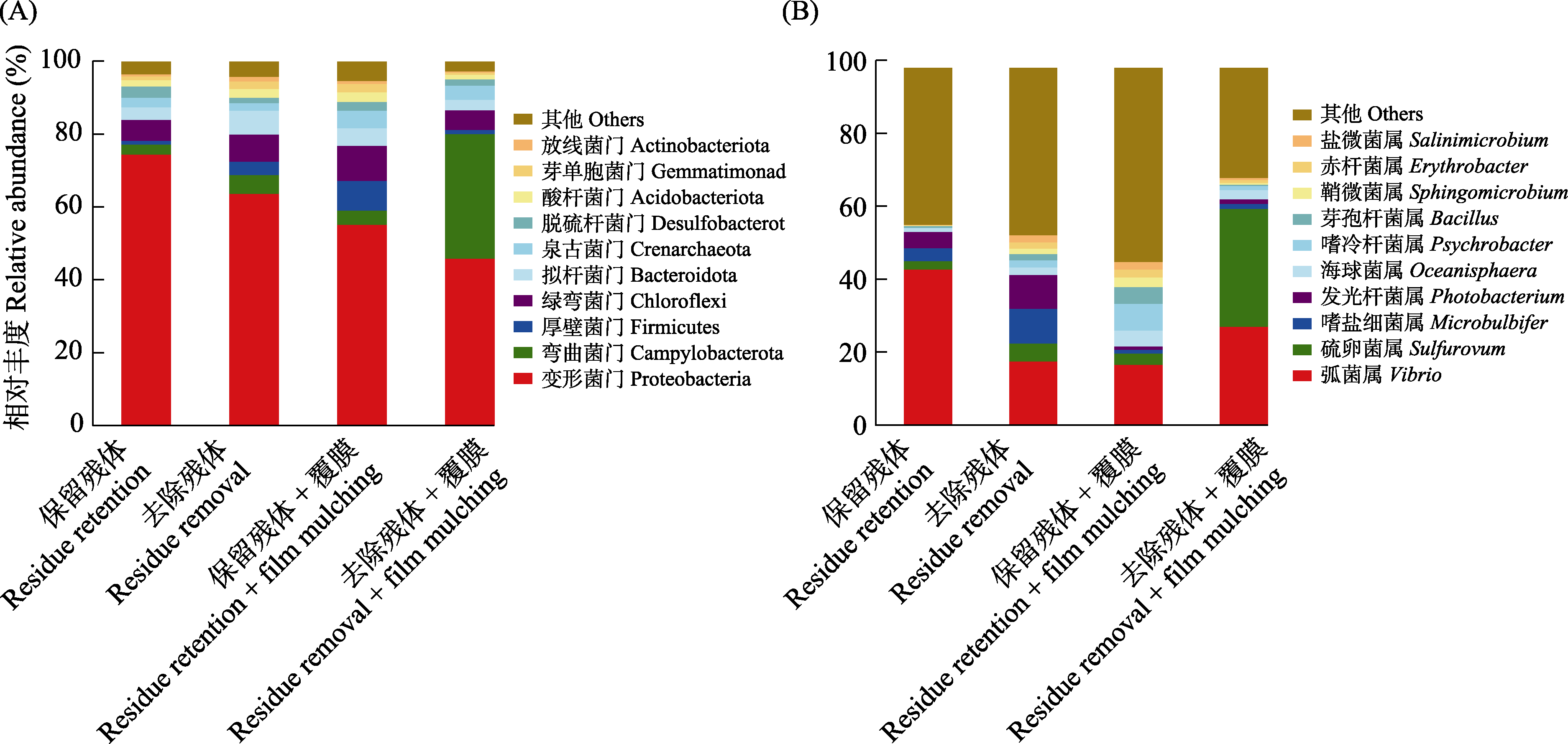
图1 刈割后互花米草残体保留与覆膜处理下土壤细菌门水平(A)和属水平(B)的相对丰度
Fig. 1 Relative abundance of soil bacteria at the phylum level (A) and genus level (B) under mowed Spartina alterniflora residue retention and plastic film mulching treatments
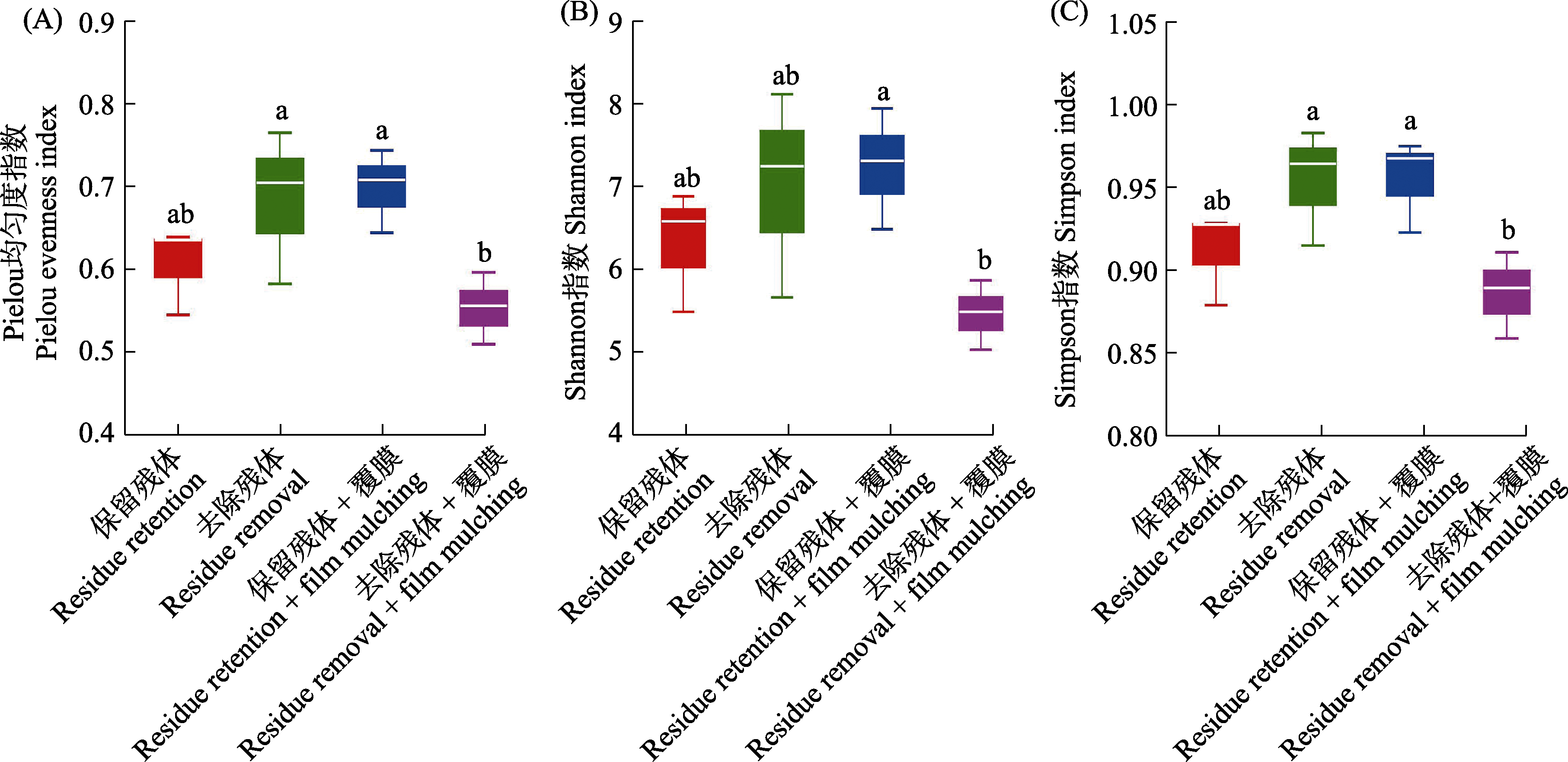
图2 刈割后互花米草残体保留与覆膜处理下根际土壤细菌群落的α多样性指数。不同小写字母表示不同处理之间多样性指数差异显著, P < 0.05。
Fig. 2 α diversity indices of rhizosphere soil bacterial communities under mowed Spartina alterniflora residue retention and plastic film mulching treatments. Different lowercase letters indicate significant differences in diversity indices among treatments (P < 0.05).
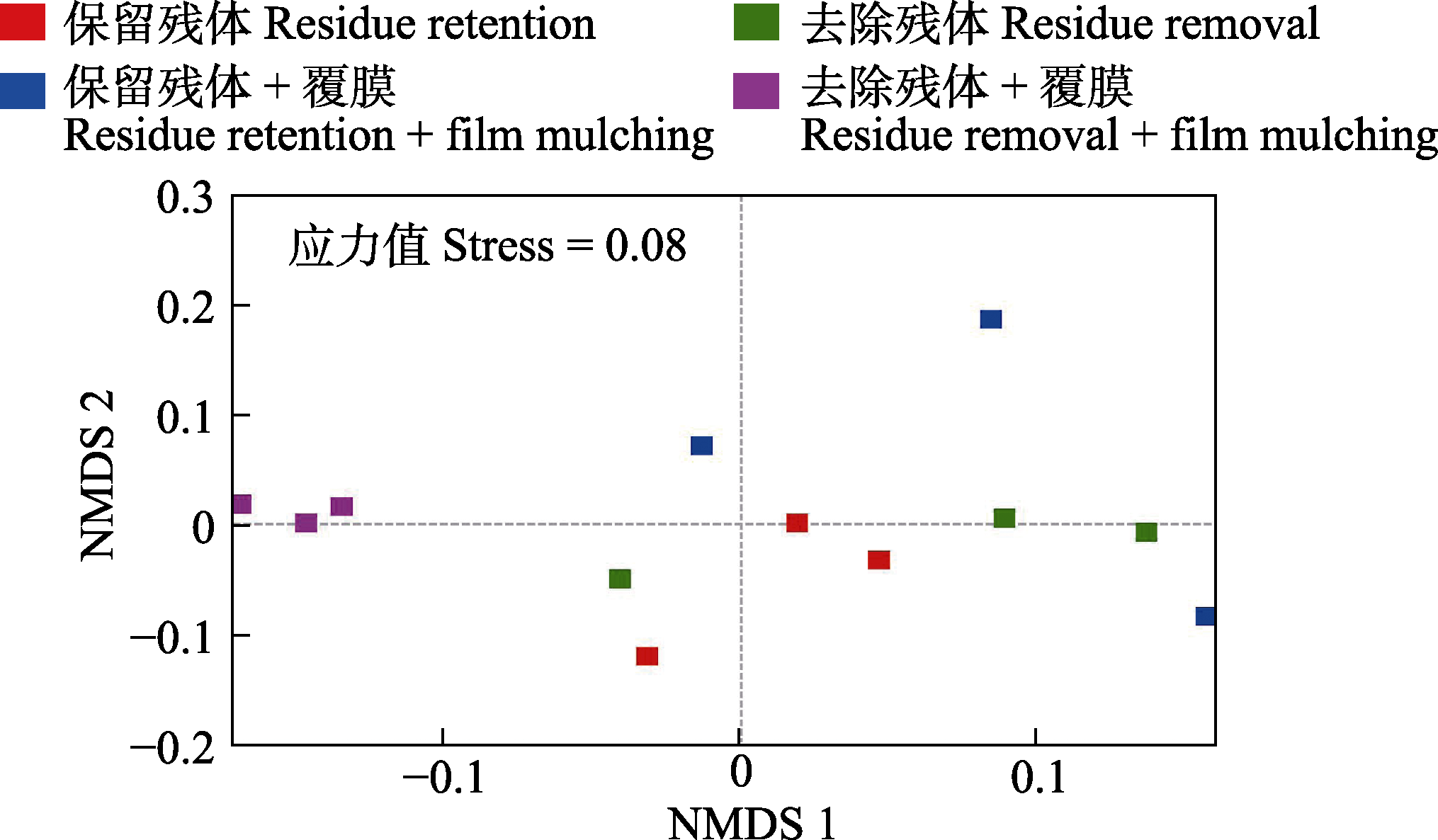
图3 刈割后互花米草残体保留与覆膜处理下土壤细菌群落结构基于加权UniFrac距离的非度量多维尺度(NMDS)排序分析
Fig. 3 Non-metric multidimensional scaling (NMDS) ordination analysis of soil bacterial community structure based on weighted UniFrac distances under mowed Spartina alterniflora residue retention and plastic film mulching treatments
| 两两组别 Pairwise groups | 差值 Difference | P值 P value | 置信下限 LCL | 置信上限 UCL |
|---|---|---|---|---|
| 保留残体/去除残体 Residue retention/residue removal | -0.667 | 0.735 | -5.049 | 3.715 |
| 保留残体/保留残体 + 覆膜 Residue retention/residue retention + film mulching | -3.33 | 0.118 | -7.715 | 1.049 |
| 保留残体/去除残体 + 覆膜 Residue retention/residue removal + film mulching | 4.667 | 0.040 | 0.285 | 9.049 |
| 去除残体/保留残体 + 覆膜 Residue removal/residue retention + film mulching | -2.667 | 0.198 | -7.049 | 1.715 |
| 去除残体/去除残体 + 覆膜 Residue removal/residue removal + film mulching | 5.333 | 0.023 | 0.951 | 9.715 |
| 保留残体+覆膜/去除残体 + 覆膜 Residue retention + film mulching/residue removal + film mulching | 8.000 | 0.003 | 3.618 | 12.382 |
表2 基于加权UniFrac距离的β多样性指数组间差异显著性检验表
Table 2 Significance test for β diversity index differences between groups based on weighted UniFrac distance
| 两两组别 Pairwise groups | 差值 Difference | P值 P value | 置信下限 LCL | 置信上限 UCL |
|---|---|---|---|---|
| 保留残体/去除残体 Residue retention/residue removal | -0.667 | 0.735 | -5.049 | 3.715 |
| 保留残体/保留残体 + 覆膜 Residue retention/residue retention + film mulching | -3.33 | 0.118 | -7.715 | 1.049 |
| 保留残体/去除残体 + 覆膜 Residue retention/residue removal + film mulching | 4.667 | 0.040 | 0.285 | 9.049 |
| 去除残体/保留残体 + 覆膜 Residue removal/residue retention + film mulching | -2.667 | 0.198 | -7.049 | 1.715 |
| 去除残体/去除残体 + 覆膜 Residue removal/residue removal + film mulching | 5.333 | 0.023 | 0.951 | 9.715 |
| 保留残体+覆膜/去除残体 + 覆膜 Residue retention + film mulching/residue removal + film mulching | 8.000 | 0.003 | 3.618 | 12.382 |
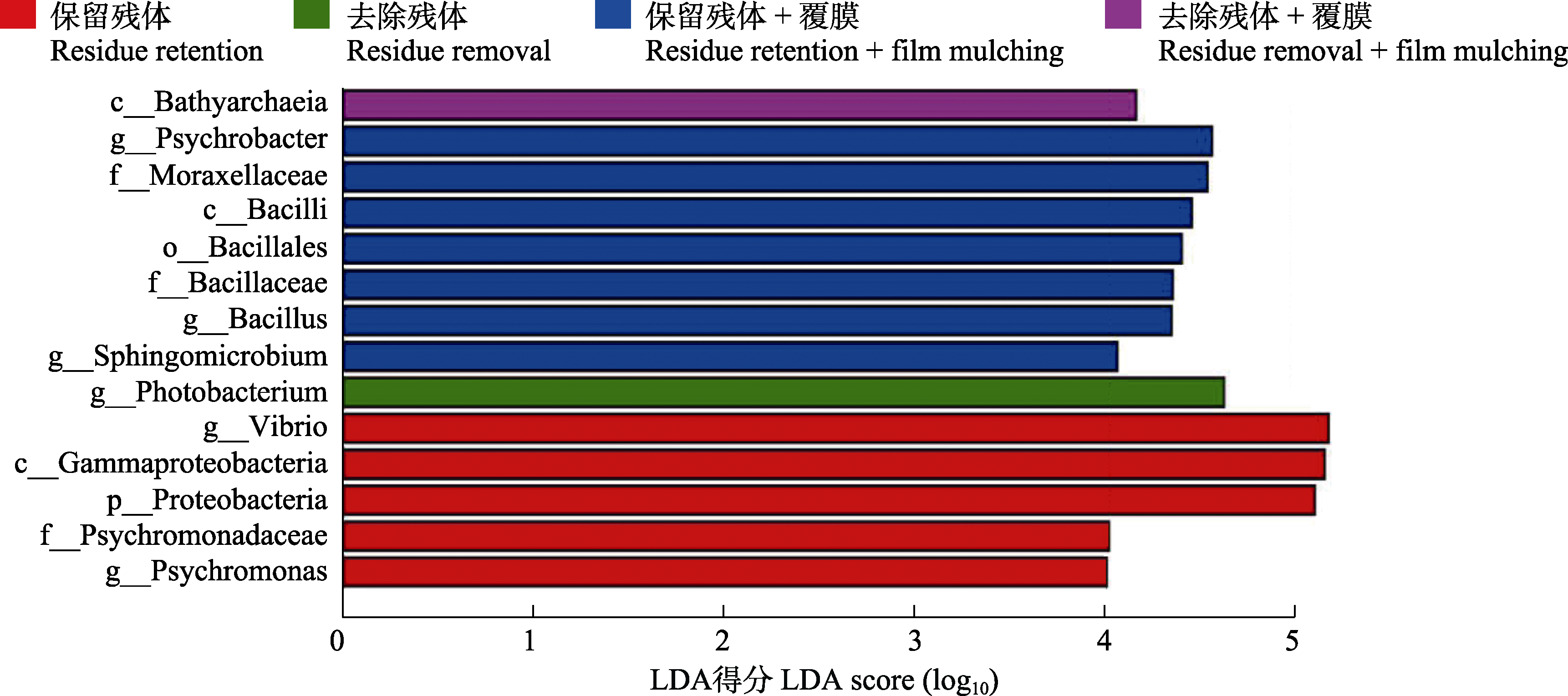
图4 刈割后互花米草残体保留与覆膜处理下土壤多级物种水平上细菌群落线性判别分析(LDA)值分布柱状图(LDA得分(log10) > 4, P < 0.05)
Fig. 4 Distribution of linear discriminant analysis (LDA) scores for soil bacterial taxa at multiple taxonomic levels under mowed Spartina alterniflora residue retention and plastic film mulching treatments (LDA score (log10) > 4, P < 0.05)
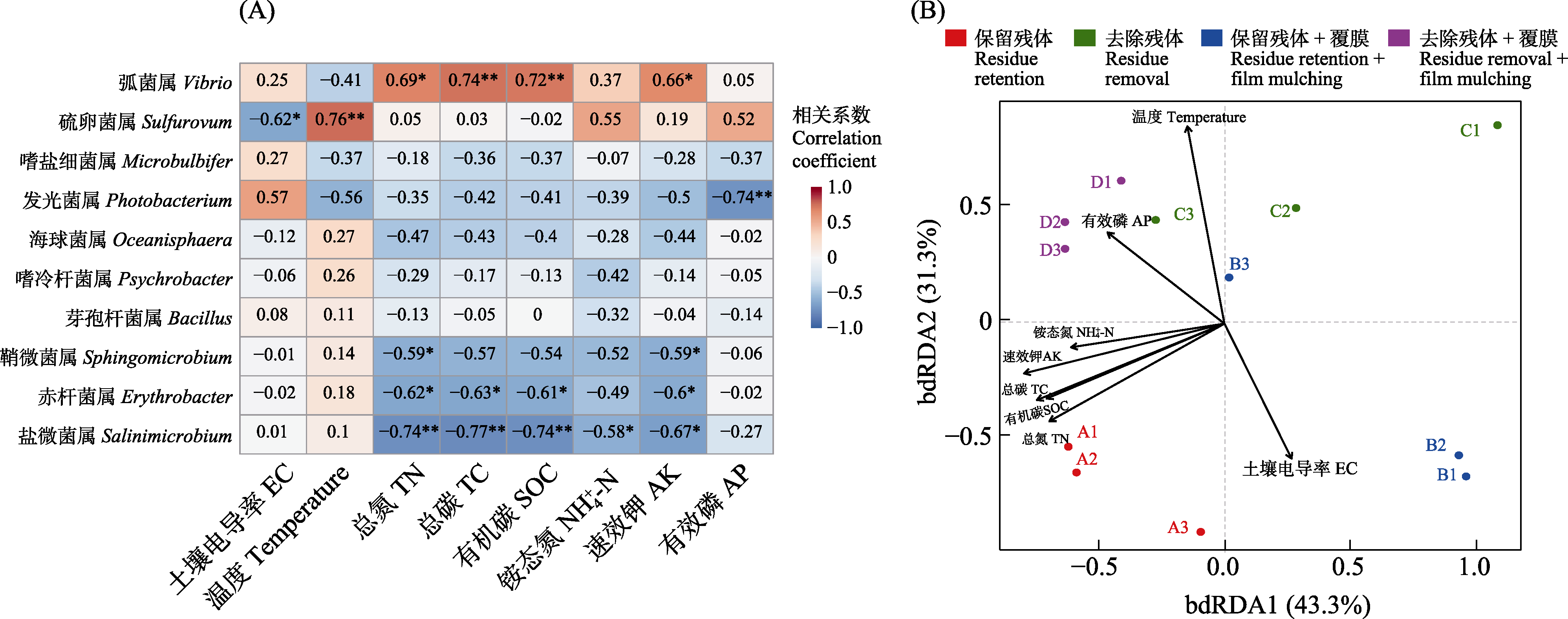
图5 细菌优势属群落与土壤理化因子的相关性分析。(A) Spearman相关性分析; (B)基于距离的冗余(bd-RDA)分析。图A中, * P < 0.05; ** P < 0.01。EC: 土壤电导率; Temperature: 温度; TN: 总氮; TC: 总碳; SOC: 土壤有机碳; NH4+-N: 铵态氮; AK: 速效钾; AP: 有效磷。图B中, A-D分别对应4个处理组, 编号1-3表示每个处理组的重复样品。
Fig. 5 Correlation analysis between dominant bacterial genera and soil physicochemical factors. (A) Spearman correlation analysis; (B) Distance-based redundancy bd-RDA analysis. In Fig. A, * P < 0.05; ** P < 0.01. EC, Soil electrical conductivity; TN, Total nitrogen; TC, Total carbon; SOC, Soil organic carbon; NH4+-N, Ammonium nitrogen; AK, Available potassium; AP, Available phosphorus. In Fig. B, A-D correspond to the four treatment groups, and the numbers 1-3 represent the replicates of each treatment group.
| [1] | 朱芸, 王凯红, 李洪磊, 徐向龙, 雷宇, 陈浩, 陈卫华, 蔡新杰, 丁长青. 朱鹮对滨海食物的适应性: 恢复东部沿海朱鹮种群的初步探索[J]. 生物多样性, 2026, 34(5): 26051-. |
| [2] | 尹翔正, 姜海燕, 张俊, 罗春生, 张元明. 极端干旱区荒漠灌木叶际细菌群落多样性特征[J]. 生物多样性, 2026, 34(4): 25485-. |
| [3] | 杨文高, 李兆光, 袁文珏, 和桂青, 王蕊, 和琼姬, 叶磊, 李燕, 侯志江. 玉龙雪山森林火烧迹地恢复年限对滇牡丹土壤细菌群落的影响[J]. 生物多样性, 2026, 34(4): 25338-. |
| [4] | 李佳璐, 李启研, 赵珮杉, 高广磊, 丁国栋, 张英. 降水量与塔里木盆地南缘荒漠土壤细菌群落多样性和稳定性的相关性[J]. 生物多样性, 2025, 33(9): 25082-. |
| [5] | 徐欢, 辛凤飞, 施宏亮, 袁琳, 薄顺奇, 赵欣怡, 邓帅涛, 潘婷婷, 余婧, 孙赛赛, 薛程. 生态修复技术集成应用对长江口北支生境与鸟类多样性提升效果评估[J]. 生物多样性, 2025, 33(5): 24478-. |
| [6] | 仝淼, 王欢, 张文双, 王超, 宋建潇. 重金属污染土壤中细菌抗生素抗性基因分布特征[J]. 生物多样性, 2025, 33(3): 24101-. |
| [7] | 宋远昊, 龚吕, 李贲, 胡阳, 李秀珍. 辽河口不同退塘还湿方式对大型底栖动物的影响[J]. 生物多样性, 2025, 33(2): 24316-. |
| [8] | 李尚炫, 明姣, 陈根娟, 武杰, 张丙昌. 晋西北风沙区植被与生物结皮协同发育对土壤细菌群落的影响[J]. 生物多样性, 2025, 33(10): 25236-. |
| [9] | 魏诗雨, 宋天骄, 罗佳宜, 张燕, 赵子萱, 茹靖雯, 易华, 林雁冰. 秦岭火地塘针叶林土壤细菌群落的海拔分布格局[J]. 生物多样性, 2024, 32(9): 24180-. |
| [10] | 张乃鹏, 梁洪儒, 张焱, 孙超, 陈勇, 王路路, 夏江宝, 高芳磊. 土壤类型和地下水埋深对黄河三角洲典型盐沼植物群落空间分异的影响[J]. 生物多样性, 2024, 32(2): 23370-. |
| [11] | 段晓敏, 李佳佳, 李靖宇, 李艳楠, 袁存霞, 王英娜, 刘建利. 腾格里沙漠东南缘藓结皮植物-土壤连续体不同粒径土壤微生物群落多样性[J]. 生物多样性, 2023, 31(9): 23131-. |
| [12] | 张雅丽, 张丙昌, 赵康, 李凯凯, 刘燕晋. 毛乌素沙地不同类型生物结皮细菌群落差异及其驱动因子[J]. 生物多样性, 2023, 31(8): 23027-. |
| [13] | 毛莹儿, 周秀梅, 王楠, 李秀秀, 尤育克, 白尚斌. 毛竹扩张对杉木林土壤细菌群落的影响[J]. 生物多样性, 2023, 31(6): 22659-. |
| [14] | 黄雨菲, 路春燕, 贾明明, 王自立, 苏越, 苏艳琳. 基于无人机影像与面向对象-深度学习的滨海湿地植物物种分类[J]. 生物多样性, 2023, 31(3): 22411-. |
| [15] | 张旋, 杜薇, 徐颖, 王永龙. 包头市半干旱型森林公园土壤细菌多样性与功能[J]. 生物多样性, 2022, 30(7): 22245-. |
| 阅读次数 | ||||||
|
全文 |
|
|||||
|
摘要 |
|
|||||
备案号:京ICP备16067583号-7
Copyright © 2026 版权所有 《生物多样性》编辑部
地址: 北京香山南辛村20号, 邮编:100093
电话: 010-62836137, 62836665 E-mail: biodiversity@ibcas.ac.cn
