

Biodiv Sci ›› 2026, Vol. 34 ›› Issue (2): 25332. DOI: 10.17520/biods.2025332 cstr: 32101.14.biods.2025332
• Conservation and Governance • Previous Articles Next Articles
Xiaofan Cheng1( ), Qingyuan Li1(), Yuanhui Li1,2,*(
 ), Mingxiang Zhang3,4,*()()
Received:2025-08-19
Accepted:2025-11-26
Online:2026-02-20
Published:2026-03-23
Contact:
Yuanhui Li, Mingxiang Zhang
Supported by:Xiaofan Cheng, Qingyuan Li, Yuanhui Li, Mingxiang Zhang. The dilemmas and solutions for invasive alien species governance policy systems[J]. Biodiv Sci, 2026, 34(2): 25332.
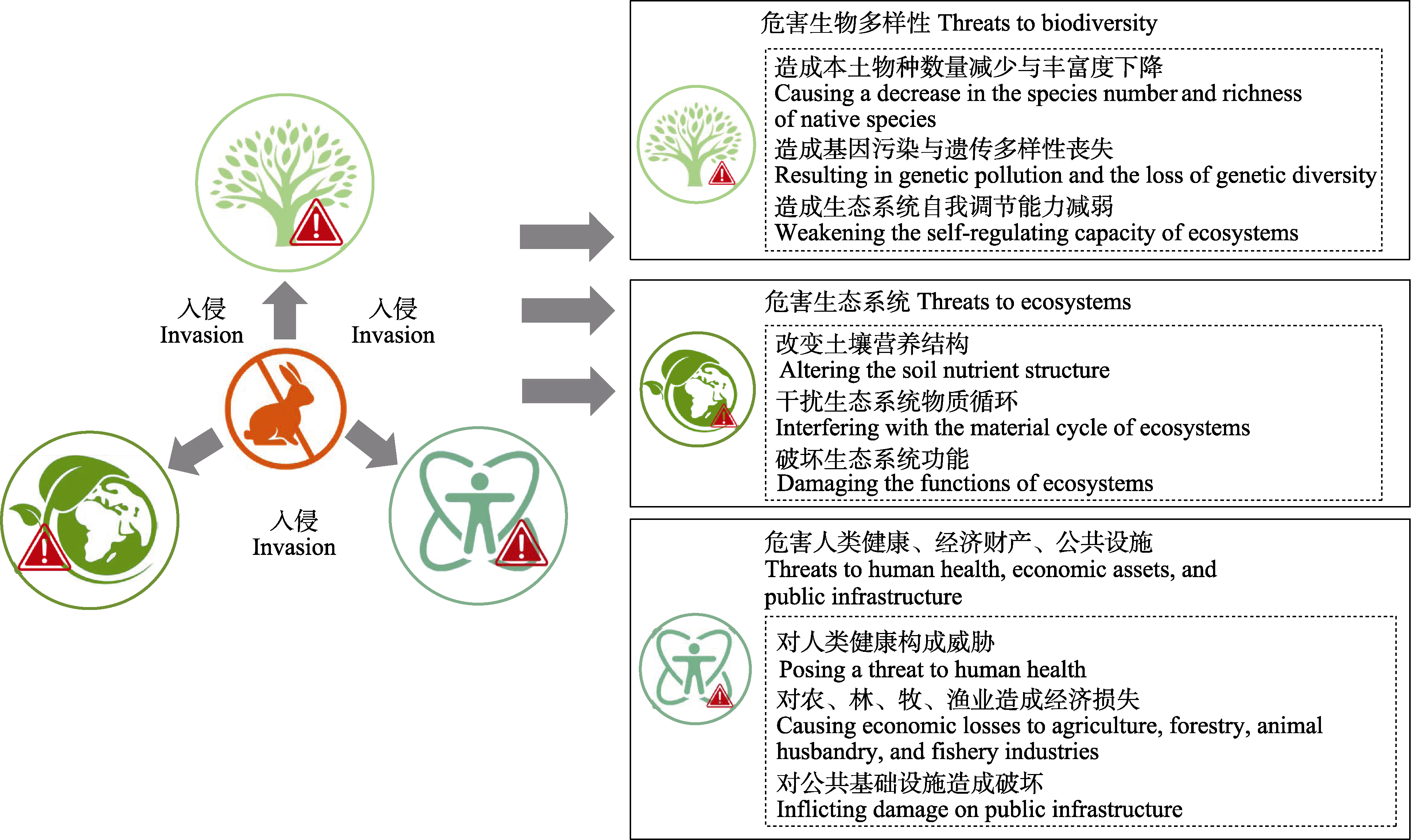
Fig. 1 Harm of invasive alien species to biodiversity, ecosystems, and human society
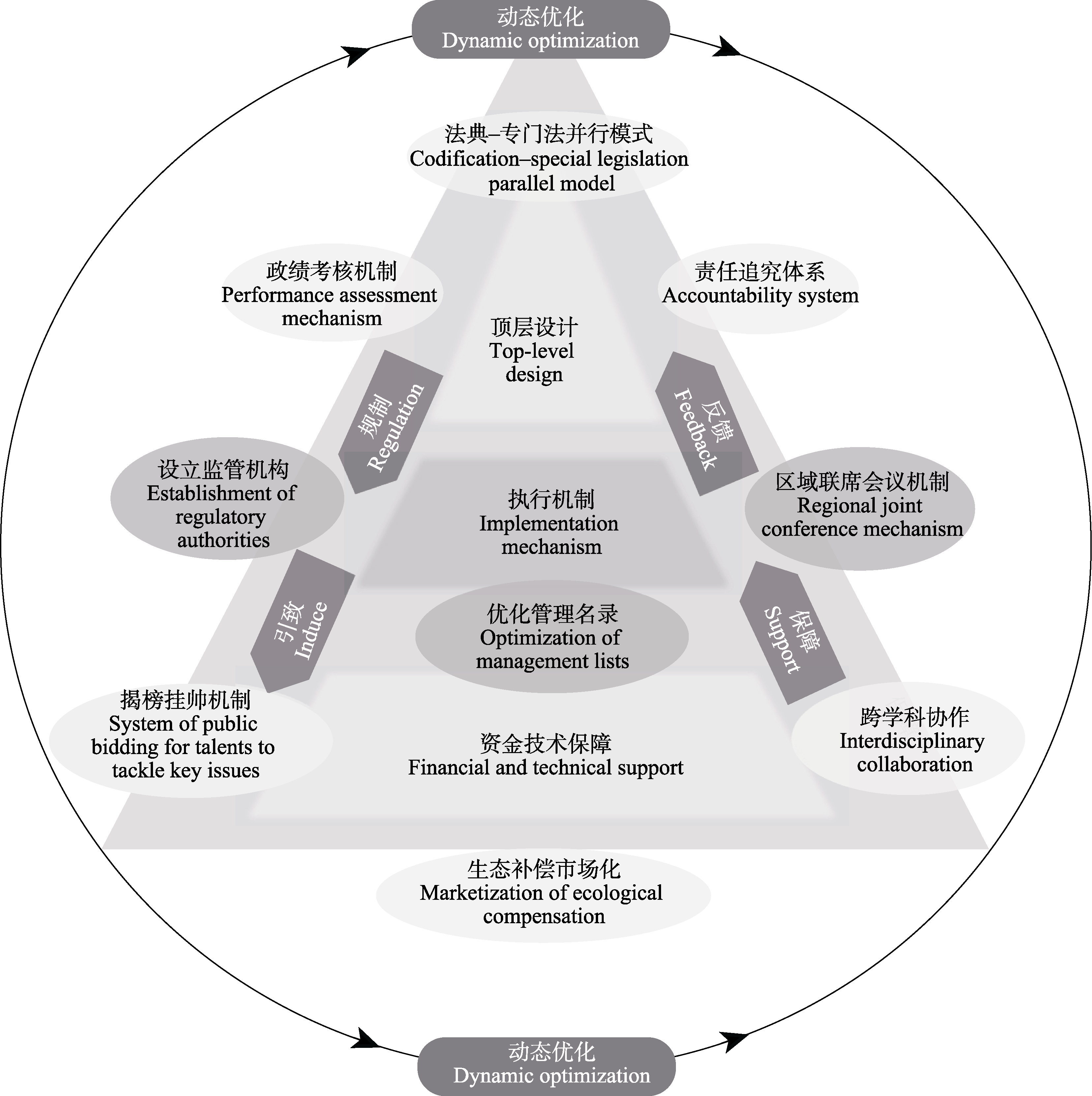
Fig. 2 Holistic governance framework for invasive alien species
| [1] | Dong CJ, Wu BY (2025) The current status, deficiencies, and improvement of legal regulations on the prevention and control of aquatic biological invasion in China. Journal of Shanghai Ocean University, 34, 1049-1057. (in Chinese with English abstract) |
| [董传举, 吴博衍 (2025) 我国水生生物入侵防治的法律规范现状、不足及完善. 上海海洋大学学报, 34, 1049-1057.] | |
| [2] | Dong FY, Xie WX, Xie S, Liang YG, Huang DM, Chen WX, Hu CL (2008) The preliminary studies on ecological characters of the cave of Procambarus clarkia (Girard) and its impacts on the security of hydro-constructions. Acta Hydrobiologica Sinica, 32, 952-954. (in Chinese) |
| [董方勇, 谢文星, 谢山, 梁友光, 黄道明, 陈文祥, 胡传林 (2008) 克氏原螯虾洞穴的生态特征及其对水利工程安全影响的初步研究. 水生生物学报, 32, 952-954.] | |
| [3] | Du YB, Tu WS, Yang L, Gu DE, Guo BC, Liu X (2023) Review of the impacts of invasive alien vertebrates on biodiversity. Scientia Sinica (Vitae), 53, 1035-1054. (in Chinese with English abstract) |
| [杜元宝, 涂炜山, 杨乐, 顾党恩, 郭宝成, 刘宣 (2023) 外来入侵脊椎动物对生物多样性危害的研究进展. 中国科学: 生命科学, 53, 1035-1054.] | |
| [4] | Fang P, Xu ZQ, Hu YC (2011) A research on the management measures to aquatic invasive biology in China. Chinese Fisheries Economics, 29(2), 93-97. (in Chinese with English abstract) |
| [方平, 徐竹青, 胡隐昌 (2011) 我国外来水生物种入侵的对策研究. 中国渔业经济, 29(2), 93-97.] | |
| [5] |
Geng YJ, Tian Y, Li JS, Li ZY, Pan YX (2024) The global progress, ongoing challenges, and future prospects of invasive alien species under the framework of Convention on Biological Diversity. Biodiversity Science, 32, 24275. (in Chinese with English abstract)
DOI |
|
[耿宜佳, 田瑜, 李俊生, 李子圆, 潘玉雪 (2024) 《生物多样性公约》框架下外来入侵物种管控的全球进展、挑战和展望. 生物多样性, 32, 24275.]
DOI |
|
| [6] | Han LL, He YJ, Zhu ZF, Wang C (2025) Research status, hotspots and enlightenment of biodiversity credit—Visual analysis based on CiteSpace. Acta Ecologica Sinica, 45, 2529-2543. (in Chinese with English abstract) |
| [韩丽丽, 何友均, 朱震锋, 王超 (2025) 生物多样性信用研究现状、热点及启示——基于CiteSpace的可视化分析. 生态学报, 45, 2529-2543.] | |
| [7] | Han LY (2024) Consideration and improvement on the legal system of biodiversity conservation in the Yellow River basin. Environmental Pollution and Control, 46, 1062-1067. (in Chinese with English abstract) |
| [韩凌月 (2024) 关于黄河流域生物多样性保护法律制度的审思与完善. 环境污染与防治, 46, 1062-1067.] | |
| [8] |
Heringer G, Fernandez RD, Bang A, Cordonnier M, Novoa A, Lenzner B, Capinha C, Renault D, Roiz D, Moodley D, Tricarico E, Holenstein K, Kourantidou M, Kirichenko NI, Adelino JRP, Dimarco RD, Bodey TW, Watari Y, Courchamp F (2024) Economic costs of invasive non-native species in urban areas: An underexplored financial drain. Science of the Total Environment, 917, 170336.
DOI URL |
| [9] |
Hu YY (2022) Research progress on biodiversity offsetting. Biodiversity Science, 30, 21266. (in Chinese with English abstract)
DOI |
|
[胡远洋 (2022) 生物多样性抵消的研究进展. 生物多样性, 30, 21266.]
DOI |
|
| [10] |
Jarić I, Heger T, Castro Monzon F, Jeschke JM, Kowarik I, McConkey KR, Pyšek P, Sagouis A, Essl F (2019) Crypticity in biological invasions. Trends in Ecology & Evolution, 34, 291-302.
DOI URL |
| [11] |
Ju RT, Gui XT, Measey J, He Q, Xian XQ, Liu JG, Sutherland WJ, Li B, Wu JH (2025) How can China curb biological invasions to meet Kunming-Montreal Target 6? Frontiers in Ecology and the Environment, 23, e2853.
DOI URL |
| [12] | Lai ZW (2023) Activation of the crime of illegally introducing, releasing and discarding alien invasive species. Journal of Political Science and Law, 40(5), 34-43. (in Chinese with English abstract) |
| [赖隹文 (2023) 非法引进、释放、丢弃外来入侵物种罪的激活. 政法学刊, 40(5), 34-43.] | |
| [13] | Lavergne S, Molofsky J (2007) Increased genetic variation and evolutionary potential drive the success of an invasive grass. Proceedings of the National Academy of Sciences, USA, 104, 3883-3888. |
| [14] | Li FF, Hao Q, Cui X, Ma JS (2024) Analysis and reflection of plant species in the Key Management List of Invasive Alien Species. Plant Science Journal, 42, 266-274. (in Chinese with English abstract) |
| [李飞飞, 郝强, 崔夏, 马金双 (2024) 对《重点管理外来入侵物种名录》中植物物种的解析与思考. 植物科学学报, 42, 266-274.] | |
| [15] | Li J (2012) On the Perfection of Our Country’s Legalre Gulation of Preventing Alien Species Invasion. PhD dissertation, Ocean University of China, Qingdao, Shandong (in Chinese with English abstract) |
| [李静 (2012) 我国防治外来物种入侵法律制度的完善. 博士学位论文,中国海洋大学, 山东青岛.] | |
| [16] | Li ZX, An SJ, Zhang XL, Luo YQ, Yan XS, Jiang P (2005) Principal component analyses of soil in a forest ecological system invaded by Bursaphelenchus xylophilus disease. Chinese Journal of Soil Science, 36, 938-942. (in Chinese with English abstract) |
| [黎镇湘, 安树杰, 张晓丽, 骆友庆, 严晓素, 蒋平 (2005) 松材线虫入侵林地土壤因子相关性分析. 土壤通报, 36, 938-942.] | |
| [17] | Liang L, Ye XQ, Wu M, Shao XX, Li CM (2016) Invasion effects of Solidago canadensis on soil nutrients and active organic carbon components in reclamation district of Hangzhou Bay wetland. Soils, 48, 680-685. (in Chinese with English abstract) |
| [梁雷, 叶小齐, 吴明, 邵学新, 李长明 (2016) 加拿大一枝黄花入侵对杭州湾湿地围垦区土壤养分及活性有机碳组分的影响. 土壤, 48, 680-685.] | |
| [18] | Liu C, Lu XX (2024) Review and improvement of legal regulation for releasing invasive alien species in China. Journal of Huaqiao University (Philosophy & Social Sciences), 5, 113-123. (in Chinese with English abstract) |
| [刘超, 陆鑫栩 (2024) 我国放生外来入侵物种行为法律规制之现状及完善. 华侨大学学报(哲学社会科学版), 5, 113-123.] | |
| [19] | Liu JM, Sun FX, Li LP (2018) The experience of American wetland mitigation banking and its enlightenment to China. Environmental Protection, 46(8), 75-79. (in Chinese) |
| [刘金淼, 孙飞翔, 李丽平 (2018) 美国湿地补偿银行机制及对我国湿地保护的启示与建议. 环境保护, 46(8), 75-79.] | |
| [20] | Liu TT (2021) Systematic holism: The legal logic of biodiversity conservation in China. Theory Monthly, (10), 130-141. (in Chinese with English abstract) |
| [刘彤彤 (2021) 整体系统观: 中国生物多样性立法保护的应然逻辑. 理论月刊, (10), 130-141.] | |
| [21] | Liu XB, Yang NX, Li T, Zhao XS, Yang YL, Hu XJ (2024) Invasive patterns and habitat analyses of Eupatorium adenophorum in the subtropical evergreen broad-leaved forest of Yunnan Province. Journal of Central South University of Forestry & Technology, 44(1), 128-139. (in Chinese with English abstract) |
| [刘宪斌, 杨楠茜, 李涛, 赵星硕, 杨亚丽, 胡先近 (2024) 紫茎泽兰在云南亚热带常绿阔叶林中的入侵格局和生境分析. 中南林业科技大学学报, 44(1), 128-139.] | |
| [22] | Lu YQ, Li FF, Jiang P, Wang C, Pan XB (2024) Analysis, development and revision of the national list of invasive alien species. Journal of Biosafety, 33, 209-214. (in Chinese with English abstract) |
| [陆轶青, 李飞飞, 姜培, 王聪, 潘绪斌 (2024) 我国外来入侵物种名录分析及制修订探讨. 生物安全学报(中英文), 33, 209-214.] | |
| [23] | Mei CQ, Wei XR (2023) Understanding and application of the crime of illegally introducing, releasing and discarding alien invasive species. Academic Exchange, (10), 58-72. (in Chinese with English abstract) |
| [梅传强, 魏雪然 (2023) 非法引进、释放、丢弃外来入侵物种罪的理解与适用. 学术交流, (10), 58-72.] | |
| [24] | Mungi NA, Galetti M, Ratnam J, Chala D, Sanín MJ, Svenning JC (2025) Alien plants and novel ecosystems in the Greater Tropics. Nature Reviews Biodiversity, 1, 515-531. |
| [25] | Pang J, Liu Y, Chen J (2024) Situation and prevention and control system construction of invasive alien species—Global perspective and China example. Chinese Journal of Agricultural Resources and Regional Planning, 45(10), 131-140. (in Chinese with English abstract) |
| [庞洁, 刘洋, 陈洁 (2024) 外来入侵物种现状与防控体制建设——全球视野和中国例证. 中国农业资源与区划, 45(10), 131-140.] | |
| [26] |
Pang ST, Liu Y, Zhu ZY (2015) Research progress of prevention management strategy of alien species. Journal of Agriculture, 5(12), 99-103. (in Chinese with English abstract)
DOI |
|
[庞淑婷, 刘颖, 朱志远 (2015) 国内外防止外来物种入侵管理策略研究进展. 农学学报, 5(12), 99-103.]
DOI |
|
| [27] |
Pyšek P, Hulme PE, Simberloff D, Bacher S, Blackburn TM, Carlton JT, Dawson W, Essl F, Foxcroft LC, Genovesi P, Jeschke JM, Kühn I, Liebhold AM, Mandrak NE, Meyerson LA, Pauchard A, Pergl J, Roy HE, Seebens H, van Kleunen M, Vilà M, Wingfield MJ, Richardson DM (2020) Scientists’ warning on invasive alien species. Biological Reviews, 95, 1511-1534.
DOI URL |
| [28] |
Qiu J, Shalimu D, Tan DY (2013) Reproductive characteristics of the invasive species Solanum rostratum in different habitats of Xinjiang, China. Biodiversity Science, 21, 590-600. (in Chinese with English abstract)
DOI URL |
|
[邱娟, 地里努尔·沙里木, 谭敦炎 2013) 入侵植物黄花刺茄在新疆不同生境中的繁殖特性. 生物多样性, 21, 590-600.]
DOI |
|
| [29] | Roy HE, Pauchard A, Stoett P, Renard TT, Bacher S, Galil BS, Hulme PE, Ikeda T, Sankaran KV, McGeoch MA, Meyerson LA, Nuñez MA, Ordonez A, Rahlao SJ, Schwindt E, Seebens H, Sheppard AW, Vandvik V (2023) Summary for Policymakers of the Thematic Assessment Report on Invasive Alien Species and Their Control of the Intergovernmental Science-Policy Platform on Biodiversity and Ecosystem Services. IPBES Secretariat, Bonn, Germany. |
| [30] | Sang WG, Zhu L, Ma KP (2006) Issues, phenomena and study emphases of alien species invasion in China. Advances in Earth Science, 3, 305-312. (in Chinese with English abstract) |
| [桑卫国, 朱丽, 马克平 (2006) 外来种入侵现象、问题及研究重点. 地球科学进展, 3, 305-312.] | |
| [31] | Su YF (2021a) Legal regulation of alien species invasion under the background of risk prevention. Resource Development & Market, 37, 273-280. (in Chinese with English abstract) |
| [苏芸芳 (2021a) 风险预防背景下的外来物种入侵法律规制. 资源开发与市场, 37, 273-280.] | |
| [32] | Su YF (2021b) Nomocracy for prevention and control of alien species invasion from the perspective of integrated governance. Chinese Journal of Environmental Management, 13(2), 134-142. (in Chinese with English abstract) |
| [苏芸芳 (2021b) 整体性治理视域下防治外来物种入侵法治研究. 中国环境管理, 13(2), 134-142.] | |
| [33] |
Sun ZJ (2021) Red imported fire ants: Dangerous alien creatures. Ecological Economy, 37(5), 5-8. (in Chinese)
DOI URL |
| [孙振杰 (2021) 红火蚁: 危险的外来生物. 生态经济, 37(5), 5-8.] | |
| [34] | UNEP (United Nations Environment Programme) (2022) Kunming-Montreal Global Biodiversity Framework. https://www.unep.org/zh-hans/resources/kunming-mengtelierquanqiushengwuduoyangxingkuangjia. (accessed on 2025-09-08) |
| [35] | Wang CY, Liu LP (2020) Transformation of government’s ecological function and innovation and optimization path in the new era. Journal of Shandong Academy of Governance, (4), 24-29. (in Chinese) |
| [王从彦, 刘丽萍 (2020) 新时代政府生态职能转变和创新优化路径. 山东行政学院学报, (4), 24-29.] | |
| [36] | Wang CY, Liu LP (2021) Insights into the early warning and prevention as well as the control management of biological invasion in the new era. Inner Mongolia Environmental Sciences, 33(2), 192-201. (in Chinese) |
| [王从彦, 刘丽萍 (2021) 新时代下生物入侵预警防控管理问题分析. 环境与发展, 33(2), 192-201.] | |
| [37] | Wang CY, Pan FQ, Tang MJ, Jiang QF, Dai ZC, Xue YL, Du DL (2015) Insight into the choice of government’s behavior under ecological civilization construction. Ecological Economy, 31(12), 164-169. (in Chinese with English abstract) |
| [王从彦, 潘法强, 唐明觉, 姜琴芳, 戴志聪, 薛永来, 杜道林 (2015) 浅析生态文明建设背景下政府行为的选择. 生态经济, 31(12), 164-169.] | |
| [38] | Wang D, Feng YL, Liu MC, Qu B (2022) Effects of Ambrosia trifida invasion on vegetation succession and soil nutrients in the enclosed riparian ecosystems—A case study of Liaohe River main stream. Journal of Shenyang Agricultural University, 53, 520-531. (in Chinese with English abstract) |
| [王迪, 冯玉龙, 刘明超, 曲波 (2022) 三裂叶豚草入侵对退化河岸带植被群落演替与土壤养分的影响及机制——以辽河干流为例. 沈阳农业大学学报, 53, 520-531.] | |
| [39] | Wang J (2007) A judicious choice of the legislative model in China—A comparative analysis of the international and foreign regulatory models. Modern Law Science, 29(2), 24-31. (in Chinese with English abstract) |
| [汪劲 (2007) 抵御外来物种入侵: 我国立法模式的合理选择——基于国际社会与外国法律规制模式的比较分析. 现代法学, 29(2), 24-31.] | |
| [40] | Wang L, Lu X, Li QF, Lu QL, Zhao ZM, Zhang YJ (2025) Research progress on monitoring and prediction technology and risk assessment method of alien biological invasion. Journal of Hydroecology, doi: 10.15928/j.1674-3075.2024 12200001. (in Chinese with English abstract) |
| [王林, 鲁仙, 李勤芬, 陆秋露, 赵志淼, 张饮江 (2025) 外来入侵生物的监测预测技术及风险评估方法研究进展. 水生态学杂志, doi: 10.15928/j.1674-3075.202412200001.] | |
| [41] |
Wang PL, Xue YT, Jiang HB, Liu CL, Zhang C, Huang HK, Zhang GF, Wan FH, Zhang YB, Courchamp F (2025) Escalating economic costs of invasive species in China driven by hidden impacts and policy gaps. Entomologia Generalis, 45, 667-678.
DOI URL |
| [42] | Wang R, Huang HK, Zhang HB, Zhang YP, Xue L, Chen BX, Yang NW, Guo JY, Liu WX, Wan FH (2022) Analysis of gaps in regulations and management mechanisms for the prevention and control of invasive alien species in China. Plant Protection, 48(4), 2-9. (in Chinese with English abstract) |
| [王瑞, 黄宏坤, 张宏斌, 张艳萍, 薛琳, 陈宝雄, 杨念婉, 郭建英, 刘万学, 万方浩 (2022) 中国外来入侵物种防控法规和管理机制空缺分析. 植物保护, 48(4), 2-9.] | |
| [43] | Wei CF (2025) Biological invasion mechanism and control countermeasures during the introduction of garden plant Lantana camara. Contemporary Horticulture, 48(1), 110-113. (in Chinese) |
| [韦彩飞 (2025) 园林植物马缨丹引种过程中生物入侵机制与防治对策. 现代园艺, 48(1), 110-113.] | |
| [44] | Xie BH, Han GX (2023) Control of invasive plant Spartina alterniflora: Concept, technology and practice. Bulletin of Chinese Academy of Sciences, 38, 1924-1938. (in Chinese with English abstract) |
| [谢宝华, 韩广轩 (2023) 入侵植物互花米草防治: 理念、技术与实践. 中国科学院院刊, 38, 1924-1938.] | |
| [45] | Yang GH (2005) Harm of introducing the western honeybee Apis mellifera L. to the Chinese honeybee Apis cerana F. and its ecological impact. Acta Entomologica Sinica, 401-406. (in Chinese with English abstract) |
| [杨冠煌 (2005) 引入西方蜜蜂对中蜂的危害及生态影响. 昆虫学报, 401-406.] | |
| [46] | Yang Z, Du H (2024) Jurisprudential interpretation and path optimization of biological invasion prevention and control from the perspective of collaborative governance. Journal of Arid Land Resources and Environment, 38(10), 1-9. (in Chinese with English abstract) |
| [杨哲, 杜辉 (2024) 协同治理视域下生物入侵防治的法理阐释与进路优化. 干旱区资源与环境, 38(10), 1-9.] | |
| [47] | Yang ZG, Wang XS, Guo DJ, Feng B (2023) Hazard analysis and biological control technology of red fire ant. Plant Health and Medicine, 2(3), 51-58. (in Chinese with English abstract) |
| [杨志刚, 王小松, 郭迪金, 冯波 (2023) 红火蚁的危害分析及生物防控技术. 植物医学, 2(3), 51-58.] | |
| [48] | Yang ZX, Cheng X (2016) On the legal response to the invasion of alien wild animals of China—Reflection on the theory of adjustment of environmental law. Journal of Jishou University (Social Sciences), 37(2), 9-22. (in Chinese with English abstract) |
| [杨朝霞, 程侠 (2016) 我国野生动物外来物种入侵的法律应对——兼谈对环境法“调整论”反思的反思. 吉首大学学报(社会科学版), 37(2), 9-22.] | |
| [49] | Yu CA (2024) Understanding and judicial application of the crime of illegally introducing, releasing, and abandoning invasive alien species. Environmental Law Review, (2), 92-114. (in Chinese) |
| [余昌安 (2024) 非法引进、释放、丢弃外来入侵物种罪的理解与司法适用. 环境法评论, (2) 92-114.] | |
| [50] | Yu WX (2020) Legal response to biological invasion in the context of biosafety. Social Science Journal, (3), 148-153, 209. (in Chinese with English abstract) |
| [于文轩 (2020) 生物安全语境下生物入侵的法制因应. 社会科学辑刊, (3), 148-153, 209.] | |
| [51] | Yu WX, Hu ZH (2022) Systematization of biodiversity legal institution from the perspective of ecological civilization. Journal of Henan Normal University (Philosophy and Social Sciences), 49(5), 37-45. (in Chinese with English abstract) |
| [于文轩, 胡泽弘 (2022) 论生态文明视域下的生物多样性法制体系化. 河南师范大学学报(哲学社会科学版), 49(5), 37-45.] | |
| [52] | Zhang N (2016) Enlightenment of German eco-account system to China’s ecological civilization construction. China Land, (9), 39-41. (in Chinese) |
| [张宁 (2016) 德国生态账户制度对我国生态文明建设的启示. 中国土地, (9), 39-41.] | |
| [53] | Zhang ZG, Yang MR (2023) On issues over judicial application of the crime of illegally introducing, releasing and discarding alien invasive species. Journal of Southwest University of Political Science and Law, 25(6), 102-114. (in Chinese with English abstract) |
| [张志钢, 杨慕汝 (2023) 非法引进、释放、丢弃外来入侵物种罪的理解与适用研究. 西南政法大学学报, 25(6), 102-114.] | |
| [54] | Zhao HJ, Xiong GL, Cao LY, Yang F (2024) Provincial management strategies of forestry-related invasive species in Canada and their insights. World Forestry Research, 37(4), 111-116. (in Chinese with English abstract) |
| [赵慧捷, 熊国玲, 曹凌仪, 杨帆 (2024) 加拿大省域林业入侵物种管理策略与经验启示. 世界林业研究, 37(4), 111-116.] | |
| [55] | Zheng SN, Chen XL (2024) Research and suggestions on the laws and regulations of alien invasive species management in China. Journal of China Agricultural University, 29(9), 192-203. (in Chinese with English abstract) |
| [郑思宁, 陈秀丽 (2024) 我国外来入侵物种管理的法律法规研究及完善对策. 中国农业大学学报, 29(9), 192-203.] | |
| [56] | Zhou MH, Ding ZP, Wang MS, Zhu J, Lu J (2023) Review on the current status of prevention and control of invasive alien species in China. Plant Quarantine, 37(2), 1-7. (in Chinese with English abstract) |
| [周明华, 丁志平, 王明生, 朱君, 陆军 (2023) 我国外来物种入侵防控工作现状综述. 植物检疫, 37(2), 1-7.] |
| [1] | Lijie Zhou, Minhui Huang, Huaijiang He, Yanxia Cheng, Chunyu Zhang, Xiuhai Zhao. Disentangling the patterns, components, and influencing factors of forest β diversity in the Xiaoxing’an Mountains, Northeast China [J]. Biodiv Sci, 2026, 34(4): 25443-. |
| [2] | Yunyue Peng, Kui Peng, Xinran Liu, Tianyi Sun, Xiaoquan Zhang. Corporate engagement pathways, market development barriers and recommendations for biodiversity credits [J]. Biodiv Sci, 2026, 34(4): 26031-. |
| [3] | Boyao Li, Tiancheng Sheng, Xiaoyun Xing. Impact of biodiversity risk on corporate financial performance: Evidence from listed companies in China [J]. Biodiv Sci, 2026, 34(4): 25330-. |
| [4] | Hao Liu, Yuxiao Zhang, Bing Liu, Feifei Li, Hongzheng Ma, Haining Qin, Dezhu Li, Wenli Chen. Diversity and checklist of grasses (Poaceae) in China [J]. Biodiv Sci, 2026, 34(4): 25438-. |
| [5] | Ziyi Kong, Degang Wang, Jiantao Wang, Zhiyong Pei, Jing Sun, Changchun Zhang, Junguo Zhang. Wildlife pose estimation based on the SCD-HRNet model and its application in biodiversity monitoring: A case study of the Saihanwula Region, Inner Mongolia [J]. Biodiv Sci, 2026, 34(4): 25287-. |
| [6] | Haoyou Zhu, Youbing Zhou, Yi Luo, Zhaomin Zhou. Changes in breeding bird community in an urban area of Nanchong over two decades [J]. Biodiv Sci, 2026, 34(3): 24560-. |
| [7] | Shuyu Hou, Yingying Liu, Rui Yang. Progress of international OECMs practices under the Kunming-Montreal Global Biodiversity Framework and pathways for localization in China [J]. Biodiv Sci, 2026, 34(3): 25264-. |
| [8] | Lulu Chen, Haoting Tang, Hong Leng, Qing Yuan, Xinyue Yang. Impacts of urban block built environments on biodiversity—A review and outlook [J]. Biodiv Sci, 2026, 34(2): 25286-. |
| [9] | Wenqi Gao, Jingrong Xiang, Yao Zhao, Lingshuang Fan, Yuan Gu, Weihan Shao, Gaojun Li, Guangjun Zhao, Mingbin Chen, Xingwei Cai, Kai Chen. Stream fish community characteristics and their response to land use in Limushan and Jianfengling of Hainan Tropical Rainforest National Park [J]. Biodiv Sci, 2026, 34(2): 25374-. |
| [10] | Xiaoqiang Lu, Dan Rui, Jiangfeng Zhang, Bingxin Yin, Yulu Wang, Yuting Cen, Yichen Cui, Wanxia Yang. Impacts of nitrogen inputs-driven key ecological processes on biodiversity and their management implications [J]. Biodiv Sci, 2026, 34(2): 25368-. |
| [11] | Tinghong Tan, Fan Gao, Yu Yang, Qunying Xiao, Chunfang Wu, Na Qiu, Ningning Zhao, Min Zhou, Gongping Kang, Zhihong Lu, Jianqiang Gao, Hong Yang, Chuandong Yang, Chunying Deng. Macrofungal species cataloging in karst areas of southwestern China [J]. Biodiv Sci, 2026, 34(2): 25281-. |
| [12] | Xuri Zhang, Biao Luo, Tong Zhao, Dan Huang, Weiming Ai. Fish diversity of Zhejiang Province: Inventory, distribution and conservation [J]. Biodiv Sci, 2026, 34(2): 25225-. |
| [13] | Haiou Liu, Zhiming Hao, Leshan Du, Wenhui Liu, Ziyuan Li, Lei Liu. Progress, challenges, and insights on the operation of the Global Biodiversity Framework Fund [J]. Biodiv Sci, 2026, 34(2): 25463-. |
| [14] | Xi Luo, Qifang Wang, Jianjia Wang, Qianxi Yang, Hongfei Fang, Miao Hong, Qi Zhang, Ling Cai, Xijie Zhou, Dingyong Huang, Xinqing Zheng. Newly recorded coral species near the region of Dongshan, Fujian Province expands the biodiversity of the northernmost scleractinian communities of China [J]. Biodiv Sci, 2026, 34(2): 25335-. |
| [15] | Jiangjian Xie, Mengkun Zhu, Aiwu Jiang, Zhishu Xiao. Future of listening to biodiversity: Limitations and development directions of soundscape-based automatic assessment methods [J]. Biodiv Sci, 2026, 34(2): 25296-. |
| Viewed | ||||||
|
Full text |
|
|||||
|
Abstract |
|
|||||
Copyright © 2026 Biodiversity Science
Editorial Office of Biodiversity Science, 20 Nanxincun, Xiangshan, Beijing 100093, China
Tel: 010-62836137, 62836665 E-mail: biodiversity@ibcas.ac.cn

