

Biodiv Sci ›› 2026, Vol. 34 ›› Issue (2): 25281. DOI: 10.17520/biods.2025281 cstr: 32101.14.biods.2025281
• Bioinventories • Previous Articles Next Articles
Tinghong Tan1,2,*( )(
)( ), Fan Gao1(), Yu Yang3(), Qunying Xiao4(), Chunfang Wu1(), Na Qiu1(), Ningning Zhao1(), Min Zhou1(), Gongping Kang2,5(), Zhihong Lu6(), Jianqiang Gao1,2(), Hong Yang1,2(), Chuandong Yang1,2(), Chunying Deng7,*()()
Received:2025-07-20
Accepted:2025-11-19
Online:2026-02-20
Published:2026-03-23
Contact:
Tinghong Tan, Chunying Deng
About author:First author contact:# 共同第一作者
Supported by:Tinghong Tan, Fan Gao, Yu Yang, Qunying Xiao, Chunfang Wu, Na Qiu, Ningning Zhao, Min Zhou, Gongping Kang, Zhihong Lu, Jianqiang Gao, Hong Yang, Chuandong Yang, Chunying Deng. Macrofungal species cataloging in karst areas of southwestern China[J]. Biodiv Sci, 2026, 34(2): 25281.
| 门 Phylum | 纲 Class | 目 Order | 科 Family | 属 Genus | 种 Species |
|---|---|---|---|---|---|
| 子囊菌门 Ascomycota | 4 | 7 | 28 | 56 | 122 |
| 担子菌门 Basidiomycota | 6 | 20 | 90 | 362 | 1,383 |
| 总计 Total | 10 | 27 | 118 | 418 | 1,505 |
Table 1 Statistics of macrofungal taxa in karst areas of southwestern China (Guizhou, Guangxi, and Yunnan)
| 门 Phylum | 纲 Class | 目 Order | 科 Family | 属 Genus | 种 Species |
|---|---|---|---|---|---|
| 子囊菌门 Ascomycota | 4 | 7 | 28 | 56 | 122 |
| 担子菌门 Basidiomycota | 6 | 20 | 90 | 362 | 1,383 |
| 总计 Total | 10 | 27 | 118 | 418 | 1,505 |
| 优势科 Dominant families | 属数 No. of genus | 种数 No. of species | 占总种数百分比 Percentage of total species (%) | 优势科 Dominant families | 属数 No. of genus | 种数 No. of species | 占总种数百分比 Percentage of total species (%) |
|---|---|---|---|---|---|---|---|
| 红菇科 Russulaceae | 3 | 143 | 9.50 | 马勃科 Lycoperdaceae | 6 | 20 | 1.33 |
| 多孔菌科 Polyporaceae | 32 | 127 | 8.44 | 乳牛肝菌科 Suillaceae | 2 | 20 | 1.33 |
| 牛肝菌科 Boletaceae | 32 | 115 | 7.64 | 木耳科 Auriculariaceae | 6 | 19 | 1.26 |
| 伞菌科 Agaricaceae | 11 | 73 | 4.85 | 鬼笔科 Phallaceae | 9 | 19 | 1.26 |
| 鹅膏菌科 Amanitaceae | 2 | 73 | 4.85 | 拟层孔菌科 Fomitopsidaceae | 6 | 15 | 1.00 |
| 锈革菌科 Hymenochaetaceae | 14 | 39 | 2.59 | 轴腹菌科 Hydnangiaceae | 1 | 15 | 1.00 |
| 口蘑科 Tricholomataceae | 10 | 38 | 2.52 | 层腹菌科 Hymenogastraceae | 6 | 15 | 1.00 |
| 类脐菇科 Omphalotaceae | 7 | 34 | 2.26 | 珊瑚菌科 Clavariaceae | 3 | 14 | 0.93 |
| 未定科 Incertae sedis1 | 18 | 33 | 2.19 | 侧耳科 Pleurotaceae | 2 | 13 | 0.86 |
| 泡头菌科 Physalacriaceae | 13 | 33 | 2.19 | 光柄菇科 Pluteaceae | 3 | 13 | 0.86 |
| 小皮伞科 Marasmiaceae | 5 | 32 | 2.13 | 韧革菌科 Stereaceae | 5 | 13 | 0.86 |
| 小菇科 Mycenaceae | 6 | 30 | 1.99 | 地星科 Geastraceae | 2 | 12 | 0.80 |
| 钉菇科 Gomphaceae | 5 | 29 | 1.93 | 离褶伞科 Lyophyllaceae | 6 | 12 | 0.80 |
| 小脆柄菇科 Psathyrellaceae | 8 | 28 | 1.86 | 干朽菌科 Meruliaceae | 9 | 12 | 0.80 |
| 炭角菌科 Xylariaceae | 4 | 28 | 1.86 | 线虫草科 Ophiocordycipitaceae | 3 | 12 | 0.80 |
| 蜡伞科 Hygrophoraceae | 8 | 27 | 1.79 | 肉杯菌科 Sarcoscyphaceae | 6 | 12 | 0.80 |
| 球盖菇科 Strophariaceae | 7 | 27 | 1.79 | 虫草科 Cordycipitaceae | 3 | 11 | 0.73 |
| 丝膜菌科 Cortinariaceae | 2 | 25 | 1.66 | 硬皮马勃科 Sclerodermataceae | 2 | 11 | 0.73 |
| 齿菌科 Hydnaceae | 5 | 25 | 1.66 | 齿耳菌科 Steccherinaceae | 7 | 11 | 0.73 |
| 粉褶菌科 Entolomataceae | 2 | 23 | 1.53 | 火丝菌科 Pyronemataceae | 7 | 10 | 0.66 |
| 丝盖伞科 Inocybaceae | 3 | 23 | 1.53 | 总计 Total | 291 | 1,284 | 85.32 |
Table 2 Dominant families of macrofungi in the karst areas of southwestern China (Guizhou, Guangxi, and Yunnan)
| 优势科 Dominant families | 属数 No. of genus | 种数 No. of species | 占总种数百分比 Percentage of total species (%) | 优势科 Dominant families | 属数 No. of genus | 种数 No. of species | 占总种数百分比 Percentage of total species (%) |
|---|---|---|---|---|---|---|---|
| 红菇科 Russulaceae | 3 | 143 | 9.50 | 马勃科 Lycoperdaceae | 6 | 20 | 1.33 |
| 多孔菌科 Polyporaceae | 32 | 127 | 8.44 | 乳牛肝菌科 Suillaceae | 2 | 20 | 1.33 |
| 牛肝菌科 Boletaceae | 32 | 115 | 7.64 | 木耳科 Auriculariaceae | 6 | 19 | 1.26 |
| 伞菌科 Agaricaceae | 11 | 73 | 4.85 | 鬼笔科 Phallaceae | 9 | 19 | 1.26 |
| 鹅膏菌科 Amanitaceae | 2 | 73 | 4.85 | 拟层孔菌科 Fomitopsidaceae | 6 | 15 | 1.00 |
| 锈革菌科 Hymenochaetaceae | 14 | 39 | 2.59 | 轴腹菌科 Hydnangiaceae | 1 | 15 | 1.00 |
| 口蘑科 Tricholomataceae | 10 | 38 | 2.52 | 层腹菌科 Hymenogastraceae | 6 | 15 | 1.00 |
| 类脐菇科 Omphalotaceae | 7 | 34 | 2.26 | 珊瑚菌科 Clavariaceae | 3 | 14 | 0.93 |
| 未定科 Incertae sedis1 | 18 | 33 | 2.19 | 侧耳科 Pleurotaceae | 2 | 13 | 0.86 |
| 泡头菌科 Physalacriaceae | 13 | 33 | 2.19 | 光柄菇科 Pluteaceae | 3 | 13 | 0.86 |
| 小皮伞科 Marasmiaceae | 5 | 32 | 2.13 | 韧革菌科 Stereaceae | 5 | 13 | 0.86 |
| 小菇科 Mycenaceae | 6 | 30 | 1.99 | 地星科 Geastraceae | 2 | 12 | 0.80 |
| 钉菇科 Gomphaceae | 5 | 29 | 1.93 | 离褶伞科 Lyophyllaceae | 6 | 12 | 0.80 |
| 小脆柄菇科 Psathyrellaceae | 8 | 28 | 1.86 | 干朽菌科 Meruliaceae | 9 | 12 | 0.80 |
| 炭角菌科 Xylariaceae | 4 | 28 | 1.86 | 线虫草科 Ophiocordycipitaceae | 3 | 12 | 0.80 |
| 蜡伞科 Hygrophoraceae | 8 | 27 | 1.79 | 肉杯菌科 Sarcoscyphaceae | 6 | 12 | 0.80 |
| 球盖菇科 Strophariaceae | 7 | 27 | 1.79 | 虫草科 Cordycipitaceae | 3 | 11 | 0.73 |
| 丝膜菌科 Cortinariaceae | 2 | 25 | 1.66 | 硬皮马勃科 Sclerodermataceae | 2 | 11 | 0.73 |
| 齿菌科 Hydnaceae | 5 | 25 | 1.66 | 齿耳菌科 Steccherinaceae | 7 | 11 | 0.73 |
| 粉褶菌科 Entolomataceae | 2 | 23 | 1.53 | 火丝菌科 Pyronemataceae | 7 | 10 | 0.66 |
| 丝盖伞科 Inocybaceae | 3 | 23 | 1.53 | 总计 Total | 291 | 1,284 | 85.32 |
| 优势属 Dominant genera | 种数 No. of species | 占比 Proportion (%) | 生态类型 Ecological form | 优势属 Dominant genera | 种数 No. of species | 占比 Proportion (%) | 生态类型 Ecological form |
|---|---|---|---|---|---|---|---|
| 红菇属 Russula | 88 | 5.85 | 共生 Symbiotic | 小脆柄菇属 Psathyrella | 9 | 0.60 | 腐生 Saprophytic |
| 鹅膏属 Amanita | 72 | 4.78 | 共生 Symbiotic | 锁瑚菌属 Clavulina | 8 | 0.53 | 腐生 Saprophytic |
| 乳菇属 Lactarius | 44 | 2.92 | 共生 Symbiotic | 集毛孔菌属 Coltricia | 8 | 0.53 | 共生 Symbiotic |
| 蘑菇属 Agaricus | 41 | 2.72 | 腐生 Saprophytic | 拟层孔菌属 Fomitopsis | 8 | 0.53 | 腐生 Saprophytic |
| 小皮伞属 Marasmius | 26 | 1.73 | 共生 Symbiotic | 侧耳属 Pleurotus | 8 | 0.53 | 腐生 Saprophytic |
| 灵芝属 Ganoderma | 24 | 1.59 | 腐生 Saprophytic | 光柄菇属 Pluteus | 8 | 0.53 | 共生 Symbiotic |
| 炭角菌属 Xylaria | 24 | 1.59 | 腐生 Saprophytic | 硬皮马勃属 Scleroderma | 8 | 0.53 | 共生 Symbiotic |
| 牛肝菌属 Boletus | 23 | 1.53 | 共生 Symbiotic | 韧革菌属 Stereum | 8 | 0.53 | 腐生 Saprophytic |
| 丝膜菌属 Cortinarius | 22 | 1.46 | 共生 Symbiotic | 革菌属 Thelephora | 8 | 0.53 | 共生 Symbiotic |
| 粉褶蕈属 Entoloma | 22 | 1.46 | 共生 Symbiotic | 喇叭菌属 Craterellus | 7 | 0.47 | 共生 Symbiotic |
| 枝瑚菌属 Ramaria | 21 | 1.40 | 腐生 Saprophytic | 胶孔菌属 Favolaschia | 7 | 0.47 | 腐生 Saprophytic |
| 栓孔菌属 Trametes | 21 | 1.40 | 腐生 Saprophytic | 羊肚菌属 Morchella | 7 | 0.47 | 腐生 Saprophytic |
| 丝盖伞属 Inocybe | 19 | 1.26 | 共生 Symbiotic | 拟金钱菌属 Collybiopsis | 6 | 0.40 | 腐生 Saprophytic |
| 小菇属 Mycena | 17 | 1.13 | 共生 Symbiotic | 拟鬼伞属 Coprinopsis | 6 | 0.40 | 腐生 Saprophytic |
| 乳牛肝菌属 Suillus | 17 | 1.13 | 共生 Symbiotic | 盔孢伞属 Galerina | 6 | 0.40 | 腐生 Saprophytic |
| 口蘑属 Tricholoma | 16 | 1.06 | 共生 Symbiotic | 斑褶菇属 Panaeolus | 6 | 0.40 | 腐生 Saprophytic |
| 蜡蘑属 Laccaria | 15 | 1.00 | 共生 Symbiotic | 革耳属 Panus | 6 | 0.40 | 腐生 Saprophytic |
| 鳞伞属 Pholiota | 12 | 0.80 | 腐生 Saprophytic | 蚁巢伞属 Termitomyces | 6 | 0.40 | 共生 Symbiotic |
| 多孔菌属 Polyporus | 12 | 0.80 | 腐生 Saprophytic | 田头菇属 Agrocybe | 5 | 0.33 | 腐生 Saprophytic |
| 地星属 Geastrum | 11 | 0.73 | 共生 Symbiotic | 蜜环菌属 Armillaria | 5 | 0.33 | 共生 Symbiotic |
| 裸脚伞属 Gymnopus | 11 | 0.73 | 腐生 Saprophytic | 丽口包属 Calostoma | 5 | 0.33 | 腐生 Saprophytic |
| 湿伞属 Hygrocybe | 11 | 0.73 | 共生 Symbiotic | 鸡油菌属 Cantharellus | 5 | 0.33 | 共生 Symbiotic |
| 锈革菌属 Hymenochaete | 11 | 0.73 | 腐生 Saprophytic | 杯伞属 Clitocybe | 5 | 0.33 | 腐生 Saprophytic |
| 多汁乳菇属 Lactifluus | 11 | 0.73 | 腐生 Saprophytic | 锥盖伞属 Conocybe | 5 | 0.33 | 腐生 Saprophytic |
| 香菇属 Lentinus | 11 | 0.73 | 腐生 Saprophytic | 小鬼伞属 Coprinellus | 5 | 0.33 | 腐生 Saprophytic |
| 环柄菇属 Lepiota | 11 | 0.73 | 共生 Symbiotic | 鬼伞属 Coprinus | 5 | 0.33 | 腐生 Saprophytic |
| 松塔牛肝菌属 Strobilomyces | 11 | 0.73 | 共生 Symbiotic | 靴耳属 Crepidotus | 5 | 0.33 | 腐生 Saprophytic |
| 粉孢牛肝菌属 Tylopilus | 11 | 0.73 | 共生 Symbiotic | 老伞属 Gerronema | 5 | 0.33 | 腐生 Saprophytic |
| 木耳属 Auricularia | 10 | 0.66 | 腐生 Saprophytic | 亚侧耳属 Hohenbuehelia | 5 | 0.33 | 腐生 Saprophytic |
| 线虫草属 Ophiocordyceps | 10 | 0.66 | 寄生 Parasitic | 大环柄菇属 Macrolepiota | 5 | 0.33 | 共生 Symbiotic |
| 褶孔牛肝菌属 Phylloporus | 10 | 0.66 | 共生 Symbiotic | 小奥德蘑属 Oudemansiella | 5 | 0.33 | 腐生 Saprophytic |
| 拟锁瑚菌属 Clavulinopsis | 9 | 0.60 | 腐生 Saprophytic | 粉末牛肝菌属 Pulveroboletus | 5 | 0.33 | 共生 Symbiotic |
| 虫草菌属 Cordyceps | 9 | 0.60 | 寄生 Parasitic | 干皮菌属 Skeletocutis | 5 | 0.33 | 腐生 Saprophytic |
| 蜡伞属 Hygrophorus | 9 | 0.60 | 共生 Symbiotic | 银耳属 Tremella | 5 | 0.33 | 腐生 Saprophytic |
| 马勃属 Lycoperdon | 9 | 0.60 | 共生 Symbiotic | 绒盖牛肝菌属 Xerocomus | 5 | 0.33 | 共生 Symbiotic |
| 微皮伞属 Marasmiellus | 9 | 0.60 | 腐生 Saprophytic | 趋木齿菌属 Xylodon | 5 | 0.33 | 腐生 Saprophytic |
| 鬼笔属 Phallus | 9 | 0.60 | 腐生 Saprophytic | 总计 Total | 939 | 62.39 |
Table 3 Dominant genera and ecological types of macrofungi in the karst areas of southwestern China (Guizhou, Guangxi, and Yunnan)
| 优势属 Dominant genera | 种数 No. of species | 占比 Proportion (%) | 生态类型 Ecological form | 优势属 Dominant genera | 种数 No. of species | 占比 Proportion (%) | 生态类型 Ecological form |
|---|---|---|---|---|---|---|---|
| 红菇属 Russula | 88 | 5.85 | 共生 Symbiotic | 小脆柄菇属 Psathyrella | 9 | 0.60 | 腐生 Saprophytic |
| 鹅膏属 Amanita | 72 | 4.78 | 共生 Symbiotic | 锁瑚菌属 Clavulina | 8 | 0.53 | 腐生 Saprophytic |
| 乳菇属 Lactarius | 44 | 2.92 | 共生 Symbiotic | 集毛孔菌属 Coltricia | 8 | 0.53 | 共生 Symbiotic |
| 蘑菇属 Agaricus | 41 | 2.72 | 腐生 Saprophytic | 拟层孔菌属 Fomitopsis | 8 | 0.53 | 腐生 Saprophytic |
| 小皮伞属 Marasmius | 26 | 1.73 | 共生 Symbiotic | 侧耳属 Pleurotus | 8 | 0.53 | 腐生 Saprophytic |
| 灵芝属 Ganoderma | 24 | 1.59 | 腐生 Saprophytic | 光柄菇属 Pluteus | 8 | 0.53 | 共生 Symbiotic |
| 炭角菌属 Xylaria | 24 | 1.59 | 腐生 Saprophytic | 硬皮马勃属 Scleroderma | 8 | 0.53 | 共生 Symbiotic |
| 牛肝菌属 Boletus | 23 | 1.53 | 共生 Symbiotic | 韧革菌属 Stereum | 8 | 0.53 | 腐生 Saprophytic |
| 丝膜菌属 Cortinarius | 22 | 1.46 | 共生 Symbiotic | 革菌属 Thelephora | 8 | 0.53 | 共生 Symbiotic |
| 粉褶蕈属 Entoloma | 22 | 1.46 | 共生 Symbiotic | 喇叭菌属 Craterellus | 7 | 0.47 | 共生 Symbiotic |
| 枝瑚菌属 Ramaria | 21 | 1.40 | 腐生 Saprophytic | 胶孔菌属 Favolaschia | 7 | 0.47 | 腐生 Saprophytic |
| 栓孔菌属 Trametes | 21 | 1.40 | 腐生 Saprophytic | 羊肚菌属 Morchella | 7 | 0.47 | 腐生 Saprophytic |
| 丝盖伞属 Inocybe | 19 | 1.26 | 共生 Symbiotic | 拟金钱菌属 Collybiopsis | 6 | 0.40 | 腐生 Saprophytic |
| 小菇属 Mycena | 17 | 1.13 | 共生 Symbiotic | 拟鬼伞属 Coprinopsis | 6 | 0.40 | 腐生 Saprophytic |
| 乳牛肝菌属 Suillus | 17 | 1.13 | 共生 Symbiotic | 盔孢伞属 Galerina | 6 | 0.40 | 腐生 Saprophytic |
| 口蘑属 Tricholoma | 16 | 1.06 | 共生 Symbiotic | 斑褶菇属 Panaeolus | 6 | 0.40 | 腐生 Saprophytic |
| 蜡蘑属 Laccaria | 15 | 1.00 | 共生 Symbiotic | 革耳属 Panus | 6 | 0.40 | 腐生 Saprophytic |
| 鳞伞属 Pholiota | 12 | 0.80 | 腐生 Saprophytic | 蚁巢伞属 Termitomyces | 6 | 0.40 | 共生 Symbiotic |
| 多孔菌属 Polyporus | 12 | 0.80 | 腐生 Saprophytic | 田头菇属 Agrocybe | 5 | 0.33 | 腐生 Saprophytic |
| 地星属 Geastrum | 11 | 0.73 | 共生 Symbiotic | 蜜环菌属 Armillaria | 5 | 0.33 | 共生 Symbiotic |
| 裸脚伞属 Gymnopus | 11 | 0.73 | 腐生 Saprophytic | 丽口包属 Calostoma | 5 | 0.33 | 腐生 Saprophytic |
| 湿伞属 Hygrocybe | 11 | 0.73 | 共生 Symbiotic | 鸡油菌属 Cantharellus | 5 | 0.33 | 共生 Symbiotic |
| 锈革菌属 Hymenochaete | 11 | 0.73 | 腐生 Saprophytic | 杯伞属 Clitocybe | 5 | 0.33 | 腐生 Saprophytic |
| 多汁乳菇属 Lactifluus | 11 | 0.73 | 腐生 Saprophytic | 锥盖伞属 Conocybe | 5 | 0.33 | 腐生 Saprophytic |
| 香菇属 Lentinus | 11 | 0.73 | 腐生 Saprophytic | 小鬼伞属 Coprinellus | 5 | 0.33 | 腐生 Saprophytic |
| 环柄菇属 Lepiota | 11 | 0.73 | 共生 Symbiotic | 鬼伞属 Coprinus | 5 | 0.33 | 腐生 Saprophytic |
| 松塔牛肝菌属 Strobilomyces | 11 | 0.73 | 共生 Symbiotic | 靴耳属 Crepidotus | 5 | 0.33 | 腐生 Saprophytic |
| 粉孢牛肝菌属 Tylopilus | 11 | 0.73 | 共生 Symbiotic | 老伞属 Gerronema | 5 | 0.33 | 腐生 Saprophytic |
| 木耳属 Auricularia | 10 | 0.66 | 腐生 Saprophytic | 亚侧耳属 Hohenbuehelia | 5 | 0.33 | 腐生 Saprophytic |
| 线虫草属 Ophiocordyceps | 10 | 0.66 | 寄生 Parasitic | 大环柄菇属 Macrolepiota | 5 | 0.33 | 共生 Symbiotic |
| 褶孔牛肝菌属 Phylloporus | 10 | 0.66 | 共生 Symbiotic | 小奥德蘑属 Oudemansiella | 5 | 0.33 | 腐生 Saprophytic |
| 拟锁瑚菌属 Clavulinopsis | 9 | 0.60 | 腐生 Saprophytic | 粉末牛肝菌属 Pulveroboletus | 5 | 0.33 | 共生 Symbiotic |
| 虫草菌属 Cordyceps | 9 | 0.60 | 寄生 Parasitic | 干皮菌属 Skeletocutis | 5 | 0.33 | 腐生 Saprophytic |
| 蜡伞属 Hygrophorus | 9 | 0.60 | 共生 Symbiotic | 银耳属 Tremella | 5 | 0.33 | 腐生 Saprophytic |
| 马勃属 Lycoperdon | 9 | 0.60 | 共生 Symbiotic | 绒盖牛肝菌属 Xerocomus | 5 | 0.33 | 共生 Symbiotic |
| 微皮伞属 Marasmiellus | 9 | 0.60 | 腐生 Saprophytic | 趋木齿菌属 Xylodon | 5 | 0.33 | 腐生 Saprophytic |
| 鬼笔属 Phallus | 9 | 0.60 | 腐生 Saprophytic | 总计 Total | 939 | 62.39 |
| 区系地理成分 Geographical floristic components | 占比 Proportion (%) |
|---|---|
| 世界广布成分 Cosmopolitan | 46.65 |
| 北温带成分 North temperate | 27.51 |
| 泛热带成分 Pantropical | 11.24 |
| 不详 Unknown | 9.81 |
| 地中海区-西亚至中亚分布成分 Mediterranean-West Asia-Central Asia | 0.48 |
| 东亚-北美成分 East Asia-North America | 0.48 |
| 东亚成分 East Asia | 0.96 |
| 热带-亚热带成分 Tropical subtropical | 2.39 |
| 中国特有成分 Endemic to China | 0.48 |
Table 4 Proportion of geographical floristic components at genus level in the karst areas of southwestern China
| 区系地理成分 Geographical floristic components | 占比 Proportion (%) |
|---|---|
| 世界广布成分 Cosmopolitan | 46.65 |
| 北温带成分 North temperate | 27.51 |
| 泛热带成分 Pantropical | 11.24 |
| 不详 Unknown | 9.81 |
| 地中海区-西亚至中亚分布成分 Mediterranean-West Asia-Central Asia | 0.48 |
| 东亚-北美成分 East Asia-North America | 0.48 |
| 东亚成分 East Asia | 0.96 |
| 热带-亚热带成分 Tropical subtropical | 2.39 |
| 中国特有成分 Endemic to China | 0.48 |
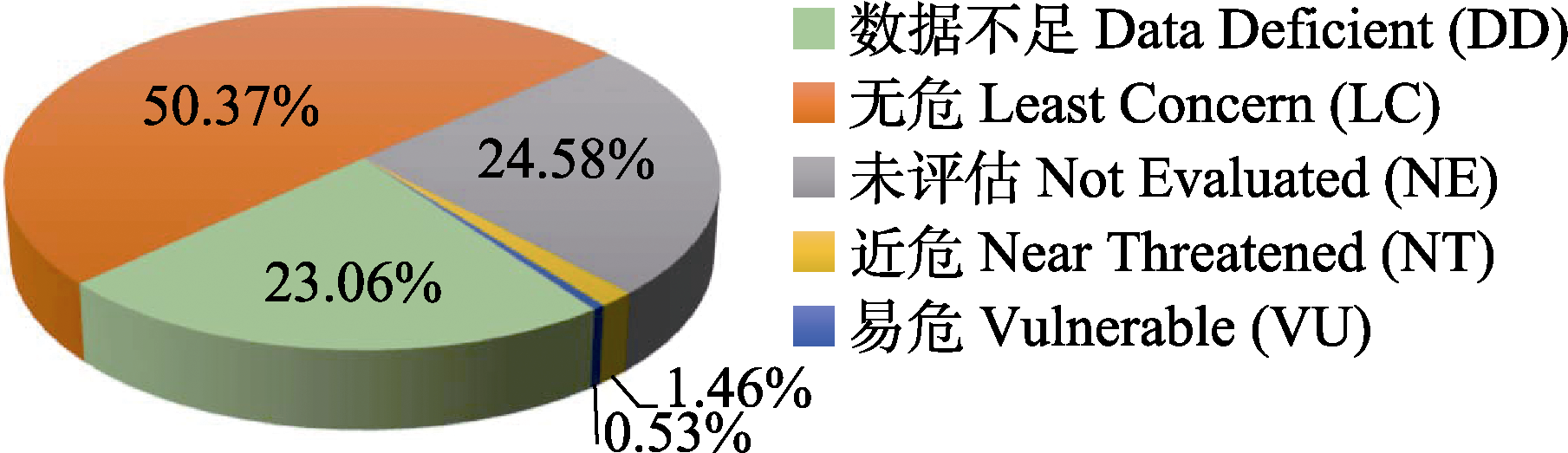
Fig. 1 Proportion of the threat level of macrofungi in the karst areas of southwestern China
| [1] | Bau T, Li HJ, Bao HY, Li Y (2024) A revised checklist of poisonous mushrooms in China. Journal of Fungal Research, 22, 301-321. (in Chinese with English abstract) |
| [图力古尔, 李海蛟, 包海鹰, 李玉 (2024) 中国毒蘑菇新修订名录. 菌物研究, 22, 301-321.] | |
| [2] | Bau T, Li Y (2000) Study on fungal flora diversity in Daqinggou Nature Reserve. Chinese Biodiversity, 8, 73-80. (in Chinese with English abstract) |
| [图力古尔, 李玉 (2000) 大青沟自然保护区大型真菌区系多样性的研究. 生物多样性, 8, 73-80.] | |
| [3] | Bau T, Yang ZL, Chen ZH, Li TH, Li HJ (2025) Poisonous Mushrooms of China. Science Press, Beijing. (in Chinese) |
| [图力古尔, 杨祝良, 陈作红, 李泰辉, 李海蛟 (2025) 中国的毒蘑菇, 科学出版社, 北京.] | |
| [4] |
Cao B, Li GJ, Zhao RL (2019) Species diversity and geographic components of Russula from the Greater and Lesser Khinggan Mountains. Biodiversity Science, 27, 854-866. (in Chinese with English abstract)
DOI |
|
[曹槟, 李国杰, 赵瑞琳 (2019) 大小兴安岭地区红菇属物种多样性及其地理成分. 生物多样性, 27, 854-866.]
DOI |
|
| [5] |
Chang JY, Li Q, Zhai L, Liao CJ, Qi XK, Zhang Y, Wang KL (2024) Comprehensive assessment of rocky desertification treatment in Southwest China karst. Land Degradation & Development, 35, 3461-3476.
DOI URL |
| [6] |
Clements R, Sodhi NS, Schilthuizen M, Ng PKL (2006) Limestone karsts of Southeast Asia: Imperiled arks of biodiversity. BioScience, 56, 733-742.
DOI URL |
| [7] |
Coleine C, Stajich JE, Selbmann L (2022) Fungi are key players in extreme ecosystems. Trends in Ecology & Evolution, 37, 517-528.
DOI URL |
| [8] | Dai YC, Zhou LW, Yang ZL, Wen HA, Bau T, Li TH (2010) A revised checklist of edible fungi in China. Mycosystema, 29, 1-21. (in Chinese with English abstract) |
| [戴玉成, 周丽伟, 杨祝良, 文华安, 图力古尔, 李泰辉 (2010) 中国食用菌名录. 菌物学报, 29, 1-21.] | |
| [9] |
Deng WQ, Li TH, Song ZP, Zhang M, Xu JY, Huang H, Zhong XR, Wang CQ, He Y (2020) Floristic analysis and resource evaluation of macrofungi in the Luoxiao Mountains, China. Biodiversity Science, 28, 896-904. (in Chinese with English abstract)
DOI |
|
[邓旺秋, 李泰辉, 宋宗平, 张明, 徐隽彦, 黄浩, 钟祥荣, 王超群, 贺勇 (2020) 罗霄山脉大型真菌区系分析与资源评价. 生物多样性, 28, 896-904.]
DOI |
|
| [10] |
Guo TT, Ding HW, Zhang H, Zeng ZX, Liu XL (2024) Research and prospects on ecosystem services and trade-offs/synergies relationships in the karst regions of southwestern China. Journal of Natural Resources, 39, 1384-1398. (in Chinese with English abstract)
DOI URL |
|
[郭婷婷, 丁洪伟, 张浩, 曾昭霞, 刘孝利 (2024) 中国西南喀斯特地区生态系统服务权衡/协同研究及展望. 自然资源学报, 39, 1384-1398.]
DOI |
|
| [11] |
Hu YQ, Li LY, Liu XZ, Lang N, Qi LL, Li Y (2024) Diversity of macrofungi in the karst area of Sino-Vietnam border in Guangxi, South China. Mycosystema, 43, 240106. (in Chinese with English abstract)
DOI |
|
[胡永强, 李俐颖, 刘栩州, 郎宁, 祁亮亮, 李玉 (2024) 广西中越边境喀斯特地区大型真菌资源多样性. 菌物学报, 43, 240106.]
DOI |
|
| [12] |
Jiang C, Qiu CC, Wu YQ, Zhu SF, Shui W (2025a) Karst Tiankeng is the refuge of microbial diversity in the degraded karst landscape. Land Degradation & Development, 36, 3516-3526.
DOI URL |
| [13] |
Jiang C, Qiu CC, Wu YQ, Zhu SF, Shui W (2025b) Area influences microbial resource limitations in karst fragmented habitats. Applied Soil Ecology, 206, 105875.
DOI URL |
| [14] |
Li GH, Guo XY, Li LM, Ren MX, Wan L, Ding Q, Li JL (2022) Macrofungal diversity in different vegetation types of Hainan Tropical Rainforest National Park. Biodiversity Science, 30, 22110. (in Chinese with English abstract)
DOI |
|
[李国华, 郭向阳, 李霖明, 任明迅, 万玲, 丁琼, 李娟玲 (2022) 海南热带雨林国家公园不同植被类型的大型真菌多样性. 生物多样性, 30, 22110.]
DOI |
|
| [15] |
Li MQ, Yan XF, Ren YF, Zhou LB, Deng XJ (2023) Diversity of macrofungi in Liupanshan National Nature Reserve, Ningxia. Mycosystema, 42, 1889-1905. (in Chinese with English abstract)
DOI |
|
[李敏奇, 闫兴富, 任玉锋, 周立彪, 邓晓娟 (2023) 六盘山国家级自然保护区大型真菌多样性. 菌物学报, 42, 1889-1905.]
DOI |
|
| [16] | Liang XN, Gao YJ, Zhang HY, Zhang Y (2023) Research on macrofungal diversity in southern section portion of Gaoligongshan. Journal of Southwest Forestry University (Natural Sciences), 43, 97-105. (in Chinese with English abstract) |
| [梁香娜, 高玉江, 张海洋, 张颖 (2023) 高黎贡山南段大型真菌多样性研究. 西南林业大学学报(自然科学), 43, 97-105.] | |
| [17] | Lu BY, Wei SW, Li S, Song LR, Wang Q (2024) Resource survey for macrofungi in Qilian Mountain National Nature Reserve Area. Journal of Fungal Research, 22, 142-148. (in Chinese with English abstract) |
| [卢伯宇, 魏书威, 李姝, 宋利茹, 王琦 (2024) 祁连山国家级自然保护区大型真菌资源. 菌物研究, 22, 142-148.] | |
| [18] | Mou GF, Bau T (2023) Fungal composition and characteristics in three karst forests of Guangxi, Southern China. Mycosystema, 42, 1461-1484. (in Chinese with English abstract) |
|
[牟光福, 图力古尔 (2023) 广西喀斯特三主要林区大型真菌区系组成及其特点. 菌物学报, 42, 1461-1484.]
DOI |
|
| [19] |
Niego AGT, Rapior S, Thongklang N, Raspé O, Hyde KD, Mortimer P (2023) Reviewing the contributions of macrofungi to forest ecosystem processes and services. Fungal Biology Reviews, 44, 100294.
DOI URL |
| [20] | Ren J, Wang K, Niu CY, Kang X, Li SM, Wang LA, Liu TZ, Wei TZ, Li GJ (2024) Species diversity and fungal diversity of macrofungi in Yanshan area, North China. Mycosystema, 43, 49-64. (in Chinese with English abstract) |
| [任静, 王科, 牛彩云, 康霞, 李守勉, 王立安, 刘铁志, 魏铁铮, 李国杰 (2024) 燕山地区大型真菌物种多样性及区系组成. 菌物学报, 43, 49-64.] | |
| [21] |
Tang S, Zhu CJ, Gao J, Bian HY (2024) Spatial-temporal variations and influencing factors of water-related ecosystem services in Southwest China under complex terrain. Journal of Soil and Water Conservation, 38, 244-252. (in Chinese with English abstract)
DOI URL |
| [唐霜, 朱崇京, 高洁, 卞鸿雁 (2024) 复杂地形下西南地区水生态系统服务时空变化与影响因素分析. 水土保持学报, 38, 244-252.] | |
| [22] | Wang J, Liu DM, Zhang J, Wang M, Deng CY, Wen TC (2024) Macrofungal diversity and its characteristics in the western priority area of Wuling Mountains. Mycosystema, 43, 190-205. (in Chinese with English abstract) |
| [王晶, 刘冬梅, 张菁, 王敏, 邓春英, 文庭池 (2024) 武陵山西部优先区大型真菌多样性及其特点. 菌物学报, 43, 190-205.] | |
| [23] |
Wang Y, Liu S, Ji X, Sun YF, Song CG, Liu DM, Cui BK (2021) Species diversity and floristic composition of polypores in the southern parts of Hengduan Mountains, Southwest China. Mycosystema, 40, 2599-2619. (in Chinese with English abstract)
DOI |
|
[王妍, 刘顺, 冀星, 孙一翡, 宋长阁, 刘冬梅, 崔宝凯 (2021) 横断山区南段多孔菌的多样性与区系成分分析. 菌物学报, 40, 2599-2619.]
DOI |
|
| [24] |
Wu F, Zhou LW, Yang ZL, Bau T, Li TH, Dai YC (2019) Resource diversity of Chinese macrofungi: Edible, medicinal and poisonous species. Fungal Diversity, 98, 1-76.
DOI |
| [25] | Wu XL, Li TH, Song B (2004) Ecological distributions and resources review of mcrofungi from Maolan karst forest area in Guizhou Province. Guizhou Science, 22(1), 31-46, 61. (in Chinese with English abstract) |
| [吴兴亮, 李泰辉, 宋斌 (2004) 贵州茂兰喀斯特林区大型真菌生态分布及资源评价. 贵州科学, 22(1), 31-46, 61.] | |
| [26] |
Xu WQ, Li Y, Li HJ, Liu DM, Yang N, Zhang Q, He SH (2023) Species diversity and resource evaluation of macrofungi in Beijing. Biodiversity Science, 31, 23196. (in Chinese with English abstract)
DOI |
|
[徐维启, 李玥, 李海蛟, 刘冬梅, 杨宁, 张琦, 何双辉 (2023) 北京市大型真菌物种多样性调查与资源评价. 生物多样性, 31, 23196.]
DOI |
|
| [27] |
Yan Y, Mo JY, Jin J, Huang YQ, Hu BQ, Shi SN (2024) Spatio-temporal patterns of meteorological drought and impact on vegetation in karst region and non-karst region of Southwest China. Scientia Geographica Sinica, 44, 1275-1285. (in Chinese with English abstract)
DOI |
|
[闫妍, 莫金宇, 靳佳, 黄玉清, 胡宝清, 史莎娜 (2024) 西南喀斯特地区与非喀斯特地区气象干旱时空特征及其对植被的影响. 地理科学, 44, 1275-1285.]
DOI |
|
| [28] |
Yang JB, Wang XH, Wang KY, Zeng DJ, Mo L, Li S, Fang BZ, Rekadwad B, Li WJ, Pu GZ (2025) Mature Tiankengs are biodiversity hotspots of soil microorganisms in the karst region. Ecological Indicators, 170, 113034.
DOI URL |
| [29] |
Yang M, Zhang J, Bai JW, Guo JG, Qu YH, Li HP (2021) Species diversity of macrofungi in the Wuling Mountain National Nature Reserve. Biodiversity Science, 29, 1229-1235. (in Chinese with English abstract)
DOI URL |
| [杨苗, 张杰, 白嘉伟, 郭建刚, 曲亚辉, 李会平 (2021) 雾灵山国家级自然保护区大型真菌物种多样性. 生物多样性, 29, 1229-1235.] | |
| [30] | Yuan WL, Zhou X, Li HG, Zhang WB, Ran GY, Ren F (2024) Characteristics of natural ecosystem vulnerability changes in southwest karst region of China under context of ecological restoration. Resources and Environment in the Yangtze Basin, 33, 2699-2712. (in Chinese with English abstract) |
| [袁稳玲, 周旭, 李洪广, 张文彬, 冉光艳, 任芳 (2024) 生态恢复背景下西南喀斯特地区自然生态系统脆弱性变化特征. 长江流域资源与环境, 33, 2699-2712.] | |
| [31] | Zhang P (2017) Diversity of Macrofungi in the Greater and Lesser Khinggan Mountains. PhD dissertation, Jilin Agricultural University, Changchun. (in Chinese with English abstract) |
| [张鹏 (2017) 大小兴安岭地区大型真菌多样性研究. 博士学位论文, 吉林农业大学, 长春.] | |
| [32] |
Zhao RL (2023) Edible and medicinal macrofungi. Journal of Fungi, 9, 908.
DOI URL |
| [1] | Lijie Zhou, Minhui Huang, Huaijiang He, Yanxia Cheng, Chunyu Zhang, Xiuhai Zhao. Disentangling the patterns, components, and influencing factors of forest β diversity in the Xiaoxing’an Mountains, Northeast China [J]. Biodiv Sci, 2026, 34(4): 25443-. |
| [2] | Yunyue Peng, Kui Peng, Xinran Liu, Tianyi Sun, Xiaoquan Zhang. Corporate engagement pathways, market development barriers and recommendations for biodiversity credits [J]. Biodiv Sci, 2026, 34(4): 26031-. |
| [3] | Boyao Li, Tiancheng Sheng, Xiaoyun Xing. Impact of biodiversity risk on corporate financial performance: Evidence from listed companies in China [J]. Biodiv Sci, 2026, 34(4): 25330-. |
| [4] | Hao Liu, Yuxiao Zhang, Bing Liu, Feifei Li, Hongzheng Ma, Haining Qin, Dezhu Li, Wenli Chen. Diversity and checklist of grasses (Poaceae) in China [J]. Biodiv Sci, 2026, 34(4): 25438-. |
| [5] | Ziyi Kong, Degang Wang, Jiantao Wang, Zhiyong Pei, Jing Sun, Changchun Zhang, Junguo Zhang. Wildlife pose estimation based on the SCD-HRNet model and its application in biodiversity monitoring: A case study of the Saihanwula Region, Inner Mongolia [J]. Biodiv Sci, 2026, 34(4): 25287-. |
| [6] | Haoyou Zhu, Youbing Zhou, Yi Luo, Zhaomin Zhou. Changes in breeding bird community in an urban area of Nanchong over two decades [J]. Biodiv Sci, 2026, 34(3): 24560-. |
| [7] | Shuyu Hou, Yingying Liu, Rui Yang. Progress of international OECMs practices under the Kunming-Montreal Global Biodiversity Framework and pathways for localization in China [J]. Biodiv Sci, 2026, 34(3): 25264-. |
| [8] | Xiaofan Cheng, Qingyuan Li, Yuanhui Li, Mingxiang Zhang. The dilemmas and solutions for invasive alien species governance policy systems [J]. Biodiv Sci, 2026, 34(2): 25332-. |
| [9] | Lulu Chen, Haoting Tang, Hong Leng, Qing Yuan, Xinyue Yang. Impacts of urban block built environments on biodiversity—A review and outlook [J]. Biodiv Sci, 2026, 34(2): 25286-. |
| [10] | Wenqi Gao, Jingrong Xiang, Yao Zhao, Lingshuang Fan, Yuan Gu, Weihan Shao, Gaojun Li, Guangjun Zhao, Mingbin Chen, Xingwei Cai, Kai Chen. Stream fish community characteristics and their response to land use in Limushan and Jianfengling of Hainan Tropical Rainforest National Park [J]. Biodiv Sci, 2026, 34(2): 25374-. |
| [11] | Xiaoqiang Lu, Dan Rui, Jiangfeng Zhang, Bingxin Yin, Yulu Wang, Yuting Cen, Yichen Cui, Wanxia Yang. Impacts of nitrogen inputs-driven key ecological processes on biodiversity and their management implications [J]. Biodiv Sci, 2026, 34(2): 25368-. |
| [12] | Xuri Zhang, Biao Luo, Tong Zhao, Dan Huang, Weiming Ai. Fish diversity of Zhejiang Province: Inventory, distribution and conservation [J]. Biodiv Sci, 2026, 34(2): 25225-. |
| [13] | Haiou Liu, Zhiming Hao, Leshan Du, Wenhui Liu, Ziyuan Li, Lei Liu. Progress, challenges, and insights on the operation of the Global Biodiversity Framework Fund [J]. Biodiv Sci, 2026, 34(2): 25463-. |
| [14] | Xi Luo, Qifang Wang, Jianjia Wang, Qianxi Yang, Hongfei Fang, Miao Hong, Qi Zhang, Ling Cai, Xijie Zhou, Dingyong Huang, Xinqing Zheng. Newly recorded coral species near the region of Dongshan, Fujian Province expands the biodiversity of the northernmost scleractinian communities of China [J]. Biodiv Sci, 2026, 34(2): 25335-. |
| [15] | Jiangjian Xie, Mengkun Zhu, Aiwu Jiang, Zhishu Xiao. Future of listening to biodiversity: Limitations and development directions of soundscape-based automatic assessment methods [J]. Biodiv Sci, 2026, 34(2): 25296-. |
| Viewed | ||||||
|
Full text |
|
|||||
|
Abstract |
|
|||||
Copyright © 2026 Biodiversity Science
Editorial Office of Biodiversity Science, 20 Nanxincun, Xiangshan, Beijing 100093, China
Tel: 010-62836137, 62836665 E-mail: biodiversity@ibcas.ac.cn

