

Biodiv Sci ›› 2026, Vol. 34 ›› Issue (2): 25463. DOI: 10.17520/biods.2025463 cstr: 32101.14.biods.2025463
• Conservation and Governance • Previous Articles
Haiou Liu1, Zhiming Hao3, Leshan Du1, Wenhui Liu1, Ziyuan Li1, Lei Liu2,*( )
)
Received:2025-11-19
Accepted:2026-01-26
Online:2026-02-20
Published:2026-03-23
Contact:
Lei Liu
Supported by:Haiou Liu, Zhiming Hao, Leshan Du, Wenhui Liu, Ziyuan Li, Lei Liu. Progress, challenges, and insights on the operation of the Global Biodiversity Framework Fund[J]. Biodiv Sci, 2026, 34(2): 25463.
| 捐资方 Contributors | 捐资额度 Donation amount | 美元等值(万美元) USD equivalent (× 104 USD)① |
|---|---|---|
| 加拿大 Canada | 2亿加元 CAD 200,000,000 | 14,411 |
| 英国 United Kingdom | 5,500万英镑 GBP 55,000,000 | 7,091 |
| 德国 Germany | 9,000万欧元 EUR 90,000,000 | 9,622 |
| 日本 Japan | 6.5亿日元 JPY 650,000,000 | 428 |
| 西班牙 Spain | 1,000万欧元 EUR 10,000,000 | 1,090 |
| 卢森堡 Luxembourg | 700万欧元 EUR 7,000,000 | 761 |
| 奥地利 Austria | 300万欧元 EUR 3,000,000 | 311 |
| 丹麦 Denmark | 1亿丹麦克朗 DKK 100,000,000 | 1,411 |
| 法国 France | 500万欧元 EUR 5,000,000 | 520 |
| 新西兰 New Zealand | 2,000万新西兰元 NZD 20,000,000 | 1,213 |
| 挪威 Norway | 1.5亿挪威克朗 NOK 150,000,000 | 1,317 |
| 加拿大(魁北克省) Canada (Quebec) | 200万加元 CAD 2,000,000 | 143 |
| 合计 Total | 38,318 |
Table 1 Pledges status of Global Biodiversity Framework Fund (GBFF)
| 捐资方 Contributors | 捐资额度 Donation amount | 美元等值(万美元) USD equivalent (× 104 USD)① |
|---|---|---|
| 加拿大 Canada | 2亿加元 CAD 200,000,000 | 14,411 |
| 英国 United Kingdom | 5,500万英镑 GBP 55,000,000 | 7,091 |
| 德国 Germany | 9,000万欧元 EUR 90,000,000 | 9,622 |
| 日本 Japan | 6.5亿日元 JPY 650,000,000 | 428 |
| 西班牙 Spain | 1,000万欧元 EUR 10,000,000 | 1,090 |
| 卢森堡 Luxembourg | 700万欧元 EUR 7,000,000 | 761 |
| 奥地利 Austria | 300万欧元 EUR 3,000,000 | 311 |
| 丹麦 Denmark | 1亿丹麦克朗 DKK 100,000,000 | 1,411 |
| 法国 France | 500万欧元 EUR 5,000,000 | 520 |
| 新西兰 New Zealand | 2,000万新西兰元 NZD 20,000,000 | 1,213 |
| 挪威 Norway | 1.5亿挪威克朗 NOK 150,000,000 | 1,317 |
| 加拿大(魁北克省) Canada (Quebec) | 200万加元 CAD 2,000,000 | 143 |
| 合计 Total | 38,318 |
| 地区 Region | 获批项目金额(百万美元) Resources approved (million USD) | 占总金额比例 Percentage of the total amount (%) | 项目数量 Number of projects | 占总项目数比例 Percentage of the total number of projects (%) |
|---|---|---|---|---|
| 非洲 Africa | 63.19 | 31 | 14 | 35 |
| 亚洲 Asia | 49.57 | 25 | 12 | 30 |
| 欧洲及中亚 Europe & Central Asia | 1.74 | 1 | 2 | 5 |
| 拉丁美洲和加勒比地区 Latin America & Caribbean | 87.12 | 43 | 12 | 30 |
| 总计 Total | 201.62 | 100 | 40 | 100 |
Table 2 Geographic distribution of Global Biodiversity Framework Fund (GBFF) projects
| 地区 Region | 获批项目金额(百万美元) Resources approved (million USD) | 占总金额比例 Percentage of the total amount (%) | 项目数量 Number of projects | 占总项目数比例 Percentage of the total number of projects (%) |
|---|---|---|---|---|
| 非洲 Africa | 63.19 | 31 | 14 | 35 |
| 亚洲 Asia | 49.57 | 25 | 12 | 30 |
| 欧洲及中亚 Europe & Central Asia | 1.74 | 1 | 2 | 5 |
| 拉丁美洲和加勒比地区 Latin America & Caribbean | 87.12 | 43 | 12 | 30 |
| 总计 Total | 201.62 | 100 | 40 | 100 |
| 资金规模 Funding size | 项目数量 Number of projects | 占总项目数比例 Share of total projects (%) |
|---|---|---|
| 1,000万美元以上 Funding exceeding USD 10 million | 4 | 10 |
| 500-1,000万美元(含1,000万美元) Funding of USD 5-10 million (including USD 10 million) | 9 | 22 |
| 200-500万美元(含500万美元) Funding of USD 2-5 million (including USD 5 million) | 15 | 38 |
| 200万美元以下(含200万美元) Funding of USD 2 million or less | 12 | 30 |
| 总计 Total | 40 | 100 |
Table 3 Number of approved GBFF projects by funding size
| 资金规模 Funding size | 项目数量 Number of projects | 占总项目数比例 Share of total projects (%) |
|---|---|---|
| 1,000万美元以上 Funding exceeding USD 10 million | 4 | 10 |
| 500-1,000万美元(含1,000万美元) Funding of USD 5-10 million (including USD 10 million) | 9 | 22 |
| 200-500万美元(含500万美元) Funding of USD 2-5 million (including USD 5 million) | 15 | 38 |
| 200万美元以下(含200万美元) Funding of USD 2 million or less | 12 | 30 |
| 总计 Total | 40 | 100 |
| 行动领域 Action areas of GBFF | 支持《昆蒙框架》行动目标 KMGBF targets | 获批项目数 Number of approved projects | 规划资金(百万美元) Allocated funds (million USD) |
|---|---|---|---|
| 1. 生物多样性保护、恢复、土地/海洋利用与空间规划 Biodiversity conservation, restoration, land/sea-use, and spatial planning | 行动目标1 (空间规划)、2 (生态系统恢复)、3 (保护地和其他有效区域保护措施) Target 1 (improve conservation), Target 2 (improve restoration), Target 3 (protected area and other effective area-based conservation measures (OECMs)) | 31 | 92.1 |
| 2. 支持原住民和地方社区对土地、领地和水域的管理和治理 Support to indigenous peoples and local communities stewardship and governance of lands, territories, and waters | 行动目标1 (空间规划)、2 (生态系统恢复)、3 (保护地和其他有效区域保护措施)、22 (公平参与) Target 1 (improve conservation), Target 2 (improve restoration), Target 3 (protected area and OECMs), Target 22 (inclusive and equitable participation) | 25 | 55.5 |
| 3. 政策协调与制定 Policy alignment and development | 行动目标14 (主流化)、15 (信息披露)、18 (激励措施) Target 14 (biodiversity mainstreaming), Target 15 (information disclosure), Target 18 (incentive measures) | 10 | 5.7 |
| 4. 资源调动 Resource mobilization | 行动目标18 (激励措施)、19 (资源调动) Target 18 (incentive measures), Target 19 (mobilize domestic resources) | 15 | 19.6 |
| 5. 生物多样性可持续利用 Sustainable use of biodiversity | 行动目标5 (野生物种采猎和贸易)、9 (野生物种可持续管理) Target 5 (wildlife harvesting and trade), Target 9 (sustainable management of wild species) | 7 | 7.5 |
| 6. 生产行业的生物多样性主流化 Biodiversity mainstreaming in production sectors | 行动目标7 (减少污染)、10 (农业生物多样性) Target 7 (reduce pollution), Target 10 (agricultural biodiversity) | 14 | 16.2 |
| 7. 外来入侵物种的管理和控制 Invasion of alien species management and control | 行动目标6 (外来物种入侵) Target 6 (invasive alien species) | 2 | 1.7 |
| 8. 议定书实施能力建设 Capacity building and implementation support for protocols | 行动目标13 (惠益分享)、17 (生物安全) Target 13 (benefit-sharing), Target 17 (biosafety) | 3 | 3.2 |
Table 4 Funding allocated across action areas of Global Biodiversity Frame Fund (GBFF) and its alignment with the targets of Kunming-Montreal Global Biodiversity Frame (KMGBF)
| 行动领域 Action areas of GBFF | 支持《昆蒙框架》行动目标 KMGBF targets | 获批项目数 Number of approved projects | 规划资金(百万美元) Allocated funds (million USD) |
|---|---|---|---|
| 1. 生物多样性保护、恢复、土地/海洋利用与空间规划 Biodiversity conservation, restoration, land/sea-use, and spatial planning | 行动目标1 (空间规划)、2 (生态系统恢复)、3 (保护地和其他有效区域保护措施) Target 1 (improve conservation), Target 2 (improve restoration), Target 3 (protected area and other effective area-based conservation measures (OECMs)) | 31 | 92.1 |
| 2. 支持原住民和地方社区对土地、领地和水域的管理和治理 Support to indigenous peoples and local communities stewardship and governance of lands, territories, and waters | 行动目标1 (空间规划)、2 (生态系统恢复)、3 (保护地和其他有效区域保护措施)、22 (公平参与) Target 1 (improve conservation), Target 2 (improve restoration), Target 3 (protected area and OECMs), Target 22 (inclusive and equitable participation) | 25 | 55.5 |
| 3. 政策协调与制定 Policy alignment and development | 行动目标14 (主流化)、15 (信息披露)、18 (激励措施) Target 14 (biodiversity mainstreaming), Target 15 (information disclosure), Target 18 (incentive measures) | 10 | 5.7 |
| 4. 资源调动 Resource mobilization | 行动目标18 (激励措施)、19 (资源调动) Target 18 (incentive measures), Target 19 (mobilize domestic resources) | 15 | 19.6 |
| 5. 生物多样性可持续利用 Sustainable use of biodiversity | 行动目标5 (野生物种采猎和贸易)、9 (野生物种可持续管理) Target 5 (wildlife harvesting and trade), Target 9 (sustainable management of wild species) | 7 | 7.5 |
| 6. 生产行业的生物多样性主流化 Biodiversity mainstreaming in production sectors | 行动目标7 (减少污染)、10 (农业生物多样性) Target 7 (reduce pollution), Target 10 (agricultural biodiversity) | 14 | 16.2 |
| 7. 外来入侵物种的管理和控制 Invasion of alien species management and control | 行动目标6 (外来物种入侵) Target 6 (invasive alien species) | 2 | 1.7 |
| 8. 议定书实施能力建设 Capacity building and implementation support for protocols | 行动目标13 (惠益分享)、17 (生物安全) Target 13 (benefit-sharing), Target 17 (biosafety) | 3 | 3.2 |
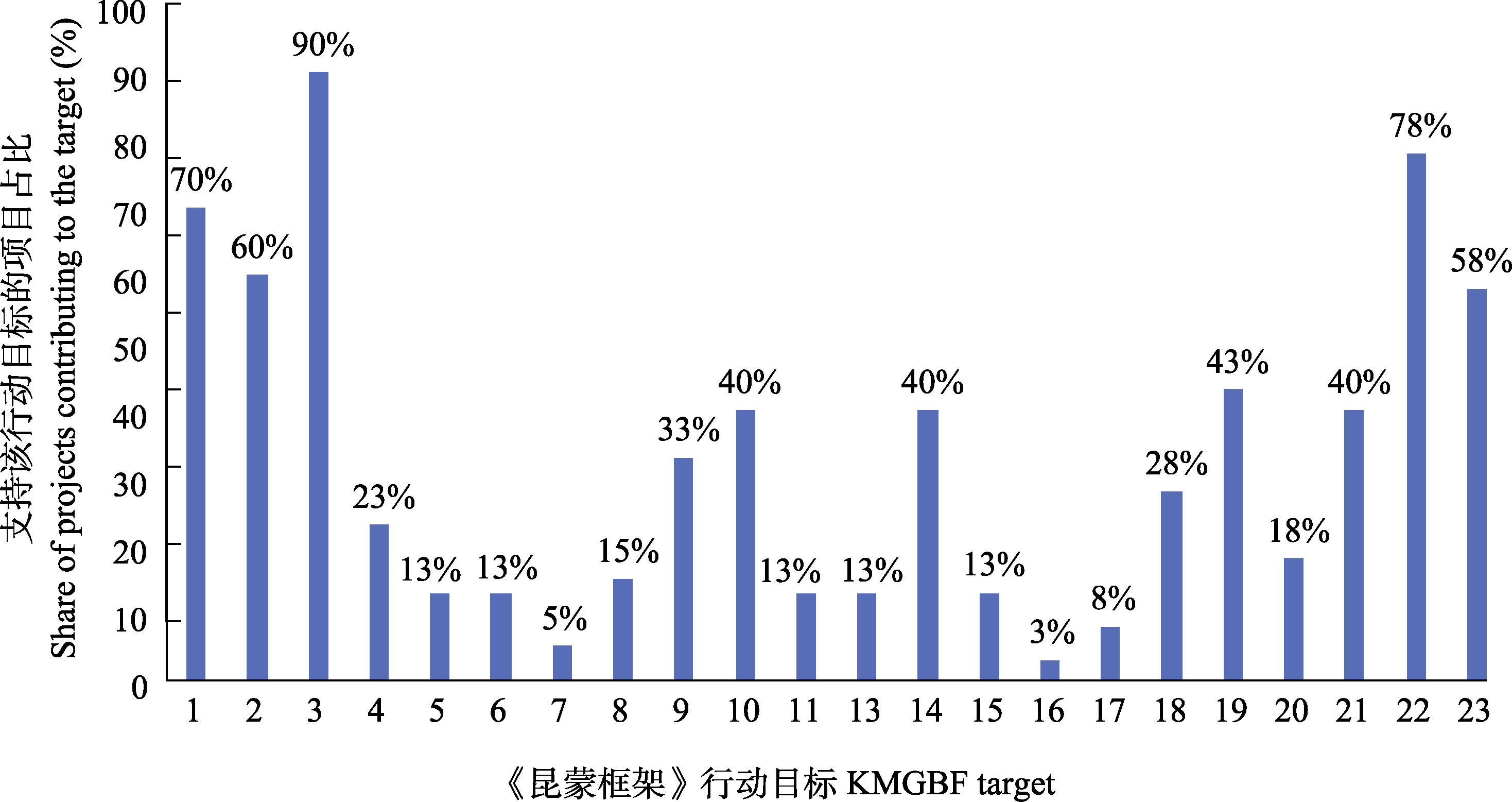
Fig. 1 Contribution of Global Biodiversity Framework Fund (GBFF) projects to Kunming-Montreal Global Biodiversity Framework (KMGBF) targets (share of projects)
| [1] | CBD (Convention on Biological Diversity) (2024) Exploration of the Biodiversity Finance Landscape. https://www.cbd.int/doc/c/8d7f/55df/1d2dbb096d00be743f006a05/rm-ac-2024-01-02-en.pdf. (accessed on 2025-09-30) |
| [2] | Dasgupta P (2021) The Economics of Biodiversity: The Dasgupta Review. HM Treasury, London. |
| [3] | GEF (Global Environment Facility) (2023a) Establishment of a New Trust Fund: The Global Biodiversity Framework Fund.https://www.thegef.org/council-meeting-documents/gef-c-64-05-rev-01. (accessed on 2025-09-30) |
| [4] | GEF (Global Environment Facility) (2023b) Programming Directions for the Global Biodiversity Framework Fund. https://www.thegef.org/council-meeting-documents/gef-c-64-06-rev-02. (accessed on 2025-09-30) |
| [5] | GEF (Global Environment Facility) (2024) Policy on Allocation of Resources for the Global Biodiversity Framework Fund. https://www.thegef.org/council-meeting-documents/gef-gbff-01-03-rev-03. (accessed on 2025-09-30) |
| [6] | GEF (Global Environment Facility) (2025a) Progress Report on the Global Biodiversity Framework Fund. https://www.thegef.org/sites/default/files/documents/2025-05/GEF-GBFF.04.03_Progress%20Report%20on%20the%20Global%20Biodiversity%20Framework%20Fund.pdf. (accessed on 2025-09-30) |
| [7] | GEF (Global Environment Facility) (2025b) Country Maximum Dollar Value of Funding Request(s) for the Second Programming Tranche of the GBFF. https://www.thegef.org/council-meeting-documents/gef-gbff-05-inf-01. (accessed on 2025-09-30) |
| [8] | GEF IEO (Global Environment Facility Independent Evaluation Office) (2025a) Evaluation of Cofinancing in the GEF. Evaluation Report No. 168. GEF IEO, Washington, DC. |
| [9] | GEF IEO (Global Environment Facility Independent Evaluation Office) (2025b) Eighth Comprehensive Evaluation of the GEF (OPS8). GEF IEO, Washington, DC. |
| [10] | IPBES (Intergovernmental Science-Policy Platform on Biodiversity and Ecosystem Services) (2019) Global Assessment Report on Biodiversity and Ecosystem Services. IPBES Secretariat, Bonn. |
| [11] | IPBES (Intergovernmental Science-Policy Platform on Biodiversity and Ecosystem Services) (2024a) Summary for Policymakers of the Thematic Assessment Report on the Underlying Causes of Biodiversity Loss and the Determinants of Transformative Change and Options for Achieving the 2050 Vision for Biodiversity. IPBES Secretariat, Bonn. |
| [12] | IPBES (Intergovernmental Science-Policy Platform on Biodiversity and Ecosystem Services) (2024b) Thematic Assessment Report on the Interlinkages among Biodiversity, Water, Food, and Health (The Nexus Assessment). IPBES Secretariat, Bonn. |
| [13] |
Li YX, Li YY, Zhang YXY, Liu WH (2023) The progress and prospect of the financial arrangements under the Convention on Biological Diversity. Biodiversity Science, 31, 23077. (in Chinese with English abstract)
DOI |
|
[李亦欣, 李圆圆, 张杨心怡, 刘文慧 (2023) 《生物多样性公约》资金问题最新进展及展望. 生物多样性, 31, 23077.]
DOI |
|
| [14] |
Liu HO, Du LS, Liu WH, Li ZY, Pan LB, Liu L (2024) Analysis on Global Biodiversity Framework Fund Management Policy. Biodiversity Science, 32, 23334. (in Chinese with English abstract)
DOI URL |
|
[刘海鸥, 杜乐山, 刘文慧, 李子圆, 潘立波, 刘蕾 (2024) 全球生物多样性框架基金管理政策分析与启示. 生物多样性, 32, 23334.]
DOI |
|
| [15] | Richardson K, Steffen W, Lucht W, Bendtsen J, Cornell SE, Donges JF, Drüke M, Fetzer I, Bala G, von Bloh W, Feulner G, Fiedler S, Gerten D, Gleeson T, Hofmann M, Huiskamp W, Kummu M, Mohan C, Nogués-Bravo D, Petri S, Porkka M, Rahmstorf S, Schaphoff S, Thonicke K, Tobian A, Virkki V, Wang-Erlandsson L, Weber L, Rockström J (2023) Earth beyond six of nine planetary boundaries. Science Advances, 9, eadh2458. |
| [16] | WWF (World Wide Fund for Nature) (2024) Living Planet Report 2024—A System in Peril. WWF, Gland, Switzerland. |
| Viewed | ||||||
|
Full text |
|
|||||
|
Abstract |
|
|||||
Copyright © 2026 Biodiversity Science
Editorial Office of Biodiversity Science, 20 Nanxincun, Xiangshan, Beijing 100093, China
Tel: 010-62836137, 62836665 E-mail: biodiversity@ibcas.ac.cn

