

Biodiv Sci ›› 2026, Vol. 34 ›› Issue (4): 25443. DOI: 10.17520/biods.2025443 cstr: 32101.14.biods.2025443
• Original Papers: Plant Diversity • Previous Articles Next Articles
Lijie Zhou1, Minhui Huang1,*( )(
)( ), Huaijiang He2, Yanxia Cheng1, Chunyu Zhang1(), Xiuhai Zhao1()
Received:2025-11-06
Accepted:2026-01-04
Online:2026-04-20
Published:2026-05-28
Contact:
*E-mail: haomh@bjfu.edu.cn
Supported by:Lijie Zhou, Minhui Huang, Huaijiang He, Yanxia Cheng, Chunyu Zhang, Xiuhai Zhao. Disentangling the patterns, components, and influencing factors of forest β diversity in the Xiaoxing’an Mountains, Northeast China[J]. Biodiv Sci, 2026, 34(4): 25443.
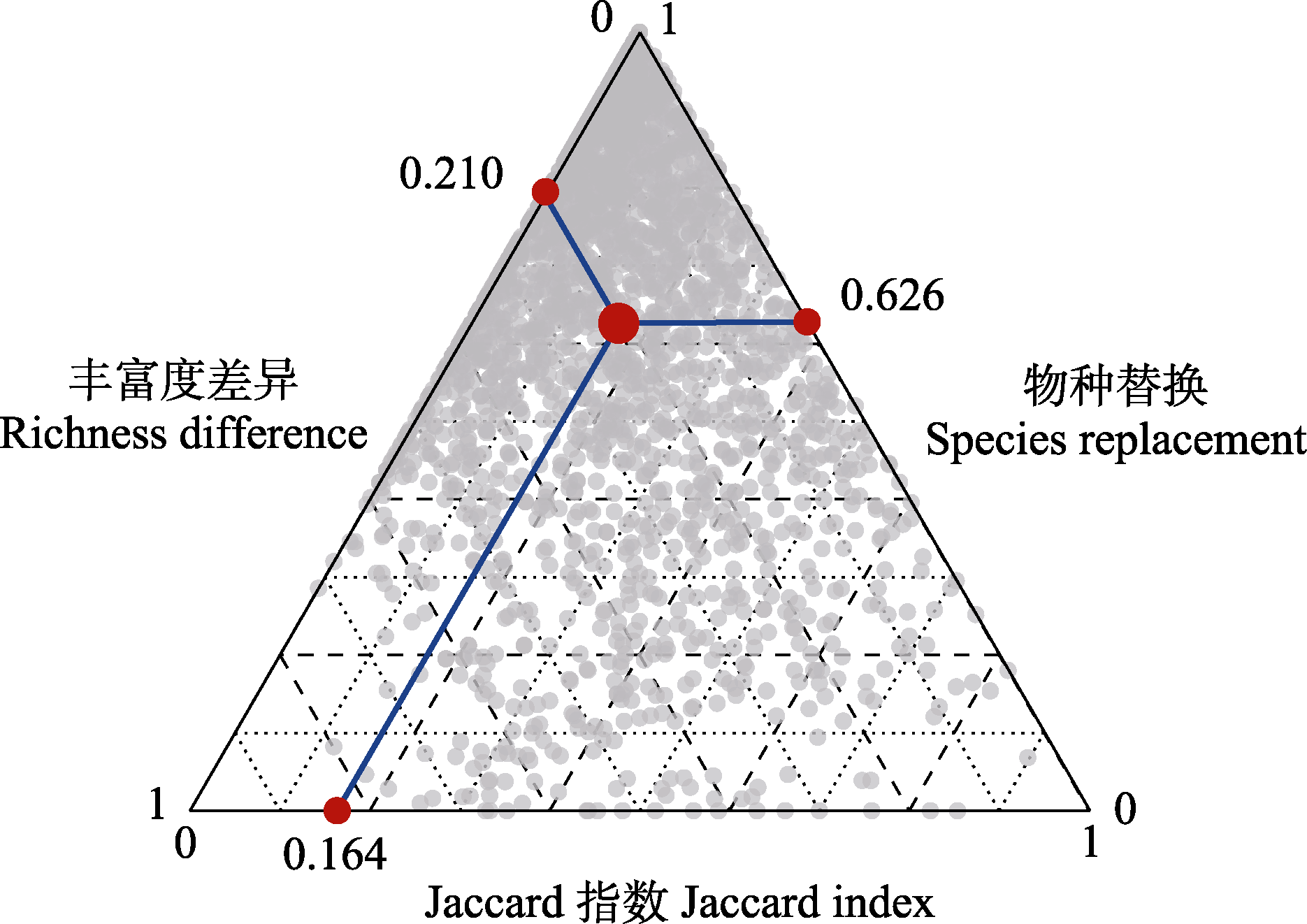
Fig.1 Triangular plot of the species replacement, richness difference, and Jaccard index in the forests of Xiaoxing’an Mountains. Each grey dot represents a pair of sites. The red dots represent the centroid of the point cloud.
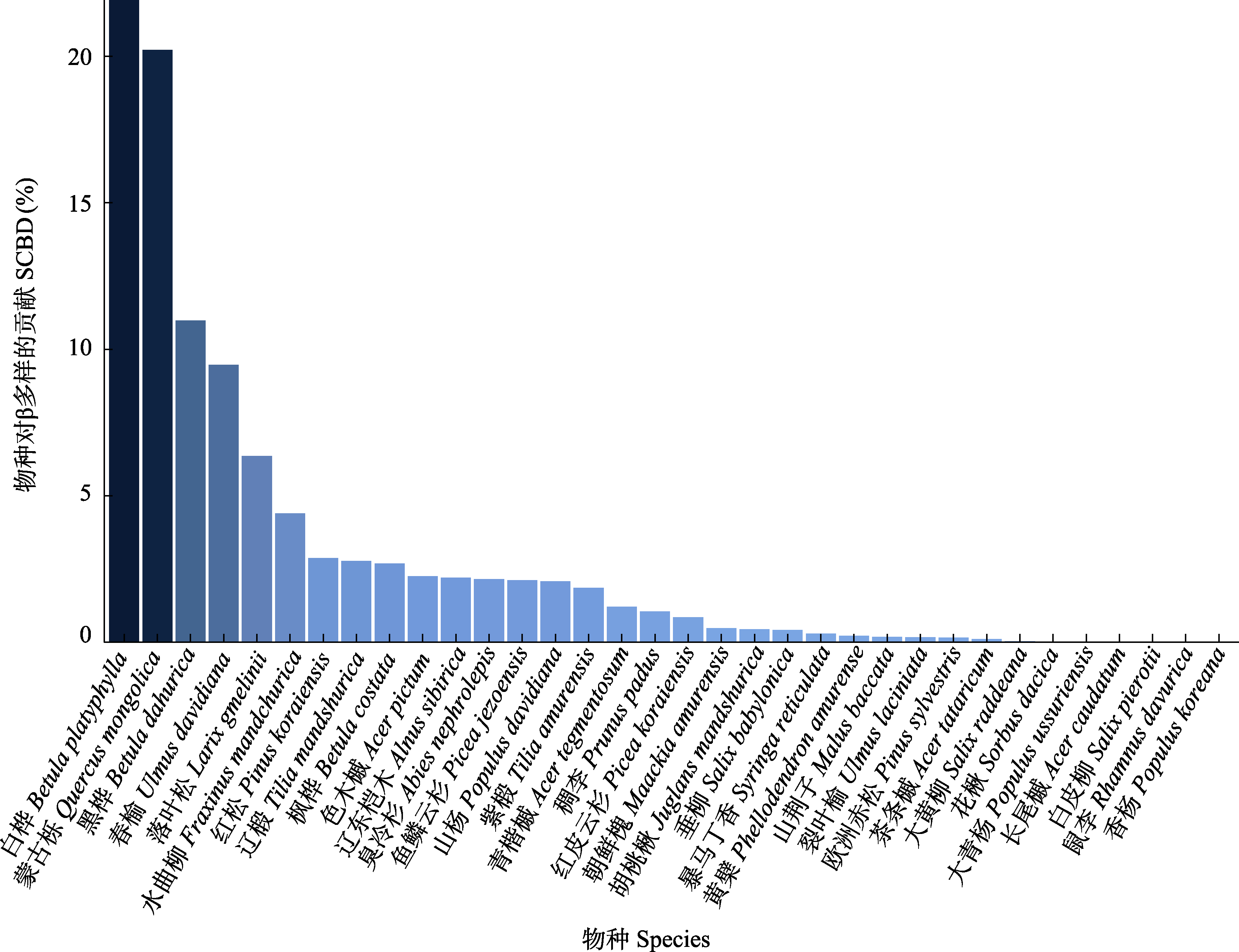
Fig.2 Species contribution to β diversity (SCBD) in the forests of Xiaoxing’an Mountains
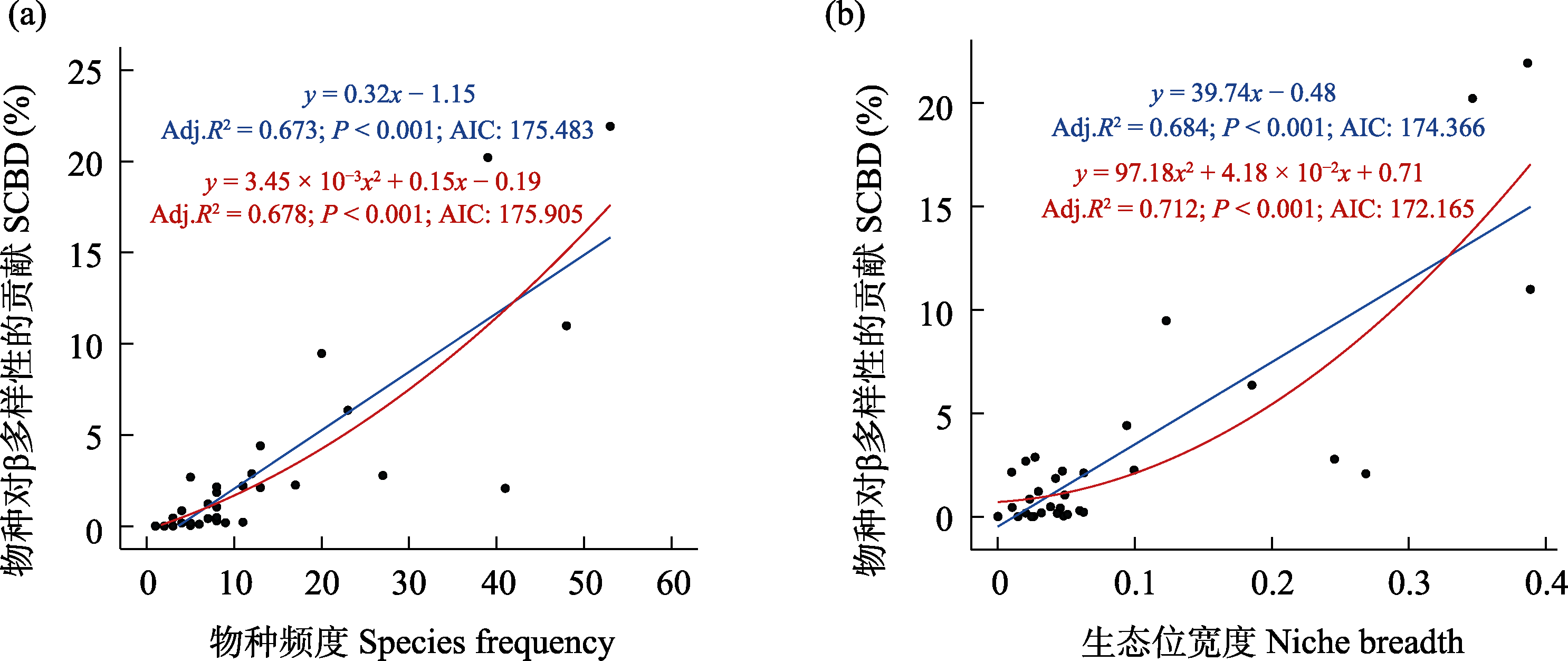
Fig.3 Relationships of species contributions to β diversity (SCBD) with species frequency (a) and niche breadth (b) in the forests of Xiaoxing’an Mountains
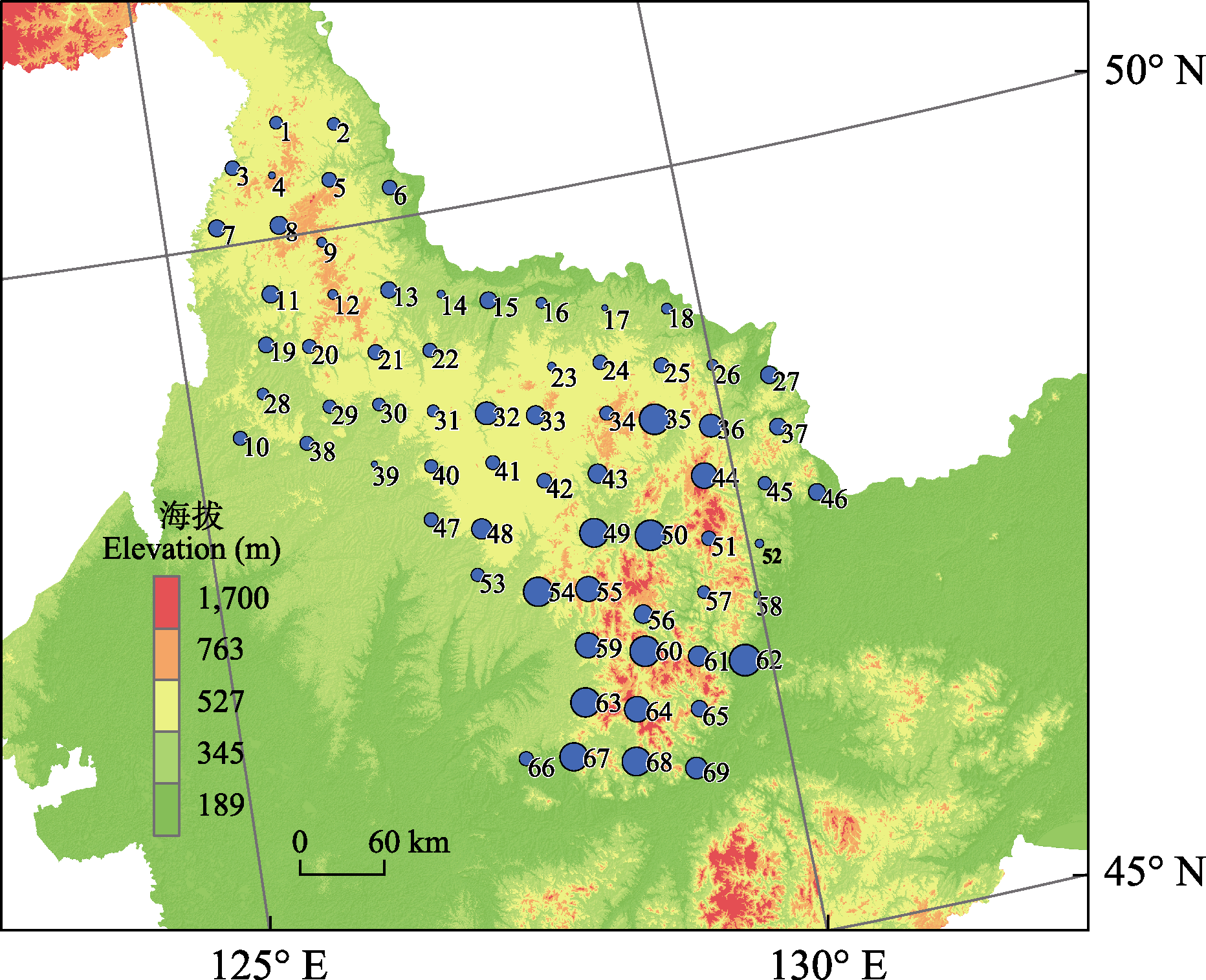
Fig. 4 Map of the spatial pattern of local contribution to β diversity in the forests of Xiaoxing’an Mountains. The numbers represent the plot ID, and circle size is proportional to the contribution value.
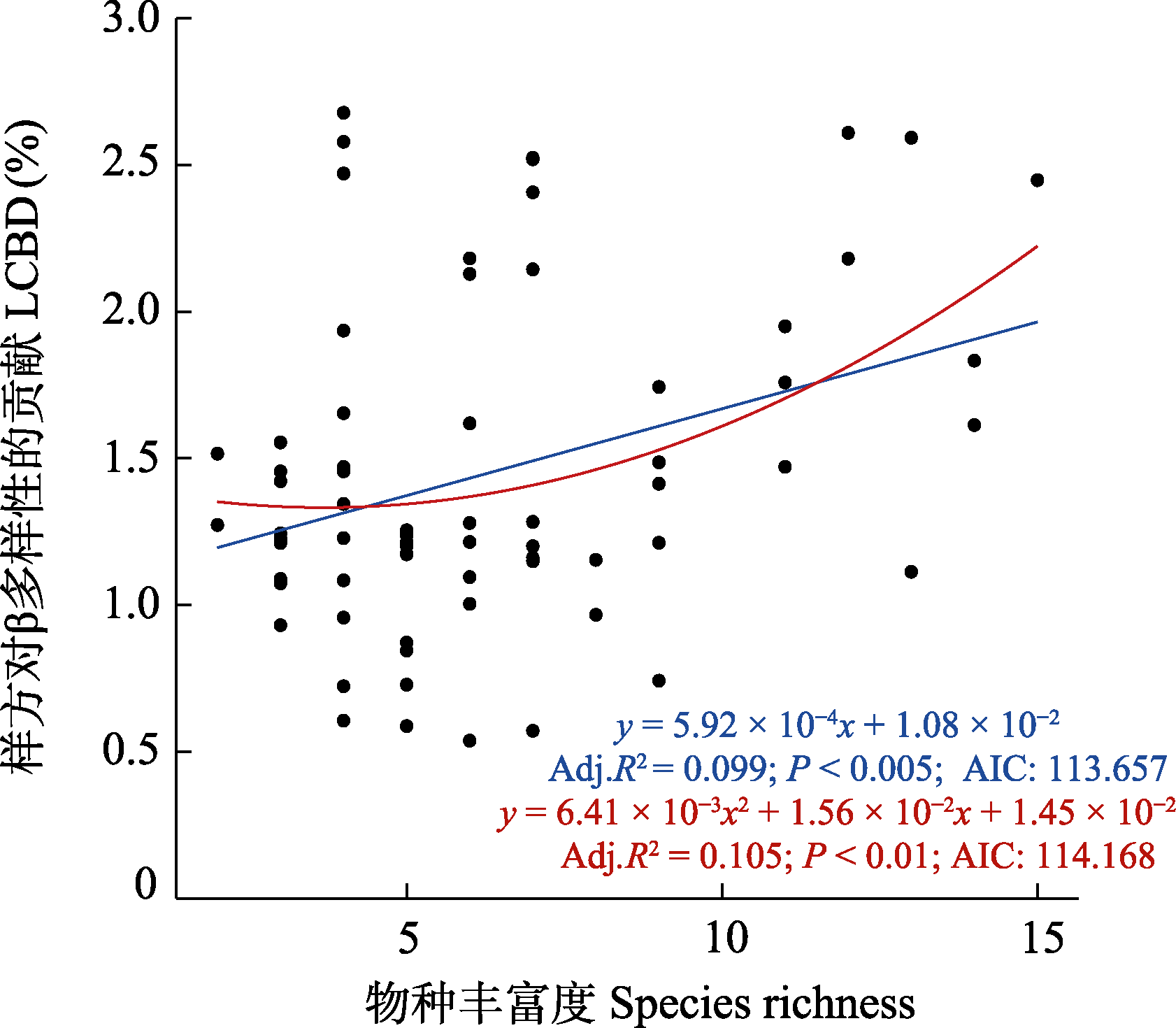
Fig. 5 Relationship between species richness and local contribution to β diversity (LCBD) in the forests of Xiaoxing’an Mountains
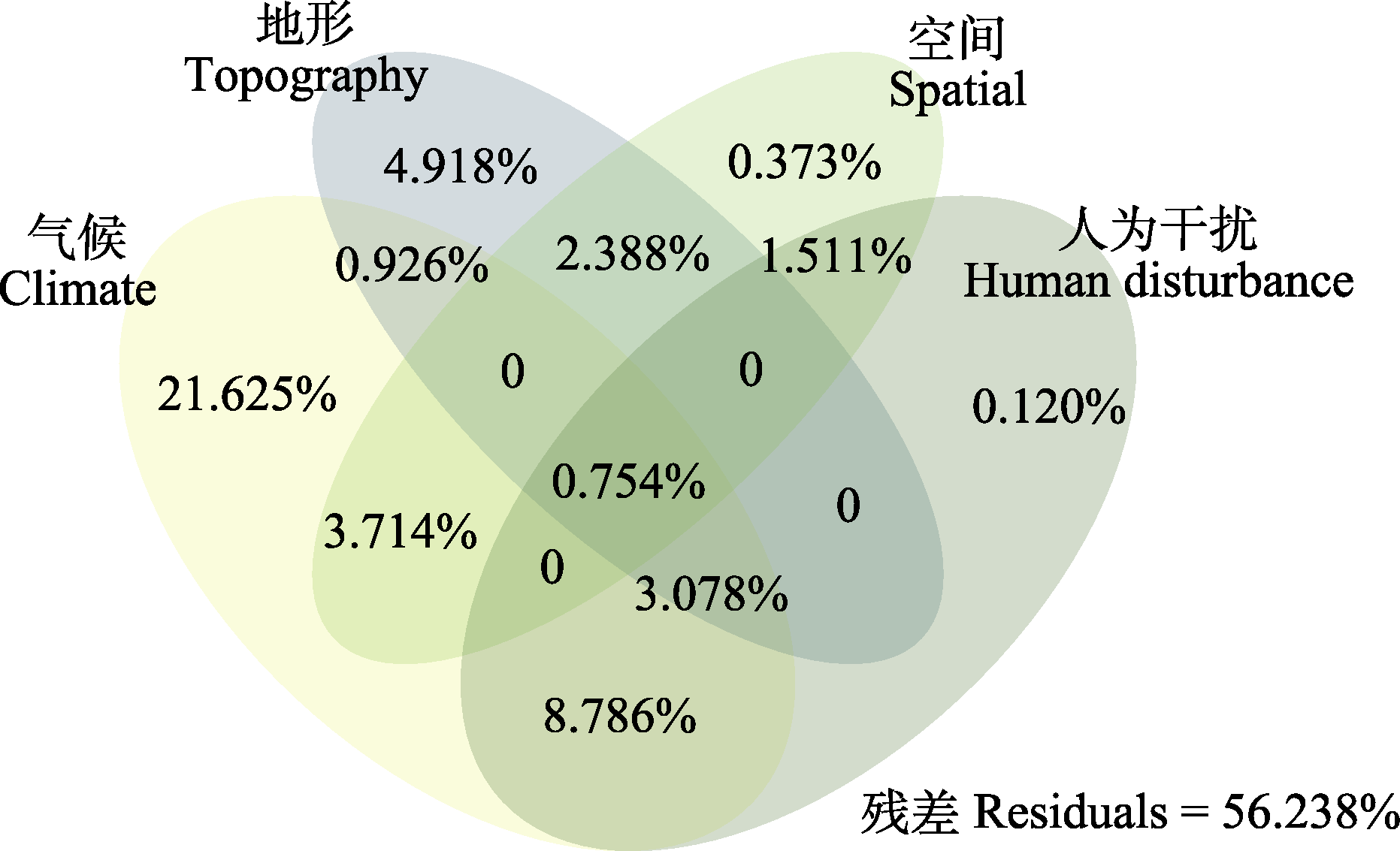
Fig.6 Variance partitioning analysis of the contributions of different factors to community uniqueness (measured by LCBD), minimal explanatory rates are shwon as zero.
| [1] |
Adams MA, Neumann M (2023) Litter accumulation and fire risks show direct and indirect climate-dependence at continental scale. Nature Communications, 14, 1515.
DOI PMID |
| [2] |
Alizadeh MR, Abatzoglou JT, Adamowski J, Modaresi Rad A, AghaKouchak A, Pausata FSR, Sadegh M (2023) Elevation-dependent intensification of fire danger in the western United States. Nature Communications, 14, 1773.
DOI PMID |
| [3] |
Bell G (2000) The distribution of abundance in neutral communities. The American Naturalist, 155, 606-617.
DOI PMID |
| [4] | Carvalho JC, Cardoso P, Gomes P (2012) Determining the relative roles of species replacement and species richness differences in generating beta-diversity patterns. Global Ecology and Biogeography, 21, 760-771. |
| [5] |
Chao A, Chazdon RL, Colwell RK, Shen TJ (2005) A new statistical approach for assessing similarity of species composition with incidence and abundance data. Ecology Letters, 8, 148-159.
DOI URL |
| [6] |
Chen SB, Ouyang ZY, Xu WH, Xiao Y (2010) A review of beta diversity studies. Biodiversity Science, 18, 323-335.(in Chinese with English abstract)
DOI |
|
[陈圣宾, 欧阳志云, 徐卫华, 肖燚 (2010) Beta多样性研究进展. 生物多样性, 18, 323-335.]
DOI |
|
| [7] |
Chen Y, Mao ZK, Wang XG (2024) Research advances and prospects on β diversity based on ecological uniqueness. Biodiversity Science, 32, 24199.(in Chinese with English abstract)
DOI |
|
[陈越, 毛子昆, 王绪高 (2024) 基于生态特异性的β多样性研究进展与未来展望. 生物多样性, 32, 24199.]
DOI |
|
| [8] |
Chen Y, Myers JA, Ordonez A, Yu JH, Ye J, Lin F, Fang S, Mao ZK, Wang XG (2024) Multiple processes jointly determine ecological uniqueness across forest plant life-forms in Northeast China. Journal of Biogeography, 51, 1133-1147.
DOI URL |
| [9] |
da Silva PG, Hernández MIM, Heino J (2018) Disentangling the correlates of species and site contributions to beta diversity in dung beetle assemblages. Diversity and Distributions, 24, 1674-1686.
DOI URL |
| [10] |
Dansereau G, Legendre P, Poisot T (2022) Evaluating ecological uniqueness over broad spatial extents using species distribution modelling. Oikos, 2022, e09063.
DOI URL |
| [11] |
De Cáceres M, Legendre P, Valencia R, Cao M, Chang LW, Chuyong G, Condit R, Hao ZQ, Hsieh CF, Hubbell S, Kenfack D, Ma KP, Mi XC, Supardi Noor MN, Kassim AR, Ren HB, Su SH, Sun IF, Thomas D, Ye WH, He FL (2012) The variation of tree beta diversity across a global network of forest plots. Global Ecology and Biogeography, 21, 1191-1202.
DOI URL |
| [12] | Dray S, Blanchet G, Borcard D, Clappe S, Guénard G, Jombart T, Larocque G, Legendre P, Madi N, Wagner H (2018) Multivariate Multiscale Spatial Analysis. R package version 0.2-0. https://CRAN.R-project.org/package=adespatial. (accessed on 2025-05-15) |
| [13] |
Dray S, Legendre P, Peres-Neto PR (2006) Spatial modelling: A comprehensive framework for principal coordinate analysis of neighbour matrices (PCNM). Ecological Modelling, 196, 483-493.
DOI URL |
| [14] | Fitzpatrick MC, Sanders NJ, Normand S, Svenning JC, Ferrier S, Gove AD, Dunn RR (2013) Environmental and historical imprints on beta diversity:Insights from variation in rates of species turnover along gradients. Proceedings of the Royal Society B: Biological Sciences, 280, 20131201. |
| [15] |
Gauch HG Jr, Whittaker RH (1972) Comparison of ordination techniques. Ecology, 53, 868-875.
DOI URL |
| [16] |
Hao MH, Corral-Rivas JJ, González-Elizondo MS, Ganeshaiah KN, Nava-Miranda MG, Zhang CY, Zhao XH, von Gadow K (2019) Assessing biological dissimilarities between five forest communities. Forest Ecosystems, 6, 30.
DOI |
| [17] |
Heino J, Grönroos M (2017) Exploring species and site contributions to beta diversity in stream insect assemblages. Oecologia, 183, 151-160.
DOI PMID |
| [18] |
Hernández-Rodríguez CS, Moreno-Martí S, Almecija G, Christmon K, Johnson JD, Ventelon M, vanEngelsdorp D, Cook SC, González-Cabrera J (2022) Resistance to amitraz in the parasitic honey bee mite Varroa destructor is associated with mutations in the β-adrenergic-like octopamine receptor. Journal of Pest Science, 95, 1179-1195.
DOI |
| [19] | Huang H, Wu WX, Lü JB, Xu YH, Fan JZ, Wu JS (2025) Ecological niche and interspecific association of dominant tree species in a Machilus and Phoebe forest in Jiande, Zhejiang Province. Journal of Zhejiang A&F University, 42, 329-338. (in Chinese with English abstract) |
| [黄浩, 吴文骁, 吕江波, 徐永宏, 范建忠, 吴家森 (2025) 浙江建德楠木林优势树种生态位及种间联结性. 浙江农林大学学报, 42, 329-338.] | |
| [20] |
Hubbell SP, Borda-de-Água L (2004) The unified neutral theory of biodiversity and biogeography: Reply. Ecology, 85, 3175-3178.
DOI URL |
| [21] |
Legendre P (2014) Interpreting the replacement and richness difference components of beta diversity. Global Ecology and Biogeography, 23, 1324-1334.
DOI URL |
| [22] |
Legendre P, Borcard D (2018) Box-Cox-chord transformations for community composition data prior to beta diversity analysis. Ecography, 41, 1820-1824.
DOI URL |
| [23] |
Legendre P, Borcard D, Peres-Neto PR (2005) Analyzing beta diversity: Partitioning the spatial variation of community composition data. Ecological Monographs, 75, 435-450.
DOI URL |
| [24] |
Legendre P, De Cáceres M (2013) Beta diversity as the variance of community data: Dissimilarity coefficients and partitioning. Ecology Letters, 16, 951-963.
DOI PMID |
| [25] | Levins R (1968) Evolution in Changing Environments:Some Theoretical Explorations. Princeton University Press, Princeton. |
| [26] | Liang JC, Ding ZF, Lie GW, Zhou ZX, Zhang ZX, Hu HJ (2023) Patterns and drivers of phylogenetic diversity of seed plants along an elevational gradient in the central Himalayas. Global Ecology and Conservation, 47,e02661. |
| [27] |
Lin SX, Fan CY, Wang J, Zhang CY, Zhao XH, von Gadow K (2024) Chronic anthropogenic disturbance mediates the biodiversity-productivity relationship across stand ages in a large temperate forest region. Journal of Applied Ecology, 61, 502-512.
DOI URL |
| [28] | Liu LX (2012) Study on the Plant Biodiversity and Ecosystem Service Functions Evaluation of Forest Ecosystem in Xiaoxing’an Mountains. PhD dissertation, Northeast Forestry University, Harbin. (in Chinese with English abstract) |
| [刘林馨 (2012) 小兴安岭森林生态系统植物多样性及生态服务功能价值研究, 博士学位论文. 东北林业大学, 哈尔滨.] | |
| [29] |
Luo WX, Kim HS, Zhao XH, Ryu D, Jung I, Cho H, Harris N, Ghosh S, Zhang CY, Liang JJ (2020) New forest biomass carbon stock estimates in Northeast Asia based on multisource data. Global Change Biology, 26, 7045-7066.
DOI URL |
| [30] |
López-Delgado EO, Winemiller KO, Villa-Navarro FA (2020) Local environmental factors influence beta-diversity patterns of tropical fish assemblages more than spatial factors. Ecology, 101, e02940.
DOI URL |
| [31] |
Martín-Devasa R, Jiménez-Valverde A, Leprieur F, Baselga A, Gómez-Rodríguez C (2024) Dispersal limitation shapes distance-decay patterns of European spiders at the continental scale. Global Ecology and Biogeography, 33, e13810.
DOI URL |
| [32] |
Myers JA, Chase JM, Jiménez I, Jørgensen PM, Araujo-Murakami A, Paniagua-Zambrana N, Seidel R (2013) Beta-diversity in temperate and tropical forests reflects dissimilar mechanisms of community assembly. Ecology Letters, 16, 151-157.
DOI PMID |
| [33] |
Nekola JC, White PS (1999) The distance decay of similarity in biogeography and ecology. Journal of Biogeography, 26, 867-878.
DOI URL |
| [34] |
Niskanen AKJ, Heikkinen RK, Väre H, Luoto M (2017) Drivers of high-latitude plant diversity hotspots and their congruence. Biological Conservation, 212, 288-299.
DOI URL |
| [35] | Oksanen J, Blanchet FG, Kindt R, Legendre P, Stevens MHH (2014) Vegan: Community Ecology Package. R Package Version 1.9-25. https://CRAN.R-project.org/package=vegan. (accessed on 2025-05-15) |
| [36] |
Podani J, Ricotta C, Schmera D (2013) A general framework for analyzing beta diversity, nestedness and related community-level phenomena based on abundance data. Ecological Complexity, 15, 52-61.
DOI URL |
| [37] |
Podani J, Schmera D (2011) A new conceptual and methodological framework for exploring and explaining pattern in presence-absence data. Oikos, 120, 1625-1638.
DOI URL |
| [38] |
Rodríguez-Lozano P, Lobera G, Pardo I, García L, Garcia C (2023) Conservation of temporary streams: The relevance of spatiotemporal variation in beta diversity. Aquatic Conservation: Marine and Freshwater Ecosystems, 33, 1014-1027.
DOI URL |
| [39] |
Schellenberger Costa D, Gerschlauer F, Kiese R, Fischer M, Kleyer M, Hemp A (2018) Plant niche breadths along environmental gradients and their relationship to plant functional traits. Diversity and Distributions, 24, 1869-1882.
DOI URL |
| [40] |
Si XF, Zhao YH, Chen CW, Ren P, Zeng D, Wu LB, Ding P (2017) Beta-diversity partitioning: Methods, applications and perspectives. Biodiversity Science, 25, 464-480.(in Chinese with English abstract)
DOI |
|
[斯幸峰, 赵郁豪, 陈传武, 任鹏, 曾頔, 吴玲兵, 丁平 (2017) Beta多样性分解: 方法、应用与展望. 生物多样性, 25, 464-480.]
DOI |
|
| [41] |
Socolar JB, Gilroy JJ, Kunin WE, Edwards DP (2016) How should beta-diversity inform biodiversity conservation? Trends in Ecology & Evolution, 31, 67-80.
DOI URL |
| [42] |
Soininen J, Heino J, Wang JJ (2018) A meta-analysis of nestedness and turnover components of beta diversity across organisms and ecosystems. Global Ecology and Biogeography, 27, 96-109.
DOI URL |
| [43] |
Soininen J, McDonald R, Hillebrand H (2007) The distance decay of similarity in ecological communities. Ecography, 30, 3-12.
DOI URL |
| [44] |
Tan LZ, Fan CY, Zhang CY, Zhao XH (2019) Understanding and protecting forest biodiversity in relation to species and local contributions to beta diversity. European Journal of Forest Research, 138, 1005-1013.
DOI |
| [45] |
Tetetla-Rangel E, Dupuy JM, Hernández-Stefanoni JL, Hoekstra PH (2017) Patterns and correlates of plant diversity differ between common and rare species in a neotropical dry forest. Biodiversity and Conservation, 26, 1705-1721.
DOI URL |
| [46] |
Venter O, Sanderson EW, Magrach A, Allan JR, Beher J, Jones KR, Possingham HP, Laurance WF, Wood P, Fekete BM, Levy MA, Watson JEM (2016) Global terrestrial human footprint maps for 1993 and 2009. Scientific Data, 3, 160067.
DOI |
| [47] |
Wang JJ, Legendre P, Soininen J, Yeh CF, Graham E, Stegen J, Casamayor EO, Zhou JZ, Shen J, Pan FY (2020) Temperature drives local contributions to beta diversity in mountain streams: Stochastic and deterministic processes. Global Ecology and Biogeography, 29, 420-432.
DOI URL |
| [48] |
Wang XG, Wiegand T, Anderson-Teixeira KJ, Bourg NA, Hao ZQ, Howe R, Jin GZ, Orwig DA, Spasojevic MJ, Wang SZ, Wolf A, Myers JA (2018) Ecological drivers of spatial community dissimilarity, species replacement and species nestedness across temperate forests. Global Ecology and Biogeography, 27, 581-592.
DOI URL |
| [49] |
Weiher E, Keddy PA (1995) The assembly of experimental wetland plant communities. Oikos, 73, 323.
DOI URL |
| [50] | Whittaker RH (1960) Vegetation of the Siskiyou Mountains, Oregon and California. Ecological Monographs, 30, 279-338. |
| [51] |
Xie ZJ, Zhang J, Zhao YH, Xing DL, Wu YG, Lux J, Chang L, Lu KL, Sun X, Wu DH, Scheu S (2025) Taxonomic and functional β-diversity of Collembola across elevational and seasonal gradients on a temperate mountain. Geoderma, 458, 117322.
DOI URL |
| [52] |
Yao J, Huang JH, Ding Y, Xu Y, Xu H, Zang RG (2021) Ecological uniqueness of species assemblages and their determinants in forest communities. Diversity and Distributions, 27, 454-462.
DOI URL |
| [53] |
Yao J, Huang JH, Zang RG (2023) Alpha and beta diversity jointly drive the aboveground biomass in temperate and tropical forests. Ecology and Evolution, 13, e10487.
DOI URL |
| [54] |
Zhao FF, Hao MH, Fan CY, Wang J, Lin SX, Zhao XH, Cheng YX, von Gadow K, Zhang CY (2025) Reduced soil moisture caused by human disturbance mediates the biodiversity effects on ecosystem multifunctionality across stand ages in the temperate forests of North-Eastern China. Global Ecology and Conservation, 62, e03789.
DOI URL |
| [55] |
Zhao FF, Hao MH, Yue QM, Lin SX, Zhao XH, Zhang CY, Fan XH, von Gadow K (2024) Community diversity and composition affect ecosystem multifunctionality across environmental gradients in boreal and temperate forests. Ecological Indicators, 159, 111692.
DOI URL |
| Viewed | ||||||
|
Full text |
|
|||||
|
Abstract |
|
|||||
Copyright © 2026 Biodiversity Science
Editorial Office of Biodiversity Science, 20 Nanxincun, Xiangshan, Beijing 100093, China
Tel: 010-62836137, 62836665 E-mail: biodiversity@ibcas.ac.cn

