

Biodiv Sci ›› 2026, Vol. 34 ›› Issue (2): 25368. DOI: 10.17520/biods.2025368 cstr: 32101.14.biods.2025368
• Reviews • Previous Articles Next Articles
Xiaoqiang Lu1( ), Dan Rui2, Jiangfeng Zhang3, Bingxin Yin1,4, Yulu Wang1,4, Yuting Cen1,5, Yichen Cui1,5, Wanxia Yang5,*()(
 )
)
Received:2025-09-14
Accepted:2026-01-07
Online:2026-02-20
Published:2026-03-23
Contact:
Wanxia Yang
Supported by:Xiaoqiang Lu, Dan Rui, Jiangfeng Zhang, Bingxin Yin, Yulu Wang, Yuting Cen, Yichen Cui, Wanxia Yang. Impacts of nitrogen inputs-driven key ecological processes on biodiversity and their management implications[J]. Biodiv Sci, 2026, 34(2): 25368.
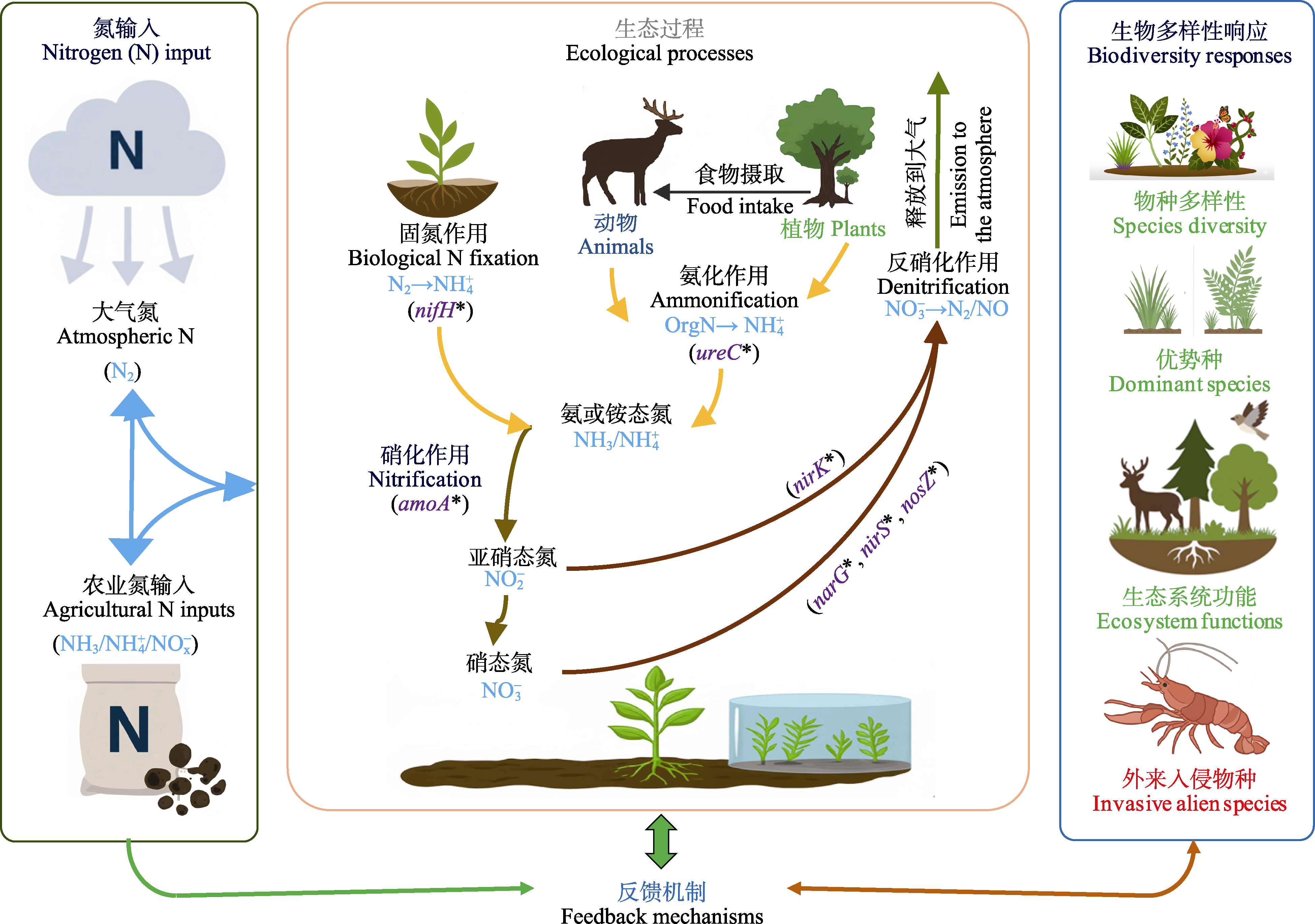
Fig. 1 Conceptual framework illustrating the interactions between nitrogen inputs, nitrogen-related processes, and biodiversity. * indicates the key microbial functional genes that drive the respective nitrogen transformation processes.
| 类别 Category | 关键措施 Key measures | 应用成效 Practical achievements | 管理启示 Management implications |
|---|---|---|---|
| 监测与风险评估 Monitoring and risk assessment | 基于氮沉降、农业氮输入及其驱动的 氮富集、氮转化和土壤酸化过程, 构 建多尺度监测与空间评估体系。 Establishing multi-scale monitoring and spatial assessment frameworks based on atmospheric deposition, agricultural nitrogen inputs, and nitrogen cycling and soil acidification processes. | 明确高氮负荷区域生物多样性丧失风险, 提升保护优先区识别与预警能力。 Identifying biodiversity loss risk hotspots in high nitrogen load areas, and improving the capacity for prioritizing conservation areas and early warning. | 可将氮负荷及其生态响应作为生物多样性风险评估的重要指标, 支撑保护地布局优化与精细化管理。 Nitrogen loads and their ecological responses can be used as key indicators for biodiversity risk assessment, supporting refined conservation zoning and management. |
| 政策转化与区域治理 Policy transformation and regional governance | 氮输入调控纳入农业、流域和区域生态治理政策, 协同推进污染控制与生态保护。 Incorporating nitrogen input regulation into agricultural, watershed, and regional ecological management policies, and promoting pollution control and ecological protection through coordinated cross-sectoral governance. | 农业氮流失和水体富营养化压力降低, 湿地与农田生态系统生物多样性得到恢复或维持。 Reducing agricultural nitrogen losses and eutrophication pressure in aquatic ecosystems, and enhancing biodiversity stability in wetlands and agro-ecosystems. | 推动氮管理与生物多样性保护目标协同纳入区域治理框架, 提升政策实施的生态综合效益。 Promoting the integration of nitrogen management objectives into biodiversity conservation targets within regional governance frameworks, thereby improving the overall effectiveness of policy implementation. |
| 生态干预与恢复措施 Ecological intervention and restoration | 通过精准施肥、引入固氮植物、人工湿地和植被缓冲带等措施调控氮输入与转化过程。 Reducing nitrogen inputs and transformation processes through precision fertilization, introduction of nitrogen-tolerant plant species, constructed wetlands, and vegetated buffer zones. | 植物和动物群落多样性提升, 生态系统稳定性和恢复力增强。 Enhancing plant and animal community diversity, and strengthening ecosystem stability and recovery capacity. | 生态修复和绿色基础设施建设中实施“氮‒多样性协同治理”, 实现污染控制与生物多样性恢复的协同增效。 Implementing “nitrogen‒biodiversity co-management” in ecological restoration and green infrastructure development, achieving synergistic benefits for pollution control and biodiversity recovery. |
Table 1 Application types, outcomes and management implications of nitrogen input-driven key ecological processes in biodiversity conservation
| 类别 Category | 关键措施 Key measures | 应用成效 Practical achievements | 管理启示 Management implications |
|---|---|---|---|
| 监测与风险评估 Monitoring and risk assessment | 基于氮沉降、农业氮输入及其驱动的 氮富集、氮转化和土壤酸化过程, 构 建多尺度监测与空间评估体系。 Establishing multi-scale monitoring and spatial assessment frameworks based on atmospheric deposition, agricultural nitrogen inputs, and nitrogen cycling and soil acidification processes. | 明确高氮负荷区域生物多样性丧失风险, 提升保护优先区识别与预警能力。 Identifying biodiversity loss risk hotspots in high nitrogen load areas, and improving the capacity for prioritizing conservation areas and early warning. | 可将氮负荷及其生态响应作为生物多样性风险评估的重要指标, 支撑保护地布局优化与精细化管理。 Nitrogen loads and their ecological responses can be used as key indicators for biodiversity risk assessment, supporting refined conservation zoning and management. |
| 政策转化与区域治理 Policy transformation and regional governance | 氮输入调控纳入农业、流域和区域生态治理政策, 协同推进污染控制与生态保护。 Incorporating nitrogen input regulation into agricultural, watershed, and regional ecological management policies, and promoting pollution control and ecological protection through coordinated cross-sectoral governance. | 农业氮流失和水体富营养化压力降低, 湿地与农田生态系统生物多样性得到恢复或维持。 Reducing agricultural nitrogen losses and eutrophication pressure in aquatic ecosystems, and enhancing biodiversity stability in wetlands and agro-ecosystems. | 推动氮管理与生物多样性保护目标协同纳入区域治理框架, 提升政策实施的生态综合效益。 Promoting the integration of nitrogen management objectives into biodiversity conservation targets within regional governance frameworks, thereby improving the overall effectiveness of policy implementation. |
| 生态干预与恢复措施 Ecological intervention and restoration | 通过精准施肥、引入固氮植物、人工湿地和植被缓冲带等措施调控氮输入与转化过程。 Reducing nitrogen inputs and transformation processes through precision fertilization, introduction of nitrogen-tolerant plant species, constructed wetlands, and vegetated buffer zones. | 植物和动物群落多样性提升, 生态系统稳定性和恢复力增强。 Enhancing plant and animal community diversity, and strengthening ecosystem stability and recovery capacity. | 生态修复和绿色基础设施建设中实施“氮‒多样性协同治理”, 实现污染控制与生物多样性恢复的协同增效。 Implementing “nitrogen‒biodiversity co-management” in ecological restoration and green infrastructure development, achieving synergistic benefits for pollution control and biodiversity recovery. |
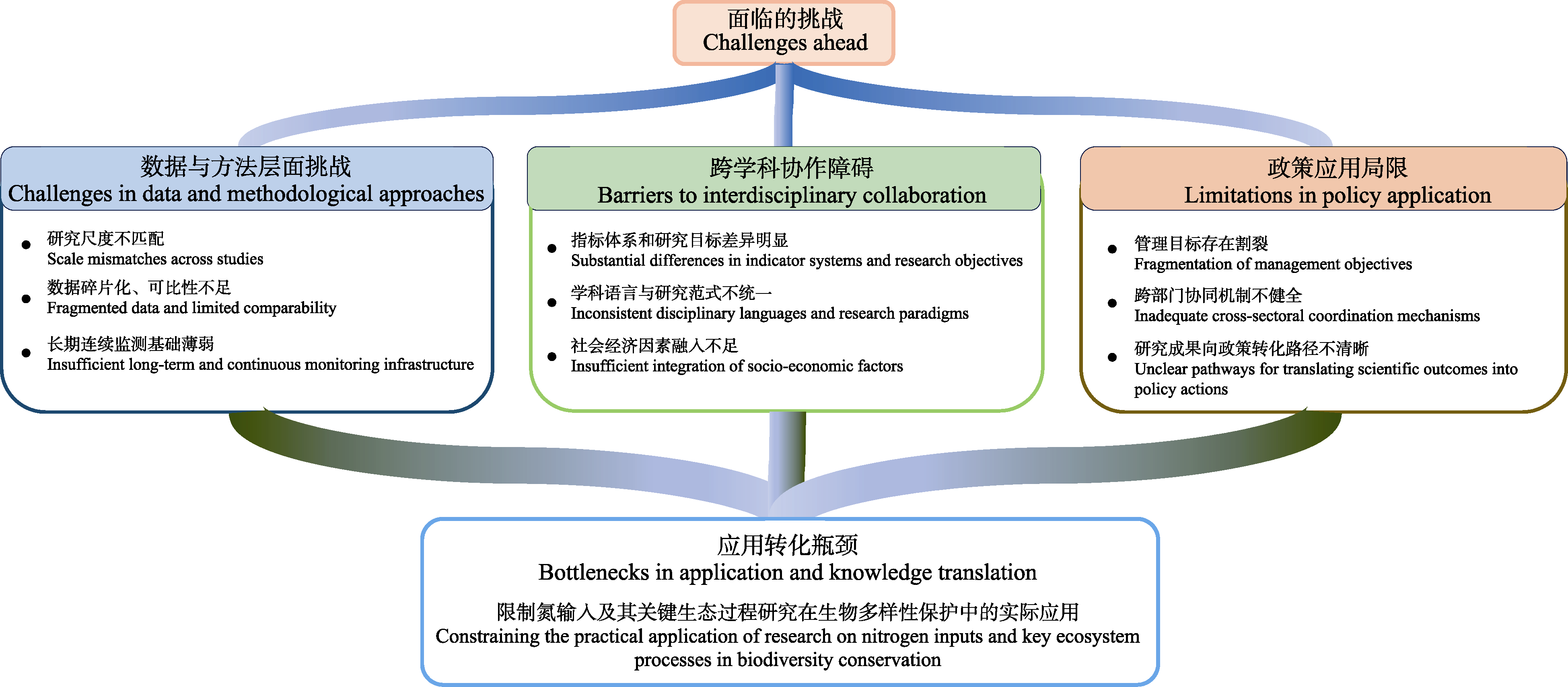
Fig. 2 Major challenges in applying research on nitrogen input-driven key ecological processes to biodiversity conservation
| [1] |
Alsila T, Elo M, Hakkari T, Kotiaho JS (2021) Effects of habitat restoration on peatland bird communities. Restoration Ecology, 29, e13304.
DOI URL |
| [2] | Baer SG, Adams T, Scott DA, Blair JM, Collins SL (2020) Soil heterogeneity increases plant diversity after 20 years of manipulation during grassland restoration. Ecological Applications, 30, e02014. |
| [3] |
Bender SF, Wagg C, van der Heijden MGA (2016) An underground revolution: Biodiversity and soil ecological engineering for agricultural sustainability. Trends in Ecology & Evolution, 31, 440-452.
DOI URL |
| [4] |
Bennett NJ, Roth R, Klain SC, Chan K, Christie P, Clark DA, Cullman G, Curran D, Durbin TJ, Epstein G, Greenberg A, Nelson MP, Sandlos J, Stedman R, Teel TL, Thomas R, Veríssimo D, Wyborn C (2017) Conservation social science: Understanding and integrating human dimensions to improve conservation. Biological Conservation, 205, 93-108.
DOI URL |
| [5] |
Bobbink R, Hicks K, Galloway J, Spranger T, Alkemade R, Ashmore M, Bustamante M, Cinderby S, Davidson E, Dentener F, Emmett B, Erisman JW, Fenn M, Gilliam F, Nordin A, Pardo L, de Vries W (2010) Global assessment of nitrogen deposition effects on terrestrial plant diversity: A synthesis. Ecological Applications, 20, 30-59.
PMID |
| [6] |
Borer ET, Seabloom EW, Gruner DS, Harpole WS, Hillebrand H, Lind EM, Adler PB, Alberti J, Anderson TM, Bakker JD, Biederman L, Blumenthal D, Brown CS, Brudvig LA, Buckley YM, Cadotte M, Chu CJ, Cleland EE, Crawley MJ, Daleo P, Damschen EI, Davies KF, DeCrappeo NM, Du GZ, Firn J, Hautier Y, Heckman RW, Hector A, HilleRisLambers J, Iribarne O, Klein JA, Knops JMH, La Pierre KJ, Leakey ADB, Li W, MacDougall AS, McCulley RL, Melbourne BA, Mitchell CE, Moore JL, Mortensen B, O’Halloran LR, Orrock JL, Pascual J, Prober SM, Pyke DA, Risch AC, Schuetz M, Smith MD, Stevens CJ, Sullivan LL, Williams RJ, Wragg PD, Wright JP, Yang LH (2014) Herbivores and nutrients control grassland plant diversity via light limitation. Nature, 508, 517-520.
DOI |
| [7] | Chakraborty SK, Sanyal P, Ray R (2023) Introductory and basic eco-biological aspects of wetlands. In: Wetlands Ecology: Eco-biological Uniqueness of a Ramsar Site (East Kolkata Wetlands, India) (eds Chakraborty SK, Sanyal P, Ray R), pp. 1-38. Springer International Publishing, Cham. |
| [8] |
Clark CM, Tilman D (2008) Loss of plant species after chronic low-level nitrogen deposition to prairie grasslands. Nature, 451, 712-715.
DOI |
| [9] | Díaz S, Settele J, Brondízio ES, Ngo HT, Agard J, Arneth A, Balvanera P, Brauman KA, Butchart SHM, Chan KMA, Garibaldi LA, Ichii K, Liu JG, Subramanian SM, Midgley GF, Miloslavich P, Molnár Z, Obura D, Pfaff A, Polasky S, Purvis A, Razzaque J, Reyers B, Chowdhury RR, Shin YJ, Visseren-Hamakers I, Willis KJ, Zayas CN (2019) Summary for Policymakers of the Global Assessment Report on Biodiversity and Ecosystem Services of the Intergovernmental Science-Policy Platform on Biodiversity and Ecosystem Services. IPBES Secretariat, Bonn, Germany. |
| [10] |
Dirnböck T, Grandin U, Bernhardt-Römermann M, Beudert B, Canullo R, Forsius M, Grabner MT, Holmberg M, Kleemola S, Lundin L, Mirtl M, Neumann M, Pompei E, Salemaa M, Starlinger F, Staszewski T, Uziębło AK (2014) Forest floor vegetation response to nitrogen deposition in Europe. Global Change Biology, 20, 429-440.
DOI PMID |
| [11] |
Dong LZ, Yao XD, Zhang HJ, Deng YY, Hu T, Baquerizo MD, Wang W (2024) Microbial diversity is especially important for supporting soil function in low nitrogen ecosystems. Soil Biology and Biochemistry, 194, 109442.
DOI URL |
| [12] |
Duan JK, Liu HB, Zhang XM, Ren CC, Wang C, Cheng LX, Xu JM, Gu BJ (2024) Agricultural management practices in China enhance nitrogen sustainability and benefit human health. Nature Food, 5, 378-389.
DOI PMID |
| [13] | Feng MM, Lin YX, He ZY, Liu XF, Chen SD, Wan S, Duan CJ, Ye GP, He JZ (2022) Responses of soil ammonia-oxidizing microorganisms to simulated nitrogen deposition in a natural Castanopsis carlesii forest. Chinese Journal of Applied Ecology, 33, 1622-1628. (in Chinese with English abstract) |
|
[冯蒙蒙, 林永新, 贺子洋, 刘小飞, 陈仕东, 宛颂, 段春健, 叶桂萍, 贺纪正 (2022) 亚热带米槠天然林土壤氨氧化微生物对模拟氮沉降的响应. 应用生态学报, 33, 1622-1628.]
DOI |
|
| [14] | Fowler D, Pyle JA, Raven JA, Sutton MA (2013) The global nitrogen cycle in the twenty-first century: Introduction. Philosophical Transactions of the Royal Society of London Series B: Biological Sciences, 368, 20130165. |
| [15] | Fowler D, Steadman CE, Stevenson D, Coyle M, Rees RM, Skiba UM, Sutton MA, Cape JN, Dore AJ, Vieno M, Simpson D, Zaehle S, Stocker BD, Rinaldi M, Facchini MC, Flechard CR, Nemitz E, Twigg M, Erisman JW, Butterbach-Bahl K, Galloway JN (2015) Effects of global change during the 21st century on the nitrogen cycle. Atmospheric Chemistry and Physics, 15, 13849-13893. |
| [16] |
Frey B, Moser B, Tytgat B, Zimmermann S, Alberti J, Biederman LA, Borer ET, Broadbent AAD, Caldeira MC, Davies KF, Eisenhauer N, Eskelinen A, Fay PA, Hagedorn F, Hautier Y, MacDougall AS, McCulley RL, Moore JL, Nepel M, Power SA, Seabloom EW, Vázquez E, Virtanen R, Yahdjian L, Risch AC (2023) Long-term N-addition alters the community structure of functionally important N-cycling soil microorganisms across global grasslands. Soil Biology and Biochemistry, 176, 108887.
DOI URL |
| [17] |
Fu W, Wu H, Zhao AH, Hao ZP, Chen BD (2020) Ecological impacts of nitrogen deposition on terrestrial ecosystems: Research progresses and prospects. Chinese Journal of Plant Ecology, 44, 475-493. (in Chinese with English abstract)
DOI URL |
|
[付伟, 武慧, 赵爱花, 郝志鹏, 陈保冬 (2020) 陆地生态系统氮沉降的生态效应: 研究进展与展望. 植物生态学报, 44, 475-493.]
DOI |
|
| [18] | Furukawa K (2013) Case studies for urban wetlands restoration and management in Japan. Ocean & Coastal Management, 81, 97-102. |
| [19] |
Galloway JN, Townsend AR, Erisman JW, Bekunda M, Cai ZC, Freney JR, Martinelli LA, Seitzinger SP, Sutton MA (2008) Transformation of the nitrogen cycle: Recent trends, questions, and potential solutions. Science, 320, 889-892.
DOI PMID |
| [20] |
Gao Q, Yu C (2015) A review of urbanization impact on nitrogen cycle. Progress in Geography, 34, 726-738. (in Chinese with English abstract)
DOI |
|
[高群, 余成 (2015) 城市化进程对氮循环格局及动态的影响研究进展. 地理科学进展, 34, 726-738.]
DOI |
|
| [21] |
Gilliam FS, Burns DA, Driscoll CT, Frey SD, Lovett GM, Watmough SA (2019) Decreased atmospheric nitrogen deposition in eastern North America: Predicted responses of forest ecosystems. Environmental Pollution, 244, 560-574.
DOI PMID |
| [22] |
Gong J, Song YJ, Zhang XL (2013) Phylogenetic and functional diversity of nitrogen cycling microbes in coastal sediments. Biodiversity Science, 21, 433-444. (in Chinese with English abstract)
DOI |
|
[龚骏, 宋延静, 张晓黎 (2013) 海岸带沉积物中氮循环功能微生物多样性. 生物多样性, 21, 433-444.]
DOI |
|
| [23] |
Grizzetti B, Bouraoui F, Aloe A (2012) Changes of nitrogen and phosphorus loads to European seas. Global Change Biology, 18, 769-782.
DOI URL |
| [24] | Grossart HP, Massana R, McMahon KD, Walsh DA (2020) Linking metagenomics to aquatic microbial ecology and biogeochemical cycles. Limnology and Oceanography, 65(S1), S2-S20. |
| [25] | Gurmesa GA, Wang A, Li SL, Peng SS, de Vries W, Gundersen P, Ciais P, Phillips OL, Hobbie EA, Zhu WX, Nadelhoffer K, Xi Y, Bai E, Sun T, Chen DX, Zhou WJ, Zhang YP, Guo YR, Zhu JJ, Duan L, Li DJ, Koba K, Du EZ, Zhou GY, Han XG, Han SJ, Fang YT (2022) Retention of deposited ammonium and nitrate and its impact on the global forest carbon sink. Nature Communications, 13, 880. |
| [26] |
Hautier Y, Seabloom EW, Borer ET, Adler PB, Harpole WS, Hillebrand H, Lind EM, MacDougall AS, Stevens CJ, Bakker JD, Buckley YM, Chu CJ, Collins SL, Daleo P, Damschen EI, Davies KF, Fay PA, Firn J, Gruner DS, Jin VL, Klein JA, Knops JMH, La Pierre KJ, Li W, McCulley RL, Melbourne BA, Moore JL, O’Halloran LR, Prober SM, Risch AC, Sankaran M, Schuetz M, Hector A (2014) Eutrophication weakens stabilizing effects of diversity in natural grasslands. Nature, 508, 521-525.
DOI |
| [27] |
Hector A, Schmid B, Beierkuhnlein C, Caldeira MC, Diemer M, Dimitrakopoulos PG, Finn JA, Freitas H, Giller PS, Good J, Harris R, Högberg P, Huss-Danell K, Joshi J, Jumpponen A, Körner C, Leadley PW, Loreau M, Minns A, Mulder CP, O’Donovan G, Otway SJ, Pereira JS, Prinz A, Read DJ, Scherer-Lorenzen M, Schulze ED, Siamantziouras ASD, Spehn EM, Terry AC, Troumbis AY, Woodward FI, Yachi S, Lawton JH (1999) Plant diversity and productivity experiments in European grasslands. Science, 286, 1123-1127.
DOI PMID |
| [28] |
Isbell F, Gonzalez A, Loreau M, Cowles J, Díaz S, Hector A, Mace GM, Wardle DA, O’Connor MI, Duffy JE, Turnbull LA, Thompson PL, Larigauderie A (2017) Linking the influence and dependence of people on biodiversity across scales. Nature, 546, 65-72.
DOI URL |
| [29] | Ju XT, Xing GX, Chen XP, Zhang SL, Zhang LJ, Liu XJ, Cui ZL, Yin B, Christie P, Zhu ZL, Zhang FS (2009) Reducing environmental risk by improving N management in intensive Chinese agricultural systems. Proceedings of the National Academy of Sciences, USA, 106, 3041-3046. |
| [30] | Kanter DR, Brownlie WJ (2019) Joint nitrogen and phosphorus management for sustainable development and climate goals. Environmental Science & Policy, 92, 1-8. |
| [31] |
Kanter DR, Chodos O, Nordland O, Rutigliano M, Winiwarter W (2020) Gaps and opportunities in nitrogen pollution policies around the world. Nature Sustainability, 3, 956-963.
DOI |
| [32] |
Li T, Cui LZ, Liu LL, Wang H, Dong JF, Wang F, Song XF, Che RX, Li CJ, Tang L, Xu ZH, Wang YF, Du JQ, Hao YB, Cui XY (2022) Characteristics of nitrogen deposition research within grassland ecosystems globally and its insight from grassland microbial community changes in China. Frontiers in Plant Science, 13, 947279.
DOI URL |
| [33] | Li Y, Schichtel BA, Walker JT, Schwede DB, Chen X, Lehmann CMB, Puchalski MA, Gay DA, Collett Jr JL (2016) Increasing importance of deposition of reduced nitrogen in the United States. Proceedings of the National Academy of Sciences, USA, 113, 5874-5879. |
| [34] | Liu W, Mu T, Yuan SJ, Yi JF, Yu DD, Li JQ, Ma FZ, Wan YQ, Chen J, Zhang RQ, Wilcove DS, Xu HG (2025) Multidimensional patterns of bird diversity and its driving forces in the Yangtze River Basin of China. Eco-Environment & Health, 4, 100124. |
| [35] |
Liu XJ, Zhang Y, Han WX, Tang AH, Shen JL, Cui ZL, Vitousek P, Erisman JW, Goulding K, Christie P, Fangmeier A, Zhang FS (2013) Enhanced nitrogen deposition over China. Nature, 494, 459-462.
DOI |
| [36] |
Lu XK, Mo JM, Dong SF (2008) Effects of nitrogen deposition on forest biodiversity: A review. Acta Ecologica Sinica, 28, 5532-5548. (in Chinese with English abstract)
DOI URL |
| [鲁显楷, 莫江明, 董少峰 (2008) 氮沉降对森林生物多样性的影响. 生态学报, 28, 5532-5548.] | |
| [37] | Lundberg S, Lee SI (2017) A unified approach to interpreting model predictions. In:Proceedings of the 31st International Conference on Neural Information Processing Systems (NIPS 2017), pp. 4768-4777. Long Beach, CA. https://papers.nips.cc/paper_files/paper/2017/file/8a20a8621978632d76c43dfd28b67767-Paper.pdf. (accessed on 2025-09-10) |
| [38] |
Mahmud K, Panday D, Mergoum A, Missaoui A, Mahmud K, Panday D, Mergoum A, Missaoui A (2021) Nitrogen losses and potential mitigation strategies for a sustainable agroecosystem. Sustainability, 13, 2400.
DOI URL |
| [39] | Mason RE, Craine JM, Lany NK, Jonard M, Ollinger SV, Groffman PM, Fulweiler RW, Angerer J, Read QD, Reich PB, Templer PH, Elmore AJ (2022) Evidence, causes, and consequences of declining nitrogen availability in terrestrial ecosystems. Science, 376, eabh3767. |
| [40] |
Midolo G, Alkemade R, Schipper AM, Benítez-López A, Perring MP, De Vries W (2019) Impacts of nitrogen addition on plant species richness and abundance: A global meta-analysis. Global Ecology and Biogeography, 28, 398-413.
DOI URL |
| [41] |
Painter SC, Artioli Y, Amir FH, Arnull J, Ganeshram RS, Ibrahim N, Samuel VD, Robin RS, Raghuraman R, Purvaja R, Ramesh R, Rajasuriya A, Rendon OR, Shazly A, Wilson AMW, Tudhope AW (2023) Anthropogenic nitrogen pollution threats and challenges to the health of South Asian coral reefs. Frontiers in Marine Science, 10, 1187804.
DOI URL |
| [42] |
Philippot L, Raaijmakers JM, Lemanceau P, van der Putten WH (2013) Going back to the roots: The microbial ecology of the rhizosphere. Nature Reviews Microbiology, 11, 789-799.
DOI PMID |
| [43] |
Reich PB, Hobbie SE, Lee T, Ellsworth DS, West JB, Tilman D, Knops JMH, Naeem S, Trost J (2006) Nitrogen limitation constrains sustainability of ecosystem response to CO2. Nature, 440, 922-925.
DOI |
| [44] |
Reich PB, Mohanbabu N, Isbell F, Hobbie SE, Butler EE (2024) High CO2 dampens then amplifies N-induced diversity loss over 24 years. Nature, 635, 370-375.
DOI |
| [45] |
Ren ZR, Zhang YQ, Zhang YH (2021) Nitrogen deposition magnifies the positive response of plant community production to precipitation: Ammonium to nitrate ratio matters. Environmental Pollution, 276, 116659.
DOI URL |
| [46] |
Sanborn T, Jung J (2021) Intersecting social science and conservation. Frontiers in Marine Science, 8, 676394.
DOI URL |
| [47] |
Shen H, Dong SK, DiTommaso A, Xiao JN, Lu W, Zhi YL (2022) Nitrogen deposition shifts grassland communities through directly increasing dominance of graminoids: A 3-year case study from the Qinghai-Tibetan Plateau. Frontiers in Plant Science, 13, 811970.
DOI URL |
| [48] |
Shi JM, Wang C, Zheng Y, Gao C (2023) Research progress on the responses of morphological structure, species diversity and community composition of arbuscular mycorrhizal fungi to nitrogen deposition. Mycosystema, 42, 118-129. (in Chinese with English abstract)
DOI |
|
[史加勉, 王聪, 郑勇, 高程 (2023) 丛枝菌根真菌形态结构、物种多样性和群落组成对氮沉降响应研究进展. 菌物学报, 42, 118-129.]
DOI |
|
| [49] |
Stevens CJ, Duprè C, Dorland E, Gaudnik C, Gowing DJG, Bleeker A, Diekmann M, Alard D, Bobbink R, Fowler D, Corcket E, Mountford JO, Vandvik V, Aarrestad PA, Muller S, Dise NB (2010) Nitrogen deposition threatens species richness of grasslands across Europe. Environmental Pollution, 158, 2940-2945.
DOI PMID |
| [50] | Su MD, Ma X, Hu LT, Zhao LJ, Peng J, Wang HH, Zhang ST (2022) Effects of high-carbon basal fertilizers combined with nitrogen reduction on soil fertility and bacterial diversity. Journal of Agricultural Biotechnology, 30, 1174-1185. (in Chinese with English abstract) |
| [苏梦迪, 马啸, 胡丽涛, 赵龙杰, 彭军, 王欢欢, 张松涛 (2022) 高碳基肥减氮施用对土壤肥力和细菌多样性的影响. 农业生物技术学报, 30, 1174-1185.] | |
| [51] | Suding KN, Collins SL, Gough L, Clark C, Cleland EE, Gross KL, Milchunas DG, Pennings S (2005) Functional- and abundance-based mechanisms explain diversity loss due to N fertilization. Proceedings of the National Academy of Sciences, USA, 102, 4387-4392. |
| [52] | Sutton MA, Howard CM, Mason KE, Brownlie WJ, Cordovil CMS (2022) Nitrogen Opportunities for Agriculture, Food & Environment. UNECE Guidance Document on Integrated Sustainable Nitrogen Management, UK Centre for Ecology & Hydrology, Edinburgh, UK. https://nora.nerc.ac.uk/id/eprint/534033/1/N534033CR.pdf. (accessed on 2025-09-10) |
| [53] | Tang HB, Zhang SF, Zhu LM, Zou X, Shi F, Yang Q, Hu L, Zhu W, Shi YL, Li B (2024) Nitrogen and phosphorus excretion of fishes with different feeding habits and their role in nutrient cycling in Xiaojiang River. Journal of Hydroecology, 45(5), 76-84. (in Chinese with English abstract) |
| [唐海滨, 张三峰, 朱利明, 邹曦, 史方, 杨晴, 胡莲, 朱稳, 时玉龙, 李博 (2024) 小江不同食性鱼类氮磷排泄及其对养分循环的影响. 水生态学杂志, 45(5), 76-84.] | |
| [54] |
Temperton VM, Mwangi PN, Scherer-Lorenzen M, Schmid B, Buchmann N (2007) Positive interactions between nitrogen-fixing legumes and four different neighbouring species in a biodiversity experiment. Oecologia, 151, 190-205.
DOI PMID |
| [55] |
Tilman D, Reich PB, Knops J, Wedin D, Mielke T, Lehman C (2001) Diversity and productivity in a long-term grassland experiment. Science, 294, 843-845.
DOI PMID |
| [56] |
Török P, Brudvig LA, Kollmann J, Price JN, Tóthmérész B (2021) The present and future of grassland restoration. Restoration Ecology, 29, e13378.
DOI URL |
| [57] |
van der Plas F, Hautier Y, Ceulemans T, Alard D, Bobbink R, Diekmann M, Dise NB, Dorland E, Dupré C, Gowing D, Stevens C (2024) Atmospheric nitrogen deposition is related to plant biodiversity loss at multiple spatial scales. Global Change Biology, 30, e17445.
DOI URL |
| [58] |
Volkogon VV, Dimova SB, Volkogon KI, Sidorenko VP, Volkogon MV (2021) Biological nitrogen fixation and denitrification in rhizosphere of potato plants in response to the fertilization and inoculation. Frontiers in Sustainable Food Systems, 5, 606379.
DOI URL |
| [59] | Wang WW, Li MZ, Chen P, Yuan SW, Wang K, Wang SH, Jiang X (2025) Role of nitrogen cycling functional genes and their key influencing factors in eutrophic aquatic ecosystems. Environmental Reviews, 33, 1-10. |
| [60] |
Wang YB, Sun YH, Ding W, Zhang ET, Li WH, Chi YG, Zheng SX (2020) Effects and pathways of long-term nitrogen addition on plant diversity and primary productivity in a typical steppe. Chinese Journal of Plant Ecology, 44, 22-32. (in Chinese with English abstract)
DOI URL |
|
[王玉冰, 孙毅寒, 丁威, 张恩涛, 李文怀, 迟永刚, 郑淑霞 (2020) 长期氮添加对典型草原植物多样性与初级生产力的影响及途径. 植物生态学报, 44, 22-32.]
DOI |
|
| [61] |
Wang Z, Wang YQ, Ding XK, Wang YJ, Yan ZY, Wang SH (2022) Evaluation of net anthropogenic nitrogen inputs in the Three Gorges Reservoir Area. Ecological Indicators, 139, 108922.
DOI URL |
| [62] |
Western D, Mose VN (2021) The changing role of natural and human agencies shaping the ecology of an African savanna ecosystem. Ecosphere, 12, e03536.
DOI URL |
| [63] |
Xiang XM, De KJ, Lin WS, Feng TX, Li F, Wei XJ (2025) Effects of warming and nitrogen deposition on species and functional diversity of plant communities in the Alpine meadow of Qinghai-Tibet Plateau. PLoS ONE, 20, e0319581.
DOI URL |
| [64] | Xue LH, Hou PF, Zhang ZY, Shen MX, Liu FX, Yang LZ (2020) Application of systematic strategy for agricultural non-point source pollution control in Yangtze River basin, China. Agriculture, Ecosystems & Environment, 304, 107148. |
| [65] |
Yang Y, Chen XL, Liu LX, Li T, Dou YX, Qiao JB, Wang YQ, An SS, Chang SX (2022) Nitrogen fertilization weakens the linkage between soil carbon and microbial diversity: A global meta-analysis. Global Change Biology, 28, 6446-6461.
DOI URL |
| [66] |
Yu GR, Jia YL, He NP, Zhu JX, Chen Z, Wang QF, Piao SL, Liu XJ, He HL, Guo XB, Wen Z, Li P, Ding GA, Goulding K (2019) Stabilization of atmospheric nitrogen deposition in China over the past decade. Nature Geoscience, 12, 424-429.
DOI |
| [67] |
Yu Z, Liu J, Kattel G (2022) Historical nitrogen fertilizer use in China from 1952 to 2018. Earth System Science Data, 14, 5179-5194.
DOI URL |
| [68] | Yuan JY (2023) Advances in the effects of atmospheric nitrogen deposition on soil microorganism of forest ecosystem. Journal of Yunnan University (Natural Sciences Edition), 45(1), 199-210. (in Chinese) |
| [袁吉有 (2023) 大气氮沉降对森林土壤微生物影响的研究进展. 云南大学学报(自然科学版), 45(1), 199-210.] | |
| [69] | Yuan XL, Wang C, Li BY, Wang W, Chen NC (2023) Review of the driving forces and impacts of land use/cover change in the Yangtze River Basin. Geomatics and Information Science of Wuhan University, 48, 1241-1255. (in Chinese with English abstract) |
| [袁晓蕾, 王超, 李柏延, 王伟, 陈能成 (2023) 长江流域土地利用/盖变化驱动力及影响综述. 武汉大学学报(信息科学版), 48, 1241-1255.] | |
| [70] |
Yuan ZA, Liu XX, Du HR, Zhang MH (2021) Can artificial ecological islands alter the biodiversity of macroinvertebrate? A case study in Fujin National Wetland Park, the Sanjiang Plain, China. Ecology and Evolution, 11, 14988-15003.
DOI URL |
| [71] |
Zhang C, Fujiwara M, Pawluk M, Liu HZ, Cao WX, Gao X (2020) Changes in taxonomic and functional diversity of fish communities after catastrophic habitat alteration caused by construction of Three Gorges Dam. Ecology and Evolution, 10, 5829-5839.
DOI PMID |
| [72] |
Zhang XM, Ren CC, Gu BJ, Chen DL (2021) Uncertainty of nitrogen budget in China. Environmental Pollution, 286, 117216.
DOI URL |
| [73] |
Zhang YH, Lü XT, Isbell F, Stevens C, Han X, He NP, Zhang GM, Yu Q, Huang JH, Han XG (2014) Rapid plant species loss at high rates and at low frequency of N addition in temperate steppe. Global Change Biology, 20, 3520-3529.
DOI PMID |
| [74] | Zhao BT, Hua CH, Ye CY, Xiong YC, Qian T, Cheng T, Yao X, Zheng HB, Zhu Y, Cao WX, Jiang CY (2025) Research progress on remote sensing monitoring and intelligent decision-making algorithms for rice production. Smart Agriculture, 7(2), 57-72. (in Chinese with English abstract) |
| [赵柄婷, 华传海, 叶晨洋, 熊育春, 钱涛, 程涛, 姚霞, 郑恒彪, 朱艳, 曹卫星, 江冲亚 (2025) 水稻生产遥感监测与智慧决策研究进展. 智慧农业(中英文), 7(2), 57-72.] | |
| [75] |
Zhou JQ, Wilson GWT, Cobb AB, Yang GW, Zhang YJ (2019) Phosphorus and mowing improve native alfalfa establishment, facilitating restoration of grassland productivity and diversity. Land Degradation & Development, 30, 647-657.
DOI URL |
| [76] |
Zhou JZ, Deng Y, Shen LN, Wen CQ, Yan QY, Ning DL, Qin YJ, Xue K, Wu LY, He ZL, Voordeckers JW, Van Nostrand JD, Buzzard V, Michaletz ST, Enquist BJ, Weiser MD, Kaspari M, Waide R, Yang YF, Brown JH (2016) Temperature mediates continental-scale diversity of microbes in forest soils. Nature Communications, 7, 12083.
DOI PMID |
| [77] | Zhou KY, Xu W, Zhang L, Ma MR, Liu XJ, Zhao Y (2023) Estimating nitrogen and sulfur deposition across China during 2005 to 2020 based on multiple statistical models. Atmospheric Chemistry and Physics, 23, 8531-8551. |
| [78] | Zhou NQ, Wu YH, Cai Y, Min SX (2022) Coupling mechanism of phosphorus and nitrogen, carbon cycles in critical zone of wetland. Journal of Earth Sciences and Environment, 44(1), 91-101. (in Chinese with English abstract) |
| [周念清, 吴延浩, 蔡奕, 闵思贤 (2022) 湿地关键带中磷与氮、碳循环联动耦合机制. 地球科学与环境学报, 44(1), 91-101.] |
| Viewed | ||||||
|
Full text |
|
|||||
|
Abstract |
|
|||||
Copyright © 2026 Biodiversity Science
Editorial Office of Biodiversity Science, 20 Nanxincun, Xiangshan, Beijing 100093, China
Tel: 010-62836137, 62836665 E-mail: biodiversity@ibcas.ac.cn

