

Biodiv Sci ›› 2026, Vol. 34 ›› Issue (4): 25409. DOI: 10.17520/biods.2025409 cstr: 32101.14.biods.2025409
• Data Papers • Previous Articles Next Articles
Dexi Zhang1,2( ), Qian Zhou1,2, Xuezhu Pei1,2, Hongyong Zhang3, Yingtai Pei3, Shan Sun1,2, Mingxin Liu1,2,*()(
 ), Lixun Zhang1,2(), Changming Zhao1,2
Received:2025-10-15
Accepted:2026-01-26
Online:2026-04-20
Published:2026-05-28
Contact:
*E-mail: liumingxin@lzu.edu.cn
Supported by:Dexi Zhang, Qian Zhou, Xuezhu Pei, Hongyong Zhang, Yingtai Pei, Shan Sun, Mingxin Liu, Lixun Zhang, Changming Zhao. Dataset of arthropod specimen images and DNA barcodes in forest ecosystem of the Xinglong Mountains of Gansu Province[J]. Biodiv Sci, 2026, 34(4): 25409.
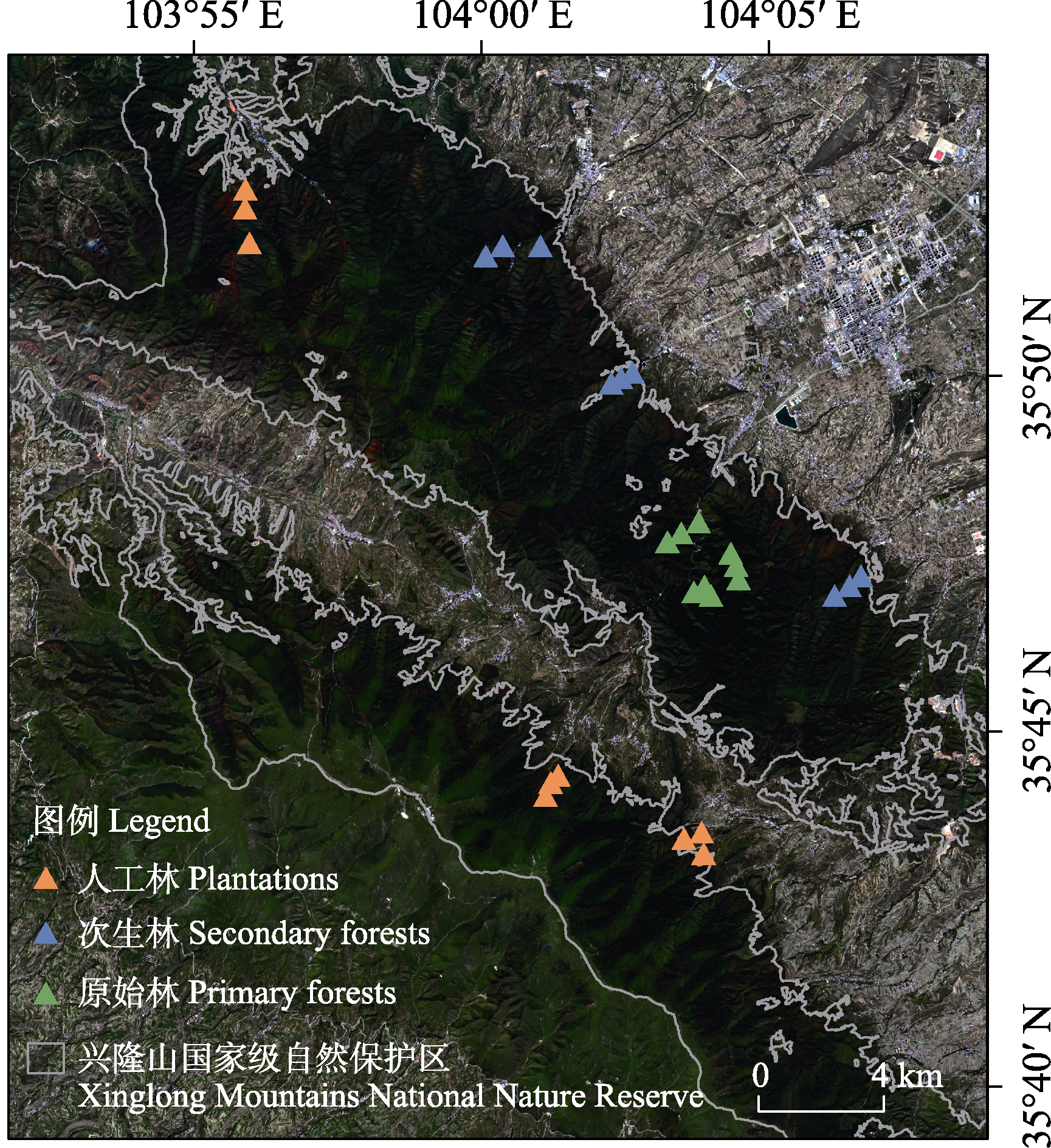
Fig. 1 Distribution of arthropod sampling plots in the Gansu Xinglongshan National Nature Reserve
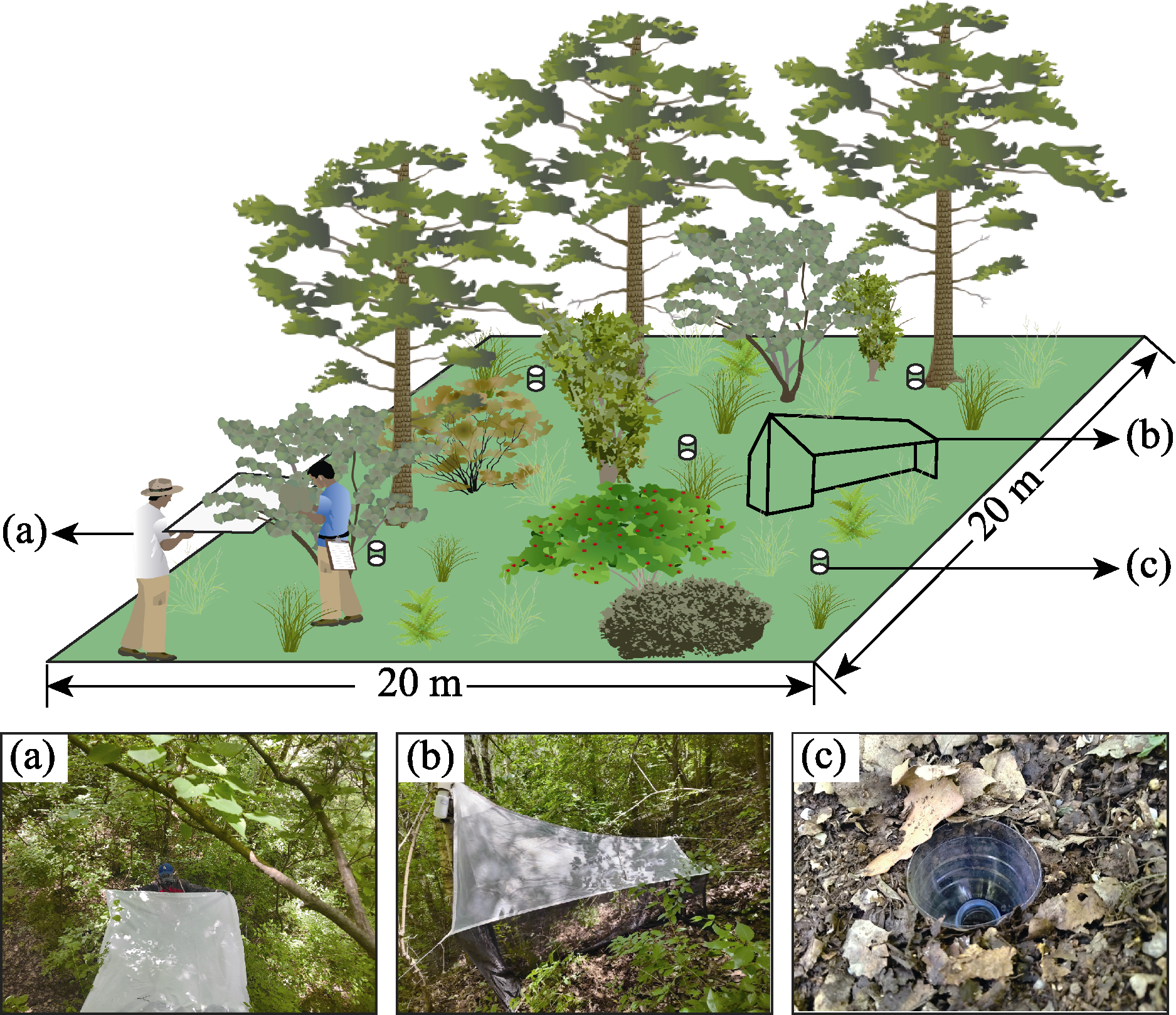
Fig. 2 The three arthropod sampling methods. (a) Beating; (b) Malaise trap; (c) Pitfall trap.
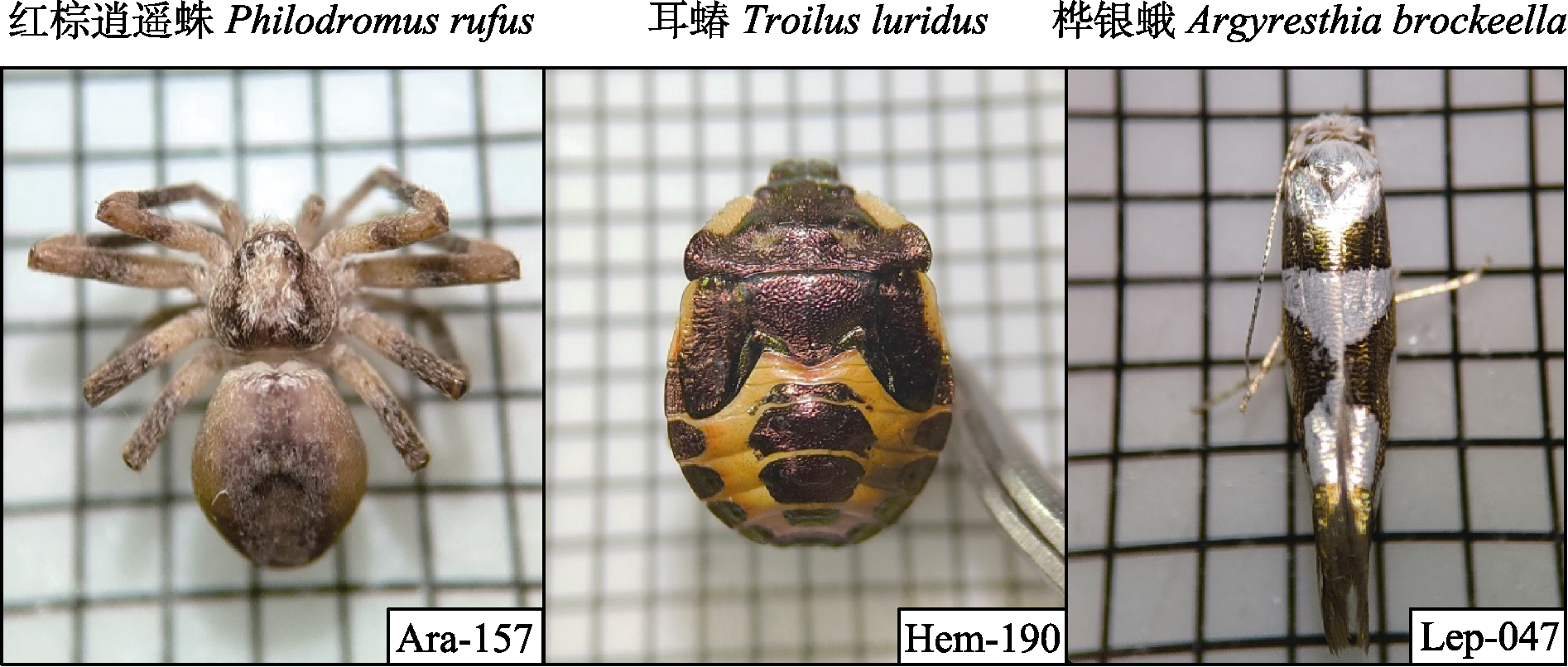
Fig. 3 Exemplar specimen images of collected arthropods
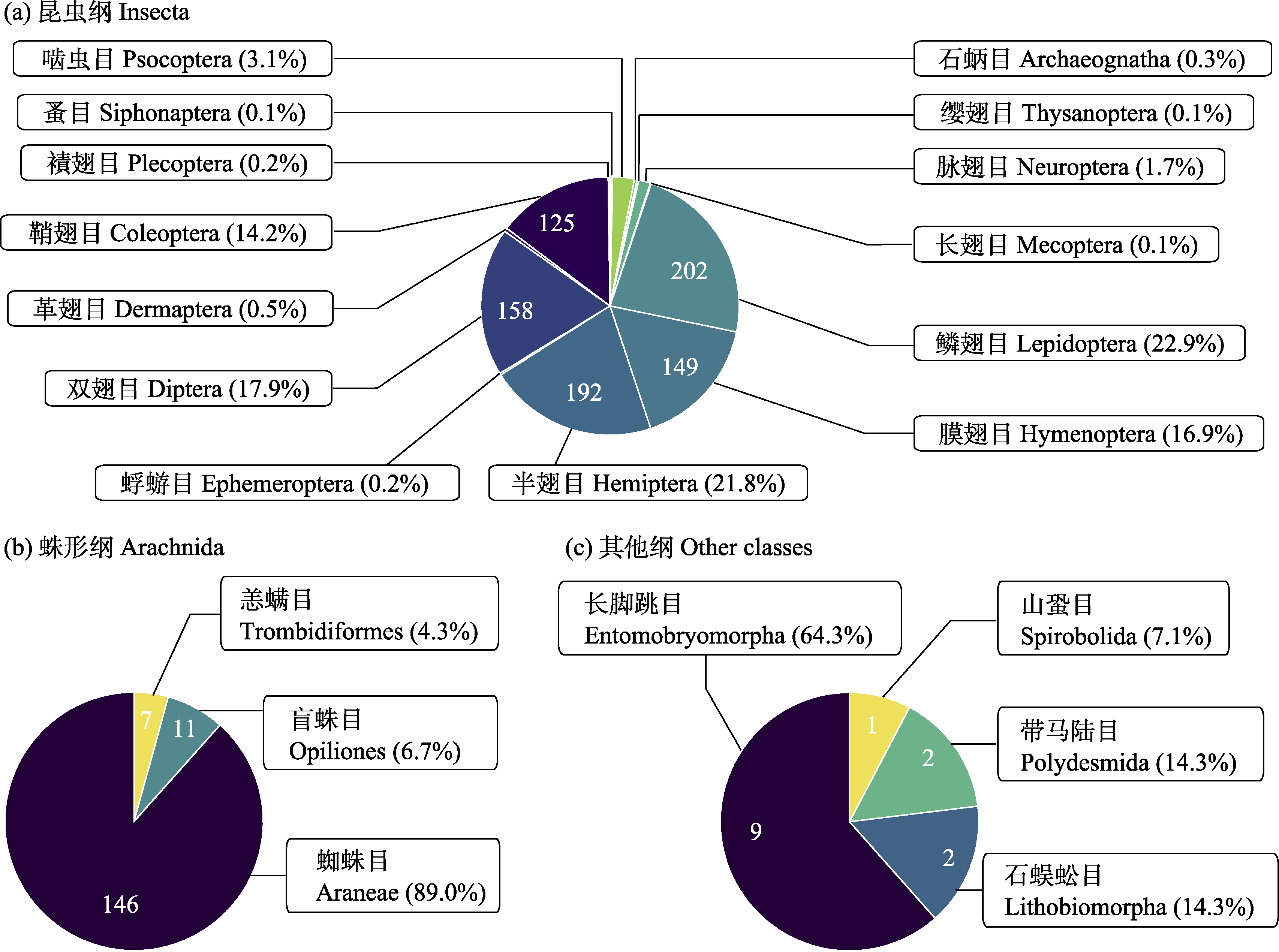
Fig. 4 Order-level species composition of Insecta (a), Arachnida (b) and other classes (c)
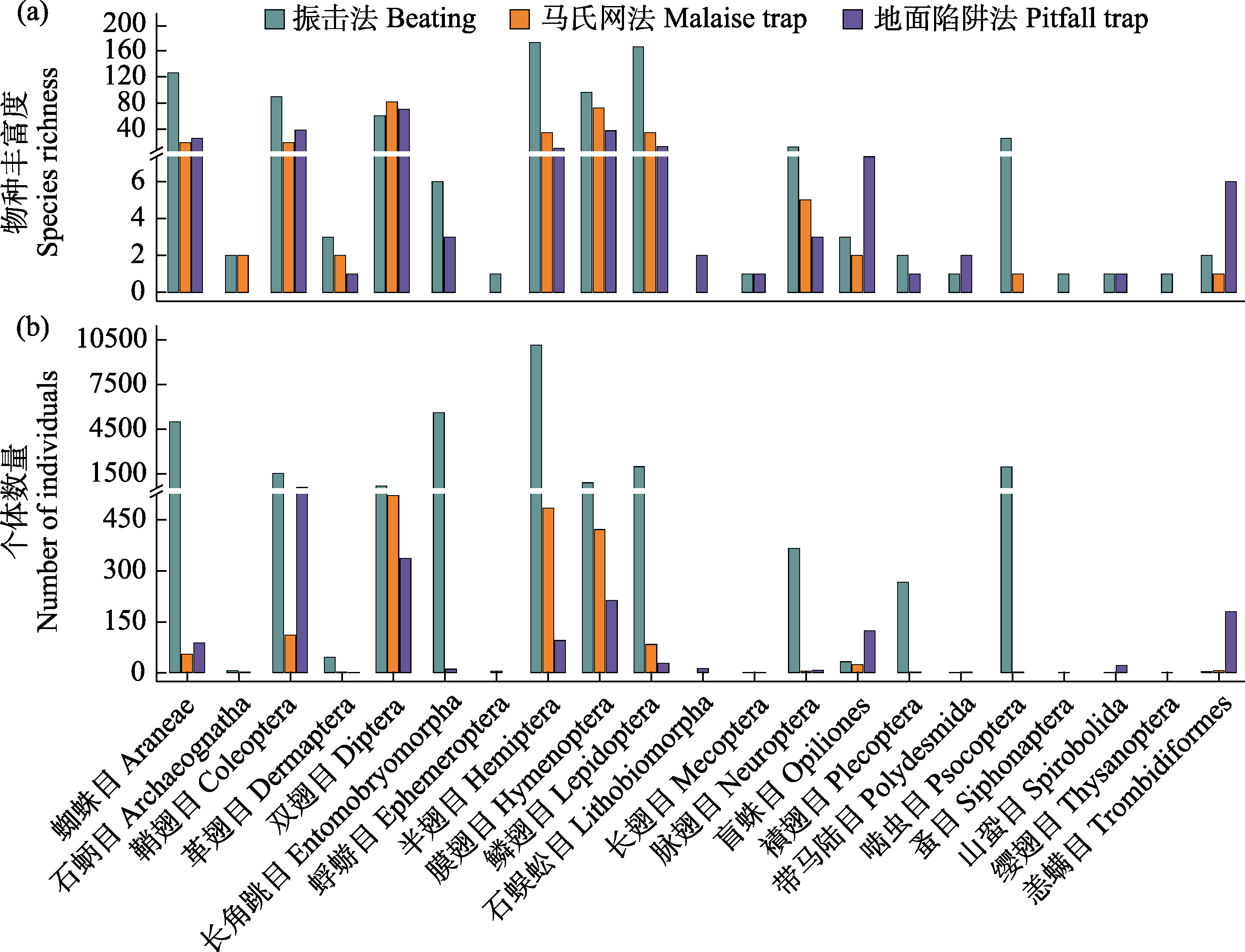
Fig. 5 Comparison of species richness (a) and number of individuals (b) at the order level collected by different sampling methods
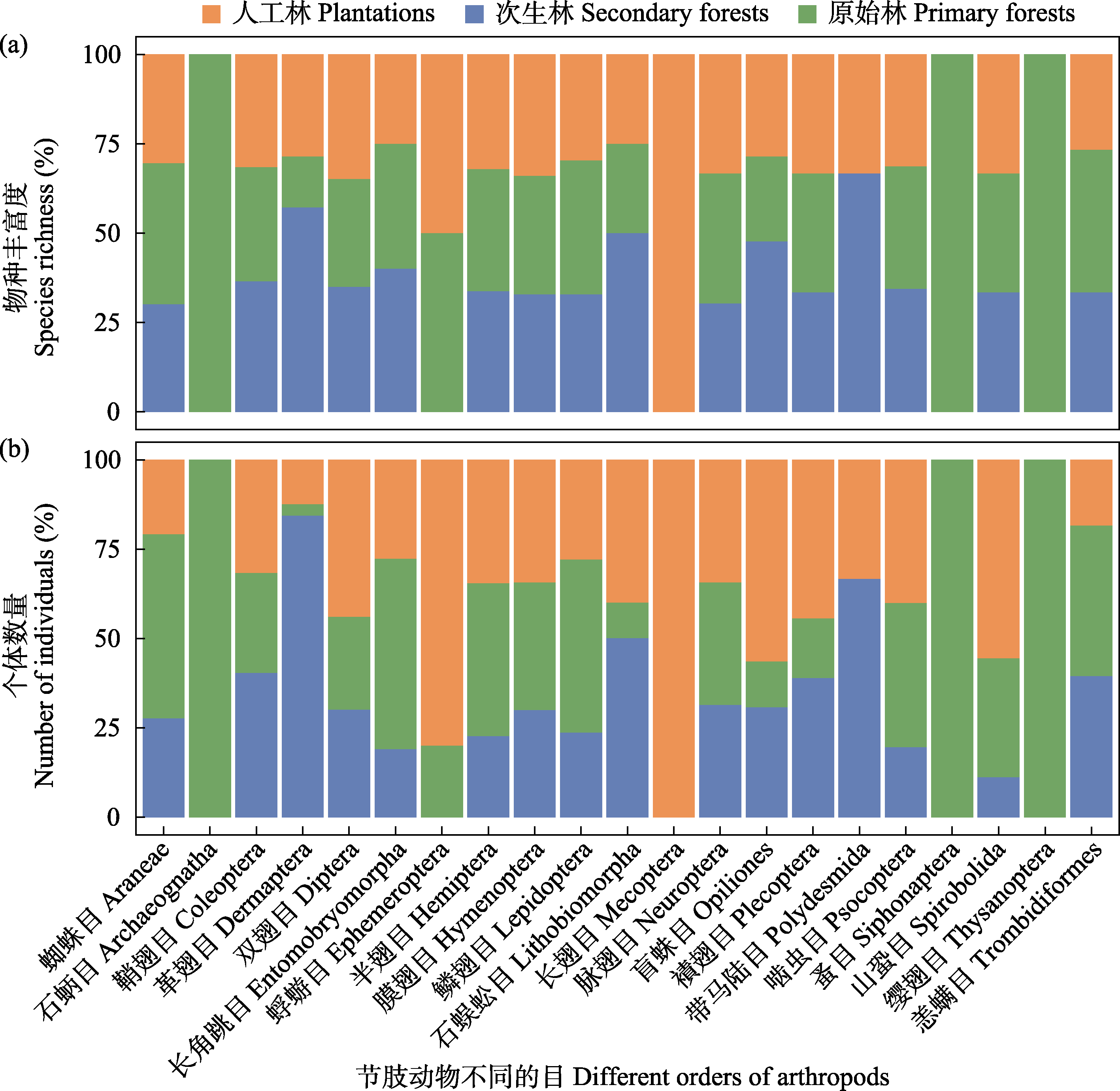
Fig. 6 Relative proportions of species richness (a) and number of individuals (b) at the order level across different forest types
| [1] |
Bastin JF, Finegold Y, Garcia C, Mollicone D, Rezende M, Routh D, Zohner CM, Crowther TW (2019) The global tree restoration potential. Science, 365, 76-79.
DOI URL |
| [2] |
Dai ZX, Chen GK, Zhang NL, Ma KP (2022) A dataset on the diversity of forest vascular epiphytes in China. Biodiversity Science, 30, 22332.(in Chinese with English abstract)
DOI |
|
[戴梓潇, 陈国科, 张乃莉, 马克平 (2022) 中国森林附生维管植物多样性数据集. 生物多样性, 30, 22332.]
DOI |
|
| [3] |
Eggleton P (2020) The state of the world’s insects. Annual Review of Environment and Resources, 45, 61-82.
DOI |
| [4] |
Folmer O, Black M, Hoeh W, Lutz R, Vrijenhoek R (1994) DNA primers for amplification of mitochondrial cytochrome c oxidase subunit I from diverse metazoan invertebrates. Molecular Marine Biology and Biotechnology, 3, 294-299.
PMID |
| [5] |
Han YJ, Liang YL, Tong YJ, Ding Q, Tian ZH, Li LL, Li XJ, Shen H, Zhu YC, Liu N, Wang XP, Bai M (2024) Dataset of beetle specimen images based on three passive acquisition methods in Mt. Helanshan, Ningxia. Biodiversity Science, 32, 24054.(in Chinese with English abstract)
DOI |
|
[韩永金, 梁咏亮, 佟一杰, 丁强, 田哲豪, 李露露, 李晓娟, 申昊, 朱亚超, 刘宁, 王新谱, 白明 (2024) 基于三种被动式采集方法采集的宁夏贺兰山甲虫标本照片数据集. 生物多样性, 32, 24054.]
DOI |
|
| [6] | Hebert PDN, Cywinska A, Ball SL, de Waard JR (2003) Biological identifications through DNA barcodes. Proceedings of the Royal Society B: Biological Sciences, 270, 313-321. |
| [7] |
Hua FY, Bruijnzeel LA, Meli P, Martin PA, Zhang J, Nakagawa S, Miao XR, Wang WY, McEvoy C, Peña-Arancibia JL, Brancalion PHS, Smith P, Edwards DP, Balmford A (2022) The biodiversity and ecosystem service contributions and trade-offs of forest restoration approaches. Science, 376, 839-844.
DOI URL |
| [8] |
Langor DW, Spence JR (2006) Arthropods as ecological indicators of sustainability in Canadian forests. The Forestry Chronicle, 82, 344-350.
DOI URL |
| [9] | Li Y, Schmid B, Schuldt A, Li S, Wang MQ, Fornoff F, Staab M, Guo PF, Anttonen P, Chesters D, Bruelheide H, Zhu CD, Ma KP, Liu XJ (2023) Multitrophic arthropod diversity mediates tree diversity effects on primary productivity. Nature Ecology & Evolution, 7, 832-840. |
| [10] |
Luo XY, Li Q, Huang XL (2023) DNA barcode reference dataset for flower-visiting insects in Daiyun Mountain National Nature Reserve. Biodiversity Science, 31, 23236.(in Chinese with English abstract)
DOI |
|
[罗小燕, 李强, 黄晓磊 (2023) 戴云山国家级自然保护区访花昆虫DNA条形码数据集. 生物多样性, 31, 23236 ]
DOI |
|
| [11] |
Potapov AM, Drescher J, Darras K, Wenzel A, Janotta N, Nazarreta R, Kasmiatun, Laurent V, Mawan A, Utari EH, Pollierer MM, Rembold K, Widyastuti R, Buchori D, Hidayat P, Turner E, Grass I, Westphal C, Tscharntke T, Scheu S (2024) Rainforest transformation reallocates energy from green to brown food webs. Nature, 627, 116-122.
DOI |
| [12] |
Ratnasingham S, Hebert PDN (2007) BOLD: The Barcode of Life Data System (http://www.barcodinglife.org). Molecular Ecology Notes, 7, 355-364.
DOI URL PMID |
| [13] |
Shang SQ, Wu XB, Wang ZL, Peng HN, Zhou HL, Zhang HY, Bai YL (2020) Butterfly community structure and species-abundance distribution in different habitats in the Xinglong Mountains National Nature Reserve. Biodiversity Science, 28, 983-992.(in Chinese with English abstract)
DOI URL |
| [尚素琴, 吴兴波, 王召龙, 彭鹤年, 周惠丽, 张红勇, 白映禄 (2020) 兴隆山国家级自然保护区不同生境的蝴蝶群落结构与种-多度分布. 生物多样性, 28, 983-992.] | |
| [14] |
van Klink R, Bowler DE, Gongalsky KB, Swengel AB, Gentile A, Chase JM (2020) Meta-analysis reveals declines in terrestrial but increases in freshwater insect abundances. Science, 368, 417-420.
DOI PMID |
| [15] |
Wang QJ, Zhang SY, Dong SF, Zhang GC, Yang J, Li R, Wang HQ (2020) Pest24: A large-scale very small object data set of agricultural pests for multi-target detection. Computers and Electronics in Agriculture, 175, 105585.
DOI URL |
| [16] | Wang XT (1996) Investigation and Research on the Resource Background of Xinglongshan National Nature Reserve in Gansu Province. Gansu Nationalities Publishing House, Lanzhou.(in Chinese) |
| [王香亭 (1996) 甘肃兴隆山国家级自然保护区资源本底调查研究. 甘肃民族出版社, 兰州.] | |
| [17] |
Wang XY, Hua FY, Wang L, Wilcove DS, Yu DW (2019) The biodiversity benefit of native forests and mixed-species plantations over monoculture plantations. Diversity and Distributions, 25, 1721-1735.
DOI URL |
| [18] |
Wang YP, Song YF, Zhong YX, Chen CW, Zhao YH, Zeng D, Wu YR, Ding P (2021) A dataset on the life-history and ecological traits of Chinese birds. Biodiversity Science, 29, 1149-1153.(in Chinese with English abstract)
DOI URL |
|
[王彦平, 宋云枫, 钟雨茜, 陈传武, 赵郁豪, 曾頔, 吴亦如, 丁平 (2021) 中国鸟类的生活史和生态学特征数据集. 生物多样性, 29, 1149-1153.]
DOI |
|
| [19] | Wu XP, Zhan C, Lai YK, Cheng MM, Yang JF (2019) IP102:A large-scale benchmark dataset for insect pest recognition. In: Proceedings of the IEEE/CVF Conference on Computer Vision and Pattern Recognition (CVPR), pp. 8779-8788. IEEE, Long Beach, CA. |
| [20] |
Zenker MM, Rougerie R, Teston JA, Laguerre M, Pie MR, Freitas AVL (2016) Fast census of moth diversity in the Neotropics: A comparison of field-assigned morphospecies and DNA barcoding in tiger moths. PLoS ONE, 11, e0148423.
DOI URL |
| [21] |
Zhang DX, Mao RR, Liu MX, Zhou Q, Wang YZ, Si XF, Zhao CM, Zhang LX (2024) Impacts of forest restoration on multifaceted bird diversity and community assembly in the Loess Plateau of China. Forest Ecology and Management, 573, 122350.
DOI URL |
| [1] | Zhongjun Gong, Weizheng Li, Yongsheng Yao, Xuqi Zuo, Yuqing Wu, Jin Miao. Distribution characteristics of arthropod eDNA in the solid, liquid, and gas phases of farmland soil [J]. Biodiv Sci, 2026, 34(7): 26146-. |
| [2] | Han Li, Xingcheng He, Shangmingyu Zhang, Yiwei Cao, Jiayu Zhang, Kexin Peng, Yongjie Wu. Avian checklist of the Hengduan Mountains [J]. Biodiv Sci, 2026, 34(7): 25375-. |
| [3] | Jie Zhang, Haoming Lu, Jiajie Chen, Jiangyuan Chen, Yufan Mao, Junxi Hu, Baowei Zhang. Latin-English-Chinese-Japanese checklist of Chinese chondrichthyans and a comparison of diversity among marine regions [J]. Biodiv Sci, 2026, 34(6): 25522-. |
| [4] | Hailong Zhang, Haiyan Nie, Mengmeng Liu, Meicai Wei, Zejian Li. Diversity patterns and influencing factors of sawfly communities in Mt. Wuyanling, Zhejiang Province, China [J]. Biodiv Sci, 2026, 34(6): 25459-. |
| [5] | Xuri Zhang, Biao Luo, Tong Zhao, Dan Huang, Weiming Ai. Fish diversity of Zhejiang Province: Inventory, distribution and conservation [J]. Biodiv Sci, 2026, 34(2): 25225-. |
| [6] | Siyu Liu, Chunhuan Li, Yumei Pan, Xiuhai Zhao, Chunyu Zhang, Naili Zhang. Influence of ectomycorrhizal tree dominance on seedling recruitment in temperate forests at different successional stages [J]. Biodiv Sci, 2025, 33(9): 25268-. |
| [7] | Yizhe Wang, Yuchen Feng, Xiaolei Huang. The diversity of aphids and their host plants in Fujian Province, China [J]. Biodiv Sci, 2025, 33(6): 25159-. |
| [8] | Xiao Chen, Xiaohui Ma, Jiacheng Chen, Ding Yao, Xinyi Yu, Wenfei Song, Zhongguan Jiang, Shiping Su. Updated species checklist of freshwater fishes from major tributaries of Yangtze River in Chizhou of Anhui Province, China [J]. Biodiv Sci, 2025, 33(12): 25182-. |
| [9] | Yongjin Han, Yongliang Liang, Yijie Tong, Qiang Ding, Zhehao Tian, Lulu Li, Xiaojuan Li, Hao Shen, Yachao Zhu, Ning Liu, Xinpu Wang, Ming Bai. Dataset of beetle specimen images based on three passive acquisition methods in Mt. Helanshan, Ningxia [J]. Biodiv Sci, 2024, 32(9): 24054-. |
| [10] | Xinyi He, Yumei Pan, Yan Zhu, Jiayi Chen, Sirong Zhang, Naili Zhang. Impact of ectomycorrhizal tree dominance and species richness on soil nitrogen turnover in a warm temperate forest [J]. Biodiv Sci, 2024, 32(9): 24173-. |
| [11] | Jianan Han, Yang Su, Fei Li, Junyan Liu, Yilin Zhao, Lin Li, Jiancheng Zhao, Hongzhu Liang, Min Li. Bryophytes diversity of Hebei Province, China [J]. Biodiv Sci, 2024, 32(9): 24096-. |
| [12] | Jianwei Cheng, Manhou Xu, Yongjing Dou, Yadong Wang, Yanan Wang, Xinmin Liu, Frank Yonghong Li. Seasonal dynamics of arthropod communities during horse dung decomposition in Inner Mongolian grasslands [J]. Biodiv Sci, 2024, 32(6): 24018-. |
| [13] | Huimei Chen, Wenjun Li, Juan Qiu, Zhancang Ma, Bo Li, Zongzong Yang, Zhibin Wen, Yan Meng, Qiumei Cao, Dong Qiu, Danhui Liu, Guangzhao Jin. A checklist of wild vascular plants in Xinjiang, China [J]. Biodiv Sci, 2023, 31(9): 23124-. |
| [14] | Yongjie Niu, Quanhui Ma, Yu Zhu, Hairong Liu, Jiale Lü, Yuanchun Zou, Ming Jiang. Research progress on the impact of nitrogen deposition on grassland insect diversity [J]. Biodiv Sci, 2023, 31(9): 23130-. |
| [15] | Hao Shen, Yijie Tong, Shuzhe Zhao, Yongjin Han, Xiaoxu Shi, Bei Teng, Xinpu Wang, Ming Bai. A photographic dataset of the beetle specimens by three passive acquisition methods in Ma On Shan, Hong Kong [J]. Biodiv Sci, 2023, 31(7): 23021-. |
| Viewed | ||||||
|
Full text |
|
|||||
|
Abstract |
|
|||||
Copyright © 2026 Biodiversity Science
Editorial Office of Biodiversity Science, 20 Nanxincun, Xiangshan, Beijing 100093, China
Tel: 010-62836137, 62836665 E-mail: biodiversity@ibcas.ac.cn

