Please wait a minute...
Table of Content
    Volume 34 Issue 6
    20 June 2026
      
    Implementation of the access and benefit sharing system under the Convention on Biological Diversity,the challenges and strategies
    Baoping Li, Zhanhao Zhang, Yadan Wei
    Biodiv Sci. 2026, 34 (6):  26073.  doi: 10.17520/biods.2026073
    Abstract ( 22 )   PDF (871KB) ( 4 )   Save
    Related Articles | Metrics

    Background & Aims: The Convention on Biological Diversity (CBD) and its Nagoya Protocol have established a core international legal framework for the access and benefit sharing (ABS) of genetic resources and associated traditional knowledge, aiming to advance biodiversity conservation and sustainable use through fair and equitable benefit distribution. Global biodiversity governance is undergoing rapid digital and intelligent transformation. Artificial intelligence (AI) is deeply integrated into genetic resource monitoring, digital sequence information (DSI) collection, AI-assisted breeding, and digital conservation of traditional knowledge, bringing both opportunities and new challenges to the ABS system under the Convention on Biological Diversity (CBD) and its Nagoya Protocol. As a major biodiversity country and key contracting party, China has incorporated ABS into national strategies, promoted the Kunming-Montreal Global Biodiversity Framework, and established the Kunming Biodiversity Fund. However, China’s ABS system is not fully adapted to AI-driven digital scenarios, especially in the governance of DSI and digitalized traditional knowledge. This study aims to identify the core challenges in terminology adaptation, ownership allocation, operational procedures, and international coordination, and to propose digital-oriented and feasible pathways for improving China’s ABS implementation. The objectives are to enhance compliance with CBD obligations, safeguard national biodiversity sovereignty and the rights of indigenous and local communities, and achieve fair and equitable benefit-sharing and sustainable use of genetic resources and associated traditional knowledge in the AI era. 

    Method: The paper adopts normative legal analysis, empirical case study and comparative research as the main methods. It integrates the cuttingedge progress of AI technology and ecological governance, and takes typical practices such as crossborder DSI collection, AIbased breeding, and digital development of traditional knowledge as research objects to identify practical obstacles and new technologyrelated risks. It also systematically sorts out the legal frameworks of CBD, Nagoya Protocol, International Treaty on Plant Genetic Resources for Food and Agriculture (ITPGRFA), TRIPS Agreement and UPOV Convention, and analyzes their coordination dilemmas and digital incompatibility in China’s ABS implementation. 

    Results: As an early contracting party, China has integrated the ABS system into its national strategy, fulfilled major-country responsibilities by issuing policy documents such as the Outline for Building a Powerful Country in Intellectual Property (2021–2035), contributed to international outcomes including the Kunming-Montreal Global Biodiversity Framework, and set up a biodiversity conservation fund for financial support. However, as AI reshapes ecological governance and global biodiversity conservation enters a new digital and intelligent era, China’s ABS system still faces challenges: insufficient adaptability of core term definitions, outdated ownership separation and operational procedures, and weak coordination with international conventions. Meanwhile, practical constraints such as enterprise resistance, high technical costs, international negotiation divergences, and emerging risks including algorithm opacity, data security, and cross-border abuse of digital sequence information (DSI) further impede implementation. A mature institutional system compatible with digital and intelligent development has not yet been established. 

    Conclusion: To adapt to the AI era, China needs digital-oriented institutional innovation for upgrading its ABS system. We suggest establishing digital-adapted evaluation system to clarify the qualification of local communities and the ownership of digitalized traditional knowledge. An AI-empowered mechanism for ownership separation and whole-process tracing supported by blockchain and big data platforms should be constructed to regulate DSI collection, cross-border flow, and benefit distribution. Coordination with related international conventions should be strengthened through digital rule alignment and genetic resource source disclosure requirements. These pathways can improve the efficiency, fairness, and enforceability of the ABS system, protect national biodiversity security and community rights, and provide a Chinese solution for the global digital governance of genetic resources and traditional knowledge under the post-2020 global biodiversity framework.

    Characteristics of fish community structure and driving factors in Lugu Lake
    Kaifei Li, Jinling Gong, Feifei Hu, Xuemei Li, Zhaoyuan Lu, Mingzhong Luo, Tingbing Zhu
    Biodiv Sci. 2026, 34 (6):  25339.  doi: 10.17520/biods.2025339
    Abstract ( 20 )   PDF (1666KB) ( 4 )   Save
    Related Articles | Metrics

    Aims: Lugu Lake, a significant plateau deep-water lake in Southwest China, has not had its fish community reported in several years. 

    Methods: This study conducted four field surveys in spring (May) and autumn (October) from 2023 to 2024. Redundancy analysis (RDA) and clustering methods were employed to elucidate the impact of environmental factors on the spatial and temporal diversity of fish communities. 

    Results: A total of 14 fish species were identified, categorized into 2 orders, 4 families, and 14 genera, with Cypriniformes being the predominant Order (85.7%). The indigenous fish species found was the Misgurnus anguillicaudatus, while 13 exotic fish species were also recorded, constituting 92.86% of the total species, with Carassius auratus and Pseudorasbora parva being the most abundant. RDA analysis revealed that the fish community structure variation was influenced by NO-N and pH in spring, and NO-N and TN in autumn. The biomass curve in autumn, as indicated by the ABC curve, was notably higher than the abundance curve, illustrating an “autumn steady-spring metastable state” pattern. 

    Conclusion: To address the challenges faced by the fish community in Lugu Lake, such as the decline of indigenous species and the prevalence of exotic species, it is recommended to focus on conserving indigenous fish, enhancing pollution control, regulating the release of exotic species, and establishing a comprehensive long-term monitoring program.

    Update and revision of avifauna of Heilongjiang Province
    Yusheng Li, Xiaoying Xing
    Biodiv Sci. 2026, 34 (6):  25521.  doi: 10.17520/biods.2025521
    Abstract ( 39 )   PDF (347KB) ( 11 )   Save
    Related Articles | Metrics

    Background and Aims: Heilongjiang Province is one of the important regions for the distribution of Palearctic birds in China. The Avifauna of Heilongjiang, published in 1992, recorded a total of 343 species belonging to 19 orders and 57 families. In 2016, a systematic revision listed 384 species belonging to 20 orders and 64 families. During the past decade, avian classification systems have experienced rapid changes. Along with the expansion of birdwatching activities and the sustained implementation of avian biodiversity surveys, new bird records have been increasingly reported across regions. Concurrently, the emergence of citizen science has facilitated the development of online bird recording platforms, broadening data acquisition channels and shifting the discovery of new records beyond conventional surveys and dedicated publications. 

    Method: In this study, we compiled relevant literature published between 2017 and 2025 and integrated records from eBird and China Bird Report Center. Based on the 2016 revision, using AviList: The Global Avian Checklist, v2025 as the taxonomic reference and the fourth edition of the Checklist on the Classification and Distribution of the Birds of China as the reference for Chinese names and distribution information, we conducted a systematic revision of the bird checklist of Heilongjiang Province. 

    Results: After this revision, a total of 414 bird species belonging to 23 orders and 69 families are recorded in Heilongjiang Province, accounting for approximately 27.5% of the total bird species in China (1,505 species). Compared with the 2016 revision, 4 orders, 7 families, 32 species and 4 subspecies were added, while 1 order, 2 families, 2 species and 8 subspecies were removed. In total, the names of 1 order, 1 family, 40 genera were revised, along with 21 Latin species names, 16 subspecies names, 12 Chinese names. 

    Conclusion: This study provides a timely update to the avifaunal checklist of Heilongjiang Province and contributes to the further improvement of the avifaunal checklist of China.

    Revision of the checklist of amphibian species in Guangxi, China
    Weicai Chen, Guohua Yu, Yunming Mo, Yongjian Bei
    Biodiv Sci. 2026, 34 (6):  26002.  doi: 10.17520/biods.2026002
    Abstract ( 31 )   PDF (698KB) ( 19 )   Save
    Related Articles | Metrics

    Aims: This study updates the checklist of amphibian species in Guangxi, China, by integrating taxonomic revisions and newly described species since 2015, thereby providing a scientific basis for conservation and management strategies. 

    Methods: The revision was conducted through a comprehensive review of existing literature and specimen records. Key references included the Colored Atlas of Guangxi Amphibians (2014) and online databases such as AmphibiaChina (2025) and Amphibian Species of the World (2025). Species classification follows the system adopted by AmphibiaChina. 

    Results: The updated checklist comprises 151 amphibian species in Guangxi, belonging to 3 orders, 12 families, and 40 genera, representing 20.5% of China’s total amphibian diversity (735 species). Compared with the 2014 checklist, 58 species have been added. The revision incorporates taxonomic updates for 1 family, 13 genera, and 39 species, along with the addition of 28 newly described species and 31 new records. According to the China Biodiversity Red List, 19 species are classified as threatened, including 2 Critically Endangered (CR), 10 Endangered (EN), and 7 Vulnerable (VU). Based on the IUCN Red List, 3 species are classified as Critically Endangered (CR), 9 as Endangered (EN), and 9 as Vulnerable (VU). The checklist includes 1 species listed as a National First-Class Protected Wildlife, 12 as National Second-Class Protected Wildlife, and 32 as Guangxi Key Protected Wildlife; additionally, 1 species is listed in CITES Appendix I and 5 in Appendix II. 

    Conclusion: This revised checklist provides essential baseline data for biodiversity conservation and habitat management in Guangxi. To address uncertainties regarding species distributions and cryptic diversity—particularly within genera such as Boulenophrys and Leptobrachella—further molecular studies combined with intensified field surveys are strongly recommended.

    Distribution and inventory of macrofungal diversity in Jiulianshan, Jiangxi Province
    Yinrun Xiao, Yuanchun Qiu, Yunping Wang, Jiping Ma, Qiping Zhong, Suzhen Wang, Guoxiang Zhong, Cheng Zhang
    Biodiv Sci. 2026, 34 (6):  26103.  doi: 10.17520/biods.2026103
    Abstract ( 50 )   PDF (505KB) ( 24 )   Save
    Related Articles | Metrics

    Aims: This study conducted field investigations and specimen collection in order to systematically clarify the species composition, taxonomic characteristics, resource value and endangered status of the macrofungi in the Jiulian Mountain Nature Reserve. The studies will provide fundamental data support for further investigations of macrofungi, ecological protection and resource utilization in the area. 

    Methods: 737 macrofungal specimens were obtained in total from 2023 to 2025 in Jiulian Mountain using line transect and random survey methods. Species identification was conducted based on molecular phylogenetic evidence and morphological characteristics. 

    Results: A total of 215 species of macrofungi were identified, and they belong to 2 phyla, 6 classes, 17 orders, 64 families, 123 genera. Among them, 3 classes, 4 orders, 7 families, 8 genera and 11 species are ascomycetes, while 3 classes, 13 orders, 57 families, 115 genera and 204 species are basidiomycetes. Six species are records new to Jiangxi. The dominant families include Polyporaceae, Omphalotaceae, Psathyrellaceae and Russulaceae, with 61 species, accounting for 28.37% of the total species. The nine dominant genera contained Gymnopus, Pluteus, Russula and Mycena, etc, which comprise 56 species accounting for 26.05% of all the known species. The subtropical evergreen broad-leaved forest is the dominant vegetation types where macrofungi grow, and the main nutritional types is lignicolous. The resource evaluation showed that 29 species were edible fungi, 32 species medicinal fungi, 33 species of edible-medicinal fungi and 33 species poisonous fungi. Threat status analysis revealed that one species was categorized as nearly threatened, merely accounting for 0.46% of the total known species, and no vulnerable, endangered or critically endangered species were recognized.

    Research progress and conservation perspectives for the endangered crocodile lizard (Shinisaurus crocodilurus)
    Jinzhao Ke, Yuning Cao, Nan He, Bin Lü, Mona van Schingen-Khan, Thomas Ziegler, Weiguo Du, Yan Hua, Zhengjun Wu, Yin Qi
    Biodiv Sci. 2026, 34 (6):  25425.  doi: 10.17520/biods.2025425
    Abstract ( 66 )   PDF (730KB) ( 33 )   Save
    Related Articles | Metrics

    Background & Aims: The crocodile lizard (Shinisaurus crocodilurus), has experienced a dramatic decline in wild populations due to historical habitat loss, human-induced poaching driven by international pet trade, and other anthropogenic pressures, and is now facing an extremely high risk of extinction in both range countries, China and Vietnam. It is assessed as Endangered by the IUCN Red List and nationally listed as National Class I Protected Wildlife species in China, as well as in Vietnam. Beyond its irreplaceable conservation value, S. crocodilurus represents an ideal model for investigating evolutionary history and ecological adaptation in lizards, owing to its unique systematic position, ancient evolutionary lineage, distinctive life-history traits, and high sensitivity to environmental change. This review aims to synthesize current research progress on S. crocodilurus and to identify key scientific issues relevant to its conservation and management.‌ 

    Progress: Since its discovery, substantial advances have been made in studies of S. crocodilurus, encompassing its taxonomic status and fossil record, historical range shifts and population status, habitat selection, genetic diversity and phylogeographic structure, as well as behavioral rhythms and thermal physiology under captive conditions. Recent molecular phylogenetic and genomic studies have clarified the pivotal position of S. crocodilurus within anguid lizards and revealed pronounced genetic differentiation among geographically distinct populations in China and the Vietnamese subspecies. Genetic and genomic evidence indicates that extant populations exhibit overall low genetic diversity, although long-term population bottlenecks may have been accompanied by a certain degree of genetic purging. Field surveys and ecological studies show that habitat loss and fragmentation, together with human disturbance, have imposed persistent pressures on wild populations; moreover, climate-scenario-based models suggest that future climate change may substantially exacerbate declines in habitat suitability and increase long-term persistence risks. 

    Perspectives: Based on a systematic synthesis of existing research, this review highlights key scientific challenges in the conservation of S. crocodilurus and outlines priority directions for future research and management. These include improving long-term population monitoring, assessing adaptive potential under ongoing climate change, standardizing genetic management of captive populations, developing non-invasive indicators such as body coloration for individual assessment, and optimizing reintroduction programs and post-release monitoring strategies. Together, these efforts aim to provide a scientific foundation for evidence-based conservation and management decisions for the crocodile lizard.

    Origin and dispersal history of Tibetan peach in the Third Pole
    Xing Kong, Xiangqian Sun, Benqin Zhao, Xun Gong, Jie Cai, Jie Liu,
    Biodiv Sci. 2026, 34 (6):  26152.  doi: 10.17520/biods.2026152
    Abstract ( 41 )   PDF (1257KB) ( 15 )   Save
    Related Articles | Metrics

    Aims: Tibetan peach (Prunus mira) is an endemic wild relative of cultivated peach distributed in the Third Pole, primarily within the Himalaya and Hengduan Mountains biodiversity hotspots. It possesses unique ecological adaptability and significant economic value. This study aims to investigate the population structure and genetic diversity of P. mira, reconstruct its origin and dispersal history, and identify glacial refugia, thereby providing a scientific basis for the conservation and sustainable utilization of this wild peach germplasm resource. 

    Methods: We analyzed 746 individuals of P. mira from Tibet, Yunnan, and Sichuan Province, covering the entire species range. Whole chloroplast genome and nuclear ribosomal DNA sequences were used to investigate genetic diversity and phylogeographic structure, estimate divergence times, and infer population demographic history. Additionally, we conducted species distribution modeling to assess stable potential distribution areas of P. mira from the past to the future. 

    Results: Population structure analyses suggest that there is no clear genetic structure in the nrDNA dataset, whereas the plastome recognizes three distinct clades (Clade A, Clade B, and Clade C) within P. mira populations, indicating that P. mira comprises three distinct maternal lineages. Notably, geographical distribution patterns show that Clade C exhibits a narrow distribution, mainly concentrated in the western Sichuan. While Clade A and Clade B have a similar geographic range in the northwestern Yunnan and southeastern Tibet. Divergence time estimates indicate that the P. mira originated around 8.69 Ma, with its three clades diverged in the middle Pliocene (3.64–4.56 Ma), which may be related to the uplift of the Tibetan Plateau and the intensification of the Asian Summer Monsoon. Genetic diversity analysis identified northwestern Yunnan as the genetic diversity core and private haplotype hotspot for Clade A and Clade B, and western Sichuan as the diversity center for Clade C. Moreover, the observation that these two regions exhibit high and unique nrDNA diversity, and together maintain relatively stable potential distributions of P. mira across multiple historical periods, supports their role as independent refugia during the last glacial period. Population dynamics analysis further shows that Clade A and Clade C experienced significant population expansion approximately 1,500 and 600 years ago, respectively, which is consistent with the rise and fall of the Tea Horse Road in the region. Collectively, these findings suggest that P. mira originated in northwestern Yunnan and western Sichuan, and subsequently expanded westward to southeastern Tibet and the Himalaya, likely along the ancient Tea Horse Road. 

    Conclusion: By combining molecular phylogeography with species distribution modeling, this study provides a coherent framework for understanding the complex evolutionary history of P. mira. The results reveal three distinct maternal lineages within the species, identify two independent glacial refugia (northwestern Yunnan and western Sichuan), and suggest that the ancient Tea Horse Road may have served as a dispersal corridor facilitating the westward expansion of P. mira into southeastern Tibet and the Himalaya. Together, this study not only provides new insights into the evolutionary history of P. mira and a scientific basis for the conservation and sustainable utilization of its genetic resources, but also establishes a new research paradigm for using phylogeographic approaches to explore biological distribution shifts driven by the synergistic effects of natural processes and human activities.

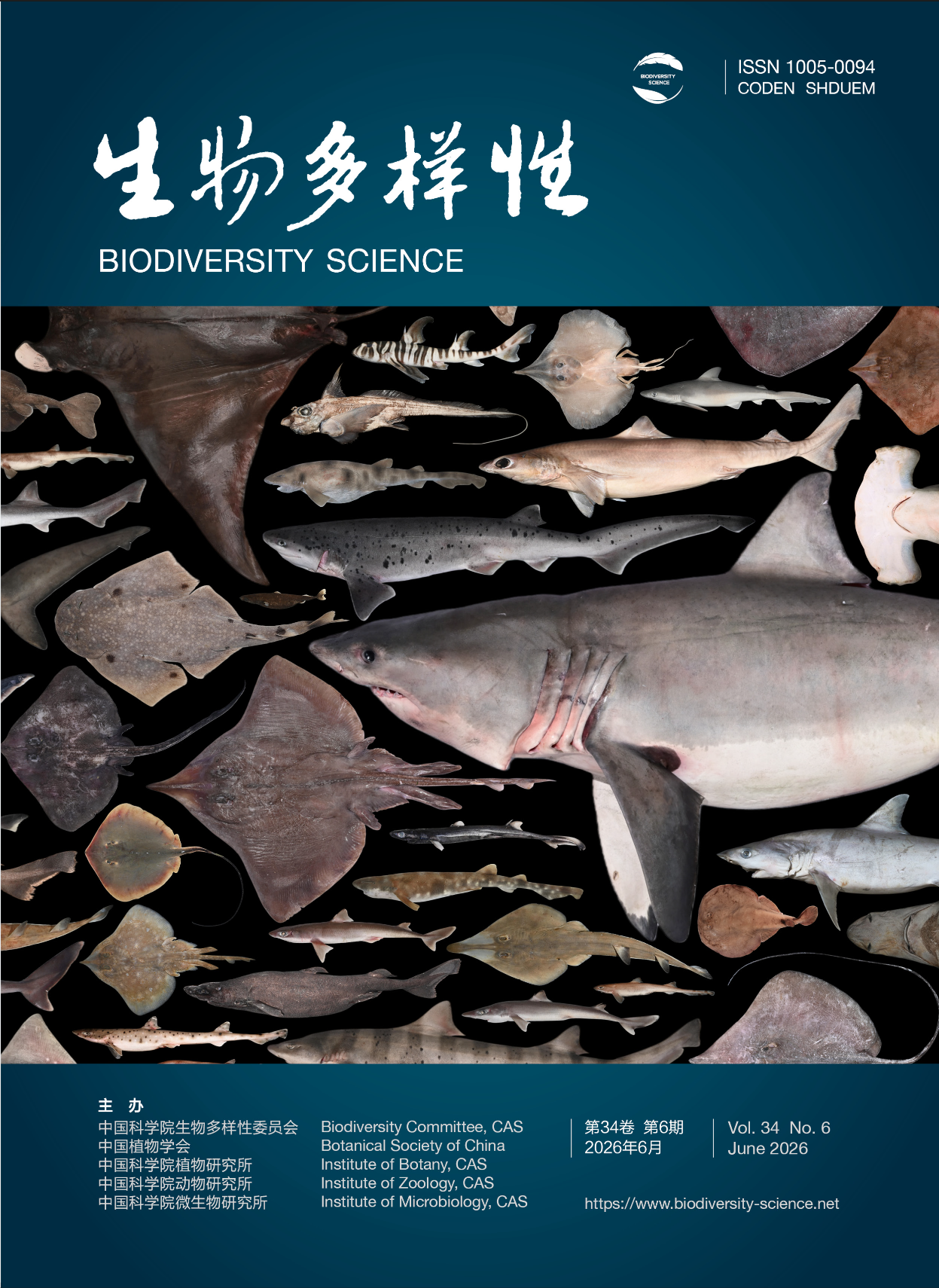
    Comparison of similarity between Chondrichthyan fishes in China and surrounding waters and technical support for CITES compliance
    Haoming Lu, Hao Xu, Lifeng Zhang, Yan Li, Junxi Hu, Baowei Zhang, Jie Zhang
    Biodiv Sci. 2026, 34 (6):  26007.  doi: 10.17520/biods.2026007
    Abstract ( 78 )   PDF (1778KB) ( 22 )   Save
    Related Articles | Metrics

    Background: Chondrichthyan fishes are among the oldest and most widely distributed vertebrate groups, playing a vital role in marine ecosystems. Although China provides critical habitats for chondrichthyan fishes, domestic research on this group has historically been limited. With the global decline of fishery resources, these species have attracted increasing international attention. Consequently, regional fisheries organizations and international conventions have imposed mandatory restrictions on the resource utilization and trade of sharks. Specifically, the Convention on International Trade in Endangered Species of Wild Fauna and Flora (CITES) requires Contracting Parties to issue “Non-detriment Findings” (NDFs) for the international trade of Appendix II species and non-commercial trade of Appendix I species. As a key Contracting Party to CITES, China is still in the early stages of developing NDFs. For its future NDF development, it is essential to reference the diversity data and life history parameters of sharks from neighboring countries and regions. 

    Methods: This study primarily relied on a comprehensive literature review to compile separate checklists of chondrichthyan species in the waters of Japan, Southeast Asia, Australia, and New Zealand. The Jaccard similarity coefficient was then employed to compare their species composition with that of chondrichthyan fishes in Chinese waters. Furthermore, relevant compliance techniques for chondrichthyan fishes listed in the CITES Appendices were discussed. 

    Results: Japan, Southeast Asia, Australia, and New Zealand harbored 225, 284, 338, and 120 species of chondrichthyan fishes, respectively. The Jaccard similarity coefficients between these regions and China were 0.6080, 0.4519, 0.2195, and 0.1416, respectively. A review of the CITES Appendices and the submission status of NDFs revealed that, by March 2026, CITES had listed 216 species belonging to 35 genera, 14 families, and 5 orders, with 15 Contracting Parties having submitted 127 NDFs for 56 appendix-listed species. Given that China’s NDF development is in its infancy, this study selected the silky shark (Carcharhinus falciformis) to establish a six-step NDF framework for the introduction from the sea (IFS) of CITES Appendix II chondrichthyan species. Our preliminary assessment indicates that the overall risk level for the introduction of the silky shark from the sea is medium. This framework can provide methodological and data support for CITES authorities when formulating formal NDFs for specific silky shark cases, while also identifying the steps that require further data supplementation and expert consultation. 

    Significance: This study further clarifies the diversity patterns of chondrichthyan fishes in China and its surrounding waters. It provides baseline information and technical support for China’s CITES compliance, offering a valuable reference for the conservation of chondrichthyan diversity and the sustainable utilization of resources in China and adjacent marine regions.

    The impact of road disturbance on Artiodactyla: A case study from the Dalaoling National Nature Reserve in Hubei Province, China
    Meng Zhang, Rongjun Cao, Gongfang Wang, Qiongjiu Zou, Linting Wu, Weichang Fu, Youbing Zhou, Gangzhi Peng
    Biodiv Sci. 2026, 34 (6):  26050.  doi: 10.17520/biods.2026050
    Abstract ( 134 )   PDF (1694KB) ( 36 )   Save
    Related Articles | Metrics

    Background & Aim: The expansion of road networks, while enhancing public mobility, exerts discernible impacts on wildlife behavior. However, the correlation between wildlife characteristics and the road effect zone remains poorly explored. The Hubei Dalaoling National Nature Reserve is traversed by Provincial Road S287, and the core area is divided into two parts. As linear infrastructures, roads potentially impose disturbances on wildlife, particularly artiodactyl species. 

    Method: This study used infrared cameras within a 3km buffer on each side of Provincial Road S287 in the Hubei Dalaoling National Nature Reserve from January 2020 to July 2025. Based on data from 388 camera traps, we analyzed the road effect zones of six artiodactyl species using generalized linear models.Furthermore, correlation analysis was used to explore the associations of the road effect zone with body weight and the diurnal-nocturnal index. 

    Results: All six artiodactyl species exhibited dual road effect zone thresholds, with interspecific variation. The tufted deer(Elaphodus cephalophus) had near and far road effect zone thresholds at 600 m and 1,700 m, the Chinese muntjac(Muntiacus reevesi) at 1,300 m and 1,700 m; the Chinese serow(Capricornis milneedwardsii), Chinese goral(Naemorhedus griseus), and forest musk deer(Moschus berezovskii) at 1400 m and 1,800 m; and the wild boar(Sus scrofa) at 900 m and 1300 m. The diurnal-nocturnal index was negatively correlated with both zone thresholds(rs = -0.893, P < 0.05; rs = -0.939, P < 0.05), suggesting greater road tolerance in diurnal species. Body weight showed no significant relationship with the road effect zone.

    Latin-English-Chinese-Japanese Checklist of Chinese Chondrichthyans and comparison of diversity among marine regions
    Jie Zhang, Haoming Lu, Jiajie Chen, Jiangyuan Chen, Yufan Mao, Junxi Hu, Baowei Zhang
    Biodiv Sci. 2026, 34 (6):  25522.  doi: 10.17520/biods.2025522
    Abstract ( 219 )   PDF (1751KB) ( 56 )   Save
    Related Articles | Metrics

    Aims: The Chondrichthyans is one of the oldest and most unique groups of vertebrates, with over 400 million years of evolutionary history. They play a vital role in maintaining the stability of marine ecosystems, and some species have significant economic and scientific value. From 2001 to 2024, the number of Chondrichthyan species worldwide has increased from approximately 900 to over 1200, with many new species and distribution records emerging. China, as an important habitat for Chondrichthyan fishes, currently lacks a comprehensive Checklist of Chondrichthyan species incorporating the latest information. 

    Methods: This study compiled a Checklist of Chinese Chondrichthyan species with Latin, English, Mandarin and Japanese names, based on a review of published literature, institutional collections in various marine regions of China, public databases, and nearly 20 years of field survey data from important fishing ports (up to September 30, 2025). The Checklist also includes the distribution of each species in four major marine regions of China (Yellow & Bohai Sea, East China Sea, South China Sea, and Taiwan). The G, F, and G-F indices were used to compare the diversity of Chondrichthyan fishes among these marine regions. 

    Results: China harbors 259 species of Chondrichthyan fishes, belonging to 114 genera, 59 families and 14 orders, accounting for approximately one-fifth of the world's total Chondrichthyan species. Of these, 22 are newly described after 2001, and 22 are endemic to Chinese waters. 141 species (55.73% of assessed species in China) are classified as "threatened" on the IUCN Red List. In the aforementioned marine regions, the G-F indices are 0.4655, 0.7527, 0.7393, and 0.7580, respectively. 

    Conclusion: This study updates the Checklist of Chondrichthyan species in China. This Checklist serves as a foundational framework for subsequent research and international cooperation on these fishes, and also provides an important reference for the conservation of Chondrichthyan species in Chinese waters, fisheries resource management, and the implementation of relevant international conventions.

    The scientific value of S.W. Teng’s plant specimen collections (March 1930–October 1936)
    Huaiyi Gu, Xinxiang Bai, Meijun Li
    Biodiv Sci. 2026, 34 (6):  25452.  doi: 10.17520/biods.2025452
    Abstract ( 99 )   PDF (867KB) ( 26 )   Save
    Related Articles | Metrics

    Aim: The collection of plant specimens is crucial for taxonomy research. It was not until the early 20th century that China's scientific community began independently conducting regional plant surveys and specimen collection. The botanical collecting activities of S.W. Teng, a Guizhou-born plant collector in the 1930s, unfolded against this backdrop. Examining the plant specimens collected by S.W. Teng holds significant importance for understanding the early history of botanical collecting in China, particularly in Guizhou Province. 

    Methods: We corrected the botanical names of specimens collected by S.W. Teng by collating primary data such as plant names, collection sites, and dates from herbarium collections, and re-verified information regarding collectors, collection locations, and collection dates. 

    Results: Results indicate that from March 1930 to September 1936, S.W. Teng participated in collecting a total of 2,968 plant specimens (comprising 4,778 individual specimens), representing 1,913 plant species across 878 genera and 184 families. These specimens were primarily sourced from Guizhou, Jiangsu, and Hubei provinces. By analyzing the specimen records, S.W. Teng's collection routes from 1930 to 1936 were reconstructed, and rare photographs of S.W. Teng and his assistants were presented for the first time. 

    Conclusion: It is recommended that specimens of unidentified specimens should undergo re-identification to further explore the potential value of those specimens. This study provides data support for research on the history of early plant collection in China and the botanical resources of Guizhou Province.

    Diversity patterns and influencing factors of sawflies in Mt. Wuyanling, Zhejiang Province, China
    Hailong Zhang, Haiyan Nie, Mengmeng Liu, Meicai Wei, Zejian Li
    Biodiv Sci. 2026, 34 (6):  25459.  doi: 10.17520/biods.2025459
    Abstract ( 181 )   PDF (1593KB) ( 46 )   Save
    Related Articles | Metrics

    Aim: This study investigated sawflies communities in the Wuyanling National Nature Reserve, which preserves the most intact mid-subtropical evergreen broad-leaved forest in East China. The objectives were to: (1) explore the spatiotemporal distribution patterns of sawfly diversity across different elevations and months; and (2) identify the environmental drivers shaping these diversity patterns. 

    Methods: We established four fixed transects along an elevational gradient (categorized as low, lower-mid, mid, and high elevations) within the reserve. Repeated systematic surveys were conducted from March to July in 2023 and 2024 to compile a species checklist and obtain abundance data. 

    Results: The results showed that regarding α diversity, sawfly species diversity and richness decreased significantly with increasing elevation (P < 0.05), and sawfly richness was significantly lower in July (P < 0.05), whereas the other diversity indices showed no significant differences among months (P > 0.05). Generalized Additive Model (GAM) results indicated that the response of species richness to elevation was characterized by multiple local peaks and valleys. Mean daily temperature exhibited a significant unimodal relationship with species richness, while humidity showed a weak non-linear effect. There were significant positive linear correlations between air pressure and species richness, as well as between elevation and community evenness. Regarding β diversity, community composition differed significantly across elevation zones and months, and was primarily driven by species turnover processes. Mantel tests revealed that the total variation in community composition and the spatial turnover component were significantly positively correlated with variations in multiple environmental factors, and community similarity decreased significantly with increasing environmental distance. 

    Conclusion: This study supplements the regional checklist of sawfly taxa and systematically reveals the spatial distribution patterns of sawfly communities in Mt. Wuyanling. These findings provide essential baseline data for regional insect diversity surveys and offer insights for biodiversity conservation in subtropical mountain ecosystems.

    Impact of grazing disturbance on the spatio-temporal distribution characteristics of Tragopan temminckii in Wanglang National Nature Reserve
    Hua Guo, Yutian Luo, Yili Dong, Lü Zhou, Shimao Yao, Xufei Zhu, Cheng Tian
    Biodiv Sci. 2026, 34 (6):  25501.  doi: 10.17520/biods.2025501
    Abstract ( 53 )   PDF (2297KB) ( 30 )   Save
    Related Articles | Metrics

    Aims: Livestock grazing is one of the primary threats to wildlife, and elucidating the responses of wildlife to grazing disturbance is crucial for species conservation. Free-ranging livestock such as cattle and horses in nature reserves can degrade wildlife habitats. However, quantitative assessments of how livestock influence the spatiotemporal distribution patterns of pheasants remain scarce. 

    Methods: From 2011 to 2015, we conducted this study at Wanglang National Nature Reserve in Sichuan Province, China. Camera trap surveys were implemented targeting Tragopan temminckii and livestock (cattle and horses). Multi-species occupancy models, kernel density estimation, and the avoidance-attraction ratios (AAR) were employed to investigate the effects of livestock grazing on the activity rhythm, habitat use, and occupancy of Tragopan temminckii

    Results: The results revealed that in the temporal dimension, the activity pattern of Tragopan temminckii overlapped highly with that of livestock (coefficient of overlap ∆4 = 0.74, 95% CI: 0.73–0.95), and the species exhibited significant behavioral avoidance of livestock (AAR = 3.17 ± 2.44). In the spatial dimension, the marginal occupancy probability of Tragopan temminckii was positively correlated with shrub coverage (β = 0.16) and canopy density (β = 0.06), but negatively correlated with litter thickness (β = –0.36), herb coverage (β = –0.41), altitude (β = –0.20), and bamboo coverage (β = –0.10). For livestock, the marginal occupancy probability was positively correlated with canopy density (β = 0.39) and negatively correlated with litter thickness (β = –0.10), distance to river (β = –0.15), altitude (β = –0.33), shrub coverage (β = –0.54), and bamboo coverage (β = –0.25). The habitat use of Tragopan temminckii was jointly affected by livestock and other ecological factors. The presence of livestock altered the occupancy response of Tragopan temminckii to bamboo coverage, altitude, and distance to river, driving the species to prefer habitats with higher bamboo coverage, lower altitude, and greater distance from river. 

    Conclusion: We propose that grazing management measures should be implemented to restore the diversity of the alpine ecosystem in Wanglang National Nature Reserve.

    Comparison of potential distribution in East Asian-North American disjunct genera in response to future climate change
    Li Cai, Liping Ge, Danxiao Peng, Haihua Hu, Zhiduan Chen, Yanting Niu
    Biodiv Sci. 2026, 34 (6):  25478.  doi: 10.17520/biods.2025478   cstr: 32101.14.biods.2025478
    Abstract ( 278 )   PDF (2914KB) ( 54 )   Save
    Related Articles | Metrics

    Aims: This study aims to predict changes in plant distribution ranges under future climate change scenarios, providing critical insights for assessing species survival potential and biodiversity risks. The East Asian-North American disjunct genera, characterized by their intercontinental phylogenetic relationships and niche conservatism, serve as an ideal model system for investigating differential biotic responses to climate change across regions. This research systematically compares the responses of these plants to climate change between East Asia and North America, and explores the role of life forms (including trees, shrubs, lianas, and herbs) in this process. The goal is to deepen the understanding of biological response mechanisms to climate change and offer scientific support for developing targeted conservation strategies. 

    Methods: Fifteen East Asian-North American disjunct genera with comparable intercontinental distributional ranges, comprising 71 species in total, were selected. The MaxEnt model was utilized to simulate their potential distributions under both current and future climate scenarios. Based on the modeling results, responses to future climate change were compared between regions (East Asia vs. North America) and among different life forms, focusing on three aspects: changes in suitable habitat area, latitudinal shift trends, and the degree of habitat fragmentation. 

    Results: (1) North American species exhibited greater sensitivity to climate change than East Asian species, evidenced by a higher proportion of species experiencing significant changes in distribution area, more prevalent northward migration trends, and more pronounced habitat fragmentation. (2) The response of life forms to climate change showed regional differences: trees and lianas demonstrated stronger responses and more drastic distributional changes in North America; shrubs showed similar migration trends in both regions; herbs in East Asia displayed stronger fragmentation, whereas in North America they showed trends of expansion and enhanced connectivity. 

    Conclusion: This study reveals regional differences and life-form dependencies in the responses of East Asian-North American disjunct taxa to climate change. It indicates that macro-topographic patterns and life-form characteristics jointly drive these disparities, highlighting the key role of topography in determining species' climatic resilience. The findings provide important scientific support for identifying cross-regional conservation priorities and formulating life-form-specific adaptation strategies.


  • wechat:swdyx_wx