

生物多样性 ›› 2026, Vol. 34 ›› Issue (8): 26138. DOI: 10.17520/biods.2026138 cstr: 32101.14.biods.2026138
张萌, 王彦平*( )(
 )
收稿日期:2026-04-16
接受日期:2026-07-08
出版日期:2026-08-20
发布日期:2026-10-21
通讯作者:
*E-mail: wangyanping@njnu.edu.cn
基金资助:
Meng Zhang, Yanping Wang*()()
Received:2026-04-16
Accepted:2026-07-08
Online:2026-08-20
Published:2026-10-21
Contact:
*E-mail: wangyanping@njnu.edu.cn
Supported by:摘要:
Zeta (ζ)多样性是量化多站点物种组成变化的核心指数, 其定义为特定数量站点间共享物种的平均数。通过系统评估该指数如何随共享站点数量的增加而变化, 能够构建从稀有种到常见种的完整分布谱系, 进而为解析多尺度群落构建机制提供新的视角。以zeta多样性为核心的一系列方法学不断拓展与整合, 共同构成了zeta多样性分析框架, 该框架已成为理解生物多样性时空动态的重要工具。本文旨在系统综述该框架的最新进展, 以全面反映其发展全貌。首先, 追溯了zeta多样性分析框架的理论起源, 并概述了其在不同生物类群与生态系统中的研究现状。其次, 梳理了其核心度量(zeta多样性)、关键衍生模式(zeta递减、zeta衰减)与分析工具(留存率、多站点广义相异性模型)的演进过程, 并阐述了该框架向功能性状和种间互作网络等前沿维度的拓展。再次, 总结了该框架在评估保护有效性、诊断生物威胁、支持空间规划等保护实践中的具体应用。最后, 讨论了该框架当前面临的数据与方法挑战, 并对未来研究方向进行了展望。本文对于深入了解zeta多样性的前沿进展以及推动其在国内生物多样性保护研究与管理实践中的深入应用具有重要意义。
张萌, 王彦平 (2026) Zeta多样性研究进展: 分析方法、保护应用及展望. 生物多样性, 34, 26138. DOI: 10.17520/biods.2026138.
Meng Zhang, Yanping Wang (2026) A review of zeta diversity: Analysis methods, conservation applications, and future perspectives. Biodiversity Science, 34, 26138. DOI: 10.17520/biods.2026138.
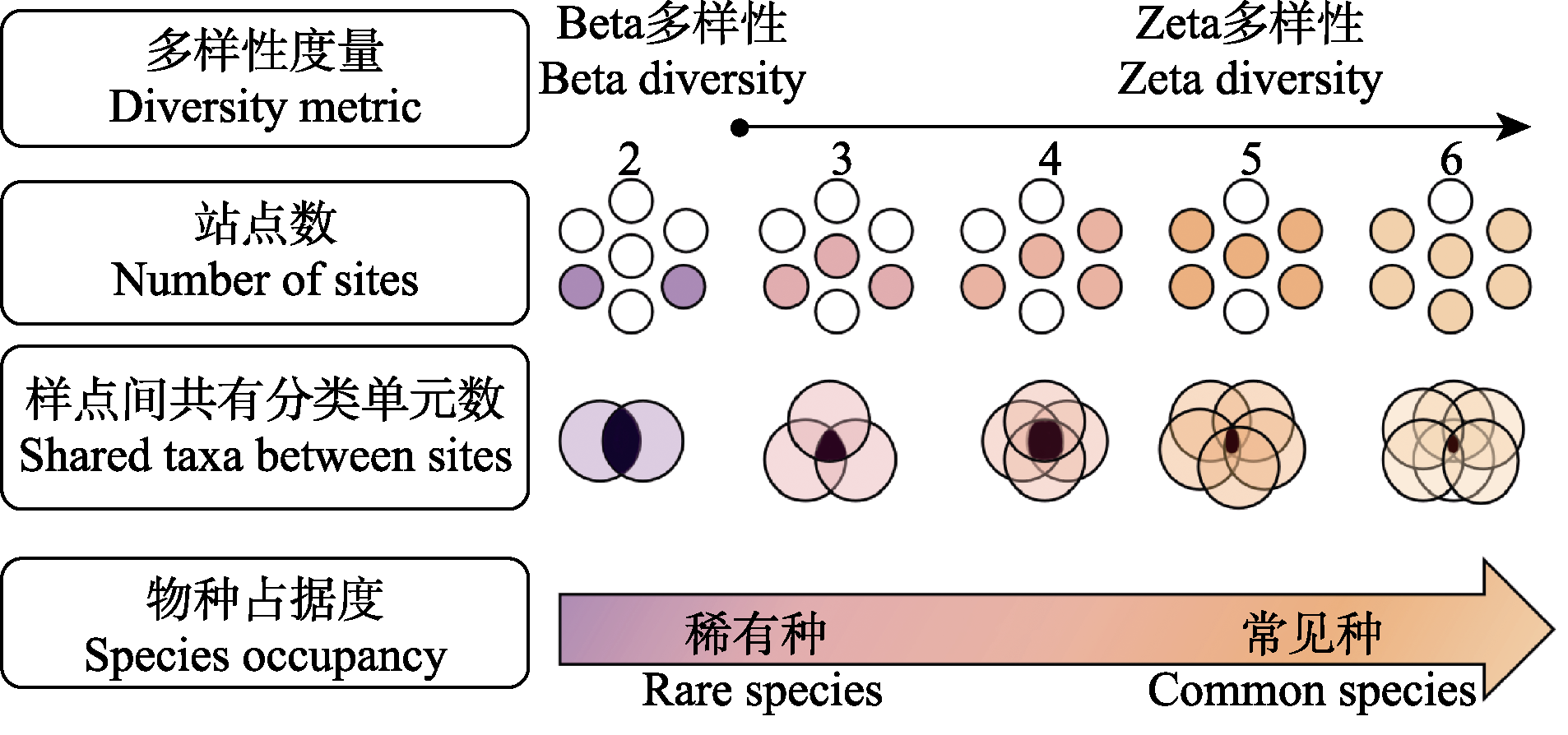
图1 Zeta多样性涵盖从稀有种到常见种群落组分更替的原理示意图, 改编自Bay等(2020)。
Fig. 1 Schematic illustrating how zeta diversity encompasses species turnover from rare to common community members, adapted from Bay et al. (2020).
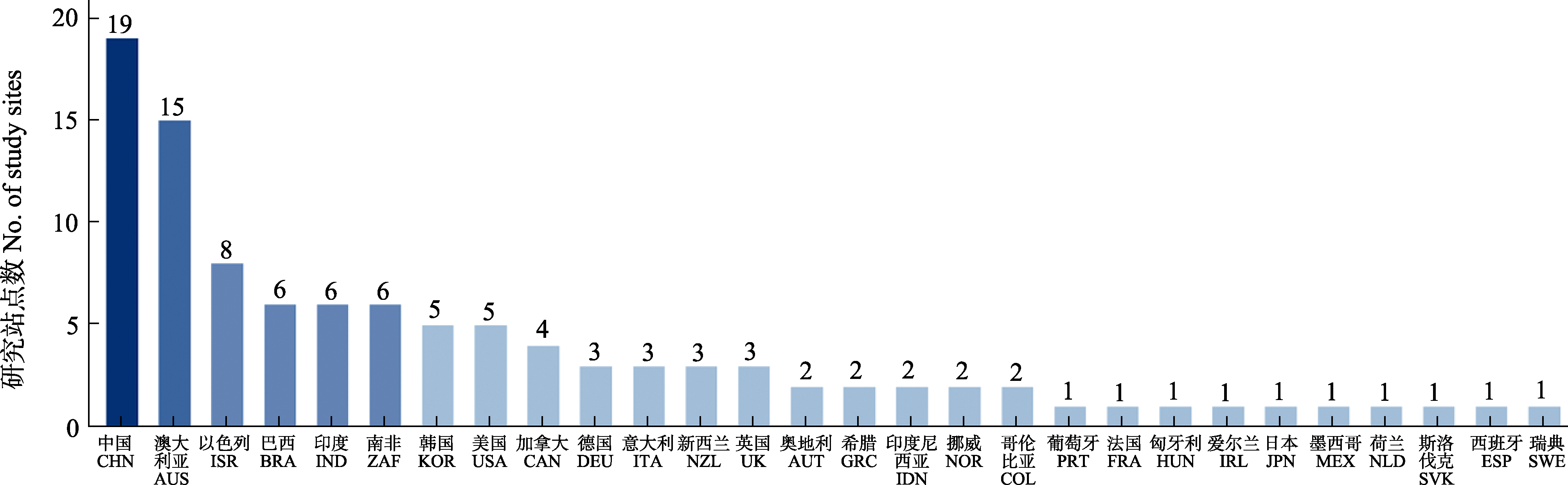
图2 全球zeta多样性实证研究的地理分布图。该图由截至2025年12月, 以“zeta diversity”及其中文译名为关键词, 在Web of Science核心合集(https://www.webofscience.com)和中国知网(CNKI)数据库(https://www.cnki.net)检索并筛选后所得的97篇核心文献中可明确地理定位的全部研究地点绘制而成(已去除重复、综述及无关内容)。
Fig. 2 Global geographic distribution of empirical studies on zeta diversity. This figure is based on all geolocatable study sites extracted from 97 core publications. These publications were retrieved, as of December 2025, from the Web of Science Core Collection (https://www.webofscience.com) and the China National Knowledge Infrastructure (CNKI) database (https://www.cnki.net) using the keywords “zeta diversity” and its Chinese translation. Duplicate entries, review articles, and irrelevant content have been removed. CHN, China; AUS, Australia; ISR, Israel; BRA, Brazil; IND, India; ZAF, South Africa; KOR, Republic of Korea; USA, United States; CAN, Canada; DEU, Germany; ITA, Italy; NZL, New Zealand; UK, United Kingdom; AUT, Austria; GRC, Greece; IDN, Indonesia; NOR, Norway; COL, Colombia; PRT, Portugal; FRA, France; HUN, Hungary; IRL, Ireland; JPN, Japan; MEX, Mexico; NLD, Netherlands; SVK, Slovakia; ESP, Spain; SWE, Sweden.
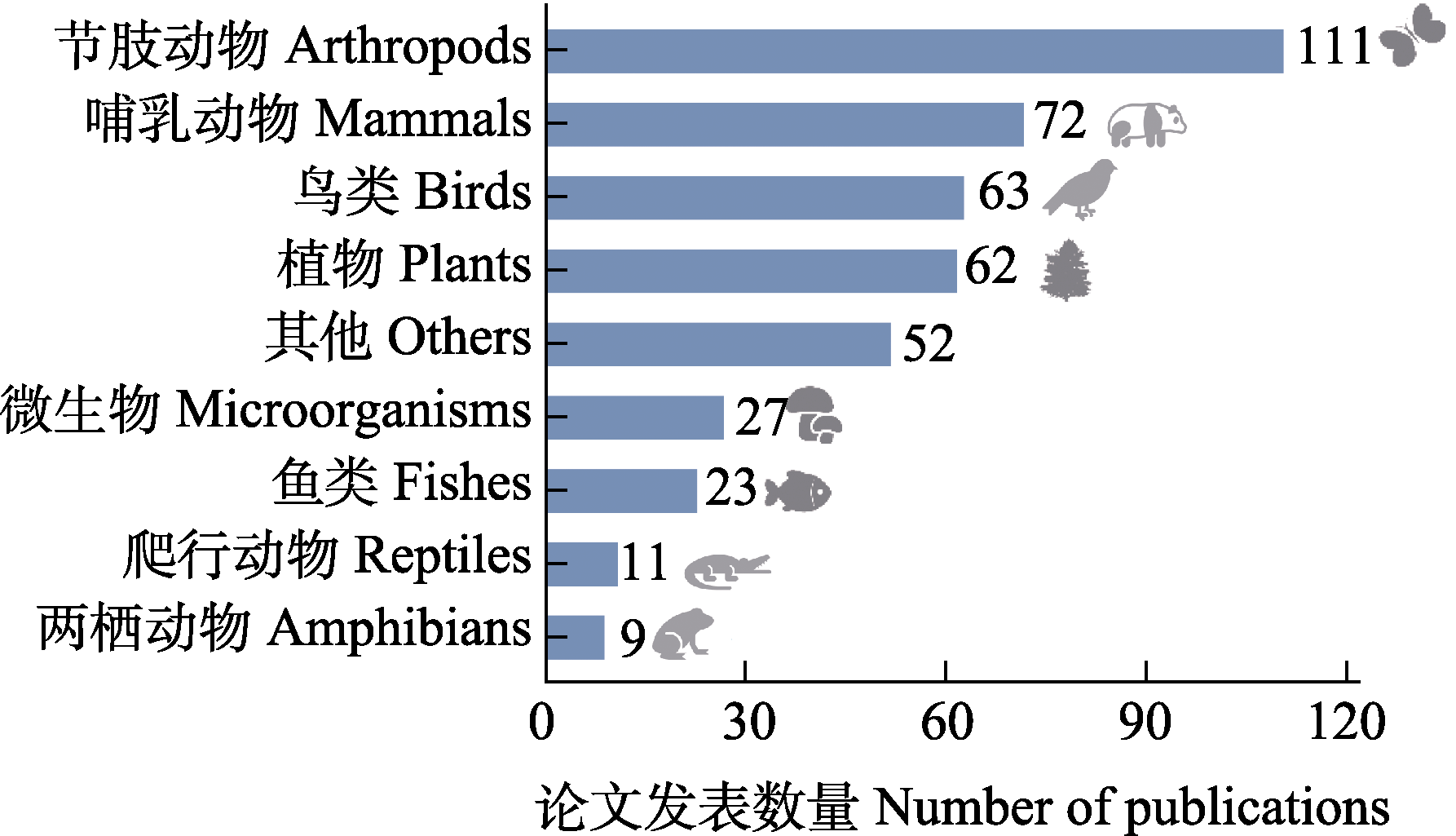
图3 Zeta多样性研究在不同生物类群中的数量分布。该图展示了截至2025年12月, 基于以“zeta diversity”及其中文译名为关键词, 在Web of Science核心合集(https://www.webofscience.com)和中国知网(CNKI)数据库(https://www.cnki.net)检索并筛选后所得的97篇核心文献的分析结果。
Fig. 3 Distribution of research effort on zeta diversity across different taxonomic groups. This figure presents the distribution of the number of publications across taxonomic groups, based on an analysis of 97 core publications retrieved, as of December 2025, from the Web of Science Core Collection (https://www.webofscience.com) and the China National Knowledge Infrastructure (CNKI) database (https://www.cnki.net) using the keywords “zeta diversity” and its Chinese translation.
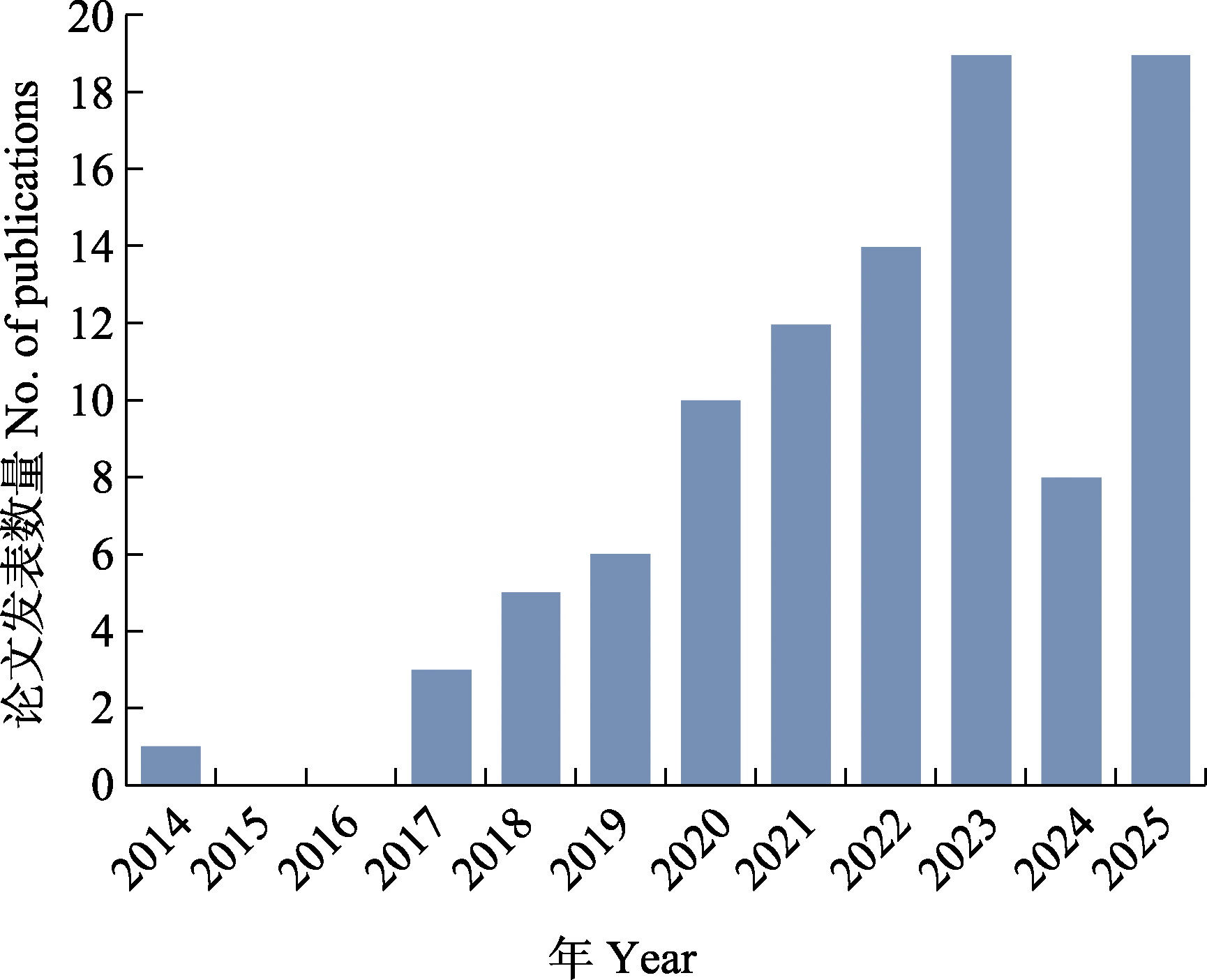
图4 Zeta多样性在2014-2025年期间的研究趋势。该图展示了截至2025年12月, 基于以“zeta diversity”及其中文译名为关键词, 在Web of Science核心合集(https://www.webofscience.com)和中国知网(CNKI)数据库(https://www.cnki.net)检索并筛选后所得的97篇核心文献的分析结果。
Fig. 4 Research trends in zeta diversity from 2014 to 2025. This figure presents an analysis of 97 core publications retrieved, as of December 2025, from the Web of Science Core Collection (https://www.webofscience.com) and the China National Knowledge Infrastructure (CNKI) database (https://www.cnki.net) using the keywords “zeta diversity” and its Chinese translation.
| 概念 Concept | 定义 Definition | 参考文献 References |
|---|---|---|
| Zeta多样性 Zeta diversity | 一个用于量化多站点物种组成变化的概念与度量框架。其核心度量ζi定义为任意站点(i ≥ 2)共享的物种平均数。通过计算从ζ2到ζi (i为总站点数)的序列, 能整合从稀有种到常见种的完整分布谱系。A conceptual and metric framework for quantifying species compositional change across multiple sites. Its core metric ζi is defined as the average number of species shared by any sites (i ≥ 2). By calculating the sequence from ζ2 to ζi, it integrates the full profile of species ranging from rare to common. | Hui & McGeoch, |
| Zeta阶数 Zeta order | 指计算zeta多样性时所涉及的站点数量, 记为i (i ≥ 2)。ζi定义为任意i个站点共享物种的平均数, 其中的i即为zeta阶数。The zeta order denotes the number of sites considered in the calculation of zeta diversity, represented by i (i ≥ 2). ζi is defined as the mean number of species shared by any i sites, where i is the zeta order. | Hui & McGeoch, |
| Zeta递减 Zeta decline | 指观测到的共享物种数(ζi)随共享站点数(i)增加而呈现的单调递减趋势。最常见的两种数学形式是指数递减和幂律递减, 分别关联于以随机性过程和确定性过程为主导的群落构建机制。Refers to the monotonically decreasing trend of the observed number of shared species (ζi) as the number of shared sites (i) increases. The two most common mathematical forms are exponential decline and power-law decline, which are associated with community assembly mechanisms dominated by stochastic processes and deterministic processes, respectively. | Hui & McGeoch, |
| Zeta衰减 Zeta decay | 指在固定阶数i下, 平均共有物种数ζi随站点间空间距离或调查时间间隔增大而变化的关系。Zeta decay refers to the change in the average number of shared species (ζi) at a fixed order i with increasing spatial distance between sites or temporal interval between surveys. | Hui & McGeoch, |
| 留存率 Retention rate | 定义为连续阶zeta值的比值(ζi+1/ζi)。其生态学含义可解释为: 一个已出现在i个站点中的物种, 继续出现在第i + 1个站点中的条件概率。绘制留存率与阶数i的关系图, 即得到物种留存率曲线。Defined as the ratio of consecutive zeta values (ζi+1/ζi). Its ecological interpretation is the conditional probability that a species already present in i sites will also occur in the i + 1 site. Plotting the retention rate against order i yields the species retention curve. | McGeoch et al., |
| 多站点广义相异性模型 Multi-site generalized dissimilarity modelling (MS-GDM) | Zeta多样性框架与统计建模结合的核心分析工具。它将回归模型的响应变量从“成对相异性”扩展为“多站点相似性” (即ζi), 通过系统构建并比较从低阶到高阶ζi的独立模型, 量化并区分驱动稀有种与常见种群落周转的差异化环境与空间机制。A core analytical tool that integrates the zeta diversity framework with statistical modelling. It extends the response variable of the regression model from “pairwise dissimilarity” to “multi-site similarity” (i.e., ζi). By systematically building and comparing independent models for ζi from low to high orders, it quantifies and distinguishes the differential environmental and spatial mechanisms driving the turnover of rare and common species. | Latombe et al., |
| 功能zeta多样性 Functional zeta diversity | 将功能性状整合进zeta多样性框架的方法。其核心在于将分析的基本单元从“物种”转换为“功能实体” (如基于功能群或功能性状距离), 从而将对物种共存格局的描述, 深化为对功能特征空间周转机制的量化。An approach that integrates functional traits into the zeta diversity framework. Its core idea is to shift the basic unit of analysis from “species” to “functional entities” (e.g., based on functional groups or functional trait distances), thereby transforming the description of species co-occurrence patterns into a quantification of the spatial turnover mechanisms of functional characteristics. | Simons et al., Dai et al., |
| 互作zeta多样性 Interaction zeta diversity (ζn,int) | 将zeta多样性框架拓展至种间互作网络维度的方法。其分析的基本单元从一个“物种”转换为一个具体的“物种对链接” (如捕食、寄生关系)。ζn,int表示在所有可能的n个站点组合中, 每个组合所共享的互作链接数量的平均值, 用于量化互作网络的共存与周转格局。A method that extends the zeta diversity framework to the dimension of interspecific interaction networks. The basic unit of analysis shifts from a “species” to a specific “species-pair interaction link” (e.g., predation, parasitism). ζn,int represents the average number of shared interaction links across all possible combinations of n sites, used to quantify the co-occurrence and turnover patterns of interaction networks. | Henriksen et al., |
表1 Zeta多样性核心术语定义表
Table 1 Core terminology definitions of zeta diversity
| 概念 Concept | 定义 Definition | 参考文献 References |
|---|---|---|
| Zeta多样性 Zeta diversity | 一个用于量化多站点物种组成变化的概念与度量框架。其核心度量ζi定义为任意站点(i ≥ 2)共享的物种平均数。通过计算从ζ2到ζi (i为总站点数)的序列, 能整合从稀有种到常见种的完整分布谱系。A conceptual and metric framework for quantifying species compositional change across multiple sites. Its core metric ζi is defined as the average number of species shared by any sites (i ≥ 2). By calculating the sequence from ζ2 to ζi, it integrates the full profile of species ranging from rare to common. | Hui & McGeoch, |
| Zeta阶数 Zeta order | 指计算zeta多样性时所涉及的站点数量, 记为i (i ≥ 2)。ζi定义为任意i个站点共享物种的平均数, 其中的i即为zeta阶数。The zeta order denotes the number of sites considered in the calculation of zeta diversity, represented by i (i ≥ 2). ζi is defined as the mean number of species shared by any i sites, where i is the zeta order. | Hui & McGeoch, |
| Zeta递减 Zeta decline | 指观测到的共享物种数(ζi)随共享站点数(i)增加而呈现的单调递减趋势。最常见的两种数学形式是指数递减和幂律递减, 分别关联于以随机性过程和确定性过程为主导的群落构建机制。Refers to the monotonically decreasing trend of the observed number of shared species (ζi) as the number of shared sites (i) increases. The two most common mathematical forms are exponential decline and power-law decline, which are associated with community assembly mechanisms dominated by stochastic processes and deterministic processes, respectively. | Hui & McGeoch, |
| Zeta衰减 Zeta decay | 指在固定阶数i下, 平均共有物种数ζi随站点间空间距离或调查时间间隔增大而变化的关系。Zeta decay refers to the change in the average number of shared species (ζi) at a fixed order i with increasing spatial distance between sites or temporal interval between surveys. | Hui & McGeoch, |
| 留存率 Retention rate | 定义为连续阶zeta值的比值(ζi+1/ζi)。其生态学含义可解释为: 一个已出现在i个站点中的物种, 继续出现在第i + 1个站点中的条件概率。绘制留存率与阶数i的关系图, 即得到物种留存率曲线。Defined as the ratio of consecutive zeta values (ζi+1/ζi). Its ecological interpretation is the conditional probability that a species already present in i sites will also occur in the i + 1 site. Plotting the retention rate against order i yields the species retention curve. | McGeoch et al., |
| 多站点广义相异性模型 Multi-site generalized dissimilarity modelling (MS-GDM) | Zeta多样性框架与统计建模结合的核心分析工具。它将回归模型的响应变量从“成对相异性”扩展为“多站点相似性” (即ζi), 通过系统构建并比较从低阶到高阶ζi的独立模型, 量化并区分驱动稀有种与常见种群落周转的差异化环境与空间机制。A core analytical tool that integrates the zeta diversity framework with statistical modelling. It extends the response variable of the regression model from “pairwise dissimilarity” to “multi-site similarity” (i.e., ζi). By systematically building and comparing independent models for ζi from low to high orders, it quantifies and distinguishes the differential environmental and spatial mechanisms driving the turnover of rare and common species. | Latombe et al., |
| 功能zeta多样性 Functional zeta diversity | 将功能性状整合进zeta多样性框架的方法。其核心在于将分析的基本单元从“物种”转换为“功能实体” (如基于功能群或功能性状距离), 从而将对物种共存格局的描述, 深化为对功能特征空间周转机制的量化。An approach that integrates functional traits into the zeta diversity framework. Its core idea is to shift the basic unit of analysis from “species” to “functional entities” (e.g., based on functional groups or functional trait distances), thereby transforming the description of species co-occurrence patterns into a quantification of the spatial turnover mechanisms of functional characteristics. | Simons et al., Dai et al., |
| 互作zeta多样性 Interaction zeta diversity (ζn,int) | 将zeta多样性框架拓展至种间互作网络维度的方法。其分析的基本单元从一个“物种”转换为一个具体的“物种对链接” (如捕食、寄生关系)。ζn,int表示在所有可能的n个站点组合中, 每个组合所共享的互作链接数量的平均值, 用于量化互作网络的共存与周转格局。A method that extends the zeta diversity framework to the dimension of interspecific interaction networks. The basic unit of analysis shifts from a “species” to a specific “species-pair interaction link” (e.g., predation, parasitism). ζn,int represents the average number of shared interaction links across all possible combinations of n sites, used to quantify the co-occurrence and turnover patterns of interaction networks. | Henriksen et al., |
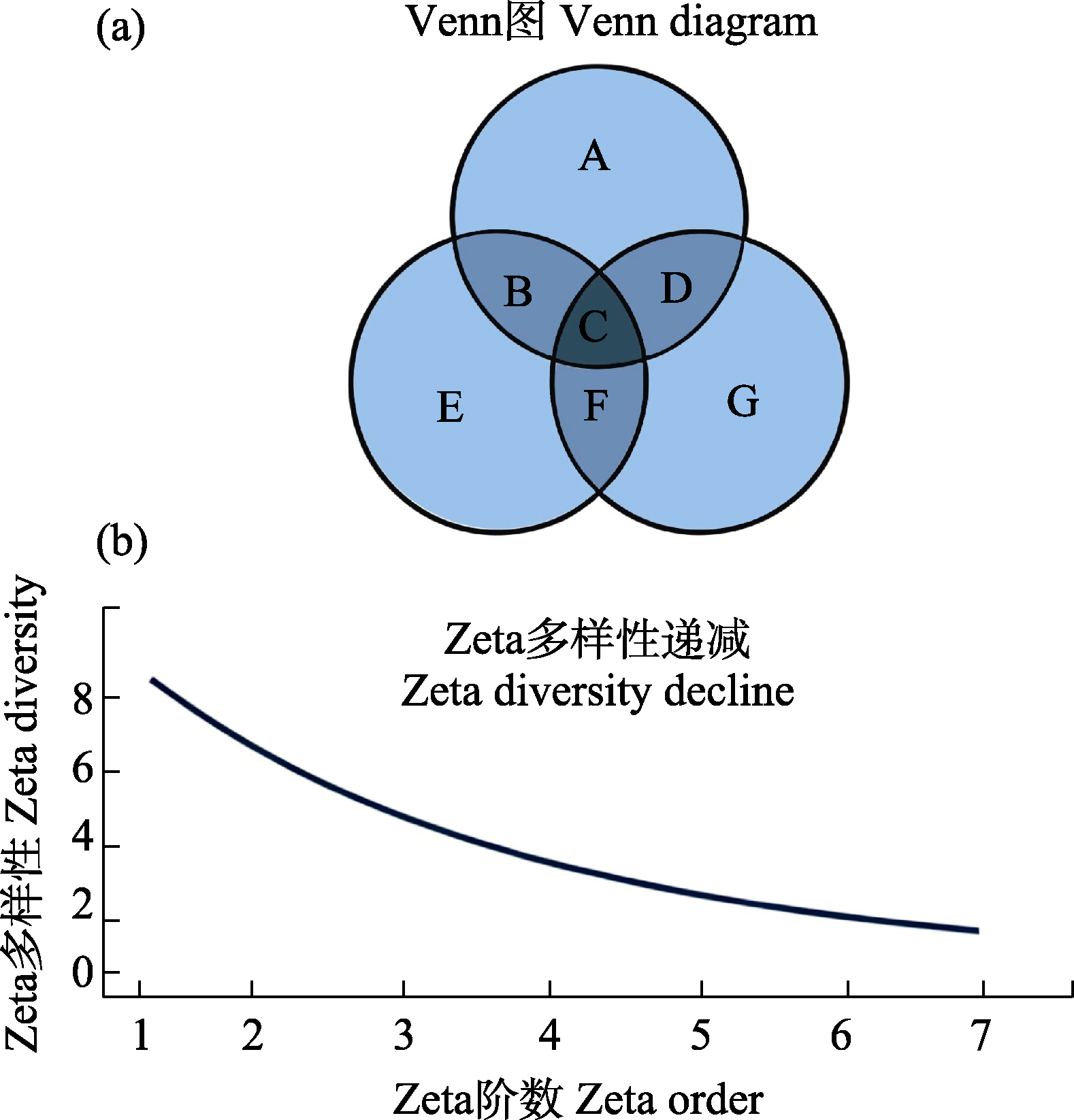
图5 Zeta多样性的核心概念与分区思想示意图。(a)分区思想图示。Venn图以3个相互重叠的集合(代表3个站点或群落)为例, 阐释了zeta多样性的“分区思想”: 其中物种被划分为7个互斥的子集(组分A-G)。令AB表示组分A和B中物种的并集, |A|表示组分A中的物种数。基于zeta多样性的定义, 有ζ1 = (|ABCD| + |EFBC| + |GFCD|)/3, ζ2 = (|BC| + |CD| + |FC|)/3, 以及ζ3 = |C|; 在1个、2个和3个站点中新发现的物种数分别为S1 = ζ1, S2 = (|ABCDEF| + |EFCBDG| + |GFCDAB|)/3 = 2ζ1 - ζ2, 以及S3 = |ABCDEFG| = 3ζ1 - 3ζ2 + ζ3, 由于ζ3代表一个独特的多样性组分, 它不能仅表示为ζ1和ζ2 (即β多样性组分)的函数。(b) Zeta多样性递减曲线。展示了zeta多样性(ζi)随zeta阶数(i, 即共享的站点数量)增加而单调递减的典型格局, 称为“zeta递减”。概念与框架改编自Hui和McGeoch (2014)。
Fig. 5 Schematic diagram of the core concept and partitioning idea of zeta diversity. (a) Illustration of the partitioning idea. The Venn diagram, using three overlapping sets (representing three sites or communities) as an example, explains the “partitioning idea” of zeta diversity: species are divided into seven mutually exclusive subsets (components A to G). Let AB denote the union of species in components A and B, and |A| denote the number of species in component A. Based on the definition of zeta diversity, we have ζ1 = (|ABCD| + |EFBC| + |GFCD|)/3, ζ2 = (|BC| + |CD| + |FC|)/3, and ζ3 = |C|; the number of species newly discovered in one, two, and three samples are S1 = ζ1, S2 = (|ABCDEF| + |EFCBDG| + |GFCDAB|)/3 = 2ζ1 - ζ2, and S3 = |ABCDEFG| = 3ζ1 - 3ζ2 + ζ3, respectively. As ζ3 represents a unique diversity component, it cannot be expressed as a function of ζ1 and ζ2 (the β-diversity component) only. (b) Zeta diversity decline curve. The lower panel shows the typical pattern of zeta diversity (ζi) monotonically decreasing as the zeta order (i, i.e., the number of shared sites) increases, known as “zeta decline”. Concepts and framework adapted from Hui & McGeoch (2014).
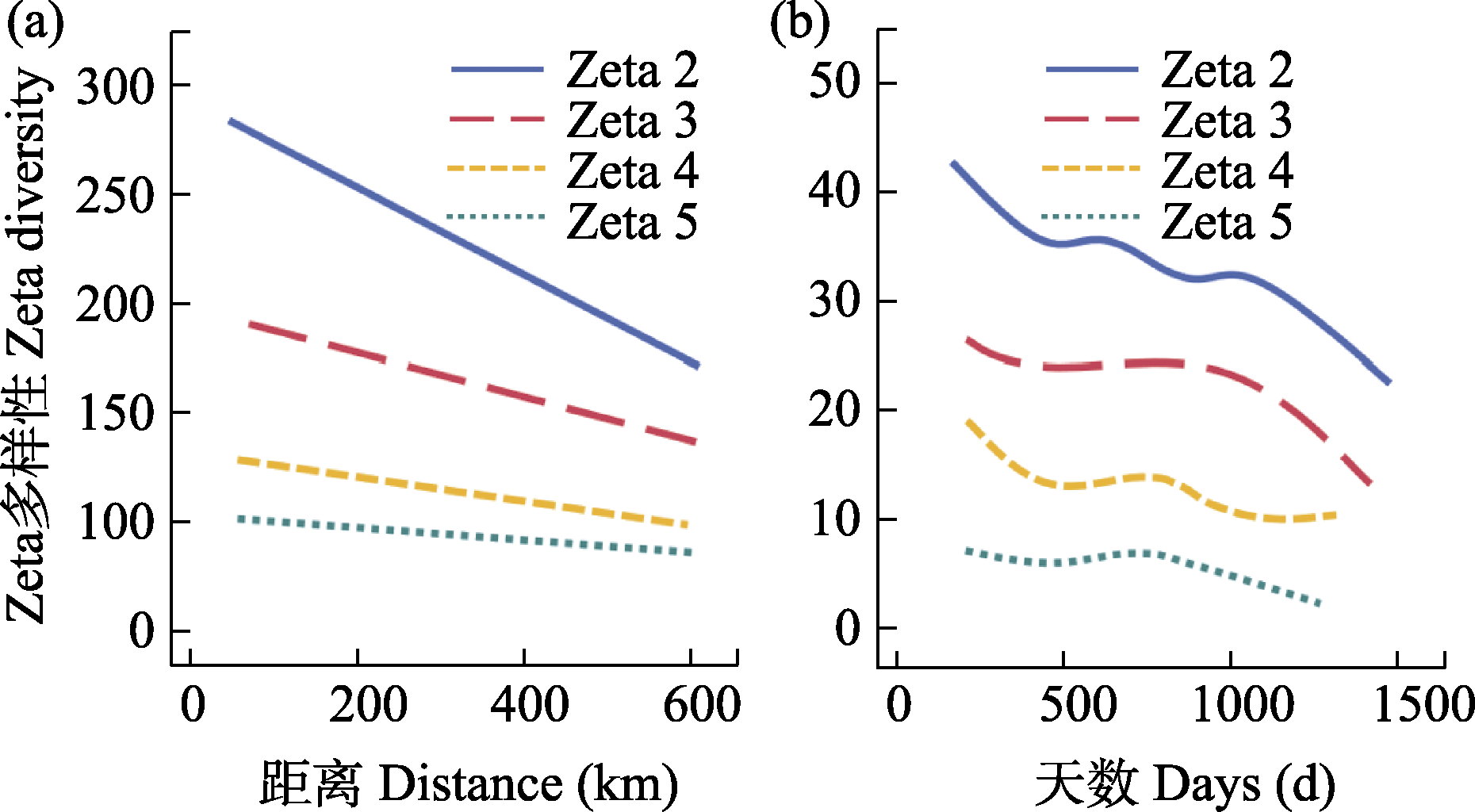
图6 Zeta多样性随距离(a)和时间(b)的衰减(zeta decay)。图中不同曲线分别代表基于不同阶数(zeta 2、zeta 3、zeta 4、zeta 5)计算的zeta多样性。改编自McGeoch等(2019)。
Fig. 6 Distance (a) and temporal (b) decay (zeta decay) of zeta diversity. Different curves represent zeta diversity calculated at different orders (zeta 2, zeta 3, zeta 4, and zeta 5), respectively. Adapted from McGeoch et al. (2019).
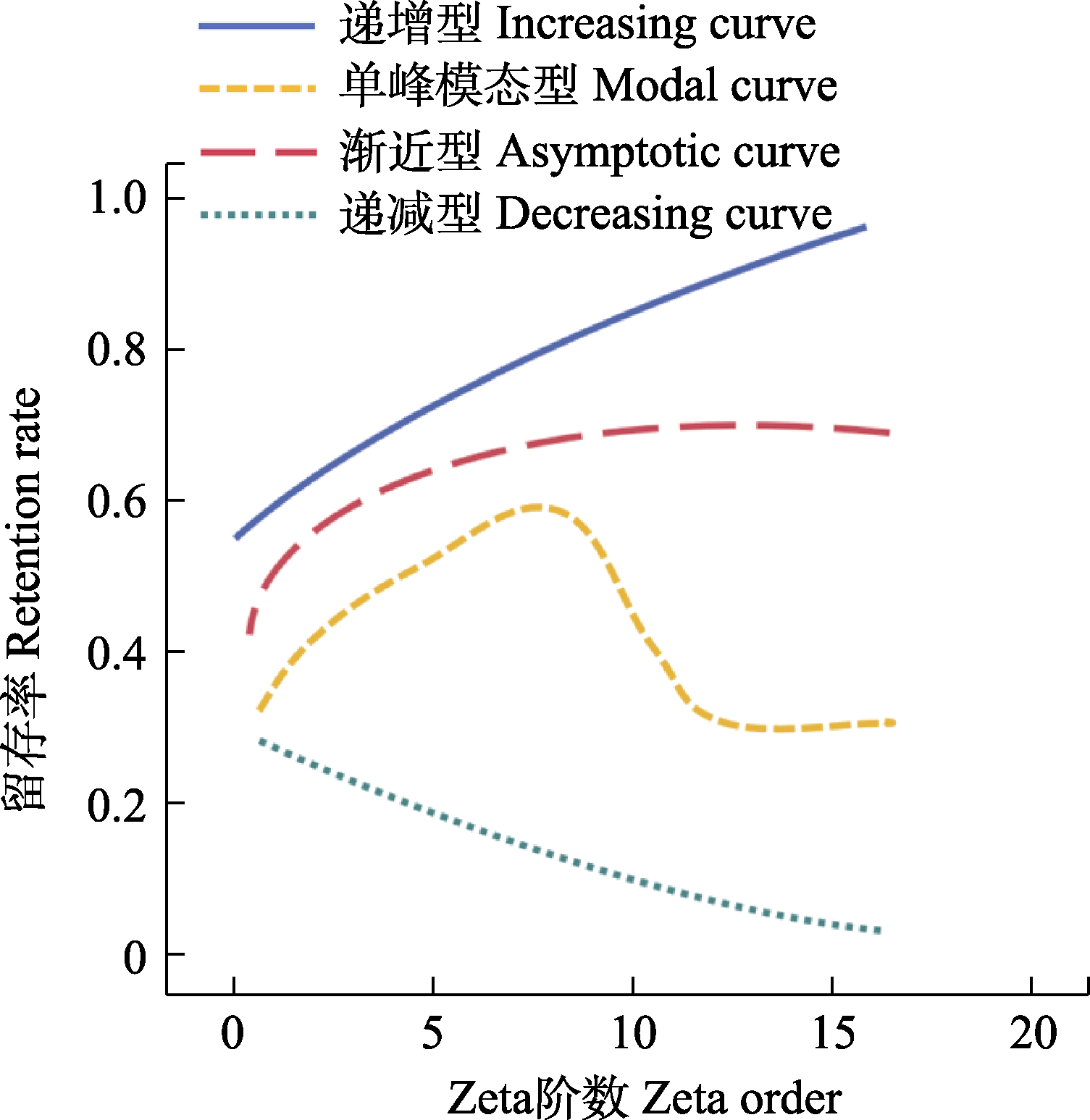
图7 4种典型格局下的留存率曲线。本图展示了留存率(ζi+1/ζi, 即物种从i个站点扩展至第i + 1个站点的条件概率)随zeta阶数(i, 分析的站点累积数量)变化的4种典型曲线形态。
Fig. 7 Retention rate curves under four typical patterns. This figure illustrates four representative morphological patterns of the retention rate (ζi+1/ζi, i.e., the conditional probability of a species extending its occurrence from i to i + 1 sites) plotted against the zeta order (i, the cumulative number of sites included in the analysis).
| [1] | Baselga A (2010) Partitioning the turnover and nestedness components of beta diversity. Global Ecology and Biogeography, 19, 134-143. |
| [2] | Bay SK, McGeoch MA, Gillor O, Wieler N, Palmer DJ, Baker DJ, Chown SL, Greening C (2020) Soil bacterial communities exhibit strong biogeographic patterns at fine taxonomic resolution. mSystems, 5, e00540-20. |
| [3] | Benites P, García-Bautista A, Bautista-Briseño N, Zárate-Hernández FE, del-Val E, Hernández-López A, Ramírez-García E, Zavala-de la Rosa DP, Vogler AP, Zaldívar-Riverón A (2025) Drivers of insect diversity and community turnover in protected tropical deciduous forests of Mexico. Environmental DNA, 7, e70143. |
| [4] | Bogoni JA, de Oliveira RF, dos Santos-Filho M (2025) Environmental and landscape changes drive medium- to large-bodied mammal species composition across an Amazon-Cerrado ecotone amid the deforestation expansion. Mammalia, 89, 339-350. |
| [5] | Britton AW, Day JJ, Doble CJ, Ngatunga BP, Kemp KM, Carbone C, Murrell DJ (2017) Terrestrial-focused protected areas are effective for conservation of freshwater fish diversity in Lake Tanganyika. Biological Conservation, 212, 120-129. |
| [6] | Buckley LB, Jetz W (2008) Linking global turnover of species and environments. Proceedings of the National Academy of Sciences, USA, 105, 17836-17841. |
| [7] | Chao A, Jost L, Chiang SC, Jiang YH, Chazdon RL (2008) A two-stage probabilistic approach to multiple-community similarity indices. Biometrics, 64, 1178-1186. |
| [8] | Chao A, Gotelli NJ, Hsieh TC, Sander EL, Ma KH, Colwell RK, Ellison AM (2014) Rarefaction and extrapolation with Hill numbers: A framework for sampling and estimation in species diversity studies. Ecological Monographs, 84, 45-67. |
| [9] | Chen YW, Zhang JJ, Zhang Y, Deng XQ, Ao PR, Gu DH, Zhang BX, Damba I, Navaandorj I, Zhao QS, Zhang J, Liu GH, Xu WB, Gao DL, Hu BH, Cao L (2025) Spatiotemporal diversity patterns and homogenization signs: Ecological responses and conservation strategies for waterbird communities in the Yangtze River floodplain. Biological Conservation, 308, 111244. |
| [10] | Dai BG, Chen SB, Wang C, Jiang ZG (2024) Functional zeta diversity can better reveal fish metacommunity assembly process in a transitional floodplain. Ecological Indicators, 160, 111792. |
| [11] | de Oliveira Pinto TK, Netto SA, Esteves AM, de Castro FJV, Neres PF, da Silva MC (2021) Free-living freshwater nematodes from Brazil: Checklist of genera and regional patterns of diversity. Nematology, 23, 1125-1138. |
| [12] | Deane DC, Hui C, McGeoch M (2023) Two dominant forms of multisite similarity decline-Their origins and interpretation. Ecology and Evolution, 13, e9859. |
| [13] | Dormann CF, Fründ J, Schaefer HM (2017) Identifying causes of patterns in ecological networks: Opportunities and limitations. Annual Review of Ecology, Evolution, and Systematics, 48, 559-584. |
| [14] | Erős T, Czeglédi I, Tóth R, Schmera D (2020) Multiple stressor effects on alpha, beta and zeta diversity of riverine fish. Science of the Total Environment, 748, 141407. |
| [15] | Fath BD, Scharler UM, Ulanowicz RE, Hannon B (2007) Ecological network analysis: Network construction. Ecological Modelling, 208, 49-55. |
| [16] | Fitzpatrick MC, Sanders NJ, Normand S, Svenning JC, Ferrier S, Gove AD, Dunn RR (2013) Environmental and historical imprints on beta diversity:Insights from variation in rates of species turnover along gradients. Proceedings of the Royal Society B: Biological Sciences, 280, 20131201. |
| [17] | Fonte LFM, Latombe G, Gordo M, Menin M, de Almeida AP, Hui C, Lötters S (2021) Amphibian diversity in the Amazonian floating meadows: A Hanski core-satellite species system. Ecography, 44, 1325-1340. |
| [18] | Gaston KJ (2010) Valuing common species. Science, 327, 154-155. |
| [19] | Gavriel T, Zvuloni A, Levy L, Avidan C, Avidan L, Buba Y, Chaikin S, Frid O, Holzman R, Lazarus M, Malamud S, Marom S, Perevolotsky T, Pickholtz R, Salingre S, Shapira N, Belmaker J (2023) An extreme storm decreases reef fish abundance and richness but does not impact spatial heterogeneity. Coral Reefs, 42, 1395-1410. |
| [20] | Goebel LGA, Bogoni JA, Longo GR, Palmeirim AF, Fermiano EC, da Silva DJ, Ignácio ÁRA, dos Santos-Filho M (2025) Multi-faceted decline of vertebrate diversity in an endemism zone of the Brazilian Amazon. Journal for Nature Conservation, 84, 126842. |
| [21] | Harrison S, Ross SJ, Lawton JH (1992) Beta diversity on geographic gradients in Britain. Journal of Animal Ecology, 61, 151-158. |
| [22] | Henriksen MV, Latombe G, Chapple DG, Chown SL, McGeoch MA (2022) A multi-site method to capture turnover in rare to common interactions in bipartite species networks. Journal of Animal Ecology, 91, 404-416. |
| [23] | Hui C, McGeoch MA (2014) Zeta diversity as a concept and metric that unifies incidence-based biodiversity patterns. The American Naturalist, 184, 684-694. |
| [24] | Hui C, Richardson DM (2019) How to invade an ecological network. Trends in Ecology & Evolution, 34, 121-131. |
| [25] | Jackson ST, Sax DF (2010) Balancing biodiversity in a changing environment: Extinction debt, immigration credit and species turnover. Trends in Ecology & Evolution, 25, 153-160. |
| [26] | Jones HL, Diamond JM (1976) Short-time-base studies of turnover in breeding bird populations on the California Channel Islands. The Condor, 78, 526-549. |
| [27] | Jost L, Chao A, Chazdon RL (2010) Compositional similarity and β (beta) diversity. In: Biological Diversity: Frontiers in Measurement and Assessment (eds Magurran AE, McGill BJ), pp.66-84. Oxford University Press, Oxford. |
| [28] | Jung S, Sim HS, Kim JS, Bae KH, Cho YC (2021) Processes driving understory community dynamics in Ulleungdo Island broadleaved forest, South Korea. Ecological Research, 36, 686-700. |
| [29] | Ke JZ, Wen ZX, Wang MQ, Feijó A, Tian T, Xia L, Yang QS (2023) Applying zeta diversity to understand species turnover patterns of small mammals in the mountains of Southwest China. Zoological Research, 44, 939-942. |
| [30] | Krasnov BR, Berrizbeitia MFL, Sanchez JP, Díaz MM, Lareschi M, Khokhlova IS, Grabovsky VI (2023) The species composition of local flea assemblages at a small scale in two South American regions is predominantly driven by niche-based mechanisms. Parasitology Research, 122, 571-583. |
| [31] | Krasnov BR, Vinarski MV, Korallo-Vinarskaya NP, Khokhlova IS (2020) Patterns of zeta diversity in ectoparasite communities harboured by small mammals at three hierarchical scales: Taxon-invariance and scale-dependence. Oecologia, 192, 1057-1071. |
| [32] | Kunin WE, Harte J, He FL, Hui C, Jobe RT, Ostling A, Polce C, Šizling A, Smith AB, Smith K, Smart SM, Storch D, Tjørve E, Ugland KI, Ulrich W, Varma V (2018) Upscaling biodiversity: Estimating the species-area relationship from small samples. Ecological Monographs, 88, 170-187. |
| [33] | Latombe G, Hui C, McGeoch MA (2017) Multi-site generalised dissimilarity modelling: Using zeta diversity to differentiate drivers of turnover in rare and widespread species. Methods in Ecology and Evolution, 8, 431-442. |
| [34] | Latombe G, McGeoch MA, Nipperess DA, Hui C (2018a) zetadiv: An R package for computing compositional change across multiple sites, assemblages or cases. bioRxiv, 324897. doi: 10.1101/324897. |
| [35] | Latombe G, Richardson DM, Pyšek P, Kučera T, Hui C (2018b) Drivers of species turnover vary with species commonness for native and alien plants with different residence times. Ecology, 99, 2763-2775. |
| [36] | Lenzner B, Latombe G, Schertler A, Seebens H, Yang Q, Winter M, Weigelt P, van Kleunen M, Pyšek P, Pergl J, Kreft H, Dawson W, Dullinger S, Essl F (2022) Naturalized alien floras still carry the legacy of European colonialism. Nature Ecology & Evolution, 6, 1723-1732. |
| [37] | McGeoch MA, Latombe G, Andrew NR, Nakagawa S, Nipperess DA, Roigé M, Marzinelli EM, Campbell AH, Vergés A, Thomas T, Steinberg PD, Selwood KE, Henriksen MV, Hui C (2019) Measuring continuous compositional change using decline and decay in zeta diversity. Ecology, 100, e02832. |
| [38] | McGill BJ, Dornelas M, Gotelli NJ, Magurran AE (2015) Fifteen forms of biodiversity trend in the Anthropocene. Trends in Ecology & Evolution, 30, 104-113. |
| [39] | Nekola JC, McGill BJ (2014) Scale dependency in the functional form of the distance decay relationship. Ecography, 37, 309-320. |
| [40] | Nekola JC, White PS (1999) The distance decay of similarity in biogeography and ecology. Journal of Biogeography, 26, 867-878. |
| [41] | Parra-Sanchez E, Latombe G, Mills SC, Socolar JB, Edwards FA, Martinez-Revelo D, Perez-Escobar OA, Davies RW, Bousfield CG, Cerullo GR, Ochoa-Quintero JM, Haugaasen T, Barlow J, Freckleton RP, Edwards DP (2025) Tropical land-use change disrupts zeta-diversity across taxa. Global Change Biology, 31, e70245. |
| [42] | Pettersen AK, Marzinelli EM, Steinberg PD, Coleman MA (2022) Impact of marine protected areas on temporal stability of fish species diversity. Conservation Biology, 36, e13815. |
| [43] | Qian H, Ricklefs RE, White PS (2005) Beta diversity of angiosperms in temperate floras of eastern Asia and eastern North America. Ecology Letters, 8, 15-22. |
| [44] | Reeve S, Deane DC, McGrannachan C, Horner G, Hui C, McGeoch M (2022) Rare, common, alien and native species follow different rules in an understory plant community. Ecology and Evolution, 12, e8734. |
| [45] | Reis JBAD, Oliveira TMR, Sartori da Silva MRS, Lopes FAC, de Paula AM, Pontes NC, Vale HMMD (2025) Different land use systems in the Brazilian Cerrado and their effects on soil bacterial communities. Microorganisms, 13, 804. |
| [46] | Si XF, Pimm SL, Russell GJ, Ding P (2014) Turnover of breeding bird communities on islands in an inundated lake. Journal of Biogeography, 41, 2283-2292. |
| [47] | Simberloff D (1976) Species turnover and equilibrium island biogeography: Critical field studies are needed to ascertain the frequency of local population extinction. Science, 194, 572-578. |
| [48] | Simons AL, Mazor R, Stein ED, Nuzhdin S (2019) Using alpha, beta, and zeta diversity in describing the health of stream-based benthic macroinvertebrate communities. Ecological Applications, 29, e01896. |
| [49] | Thakuri B, Jins VJ, Acharya BK (2025) Zeta diversity as a tool for sustainable avian conservation in the Eastern Himalayan traditional agricultural landscapes. Environmental Management, 76, 27. |
| [50] | Tierney DA, Gallagher RV, Allen S, Auld TD (2021) Multiple analyses redirect management and restoration priorities for a critically endangered ecological community. Austral Ecology, 46, 545-560. |
| [51] | Vellend M (2001) Do commonly used indices of β-diversity measure species turnover? Journal of Vegetation Science, 12, 545-552. |
| [52] | Wang MQ, Wen ZX, Ke JZ, Chesters D, Li Y, Chen JT, Luo AR, Shi XY, Zhou QS, Liu XJ, Ma KP, Bruelheide H, Schuldt A, Zhu CD (2023) Tree communities and functional traits determine herbivore compositional turnover. Oecologia, 203, 205-218. |
| [53] | Wen ZX, Cai TL, Wu YJ, Feijó A, Xia L, Cheng JL, Peng XW, Zhang Q, Zhang ZJ, Ran JH, Ge DY, Yang QS (2022) Environmental drivers of sympatric mammalian species compositional turnover in giant panda nature reserves: Implications for conservation. Science of the Total Environment, 806, 150944. |
| [54] | White HJ, McKeon CM, Pakeman RJ, Buckley YM (2023) The contribution of geographically common and rare species to the spatial distribution of biodiversity. Global Ecology and Biogeography, 32, 1730-1747. |
| [55] | Whittaker RH (1960) Vegetation of the Siskiyou Mountains, Oregon and California. Ecological Monographs, 30, 279-338. |
| [56] | Yan Y, Zhang PZ, Luo ZS, Yang XD, Wang CG, Kang B (2025) Rethinking conservation: The role of β- and ζ-diversity in Beibu Gulf’s fishery management. Environmental Biology of Fishes, 108, 1079-1098. |
| [57] | Zhang WH, Jiang CX, Chen L, Bhagwat G, Thava P, Yang YY (2022) Spatial turnover of core and occasional bacterial taxa in the plastisphere from a plateau river, China. Science of the Total Environment, 838, 156179. |
| [1] | 唐航, 孙牧汎, 林小甜, 陈怡, 曹凤勤, 杨艳. 生境类型与月份变化对热带蜂类昆虫多样性与群落结构的影响[J]. 生物多样性, 2026, 34(8): 26172-. |
| [2] | 蔡妤, 张晓川, 连梦佳. 城市蜻蜓生境的生态胁迫、生境需求与恢复策略研究进展[J]. 生物多样性, 2026, 34(8): 26096-. |
| [3] | 谢鹏, 周志波, 樊绍刚, 莫平, 黄科瑞, 邓爱华, 杨友伟, 伍飞, 肖德伟, 王云. 银杉天然林与人工林土壤微生物多样性、网络结构及功能潜力差异[J]. 生物多样性, 2026, 34(7): 26122-. |
| [4] | 孔孜亦, 王德港, 王建涛, 裴志永, 孙晶, 张长春, 张军国. 基于SCD-HRNet模型的野生动物姿态估计及其在生物多样性监测中的应用: 以内蒙古赛罕乌拉地区为例[J]. 生物多样性, 2026, 34(4): 25287-. |
| [5] | 尹翔正, 姜海燕, 张俊, 罗春生, 张元明. 极端干旱区荒漠灌木叶际细菌群落多样性特征[J]. 生物多样性, 2026, 34(4): 25485-. |
| [6] | 周丽洁, 郝珉辉, 何怀江, 程艳霞, 张春雨, 赵秀海. 小兴安岭森林β多样性格局、组分及其影响因素[J]. 生物多样性, 2026, 34(4): 25443-. |
| [7] | 卢晓强, 芮丹, 张江峰, 尹冰鑫, 王雨露, 岑雨婷, 崔怡晨, 杨万霞. 氮输入驱动的关键生态过程对生物多样性的影响及其管理启示[J]. 生物多样性, 2026, 34(2): 25368-. |
| [8] | 杨方义, 靳彤, 申小莉, 张立, 杨彪. 生物多样性公益捐赠对《中国生物多样性保护战略与行动计划(2023‒2030年)》的贡献[J]. 生物多样性, 2026, 34(1): 25269-. |
| [9] | 田璐瑶, 尹豪. 国外生物多样性抵消研究现状和对策[J]. 生物多样性, 2026, 34(1): 25187-. |
| [10] | 明玥, 郝培尧, 谭铃千, 郑曦. 基于城市绿色高质量发展理念的中国城市生物多样性保护与提升[J]. 生物多样性, 2025, 33(5): 24524-. |
| [11] | 王欣, 鲍风宇. 基于鸟类多样性提升的南滇池国家湿地公园生态修复效果[J]. 生物多样性, 2025, 33(5): 24531-. |
| [12] | 祝晓雨, 王晨灏, 王忠君, 张玉钧. 城市绿地生物多样性研究进展与展望[J]. 生物多样性, 2025, 33(5): 25027-. |
| [13] | 卢晓强, 董姗姗, 马月, 徐徐, 邱凤, 臧明月, 万雅琼, 李孪鑫, 于赐刚, 刘燕. 前沿技术在生物多样性研究中的应用现状、挑战与展望[J]. 生物多样性, 2025, 33(4): 24440-. |
| [14] | 赵维洋, 王伟, 马冰然. 其他有效的区域保护措施(OECMs)研究进展与展望[J]. 生物多样性, 2025, 33(3): 24525-. |
| [15] | 刘立, 臧明月, 马月, 万雅琼, 胡飞龙, 卢晓强, 刘燕. 央地协同推动国家生物多样性战略和行动计划执行的措施、进展与展望[J]. 生物多样性, 2025, 33(3): 24532-. |
| 阅读次数 | ||||||
|
全文 |
|
|||||
|
摘要 |
|
|||||
备案号:京ICP备16067583号-7
Copyright © 2026 版权所有 《生物多样性》编辑部
地址: 北京香山南辛村20号, 邮编:100093
电话: 010-62836137, 62836665 E-mail: biodiversity@ibcas.ac.cn
