

Biodiv Sci ›› 2026, Vol. 34 ›› Issue (2): 25321. DOI: 10.17520/biods.2025321 cstr: 32101.14.biods.2025321
• Reviews • Previous Articles Next Articles
Wenmin Zeng1, Xia Yang1, Chengyu Zou1, Yanxin Li1, Xiannan Wang1, Yiting Wei1, Yanqin Xu1,*( )(
)( ), Yin Zhou2,*()()
Received:2025-08-12
Accepted:2026-01-28
Online:2026-02-20
Published:2026-03-23
Contact:
Yanqin Xu, Yin Zhou
Supported by:Wenmin Zeng, Xia Yang, Chengyu Zou, Yanxin Li, Xiannan Wang, Yiting Wei, Yanqin Xu, Yin Zhou. Advances in formation mechanisms and taxonomy of plant species complex[J]. Biodiv Sci, 2026, 34(2): 25321.
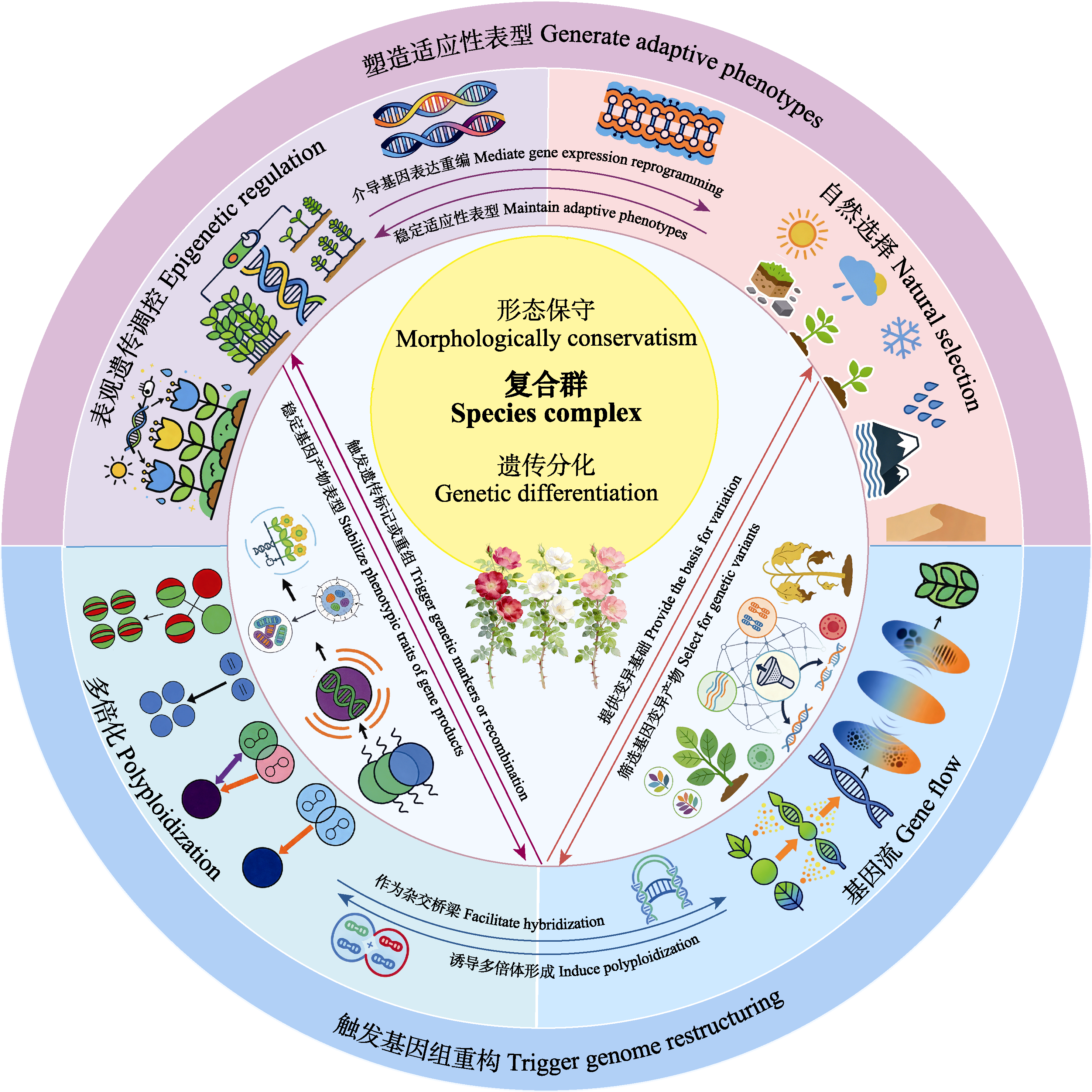
Fig. 1 Hierarchical relationships and interaction pathways of the four formation mechanisms of plant species complex
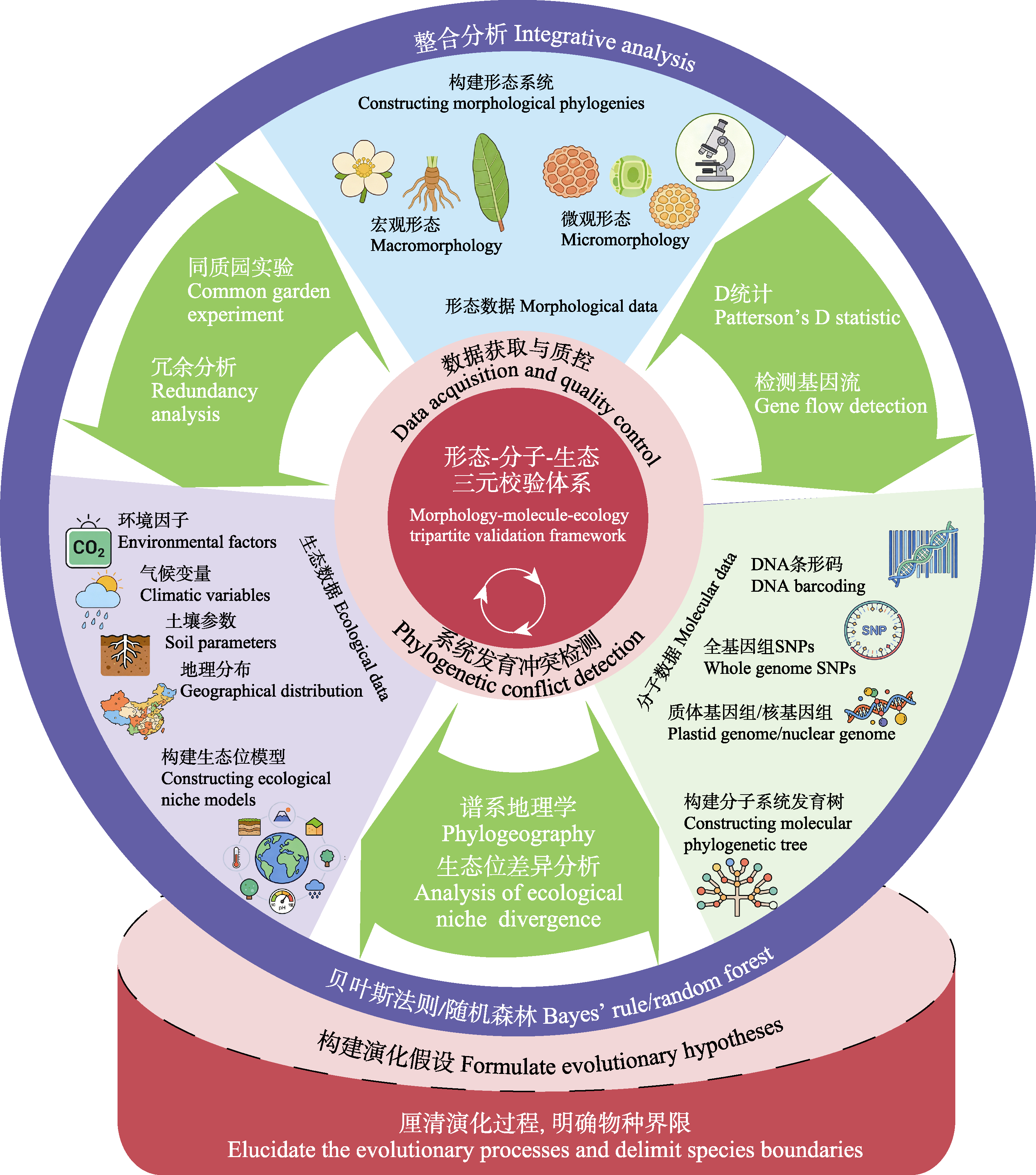
Fig. 2 Framework diagram of the “morphology-molecule-ecology” tripartite corroboration system
| [1] |
Abdullah M, Ullah Z, Shah SMI, Ahmad M, Khan A, Shah H, Ullah A, Ahmad S, Albeshr MF, Emmanuel O, Ullah H, Khan RA (2025) Systematic implication of trichome morphology in alpine flora from Hindukush Mountain range. Genetic Resources and Crop Evolution, 72, 1391-1419.
DOI |
| [2] |
Alcántara-Ayala O, Oyama K, Ríos-Muñoz CA, Rivas G, Ramirez-Barahona S, Luna-Vega I (2020) Morphological variation of leaf traits in the Ternstroemia lineata species complex (Ericales: Penthaphylacaceae) in response to geographic and climatic variation. PeerJ, 8, e8307.
DOI URL |
| [3] |
Alser M, Lindegger J, Firtina C, Almadhoun N, Mao HY, Singh G, Gomez-Luna J, Mutlu O (2022) From molecules to genomic variations: Accelerating genome analysis via intelligent algorithms and architectures. Computational and Structural Biotechnology Journal, 20, 4579-4599.
DOI PMID |
| [4] |
Arabi Z, Ghahremaninejad F, Rabeler RK, Heubl G, Zarre S (2017) Seed micromorphology and its systematic significance in tribe Alsineae (Caryophyllaceae). Flora, 234, 41-59.
DOI URL |
| [5] | Bai M, Yang XK (2007) Application of geometric morphometrics in biological researches. Chinese Bulletin of Entomology, 44, 143-147. (in Chinese with English abstract) |
| [白明, 杨星科 (2007) 几何形态测量法在生物形态学研究中的应用. 昆虫知识, 44, 143-147.] | |
| [6] |
Bao ZG, Li CH, Li GC, Wang P, Peng Z, Cheng L, Li HB, Zhang ZY, Li YY, Huang SW, Ye MW, Dong DF, Cheng ZK, VanderZaag P, Jacobsen E, Bachem CWB, Dong SM, Zhang CZ, Huang S, Zhou Q (2022) Genome architecture and tetrasomic inheritance of autotetraploid potato. Molecular Plant, 15, 1211-1226.
DOI PMID |
| [7] |
Bisconti R, Porretta D, Arduino P, Nascetti G, Canestrelli D (2018) Hybridization and extensive mitochondrial introgression among fire salamanders in peninsular Italy. Scientific Reports, 8, 13187.
DOI PMID |
| [8] | Bookstein FL (1991) Morphometric Tools for Landmark Data:Geometry and Biology. Cambridge University Press, Cambridge. |
| [9] |
Cano MJ, Jiménez JA, Martínez M, Hedenäs L, Gallego MT, Rodríguez O, Guerra J (2024) Integrative taxonomy reveals hidden diversity in the Aloina catillum complex (Pottiaceae, Bryophyta). Plants, 13, 445.
DOI URL |
| [10] |
Cao S, Wang LF, Han TW, Ye WX, Liu Y, Sun Y, Moose SP, Song QX, Chen ZJ (2022) Small RNAs mediate transgenerational inheritance of genome-wide trans-acting epialleles in maize. Genome Biology, 23, 53.
DOI PMID |
| [11] |
Ccopi D, Ortega K, Castañeda I, Rios C, Enriquez L, Patricio S, Ore Z, Casanova D, Agurto A, Zuñiga N, Urquizo J (2024) Using UAV images and phenotypic traits to predict potato morphology and yield in Peru. Agriculture, 14, 1876.
DOI URL |
| [12] |
Chase JM, Blowes SA, Knight TM, Gerstner K, May F (2020) Ecosystem decay exacerbates biodiversity loss with habitat loss. Nature, 584, 238-243.
DOI |
| [13] | Chen JJ, Xu YQ, Wei GY, Liao SH, Zhang YJ, Huang WJ, Yuan L, Wang Y (2015) Chemotypic and genetic diversity in Epimedium sagittatum from different geographical regions of China. Phytochemistry, 116, 180-187. |
| [14] | Chen JK, Wang HQ (1986) The application of the concept and method of population to plant taxonomy. Journal of Wuhan Botanical Research, 4, 377-383. (in Chinese with English abstract) |
| [陈家宽, 王徽勤 (1986) 居群(population)概念和方法在植物分类学中的应用. 武汉植物学研究, 4, 377-383.] | |
| [15] |
Chen XS, Wen S, Zhang L, Lan YB, Ge YF, Hu YJ, Luo SY (2025) A calculation method for cotton phenotypic traits based on unmanned aerial vehicle LiDAR combined with a three-dimensional deep neural network. Computers and Electronics in Agriculture, 230, 109857.
DOI URL |
| [16] | Choi B, Ryu J, Jang TS (2022) Can pollen exine ornamentation contribute to species delimitation in Korean Iris L. taxa (Iridaceae)? Palynology, 46, 2061064. |
| [17] |
Chomicki G, Burin G, Busta L, Gozdzik J, Jetter R, Mortimer B, Bauer U (2024) Convergence in carnivorous pitcher plants reveals a mechanism for composite trait evolution. Science, 383, 108-113.
DOI PMID |
| [18] |
Comai L (2005) The advantages and disadvantages of being polyploid. Nature Reviews Genetics, 6, 836-846.
DOI PMID |
| [19] | Davis PH, Heywood VH (1963) Principles of Angiosperm Taxonomy. Oliver & Boyd, Edinburgh and London. |
| [20] |
Dayrat B (2005) Towards integrative taxonomy. Biological Journal of the Linnean Society, 85, 407-415.
DOI URL |
| [21] |
De Andrade Lima JH, Katzenberger M, Gehara M, Simões PI (2025) Landscape genetics highlights species-specific ecological influences on gene flow in highland frog populations from northeastern Brazil. Ecological Processes, 14, 57.
DOI |
| [22] |
De Giorgi P, Giacò A, Astuti G, Minuto L, Varaldo L, De Luca D, De Rosa A, Bacchetta G, Sarigu M, Peruzzi L (2022) An integrated taxonomic approach points towards a single-species hypothesis for Santolina (Asteraceae) in Corsica and Sardinia. Biology, 11, 356.
DOI URL |
| [23] |
Doellman MM, Schuler H, Saint JG, Hood GR, Egan SP, Powell THQ, Glover MM, Bruzzese DJ, Smith JJ, Yee WL, Goughnour RB, Rull J, Aluja M, Feder JL (2019) Geographic and ecological dimensions of host plant-associated genetic differentiation and speciation in the Rhagoletis cingulata (Diptera: Tephritidae) sibling species group. Insects, 10, 275.
DOI URL |
| [24] |
Du AB, Wang YH, Shi XL, Cui CX, Tang Y, Xie K, Wang JS, Liu JB, Yang WN, Song P, Zhai RF (2026) Plant-to-camera enabled 3D morphological reconstruction: A high-fidelity approach for plant phenotyping. ISPRS Journal of Photogrammetry and Remote Sensing, 231, 35-52.
DOI URL |
| [25] |
Du H (2023) “Species” versus “individuals”: Which is the right target for biodiversity conservation? Biodiversity Science, 31, 23140. (in Chinese with English abstract)
DOI |
|
[杜红 (2023) “物种”与“个体”: 究竟谁是生物多样性保护的恰当对象? 生物多样性, 31, 23140.]
DOI |
|
| [26] |
Du YP, Bi Y, Yang FP, Zhang MF, Chen XQ, Xue J, Zhang XH (2017) Complete chloroplast genome sequences of Lilium: Insights into evolutionary dynamics and phylogenetic analyses. Scientific Reports, 7, 5751.
DOI |
| [27] |
Ericson HC, Forbes AA (2020) Description of the new species Coptera tonic (Hymenoptera, Diapriidae), a pupal parasitoid of Rhagoletis juniperina Marcovitch (Diptera, Tephritidae), and revised partial keys to Nearctic Coptera Say. ZooKeys, 985, 49-60.
DOI PMID |
| [28] |
Fan SH, Liu HF, Liu J, Hua W, Xu SM, Li J (2020) Systematic analysis of the DNA methylase and demethylase gene families in rapeseed (Brassica napus L.) and their expression variations after salt and heat stresses. International Journal of Molecular Sciences, 21, 953.
DOI URL |
| [29] |
Folt B, Bauder J, Spear S, Stevenson D, Hoffman M, Oaks JR, Wood PL Jr, Jenkins C, Steen DA, Guyer C (2019) Taxonomic and conservation implications of population genetic admixture, mito-nuclear discordance, and male-biased dispersal of a large endangered snake, Drymarchon couperi. PLoS ONE, 14, e0214439.
DOI URL |
| [30] |
Gao YD, Harris AJ, Li HC, Gao XF (2020) Hybrid speciation and introgression both underlie the genetic structures and evolutionary relationships of three morphologically distinct species of Lilium (Liliaceae) forming a hybrid zone along an elevational gradient. Frontiers in Plant Science, 11, 576407.
DOI URL |
| [31] |
Gao ZX, Su YN, Chang L, Jiao GZ, Ou Y, Yang M, Xu C, Liu PT, Wang ZJ, Qi ZW, Liu WW, Sun LH, He GM, Deng XW, He H (2024) Increased long-distance and homo-trans interactions related to H3K27me 3 in Arabidopsis hybrids. Journal of Integrative Plant Biology, 66, 208-227.
DOI URL |
| [32] |
Goulet BE, Roda F, Hopkins R (2017) Hybridization in plants: Old ideas, new techniques. Plant Physiology, 173, 65-78.
DOI PMID |
| [33] | Gui Q, Xu YH, Wang JB (2007) Changes of gene expression pattern in polyploid plants. Journal of Wuhan Botanical Research, 25, 198-202. (in Chinese with English abstract) |
| [桂琴, 徐延浩, 王建波 (2007) 多倍体植物中基因表达模式的变化. 武汉植物学研究, 25, 198-202.] | |
| [34] | Guo MY, Pang XH, Xu YQ, Jiang WJ, Liao BS, Yu JS, Xu J, Song JY, Chen SL (2022) Plastid genome data provide new insights into the phylogeny and evolution of the genus Epimedium. Journal of Advanced Research, 36, 175-185. |
| [35] |
Gupta C, Salgotra RK (2022) Epigenetics and its role in effecting agronomical traits. Frontiers in Plant Science, 13, 925688.
DOI URL |
| [36] | He F, Lu YF, Liu YD, Chu WK, Jin XF (2023) Nutlet morphology and micromorphology of Carex sect. Paniceae (Cyperaceae) and its taxonomic significance. Bulletin of Botanical Research, 43, 1-8. (in Chinese with English abstract) |
|
[何芳, 鲁益飞, 刘永娣, 褚文珂, 金孝锋 (2023) 薹草属少花薹草组(莎草科)小坚果形态和微形态及其分类学意义. 植物研究, 43, 1-8.]
DOI |
|
| [37] |
He L, Wu WW, Zinta G, Yang L, Wang D, Liu RY, Zhang HM, Zheng ZM, Huang H, Zhang QZ, Zhu JK (2018) A naturally occurring epiallele associates with leaf senescence and local climate adaptation in Arabidopsis accessions. Nature Communications, 9, 460.
DOI PMID |
| [38] |
He X, Cao JJ, Zhang W, Li YQ, Zhang C, Li XH, Xia GH, Shao JW (2022) Integrative taxonomy of herbaceous plants with narrow fragmented distributions: A case study on Primula merrilliana species complex. Journal of Systematics and Evolution, 60, 859-875.
DOI URL |
| [39] |
Hodač L, Karbstein K, Kösters L, Rzanny M, Wittich HC, Boho D, Šubrt D, Mäder P, Wäldchen J (2024) Deep learning to capture leaf shape in plant images: Validation by geometric morphometrics. The Plant Journal, 120, 1343-1357.
DOI PMID |
| [40] |
Hong DY (2016) Biodiversity pursuits need a scientific and operative species concept. Biodiversity Science, 24, 979-999. (in Chinese with English abstract)
DOI URL |
|
[洪德元 (2016) 生物多样性事业需要科学、可操作的物种概念. 生物多样性, 24, 979-999.]
DOI |
|
| [41] | Hong DY, Pan KY, Zhou ZQ (2004) Circumscription of Paeonia suffruticosa Andrews and identification of cultivated tree peonies. Acta Phytotaxonomica Sinica, 42, 275-283. (in Chinese with English abstract) |
| [洪德元, 潘开玉, 周志钦 (2004) Paeonia suffruticosa Andrews的界定,兼论栽培牡丹的分类鉴定问题. 植物分类学报, 42, 275-283.] | |
| [42] | Hoseini M, Arzani A (2023) Epigenetic adaptation to drought and salinity in crop plants. Journal of Plant Molecular Breeding, 11, 1-16. |
| [43] | Huang H, Lai HQ, Jiang Y, Li RQ, Li FQ, Liu Y, Xu YQ (2020) Comparative study on pollen morphology of Epimedium sagittatum and its sibling species E. myrianthum. Guihaia, 40, 1300-1314. (in Chinese with English abstract) |
| [黄华, 赖华清, 蒋勇, 李仁清, 李风琴, 刘勇, 徐艳琴 (2020) 箭叶淫羊藿与近缘种天平山淫羊藿花粉形态对比研究. 广西植物, 40, 1300-1314.] | |
| [44] |
Huxman TE, Winkler DE, Mooney KA (2022) A common garden super-experiment: An impossible dream to inspire possible synthesis. Journal of Ecology, 110, 997-1004.
DOI URL |
| [45] | IUCN Standards and Petitions Committee (2022) Guidelines for Using the IUCN Red List Categories and Criteria (Version 15.1). IUCN, Gland, Switzerland. |
| [46] |
Jacobs SJ, Herzog S, Tank DC (2019) Quantifying morphological variation in the Castilleja pilosa species complex (Orobanchaceae). PeerJ, 7, e7090.
DOI URL |
| [47] | Jia L, Liu H, Zhang B, Chen CX, Dai YY, He XX, Wang QS (2020) Analysis of genetic diversity of wild and cultivated populations of Cynoglossus semilaevis based on genotyping-by-sequencing technology. Transactions of Oceanology and Limnology, 42, 107-114. (in Chinese with English abstract) |
| [贾磊, 刘皓, 张博, 陈春秀, 戴媛媛, 何晓旭, 王群山 (2020) 基于GBS技术的半滑舌鳎野生与养殖群体遗传多样性分析. 海洋湖沼通报, 42, 107-114.] | |
| [48] | Jiang XY, Song QX, Ye WX, Chen ZJ (2021) Concerted genomic and epigenomic changes accompany stabilization of Arabidopsis allopolyploids. Nature Ecology & Evolution, 5, 1382-1393. |
| [49] |
Jiang YZ, Yang JB, Folk RA, Zhao JL, Liu J, He ZS, Peng H, Yang SX, Xiang CL, Yu XQ (2024) Species delimitation of tea plants (Camellia sect. Thea) based on super-barcodes. BMC Plant Biology, 24, 181.
DOI |
| [50] | Jiao BH, Chen C, Wei M, Niu GH, Zheng JY, Zhang GJ, Shen JH, Vitales D, Vallès J, Verloove F, Erst AS, Soejima A, Mehregan I, Kokubugata G, Chung GY, Ge XJ, Gao LM, Yuan Y, Joly C, Jabbour F, Wang W, Shultz LM, Gao TG (2023) Phylogenomics and morphological evolution of the mega-diverse genus Artemisia (Asteraceae: Anthemideae): Implications for its circumscription and infrageneric taxonomy. Annals of Botany, 131, 867-883. |
| [51] |
Jiao LC, Lu Y, He T, Li JN, Yin YF (2019) A strategy for developing high-resolution DNA barcodes for species discrimination of wood specimens using the complete chloroplast genome of three Pterocarpus species. Planta, 250, 95-104.
DOI |
| [52] |
Jin GZ, Sheludyakova M, Abduraimov O, Feng Y, Ge XJ (2025) A taxonomic revision of Artemisia subgenus Seriphidium (Asteraceae—Anthemideae) in China. Phytotaxa, 686, 1-103.
DOI URL |
| [53] |
Jones K, Jensen M, Burgess G, Leonhardt J, van Herwerden L, Hazel J, Hamann M, Bell I, Ariel E (2018) Closing the gap: Mixed stock analysis of three foraging populations of green turtles (Chelonia mydas) on the Great Barrier Reef. PeerJ, 6, e5651.
DOI URL |
| [54] |
Kabus J, Hartmann V, Cocchiararo B, Dombrowski A, Enns D, Karaouzas I, Lipkowski K, Pelikan L, Shumka S, Soose L, Baker NJ, Jourdan J (2024) Cryptic species complex shows population-dependent, rather than lineage-dependent tolerance to a neonicotinoid. Environmental Pollution, 362, 124888.
DOI URL |
| [55] |
Kamali K, Nazarizadeh M, Fatemizadeh F, Salmabadi S, Hung CM, Kaboli M (2024) Integrating phylogenetic, phylogeographic, and morphometric analyses to reveal cryptic lineages within the genus Asaccus (Reptilia: Squamata: Phyllodactylidae) in Iran. BMC Zoology, 9, 12.
DOI |
| [56] |
Ke FS, Vasseur L, Yi HQ, Yang LH, Wei X, Wang BS, Kang M (2022) Gene flow, linked selection, and divergent sorting of ancient polymorphism shape genomic divergence landscape in a group of edaphic specialists. Molecular Ecology, 31, 104-118.
DOI URL |
| [57] | Ke XR, Morales-Briones DF, Wang HX, Yang Q, Chen YS, Lu AM, Chen ZD (2022) Nuclear and plastid phylogenomics of Diabelia (Caprifoliaceae). Journal of Systematics and Evolution, 60, 1331-1343. |
| [58] |
Klingenberg CP (2021) How exactly did the nose get that long? A critical rethinking of the Pinocchio effect and how shape changes relate to landmarks. Evolutionary Biology, 48, 115-127.
DOI |
| [59] | Köhler M, Esser LF, Font F, Souza-Chies TT, Majure LC (2020) Beyond endemism, expanding conservation efforts: What can new distribution records reveal? Perspectives in Plant Ecology, Evolution, and Systematics, 45, 125543. |
| [60] | Landis JB, Guercio AM, Brown KE, Fiscus CJ, Morrell PL, Koenig D (2024) Natural selection drives emergent genetic homogeneity in a century-scale experiment with barley. Science, 385, eadl0038. |
| [61] |
Lapkovskis A, Nefedova N, Beikmohammadi A (2025) Automatic fused multimodal deep learning for plant identification. Frontiers in Plant Science, 16, 1616020.
DOI URL |
| [62] |
Li CH, Liu Y, Lin FR, Zheng YQ, Huang P (2022) Characterization of the complete chloroplast genome sequences of six Dalbergia species and its comparative analysis in the subfamily of Papilionoideae (Fabaceae). PeerJ, 10, e13570.
DOI URL |
| [63] |
Li FP, Hou ZW, Xu SQ, Han DL, Li B, Hu HF, Liu JY, Cai SK, Gan ZP, Gu Y, Zhang XF, Zhou XF, Wang SK, Zhao JL, Mei Y, Zhang JS, Wang ZF, Wang JH (2024) Haplotype-resolved genomes of octoploid species in Phyllanthaceae family reveal a critical role for polyploidization and hybridization in speciation. The Plant Journal, 119, 348-363.
DOI PMID |
| [64] |
Li MR, Wang HY, Ding N, Lu TY, Huang YC, Xiao HX, Liu B, Li LF (2019) Rapid divergence followed by adaptation to contrasting ecological niches of two closely related columbine species Aquilegia japonica and A. oxysepala. Genome Biology and Evolution, 11, 919-930.
DOI URL |
| [65] |
Li Y, Zhang B, Zhang SY, Wong CE, Liang QQ, Pang S, Wu YJ, Zhao M, Yu H (2025) Pangeneric genome analyses reveal the evolution and diversity of the orchid genus Dendrobium Nature Plants, 11, 421-437.
DOI |
| [66] |
Liang Q, Zhang YJ, Xu YQ, Huang HW, Wang Y (2013) Morphological variations and genetic diversity of Epimedium sagittatum populations. Plant Science Journal, 31, 422-427. (in Chinese with English abstract)
DOI URL |
| [梁琼, 张燕君, 徐艳琴, 黄宏文, 王瑛 (2013) 箭叶淫羊藿居群形态及遗传多样性比较研究. 植物科学学报, 31, 422-427.] | |
| [67] |
Liang SQ, Zhang XC (2024) Evolutionary relationship and taxonomic revision of the Asplenium exiguum complex (Aspleniaceae) based on integrated evidence. Taxon, 73, 1140-1169.
DOI URL |
| [68] |
Liang SQ, Zhang XC, Wei R (2019) Integrative taxonomy resolved species delimitation in a fern complex: A case study of the Asplenium coenobiale complex. Biodiversity Science, 27, 1205-1220. (in Chinese with English abstract)
DOI |
|
[梁思琪, 张宪春, 卫然 (2019) 利用整合分类学方法进行蕨类植物复合体的物种划分: 以线裂铁角蕨复合体为例. 生物多样性, 27, 1205-1220.]
DOI |
|
| [69] |
Liang SQ, Zhang XC, Wei R (2022) Ecological adaptation shaped the genetic structure of homoploid ferns against strong dispersal capacity. Molecular Ecology, 31, 2679-2697.
DOI URL |
| [70] |
Liu J, Möller M, Provan J, Gao LM, Poudel RC, Li DZ (2013) Geological and ecological factors drive cryptic speciation of yews in a biodiversity hotspot. New Phytologist, 199, 1093-1108.
DOI PMID |
| [71] |
Liu R, Wang H, Yang JB, Corlett RT, Randle CP, Li DZ, Yu WB (2022) Cryptic species diversification of the Pedicularis siphonantha complex (Orobanchaceae) in the mountains of Southwest China since the Pliocene. Frontiers in Plant Science, 13, 811206.
DOI URL |
| [72] |
Liu SX, Liu LJ, Huang XF, Zhu YY, Xu YQ (2017) A taxonomic revision of three Chinese spurless species of genus Epimedium L. (Berberidaceae). PhytoKeys, 78, 23-36.
DOI URL |
| [73] | Liu SX, Shi HJ, Xu YQ (2016) Morphological comparison of the Epimedium franchetii Stearn species complex based on population observation and implications for taxonomy. Plant Science Journal, 34, 325-339. (in Chinese with English abstract) |
| [刘少雄, 石慧君, 徐艳琴 (2016) 基于居群观测的木鱼坪淫羊藿复合种形态比较和分类学启示. 植物科学学报, 34, 325-339.] | |
| [74] |
Liu SY, Yang YY, Tian Q, Yang ZY, Li SF, Valdes PJ, Farnsworth A, Kates HR, Siniscalchi CM, Guralnick RP, Soltis DE, Soltis PS, Stull GW, Folk RA, Yi TS (2025) An integrative framework reveals widespread gene flow during the early radiation of oaks and relatives in Quercoideae (Fagaceae). Journal of Integrative Plant Biology, 67, 1119-1141.
DOI |
| [75] | Liu X, Fu CZ, Gao M, Zhi HC, Yang XB, Guo BL (2017) Genetic relationship and population genetic diversity of Epimedium pubescens and its related species based on ISSR and non-glandular hair characteristic. China Journal of Chinese Materia Medica, 42, 3090-3097. (in Chinese with English abstract) |
| [刘翔, 付长珍, 高敏, 植汉成, 杨相波, 郭宝林 (2017) 基于ISSR技术和非腺毛特征研究柔毛淫羊藿和近缘种遗传关系和居群遗传多样性. 中国中药杂志, 42, 3090-3097.] | |
| [76] |
Liu YF, Xiao WF, Wang FD, Wang Y, Dong Y, Nie W, Tan CC, An SP, Chang EM, Jiang ZP, Wang JH, Jia ZR (2024) Species divergence and environmental adaptation of Picea asperata complex at the whole-genome level. Ecology and Evolution, 14, e70126.
DOI URL |
| [77] | Liu YL, Fan BJ, Gong ZQ, He LY, Chen L, Ren AZ, Zhao NX, Gao YB (2023) Intraspecific trait variation and adaptability of Stipa krylovii: Insight from a common garden experiment with two soil moisture treatments. Ecology and Evolution, 13, e10457. |
| [78] |
López-Jurado J, Mateos-Naranjo E, Balao F (2019) Niche divergence and limits to expansion in the high polyploid Dianthus broteri complex. New Phytologist, 222, 1076-1087.
DOI PMID |
| [79] |
Lorenzoni M, Carosi A, Giovannotti M, La Porta G, Splendiani A, Caputo Barucchi V (2019) Ecology and conservation of the Mediterranean trout in the central Apennines (Italy). Journal of Limnology, 78, 1-13.
DOI |
| [80] | Lu YF, Liu YD, Zheng ZH, He F, Chu WK, Jin SH, Jin XF (2022) Utricle morphology of the species in Carex sect. Paniceae (Cyperaceae) and its systematic significance. Journal of Zhejiang University (Science Edition), 49, 760-766. (in Chinese with English abstract) |
| [鲁益飞, 刘永娣, 郑子洪, 何芳, 褚文珂, 金水虎, 金孝锋 (2022) 薹草属少花薹草组(莎草科)的果囊形态及其系统学意义. 浙江大学学报(理学版), 49, 760-766.] | |
| [81] |
Lu ZQ, Yang YZ, Liu JQ (2024) An integrative delimitation of the species boundaries within one hornbeam species complex (Betulaceae: Carpinus). Journal of Systematics and Evolution, 62, 876-888.
DOI URL |
| [82] | Luo DD, Peng HS, Kang LP, Miao YH, Liu DH, Huang LQ (2021) Morphological comparison of glandular and non-glandular trichomes between Artemisia stolonifera and A. argyi. China Journal of Chinese Materia Medica, 46, 3319-3329. (in Chinese with English abstract) |
| [罗丹丹, 彭华胜, 康利平, 苗玉焕, 刘大会, 黄璐琦 (2021) 宽叶山蒿与艾不同部位叶片腺毛和非腺毛形态特征比较研究. 中国中药杂志, 46, 3319-3329.] | |
| [83] | Luo JJ, Shang H, Xue ZQ, Wang Y, Dai XL, Shen H, Yan YH (2024) Genome-wide data reveal bi-direction and asymmetrical hybridization origin of a fern species Microlepia matthewii. Frontiers in Plant Science, 15, 1392990. |
| [84] |
Ma L, Liu KW, Li Z, Hsiao YY, Qi YY, Fu T, Tang GD, Zhang DY, Sun WH, Liu DK, Li YY, Chen GZ, Liu XD, Liao XY, Jiang YT, Yu X, Hao Y, Huang J, Zhao XW, Ke SJ, Chen YY, Wu WL, Hsu JL, Lin YF, Huang MD, Li CY, Huang LQ, Wang ZW, Zhao X, Zhong WY, Peng DH, Ahmad S, Lan SR, Zhang JS, Tsai WC, Van de Peer Y, Liu ZJ (2023) Diploid and tetraploid genomes of Acorus and the evolution of monocots. Nature Communications, 14, 3661.
DOI |
| [85] |
Ma M, Wang YD, Sun ZF, Zhao RZ, Li HH, Li XX, Zhu HF, Yang XD, Zhang CW, Fang YD (2025) Regulation of transcriptional homeostasis by DNA methylation upon genome duplication in pak choi. Molecular Horticulture, 5, 22.
DOI PMID |
| [86] |
MacLeod N (2017) Morphometrics: History, development methods and prospects. Zoological Systematics, 42, 4-33.
DOI |
| [87] |
Mason AS, Wendel JF (2020) Homoeologous exchanges, segmental allopolyploidy, and polyploid genome evolution. Frontiers in Genetics, 11, 1014.
DOI PMID |
| [88] | Mengsuwan K, Rivera-Palacio JC, Ryo M (2024) ChatGPT and general-purpose AI count fruits in pictures surprisingly well without programming or training. Smart Agricultural Technology, 9, 100688. |
| [89] |
Miao J, Li LY, Liang ZL, Feng Y, Zhang C, Li SQ, Deng HN, Ru J, Tang ZY, Gao XF (2025) Integrating morphology, ecology, and genomics: Unraveling the population genetic and evolution within the Rosa graciliflora complex. Molecular Phylogenetics and Evolution, 210, 108382.
DOI URL |
| [90] |
Mitteroecker P, Gunz P (2009) Advances in geometric morphometrics. Evolutionary Biology, 36, 235-247.
DOI URL |
| [91] |
Morales-Alonso A, Villaverde T, Jiménez-Mejías P (2023) Geometric morphometrics sheds light on the systematics affinities of two enigmatic dwarf Neotropical sedges (Carex, Cyperaceae). PhytoKeys, 232, 167-187.
DOI PMID |
| [92] |
Moser M, Ulmer JM, Van de Kamp T, Vasiliță C, Renninger M, Mikó I, Krogmann L (2023) Surprising morphological diversity in ceraphronid wasps revealed by a distinctive new species of Aphanogmus (Hymenoptera: Ceraphronoidea). European Journal of Taxonomy, 864, 146-166.
DOI URL |
| [93] |
Ni LH, Zhao ZL (2018) A morphometric comparison of three closely related species of Gentiana (Gentianaceae), endemic to the region of the Qinghai-Tibet Plateau. Botany, 96, 209-215.
DOI URL |
| [94] | Nie LH, Wang YZ, Fang WP, Xie DY (2012) Progress on changes of genome structure and gene expression pattern in polyploid plants. Journal of Henan Agricultural Sciences, 41(2), 1-4. (in Chinese with English abstract) |
| [聂利红, 王延召, 房卫平, 谢德意 (2012) 多倍体植物基因组结构和基因表达的变化研究进展. 河南农业科学, 41(2), 1-4.] | |
| [95] |
Nie LY, Fang YH, Xia ZQ, Wei XY, Wu ZQ, Yan YH, Wang FG (2024) Relationships within Bolbitis sinensis species complex using RAD sequencing. Plants, 13, 1987.
DOI URL |
| [96] | Niu XJ, Nie J, Zhao XL, Gao XF (2020) Leaf-level phenotypic plasticity of Indigofera bungeana Walp. Plant Science Journal, 38, 97-104. (in Chinese with English abstract) |
| [牛雪婧, 聂靖, 赵雪利, 高信芬 (2020) 河北木蓝的叶表型可塑性研究. 植物科学学报, 38, 97-104.] | |
| [97] | Niu ZA, Qiu ZJ (2025) Extraction method of maize plant skeleton and phenotypic parameters based on improved YOLOv11-pose. Smart Agriculture, 7(2), 95-105. (in Chinese with English abstract) |
| [牛子昂, 裘正军 (2025) 基于改进YOLOv11-Pose的玉米植株骨架及表型参数提取方法. 智慧农业(中英文), 7(2), 95-105.] | |
| [98] | Ojala A (2019) Trade-offs or complements? Balancing diversified stakeholder expectations, institutional pressures, and functional demands in the strategic management of business schools. Nordic Journal of Business, 68, 23-53. |
| [99] | Peng CQ, Zhao XL, Gao XF (2015) Study on the population genetics of Indigofera decora complex based on cpDNA and nrDNA ITS sequences. Plant Science Journal, 33, 425-437. (in Chinese with English abstract) |
| [彭春巧, 赵雪利, 高信芬 (2015) 基于cpDNA和ITS序列对庭藤复合群的居群遗传学研究. 植物科学学报, 33, 425-437.] | |
| [100] |
Peruzzi L (2023) Advances in plant taxonomy and systematics. Biology, 12, 570.
DOI URL |
| [101] | Poland JA, Rife TW (2012) Genotyping-by-sequencing for plant breeding and genetics. The Plant Genome, 5, 92-102. |
| [102] |
Powley M, Mikac KM (2024) 3D geometric morphometrics of cryptic Petaurus species (‘Sugar Glider’) in Australia and New Guinea. Animals, 14, 3680.
DOI URL |
| [103] | Rabaud S, Coreau A, Mermet L (2020) Red lists of threatened species—Indicators with the potential to act as strategic circuit breakers between science and policy. Environmental Science & Policy, 113, 72-79. |
| [104] |
Ren GP, Mateo RG, Guisan A, Conti E, Salamin N (2018) Species divergence and maintenance of species cohesion of three closely related Primula species in the Qinghai-Tibet Plateau. Journal of Biogeography, 45, 2495-2507.
DOI URL |
| [105] | Reyment RA (1982) Multivariate morphometrics. In: Handbook of Statistics (eds Krishnaiah PR, Kanal LN), pp. 721-745. Elsevier, Amsterdam. |
| [106] | Rivas MA, Chang C (2025) Efficient storage and regression computation for population-scale genome sequencing studies. Bioinformatics, 41, btaf067. |
| [107] |
Rohlf FJ, Marcus LF (1993) A revolution morphometrics. Trends in Ecology & Evolution, 8, 129-132.
DOI URL |
| [108] | Rohlf FJ, Slice D (1990) Extensions of the Procrustes method for the optimal superimposition of landmarks. Systematic Biology, 39, 40-59. |
| [109] |
Rouhan G, Gaudeul M (2021) Plant taxonomy: A historical perspective, current challenges, and perspectives. Methods in Molecular Biology, 2222, 1-38.
DOI PMID |
| [110] |
Sakaguchi S, Choi HJ, Yoichi W, Takahashi D, Hirota SK, Maki M, Murakami S, Harada T, Kobayashi N, Kurashige Y, Song JH, Choi HJ, Kim SC (2025) Unraveling enigmatic disjunctions: Population genetic analysis points to independent origins of rare rhododendrons in the Rhododendron keiskei complex (Ericaceae). Taxon, 74, 117-132.
DOI URL |
| [111] |
Sandamal S, Tennakoon A, Wijerathna P, Zhang HX, Yu WH, Qiang CG, Han JD, Zhang FM, Ratnasekera D, Ge S (2024) Phenological and morphological variations of Oryza rufipogon and O. nivara in Sri Lanka and their evolutionary implications. Scientific Reports, 14, 31126.
DOI |
| [112] | Santos-Hernández NG, Pérez-Farrera MÁ, Eguiarte LE, Vovides AP, Gutiérrez-Ortega JS (2022) Morphological variation between the two species of the palm genus Gaussia (Arecaceae) from Mesoamerica. Nordic Journal of Botany, 2022, e03770. |
| [113] |
Saraswat S, Yadav AK, Sirohi P, Singh NK (2017) Role of epigenetics in crop improvement: Water and heat stress. Journal of Plant Biology, 60, 231-240.
DOI URL |
| [114] |
Scherz MD, Glaw F, Hutter CR, Bletz MC, Rakotoarison A, Köhler J, Vences M (2019) Species complexes and the importance of Data Deficient classification in Red List assessments: The case of Hylobatrachus frogs. PLoS ONE, 14, e0219437.
DOI URL |
| [115] |
Schnitzler CK, Turchetto C, Teixeira MC, Freitas LB (2020) What could be the fate of secondary contact zones between closely related plant species? Genetics and Molecular Biology, 43, e20190271.
DOI URL |
| [116] | Shan SC, Gitzendanner MA, Boatwright JL, Spoelhof JP, Ethridge CL, Ji LX, Liu XX, Soltis PS, Schmitz RJ, Soltis DE (2024) Genome-wide DNA methylation dynamics following recent polyploidy in the allotetraploid Tragopogon miscellus (Asteraceae). New Phytologist, 242, 1363-1376. |
| [117] |
Shen P, Jing XY, Deng WZ, Jia HY, Wu TT (2025) PlantGaussian: Exploring 3D Gaussian splatting for cross-time, cross-scene, and realistic 3D plant visualization and beyond. The Crop Journal, 13, 607-618.
DOI URL |
| [118] |
Sillero N, Arenas-Castro S, Enriquez-Urzelai U, Vale CG, Sousa-Guedes D, Martínez-Freiría F, Real R, Barbosa AM (2021) Want to model a species niche? A step-by-step guideline on correlative ecological niche modelling. Ecological Modelling, 456, 109671.
DOI URL |
| [119] | Sokal RR, Sneath PHA (1963) Principles of Numerical Taxonomy. W.H. Freeman and Company, San Francisco. |
| [120] |
Song BN, Liu CK, Zhao AQ, Tian RM, Xie DF, Xiao YL, Chen H, Zhou SD, He XJ (2024) Phylogeny and diversification of genus Sanicula L. (Apiaceae): Novel insights from plastid phylogenomic analyses. BMC Plant Biology, 24, 70.
DOI |
| [121] |
Song QX, Chen ZJ (2015) Epigenetic and developmental regulation in plant polyploids. Current Opinion in Plant Biology, 24, 101-109.
DOI PMID |
| [122] |
Song XW, Tang SJ, Cao XF (2022) Epigenetic regulation and crop breeding. Journal of Agricultural Science and Technology, 24(12), 33-38. (in Chinese with English abstract)
DOI |
|
[宋显伟, 唐善杰, 曹晓风 (2022) 表观遗传调控与作物育种. 中国农业科技导报, 24(12), 33-38.]
DOI |
|
| [123] | Song YX, Hu T, Peng S, Cong YY, Hu GW (2024) Palynological and macroscopic characters evidence infer the evolutionary history and insight into pollination adaptation in Impatiens (Balsaminaceae). Journal of Systematics and Evolution, 62, 403-420. |
| [124] | Stearn WT (2002) The Genus Epimedium and Other herbaceous Berberidaceae. Timber Press, Portland. |
| [125] | Su W, Song YG, Qi M, Du F (2021) Leaf morphological characteristics of section Quercus based on geometric morphometric analysis. Chinese Journal of Applied Ecology, 32, 2309-2315. (in Chinese with English abstract) |
|
[苏蔚, 宋以刚, 祁敏, 杜芳 (2021) 基于几何形态分析的栎属白栎组叶片形态特征. 应用生态学报, 32, 2309-2315.]
DOI |
|
| [126] |
Suissa JS, Kinosian SP, Schafran PW, Bolin JF, Taylor WC, Zimmer EA (2022) Homoploid hybrids, allopolyploids, and high ploidy levels characterize the evolutionary history of a western North American quillwort (Isoëtes) complex. Molecular Phylogenetics and Evolution, 166, 107332.
DOI URL |
| [127] | Sun SG (2011) Applied Multivariate Statistical Analysis. Science Press, Beijing. (in Chinese) |
| [孙尚拱 (2011) 应用多变量统计分析. 科学出版社, 北京.] | |
| [128] |
Sun T, Lu CZ, Shi Z, Zou M, Bi P, Xu XD, Xie QG, Jiang RJ, Liu YX, Cheng R, Xu WZ, Wang HS, Zhang YY, Xu P (2025) PlantRing: A high-throughput wearable sensor system for decoding plant growth, water relations, and innovating irrigation. Plant Communications, 6, 101322.
DOI URL |
| [129] |
Sun YS, Lu ZQ, Zhu XF, Ma H (2020) Genomic basis of homoploid hybrid speciation within chestnut trees. Nature Communications, 11, 3375.
DOI PMID |
| [130] | Tang YC (1975) Discussion on the methodology of plant taxonomy. Acta Phytotaxonomica Sinica, 13, 137-139. (in Chinese) |
| [汤彦承 (1975) 谈谈植物分类学的工作方法. 植物分类学报, 13, 137-139.] | |
| [131] | Vázquez-López M, Córtes-Rodríguez N, Robles-Bello SM, Bueno-Hernández A, Zamudio-Beltrán LE, Ruegg K, Hernández-Baños BE (2021) Phylogeography and morphometric variation in the Cinnamon Hummingbird complex: Amazilia rutila (Aves: Trochilidae). Avian Research, 12, 61. |
| [132] |
Verhaegen G, Sangekar MN, Bentlage B, Hoving HJ, Collins AG, Lindsay DJ (2023) Drivers behind the diversity and distribution of a widespread midwater narcomedusa. Limnology and Oceanography, 68, 2088-2107.
DOI URL |
| [133] |
Vleminckx J, Barrantes OV, Fortunel C, Timothy Paine CE, Bauman D, Engel J, Petronelli P, Dávila N, Rios M, Valderrama Sandoval EH, Mesones I, Allié E, Goret JY, Draper FC, Guevara Andino JE, Béroujon S, Fine PVA, Baraloto C (2023) Niche breadth of Amazonian trees increases with niche optimum across broad edaphic gradients. Ecology, 104, e4053.
DOI URL |
| [134] |
Vogt G (2022) Environmental adaptation of genetically uniform organisms with the help of epigenetic mechanisms—An insightful perspective on ecoepigenetics. Epigenomes, 7, 1.
DOI URL |
| [135] |
Wang HL, Lei T, Wang XW, Cameron S, Navas-Castillo J, Liu YQ, Maruthi MN, Omongo CA, Delatte H, Lee KY, Krause-Sakate R, Ng J, Seal S, Fiallo-Olivé E, Bushley K, Colvin J, Liu SS (2025) A comprehensive framework for the delimitation of species within the Bemisia tabaci cryptic complex, a global pest-species group. Insect Science, 32, 321-342.
DOI URL |
| [136] |
Wang JF, Shi PJ, Yao WH, Wang L, Li QY, Tan R, Niklas KJ (2024) The scaling relationship between perianth fresh mass and area: Proof of concept using Magnolia × soulangeana Soul.-Bod. Trees, 38, 241-249.
DOI |
| [137] | Wang JM, Yang DM, Wang AH, Wu YG, Wang FG (2016) Morphological observation of the spores from Pteris fauriei complex by SEM. Journal of Tropical Biology, 7, 387-394. (in Chinese with English abstract) |
| [王佳玫, 杨东梅, 王爱华, 吴友根, 王发国 (2016) 傅氏凤尾蕨复合群孢子形态的扫描电镜观察. 热带生物学报, 7, 387-394.] | |
| [138] |
Wang LF, Jia GH, Jiang XY, Cao S, Chen ZJ, Song QX (2021) Altered chromatin architecture and gene expression during polyploidization and domestication of soybean. The Plant Cell, 33, 1430-1446.
DOI PMID |
| [139] | Wang Q, Huang J, Tu S, Kang Y, Wang F, Chen XM, Peng DH (2023) Analysis of phenotypic genetic diversity of various Phalaenopsis varieties. Journal of Southwest Forestry University (Natural Science), 43(6), 8-18. (in Chinese with English abstract) |
| [王钦, 黄捷, 涂松, 康阳, 王菲, 陈秀铭, 彭东辉 (2023) 蝴蝶兰不同品种表型性状遗传多样性分析. 西南林业大学学报(自然科学), 43(6), 8-18.] | |
| [140] | Wang X, Lei DQ, Zhu M, Zhang HQ, Liao JH, Zhang JJ, Liu YF (2023) Phylogeny, genetics and ecological adaptation of the Chrysanthemum indicum complex. Medicinal Plant Biology, 2, 17. |
| [141] | Wang XJ, Wang JM, Yang DM, Wang FG, Chen HF, Lang YT (2019) Molecular systematics study on Pteris fauriei complex (Pteridaceae). Guihaia, 39, 581-589. (in Chinese with English abstract) |
| [王小娇, 王佳玫, 杨东梅, 王发国, 陈红锋, 郎月婷 (2019) 傅氏凤尾蕨复合群的分子系统学研究. 广西植物, 39, 581-589.] | |
| [142] |
Wang YY, He SZ, Guo BL (2008) Non-glandular hairs of small-flowered taxa in Epimedium (Berberidaceae) from China and their taxonomic significance. Acta Botanica Yunnanica, 30, 423-429. (in Chinese with English abstract)
DOI URL |
| [王悦云, 何顺志, 郭宝林 (2008) 中国淫羊藿属小花类群非腺毛形态. 云南植物研究, 30, 423-429.] | |
| [143] | Wang ZR (1998) Concepts and Chinese translation of “biosystematics” and “complex”. Acta Phytotaxonomica Sinica, 36(6), 90-92. (in Chinese) |
| [王中仁 (1998) 术语“biosystematics”和“complex”的概念和中文译法辩析. 植物分类学报, 36(6), 90-92.] | |
| [144] |
Wen WL, Guo XY, Zhang Y, Gu SH, Zhao CJ (2023) Technology and equipment of big data on crop phenomics. Strategic Study of CAE, 25(4), 227-238. (in Chinese)
DOI |
|
[温维亮, 郭新宇, 张颖, 顾生浩, 赵春江 (2023) 作物表型组大数据技术及装备发展研究. 中国工程科学, 25(4), 227-238.]
DOI |
|
| [145] | Więcław H (2017) Within-species variation among populations of the Carex flava complex as a function of habitat conditions. Plant Ecology & Diversity, 10, 443-451. |
| [146] | Wilkinson MJ, Roda F, Walter GM, James ME, Nipper R, Walsh J, Allen SL, North HL, Beveridge CA, Ortiz-Barrientos D (2021) Adaptive divergence in shoot gravitropism creates hybrid sterility in an Australian wildflower. Proceedings of the National Academy of Sciences, USA, 118, e2004901118. |
| [147] |
Williams CJ, Dai DW, Tran KA, Monroe JG, Williams BP (2023) Dynamic DNA methylation turnover in gene bodies is associated with enhanced gene expression plasticity in plants. Genome Biology, 24, 227.
DOI PMID |
| [148] |
Wu YH, Hou SB, Yuan ZY, Jiang K, Huang RY, Wang K, Liu Q, Yu ZB, Zhao HP, Zhang BL, Chen JM, Wang LJ, Stuart BL, Chambers EA, Wang YF, Gao W, Zou DH, Yan F, Zhao GG, Fu ZX, Wang SN, Jiang M, Zhang L, Ren JL, Wu YY, Zhang LY, Yang DC, Jin JQ, Yin TT, Li JT, Zhao WG, Murphy RW, Huang S, Guo P, Zhang YP, Che J (2023) DNA barcoding of Chinese snakes reveals hidden diversity and conservation needs. Molecular Ecology Resources, 23, 1124-1141.
DOI URL |
| [149] |
Wu YT, Hipp AL, Fargo G, Stith N, Ricklefs RE (2023) Improving species delimitation for effective conservation: A case study in the endemic maple-leaf oak (Quercus acerifolia). New Phytologist, 238, 1278-1293.
DOI PMID |
| [150] |
Wu Y, Liu R, Wang WJ, Li DZ, Burgess KS, Yu WB, Wang H (2025) High species discrimination in Pedicularis (Orobanchaceae): Plastid genomes and traditional barcodes equally effective via parsimony-informative sites. Plant Diversity, 47, 920-930.
DOI URL |
| [151] |
Xie QZ, Du HB, Yang Q, Liu Z, Jin X, Li CF, Wei Y, Tang FT, Tao PJ, Yan L (2024) Deep learning-based recognition of soybean pods and branches. Plant Breeding, 143, 1-12.
DOI URL |
| [152] |
Xu B, Wu N, Gao XF, Zhang LB (2012) Analysis of DNA sequences of six chloroplast and nuclear genes suggests incongruence, introgression, and incomplete lineage sorting in the evolution of Lespedeza (Fabaceae). Molecular Phylogenetics and Evolution, 62, 346-358.
DOI URL |
| [153] | Xu WJ, Zhang C, Wu Y, Tao S, Mao CQ, Zhong MZ, Xu ZJ, Peng F (2024) The pollen morphological characteristics from five closely related medicinal plants of the genus Ligusticum. Journal of Northeast Forestry University, 52(11), 56-63. (in Chinese with English abstract) |
| [徐皖菁, 张超, 吴宇, 陶珊, 毛常清, 钟明志, 徐正君, 彭芳 (2024) 5种藁本属近缘药用植物花粉的形态特征. 东北林业大学学报, 52(11), 56-63.] | |
| [154] |
Xu YQ, Cai WZ, Hu SF, Huang XH, Ge F, Wang Y (2013) Morphological variation of non-glandular hairs in cultivated Epimedium sagittatum (Berberidaceae) populations and implications for taxonomy. Biodiversity Science, 21, 185-196. (in Chinese with English abstract)
DOI URL |
|
[徐艳琴, 蔡婉珍, 胡生福, 黄小虎, 葛菲, 王瑛 (2013) 箭叶淫羊藿同质园栽培居群非腺毛多样性及其分类学启示. 生物多样性, 21, 185-196.]
DOI |
|
| [155] | Xu YQ, Jiang Y, Huang H, Li RQ, Li FQ, Liu Y, Huang XF (2020) Taxonomic study of Epimedium L.: Status, issues and prospect. Guihaia, 40, 601-617. (in Chinese with English abstract) |
| [徐艳琴, 蒋勇, 黄华, 李仁清, 李风琴, 刘勇, 黄小方 (2020) 淫羊藿属分类学研究: 进展、问题与展望. 广西植物, 40, 601-617.] | |
| [156] |
Xu YQ, Liu LJ, Liu SX, He YM, Li RQ, Ge F (2019) The taxonomic relevance of flower colour for Epimedium (Berberidaceae), with morphological and nomenclatural notes for five species from China. PhytoKeys, 118, 33-64.
DOI URL |
| [157] | Xu YQ, Xu Y, Shi HJ, Hu SF, Ge F (2014) Taxonomic research on Epimedium sagittatum species complex and discussion. Chinese Traditional and Herbal Drugs, 45, 3343-3350. (in Chinese with English abstract) |
| [徐艳琴, 许瑛, 石慧君, 胡生福, 葛菲 (2014) 箭叶淫羊藿复合体的分类问题及讨论. 中草药, 45, 3343-3350.] | |
| [158] |
Xue C, Geng FD, Zhang XY, Chang XP, Kang JQ, Huang L, Zhang JQ, Ren Y (2020) Morphological variation pattern of Aquilegia ecalcarata and its relatives. Journal of Systematics and Evolution, 58, 221-233.
DOI URL |
| [159] |
Xue WL, Kissel E, Tóth A, Pilloni R, Vadez V (2025) Identifying phenotypic markers explaining positive sorghum response to sowing density using 3D-imaging. Smart Agricultural Technology, 10, 100756.
DOI URL |
| [160] |
Xue Y, Cao XF, Chen XS, Deng X, Deng XW, Ding Y, Dong AW, Duan CG, Fang XF, Gong L, Gong ZZ, Gu XF, He CS, He H, He SB, He XJ, He Y, He YH, Jia GF, Jiang DH, Jiang JJ, Lai JS, Lang ZB, Li CL, Li Q, Li XW, Liu B, Liu B, Luo X, Qi YJ, Qian WQ, Ren GD, Song QX, Song XW, Tian ZX, Wang JW, Wang Y, Wu L, Wu Z, Xia R, Xiao J, Xu L, Xu ZY, Yan WH, Yang HC, Zhai JX, Zhang YJ, Zhao YS, Zhong XH, Zhou DX, Zhou M, Zhou Y, Zhu B, Zhu JK, Liu QK (2025) Epigenetics in the modern era of crop improvements. Science China Life Sciences, 68, 1-28.
DOI |
| [161] |
Yan J, Han JZ, Chen C, Sun YJ, Xiang YN, Xu XY, Liu J, Li HR, Wang Q, Qi ZC, Yan XL (2024) Identification and invasive potential of Opuntia humifusa complex in China: Insights from morphology, plastid genomics, and niche modeling. Global Ecology and Conservation, 56, e03344.
DOI URL |
| [162] |
Yang J, Xiang QP, Zhang XC (2023) Uncovering the hidden diversity of the rosette-forming Selaginella tamariscina group based on morphological and molecular data. Taxon, 72, 8-19.
DOI URL |
| [163] |
Yang QE (2010) A brief analysis of the concept of “collective species” and a brief discussion on the textual research of botanical names in ancient Chinese documents. Acta Botanica Yunnanica, 32, 74-76. (in Chinese with English abstract)
DOI URL |
| [杨亲二 (2010) 浅析“集合种”的概念并略论我国古代文献中植物学名的考订. 云南植物研究, 32, 74-76.] | |
| [164] |
Yang X, Miao T, Tian XY, Wang DB, Zhao JX, Lin LL, Zhu C, Yang T, Xu TY (2024) Maize stem-leaf segmentation framework based on deformable point clouds. ISPRS Journal of Photogrammetry and Remote Sensing, 211, 49-66.
DOI URL |
| [165] | Yang XH, Zhao XL, Gao XF (2015) Morphological variation and ITS sequence analysis of the Indigofera szechuensis complex. Plant Science Journal, 33, 727-733. (in Chinese with English abstract) |
| [杨晓慧, 赵雪利, 高信芬 (2015) 四川木蓝复合群的形态特征变异及其ITS序列分析. 植物科学学报, 33, 727-733.] | |
| [166] | Yang XW, Su Y, Huang SY, Hou QD, Wei PC, Hao YN, Huang JQ, Xiao H, Ma ZY, Xu XD, Wang X, Cao S, Cao XJ, Zhang MY, Wen XP, Ma YH, Peng YL, Zhou YF, Cao K, Qiao G (2024) Comparative population genomics reveals convergent and divergent selection in the Prunus complex. Horticulture Research, 11, uhae109. |
| [167] |
Yi HQ, Dong SY, Yang LH, Wang J, Kidner C, Kang M (2023) Genome-wide data reveal cryptic diversity and hybridization in a group of tree ferns. Molecular Phylogenetics and Evolution, 184, 107801.
DOI URL |
| [168] | Yu XQ, Jiang YZ, Folk RA, Zhao JL, Fu CN, Fang L, Peng H, Yang JB, Yang SX (2022) Species discrimination in Schima (Theaceae): Next-generation super-barcodes meet evolutionary complexity. Molecular Ecology Resources, 22, 3161-3175. |
| [169] |
Zeng ZH, Zhong L, Sun HY, Wu ZK, Wang X, Wang H, Li DZ, Barrett SCH, Zhou W (2024) Parallel evolution of morphological and genomic selfing syndromes accompany the breakdown of heterostyly. New Phytologist, 242, 302-316.
DOI URL |
| [170] |
Zhang MH, Wei R, Xiang QP, Ebihara A, Zhang XC (2021) Integrative taxonomy of the Selaginella helvetica group based on morphological, molecular and ecological data. Taxon, 70, 1163-1187.
DOI URL |
| [171] |
Zhang MH, Zhang XC (2021) Species delimitation of the Selaginella delicatula group in China. Biodiversity Science, 29, 1607-1619. (in Chinese with English abstract)
DOI URL |
|
[张梦华, 张宪春 (2021) 中国薄叶卷柏复合群的物种划分. 生物多样性, 29, 1607-1619.]
DOI |
|
| [172] |
Zhang MH, Zhang XC (2022) Integrative species delimitation of Selaginella labordei and closely related species: Uncovering the mysterious identity of S. jugorum and S. tibetica, and description of a new species. Taxon, 71, 1155-1169.
DOI URL |
| [173] |
Zhang MH, Zhang XC, Shalimov AP, Shmakov AI, Xiang QP (2023) Integrative species delimitation of the Selaginella sanguinolenta (Selaginellaceae) group with description of a new species, S. baodongii. Taxon, 72, 1228-1243.
DOI URL |
| [174] |
Zhang ML, Uhink CH, Kadereit JW (2007) Phylogeny and biogeography of Epimedium/Vancouveria (Berberidaceae): Western North American-East Asian disjunctions, the origin of European mountain plant taxa, and East Asian species diversity. Systematic Botany, 32, 81-92.
DOI URL |
| [175] | Zhang Q, Folk RA, Mo ZQ, Ye H, Zhang ZY, Peng H, Zhao JL, Yang SX, Yu XQ (2023) Phylotranscriptomic analyses reveal deep gene tree discordance in Camellia (Theaceae). Molecular Phylogenetics and Evolution, 188, 107912. |
| [176] | Zhang RG, Lu CX, Li GY, Lv J, Wang LX, Wang ZX, Chen Z, Liu D, Zhao Y, Shi TL, Zhang W, Tang ZH, Mao JF, Ma YP, Jia KH, Zhao W (2023) Subgenome-aware analyses suggest a reticulate allopolyploidization origin in three Papaver genomes. Nature Communications, 14, 2204. |
| [177] |
Zhang W, Hu YF, Zhang SY, Shao JW (2023a) Integrative taxonomy in a rapid speciation group associated with mating system transition: A case study in the Primula cicutariifolia complex. Molecular Phylogenetics and Evolution, 186, 107840.
DOI URL |
| [178] | Zhang W, Wang HY, Zhang TJ, Fang XX, Liu MY, Xiao HX (2023b) Geographic-genomic and geographic-phenotypic differentiation of the Aquilegia viridiflora complex. Horticulture Research, 10, uhad041. |
| [179] |
Zhang XL, Ge XJ, Liu JQ, Yuan YM (2006) Morphological, karyological and molecular delimitation of two gentians: Gentiana crassicaulis versus G. tibetica (Gentianaceae). Acta Phytotaxonomica Sinica, 44, 627-640. (in Chinese with English abstract)
DOI URL |
| [张小兰, 葛学军, 刘建全, 袁永明 (2006) 粗茎秦艽与西藏秦艽(龙胆科)种间的形态学、染色体与分子界定. 植物分类学报, 44, 627-640.] | |
| [180] |
Zhang XM, Yu L, Li YL, Suonan Z, Komatsu T, Qiu GL, Xu SC, Yue SD, Xu M, Wang F, Zhang Y, Lee KS, Liu JX, Zhou Y, Reusch TBH (2025) Uncovering the Nanozostera japonica species complex suggests cryptic speciation and underestimated seagrass diversity. New Phytologist, 247, 2086-2097.
DOI URL |
| [181] |
Zhang XY, Chen WL (2024) Species delimitation and taxonomic revision of the Ptilagrostis dichotoma species complex (Poaceae) based on statistical morphological variations. Botanical Journal of the Linnean Society, 206, 69-82.
DOI URL |
| [182] | Zhang YJ, Dang HS, Li JQ, Wang Y (2014a) The Epimedium wushanense (Berberidaceae) species complex, with one new species from Sichuan, China. Phytotaxa, 172, 39-45. |
| [183] | Zhang YJ, Dang HS, Li JQ, Wang Y (2015) Taxonomic notes on three species of Epimedium (Berberidaceae) endemic to China. Phytotaxa, 204, 147-152. |
| [184] | Zhang YJ, Yang LL, Chen JJ, Sun W, Wang Y (2014b) Taxonomic and phylogenetic analysis of Epimedium L. based on amplified fragment length polymorphisms. Scientia Horticulturae, 170, 284-292. |
| [185] |
Zhang YY, Latzel V, Fischer M, Bossdorf O (2018) Understanding the evolutionary potential of epigenetic variation: A comparison of heritable phenotypic variation in epiRILs, RILs, and natural ecotypes of Arabidopsis thaliana. Heredity, 121, 257-265.
DOI |
| [186] |
Zhang YY, Li SQ (2014) A spider species complex revealed high cryptic diversity in South China caves. Molecular Phylogenetics and Evolution, 79, 353-358.
DOI PMID |
| [187] |
Zhao M, Kurtis SM, White ND, Moncrieff AE, Leite RN, Brumfield RT, Braun EL, Kimball RT (2023) Exploring conflicts in whole genome phylogenetics: A case study within manakins (Aves: Pipridae). Systematic Biology, 72, 161-178.
DOI URL |
| [188] | Zhao XL, Yang LN, Zhu ZM, Xu B, Gao XF (2020) Morphological variation of Indigofera bungeana complex. Journal of Southwest Forestry University (Natural Sciences), 40(2), 63-70. (in Chinese with English abstract) |
| [赵雪利, 杨丽娜, 朱章明, 徐波, 高信芬 (2020) 河北木蓝复合群的形态变异研究. 西南林业大学学报(自然科学), 40(2), 63-70.] | |
| [189] | Zhi HC, Liu X, Guo BL, Feng XF, Ge F, Guo JQ, Wen CM (2018) Leaf non-glandular hair morphology and its taxonomic significance in Epimedium pubescens and related species. Acta Botanica Boreali-Occidentalia Sinica, 38, 2023-2035. (in Chinese with English abstract) |
| [植汉成, 刘翔, 郭宝林, 冯学锋, 葛菲, 郭佳琪, 温春梅 (2018) 柔毛淫羊藿及其近缘种叶片非腺毛形态及其分类学意义. 西北植物学报, 38, 2023-2035.] | |
| [190] |
Zhou Y, Zhou HH, Chen Y (2024) An automated phenotyping method for Chinese Cymbidium seedlings based on 3D point cloud. Plant Methods, 20, 151.
DOI |
| [191] |
Zhu ZM, Gao XF, Fougère-Danezan M (2015) Phylogeny of Rosa sections Chinenses and Synstylae (Rosaceae) based on chloroplast and nuclear markers. Molecular Phylogenetics and Evolution, 87, 50-64.
DOI URL |
| [192] | Zou LS, Yi DY, Pan YN, Lin LQ, Xiao CH, Pei GS, Xue J, Liu XH (2024) Micro-characteristics and microscopic identification of 9 kinds of Epimedium leaves. Chinese Pharmaceutical Journal, 59, 776-788. (in Chinese with English abstract) |
|
[邹立思, 易东阳, 潘雅楠, 林丽群, 肖承鸿, 裴高升, 薛佳, 刘训红 (2024) 9种淫羊藿叶的微性状与显微鉴别研究. 中国药学杂志, 59, 776-788.]
DOI |
| [1] | Ruixiang Xue, Xuerong Ma, Jiongwen Wu, Aijun Liu, Xiquan Zhang, Congliang Ji, Yingshan Yin, Weijian Zhu, Qingbin Luo. Genetic diversity and genetic structure of Zhongshan partridge duck populations [J]. Biodiv Sci, 2025, 33(8): 24592-. |
| [2] | Yanwen Lv, Ziyun Wang, Yu Xiao, Zihan He, Chao Wu, Xinsheng Hu. Advances in lineage sorting theories and their detection methods [J]. Biodiv Sci, 2024, 32(4): 23400-. |
| [3] | Chen Feng, Jie Zhang, Hongwen Huang. Parallel situ conservation: A new plant conservation strategy to integrate in situ and ex situ conservation of plants [J]. Biodiv Sci, 2023, 31(9): 23184-. |
| [4] | Wenwen Shao, Guozhen Fan, Zhizhou He, Zhiping Song. Phenotypic plasticity and local adaptation of Oryza rufipogon revealed by common garden trials [J]. Biodiv Sci, 2023, 31(3): 22311-. |
| [5] | Qiong Sun, Rong Wang, Xiaoyong Chen. Genomic island of divergence during speciation and its underlying mechanisms [J]. Biodiv Sci, 2022, 30(3): 21383-. |
| [6] | Mingxian Deng, Heyan Huang, Shiyun Shen, Jihua Wu, Qiong La, Tsechoe Dorji, Xiaoyun Pan. Phenotypic plasticity of Alternanthera philoxeroides in response to simulated daily warming in the Tibet Plateau in introduced vs. native populations [J]. Biodiv Sci, 2021, 29(9): 1198-1205. |
| [7] | Heyan Huang, Zhengcai Zhu, Jihua Wu, Qiong La, Yonghong Zhou, Xiaoyun Pan. Phenotypic plasticity of Alternanthera philoxeroides in response to simulated daily warming: Introduced vs. native populations [J]. Biodiv Sci, 2021, 29(4): 419-427. |
| [8] | Liangrui Yu, Zhengcai Zhu, Xiaoyun Pan. Phenotypic plasticity of Alternanthera philoxeroides in response to root neighbors of kin: Introduced vs. native genotypes [J]. Biodiv Sci, 2020, 28(6): 651-657. |
| [9] | Chao Li,Jinjin Jin,Jinzhen Luo,Chunhui Wang,Junjie Wang,Jun Zhao. Genetic relationships of hatchery populations and wild populations of Tanichthys albonubes near Guangzhou [J]. Biodiv Sci, 2020, 28(4): 474-484. |
| [10] | Jun Chen, Lan Yao, Xunru Ai, Jiang Zhu, Manling Wu, Xiao Huang, Siyi Chen, Jin Wang, Qiang Zhu. Adaptive strategies of functional traits of Metasequoia glyptostroboides parent trees to changing habitats [J]. Biodiv Sci, 2020, 28(3): 296-302. |
| [11] | Jian-Feng Mao, Yongpeng Ma, Renchao Zhou. Approaches used to detect and test hybridization: combining phylogenetic and population genetic analyses [J]. Biodiv Sci, 2017, 25(6): 577-599. |
| [12] | Yumei Pan, Saichun Tang, Chunqiang Wei, Xiangqin Li. Comparison of growth, photosynthesis and phenotypic plasticity between invasive and native Bidens species under different light and water conditions [J]. Biodiv Sci, 2017, 25(12): 1257-1266. |
| [13] | Haomin Lyu, Renchao Zhou, Suhua Shi. Recent advances in the study of ecological speciation [J]. Biodiv Sci, 2015, 23(3): 398-407. |
| [14] | Ziyan Zhang, Zhijie Zhang, Xiaoyun Pan. Phenotypic plasticity of Alternanthera philoxeroides in response to shading: introduced vs. native populations [J]. Biodiv Sci, 2015, 23(1): 18-22. |
| [15] | Zhonghu Li,Zhanlin Liu,Mali Wang,Zengqiang Qian,Peng Zhao,Juan Zhu,Yixin Yang,Xiaohao Yan,Yinjun Li,Guifang Zhao. A review on studies of speciation in the presence of gene flow: evolution of reproductive isolation [J]. Biodiv Sci, 2014, 22(1): 88-96. |
| Viewed | ||||||
|
Full text |
|
|||||
|
Abstract |
|
|||||
Copyright © 2026 Biodiversity Science
Editorial Office of Biodiversity Science, 20 Nanxincun, Xiangshan, Beijing 100093, China
Tel: 010-62836137, 62836665 E-mail: biodiversity@ibcas.ac.cn

