

Biodiv Sci ›› 2026, Vol. 34 ›› Issue (5): 25468. DOI: 10.17520/biods.2025468 cstr: 32101.14.biods.2025468
• Original Papers: Microbial Diversity • Previous Articles Next Articles
Wei Huang1,2, Yifan Liu2, Tao Fang2, Wei Zhao2, Rong Wang3, Ting Wu2, Yu Jin2, Fangli Luo2,4*, Yunqian Guo1*, Yaojun Zhu5,6*
1 School of Biological Sciences and Technology, Beijing Forestry University, Beijing 100083, China
2 School of Ecology and Nature Conservation, Beijing Forestry University, Beijing 100083, China
3 Beijing Eco-mind Technology Co., Ltd, Beijing 100085, China
4 Key Laboratory of Ecosystem Protection and Restoration of the Yellow River Basin, National Forestry and Grassland Administration, Beijing 100083, China
5 National Positioning Observation and Research Station of Mangrove Wetland Ecosystem in Zhanjiang, Zhanjiang, Guangdong 524448, China
6 Institute of Ecological Conservation and Restoration, Research Institute of Wetland, Chinese Academy of Forestry, Beijing 100091, China
Received:2025-11-23
Revised:2026-03-05
Accepted:2026-04-22
Online:2026-05-20
Published:2026-07-01
Contact:
Fangli Luo, Yunqian Guo, Yaojun Zhu
Wei Huang, Yifan Liu, Tao Fang, Wei Zhao, Rong Wang, Ting Wu, Yu Jin, Fangli Luo, Yunqian Guo, Yaojun Zhu. Effects of mowed Spartina alterniflora residue retention and plastic film mulching on soil bacterial community structure in coastal wetlands[J]. Biodiv Sci, 2026, 34(5): 25468.
| 指标 Indicators | 保留残体 Residue retention | 保留残体 + 覆膜 Residue retention + film mulching | 去除残体 Residue removal | 去除残体 + 覆膜 Residue removal + film mulching |
|---|---|---|---|---|
| EC (μs/cm) | 0.34 ± 0.01a | 0.35 ± 0.02a | 0.28 ± 0.01b | 0.24 ± 0.01b |
| Temperature (℃) | 15.34 ± 0.11d | 18.32 ± 0.10c | 22.20 ± 0.17b | 25.74 ± 0.49a |
| TN (g/kg) | 1.58 ± 0.06a | 0.99 ± 0.17b | 1.24 ± 0.17ab | 1.32 ± 0.09ab |
| TC (g/kg) | 17.22 ± 0.46a | 11.58 ± 1.27b | 13.96 ± 1.03ab | 15.38 ± 1.01ab |
| SOC (g/kg) | 16.66 ± 0.40a | 11.07 ± 1.26b | 13.62 ± 0.97ab | 14.64 ± 1.18ab |
| NH4+-N (mg/kg) | 18.45 ± 0.58a | 17.93 ± 1.00a | 17.16 ± 0.60a | 19.48 ± 0.85a |
| AK (mg/kg) | 737.63 ± 21.46a | 537.40 ± 29.03b | 655.10 ± 54.88ab | 685.40 ± 19.57a |
| AP (mg/kg) | 58.50 ± 4.92b | 50.72 ± 5.62b | 66.56 ± 4.30b | 90.40 ± 5.89a |
Table 1 Effects of mowed Spartina alterniflora residue retention and plastic-film mulching on soil physicochemical properties
| 指标 Indicators | 保留残体 Residue retention | 保留残体 + 覆膜 Residue retention + film mulching | 去除残体 Residue removal | 去除残体 + 覆膜 Residue removal + film mulching |
|---|---|---|---|---|
| EC (μs/cm) | 0.34 ± 0.01a | 0.35 ± 0.02a | 0.28 ± 0.01b | 0.24 ± 0.01b |
| Temperature (℃) | 15.34 ± 0.11d | 18.32 ± 0.10c | 22.20 ± 0.17b | 25.74 ± 0.49a |
| TN (g/kg) | 1.58 ± 0.06a | 0.99 ± 0.17b | 1.24 ± 0.17ab | 1.32 ± 0.09ab |
| TC (g/kg) | 17.22 ± 0.46a | 11.58 ± 1.27b | 13.96 ± 1.03ab | 15.38 ± 1.01ab |
| SOC (g/kg) | 16.66 ± 0.40a | 11.07 ± 1.26b | 13.62 ± 0.97ab | 14.64 ± 1.18ab |
| NH4+-N (mg/kg) | 18.45 ± 0.58a | 17.93 ± 1.00a | 17.16 ± 0.60a | 19.48 ± 0.85a |
| AK (mg/kg) | 737.63 ± 21.46a | 537.40 ± 29.03b | 655.10 ± 54.88ab | 685.40 ± 19.57a |
| AP (mg/kg) | 58.50 ± 4.92b | 50.72 ± 5.62b | 66.56 ± 4.30b | 90.40 ± 5.89a |
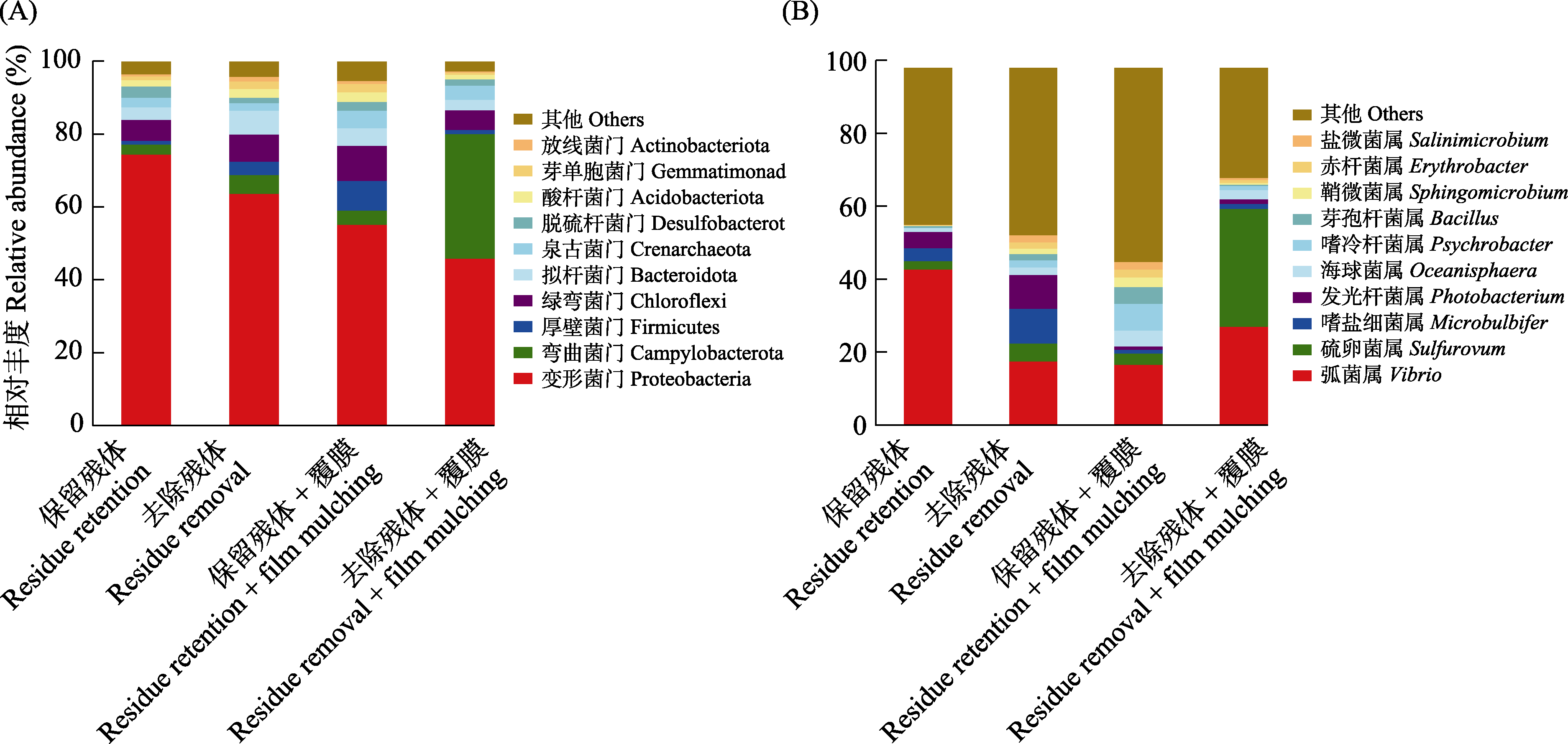
Fig. 1 Relative abundance of soil bacteria at the phylum level (A) and genus level (B) under mowed Spartina alterniflora residue retention and plastic film mulching treatments
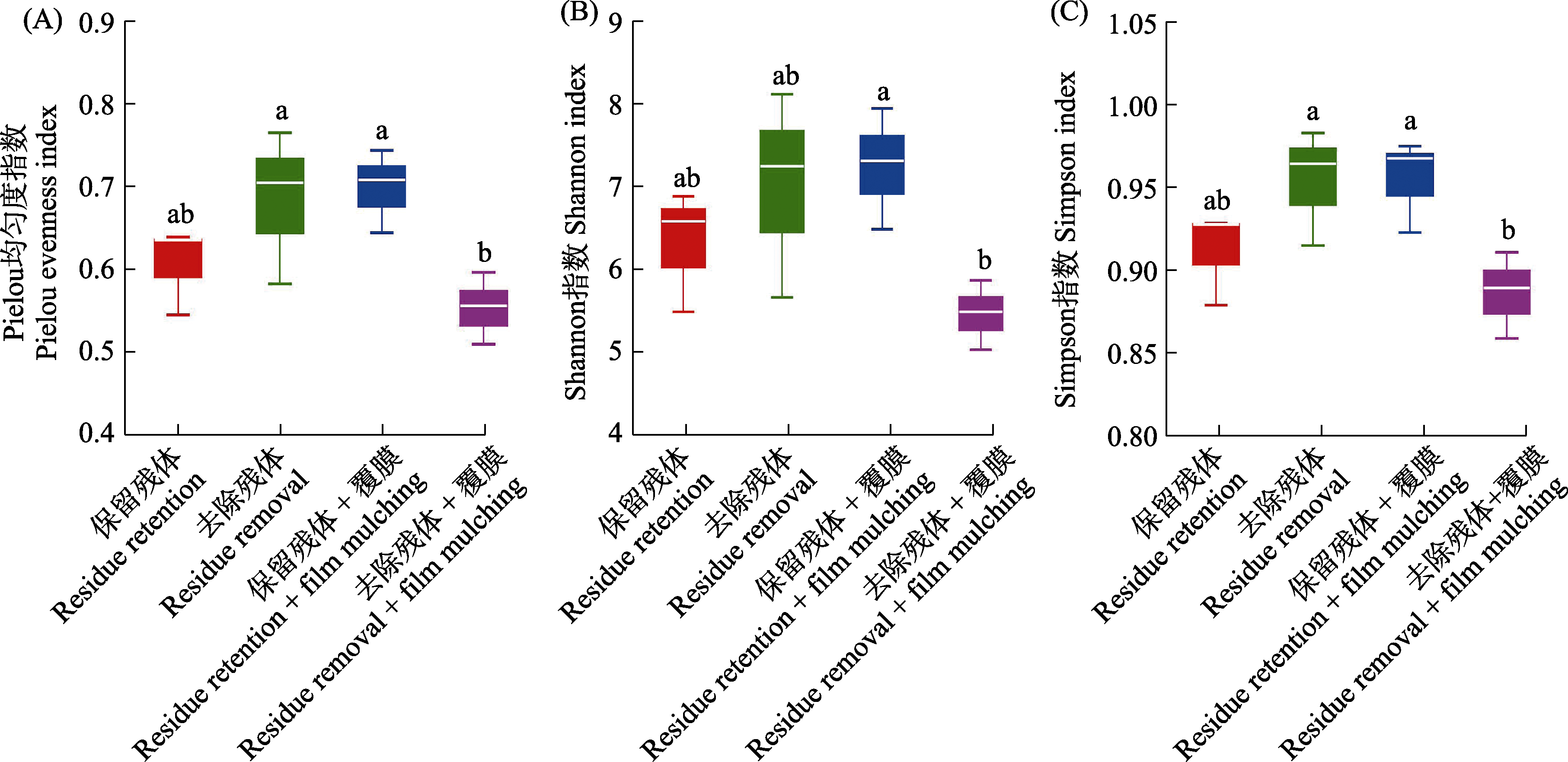
Fig. 2 α diversity indices of rhizosphere soil bacterial communities under mowed Spartina alterniflora residue retention and plastic film mulching treatments. Different lowercase letters indicate significant differences in diversity indices among treatments (P < 0.05).
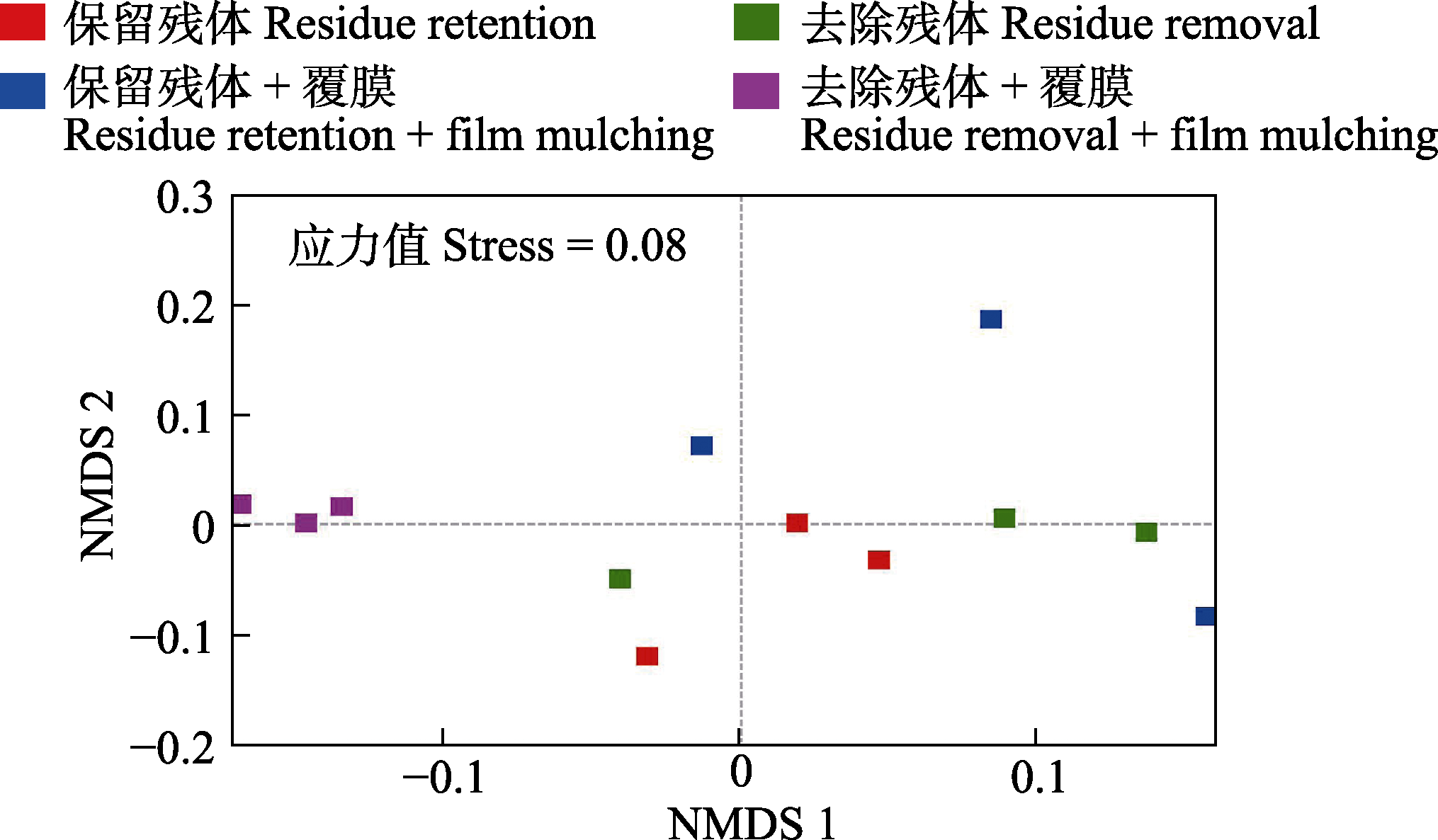
Fig. 3 Non-metric multidimensional scaling (NMDS) ordination analysis of soil bacterial community structure based on weighted UniFrac distances under mowed Spartina alterniflora residue retention and plastic film mulching treatments
| 两两组别 Pairwise groups | 差值 Difference | P值 P value | 置信下限 LCL | 置信上限 UCL |
|---|---|---|---|---|
| 保留残体/去除残体 Residue retention/residue removal | -0.667 | 0.735 | -5.049 | 3.715 |
| 保留残体/保留残体 + 覆膜 Residue retention/residue retention + film mulching | -3.33 | 0.118 | -7.715 | 1.049 |
| 保留残体/去除残体 + 覆膜 Residue retention/residue removal + film mulching | 4.667 | 0.040 | 0.285 | 9.049 |
| 去除残体/保留残体 + 覆膜 Residue removal/residue retention + film mulching | -2.667 | 0.198 | -7.049 | 1.715 |
| 去除残体/去除残体 + 覆膜 Residue removal/residue removal + film mulching | 5.333 | 0.023 | 0.951 | 9.715 |
| 保留残体+覆膜/去除残体 + 覆膜 Residue retention + film mulching/residue removal + film mulching | 8.000 | 0.003 | 3.618 | 12.382 |
Table 2 Significance test for β diversity index differences between groups based on weighted UniFrac distance
| 两两组别 Pairwise groups | 差值 Difference | P值 P value | 置信下限 LCL | 置信上限 UCL |
|---|---|---|---|---|
| 保留残体/去除残体 Residue retention/residue removal | -0.667 | 0.735 | -5.049 | 3.715 |
| 保留残体/保留残体 + 覆膜 Residue retention/residue retention + film mulching | -3.33 | 0.118 | -7.715 | 1.049 |
| 保留残体/去除残体 + 覆膜 Residue retention/residue removal + film mulching | 4.667 | 0.040 | 0.285 | 9.049 |
| 去除残体/保留残体 + 覆膜 Residue removal/residue retention + film mulching | -2.667 | 0.198 | -7.049 | 1.715 |
| 去除残体/去除残体 + 覆膜 Residue removal/residue removal + film mulching | 5.333 | 0.023 | 0.951 | 9.715 |
| 保留残体+覆膜/去除残体 + 覆膜 Residue retention + film mulching/residue removal + film mulching | 8.000 | 0.003 | 3.618 | 12.382 |
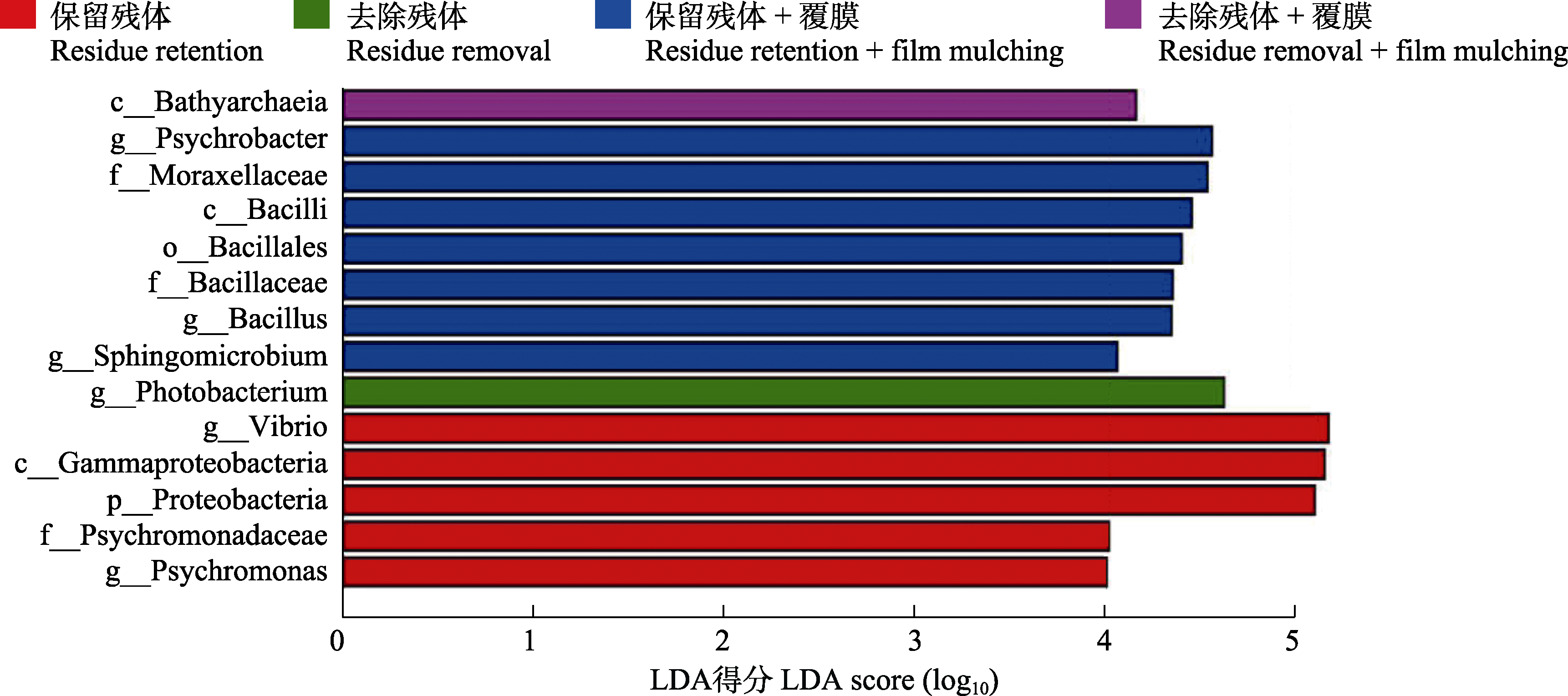
Fig. 4 Distribution of linear discriminant analysis (LDA) scores for soil bacterial taxa at multiple taxonomic levels under mowed Spartina alterniflora residue retention and plastic film mulching treatments (LDA score (log10) > 4, P < 0.05)
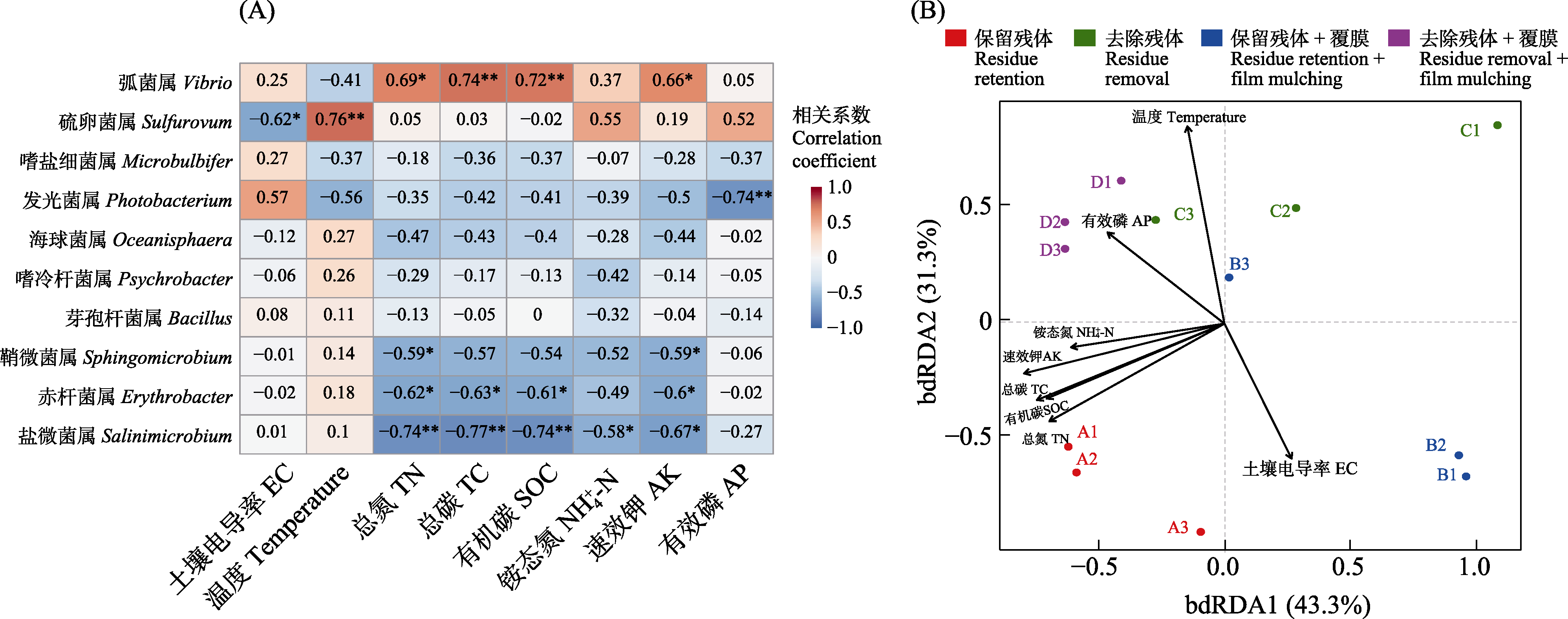
Fig. 5 Correlation analysis between dominant bacterial genera and soil physicochemical factors. (A) Spearman correlation analysis; (B) Distance-based redundancy bd-RDA analysis. In Fig. A, * P < 0.05; ** P < 0.01. EC, Soil electrical conductivity; TN, Total nitrogen; TC, Total carbon; SOC, Soil organic carbon; NH4+-N, Ammonium nitrogen; AK, Available potassium; AP, Available phosphorus. In Fig. B, A-D correspond to the four treatment groups, and the numbers 1-3 represent the replicates of each treatment group.
| Viewed | ||||||
|
Full text |
|
|||||
|
Abstract |
|
|||||
Copyright © 2026 Biodiversity Science
Editorial Office of Biodiversity Science, 20 Nanxincun, Xiangshan, Beijing 100093, China
Tel: 010-62836137, 62836665 E-mail: biodiversity@ibcas.ac.cn

