

Biodiv Sci ›› 2026, Vol. 34 ›› Issue (4): 25485. DOI: 10.17520/biods.2025485 cstr: 32101.14.biods.2025485
• Original Papers: Microbial Diversity • Previous Articles Next Articles
Xiangzheng Yin1,2,3,4,5, Haiyan Jiang1,*( ), Jun Zhang2,3,4,5,*(), Chunsheng Luo2,3,4,5,6, Yuanming Zhang2
Received:2025-12-04
Accepted:2026-03-17
Online:2026-04-20
Published:2026-05-27
Contact:
*Co-authors for correspondence: E-mail: zhangjun_09_27@126.com; jhydlm@126.com
Supported by:Xiangzheng Yin, Haiyan Jiang, Jun Zhang, Chunsheng Luo, Yuanming Zhang. Diversity characteristics of phyllosphere bacterial communities in desert shrubs in hyper-arid regions[J]. Biodiv Sci, 2026, 34(4): 25485.
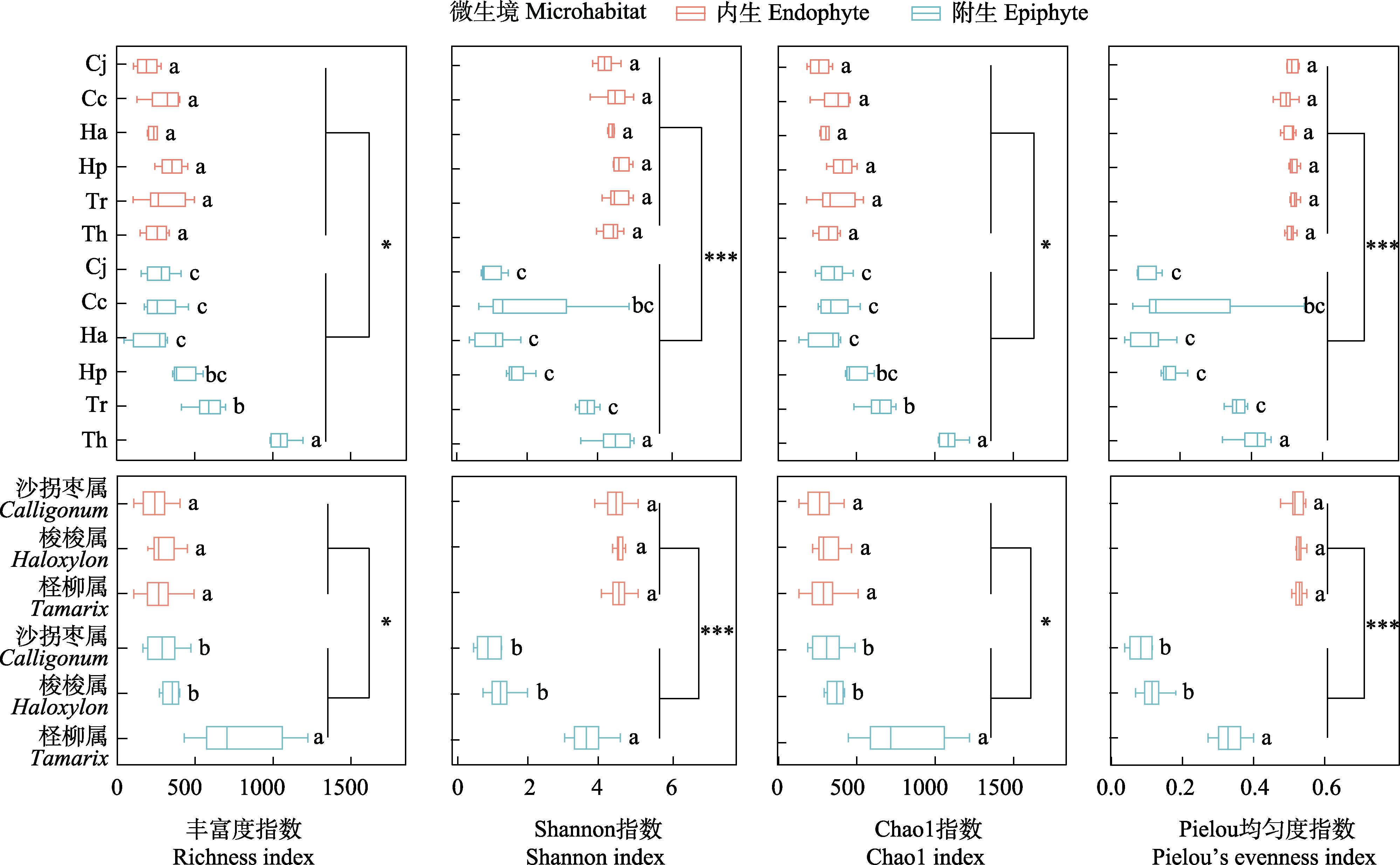
Fig. 1 Alpha diversity distribution characteristics of phyllosphere endophytic and epiphytic bacterial communities in desert shrubs. Cc, Calligonum caput-medusae; Cj, C. junceum; Ha, Haloxylon ammodendron; Hp, H. persicum; Th, Tamarix hispida; Tr, T. ramosissima. * P < 0.05; ** P < 0.01; *** P < 0.001. Lowercase letters beside boxplots denote least significant difference (LSD) multiple comparison results, different letters indicate significant differences.
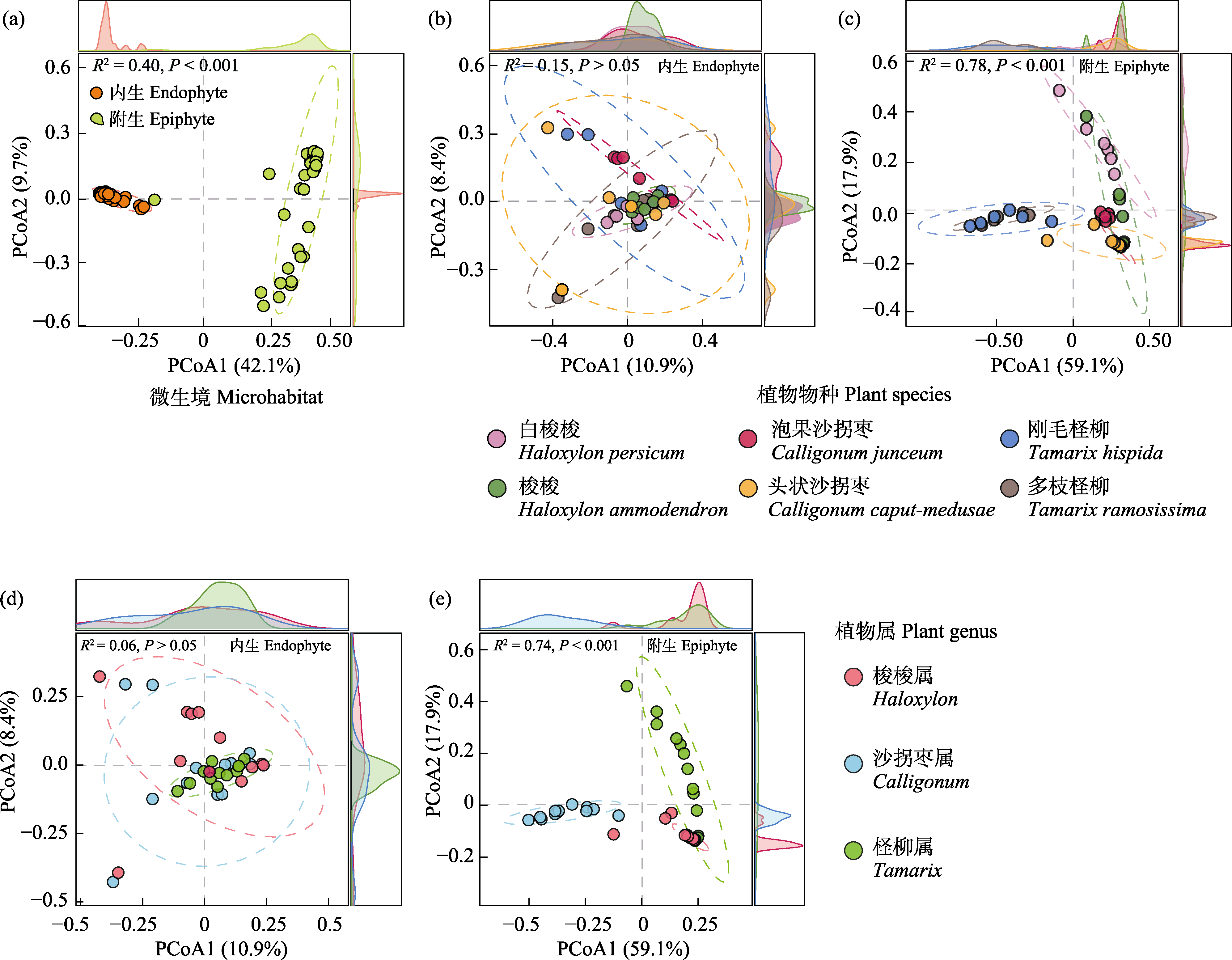
Fig. 2 Principal coordinate analysis (PCoA) of phyllosphere bacterial community structure in desert shrubs based on Bray-Curtis distance. (a) Effect of leaf ecological niche on phyllosphere bacterial community structure; Effect of plant species identity on endophytic (b) and epiphytic (c) bacterial community structure; Effect of plant genus identity on endophytic (d) and epiphytic (e) bacterial community structure. The dashed ellipses in the figure represent the distribution range of within-group data based on a 95% confidence interval.
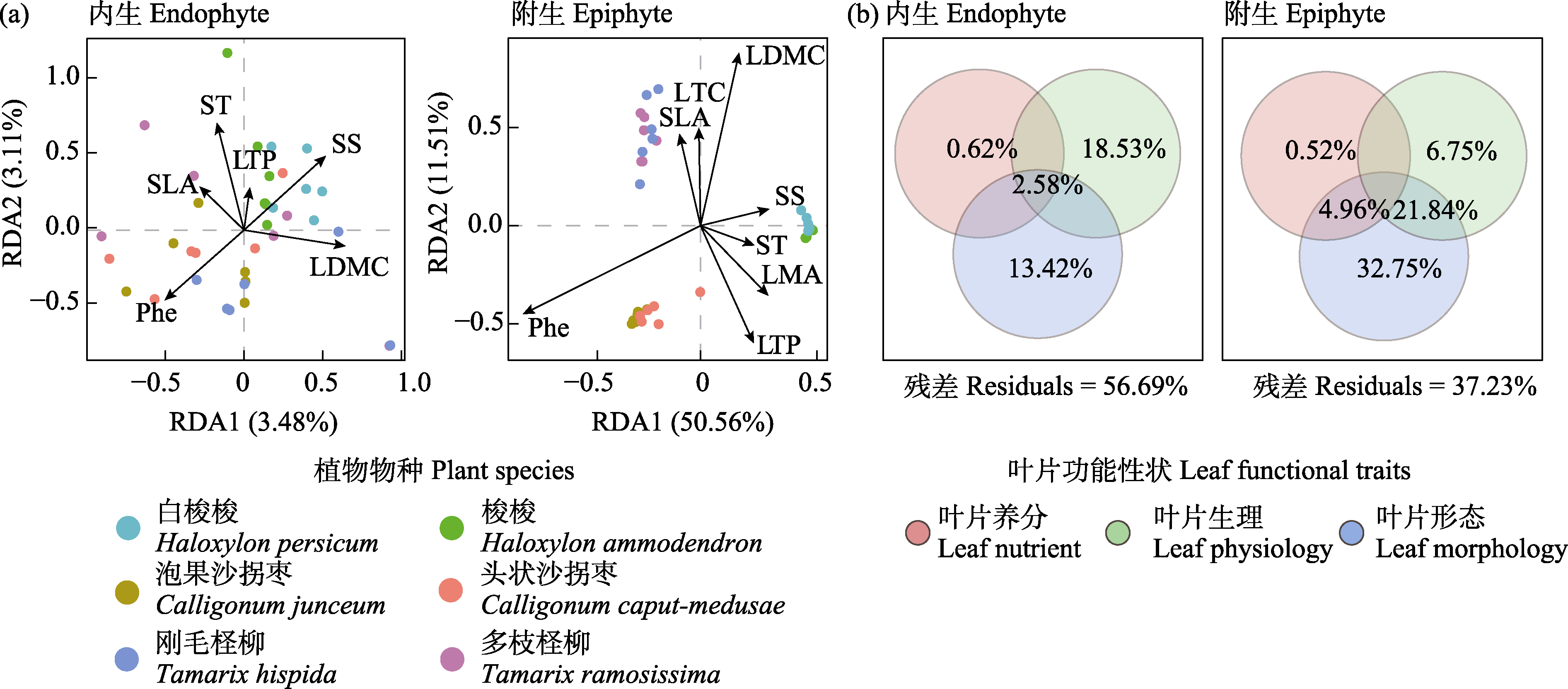
Fig. 3 Effects of leaf functional traits on phyllosphere bacterial community structure in desert shrubs. (a) Redundancy analysis showing the relationship between phyllosphere bacterial communities and leaf functional traits. (b) Variance partitioning analysis illustrating the independent and shared contributions of leaf nutrient, physiological, and morphological traits to the variation in phyllosphere bacterial community structure. Values<0 not shown. BW, Blade width; BL, Blade length; SLA, Specific leaf area: LMA, Leaf mass per area; LDMC, Leaf dry matter content; SS, Soluble sugar; ST, Starch; Phe, Total phenols; Fla, Total flavonoids; TNC, Total non-structural carbohydrates ; LTP, Leaf total phosphorus; LTC, Leaf total carbon.
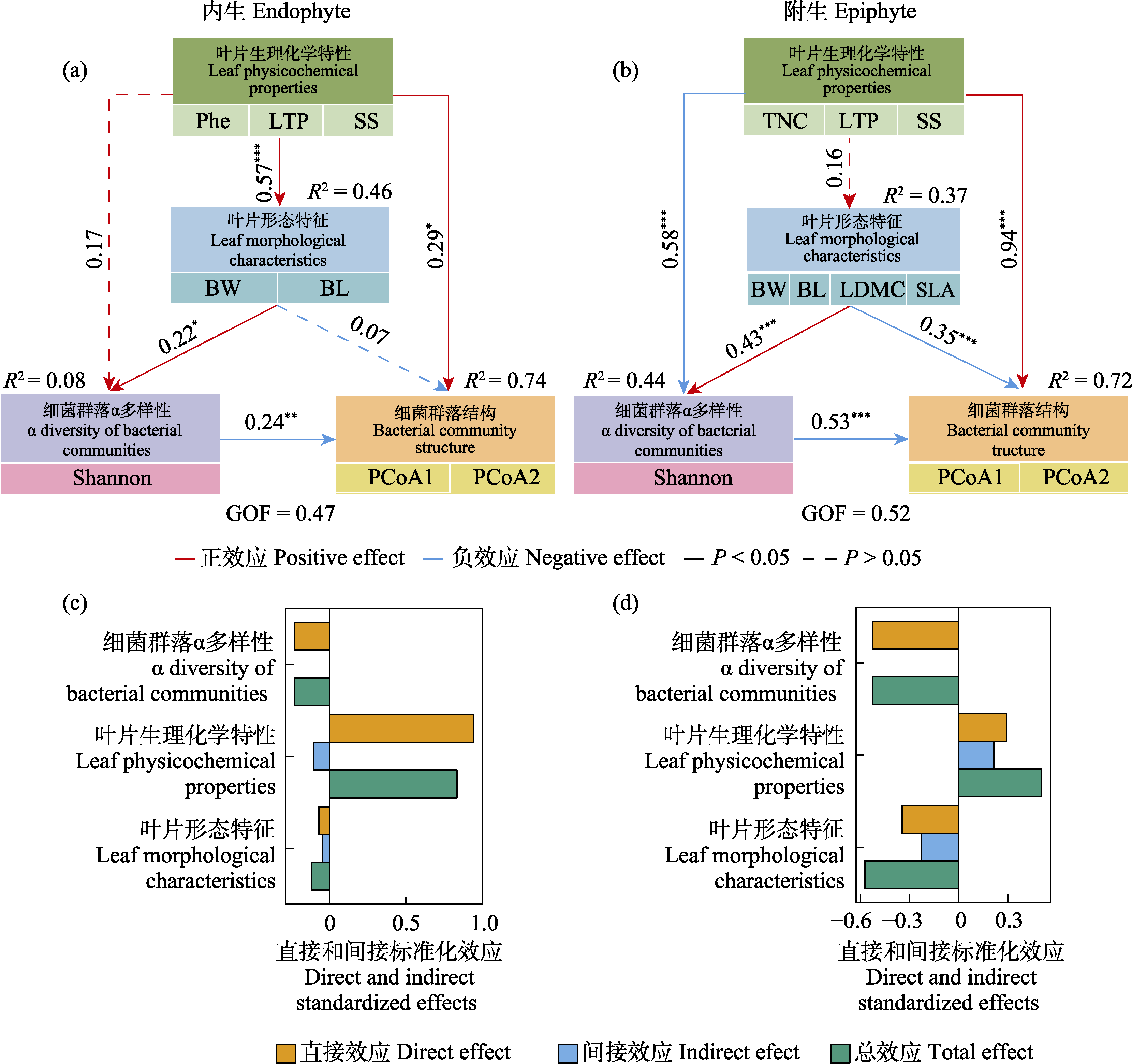
Fig. 4 The key factors influencing the variation of phyllosphere bacterial community structure in desert shrubs. (a) Structural equation model of phyllosphere endophytic bacterial communities; (b) Structural equation model of phyllosphere epiphytic bacterial communities. Values next to arrows are standardized path coefficients. Solid lines indicate significant effects (P < 0.05), while dashed lines indicate non-significant effects (P > 0.05). Red and blue lines represent positive and negative effects, respectively. R2 denotes the explained variance of variables, and GOF denotes the goodness of model fit. (c) Decomposition of standardized effects of each variable on the structure of phyllosphere endophytic bacterial communities; (d) Decomposition of standardized effects of each variable on the structure of phyllosphere epiphytic bacterial communities. * P < 0.05; ** P < 0.01; *** P < 0.001. The corresponding abbreviations of leaf functional traits are shown in Fig. 3.
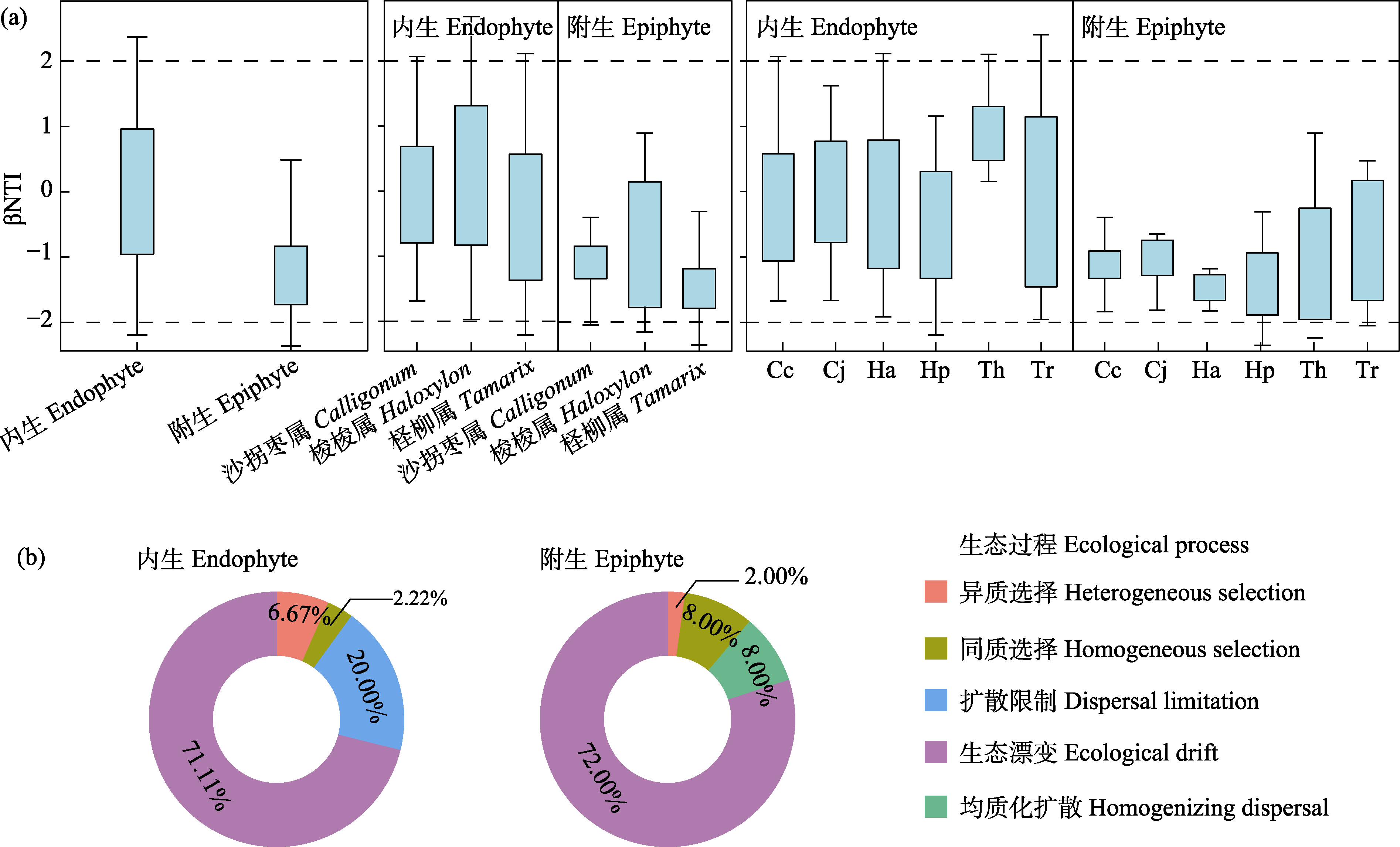
Fig. 5 Assembly processes of phyllosphere bacterial communities in desert shrubs. (a) β-nearest taxon index (βNTI) distributions of endophytic and epiphytic bacterial communities. The dashed lines indicate the |2| threshold, with values>|2| suggesting deterministic assembly and values<|2| indicating stochastic dominance. (b) Relative contributions of deterministic (homogeneous and heterogeneous selection) versus stochastic (homogenizing dispersal, diffusion limitation, and ecological drift) processes to bacterial community assembly, inferred from a zero-model analysis. The meanings of the abbreviations are shown in Fig. 1.
| [1] |
Abdelfattah A, Freilich S, Bartuv R, Zhimo VY, Kumar A, Biasi A, Salim S, Feygenberg O, Burchard E, Dardick C, Liu J, Khan A, Ellouze W, Ali S, Spadaro D, Torres R, Teixido N, Ozkaya O, Buehlmann A, Vero S, Mondino P, Berg G, Wisniewski M, Droby S (2021) Global analysis of the apple fruit microbiome: Are all apples the same? Environmental Microbiology, 23, 6038-6055.
DOI PMID |
| [2] |
Alford RA, Wilbur HM (1985) Priority effects in experimental pond communities: Competition between Bufo and Rana. Ecology, 66, 1097-1105.
DOI URL |
| [3] |
Bai L, Wen YZ, Han GD, Tang JL, Xu ZW, Wang ZW, Jiang L, Ren HY (2025) Long-term climate warming and nitrogen deposition increase leaf epiphytic and endophytic bacterial diversity. Journal of Integrative Plant Biology, 67, 2430-2445.
DOI |
| [4] |
Bashir I, War AF, Rafiq I, Reshi ZA, Rashid I, Shouche YS (2022) Phyllosphere microbiome: Diversity and functions. Microbiological Research, 254, 126888.
DOI URL |
| [5] |
Bodenhausen N, Horton MW, Bergelson J (2013) Bacterial communities associated with the leaves and the roots of Arabidopsis thaliana. PLoS ONE, 8, e56329.
DOI URL |
| [6] |
Borruso L, Wellstein C, Bani A, Casagrande Bacchiocchi S, Margoni A, Tonin R, Zerbe S, Brusetti L (2018) Temporal shifts in endophyte bacterial community composition of sessile oak (Quercus petraea) are linked to foliar nitrogen, stomatal length, and herbivory. PeerJ, 6, e5769.
DOI URL |
| [7] |
Bulgarelli D, Schlaeppi K, Spaepen S, van Themaat EVL, Schulze-Lefert P (2013) Structure and functions of the bacterial microbiota of plants. Annual Review of Plant Biology, 64, 807-838.
DOI PMID |
| [8] |
Canto A, Herrera CM (2012) Micro-organisms behind the pollination scenes: Microbial imprint on floral nectar sugar variation in a tropical plant community. Annals of Botany, 110, 1173-1183.
DOI PMID |
| [9] |
Chase JM (2003) Community assembly: When should history matter? Oecologia, 136, 489-498.
PMID |
| [10] |
Chaudhry V, Runge P, Sengupta P, Doehlemann G, Parker JE, Kemen E (2021) Shaping the leaf microbiota: Plant-microbe-microbe interactions. Journal of Experimental Botany, 72, 36-56.
DOI PMID |
| [11] | Chen DQ, Yang JJ, Wang SF, Lan SR, Wang YL, Liu ZJ, Qian X (2025) Comparative analysis of community composition and network structure between phyllosphere endophytic and epiphytic fungal communities of Mussaenda pubescens. Microbiology Spectrum, 13, e01019-e01024. |
| [12] |
Chen T, Nomura K, Wang XL, Sohrabi R, Xu J, Yao LY, Paasch BC, Ma L, Kremer J, Cheng YT, Zhang L, Wang N, Wang ET, Xin XF, He SY (2020) A plant genetic network for preventing dysbiosis in the phyllosphere. Nature, 580, 653-657.
DOI |
| [13] |
Chen XL, Li LL, He YH (2024) Epiphytic and endophytic bacteria on Camellia oleifera phyllosphere: Exploring region and cultivar effect. BMC Ecology and Evolution, 24, 62.
DOI |
| [14] |
Chesson P (2000) Mechanisms of maintenance of species diversity. Annual Review of Ecology and Systematics, 31, 343-366.
DOI URL |
| [15] |
Coleman-Derr D, Desgarennes D, Fonseca-García C, Gross S, Clingenpeel S, Woyke T, North G, Visel A, Partida- Martinez LP, Tringe SG (2016) Plant compartment and biogeography affect microbiome composition in cultivated and native Agave species. New Phytologist, 209, 798-811.
DOI PMID |
| [16] |
Demarquest G, Lajoie G (2023) Bacterial endophytes of sugar maple leaves vary more idiosyncratically than epiphytes across a large geographic area. FEMS Microbiology Ecology, 99, fiad079.
DOI URL |
| [17] | Dini-Andreote F, Stegen JC, van Elsas JD, Salles JF (2015) Disentangling mechanisms that mediate the balance between stochastic and deterministic processes in microbial succession. Proceedings of the National Academy of Sciences, USA, 112, e1326-e1332. |
| [18] | Fargione J, Brown CS, Tilman D (2003) Community assembly and invasion: An experimental test of neutral versus niche processes. Proceedings of the National Academy of Sciences, USA, 100, 8916-8920. |
| [19] | Feng YZ, Chen RR, Stegen JC, Guo ZY, Zhang JW, Li ZP, Lin XG (2018) Two key features influencing community assembly processes at regional scale: Initial state and degree of change in environmental conditions. Molecular Ecology, 27, 5238-5251. |
| [20] |
Finkel OM, Burch AY, Elad T, Huse SM, Lindow SE, Post AF, Belkin S (2012) Distance-decay relationships partially determine diversity patterns of phyllosphere bacteria on tamrix trees across the Sonoran Desert. Applied and Environmental Microbiology, 78, 6187-6193.
DOI PMID |
| [21] |
Fonseca-García C, Coleman-Derr D, Garrido E, Visel A, Tringe SG, Partida-Martínez LP (2016) The Cacti microbiome: Interplay between habitat-filtering and host-specificity. Frontiers in Microbiology, 7, 150.
DOI PMID |
| [22] | Gilbert B, Levine JM (2017) Ecological drift and the distribution of species diversity. Proceedings of the Royal Society B: Biological Sciences, 284, 20170507. |
| [23] |
Griffin EA, Carson WP (2015) The ecology and natural history of foliar bacteria with a focus on tropical forests and agroecosystems. The Botanical Review, 81, 105-149.
DOI URL |
| [24] |
Griffin EA, Harrison JG, Kembel SW, Carrell AA, Wright SJ, Carson WP (2019) Plant host identity and soil macronutrients explain little variation in sapling endophyte community composition: Is disturbance an alternative explanation? Journal of Ecology, 107, 1876-1889.
DOI |
| [25] |
Hakobyan A, Velte S, Sickel W, Quandt D, Stoll A, Knief C (2023) Tillandsia landbeckii phyllosphere and laimosphere as refugia for bacterial life in a hyperarid desert environment. Microbiome, 11, 246.
DOI PMID |
| [26] | Hubbell SP (2001) The unified neutral theory of biodiversity and biogeography. In: Monographs in Population Biology. Princeton University Press, Princeton. |
| [27] |
Hubbell SP (2005) Neutral theory in community ecology and the hypothesis of functional equivalence. Functional Ecology, 19, 166-172.
DOI URL |
| [28] |
Hunter PJ, Hand P, Pink D, Whipps JM, Bending GD (2010) Both leaf properties and microbe-microbe interactions influence within-species variation in bacterial population diversity and structure in the lettuce (Lactuca species) phyllosphere. Applied and Environmental Microbiology, 76, 8117-8125.
DOI PMID |
| [29] | Kembel SW, O’Connor TK, Arnold HK, Hubbell SP, Wright SJ, Green JL (2014) Relationships between phyllosphere bacterial communities and plant functional traits in a neotropical forest. Proceedings of the National Academy, USA, 111, 13715-13720. |
| [30] |
Kim M, Singh D, Lai-Hoe A, Go R, Abdul Rahim R, Ainuddin AN, Chun J, Adams JM (2012) Distinctive phyllosphere bacterial communities in tropical trees. Microbial Ecology, 63, 674-681.
DOI PMID |
| [31] |
Knapp DG, Lázár A, Molnár A, Vajna B, Karácsony Z, Váczy KZ, Kovács GM (2021) Above-ground parts of white grapevine Vitis vinifera cv. Furmint share core members of the fungal microbiome. Environmental Microbiology Reports, 13, 509-520.
DOI URL |
| [32] |
Laforest-Lapointe I, Paquette A, Messier C, Kembel SW (2017) Leaf bacterial diversity mediates plant diversity and ecosystem function relationships. Nature, 546, 145-147.
DOI URL |
| [33] |
Lajoie G, Kembel SW (2021) Host neighborhood shapes bacterial community assembly and specialization on tree species across a latitudinal gradient. Ecological Monographs, 91, e01443.
DOI URL |
| [34] |
Leibold MA, Holyoak M, Mouquet N, Amarasekare P, Chase JM, Hoopes MF, Holt RD, Shurin JB, Law R, Tilman D, Loreau M, Gonzalez A (2004) The metacommunity concept: A framework for multi-scale community ecology. Ecology Letters, 7, 601-613.
DOI URL |
| [35] | Li B, Fu MY, Jin GZ, Liu ZL (2025) Rare bacterial subcommunity drives nutrient cycling in phyllosphere habitat of evergreen conifers. Microbiology Spectrum, 13, e00518-e00525. |
| [36] |
Li MJ, Hong L, Ye WH, Wang ZM, Shen H (2022) Phyllosphere bacterial and fungal communities vary with host species identity, plant traits and seasonality in a subtropical forest. Environmental Microbiome, 17, 29.
DOI PMID |
| [37] | Li XM, Zuo YL, Xue ZK, Zhang LL, Zhao LL, He XL (2018) Characteristics of microbial community structure in rhizosphere soil of different desert plants. Acta Ecologica Sinica, 38, 2855-2863.(in Chinese with English abstract) |
| [李欣玫, 左易灵, 薛子可, 张琳琳, 赵丽莉, 贺学礼 (2018) 不同荒漠植物根际土壤微生物群落结构特征. 生态学报, 38, 2855-2863.] | |
| [38] |
Li Y, Pan JX, Zhang RY, Wang JS, Tian DS, Niu SL (2022) Environmental factors, bacterial interactions and plant traits jointly regulate epiphytic bacterial community composition of two alpine grassland species. Science of the Total Environment, 836, 155665.
DOI URL |
| [39] |
Li Y, Wang JS, Pan JX, Zhang RY, Zhou B, Niu SL (2025) Divergent assembly processes of phyllosphere and rhizosphere microbial communities along environmental gradient. Plant, Cell & Environment, 48, 1380-1392.
DOI URL |
| [40] |
Li YS, Jin L, Wu MH, Wang B, Qu N, Zhou HZ, Chen T, Liu GX, Yue M, Zhang GS (2024) Forest management positively reshapes the phyllosphere bacterial community and improves community stability. Environment International, 186, 108611.
DOI URL |
| [41] |
Lindow SE, Brandl MT (2003) Microbiology of the phyllosphere. Applied and Environmental Microbiology, 69, 1875-1883.
DOI PMID |
| [42] |
Liu D, Howell K (2021) Community succession of the grapevine fungal microbiome in the annual growth cycle. Environmental Microbiology, 23, 1842-1857.
DOI URL |
| [43] |
Liu HW, MacDonald CA, Cook J, Anderson IC, Singh BK (2019) An ecological loop: Host microbiomes across multitrophic interactions. Trends in Ecology & Evolution, 34, 1118-1130.
DOI URL |
| [44] |
Liu JQ, Sun X, Zuo YL, Hu QN, He XL (2023) Plant species shape the bacterial communities on the phyllosphere in a hyper-arid desert. Microbiological Research, 269, 127314.
DOI URL |
| [45] |
Liu JY, Zhang XL, Jin XY, Wang MT, Zhang YY, Wang XY (2024) Nutrient allocation patterns in different aboveground organs at different reproductive stages of four introduced Calligonum species in a common garden in northwestern China. Frontiers in Plant Science, 15, 1504216.
DOI URL |
| [46] | Maignien L, DeForce EA, Chafee ME, Eren AM, Simmons SL (2014) Ecological succession and stochastic variation in the assembly of Arabidopsis thaliana phyllosphere communities. mBio, 5, e00682-e00613. |
| [47] |
Melotto M, Underwood W, He SY (2008) Role of stomata in plant innate immunity and foliar bacterial diseases. Annual Review of Phytopathology, 46, 101-122.
DOI PMID |
| [48] | Mercado-Blanco J (2015) Life of microbes inside the plant. In: Principles of Plant-Microbe Interactions (ed. Lugtenberg B), pp. 25-32. Springer International Publishing, Cham. |
| [49] |
Mina D, Pereira JA, Lino-Neto T, Baptista P (2020) Epiphytic and endophytic bacteria on olive tree phyllosphere: Exploring tissue and cultivar effect. Microbial Ecology, 80, 145-157.
DOI PMID |
| [50] | Pan YS, Liu BH, Zhang WY, Zhuang S, Wang HZ, Chen JY, Xiao L, Li YZ, Han DF (2024) Drought-induced assembly of rhizosphere mycobiomes shows beneficial effects on plant growth. mSystems, 9, e00354-e00324. |
| [51] |
Qvit-Raz N, Finkel OM, Al-Deeb TM, Malkawi HI, Hindiyeh MY, Jurkevitch E, Belkin S (2012) Biogeographical diversity of leaf-associated microbial communities from salt-secreting Tamarix trees of the Dead Sea region. Research in Microbiology, 163, 142-150.
DOI PMID |
| [52] |
Redford AJ, Fierer N (2009) Bacterial succession on the leaf surface: A novel system for studying successional dynamics. Microbial Ecology, 58, 189-198.
DOI PMID |
| [53] | Rodríguez-Castro L, Sierra AM, Villarreal Aguilar JC, Saltonstall K (2025) Spatial and seasonal analysis of phyllosphere bacterial communities of the epiphytic gymnosperm Zamia pseudoparasitica. Applied Biosciences, 4, 35. |
| [54] | Sanjenbam P, Agashe D (2024) Divergence and convergence in epiphytic and endophytic phyllosphere bacterial communities of rice landraces. mSphere, 9, e00765-e00724. |
| [55] | Schimann H, Vacher C, Coste S, Louisanna E, Fort T, Zinger L (2023) Determinants of the vertical distribution of the phyllosphere differ between microbial groups and the epi and endosphere in a tropical forest. Phytobiomes Journal, 7, 312-323. |
| [56] |
Schlechter RO, Miebach M, Remus-Emsermann MNP (2019) Driving factors of epiphytic bacterial communities: A review. Journal of Advanced Research, 19, 57-65.
DOI PMID |
| [57] |
Tahtamouni ME, Khresat S, Lucero M, Sigala J, Unc A (2016) Diversity of endophytes across the soil-plant continuum for Atriplex spp. in arid environments. Journal of Arid Land, 8, 241-253.
DOI URL |
| [58] |
Truchado P, Gil MI, Reboleiro P, Rodelas B, Allende A (2017) Impact of solar radiation exposure on phyllosphere bacterial community of red-pigmented baby leaf lettuce. Food Microbiology, 66, 77-85.
DOI PMID |
| [59] |
Vacher C, Castagneyrol B, Jousselin E, Schimann H (2021) Trees and insects have microbiomes: Consequences for forest health and management. Current Forestry Reports, 7, 81-96.
DOI |
| [60] |
Vacher C, Hampe A, Porté AJ, Sauer U, Compant S, Morris CE (2016) The phyllosphere: Microbial jungle at the plant- climate interface. Annual Review of Ecology, Evolution, and Systematics, 47, 1-24.
DOI URL |
| [61] |
Violle C, Navas ML, Vile D, Kazakou E, Fortunel C, Hummel I, Garnier E (2007) Let the concept of trait be functional! Oikos, 116, 882-892.
DOI URL |
| [62] |
Vorholt JA (2012) Microbial life in the phyllosphere. Nature Reviews Microbiology, 10, 828-840.
DOI PMID |
| [63] |
Wallace J, Laforest-Lapointe I, Kembel SW (2018) Variation in the leaf and root microbiome of sugar maple (Acer saccharum) at an elevational range limit. PeerJ, 6, e5293.
DOI URL |
| [64] | Wang WX, Luo M, Pan CD (2010) Microorganisms and its biological activity in rhizospheric soil around desert plants at the lower reaches of Tarim River, Xinjiang, China. Journal of Desert Research, 30, 571-576.(in Chinese with English abstract) |
| [王卫霞, 罗明, 潘存德 (2010) 塔里木河下游几种荒漠植物根际土壤微生物及其活性. 中国沙漠, 30, 571-576.] | |
| [65] |
Wang ZH, Jiang Y, Zhang MH, Chu CJ, Chen YF, Fang S, Jin GZ, Jiang MX, Lian JY, Li YP, Liu Y, Ma KP, Mi XC, Qiao XJ, Wang XH, Wang XG, Xu H, Ye WH, Zhu L, Zhu Y, He FL, Kembel SW (2023) Diversity and biogeography of plant phyllosphere bacteria are governed by latitude-dependent mechanisms. New Phytologist, 240, 1534-1547.
DOI URL |
| [66] | Wei S, Zhao YF, Pan BR, Yin LK, Liu RX (2014) Phenological behaviour of desert plants in response to temperature change: A case study from Turpan Eremophytes Botanical Garden, Northwest China. Pakistan Journal of Botany, 46, 1601-1609. |
| [67] | Wei YQ, Lan GY, Wu ZX, Chen BQ, Quan F, Li MM, Sun SQ, Du HN (2022) Phyllosphere fungal communities of rubber trees exhibited biogeographical patterns, but not bacteria. Environmental Microbiology, 24, 3777-3790. |
| [68] |
Wu TG, Wang GG, Wu QT, Cheng XR, Yu MK, Wang W, Yu XB (2014) Patterns of leaf nitrogen and phosphorus stoichiometry among Quercus acutissima provenances across China. Ecological Complexity, 17, 32-39.
DOI URL |
| [69] |
Yadav RKP, Karamanoli K, Vokou D (2005) Bacterial colonization of the phyllosphere of Mediterranean perennial species as influenced by leaf structural and chemical features. Microbial Ecology, 50, 185-196.
DOI PMID |
| [70] |
Yan K, Han WH, Zhu QL, Li CR, Dong Z, Wang YP (2022) Leaf surface microtopography shaping the bacterial community in the phyllosphere: Evidence from 11 tree species. Microbiological Research, 254, 126897.
DOI URL |
| [71] |
Yan ZZ, Chen QL, Li CY, Thi Nguyen BA, He JZ, Hu HW (2022) Contrasting ecological processes shape the Eucalyptus phyllosphere bacterial and fungal community assemblies. Journal of Sustainable Agriculture and Environment, 1, 73-83.
DOI URL |
| [72] |
Yang X, Wang PD, Xiao BW, Xu QN, Guo Q, Li SP, Guo LL, Deng MF, Lu JB, Liu LL, Ma KP, Schmid B, Jiang L (2023) Different assembly mechanisms of leaf epiphytic and endophytic bacterial communities underlie their higher diversity in more diverse forests. Journal of Ecology, 111, 970-981.
DOI URL |
| [73] |
Yao H, Sun X, He C, Li XC, Guo LD (2020) Host identity is more important in structuring bacterial epiphytes than endophytes in a tropical mangrove forest. FEMS Microbiology Ecology, 96, fiaa038.
DOI URL |
| [74] |
Yao H, Sun X, He C, Maitra P, Li XC, Guo LD (2019) Phyllosphere epiphytic and endophytic fungal community and network structures differ in a tropical mangrove ecosystem. Microbiome, 7, 57.
DOI PMID |
| [75] |
Yue K, Fornara DA, Yang WQ, Peng Y, Li ZJ, Wu FZ, Peng CH (2017) Effects of three global change drivers on terrestrial C:N:P stoichiometry: A global synthesis. Global Change Biology, 23, 2450-2463.
DOI PMID |
| [76] |
Zhang J, Zhang YM, Zhang Q (2024) Host plant traits play a crucial role in shaping the composition of epiphytic microbiota in the arid desert, Northwest China. Journal of Arid Land, 16, 699-724.
DOI |
| [77] |
Zhang J, Zhou XB, Rong XY, Yin BF, Zhang L, Zhang YM (2026) Host phylogeny and traits shape the composition and network structure of the phyllosphere microbial communities in temperate desert plants. Microbiological Research, 302, 128355.
DOI URL |
| [78] | Zhang X, Xu Y, Yang YC, Zhao YL, Men ZH, Wang YL (2024) The diversity and assembly mechanism of phyllosphere fungal communities in the relict plant Helianthemum songaricum. Biodiversity Sciencesongaricum, 32, 23384.(in Chinese with English abstract) |
|
[张旋, 徐颖, 杨颜慈, 赵艳玲, 门中华, 王永龙 (2024) 孑遗植物半日花叶际真菌群落的多样性与构建机制. 生物多样性, 32, 23384.]
DOI |
| [1] | Peng Xie, Zhibo Zhou, Shaogang Fan, Ping Mo, Kerui Huang, Aihua Deng, Youwei Yang, Fei Wu, Dewei Xiao, Yun Wang. Soil microbial diversity, network structure, and functional potential differ between natural and plantation forests of Cathaya argyrophylla [J]. Biodiv Sci, 2026, 34(7): 26122-. |
| [2] | Chen Wang, Jiajie Xu, Ruizhi An, Peipei Wei, Xiangjun Wu, Sang Ba. The environmental DNA reveals diversity patterns and geographical distribution of protozoan in the middle reaches of the Yarlung Zangbo River during the dry season [J]. Biodiv Sci, 2025, 33(6): 24486-. |
| [3] | Chunsheng Luo, Jun Zhang, Hua Jin, Xiangzheng Yin, Yuanming Zhang. Diversity characteristics and driving factors of phyllosphere bacterial communities in shrubs of the Gurbantunggut Desert [J]. Biodiv Sci, 2025, 33(12): 25340-. |
| [4] | Yuan Liu, Jianqing Du, Liyuan Ma, Gang Yang, Jianqing Tian. Diversity and distribution of methanogen communities in the riparian wetlands of the Nam Co basin [J]. Biodiv Sci, 2025, 33(1): 24247-. |
| [5] | Chuan Jin, Zijia Zhang, Kai Di, Weirong Zhang, Dong Qiao, Siyuan Cheng, Zhongmin Hu. A dataset on fluorescence, photosynthesis gas exchange, and leaf traits of Hainan tropical rainforest plant species [J]. Biodiv Sci, 2024, 32(9): 24139-. |
| [6] | Rui Qu, Zhenjun Zuo, Youxin Wang, Liangjian Zhang, Zhigang Wu, Xiujuan Qiao, Zhong Wang. The biogeochemical niche based on elementome and its applications in different ecosystems [J]. Biodiv Sci, 2024, 32(4): 23378-. |
| [7] | Mengyao Zheng, Yuan Li, Xuerong Wang, Yue Zhang, Tong Jia. Soil protozoa community assembly mechanism in different vegetation types of Luya Mountain [J]. Biodiv Sci, 2024, 32(4): 23419-. |
| [8] | Kailun Xu, Xiaorong Chen, Minhua Zhang, Wanwan Yu, Sumei Wu, Zhicheng Zhu, Dingyun Chen, Rongguang Lan, Shu Dong, Yu Liu. Succession and topography jointly influence the diversity of plant sexual systems in the Baishanzu forest community [J]. Biodiv Sci, 2024, 32(12): 24338-. |
| [9] | Shengxian Yang, Qing Yang, Xiaodong Li, Xin Chao, Huiqiu Liu, Lanruoxue Wei, Sang Ba. Deterministic processes dominate the geographic distribution pattern and community assembly of phytoplankton in typical plateau rivers [J]. Biodiv Sci, 2023, 31(7): 23092-. |
| [10] | Fang Du, Xiaoying Rong, Peng Xu, Benfeng Yin, Yuanming Zhang. Bacterial diversity and community assembly responses to precipitation in the Gurbantunggut Desert [J]. Biodiv Sci, 2023, 31(2): 22492-. |
| [11] | Jianyu Dong, Xin Sun, Qipeng Zhan, Yuyang Zhang, Xiumei Zhang. Patterns and drivers of beta diversity of subtidal macrobenthos community on the eastern coast of Laizhou Bay [J]. Biodiv Sci, 2022, 30(3): 21388-. |
| [12] | Yin Wang, Jianming Wang, Mengjun Qu, Jingwen Li. Plant community assembly processes and key drivers in an arid inland river basin [J]. Biodiv Sci, 2022, 30(2): 21419-. |
| [13] | Yongqingcuomu , Xinqiang Xi, Kechang Niu. Effect of plant species loss on grassland caterpillar in alpine meadows [J]. Biodiv Sci, 2022, 30(11): 22069-. |
| [14] | Xiangcheng Mi, Xugao Wang, Guochun Shen, Xubin Liu, Xiaoyang Song, Xiujuan Qiao, Gang Feng, Jie Yang, Zikun Mao, Xuehong Xu, Keping Ma. Chinese Forest Biodiversity Monitoring Network (CForBio): Twenty years of exploring community assembly mechanisms and prospects for future research [J]. Biodiv Sci, 2022, 30(10): 22504-. |
| [15] | Cheng Gao, Liang-Dong Guo. Progress on microbial species diversity, community assembly and functional traits [J]. Biodiv Sci, 2022, 30(10): 22429-. |
| Viewed | ||||||
|
Full text |
|
|||||
|
Abstract |
|
|||||
Copyright © 2026 Biodiversity Science
Editorial Office of Biodiversity Science, 20 Nanxincun, Xiangshan, Beijing 100093, China
Tel: 010-62836137, 62836665 E-mail: biodiversity@ibcas.ac.cn

