

Biodiv Sci ›› 2025, Vol. 33 ›› Issue (12): 25169. DOI: 10.17520/biods.2025169 cstr: 32101.14.biods.2025169
• Original Papers:Plant Diversity • Previous Articles Next Articles
Changqiao Chen1, Yanfei Feng1, Liqi Lu1, Huaijiang He2, Chunyu Zhang1( ), Xiuhai Zhao1(), Minhui Hao1,*()(
 )
)
Received:2025-05-07
Accepted:2025-08-10
Online:2025-12-20
Published:2026-01-09
Supported by:Changqiao Chen, Yanfei Feng, Liqi Lu, Huaijiang He, Chunyu Zhang, Xiuhai Zhao, Minhui Hao. β-diversity pattern and mechanism in a conifer-broadleaf mixed forest in Jiaohe, Jilin Province[J]. Biodiv Sci, 2025, 33(12): 25169.
| 相异性 Dissimilarity | 物种替换 Species replacement | 丰富度差异 Richness difference | |
|---|---|---|---|
| Jaccard指数 Jaccard index | |||
| Sørenson指数 Sørenson index |
Table 1 Formulas for β diversity based on the Jaccard index and Sørenson index (Podani & Schmera, 2011)
| 相异性 Dissimilarity | 物种替换 Species replacement | 丰富度差异 Richness difference | |
|---|---|---|---|
| Jaccard指数 Jaccard index | |||
| Sørenson指数 Sørenson index |
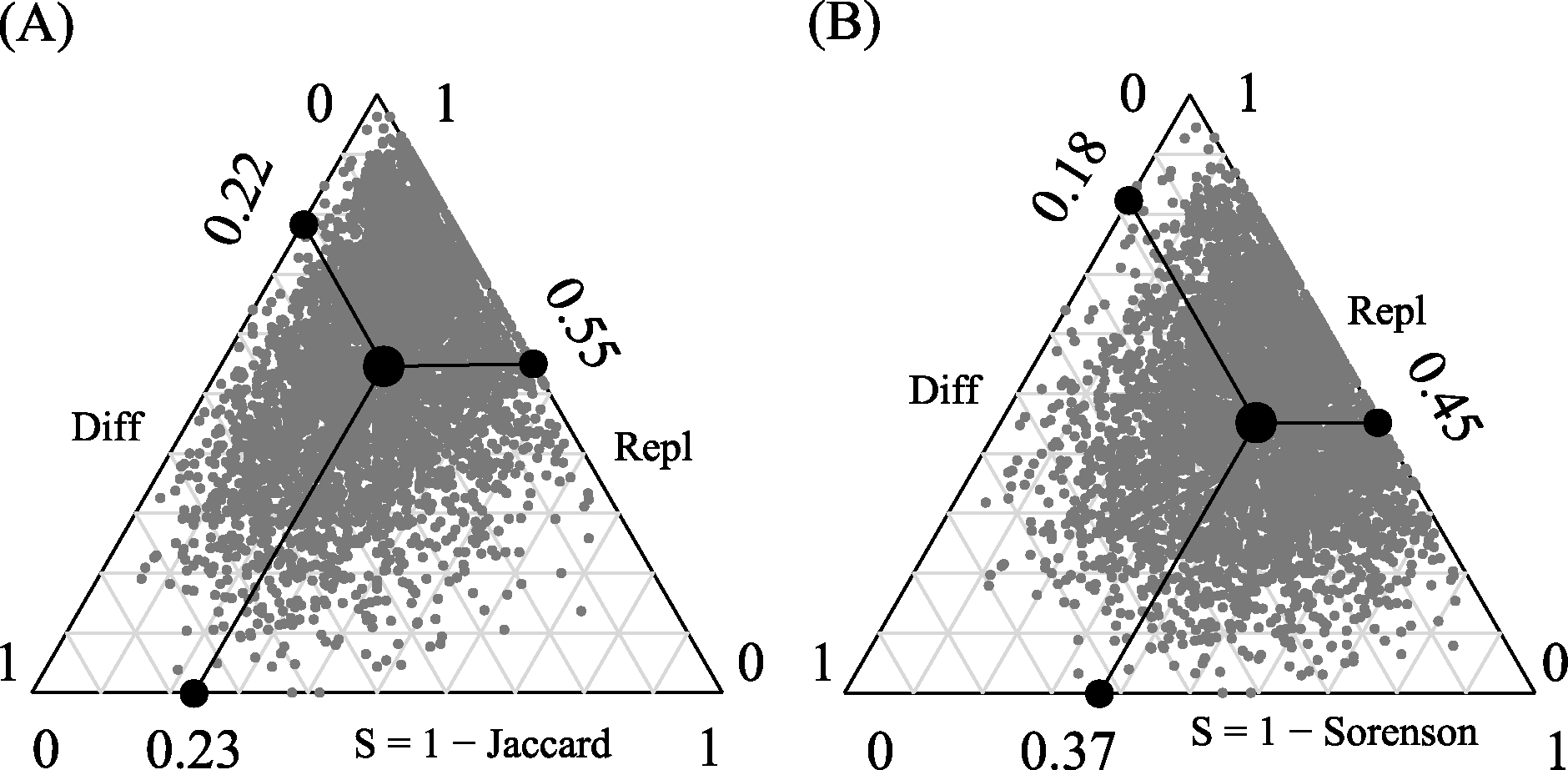
Fig. 1 Triangular plots of the species richness difference (Diff), species replacement (Repl), and similarity index (S). (A) β diversity based on Jaccard index; (B) β diversity based on Sørenson index. Each grey dot represents a pair of forest plots, and the black dots represent the centroid of these grey dots.
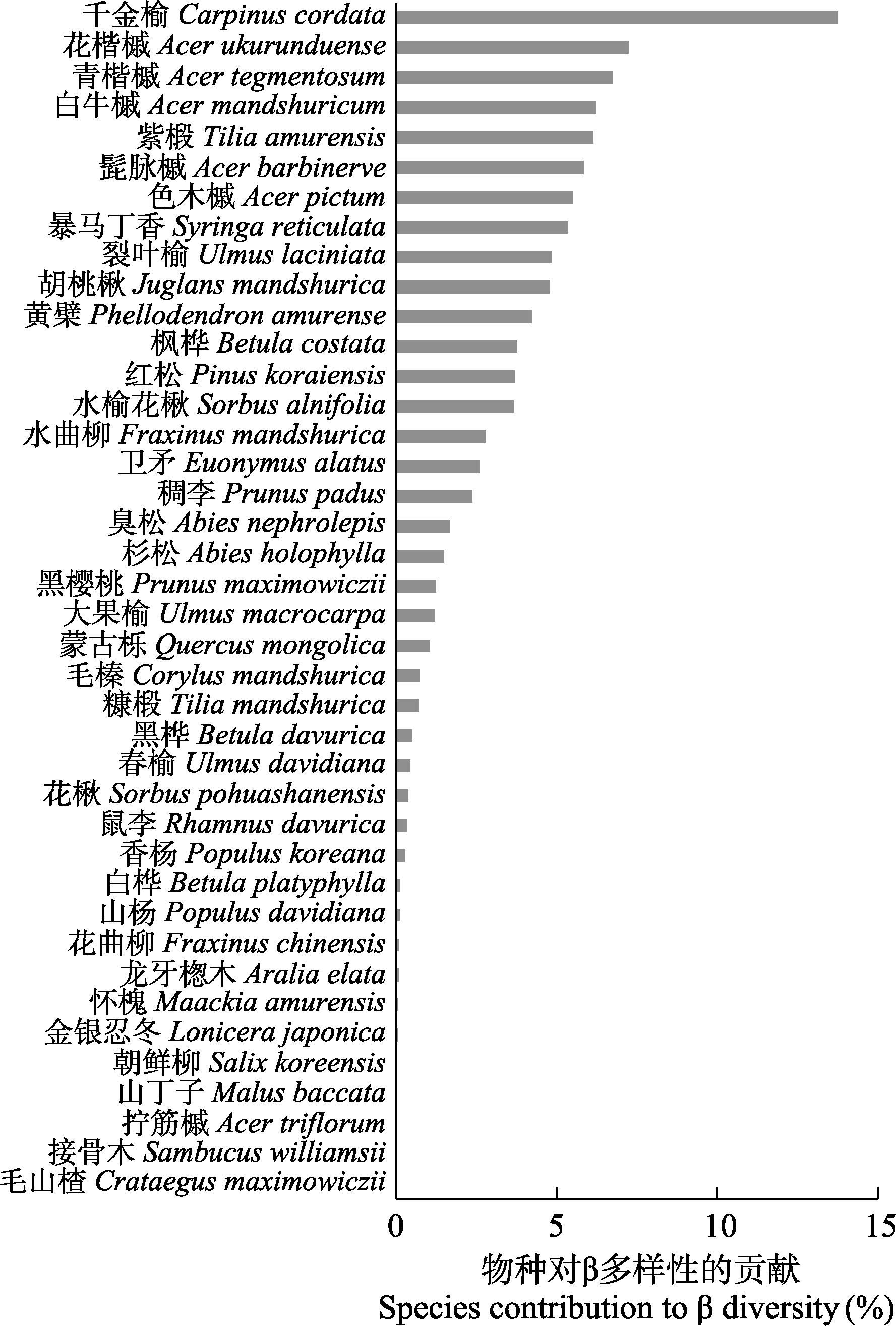
Fig. 2 Species contribution to β diversity (SCBD) in a conifer-broadleaf mixed forest in Jiaohe, Jilin
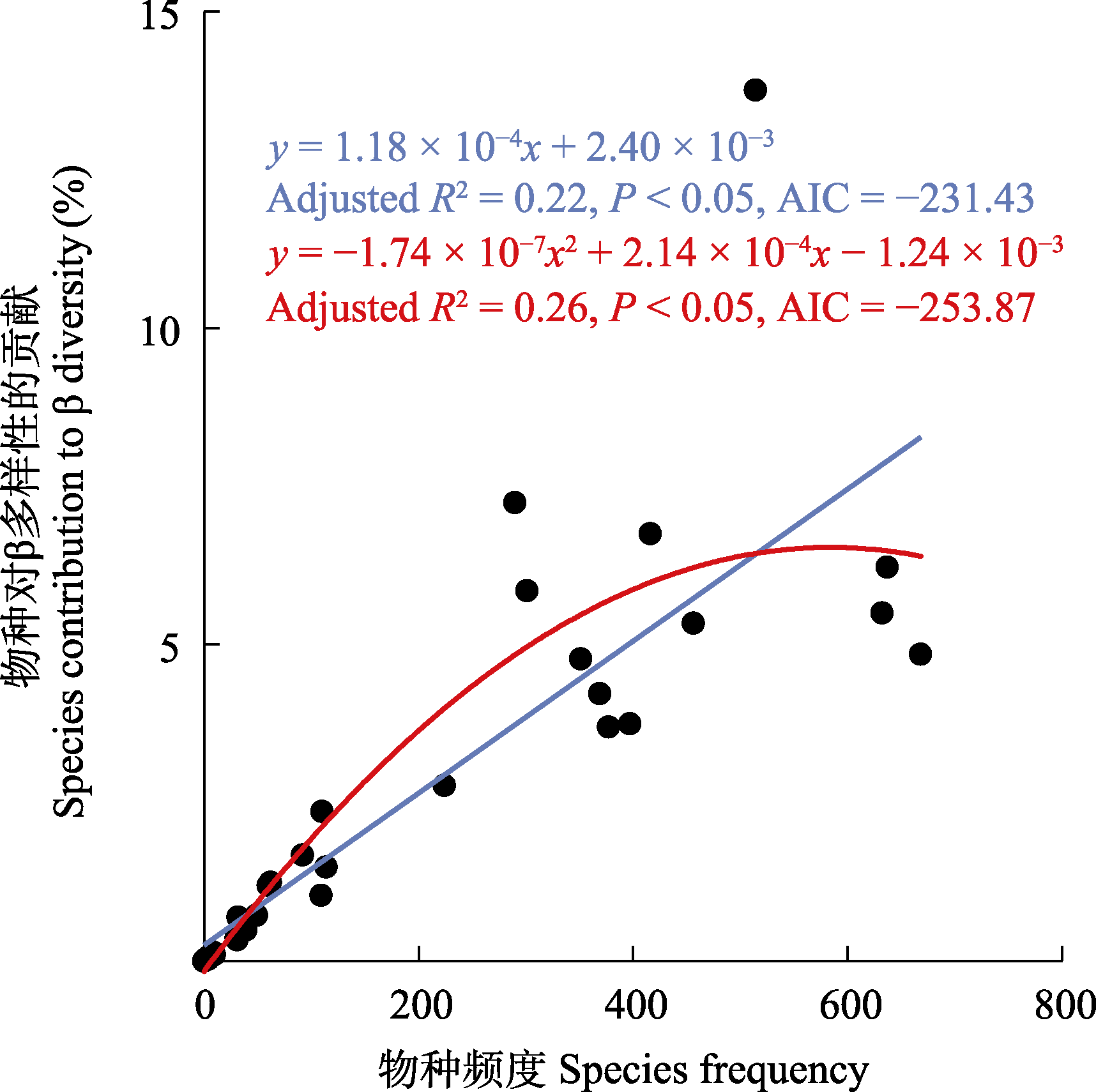
Fig. 3 Linear (blue) and quadratic (red) regression models depicting the relationships between species frequency and species contribution to β diversity (SCBD)
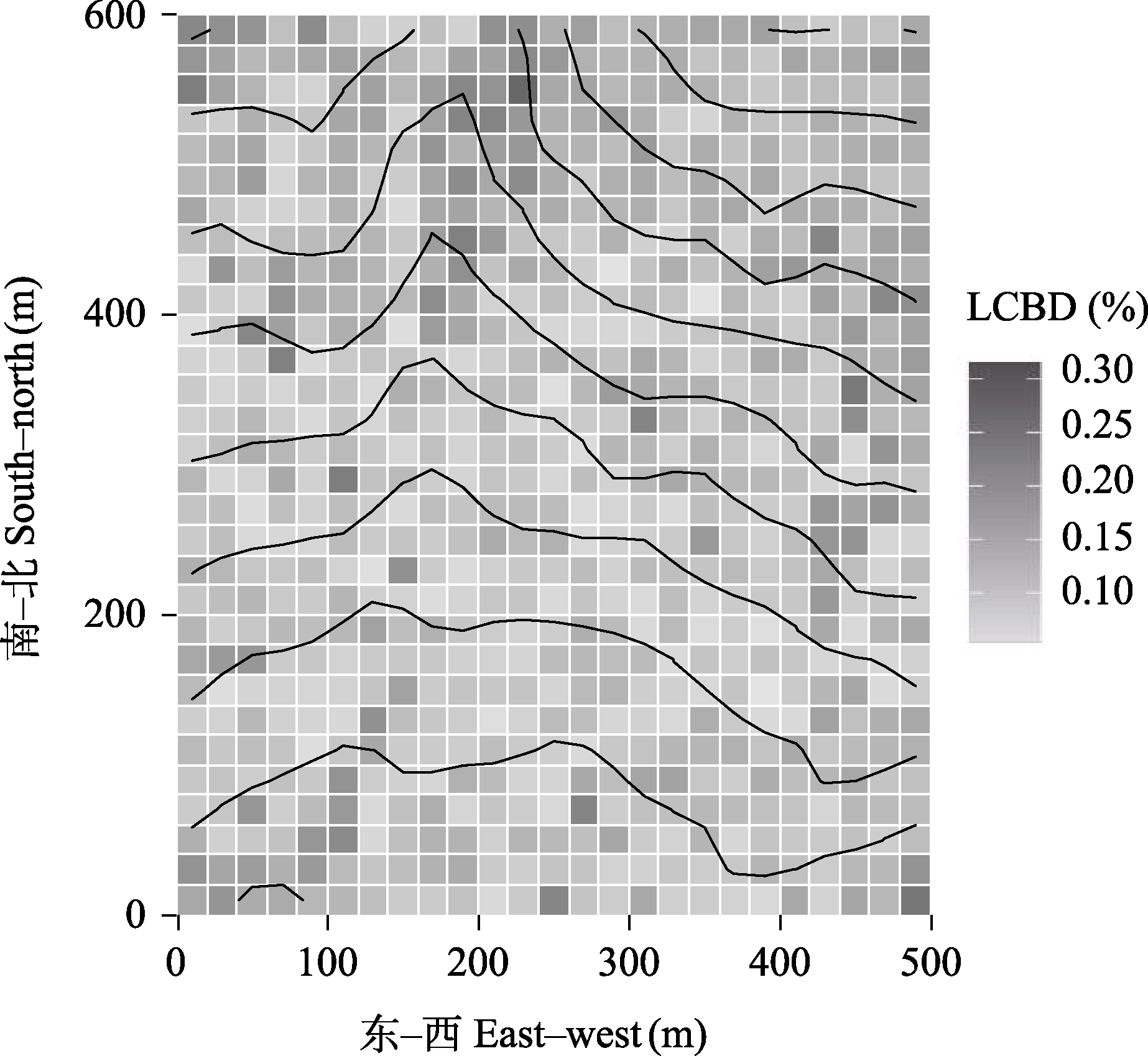
Fig. 4 Map of the forest plots showing the local contributions to β diversity (LCBD) in a conifer-broadleaf mixed forest in Jiaohe, Jilin
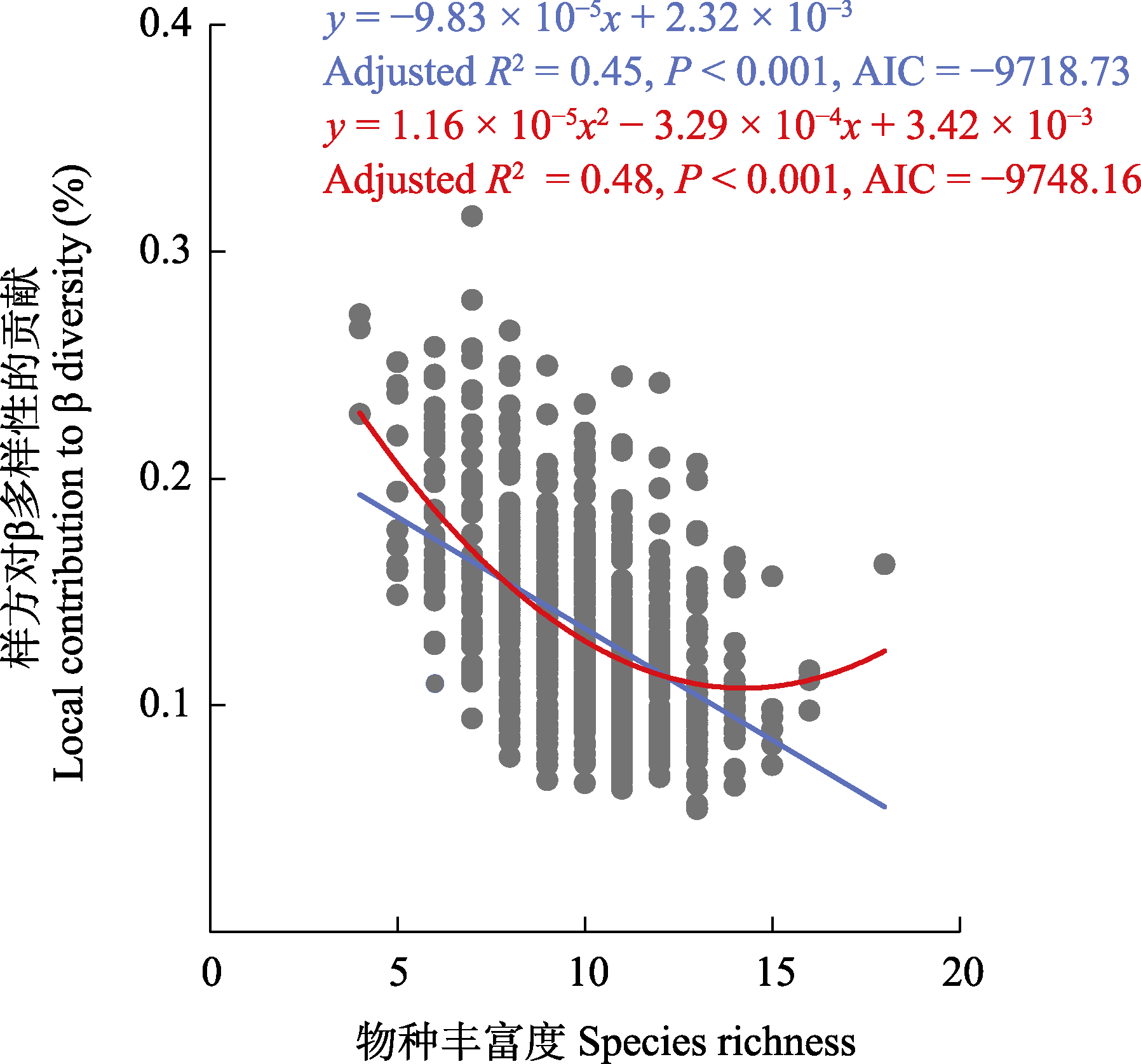
Fig. 5 Linear (blue) and quadratic (red) regression models depicting the relationships between species richness and local contribution to β diversity (LCBD)
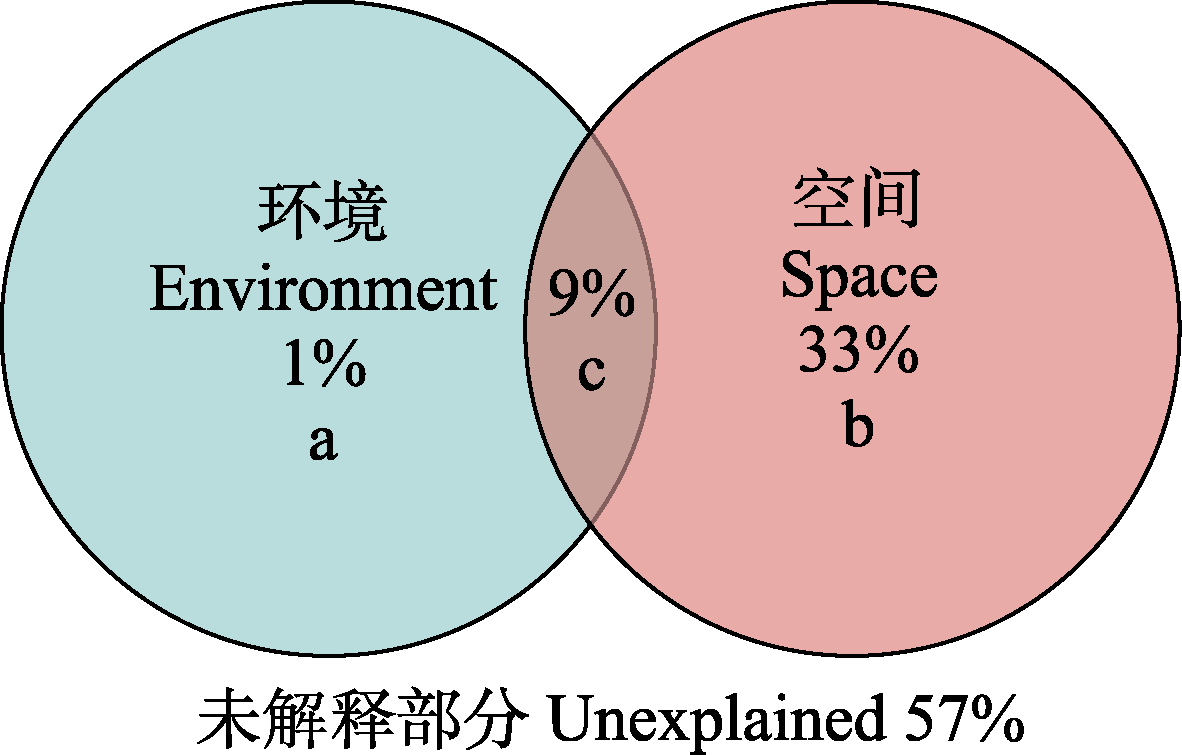
Fig. 6 Relative impact of environmental and spatial variables on local contribution to β diversity (LCBD)
| [1] | Anderson MJ, Crist TO, Chase JM, Vellend M, Inouye BD, Freestone AL, Sanders NJ, Cornell HV, Comita LS, Davies KF, Harrison SP, Kraft NJB, Stegen JC, Swenson NG (2011) Navigating the multiple meanings of β diversity: A roadmap for the practicing ecologist. Ecology Letters 14, 19-28. |
| [2] | Barton PS, Cunningham SA, Manning AD, Gibb H, Lindenmayer DB, Didham RK (2013) The spatial scaling of beta diversity. Global Ecology and Biogeography, 22, 639-647. |
| [3] |
Bell G (2001) Neutral macroecology. Science, 293, 2413-2418.
PMID |
| [4] |
Bevilacqua S, Plicanti A, Sandulli R, Terlizzi A (2012) Measuring more of β-diversity: Quantifying patterns of variation in assemblage heterogeneity. An insight from marine benthic assemblages. Ecological Indicators, 18, 140-148.
DOI URL |
| [5] |
Borcard D, Legendre P (2002) All-scale spatial analysis of ecological data by means of principal coordinates of neighbour matrices. Ecological Modelling, 153, 51-68.
DOI URL |
| [6] |
Brown JH (1984) On the relationship between abundance and distribution of species. The American Naturalist, 124, 255-279.
DOI URL |
| [7] | Burnham KP, Anderson DR (2004) Multimodel inference: Understanding AIC and BIC in model selection. Sociological Methods & Research, 33, 261-304. |
| [8] |
Chang LW, Zelený D, Li CF, Chiu ST, Hsieh CF (2013) Better environmental data may reverse conclusions about niche and dispersal-based processes in community assembly. Ecology, 94, 2145-2151.
PMID |
| [9] |
Chen SB, Ouyang ZY, Xu WH, Xiao Y (2010) A review of beta diversity studies. Biodiversity Science, 18, 323-335. (in Chinese with English abstract)
DOI |
|
[陈圣宾, 欧阳志云, 徐卫华, 肖燚 (2010) Beta多样性研究进展. 生物多样性, 18, 323-335.]
DOI |
|
| [10] | Condit R (1998) Tropical Forest Census Plots: Methods and Results from Barro Colorado Island, Panama and a Comparison with Other Plots. Springer-Verlag, Berlin. |
| [11] |
da Silva PG, Hernández MIM, Heino J (2018) Disentangling the correlates of species and site contributions to beta diversity in dung beetle assemblages. Diversity and Distributions, 24, 1674-1686.
DOI URL |
| [12] |
Dai LM, Zhao FQ, Shao GF, Zhou L, Tang LN (2009) China’s classification-based forest management: Procedures, problems and prospects. Environmental Management, 43, 1162-1173.
DOI URL |
| [13] | Dansereau G, Legendre P, Poisot T (2022) Evaluating ecological uniqueness over broad spatial extents using species distribution modelling. Oikos, 2022, e09063. |
| [14] |
De Cáceres M, Legendre P, Valencia R, Cao M, Chang LW, Chuyong G, Condit R, Hao ZQ, Hsieh CF, Hubbell S, Kenfack D, Ma KP, Mi XC, Noor MNS, Kassim AR, Ren HB, Su SH, Sun IF, Thomas D, Ye WH, He FL (2012) The variation of tree beta diversity across a global network of forest plots. Global Ecology and Biogeography, 21, 1191-1202.
DOI URL |
| [15] |
De K, Dipti D, Megha S, Virendra PU, Bhupendra SA, Jeyaraj AJ, Hussain SA (2023a) β-diversity of odonate community of the Ganga River: Partitioning and insights from local and species contribution. Wetlands Ecology and Management, 31, 899-912.
DOI |
| [16] |
De K, Singh AP, Sarkar A, Singh K, Siliwal M, Uniyal VP, Hussain SA (2023b) Local and species contribution to the beta diversity and rarity of riparian spider community of the Ganga River, India. Community Ecology, 24, 189-199.
DOI |
| [17] |
Dornelas M, Moonen AC, Magurran AE, Bàrberi P (2009) Species abundance distributions reveal environmental heterogeneity in modified landscapes. Journal of Applied Ecology, 46, 666-672.
DOI URL |
| [18] | Dray S, Bauman S, Blanchet G, Borcard D, Clappe S, Guenard G, Jombart T, Larocque G, Legendre P, Madi N, Wagner HH (2023) Adespatial: Multivariate Multiscale Spatial Analysis. R package version 0.3-23. https://cran.r-project.org/web/packages/adespatial/. (accessed on 2023-12-16) |
| [19] |
Gaston KJ, Borges PAV, He FL, Gaspar C (2006) Abundance, spatial variance and occupancy: Arthropod species distribution in the Azores. Journal of Animal Ecology, 75, 646-656.
DOI PMID |
| [20] |
Gianuca AT, Declerck SAJ, Lemmens P, De Meester L (2017) Effects of dispersal and environmental heterogeneity on the replacement and nestedness components of beta-diversity. Ecology, 98, 525-533.
DOI PMID |
| [21] | Gilbert B, Lechowicz MJ (2004) Neutrality, niches, and dispersal in a temperate forest understory. Proceedings of the National Academy of Sciences, USA, 101, 7651-7656. |
| [22] |
González E, Buffa L, Defagó MT, Molina SI, Salvo A, Valladares G (2018) Something is lost and something is gained: Loss and replacement of species and functional groups in ant communities at fragmented forests. Landscape Ecology, 33, 2089-2102.
DOI |
| [23] |
Gray JS (2000) The measurement of marine species diversity, with an application to the benthic fauna of the Norwegian continental shelf. Journal of Experimental Marine Biology and Ecology, 250, 23-49.
DOI PMID |
| [24] |
Green JL, Ostling A (2003) Endemics-area relationships: The influence of species dominance and spatial aggregation. Ecology, 84, 3090-3097.
DOI URL |
| [25] |
Hao MH, Ganeshaiah KN, Zhang CY, Zhao XH, von Gadow K (2019) Discriminating among forest communities based on taxonomic, phylogenetic and trait distances. Forest Ecology and Management, 440, 40-47.
DOI URL |
| [26] |
Harrison S, Ross SJ, Lawton JH (1992) Beta-diversity on geographic gradients in Britain. Journal of Animal Ecology, 61, 151-158.
DOI URL |
| [27] | He MX, Li QZ, Mo XQ, Meng WQ, Hu BB (2023) Study on vegetation β diversity and its relations to α diversity in Beidagang Wetland. Acta Scientiarum Naturalium Universitatis Nankaiensis, 56(3), 103-111. (in Chinese with English abstract) |
| [贺梦璇, 李权洲, 莫训强, 孟伟庆, 胡蓓蓓 (2023) 北大港湿地自然保护区植物群落β多样性及其与α多样性关系研究. 南开大学学报(自然科学版), 56(3), 103-111.] | |
| [28] | Jones MM, Tuomisto H, Borcard D, Legendre P, Clark DB, Olivas PC (2008) Explaining variation in tropical plant community composition: Influence of environmental and spatial data quality. Oecologia, 155, 593-604. |
| [29] |
Landeiro VL, Franz B, Heino J, Siqueira T, Bini LM (2018) Species-poor and low-lying sites are more ecologically unique in a hyperdiverse Amazon region: Evidence from multiple taxonomic groups. Diversity and Distributions, 24, 966-977.
DOI URL |
| [30] |
Legendre P, De Cáceres M (2013) Beta diversity as the variance of community data: Dissimilarity coefficients and partitioning. Ecology Letters, 16, 951-963.
DOI PMID |
| [31] |
Legendre P, Mi XC, Ren HB, Ma KP, Yu MJ, Sun IF, He FL (2009) Partitioning beta diversity in a subtropical broad-leaved forest of China. Ecology, 90, 663-674.
DOI PMID |
| [32] |
Lennon JJ, Koleff P, Greenwood JJD, Gaston KJ (2001) The geographical structure of British bird distributions: Diversity, spatial turnover and scale. Journal of Animal Ecology, 70, 966-979.
DOI URL |
| [33] |
Liu YN, Tang ZY, Fang JY (2015) Contribution of environmental filtering and dispersal limitation to species turnover of temperate deciduous broad-leaved forests in China. Applied Vegetation Science, 18, 34-42.
DOI URL |
| [34] | Moritz C, Richardson KS, Ferrier S, Monteith GB, Stanisic J, Williams SE, Whiffin T (2001) Biogeographical concordance and efficiency of taxon indicators for establishing conservation priority in a tropical rainforest biota. Proceedings of the Royal Society B: Biological Sciences, 268, 1875-1881. |
| [35] |
Myers JA, Chase JM, Jiménez I, Jørgensen PM, Araujo-Murakami A, Paniagua-Zambrana N, Seidel R (2013) Beta-diversity in temperate and tropical forests reflects dissimilar mechanisms of community assembly. Ecology Letters, 16, 151-157.
DOI PMID |
| [36] | Oksanen J, Blanchet FG, Friendly M, Kindt R, Legendre P, McGlinn D, Minchin PR, O’Hara RB, Simpson GL, Solymos P, Stevens MHH, Szoecs E, Wagner H (2022) vegan: Community Ecology Package. R package version 2.6-4.. https://cran.r-project.org/web/packages/vegan/. (accessed on 2023-12-16) |
| [37] |
Palmer MW, Dixon PM (1990) Small-scale environmental heterogeneity and the analysis of species distributions along gradients. Journal of Vegetation Science, 1, 57-65.
DOI URL |
| [38] |
Podani J, Ricotta C, Schmera D (2013) A general framework for analyzing beta diversity, nestedness and related community-level phenomena based on abundance data. Ecological Complexity, 15, 52-61.
DOI URL |
| [39] |
Podani J, Schmera D (2011) A new conceptual and methodological framework for exploring and explaining pattern in presence-absence data. Oikos, 120, 1625-1638.
DOI URL |
| [40] |
Pozzobom UM, Heino J, da Silva Brito MT, Landeiro VL (2020) Untangling the determinants of macrophyte beta diversity in tropical floodplain lakes: Insights from ecological uniqueness and species contributions. Aquatic Sciences, 82, 56.
DOI |
| [41] |
Qian H, Ricklefs RE (2007) A latitudinal gradient in large-scale beta diversity for vascular plants in North America. Ecology Letters, 10, 737-744.
DOI PMID |
| [42] |
Qiao XJ, Li QX, Jiang QH, Lu JM, Franklin S, Tang ZY, Wang QG, Zhang JX, Lu ZJ, Bao DC, Guo YL, Liu HB, Xu YZ, Jiang MX (2015) Beta diversity determinants in Badagongshan, a subtropical forest in central China. Scientific Reports, 5, 17043.
DOI PMID |
| [43] |
Si XF, Zhao YH, Chen CW, Ren P, Zeng D, Wu LB, Ding P (2017) Beta-diversity partitioning: Methods, applications and perspectives. Biodiversity Science, 25, 464-480. (in Chinese with English abstract)
DOI |
|
[斯幸峰, 赵郁豪, 陈传武, 任鹏, 曾頔, 吴玲兵, 丁平 (2017) Beta多样性分解: 方法、应用与展望. 生物多样性, 25, 464-480.]
DOI |
|
| [44] |
Socolar JB, Gilroy JJ, Kunin WE, Edwards DP (2016) How should beta-diversity inform biodiversity conservation? Trends in Ecology & Evolution, 31, 67-80.
DOI URL |
| [45] |
Sor R, Legendre P, Lek S (2018) Uniqueness of sampling site contributions to the total variance of macroinvertebrate communities in the Lower Mekong basin. Ecological Indicators, 84, 425-432.
DOI URL |
| [46] | Svenning JC, Eiserhardt WL, Normand S, Ordonez A, Sandel B (2015) The influence of paleoclimate on present-day patterns in biodiversity and ecosystems. Annual Review of Ecology, Evolution, and Systematics, 46, 551-572. |
| [47] | Tan LZ (2020) β Diversity and Community Assembly Mechanism of Temperate Forests at Different Spatial Scales in Northeastern China. PhD dissertation, Beijing Forestry University, Beijing. (in Chinese with English abstract) |
| [谭凌照 (2020) 东北温带森林群落不同空间尺度下β多样性及群落构建机制. 博士学位论文, 北京林业大学, 北京.] | |
| [48] |
Tuomisto H, Ruokolainen K, Kalliola R, Linna A, Danjoy W, Rodriguez Z (1995) Dissecting Amazonian biodiversity. Science, 269, 63-66.
DOI PMID |
| [49] |
Vilmi A, Karjalainen SM, Heino J (2017) Ecological uniqueness of stream and lake diatom communities shows different macroecological patterns. Diversity and Distributions, 23, 1042-1053.
DOI URL |
| [50] |
Wang JM, Lei X, Feng YM, Wu B, Lu Q, He NP, Li JW (2023) The ecological uniqueness of plant communities and their determinants across the temperate deserts of China. Biodiversity Science, 31, 23144. (in Chinese with English abstract)
DOI |
|
[王健铭, 雷训, 冯益明, 吴波, 卢琦, 何念鹏, 李景文 (2023) 中国温带荒漠植物群落生态特异性格局及其影响因素. 生物多样性, 31, 23144.]
DOI |
|
| [51] | Wang WG (2018) Analysis of the beta diversity of snails in the lakes of mid-lower reaches of the Yangtze River. Ecological Science, 37(6), 122-130. (in Chinese with English abstract) |
| [王魏根 (2018) 长江中下游湖泊螺类beta多样性分析. 生态科学, 37(6), 122-130.] | |
| [52] |
Wang XG, Wiegand T, Anderson-Teixeira KJ, Bourg NA, Hao ZQ, Howe R, Jin GZ, Orwig DA, Spasojevic MJ, Wang SZ, Wolf A, Myers JA (2018) Ecological drivers of spatial community dissimilarity, species replacement and species nestedness across temperate forests. Global Ecology and Biogeography, 27, 581-592.
DOI URL |
| [53] |
Wang XG, Wiegand T, Swenson NG, Wolf AT, Howe RW, Hao ZQ, Lin F, Ye J, Yuan ZQ (2015) Mechanisms underlying local functional and phylogenetic beta diversity in two temperate forests. Ecology, 96, 1062-1073.
PMID |
| [54] |
Whittaker RH (1960) Vegetation of the Siskiyou Mountains,Oregon and California. Ecological Monographs, 30, 279-338.
DOI URL |
| [55] |
Yao J, Zhang CY, De Cáceres M, Legendre P, Zhao XH (2019) Variation in compositional and structural components of community assemblage and its determinants. Journal of Vegetation Science, 30, 257-268.
DOI URL |
| [56] |
Yao ZL, Wen HD, Deng Y, Cao M, Lin LX (2020) Driving forces underlying the beta diversity of tree species in subtropical mid-mountain moist evergreen broad-leaved forests in Ailao Mountains. Biodiversity Science, 28, 445-454. (in Chinese with English abstract)
DOI |
|
[姚志良, 温韩东, 邓云, 曹敏, 林露湘 (2020) 哀牢山亚热带中山湿性常绿阔叶林树种beta多样性格局形成的驱动力. 生物多样性, 28, 445-454.]
DOI |
|
| [57] | Yue QM, He HJ, Zhang CY, Zhao XH, Hao MH (2024) Response of phylogenetic and functional diversity to harvesting disturbance in the Korean pine-broadleaved forest. Acta Ecologica Sinica, 44, 8617-8626. (in Chinese with English abstract) |
| [岳庆敏, 何怀江, 张春雨, 赵秀海, 郝珉辉 (2024) 吉林蛟河阔叶红松林谱系多样性和功能多样性对采伐干扰的响应. 生态学报, 44, 8617-8626.] |
| [1] | Lijie Zhou, Minhui Huang, Huaijiang He, Yanxia Cheng, Chunyu Zhang, Xiuhai Zhao. Disentangling the patterns, components, and influencing factors of forest β diversity in the Xiaoxing’an Mountains, Northeast China [J]. Biodiv Sci, 2026, 34(4): 25443-. |
| [2] | Zhao Chen, Ying Xu, Tianyu Liang, Yanling Zhao, Xuan Zhang, Lujing Wang, Yanci Yang, Yonglong Wang. Diversity and mechanisms underlying community assembly of the fungi associated with Tetraena mongolica, an endangered relict plant in West Ordos [J]. Biodiv Sci, 2026, 34(3): 25290-. |
| [3] | Jiqi Gu, Jiangshan Lai, Ying Wang, Haoran Wu, Xue Zhang, Xiaotong Song, Xiaoming Shao, Anru Lou. Theoretical foundations, methodological advances, and applications of joint species distribution models with a focus on the HMSC framework in ecology [J]. Biodiv Sci, 2026, 34(1): 25364-. |
| [4] | Yi Li, Yanchao Zhao, Litong Chen. Responses of α and β diversity of alpine meadows to warming were modulated strongly by elevations and soil nutrients [J]. Biodiv Sci, 2025, 33(12): 25062-. |
| [5] | Guoshan Shi, Feng Liu, Guanghong Cao, Dian Chen, Shangwen Xia, Yun Deng, Bin Wang, Xiaodong Yang, Luxiang Lin. Beta diversity of woody plants in a tropical seasonal rainforest at Xishuangbanna: Roles of space, environment, and forest stand structure [J]. Biodiv Sci, 2024, 32(12): 24285-. |
| [6] | Weiwei Wang, Xiangcheng Mi, Ningning Wang, Haibao Ren, Zhixi Tang, Zhuning Zhang, Keping Ma, Lei Chen. Plant diversity dataset of the 24-ha Zhejiang Gutianshan subtropical evergreen broad-leaved forest dynamics plot (2005-2020) [J]. Biodiv Sci, 2024, 32(12): 24417-. |
| [7] | Yue Chen, Zikun Mao, Xugao Wang. Research advances and prospects on β diversity based on ecological uniqueness [J]. Biodiv Sci, 2024, 32(12): 24199-. |
| [8] | Qing Yang, Xiaodong Li, Shengxian Yang, Xin Chao, Huiqiu Liu, Sang Ba. Protozoan community diversity and its impact factor in the middle reaches of the Yarlung Zangbo River in the wet season [J]. Biodiv Sci, 2023, 31(4): 22500-. |
| [9] | Xiaofeng Wang, Jiesheng Rao, Tao Yang, Wencong Liu, Xi Tian, Xi Chen, Qiming Liu, Yanxiao Xu, Qiuyu Zhang, Hongqiang Zhang, Xu Zhang, Xiaokun Ou, Zehao Shen. Spatial variation and determinants of woody plant species diversity in a semi-humid evergreen broad-leaved forest in the Jizu Mountains, Yunnan [J]. Biodiv Sci, 2023, 31(11): 23217-. |
| [10] | Mengjun Qu, Nueryila·Ababaike , Xuge Zou, Hang Zhao, Weilin Zhu, Jianming Wang, Jingwen Li. Influence of geographic distance and environmental factors on beta diversity of plants in the Alxa gobi region in northern China [J]. Biodiv Sci, 2022, 30(11): 22029-. |
| [11] | Xiangcheng Mi, Xugao Wang, Guochun Shen, Xubin Liu, Xiaoyang Song, Xiujuan Qiao, Gang Feng, Jie Yang, Zikun Mao, Xuehong Xu, Keping Ma. Chinese Forest Biodiversity Monitoring Network (CForBio): Twenty years of exploring community assembly mechanisms and prospects for future research [J]. Biodiv Sci, 2022, 30(10): 22504-. |
| [12] | Xinyang Wang, Cheng Jin, Li Huang, Lihua Zhou, Mingming Zheng, Shenhua Qian, Yongchuan Yang. Plant diversity and species replacement in Chinese Buddhist temples [J]. Biodiv Sci, 2020, 28(6): 668-677. |
| [13] | Zhiliang Yao,Handong Wen,Yun Deng,Min Cao,Luxiang Lin. Driving forces underlying the beta diversity of tree species in subtropical mid-mountain moist evergreen broad-leaved forests in Ailao Mountains [J]. Biodiv Sci, 2020, 28(4): 445-454. |
| [14] | Mingjia Li, Kaiyuan Wu, Fanfan Meng, Ji Shen, Yongqin Liu, Nengwen Xiao, Jianjun Wang. Beta diversity of stream bacteria in Hengduan Mountains: The effects of climatic and environmental variables [J]. Biodiv Sci, 2020, 28(12): 1570-1580. |
| [15] | Gui Xujun, Lian Juyu, Zhang Ruyun, Li Yanpeng, Shen Hao, Ni Yunlong, Ye Wanhui. Vertical structure and its biodiversity in a subtropical evergreen broad- leaved forest at Dinghushan in Guangdong Province, China [J]. Biodiv Sci, 2019, 27(6): 619-629. |
| Viewed | ||||||
|
Full text |
|
|||||
|
Abstract |
|
|||||
Copyright © 2026 Biodiversity Science
Editorial Office of Biodiversity Science, 20 Nanxincun, Xiangshan, Beijing 100093, China
Tel: 010-62836137, 62836665 E-mail: biodiversity@ibcas.ac.cn

