Please wait a minute...
Table of Content
    Volume 34 Issue 3
    20 March 2026
      
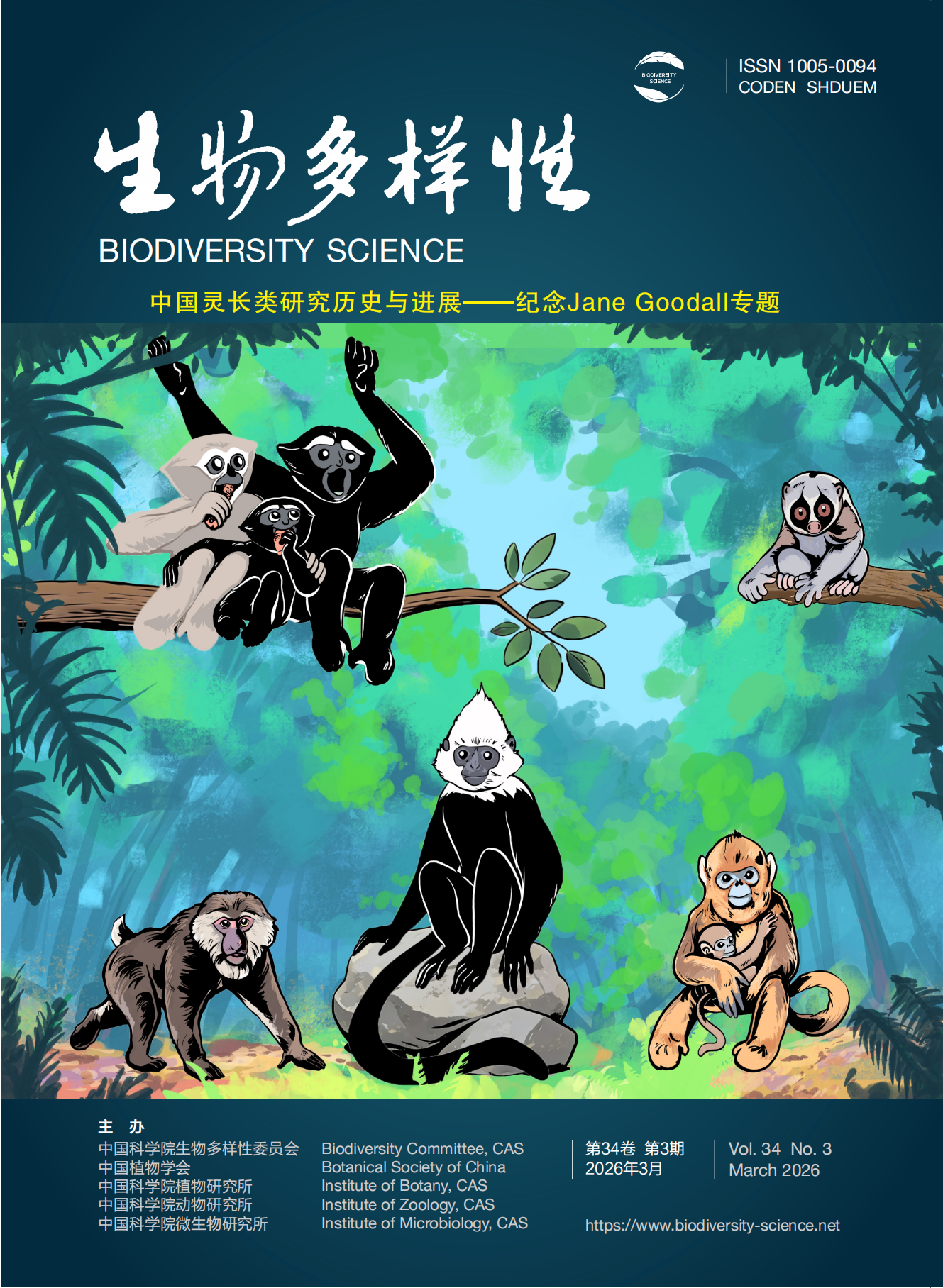
    The History and Progress of Primate Research in China - Special Issue in Honor of Jane Goodall
    Dr. Jane Goodall’s outstanding contributions to primatology
    Pengfei Fan
    Biodiv Sci. 2026, 34 (3):  25392.  doi: 10.17520/biods.2025392
    Abstract ( 532 )   PDF (386KB) ( 86 )   Save
    Related Articles | Metrics
    Advances in primate research in China
    Songtao Guo, Guoliang Chen, Baoguo Li
    Biodiv Sci. 2026, 34 (3):  25462.  doi: 10.17520/biods.2025462
    Abstract ( 73 )   PDF (449KB) ( 18 )   Save
    Related Articles | Metrics

    Background & Aims: Primates are the closest living relatives to humans. China harbors rich primate diversity, and research on this group is of great significance for biodiversity conservation and for understanding humanity itself. Primate research in China has boomed since the 1980s, with the establishment of a specialized academic system including the Primate Specialist Group (1989) and China Primatological Society (2017). 

    Review Results: China hosted the International Primatological Society (IPS) Congress in 2002 and became an IPS member in 2014, marking its growing international influence. Chinese primatology has evolved from basic species surveys to a comprehensive discipline integrating multiple fields, addressing global biodiversity conservation and human cognitive evolution needs. Chinese scholars have achieved pivotal progress in six key areas. In taxonomy and distribution, new species such as White-cheeked macaques (Macaca leucogenys) and Skywalker hoolock gibbons (Hoolock tianxing) were discovered, confirming China harbors 29 primate species from 4 families and 10 genera. Genetic and evolutionary studies, led by the Primate Genome Project, revealed the radiation evolution of macaques driven by Quaternary climate fluctuations and the hybrid origin of snub-nosed monkeys (Rhinopithecus spp.), also elucidating primate extinction mechanisms and social evolution drivers. Behavioral and physiological research uncovered the “multilevel society” of golden snub-nosed monkeys (R. roxellana), gibbons’ song coordination and path-planning behaviors, and the synergistic adaptation of primate nutritional regulation and gut microbiota. Cognitive and neuroscientific studies identified neural bases for advanced cognition and emotional processing in macaques, establishing a complete research system from disease models to cellular atlases. Conservation research built a scientific system from risk assessment to targeted intervention, achieving remarkable results such as doubling the population of white-headed langurs (Trachypithecus leucocephalus). Methodological innovations applied AI behavior recognition and UAV monitoring, forming an intelligent “sky-land-sound” observation system and promoting automated and intelligent research. 

    Prospects: Overall, Chinese primatology has formed internationally influential research paradigms in multiple key fields. Chinese primatology has developed into a comprehensive interdisciplinary discipline with prominent international contributions. Future research will focus on national strategic needs such as national park construction, biosafety and brain science. It will further integrate cross-disciplinary methods, advance basic research on primate genetics, behavior and cognition, and translate research achievements into global biodiversity conservation practices, contributing Chinese wisdom to human cognitive evolution and the harmonious coexistence of humans and nature.

    Research advances and conservation of gibbons in China
    Pengfei Fan
    Biodiv Sci. 2026, 34 (3):  25456.  doi: 10.17520/biods.2025456
    Abstract ( 152 )   PDF (580KB) ( 46 )   Save
    Related Articles | Metrics

    Aims: Gibbons were once widely distributed in China. Due to massive habitat loss, gibbon distribution range shrunk from north to south, and from east to west in China. Nowadays, they can only be found in remote areas in Yunnan, Guangxi, Hainan, and South Tibet. To promote research and conservation of gibbons in China, I provided a chronological overview of the research history and major advances in the study of gibbons in China. 

    Methods: I reviewed the literature relevant to gibbon morphology, taxonomy and phylogeny, genetics, ecology, and conservation in China, and presented the results in three sections arranged chronologically. 

    Results: More than 2000 years ago, ancient Chinese people have distinguished gibbons from monkeys, and briefly described their morphology. Over the following more than 1,000 years, the ancient Chinese people’s understanding of the gibbon gradually deepened, and they provided descriptions of its distribution, behavioral and coat color changes. Since 1980, with the deepening of investigations and the increase in the number of specimens collected, Chinese scholars have gradually clarified the distribution and taxonomy of gibbons in China. At this time, scholars from China and abroad began to study the behavior and ecology of gibbons in China and made initial progress. After 2000, scholars successfully habituated wild gibbons, conducted year around observations, and continuously monitored some populations, obtaining detailed data on the behavior, ecology, social structure, and life history of various species. Meanwhile, new technologies such as infrared cameras, drones, and passive acoustic monitoring have been applied to the research and protection of gibbons in China. In this section, I synthesized the research progress in nine key areas: taxonomy and phylogenetics, population genetics, home range and habitat utilization, foraging behavior, communication, sleeping behavior, social organization and structure, life history and reproduction, as well as conservation. 

    Conclusion: Significant progress has been made in the research and conservation of Chinese gibbons over the past 20 years. Some gibbon populations in China has shown signs of recovery. In the future, with the mainstreaming of biodiversity conservation, the research focus of gibbons in our country will shift to conservation studies. In-depth research on the nutritional ecology, reproductive ecology and interspecific competition of gibbons, as well as the development and application of new population monitoring technologies, translocation of small isolated individuals, and reintroduction of captive gibbons to their historical habitat will further promote the population recovery of gibbons in China. No scientific research can do without the training of talents. It is hoped that more young people will devote themselves to the research and protection of gibbons in our country.

    The brief research history of snub-nosed monkeys in ecology, conservation and social behavior
    Zuofu Xiang
    Biodiv Sci. 2026, 34 (3):  25442.  doi: 10.17520/biods.2025442
    Abstract ( 27 )   PDF (695KB) ( 10 )   Save
    Related Articles | Metrics

    Aims: Snub-nosed monkeys are several leaf-eating primates that are mainly endemic to China. They are extensively focused by the public because of their photogenic and captivating features; they are also considered flagship species of wildlife conservation because their conservation status is threatened by extensive deforestation, agricultural expansion, and hunting. Furthermore, zoologists, anthropologists, and psychologists are attracted by its complexity social organization of a multi-level society, in which hundreds of individuals forage and move together as one cohesive band. 

    Results: As the unique and easily distinguished ‘snub-nosed’, snub-nosed monkeys have been recorded in many historical literatures since 770 BC. However, the field studies (in terms of ecology and conservation practices) were only initiated after the new China foundation. These studies which help governments to protect populations had been gradually launched after reform and open policy, and kept pace with international researchers till the early 21st century. With animals are identifiable through provision, some of key studies of social behavior, such as male infanticide, female anti-infanticide strategies, allomother infant care, male cooperation, grooming nets etc., have lighted adaptive advantages and maintain mechanisms of the multi-level society. 

    Conclusion: Over the past few decades, with strong support from central and local government, almost all populations of Chinese snub-nosed monkeys are well protected, and field studies of behavior and ecology that have been conducted by Chinese primatologists have gradually emerged as an international leader. In the future, research should be focused on behavioral ecology for site-specific population, how snub-nosed monkeys coexist with other sympatric mammals, and cohesive forces of the multi-level society.

    Research history and conservation progress of leaf monkeys in China
    Penglai Fan, Wei Yao, Chengming Huang, Qihai Zhou
    Biodiv Sci. 2026, 34 (3):  25446.  doi: 10.17520/biods.2025446
    Abstract ( 108 )   PDF (824KB) ( 39 )   Save
    Related Articles | Metrics

    Background & Aim: In China, leaf monkeys are distributed across Yunnan, Xizang, Guangxi, Guizhou, and Chongqing. They comprise two genera (Semnopithecus and Trachypithecus) and seven species. Leaf monkeys have garnered significant attention from Chinese primatologists due to their distinctive morphological and digestive system characteristics, evolutionary status, and crucial role in maintaining the stability of ecosystem. All of these species are classified as National Class I Key Protected Wild Animals in China. To date, considerable research has been conducted on the White-headed Langur (T. leucocephalus), François’ Langur (T. francoisi), Indochinese Gray Langur (T. crepusculus), while studies on the other species remain relatively scarce. This study focuses on Chinese leaf monkeys, systematically reviewing relevant research and proposing future research directions and trends. 

    Review Results: This study focuses on Chinese leaf monkeys, conducting a systematic review of representative studies from both domestic and international sources. Through in-depth analysis, we reviewed the research history and research advances on Chinese leaf monkeys across several key areas including taxonomy, anatomical characteristics, ecology and behavior, genetics and evolution, population distribution and dynamics, and conservation management. Based on the review, we propose to conduct multi-dimensional and interdisciplinary researches on behavior and ecology, such as acoustic communication and nutritional ecology. More attention should be paid on the role of leaf monkeys in seed dispersal and maintaining the dynamic balance of forests, exploring the synergy between leaf monkey conservation and community development, and understanding the social service function of endangered species conservation. In the face of the difficulties in field surveys, new technologies (such as unmanned aerial vehicles equipped with infrared thermal imaging and passive acoustic technology) assisted by artificial intelligence provide a new method for the population monitoring of leaf monkeys. 

    Perspective: This study aims to promote the advancement and refinement of research and conservation efforts for leaf monkeys in China, thereby providing fundamental information for the protection of the country’s rare and endangered wildlife.

    Research progress of wild Macaca species in China
    Dongpo Xia, Jing Li, Jundong Tian, Zhonghao Huang, Chengfeng Wu, Shiwang Chen, Jinhua Li
    Biodiv Sci. 2026, 34 (3):  25460.  doi: 10.17520/biods.2025460
    Abstract ( 97 )   PDF (675KB) ( 21 )   Save
    Related Articles | Metrics

    Background: China is one of the countries with the richest species diversity of nonhuman primates. The genus Macaca, which constitutes the predominant group of extant primates in China, stands out as the most widely distributed, highly adaptable, and numerically abundant group of the Old World monkeys. A total of eight wild Macaca species have been recorded in China. These species play a pivotal role in maintaining the balance of regional ecosystems and serve as invaluable resources for research in animal behavior, social evolution, disease models, and human origins. 

    Progress: With a long-standing tradition and strong scientific capacity in wild macaque research, Chinese primatologists have made significant contributions to behavioral ecology and phylogenetic evolution. The field has progressed from preliminary ecological descriptions to precise behavioral quantification, while simultaneously shifting from macro-level phenomenological analysis to multi-scale, integrated investigation. These continued efforts have produced substantial results, steadily deciphering the complexities of macaque social systems. In this paper, taking M. thibetana, M. mulatta, and M. assamensis as examples, we review the main findings on taxonomic and distribution, research history, behavioral ecology and molecular biology of wild macaques in China and the major achievements of Chinese primatologists. 

    Perspective: It aims to provide a scientific basis for thoroughly assessing the threats they face and formulating comprehensive conservation strategies.

    Conservation and research progress of Lorisidae primates in China
    Qingyong Ni, Yumai Fan, Qi Zhang, Meng Xie
    Biodiv Sci. 2026, 34 (3):  25451.  doi: 10.17520/biods.2025451
    Abstract ( 127 )   PDF (1190KB) ( 21 )   Save
    Related Articles | Metrics

    Background: Lorises, a general term for small, arboreal, and nocturnal primates of the family Lorisidae, are primarily distributed across tropical regions of Africa and Asia. They exhibit a series of unique physiological and behavioral characteristics, such as ultrasonic communication, torpor at low temperatures, and toxin secretion. Two species, the Bengal slow loris (Nycticebus bengalensis) and the pygmy loris (Xanthonycticebus pygmaeus), are distributed in China. Through a comprehensive literature review, this paper analyzes the current status and developmental trends of loris research globally and domestically, summarizes the existing problems in loris conservation within China, and proposes targeted recommendations. 

    Results: Globally, research on lorises has shown steady growth in recent years, with hotspots focusing on functional adaptation mechanisms—such as gummivory, venom production, and torpor—as well as the conservation of threatened populations. In contrast, relevant research in China started later. From the 1980s to the present, it has evolved through three phases: foundational exploration, developmental deepening, and integrated conservation. Notably, the past decade has witnessed a marked upward trend in research output. In phylogenetics and genomics, domestic scholars have employed mitochondrial gene and whole-genome analyses to clarify the taxonomic relationship between the Bengal slow loris and the pygmy loris. These studies have also revealed adaptive evolution in genes related to metabolic regulation, muscle development, and circadian rhythms. Regarding population distribution and habitat, recent systematic surveys have preliminarily delineated the fragmented distribution patterns of the two loris species in provinces such as Yunnan and Guangxi in China. It has been found that their populations are mostly confined to the edges of nature reserves or within fragmented forest patches. In conservation biology and the application of new technologies, domestic research demonstrates interdisciplinary integration. Gut microbiome studies have uncovered the critical influence of captive environments and diet on loris health, providing a basis for optimizing nutritional management of rescued individuals. Artificial intelligence has been applied for the first time in facial recognition, posture analysis, and stereotypic behavior detection in lorises, enabling efficient, non-invasive individual management and welfare assessment. In terms of reintroduction and rewilding research, preliminary protocols have been established for rehabilitating the locomotor abilities of captive Bengal slow lorises. Radio-tracking technology has been utilized to conduct initial monitoring of post-release home ranges and habitat selection, offering important references for scientifically informed reintroduction practices. 

    Perspectives: Despite these advances in multiple areas, loris conservation in China still faces severe challenges. Illegal pet trade, habitat loss and fragmentation, and hunting for traditional medicine constitute major threats. Current conservation efforts are hampered by insufficient baseline data, non-standardized rescue and captive management protocols, and the high cost and low efficiency of field monitoring. To effectively promote loris conservation in the future, it is essential to further integrate interdisciplinary research approaches and systematically conduct population surveys and genetic diversity assessments. Technical guidelines for rescue, rewilding, and reintroduction should be improved. Simultaneously, efforts must be strengthened in law enforcement, community co-management, and international cooperation, alongside enhancing public awareness of conservation. This is a systematic project requiring the joint advancement of legal, administrative, scientific research, and community involvement efforts, and its successful implementation will also provide important insights for the conservation of other endangered arboreal primates.


    Original Paper: Plant Diversity
    Plant community composition and structure of sixteen 1-ha dynamics monitoring plots of Nanling Mountains in Guangdong province
    Li Huang, Zhifa Liu, Yuening Gong, Buhang Li, Jian Zhang
    Biodiv Sci. 2026, 34 (3):  0.  doi: 10.17520/biods.2025357
    Abstract ( 105 )   PDF (2660KB) ( 28 )   Save
    Related Articles | Metrics

    Aims: The Nanling mountains serve as a key ecological corridor and transition zone between the mid- and south-subtropical regions of China. Both the tropical and temperate floras converge in this region, and therefore it is the northern or southern distributional boundaries of many plant species. 

    Methods: Based on 16 1-ha forest dynamic monitoring plots established across the Guangdong Nanling National Nature Reserve, covering all main vegetation types spanning the whole region, we analyzed the species composition, floristic characteristics, size distribution, and spatial distributions of woody plants with ≥ 1 cm DBH (diameter at breast height). 

    Results: There were 75,141 individual trees and shrubs (100,923 stems including branches) in these 16 plots, belonging to 582 species, 220 genera, and 78 families. Among them, we identified 137 tropical genera (398 species; 62% of total genera, 68% of total species) and 80 temperate genera (174 species; 36% of total genera, 30% of total species), and 3 cosmopolitan genera (10 species). The plot with the highest richness had 229 species, while the plot with the lowest had only 87 species. The dominant species in the tree layer varied across plots, effectively representing the main forest types in the Nanling Mountains. Overall, all the plots exhibited stable inverse J-shaped size distributions for all the individuals together, but dominant species in each plot and the same species among the plots varied considerably in size distribution. The results of species-area curves suggested dramatic differences in the species accumulation rates and saturation thresholds among the 16 plots. On average, when a 400 m² plot is sampled, only 30% of total plant richness is covered, while 90% species coverage is achieved when the plot size of 6,600 m².is surveyed. Spatial distribution patterns varied significantly across different vegetation types and diameter classes. Dominant species showed distinct habitat preferences, and the same species (e.g., Schima superba and Pinus massoniana) displayed divergent spatial patterns across plots. 

    Conclusion: This study demonstrates large variations in plant species composition, community structure, and species’ spatial distributions among distinct vegetation types of the Nanling Mountains. These results provide the basis for long-term biodiversity monitoring in subtropical montane forests and the development of the national park network.

    Original Papers: Animal Diversity
    Changes in the breeding bird community in urban areas of Nanchong over two decades
    Haoyou Zhu, Youbing Zhou, Yi Luo, Zhaomin Zhou
    Biodiv Sci. 2026, 34 (3):  0.  doi: 10.17520/biods.2024560
    Abstract ( 113 )   PDF (613KB) ( 24 )   Save
    Related Articles | Metrics

    Aim: One main goal of eco-city development is to improve urban biodiversity. However, it is often difficult to determine how it may influence long-term biodiversity patterns, due to the lack of historical benchmark data. Here, we followed up on a study in urban areas of Nanchong during 2002-2004 by replicating the historical survey methods, to examine changes in the breeding bird community, accounting for nesting and habitat types. 

    Methods: From late February to early July 2023, we conducted five round of repeated investigation on the numbers of breeding bird species and nests using point sampling in 14 patch green spaces and transect sampling in 22 roadside green spaces. We complied an annual dataset based on the recorded species and nests, and then compared it with the historical data. 

    Results: We recorded a total of 28 breeding bird species and 1,599 nests (1,451 nests of 17 canopy-nesting species, 87 nests of 6 ground/ shrub-nesting species, 31 nests of 4 tree-cavity-nesting species, and 30 nests of 1 artificial-building -nesting species). Compared with the historical data, the total number of breeding species increased by 1, but the average numbers of species and nests across sampling sites decreased by 21.4% (1.3, P = 0.025) and 67.1% (90.4, P < 0.001), respectively; the breeding bird community was affected by the interaction of nesting type and habitat type, where species number, nest number and/ or Shannon-Wiener diversity index of canopy-nesting birds, ground/shrub-nesting birds and artificial-building-nesting birds showed a significant decrease (P < 0.05) in patch green spaces or roadside green spaces. In addition, the order of species dominance changed significantly, with two ground/ shrub-nesting species and one cave-nesting species that ranked in the top five in the first survey being replaced by canopy-nesting species. 

    Conclusion: Over the past two decades of eco-city development in Nanchong, breeding birds had not widely obtained positive ecological benefits, resulting in significant changes in their community composition at small spatial scales. We recommend that the planning and development of urban green spaces take into account the needs of diverse ecological groups to more comprehensively enhance the ecological benefits of urban construction. This approach will help ensure sustainable biodiversity and the provision of ecological services.

    Original Papers: Microbial Diversity
    Study on diversity and mechanisms underlying community assembly of the fungi associated with Tetraena Mongolica Maxim, an endangered relict plant in West Ordos
    Zhao Chen, Ying Xu, Tianyu Liang, Yanling Zhao, Xuan Zhang, Lujing Wang, Yanci Yang, Yonglong Wang
    Biodiv Sci. 2026, 34 (3):  25290.  doi: 10.17520/biods.2025290
    Abstract ( 436 )   PDF (2649KB) ( 41 )   Save
    Related Articles | Metrics

    Aim: This study explored the community diversity and ecological process mechanisms of the fungal communities associated with different compartments in Tetraena mongolica Maxim. 

    Methods: Leaf, root and soil samples were collected from the T. mongolica, and Illumina high-throughput sequencing targeting the fungal ITS1 region was employed to analyze the fungal diversity and composition. Additionally, preference analysis and LEfSe analysis were adopted to detect the biomarker fungi for each plant compartment, and the NCM, MST and iCAMP approaches were used to examine the ecological processes involved in the assembly of the fungal communities. 

    Results: A total of 752 fungal operational taxonomic units (OTUs) were identified across five plant compartments. Significant differences in fungal diversity and composition were observed among compartments, with niche-preferential OTUs and biomarker taxa specific to each compartment. Fungal diversity decreased progressively from the rhizosphere soil to root and then leaf. Epiphytic samples of roots and leaves harbored higher fungal diversity than endophytic samples. Integrated analyses using the Neutral Community Model, Modified Stochasticity Ratio, and Infer community assembly mechanisms by phylogenetic-bin-based null model analysis revealed that stochastic processes, particularly the dispersal limitation and ecological drift dominated fungal community assembly, and ecological processes played different importance in determining fungal community assembly of different plant compartments. 

    Conclusion: This research revealed for the first time the community diversity and community assembly mechanisms of the fungi of the endangered relict plant T. mongolica, and this study provides a scientific basis and practical guidance for conserving rare relict plants.

    Diversity, distribution and environmental correlation of harmful dinoflagellate cysts in the Bohai Sea and the North Yellow Seas in spring
    Zhicheng Kang, Chunlei Gao, Jianing Guo, Fanping Meng, Zongling Wang
    Biodiv Sci. 2026, 34 (3):  25426.  doi: 10.17520/biods.2025426
    Abstract ( 17 )   PDF (6454KB) ( 5 )   Save
    Related Articles | Metrics

    Aims: The frequency of harmful algal blooms (HABs) in the Bohai Sea and the North Yellow Sea has been increasing continuously in the context of coastal eutrophication and climate change. Dinoflagellate cysts are considered a potential seed bank and play a key role in the occurrence of HABs. This study aimed to investigate the diversity, distribution patterns, and environmental drivers of harmful dinoflagellate cysts in the Bohai Sea and North Yellow Sea, and to assess the potential risk of HABs in these regions. 

    Methods: A DNA metabarcoding approach was applied, targeting the small subunit ribosomal (18S V4) and internal transcribed spacer (ITS1) to investigate the diversity and distribution of harmful dinoflagellate cyst assemblages in surface sediments from the Bohai Sea and North Yellow Sea in May 2023. Canonical correspondence analysis (CCA) was used to assess the correlations between cyst assemblages and environmental variables. 

    Results: The environmental DNA (eDNA) information revealed 38 potentally toxic and harmful dinoflagellate cyst species, including 5 species not previously known to produce, and 8 newly recorded species. Among them, Azadinium spinosum, Gymnodinium nolleri and Alexandrium fragae were detected for the first time in sediments samples from the coastal waters of Chinese. Alpha diversity analysis revealed a clear decreasing trend in species richness from the Bohai Sea, through the Bohai Strait, to the central North Yellow Sea, and this trend was positively correlated with the water temperature gradient. CCA result indicated that the abundance and distribution of dominant harmful dinoflagellate cysts in the two seas were influenced to varying degrees by environmental factors (temperature, salinity, water depth, dissolved inorganic nitrogen (DIN), dissolved inorganic phosphorus (DIP) and N/P), with temperature being the main explanatory variable. Temperature, in combination with the N/P ratio and DIN, affected and regulated the abundance and distribution of most coastal-estuarine species, resulting in higher detection rates and/or abundances in the warm and eutrophic southwestern Bohai Sea. Low temperature, high salinity, and low nutrient levels were key factors contributing to the dominance of A. catenella cysts in the North Yellow Sea, particularly around the central cold-water mass. 

    Conclusion: This study provides crucial information on the diversity and distribution patterns of HAB dinoflagellate cysts in the whole Bohai and North Yellow Seas in spring. The southwestern Bohai Sea remains a high-risk area for HABs due to both established toxic and harmful species and emerging potential risks, such as HAB-forming Lepidodinium chlorophorum, whereas the North Yellow Sea faces elevated risks from the widespread high relative abundance of A. catenella. These findings demonstrate that molecular techniques are a powerful tool for monitoring HAB cysts, underscoring the need for their use in early warning of HABs and for protecting marine aquaculture from blooms.

    Original Papers: Biosafety and Nature Conservation
    Impacts of coastal reclamation on Chinese white dolphin (Sousa chinensis) habitats in China over the past 30 years
    Xixia Lu, Fengxiang Zhou, Liming Yong, Qianhui Zeng, Liyuan Zhao, Yuke Zhang, Xianyan Wang
    Biodiv Sci. 2026, 34 (3):  25249.  doi: 10.17520/biods.2025249   cstr: 32101.14.biods.2025249
    Abstract ( 662 )   PDF (2238KB) ( 67 )   Save
    Related Articles | Metrics

    Background & Aims: The rapid development of the coastal zones poses a serious challenge to global marine biodiversity, highlighting the urgent need for large-scale and long-term quantitative assessments of habitat changes for key species. Using the Chinese white dolphin (Sousa chinensis) as a key indicator species, this study integrates nearly three decades of satellite remote sensing and socioeconomic data to systematically analyze the spatial patterns and drivers of coastal reclamation in southeastern China, along with the resultant habitat loss and conservation gaps for this species. These findings provide scientific evidence for optimizing China’s marine ecological redlines and formulating conservation strategies for endangered marine species. 

    Results: Driven primarily by regional population density (r = 0.638, P < 0.001) and per capita regional GDP (r = 0.635, P < 0.001), the cumulative coastal reclamation area in the study region reached 1,683.20 km2 between 1990 and 2020, with an annual average reclamation intensity of 0.30 ha·a–1·km–1. The reclamation exhibited a distinct spatial pattern characterized by “higher intensity in the north, lower in the south, and significant clustering in estuarine zones.” Extensive reclamation differentially impacted local Chinese white dolphin populations: the Xiamen Bay population experienced the highest proportion of habitat loss and the highest reclamation intensity within its habitat (9.03% and 0.46 ha·a–1·km–1, respectively), followed by the Pearl River Estuary population (4.63% and 0.43 ha·a–1·km–1), the population in the southwestern waters of Hainan was the least affected (0.06% and 0.02 ha·a–1·km–1). Notably, only 8.25% (818.94 km2) of the species’ current habitat was located within protected areas, revealing significant conservation gaps. 

    Conclusion & Recommendation: Urgent actions are required to: (1) incorporate the estuarine habitats of Chinese white dolphin population into the natural protected area system; (2) establish an integrated land-sea conservation framework to protect the existing habitats and enhance connectivity.

    Evaluation of the effectiveness of bird-induced loss reduction measures in global aquaculture systems
    Xiaotong Shang, Cheng Huang, Li Yang, Xidong Mu, Tien Ming Lee, Yang Liu
    Biodiv Sci. 2026, 34 (3):  25453.  doi: 10.17520/biods.2025453
    Abstract ( 155 )   PDF (2252KB) ( 32 )   Save
    Related Articles | Metrics

    Background & Aims:The conflict between aquaculture development and waterbird conservation is a widespread issue globally. The expansion of aquaculture land occupies waterbird habitats, particularly in coastal areas, while waterbirds feed on aquatic products, potentially increasing the risk of cross-pond disease transmission among aquaculture products. This may lead to non-selective lethal control of waterbirds by aquaculture farmers, creating a vicious cycle that threatens the survival of waterbirds and the ecosystem services they support. To address this issue, promoting the adoption of effective, non-lethal bird control strategies among farmers is essential for achieving sustainable aquaculture practices. This study systematically evaluates the efficacy of various bird control measures implemented in aquaculture areas. 

    Methods:This study examines experimentally validated bird control measures and their associated behavioral stimuli on a global scale from 1950 to 2024. The assessment of their effectiveness is conducted using the vote -counting method. 

    Results:The findings indicate that the overall efficacy of existing bird control measures is 66.7%, with composite measures (80.9%) and physical barrier measures ( 76.7%) being more effective, while single visual disturbance measures have relatively low effectiveness ( 46.9%). The efficacy of bird control strategies is shaped by various factors, and no single solution can entirely mitigate associated losses. Presently, research in this domain reveals significant imbalances in geographical focus and aquaculture species. Over 80% of documented cases originate from North America and Europe, with a mere 2.8% reported in Asia. Furthermore, research efforts are predominantly concentrated on fish farming, accounting for 73.1% of cases, while other aquaculture species, such as crustaceans, receive limited attention. 

    Conclusion:As the leading global producer of aquaculture, China currently has only one case study examining crustacean farming scenarios. Drawing on international experience and considering its domestic context, this study emphasizes the urgent need for China to conduct effectiveness evaluation experiments in conflict-prone areas, such as coastal aquaculture ponds. Additionally, it is crucial to enhance ecological and behavioral research on waterbirds within aquaculture settings and to develop innovative bird control measures using advanced technologies. These efforts will promote the sustainable growth of aquaculture while reinforcing China’s critical role in the global network for migratory bird conservation.

    Review
    Latitudinal patterns of species range size of birds in China: A test of Rapoport’s rule
    Shixian Li, Gang Feng
    Biodiv Sci. 2026, 34 (3):  25274.  doi: 10.17520/biods2025274
    Abstract ( 207 )   PDF (1864KB) ( 35 )   Save
    Related Articles | Metrics

    Aims: The variation of species distribution ranges along environmental gradients has long been an important topic in macroecology and biogeography. Rapoport’s rule was initially proposed as a hypothesis concerning the relationship between the latitudinal position of species distributions and their latitudinal range size. In 1996, Stevens provided a broad definition of Rapoport’s rule, stating that the geographic range size of species gradually increases with the rise of a biogeographic gradient (such as latitude, elevation, water depth, etc.). Currently, there is relatively limited research examining the applicability of Rapoport's rule to latitudinal range breadth of Chinese birds, particularly in terms of comparisons across different taxonomic categories and traits. 

    Methods: We used distribution and trait data of Chinese birds, and applied four commonly used methods to test whether the latitudinal patterns of species range size of Chinese birds support Rapoport’s rule across three dimensions: taxonomic categories, feeding habits and body mass. 

    Results: The results showed that: (1) At different taxonomic levels (family, genus and species), higher taxonomic levels exhibited stronger support for Rapoport’s rule (the R2 values for Stevens’s method, Pagel’s method and Cross-species method were all greater than 0.5). (2) Among different feeding habits, species range size variation of herbivorous birds exhibited the least support for Rapoport’s rule (Cross-species method: R2 = 0.24). (3) Under the criteria of different body mass, small-bodied birds showed the strongest support for Rapoport’s rule (Cross-species method: R2 = 0.42). 

    Conclusion: This study found that birds with different dimensions show varying applicability to Rapoport’s rule. The stronger applicability of small-bodied birds to Rapoport’s rule may be due to their weaker competitive abilities, rapid growth rates and better adaptability to changing environment; the lower applicability of herbivorous birds may be related to their correlation with the distribution of plant species. This study discussed the potential reasons for these differences, which helps to understand the formation and maintenance of biodiversity distribution patterns at a macro scale.

    News and Views
    Progress of International OECMs Practices under the Kunming-Montreal Global Biodiversity Framework and Pathways for Localization in China
    Shuyu Hou, Yingying Liu, Rui Yang
    Biodiv Sci. 2026, 34 (3):  25264.  doi: 10.17520/biods.2025264
    Abstract ( 18 )   PDF (972KB) ( 1 )   Save
    Related Articles | Metrics

    Background & Aims: The comprehensive and effective protection of biodiversity cannot be achieved solely through protected areas. “Other effective area-based conservation measures (OECMs)” can coordinate nature conservation with human utilization in a compatible manner. This is recognized as an important tool for achieving the 2030 conservation targets within the Kunming-Montreal Global Biodiversity Framework. China has not yet formally launched an OECMs system at the national level, and related research is still in the exploratory stage. How to build a national OECMs system within the context of existing protected areas and territorial planning, clarify governance models, recognition systems, and management mechanisms, and effectively fulfill Target 3 of the Kunming-Montreal Global Biodiversity Framework, still lacks a clear working path. 

    Method: The study responds to China’s implementation needs under the “Kunming-Montreal Global Biodiversity Framework”, conducting a comprehensive analysis of OECMs systems worldwide across three dimensions: governance models, recognition frameworks, and management mechanisms. Based on China’s current natural protected area system and territorial spatial planning framework, it proposes pathways for adapting OECMs to the Chinese context. In terms of governance models, statistical analysis was employed to identify the governance entities and conservation objectives characterizing OECMs across different countries. Regarding the recognition framework, the study focused on analyzing experiences of how countries have developed localized OECMs recognition systems based on their own land use frameworks. This provides reference for China to establish a dual-purpose land use system for conservation that aligns with its domestic territorial spatial planning while connecting with international OECMs standards. Concerning management mechanisms, the research examined management measure documents from 199 OECMs sites to synthesize representative management approaches across different land cover types and user groups. This offers insights for developing management protocols for potential OECMs in China and supports bottom-up implementation at various sites. 

    Results: In terms of governance models, among OECMs where conservation is a secondary objective or co-benefit, 65% adopt collaborative governance, which aligns well with the original intent of OECMs—to provide diverse stakeholders with opportunities to participate in conservation while achieving biodiversity outcomes compatible with human use. Notably, the Canadian and Japanese approaches, which center on partnership-driven implementation of OECMs, offer valuable insights for China in establishing cooperative mechanisms and mainstreaming pathways for OECMs. Regarding recognition systems, developing localized OECMs frameworks—grounded in each country’s unique spatial planning and ecological management context, including clear definitions, conceptual scope, and tailored criteria—is highly instructive. This approach ensures that national definitions of “localized OECMs” are precise and unambiguous, clearly delineated from existing protected area systems domestically, while remaining fully aligned with international OECM standards. In terms of management mechanisms, OECMs exhibit distinct characteristics in conservation priorities, management measures, and monitoring schemes depending on land cover types and user groups. Although the limited number of documented cases has not yet yielded universally applicable models, these examples still provide useful references for designing management strategies for similar potential OECMs. 

    Conclusion: China should actively explore governance models, improve the in-situ conservation system, and establish flexible management mechanisms in the near future, laying the foundation for fulfilling the “30×30” commitment and building a continuum of “conservation-utilization” across the national territory under the vision of “living in harmony with nature”.

    Book Review

  • wechat:swdyx_wx