

Biodiv Sci ›› 2026, Vol. 34 ›› Issue (3): 25426. DOI: 10.17520/biods.2025426 cstr: 32101.14.biods.2025426
Special Issue: eDNA技术应用
• Original Papers: Microbial Diversity • Previous Articles Next Articles
Zhicheng Kang1, Chunlei Gao2,*( ), Jianing Guo2, Fanping Meng1,*(), Zongling Wang2
Received:2025-10-28
Accepted:2026-01-27
Online:2026-03-20
Published:2026-04-10
Contact:
*E-mail: Supported by:Zhicheng Kang, Chunlei Gao, Jianing Guo, Fanping Meng, Zongling Wang. Diversity, distribution and environmental correlation of harmful dinoflagellate cysts in the Bohai Sea and the North Yellow Sea in spring[J]. Biodiv Sci, 2026, 34(3): 25426.
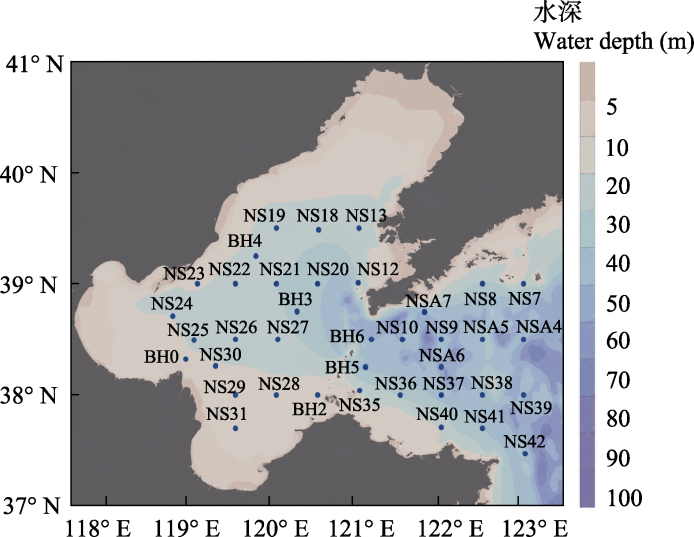
Fig. 1 Sampling stations in the Bohai Sea and the North Yellow Sea, China
| 扩增区域 Target region | 扩增片段长度 Fragment length | 引物名称 Primers | 引物序列(5′-3′) Sequences of primers (5′-3′) | 文献 References |
|---|---|---|---|---|
| 18S V4 | 370 bp | TAReuk454FWD1 | CCAGCA(G/C)C(C/T)GCGGTAATTCC | Stoeck et al., |
| TAReukREV3 | ACTTTCGTTCTTGAT(C/T)(A/G)A | Stoeck et al., | ||
| ITS1 (5.8S) | 260 bp | PRIMER B-reverse | TAGGTGAACCTGCAGAAGGAT | Medlin et al., |
| ITS300R | CACGGAA(G/T)TTCTGCA(A/G)TTCACAATG | Scholin et al., |
Table 1 The primers used for high-throughput sequencing in this study
| 扩增区域 Target region | 扩增片段长度 Fragment length | 引物名称 Primers | 引物序列(5′-3′) Sequences of primers (5′-3′) | 文献 References |
|---|---|---|---|---|
| 18S V4 | 370 bp | TAReuk454FWD1 | CCAGCA(G/C)C(C/T)GCGGTAATTCC | Stoeck et al., |
| TAReukREV3 | ACTTTCGTTCTTGAT(C/T)(A/G)A | Stoeck et al., | ||
| ITS1 (5.8S) | 260 bp | PRIMER B-reverse | TAGGTGAACCTGCAGAAGGAT | Medlin et al., |
| ITS300R | CACGGAA(G/T)TTCTGCA(A/G)TTCACAATG | Scholin et al., |
| 组分 Components | 体积 Volume (μL) | 浓度 Concentration |
|---|---|---|
| DNA模板 DNA template | 2 | 含量 Amount < 200 ng |
| 正向引物 Forward primer | 1 | 10 μM |
| 反向引物 Reverse primer | 1 | 10 μM |
| dNTP Mix | 4 | 2.5 mM |
| Ex Taq DNA聚合酶 Ex Taq DNA polymerase (Takara) | 0.3 | 50 U/μL |
| 10× Ex Taq buffer | 5 | |
| 双蒸水 ddH2O | 36.7 | |
| 总体积 Total volume | 50 |
Table 2 PCR amplification reaction system for high-throughput sequencing
| 组分 Components | 体积 Volume (μL) | 浓度 Concentration |
|---|---|---|
| DNA模板 DNA template | 2 | 含量 Amount < 200 ng |
| 正向引物 Forward primer | 1 | 10 μM |
| 反向引物 Reverse primer | 1 | 10 μM |
| dNTP Mix | 4 | 2.5 mM |
| Ex Taq DNA聚合酶 Ex Taq DNA polymerase (Takara) | 0.3 | 50 U/μL |
| 10× Ex Taq buffer | 5 | |
| 双蒸水 ddH2O | 36.7 | |
| 总体积 Total volume | 50 |
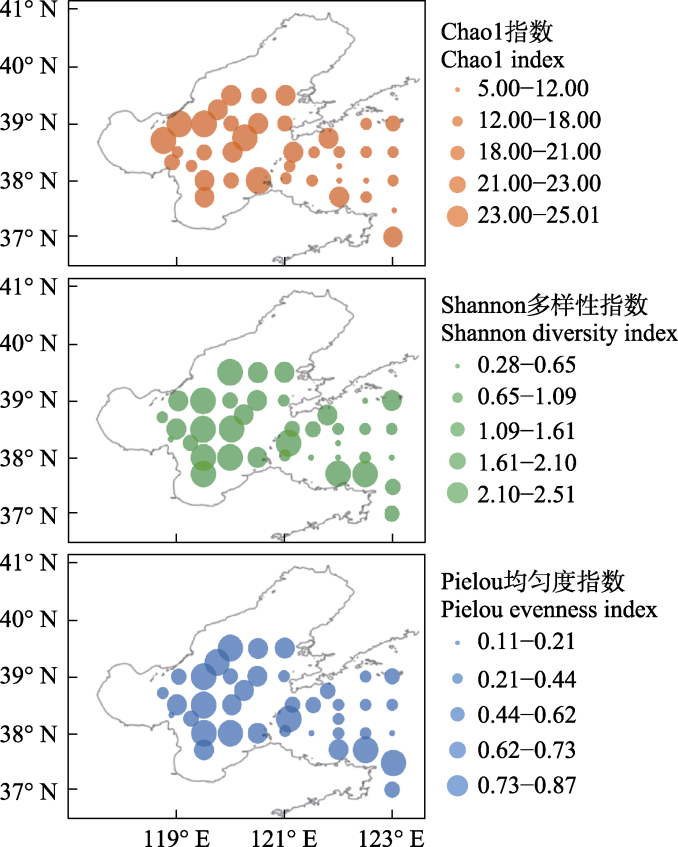
Fig. 2 Distribution of α diversity indices of harmful dinoflagellate cyst in the Bohai Sea and the North Yellow Sea, China
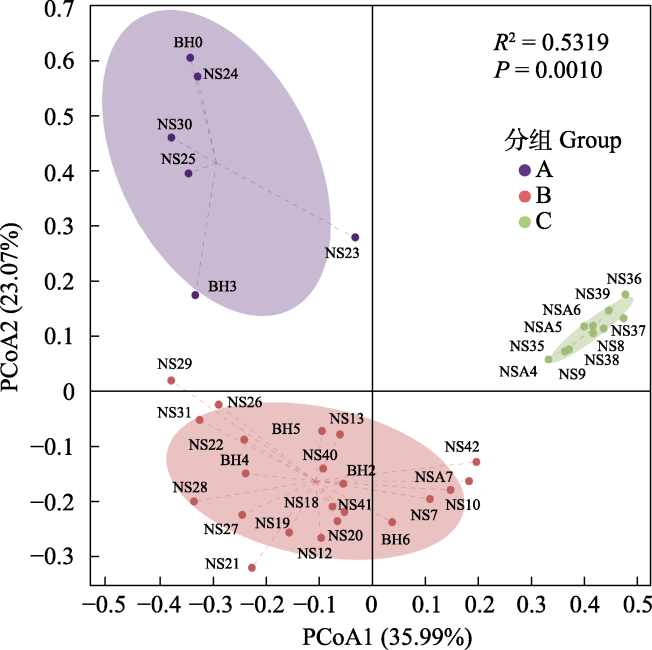
Fig. 3 Result of principal coordinate analysis (PCoA) of harmful dinoflagellate cyst assemblages in the Bohai Sea and the North Yellow Sea, China. A, Stations in the sea area near the mouth of Bohai Bay; B, Stations along the coast of the North Yellow Sea and in the Bohai Sea area outside the mouth of Bohai Bay; C, Stations in the central North Yellow Sea.
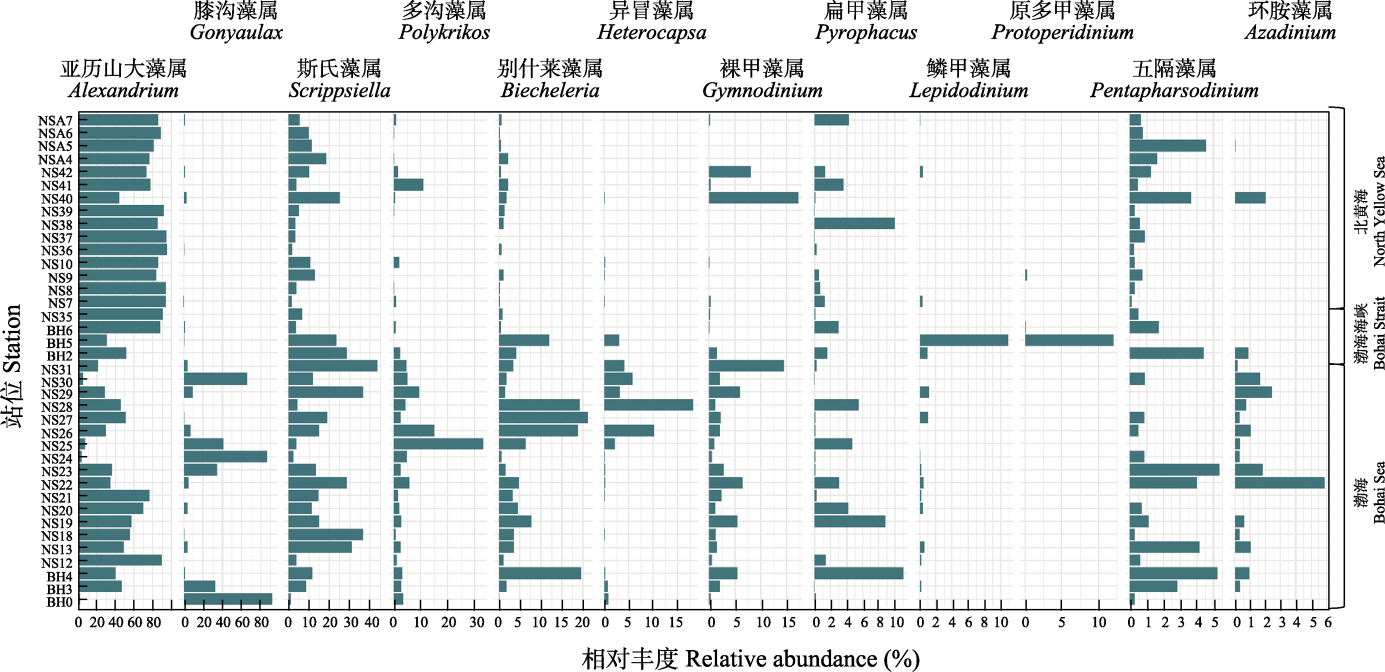
Fig. 4 Relative abundance of 12 dominant genera (relative abundance > 5%) at each sampling station
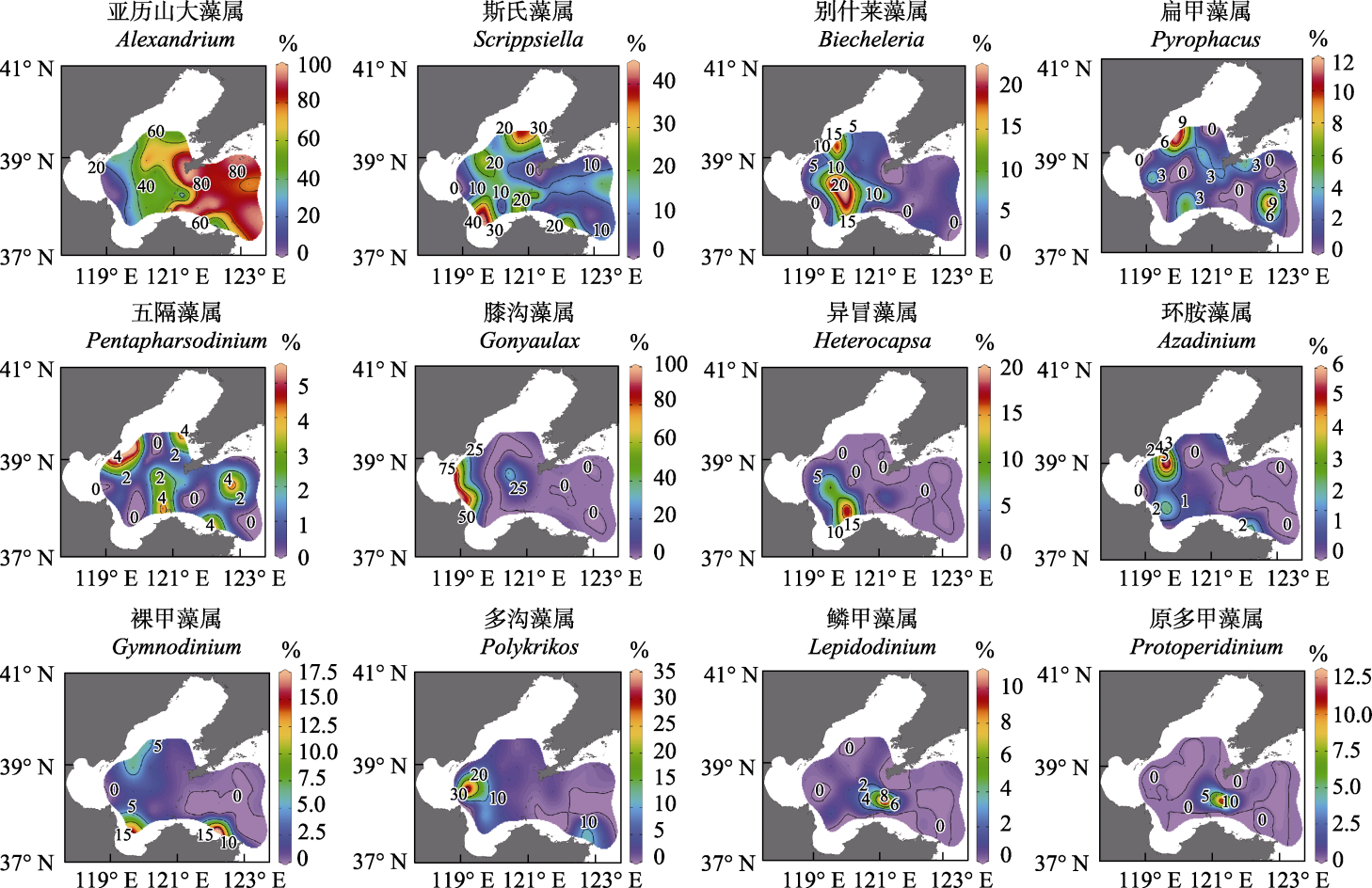
Fig. 5 Distribution of relative abundance of cysts in the dominant genus (relative abundance > 5%)
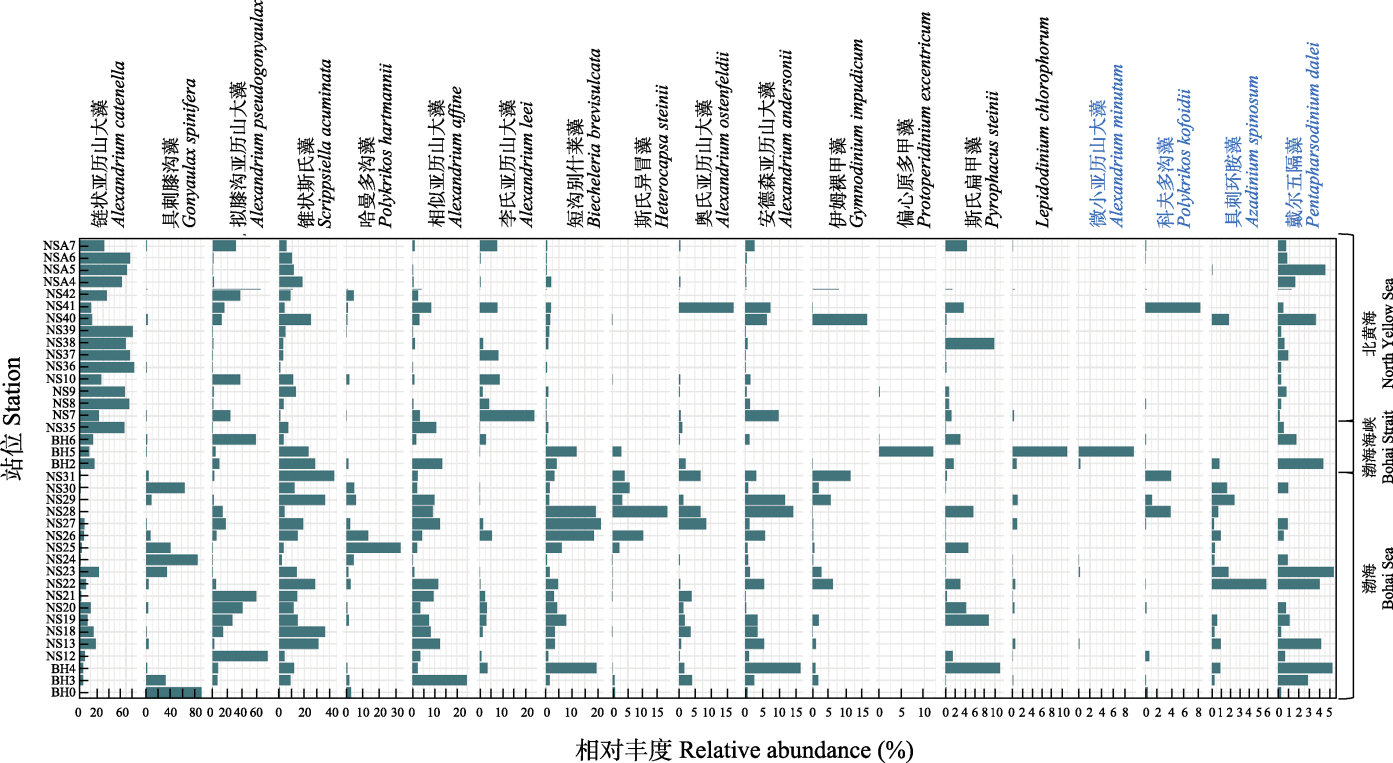
Fig. 6 Relative abundance of dominant species (relative abundance > 10%) and sub-dominant species (relative abundance 5%-10%) at each station. Black, Dominant species; Blue, Sub-dominant species.
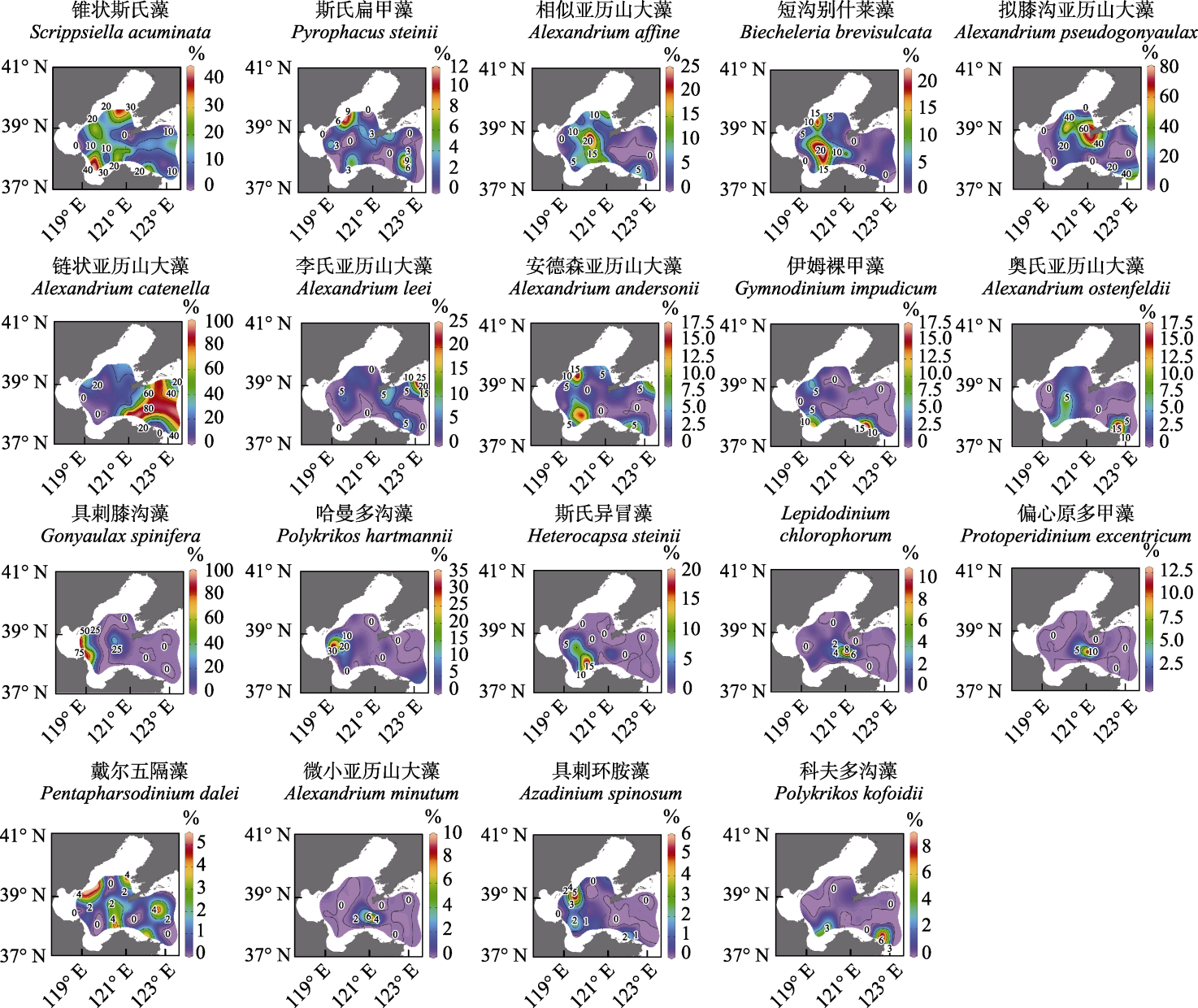
Fig. 7 Distribution of relative abundance of dominant and sub-dominant cysts in species level
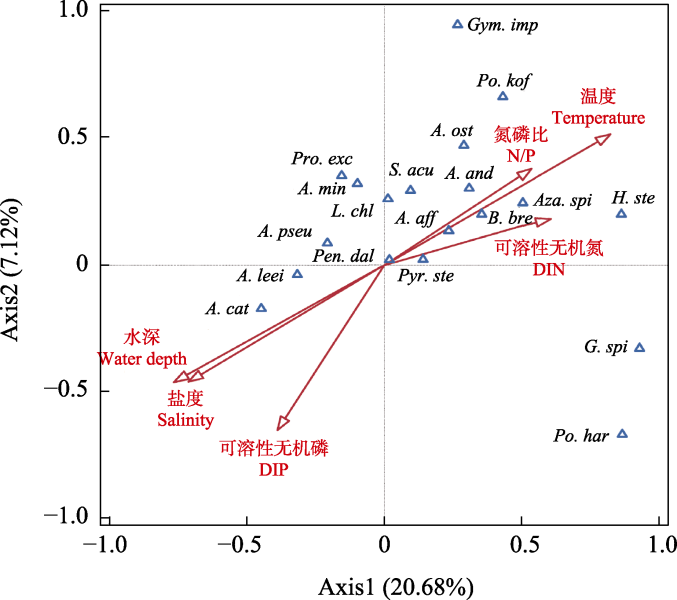
Fig. 8 Canonical Correspondence Analysis (CCA) performed on the relative abundance of dominant and sub-dominant harmful dinoflagellate cysts and in-situ environmental parameters. A. aff, Alexandrium affine; A. and, Alexandrium andersonii; A. cat, Alexandrium catenella; A. leei: Alexandrium leei; A. min, Alexandrium minutum; A. ost, Alexandrium ostenfeldii; A. pseu, Alexandrium pseudogonyaulax; Aza. spi, Azadinium spinosum; B. bre, Biecheleria brevisulcata; G. spi, Gonyaulax spinifera; Gym. imp, Gymnodinium impudicum; H. ste, Heterocapsa steinii; L. chl, Lepidodinium chlorophorum; Pen. dal, Pentapharsodinium dalei; Po. har, Polykrikos hartmannii; Po. kof, Polykrikos kofoidii; Pro. exc, Protoperidinium excentricum; Pyr. Ste, Pyrophacus steinii; S. acu, Scrippsiella acuminata. DIN, Dissolved inorganic nitrogen; DIP, Dissolved inorganic phosphorus.
| 环境因素 Environmental factors | 解释度 Explaination (%) | P |
|---|---|---|
| 温度 Temperature | 15.93 | 0.002 |
| 水深 Water depth | 13.81 | 0.002 |
| 盐度 Salinity | 12.44 | 0.002 |
| 可溶性无机氮 Dissolved inorganic nitrogen | 3.72 | 0.004 |
| 氮磷比 N/P | 3.34 | 0.008 |
| 可溶性无机磷 Dissolved inorganic phosphorus | 2.61 | 0.016 |
Table 3 The independent explanatory rate and significance of each environmental factors
| 环境因素 Environmental factors | 解释度 Explaination (%) | P |
|---|---|---|
| 温度 Temperature | 15.93 | 0.002 |
| 水深 Water depth | 13.81 | 0.002 |
| 盐度 Salinity | 12.44 | 0.002 |
| 可溶性无机氮 Dissolved inorganic nitrogen | 3.72 | 0.004 |
| 氮磷比 N/P | 3.34 | 0.008 |
| 可溶性无机磷 Dissolved inorganic phosphorus | 2.61 | 0.016 |
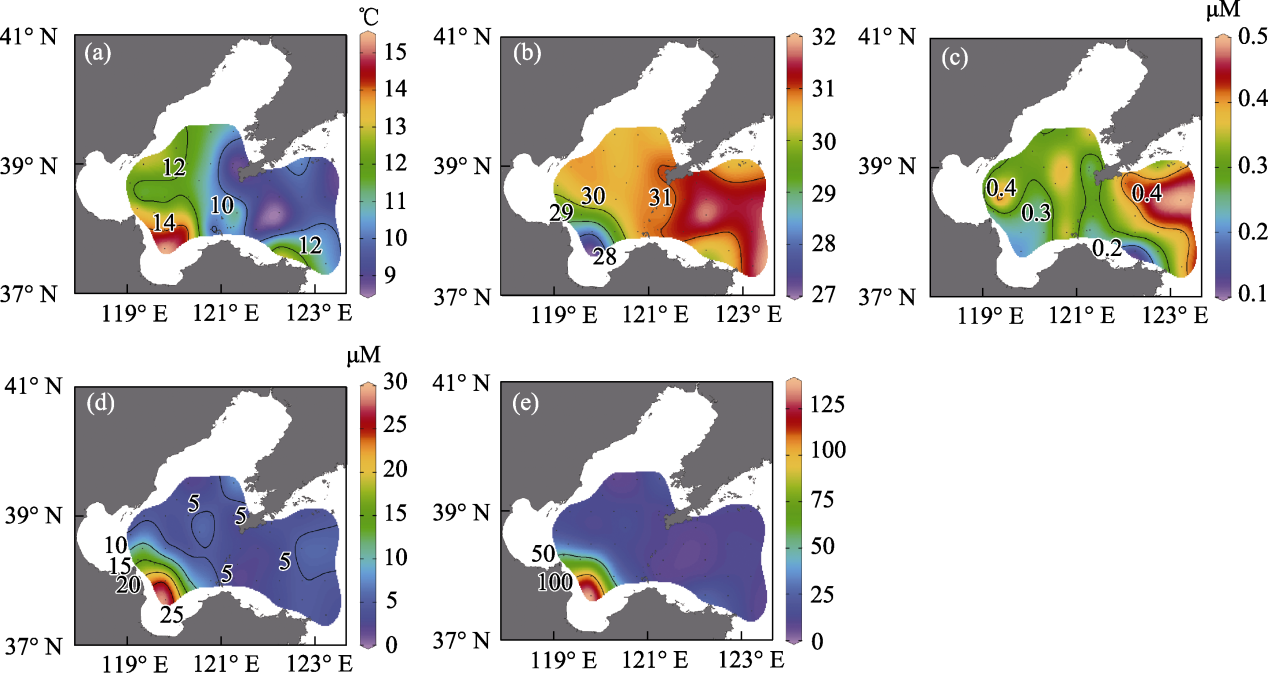
Fig. 9 Distribution of in-situ environmental factors. (a) Temperature; (b) Salinity; (c) Dissolved inorganic phosphorus (DIP); (d) Dissolved inorganic nitrogen (DIN); (e) N/P.
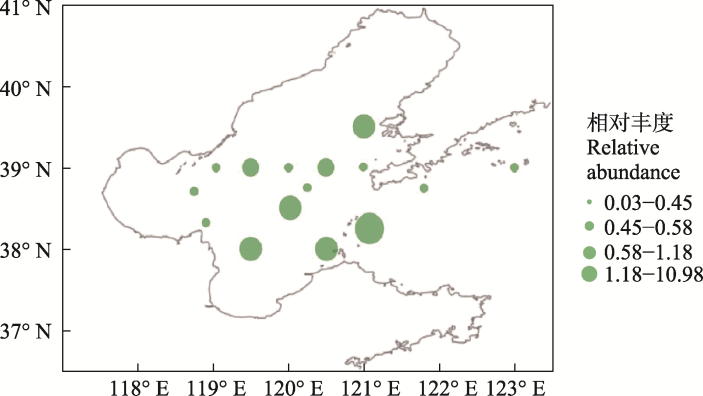
Fig. 10 Distribution of eDNA of new recorded harmful algal blooms dinoflagellate Lepidodinium chlorophorum in the surface sediments of the Bohai Sea and the North Yellow Sea
| [1] |
Adachi M, Sake Y, Ishida Y (1996) Analysis of Alexandrium (Dinophyceae) species using sequences of the 5.8S ribosomal DNA and internal transcribed spacer regions. Journal of Phycology, 32, 424-432.
DOI URL |
| [2] |
Anderson DM, Alpermann TJ, Cembella AD, Collos Y, Masseret E, Montresor M (2012) The globally distributed genus Alexandrium: Multifaceted roles in marine ecosystems and impacts on human health. Harmful Algae, 14, 10-35.
PMID |
| [3] |
Anderson DM, Stock CA, Keafer BA, Bronzino Nelson A, Thompson B, McGillicuddy DJ, Keller M, Matrai PA, Martin J (2005) Alexandrium fundyense cyst dynamics in the Gulf of Maine. Deep Sea Research Part II: Topical Studies in Oceanography, 52, 2522-2542.
DOI URL |
| [4] |
Bolch CJS (1997) The use of sodium polytungstate for the separation and concentration of living dinoflagellate cysts from marine sediments. Phycologia, 36, 472-478.
DOI URL |
| [5] |
Bravo I, Figueroa RI (2014) Towards an ecological understanding of dinoflagellate cyst functions. Microorganisms, 2, 11-32.
PMID |
| [6] |
Callahan BJ, McMurdie PJ, Rosen MJ, Han AW, Johnson AJA, Holmes SP (2016) DADA2: High-resolution sample inference from Illumina amplicon data. Nature Methods, 13, 581-583.
DOI PMID |
| [7] | Chen B, Ma L, Zhang CH, Li B, Liu HW (2018) Ocean front analysis in subdivided sea areas by using satellite remote sea surface temperature data. The Ocean Engineering, 36, 108-118. (in Chinese with English abstract) |
| [陈标, 马亮, 张春华, 李冰, 刘洪伟 (2018) 基于卫星遥感海面温度数据的海洋锋分海区分析方法. 海洋工程, 36, 108-118.] | |
| [8] |
Chen BZ, Irwin AJ, Finkel ZV (2011) Biogeographic distribution of diversity and size-structure of organic-walled dinoflagellate cysts. Marine Ecology Progress Series, 425, 35-45.
DOI URL |
| [9] |
Chen JW, Deng LX, Pang MW, Li YD, Xu ZM, Zhang XD, Liu HB (2024) Transcriptomic insights into the shift of trophic strategies in mixotrophic dinoflagellate Lepidodinium in the warming ocean. ISME Communications, 4, ycae087.
DOI URL |
| [10] |
Claquin P, Probert I, Lefebvre S, Veron B (2008) Effects of temperature on photosynthetic parameters and TEP production in eight species of marine microalgae. Aquatic Microbial Ecology, 51, 1-11.
DOI URL |
| [11] |
Dai L, Yu RC, Geng HX, Zhao Y, Zhang QC, Kong FZ, Chen ZF, Zhao JY, Zhou MJ (2020) Resting cysts of Alexandrium catenella and A. pacificum (Dinophyceae) in the Bohai and Yellow seas, China: Abundance, distribution and implications for toxic algal blooms. Harmful Algae, 93, 101794.
DOI URL |
| [12] |
Dale B (1976) Cyst formation, sedimentation, and preservation: Factors affecting dinoflagellate assemblages in recent sediments from Trondheimsfjord, Norway. Review of Palaeobotany and Palynology, 22, 39-60.
DOI URL |
| [13] |
Dale B, Thorsen TA, Fjellsa A (1999) Dinoflagellate cysts as indicators of cultural eutrophication in the Oslofjrord, Norway. Estuarine, Coastal and Shelf Science, 48, 371-382.
DOI URL |
| [14] |
De Vernal A, Rochon A, Turon JL, Matthiessen J (1997) Organic-walled dinoflagellate cysts: Palynological tracers of sea-surface conditions in middle to high latitude marine environments. Geobios, 30, 905-920.
DOI URL |
| [15] |
D’Silva MS, Anil AC, Sawant SS (2013) Dinoflagellate cyst assemblages in recent sediments of Visakhapatnam harbour, east coast of India: Influence of environmental characteristics. Marine Pollution Bulletin, 66, 59-72.
DOI PMID |
| [16] | Dzhembekova N, Moncheva S, Ivanova P, Slabakova N, Nagai S (2018) Biodiversity of phytoplankton cyst assemblages in surface sediments of the Black Sea based on metabarcoding. Biotechnology & Biotechnological Equipment, 32, 1507-1513. |
| [17] |
Elbrächter M, Schnepf E (1996) Gymnodinium chlorophorum, a new, green, bloom-forming dinoflagellate (Gymnodiniales, Dinophyceae) with a vestigial prasinophyte endosymbiont. Phycologia, 35, 381-393.
DOI URL |
| [18] | Ellegaard M, Dale B, Mertens KN, Pospelova V, Ribeiro S (2017) Dinoflagellate cysts as proxies for Holocene environmental change in estuaries:Diversity, abundance and morphology. In: Applications of Paleoenvironmental Techniques in Estuarine Studies (eds Weckström K, Saunders KM, Gell PA, Skilbeck CG), pp. 295-312. Springer-Verlag, New York. |
| [19] |
Gao YC, Dong YH, Li HT, Zhan AB (2018) Influence of environmental factors on spatial-temporal distribution patterns of dinoflagellate cyst communities in the South China Sea. Marine Biodiversity, 49, 769-781.
DOI |
| [20] |
Gao YC, Fang HD, Dong YH, Li HT, Pu CL, Zhan AB (2017) An improved method for the molecular identification of single dinoflagellate cysts. PeerJ, 5, e3224.
DOI URL |
| [21] | Gu HF, Luo ZH, Krock B, Witt M, Tillmann U (2013) Morphology, phylogeny and azaspiracid profile of Azadinium poporum (Dinophyceae) from the China Sea. Harmful Algae, 21/22, 64-75. |
| [22] | Guo SJ, Li YQ, Zhang CX, Zhai WD, Huang T, Wang LF, Ma W, Jin HL, Sun J (2014) Phytoplankton community in the Bohai Sea and its relationship with environmental factors. Marine Science Bulletin, 33, 95-105. (in Chinese with English abstract) |
| [郭术津, 李彦翘, 张翠霞, 翟惟东, 黄韬, 王丽芳, 马威, 谨华龙, 孙军 (2014) 渤海浮游植物群落结构及与环境因子的相关性分析. 海洋通报, 33, 95-105.] | |
| [23] | Hallegraeff GM (2003) Harmful algal blooms:A global overview. In: Manual on Harmful Marine Microalgae (eds Hallegraeff GM, Anderson DM, Cemballa AD), pp. 25-49. UNESCO Publishing, Paris. |
| [24] | Head MJ (1996) Modern dinoflagellate cysts and their biological affinities. In: Palynology: Principles and Applications (eds Jansonius J, McGregor DC), pp.1197-1248. American Association of Stratigraphic Palynologists, College Station. |
| [25] |
Hu ZX, Liu YY, Deng YY, Tang YZ (2022) The notorious harmful algal blooms-forming dinoflagellate Prorocentrum donghaiense produces sexual resting cysts, which widely distribute along the coastal marine sediment of China. Frontiers in Marine Science, 9, 826736.
DOI URL |
| [26] |
Hu ZX, Xu N, Gu HF, Chai ZY, Takahashi K, Li Z, Deng YY, Iwataki M, Matsuoka K, Tang YZ (2021) Morpho-molecular description of a new HAB species, Pseudocochlodinium profundisulcus gen. et sp. nov., and its LSU rRNA gene based genetic diversity and geographical distribution. Harmful Algae, 108, 102098.
DOI URL |
| [27] |
Iriarte JL, Quiñones RA, González RR (2005) Relationship between biomass and enzymatic activity of a bloom-forming dinoflagellate (Dinophyceae) in southern Chile (41° S): A field approach. Journal of Plankton Research, 27, 159-166.
DOI URL |
| [28] | Ji CZ, Li G, Yu B, Dong L, Liu QR (2019) The multi-time scale variations of water exchange across the Bohai strait. Oceanologia et Limnologia Sinica, 50(1), 24-30. (in Chinese with English abstract) |
| [冀承振, 黎舸, 于博, 董琳, 刘清容 (2019) 渤海海峡水交换多时间尺度变化特征研究. 海洋与湖沼, 50(1), 24-30.] | |
| [29] |
Lewis AM, Coates LN, Turner AD, Percy L, Lewis J (2018) A review of the global distribution of Alexandrium minutum (Dinophyceae) and comments on ecology and associated paralytic shellfish toxin profiles, with a focus on Northern Europe. Journal of Phycology, 54, 581-598.
DOI URL |
| [30] |
Liang YB, Li AF, Chen JH, Tan ZJ, Tong MM, Liu Z, Qiu JB, Yu RC (2022) Progress on the investigation and monitoring of marine phycotoxins in China. Harmful Algae, 111, 102152.
DOI URL |
| [31] |
Limoges A, Kielt JF, Radi T, Ruíz-Fernandez AC, de Vernal A (2010) Dinoflagellate cyst distribution in surface sediments along the south-western Mexican coast (14.76° N to 24.75° N). Marine Micropaleontology, 76, 104-123.
DOI URL |
| [32] |
Lin C, Ning X, Su J, Lin Y, Xu B (2005) Environmental changes and the responses of the ecosystems of the Yellow Sea during 1976-2000. Journal of Marine Systems, 55, 223-234.
DOI URL |
| [33] | Liu DY, Lü T, Lin L, Wei QS (2022) Review of fronts and its ecological effects in the shelf sea of China. Advances in Marine Science, 40, 725-741. (in Chinese with English abstract) |
| [刘东艳, 吕婷, 林磊, 韦钦胜 (2022) 我国近海陆架锋面与生态效应研究回顾. 海洋科学进展, 40, 725-741.] | |
| [34] |
Liu ML, Tillmann U, Ding GM, Wang AJ, Gu HF (2023) Metabarcoding revealed a high diversity of Amphidomataceae (Dinophyceae) and the seasonal distribution of their toxigenic species in the Taiwan Strait. Harmful Algae, 124, 102404.
DOI URL |
| [35] |
Liu XH, Liu YY, Chai ZY, Hu ZX, Tang YZ (2023) A combined approach detected novel species diversity and distribution of dinoflagellate cysts in the Yellow Sea, China. Marine Pollution Bulletin, 187, 114567.
DOI URL |
| [36] |
Liu YY, Deng YY, Shang LX, Yi L, Hu ZX, Tang YZ (2021) Geographic distribution and historical presence of the resting cysts of Karenia mikimotoi in the seas of China. Harmful Algae, 109, 102121.
DOI URL |
| [37] |
Marret F, Zonneveld KAF (2003) Atlas of modern organic-walled dinoflagellate cyst distribution. Review of Palaeobotany and Palynology, 125, 1-200.
DOI URL |
| [38] |
Matsuoka K, Joyce LB, Kotani Y, Matsuyama Y (2003) Modern dinoflagellate cysts in hypertrophic coastal waters of Tokyo Bay, Japan. Journal of Plankton Research, 25, 1461-1470.
DOI URL |
| [39] |
Medlin L, Elwood HJ, Stickel S, Sogin ML (1988) The characterization of enzymatically amplified eukaryotic 16S-like rRNA-coding regions. Gene, 71, 491-499.
DOI PMID |
| [40] |
Persson A (2000) Possible predation of cysts—A gap in the knowledge of dinoflagellate ecology? Journal of Plankton Research, 22, 803-809.
DOI URL |
| [41] |
Roux P, Schapira M, Mertens KN, André C, Terre-Terrillon A, Schmitt A, Manach S, Collin K, Serghine J, Noel C, Siano R (2023) When phytoplankton do not bloom: The case of the dinoflagellate Lepidodinium chlorophorum in southern Brittany (France) assessed by environmental DNA. Progress in Oceanography, 212, 102999.
DOI URL |
| [42] |
Roux P, Siano R, Collin K, Bilien G, Sinquin C, Marchand L, Zykwinska A, Delbarre-Ladrat C, Schapira M (2021) Bacteria enhance the production of extracellular polymeric substances by the green dinoflagellate Lepidodinium chlorophorum. Scientific Reports, 11, 4795.
DOI |
| [43] |
Sangiorgi F, Donders TH (2004) Reconstructing 150 years of eutrophication in the north-western Adriatic Sea (Italy) using dinoflagellate cysts, pollen and spores. Estuarine, Coastal and Shelf Science, 60, 69-79.
DOI URL |
| [44] |
Satta CT, Anglès S, Lugliè A, Guillén J, Sechi N, Camp J, Garcés E (2013) Studies on dinoflagellate cyst assemblages in two estuarine Mediterranean bays: A useful tool for the discovery and mapping of harmful algal species. Harmful Algae, 24, 65-79.
DOI URL |
| [45] |
Scholin CA, Herzog M, Sogin M, Anderson DM (1994) Identification of group and strain-specific genetic markers for globally distributed Alexandrium (Dinophyceae). II. Sequence analysis of a fragment of the LSU rRNA gene. Journal of Phycology, 30, 999-1011.
DOI URL |
| [46] | Shi XF, Liu YG, Qiao SQ, Liu SF, Wang KS (2021) Sediment Type Map of the Bohai Sea, Yellow Sea, and East China Sea. Science Press, Beijing. (in Chinese) |
| [石学法, 刘焱光, 乔淑清, 刘升发, 王昆山 (2021) 渤海、黄海和东海沉积物类型图. 科学出版社, 北京.] | |
| [47] | Shi YJ, Liu DY, Shao HB, Di BP, Dong ZJ, Wang YJ (2011) Distribution of dinoflagellate cysts in the surface sediments from the northern Yellow Sea, China. Marine Science Bulletin, 30, 320-327. (in Chinese with English abstract) |
| [石雅君, 刘东艳, 邵红兵, 邸宝平, 董志军, 王玉珏 (2011) 北黄海表层沉积物中甲藻孢囊的分布特征. 海洋通报, 30, 320-327.] | |
| [48] |
Siano R, Chapelle A, Antoine V, Michel-Guillou E, Rigaut-Jalabert F, Guillou L, Hégaret H, Leynaert A, Curd A (2020) Citizen participation in monitoring phytoplankton seawater discolorations. Marine Policy, 117, 103039.
DOI URL |
| [49] |
Sildever S, Andersen TJ, Ribeiro S, Ellegaard M (2015) Influence of surface salinity gradient on dinoflagellate cyst community structure, abundance and morphology in the Baltic Sea, Kattegat and Skagerrak. Estuarine, Coastal and Shelf Science, 155, 1-7.
DOI URL |
| [50] |
Smayda TJ (1997) Harmful algal blooms: Their ecophysiology and general relevance to phytoplankton blooms in the sea. Limnology and Oceanography, 42, 1137-1153.
DOI URL |
| [51] | Song NQ, Wang N, Wu N, Lin WN (2018) Temporal and spatial distribution of harmful algal blooms in the Bohai Sea during 1952-2016 based on GIS. China Environmental Science, 38, 1142-1148. (in Chinese with English abstract) |
| [宋南奇, 王诺, 吴暖, 林婉妮 (2018) 基于GIS的我国渤海1952-2016年赤潮时空分布. 中国环境科学, 38, 1142-1148.] | |
| [52] |
Sourisseau M, Jegou K, Lunven M, Quere J, Gohin F, Bryere P (2016) Distribution and dynamics of two species of Dinophyceae producing high biomass blooms over the French Atlantic Shelf. Harmful Algae, 53, 53-63.
DOI PMID |
| [53] | Sournia A (1995) Red-tide and toxic marine phytoplankton of the world ocean:An inquiry into biodiversity. In: Harmful Marine Algal Blooms (eds Lassus P, Arzul G, Erard-Le Denn E, Gentien P, Marcaillou-Le Baut C), pp.103-112. Intercept, Paris. |
| [54] |
Sournia A, Belin C, Billard C, Catherine M, Erard-Le Denn E, Fresnel J, Lassus P (1992) The repetitive and expanding occurrence of a green blooming-forming dinoflagellate (Dinophyceae) on the coast of France. Cryptogamie Algologie, 13, 1-13.
DOI URL |
| [55] |
Stoeck T, Bass D, Nebel M, Christen R, Jones MDM, Breiner HW, Richards TA (2010) Multiple marker parallel tag environmental DNA sequencing reveals a highly complex eukaryotic community in marine anoxic water. Molecular Ecology, 19(s1), 21-31.
DOI URL |
| [56] | ter Braak CJF, Šmilauer P (2002) Canoco Reference Manual and CanoDraw for Windows User’s Guide: Software for Canonical Community Ordination (version 4.5). Microcomputer Power, Itacha, NY, USA. |
| [57] |
Tillmann U, Soehner S, Nézan E, Krock B (2012) First record of the genus Azadinium (Dinophyceae) from the Shetland Islands including the description of Azadinium polongum sp. nov. Harmful Algae, 20, 142-155.
DOI URL |
| [58] | Wang J, Li HR, Chen HJ, Liu GX, Zhuang YY (2022) Community characteristics of zooplankton in the Yellow Sea and Bohai Sea in spring 2014. Marine Sciences, 46(5), 17-29. (in Chinese with English abstract) |
| [王静, 李浩然, 陈洪举, 刘光兴, 庄昀筠 (2022) 2014年春季黄、渤海浮游动物群落特征. 海洋科学, 46(5), 17-29.] | |
| [59] |
Wang JX, Kong FZ, Wang YF, Ji NJ, Song MJ, Hu ZX, Niu Z, Liu C, Wang X, Sun YY, Yu RC, Yan T (2022) Newly recorded bloom-forming dinoflagellate Gymnodinium impudicum in Haizhou Bay, Yellow Sea, China. Journal of Oceanology and Limnology, 40, 2430-2445.
DOI |
| [60] |
Wang JY, Liu Q, Huang SN, Mertens KN, Pospelova V, Shen X, Gu HF (2025) High-resolution DNA metabarcoding of modern surface sediments uncovers a diverse assemblage of dinoflagellate cysts in the Pacific and Arctic Oceans. Marine Pollution Bulletin, 215, 117899.
DOI URL |
| [61] |
Wei H, Sun J, Moll A, Zhao L (2004) Phytoplankton dynamics in the Bohai Sea—Observations and modelling. Journal of Marine Systems, 44, 233-251.
DOI URL |
| [62] | Yu RC, Liu DY (2016) Harmful algal blooms in the coastal waters of China: Current situation, long-term changes and prevention strategies. Bulletin of Chinese Academy of Sciences, 31, 1167-1174. (in Chinese with English abstract) |
| [于仁成, 刘东艳 (2016) 我国近海藻华灾害现状、演变趋势与应对策略. 中国科学院院刊, 31, 1167-1174.] | |
| [63] | Yu RC, Zhang QC, Liu Y, Chen ZF, Geng HX, Dai L, Lin ZR, Tang WJ, Kong FZ, Yan T, Zhou MJ (2021) The dinoflagellate Alexandrium catenella producing only carbamate toxins may account for the seafood poisonings in Qinhuangdao, China. Harmful Algae, 103,101980. |
| [64] | Zhang J, Liu Y, Cen JY, Hong JZ, Lü SH, Wang JY (2023) Preliminary study on the toxicity and temperature adaptation of a harmful alga Gymnodinium impudicum. Environmental Chemistry, 42, 976-985. (in Chinese with English abstract) |
| [张静, 刘悦, 岑竞仪, 洪洁漳, 吕颂辉, 王建艳 (2023) 赤潮生物伊姆裸甲藻(Gymnodinium impudicum)毒性和温度适应初步研究. 环境化学, 42, 976-985.] | |
| [65] |
Zonneveld KAF (1995) Palaeoclimatic and palaeo-ecological changes during the last deglaciation in the Eastern Mediterranean—Implications for dinoflagellate ecology. Review of Palaeobotany and Palynology, 84, 221-253.
DOI URL |
| [66] |
Zonneveld KAF, Chen L, Elshanawany R, Fischer HW, Hoins M, Ibrahim MI, Pittauerova D, Versteegh GJM (2012) The use of dinoflagellate cysts to separate human-induced from natural variability in the trophic state of the Po River discharge plume over the last two centuries. Marine Pollution Bulletin, 64, 114-132.
DOI PMID |
| [67] |
Zonneveld KAF, Marret F, Versteegh GJM, Bogus K, Bonnet S, Bouimetarhan I, Crouch E, de Vernal A, Elshanawany R, Edwards L, Esper O, Forke S, Grøsfjeld K, Henry M, Holzwarth U, Kielt JF, Kim SY, Ladouceur S, Ledu D, Chen L, Limoges A, Londeix L, Lu SH, Mahmoud MS, Marino G, Matsouka K, Matthiessen J, Mildenhal DC, Mudie P, Neil HL, Pospelova V, Qi YZ, Radi T, Richerol T, Rochon A, Sangiorgi F, Solignac S, Turon JL, Verleye T, Wang Y, Wang ZH, Young M (2013) Atlas of modern dinoflagellate cyst distribution based on 2405 data points. Review of Palaeobotany and Palynology, 191, 1-197.
DOI URL |
| [1] | Baoping Li, Zhanhao Zhang, Yadan Wei. Implementation of the access and benefit sharing system under the Convention on Biological Diversity,the challenges and strategies [J]. Biodiv Sci, 2026, 34(6): 26073-. |
| [2] | Kaifei Li, Jinling Gong, Feifei Hu, Xuemei Li, Zhaoyuan Lu, Mingzhong Luo, Tingbing Zhu. Characteristics of fish community structure and driving factors in Lugu Lake [J]. Biodiv Sci, 2026, 34(6): 25339-. |
| [3] | Yinrun Xiao, Yuanchun Qiu, Yunping Wang, Jiping Ma, Qiping Zhong, Suzhen Wang, Guoxiang Zhong, Cheng Zhang. Distribution and inventory of macrofungal diversity in Jiulianshan, Jiangxi Province [J]. Biodiv Sci, 2026, 34(6): 26103-. |
| [4] | Li Cai, Liping Ge, Danxiao Peng, Haihua Hu, Zhiduan Chen, Yanting Niu. Comparison of potential distribution in East Asian-North American disjunct genera in response to future climate change [J]. Biodiv Sci, 2026, 34(6): 25478-. |
| [5] | Hailong Zhang, Haiyan Nie, Mengmeng Liu, Meicai Wei, Zejian Li. Diversity patterns and influencing factors of sawflies in Mt. Wuyanling, Zhejiang Province, China [J]. Biodiv Sci, 2026, 34(6): 25459-. |
| [6] | Jie Zhang, Haoming Lu, Jiajie Chen, Jiangyuan Chen, Yufan Mao, Junxi Hu, Baowei Zhang. Latin-English-Chinese-Japanese Checklist of Chinese Chondrichthyans and comparison of diversity among marine regions [J]. Biodiv Sci, 2026, 34(6): 25522-. |
| [7] | Neng Wei, Yadong Zhou, Caifeng Zhang, Shengwei Wang, Guangwan Hu, Geoffrey Mwachala, Qingfeng Wang. Compilation overview and the phase-specific outcomes of Flora of Kenya [J]. Biodiv Sci, 2026, 34(5): 25423-. |
| [8] | Zezhou Hao, Xiaoli Shen, Xingfeng Si, Yanyan Zhao, Chentao Wei, Fei Wu, Xiaoqing Xu, Pinjia Que, Lu Dong, Fangyuan Hua, Lixun Zhang, Chengyun Zhang, Yang Liu. Standards and recommendations for passive acoustic monitoring of birds in China [J]. Biodiv Sci, 2026, 34(5): 25474-. |
| [9] | Xiaoxu Jia, Wanqiang Chen, Xiujun Tang, Yanfeng Fan, Jing Zhang, Haiwei Wang, Yushi Gao. Genetic diversity and gene introgression of mitochondrial DNA control region in indigenous chickens from Southwest China [J]. Biodiv Sci, 2026, 34(5): 26003-. |
| [10] | Junce Liang, Kaizhi Li, Yehui Tan. Species diversity and distribution of pteropods in the South China Sea [J]. Biodiv Sci, 2026, 34(5): 25487-. |
| [11] | Kekan Yao, Hui Yu, Qiaoling Zhang, Lin Chen. Comparing AI voiceprint monitoring and line transect surveys for avian diversity: A case study of Xixi National Wetland Park [J]. Biodiv Sci, 2026, 34(4): 25239-. |
| [12] | Lijie Zhou, Minhui Huang, Huaijiang He, Yanxia Cheng, Chunyu Zhang, Xiuhai Zhao. Disentangling the patterns, components, and influencing factors of forest β diversity in the Xiaoxing’an Mountains, Northeast China [J]. Biodiv Sci, 2026, 34(4): 25443-. |
| [13] | Cuiyi Jiang, Zhijing Xie, Zhongping Tian, Yueying Li, Mingxin Zheng, Shuai Fang, Mierkamili Maimaiti, Erfan Akberjan, Meixiang Gao, Jian Zhang. The role of microtopography in shaping forest soil Collembola community assembly in western Tianshan Mountains of Xinjiang [J]. Biodiv Sci, 2026, 34(4): 25300-. |
| [14] | Luhong Wang, Bo Li, Panyan Yang, Jiaqin Huang, Yuting Xie, Xin Du, Yi Wen, Bin Wang. Effects of ecological factors on the multidimensional diversity of breeding birds communities in Sichuan Province [J]. Biodiv Sci, 2026, 34(4): 25464-. |
| [15] | Yunyue Peng, Kui Peng, Xinran Liu, Tianyi Sun, Xiaoquan Zhang. Corporate engagement pathways, market development barriers and recommendations for biodiversity credits [J]. Biodiv Sci, 2026, 34(4): 26031-. |
| Viewed | ||||||
|
Full text |
|
|||||
|
Abstract |
|
|||||
Copyright © 2026 Biodiversity Science
Editorial Office of Biodiversity Science, 20 Nanxincun, Xiangshan, Beijing 100093, China
Tel: 010-62836137, 62836665 E-mail: biodiversity@ibcas.ac.cn

