

Biodiv Sci ›› 2026, Vol. 34 ›› Issue (4): 25300. DOI: 10.17520/biods.2025300 cstr: 32101.14.biods.2025300
• Original Papers: Animal Diversity • Previous Articles Next Articles
Cuiyi Jiang1,2( ), Zhijing Xie1,*()(
 ), Zhongping Tian3,*()(), Yueying Li1, Mingxin Zheng1, Shuai Fang4(), Mierkamili Maimaiti5, Erfan Akberjan6,7, Meixiang Gao8(), Jian Zhang2()
Received:2025-07-29
Accepted:2026-02-05
Online:2026-04-20
Published:2026-05-27
Contact:
*E-mail: xiezhijing@nenu.edu.cn;tianzhongping007@163.com
Supported by:Cuiyi Jiang, Zhijing Xie, Zhongping Tian, Yueying Li, Mingxin Zheng, Shuai Fang, Mierkamili Maimaiti, Erfan Akberjan, Meixiang Gao, Jian Zhang. The role of microtopography in shaping forest soil Collembola community assembly in western Tianshan Mountains of Xinjiang[J]. Biodiv Sci, 2026, 34(4): 25300.
| 微地形 Microtopography | 海拔 Elevation (m) | 植被类型 Vegetation type | 郁闭度 Canopy coverage (%) | 优势木本植物 Dominant woody plants |
|---|---|---|---|---|
| 阴坡 Shady | 1,228 | 森林 Forest | 33 | 新疆野苹果, 新疆野核桃 Malus sieversii, Juglans regia |
| 1,305 | 森林 Forest | 28 | 新疆野苹果, 新疆野核桃, 野杏 Malus sieversii, Juglans regia, Prunus armeniaca | |
| 1,454 | 森林 Forest | 51 | 新疆野苹果, 新疆野核桃, 天山柳 Malus sieversii, Juglans regia, Salix tianschanica | |
| 阳坡 Sunny | 1,251 | 灌丛 Shrub | 4 | 野杏, 金丝桃叶绣线菊 Prunus armeniaca, Spiraea hypericifolia |
| 1,328 | 灌丛 Shrub | 5 | 野杏, 准噶尔锦鸡儿 Prunus armeniaca, Caragana soongorica | |
| 1,448 | 灌丛 Shrub | 1 | 野杏, 金丝桃叶绣线菊 Prunus armeniaca, Spiraea hypericifolia | |
| 沟谷 Ravine | 1,225 | 森林 Forest | 53 | 新疆野苹果, 新疆野核桃 Malus sieversii, Juglans regia |
| 1,264 | 森林 Forest | 35 | 新疆野苹果, 新疆野核桃 Malus sieversii, Juglans regia | |
| 1,409 | 森林 Forest | 44 | 新疆野苹果, 新疆野核桃, 天山柳 Malus sieversii, Juglans regia, Salix tianschanica |
Table 1 Microtopographic habitats and vegetation in the Gongliu Wild Walnut Nature Reserve, Xinjiang
| 微地形 Microtopography | 海拔 Elevation (m) | 植被类型 Vegetation type | 郁闭度 Canopy coverage (%) | 优势木本植物 Dominant woody plants |
|---|---|---|---|---|
| 阴坡 Shady | 1,228 | 森林 Forest | 33 | 新疆野苹果, 新疆野核桃 Malus sieversii, Juglans regia |
| 1,305 | 森林 Forest | 28 | 新疆野苹果, 新疆野核桃, 野杏 Malus sieversii, Juglans regia, Prunus armeniaca | |
| 1,454 | 森林 Forest | 51 | 新疆野苹果, 新疆野核桃, 天山柳 Malus sieversii, Juglans regia, Salix tianschanica | |
| 阳坡 Sunny | 1,251 | 灌丛 Shrub | 4 | 野杏, 金丝桃叶绣线菊 Prunus armeniaca, Spiraea hypericifolia |
| 1,328 | 灌丛 Shrub | 5 | 野杏, 准噶尔锦鸡儿 Prunus armeniaca, Caragana soongorica | |
| 1,448 | 灌丛 Shrub | 1 | 野杏, 金丝桃叶绣线菊 Prunus armeniaca, Spiraea hypericifolia | |
| 沟谷 Ravine | 1,225 | 森林 Forest | 53 | 新疆野苹果, 新疆野核桃 Malus sieversii, Juglans regia |
| 1,264 | 森林 Forest | 35 | 新疆野苹果, 新疆野核桃 Malus sieversii, Juglans regia | |
| 1,409 | 森林 Forest | 44 | 新疆野苹果, 新疆野核桃, 天山柳 Malus sieversii, Juglans regia, Salix tianschanica |
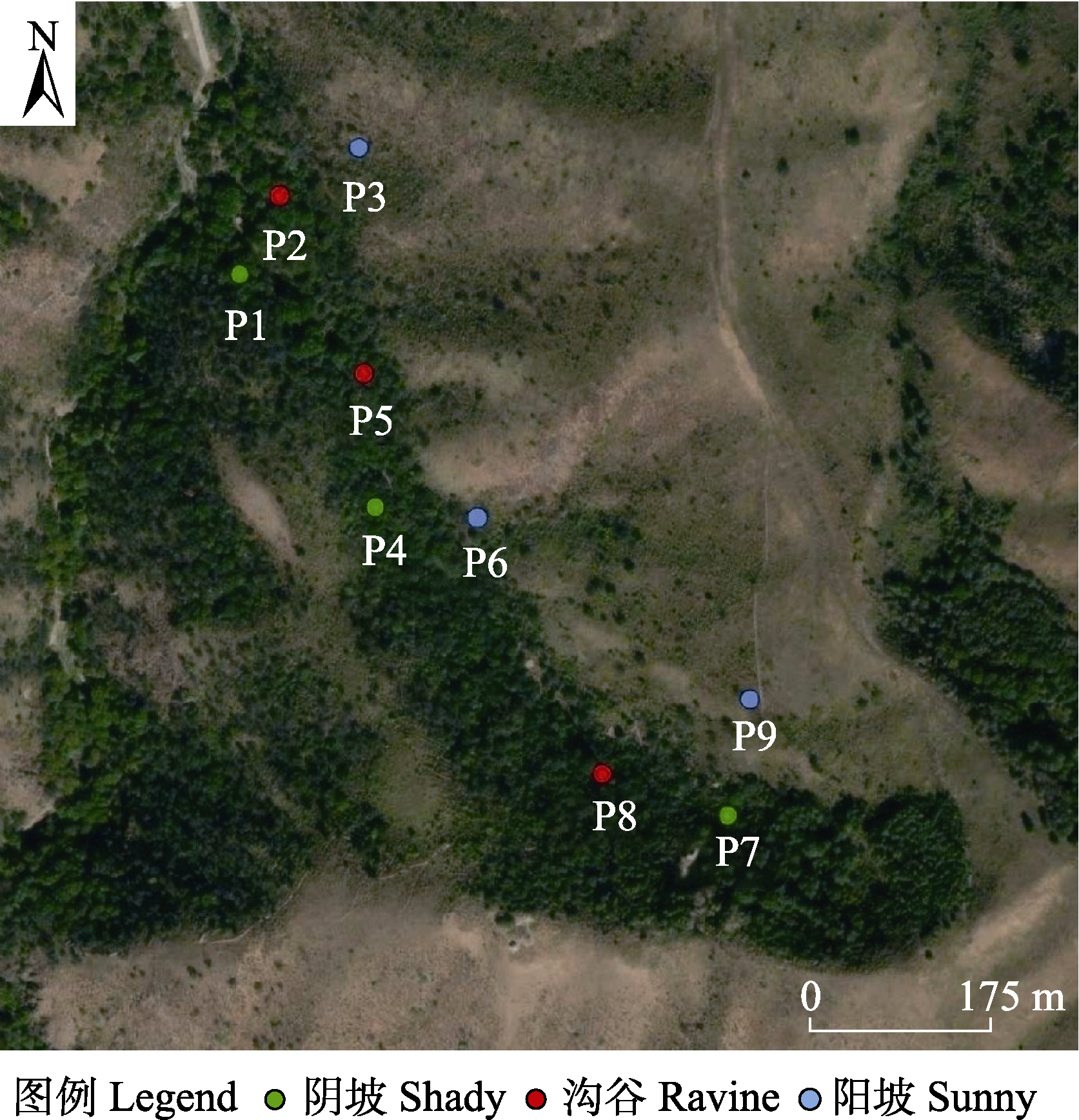
Fig. 1 Map of plot distribution in the Gongliu Wild Walnut Nature Reserve, Xinjiang
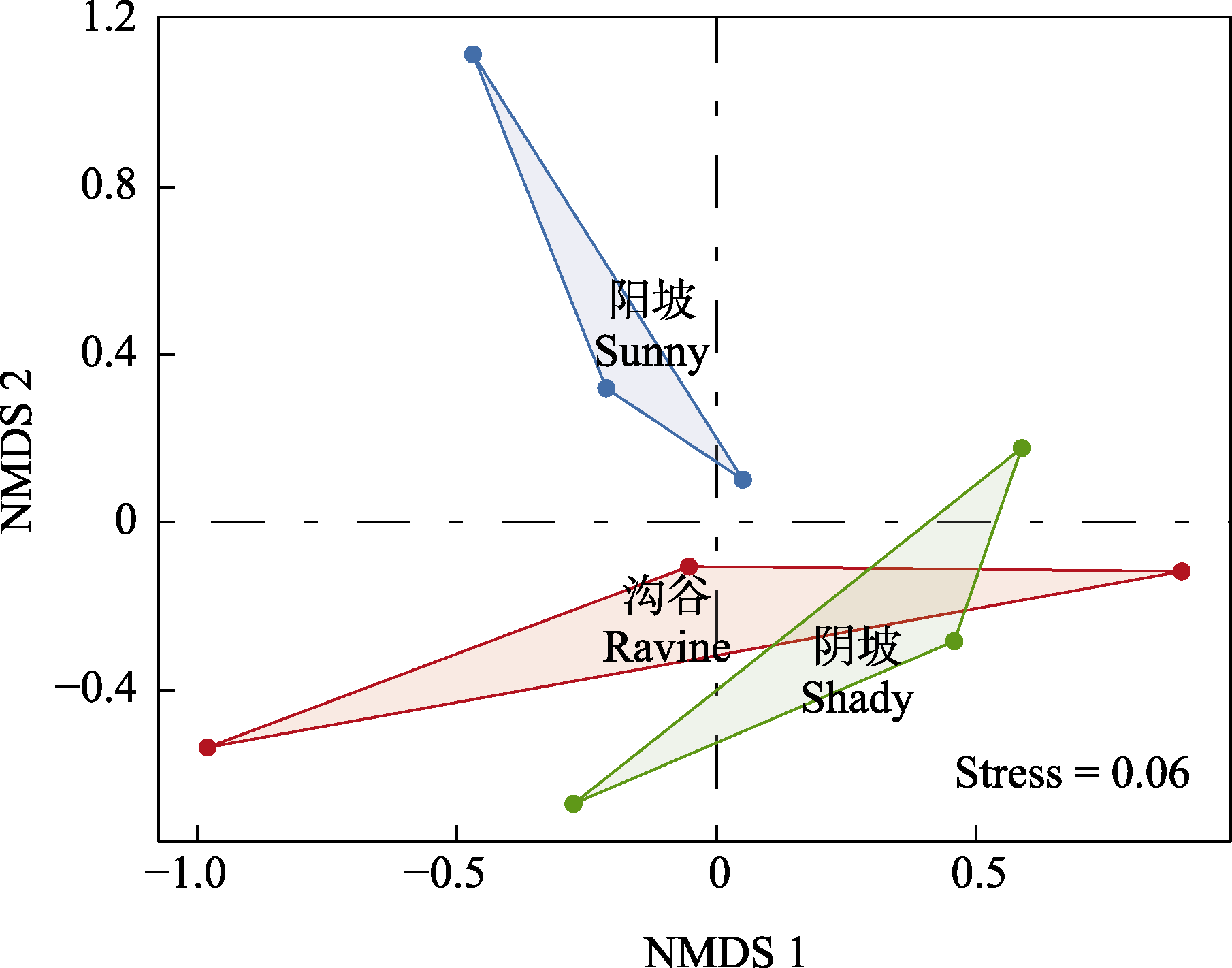
Fig. 2 Non-metric multidimensional scaling (NMDS) of soil Collembola communities in three microtopographic habitats
| 微地形 Microtopography | 丰富度 Richness | lg多度 lgAbundance | Shannon-Wiener多样性指数 Shannon-Wiener diversity index | Simpson优势度指数 Simpson dominance index | Pielou均匀度指数 Pielou evenness index |
|---|---|---|---|---|---|
| 阴坡 Shady | 6.33±0.33 | 2.68±0.29 | 1.53±0.09 | 0.75±0.03 | 0.58±0.05 |
| 阳坡 Sunny | 6.67±0.33 | 3.19±0.43 | 0.99±0.32 | 0.48±0.17 | 0.37±0.13 |
| 沟谷 Ravine | 4.00±1.53 | 2.66±0.19 | 0.66±0.33 | 0.35±0.18 | 0.27±0.14 |
Table 2 Diversity index of soil Collembola in three microtopographic habitats (mean±SE)
| 微地形 Microtopography | 丰富度 Richness | lg多度 lgAbundance | Shannon-Wiener多样性指数 Shannon-Wiener diversity index | Simpson优势度指数 Simpson dominance index | Pielou均匀度指数 Pielou evenness index |
|---|---|---|---|---|---|
| 阴坡 Shady | 6.33±0.33 | 2.68±0.29 | 1.53±0.09 | 0.75±0.03 | 0.58±0.05 |
| 阳坡 Sunny | 6.67±0.33 | 3.19±0.43 | 0.99±0.32 | 0.48±0.17 | 0.37±0.13 |
| 沟谷 Ravine | 4.00±1.53 | 2.66±0.19 | 0.66±0.33 | 0.35±0.18 | 0.27±0.14 |
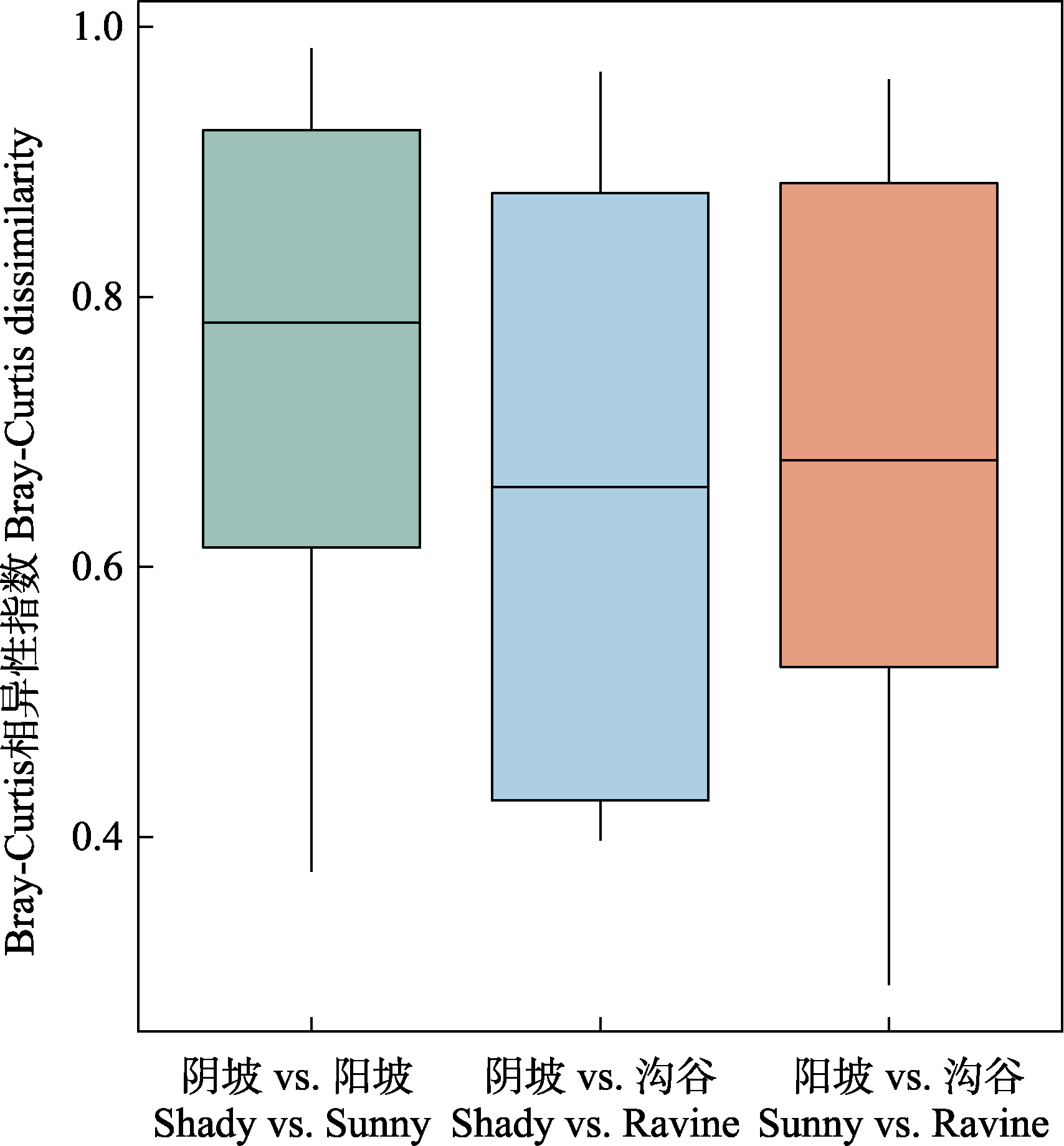
Fig. 3 Differences in β diversity of soil Collembola communities in three microtopographic habitats
| 阴坡 Shady | 阳坡 Sunny | 沟谷 Ravine | |
|---|---|---|---|
| 球角跳科 Hypogastruridae | 106.65±75.81 (15.99%) | 3,810.00±3,614.28 (90.44%) | 205.32±112.65 (37.26%) |
| 棘跳科 Onychiuridae | 253.47±114.08 (38.01%) | 296.69±62.78 (7.04%) | 267.91±147.78 (48.61%) |
| 等节跳科 Isotomidae | 272.75±136.80 (40.90%) | 4.94±2.47 (0.12%) | 54.42±35.07 (9.87%) |
| 疣跳科 Neanuridae | 14.44±14.44 (2.16%) | 94.11±42.66 (2.23%) | 22.22±22.22 (4.03%) |
| 长角跳科 Entomobryidae | 18.33±18.33 (2.75%) | 7.22±7.22 (0.17%) | 0±0 (0.00%) |
| 齿棘圆跳科 Arrhopalitidae | 1.23±1.23 (0.19%) | 0±0 (0.00%) | 1.23±1.23 (0.22%) |
Table 3 Family-level abundance (ind./m²) and relative abundance (%) of soil Collembola communities in three microtopographic habitats
| 阴坡 Shady | 阳坡 Sunny | 沟谷 Ravine | |
|---|---|---|---|
| 球角跳科 Hypogastruridae | 106.65±75.81 (15.99%) | 3,810.00±3,614.28 (90.44%) | 205.32±112.65 (37.26%) |
| 棘跳科 Onychiuridae | 253.47±114.08 (38.01%) | 296.69±62.78 (7.04%) | 267.91±147.78 (48.61%) |
| 等节跳科 Isotomidae | 272.75±136.80 (40.90%) | 4.94±2.47 (0.12%) | 54.42±35.07 (9.87%) |
| 疣跳科 Neanuridae | 14.44±14.44 (2.16%) | 94.11±42.66 (2.23%) | 22.22±22.22 (4.03%) |
| 长角跳科 Entomobryidae | 18.33±18.33 (2.75%) | 7.22±7.22 (0.17%) | 0±0 (0.00%) |
| 齿棘圆跳科 Arrhopalitidae | 1.23±1.23 (0.19%) | 0±0 (0.00%) | 1.23±1.23 (0.22%) |
| 阴坡 Shady | 阳坡 Sunny | 沟谷 Ravine | |
|---|---|---|---|
| 奇跳属 Xenylla | 0±0 (0.00%) | 3,497.93±3,475.72 (83.03%) | 0±0 (0.00%) |
| 双棘跳属 Bionychiurus | 253.47±114.08 (38.01%) | 296.69±62.78 (7.04%) | 267.91±147.78 (48.61%) |
| 泡角跳属 Ceratophysella | 106.65±75.81 (15.99%) | 312.07±139.89 (7.41%) | 205.32±112.65 (37.26%) |
| 原等跳属 Proisotoma | 147.20±80.09 (22.07%) | 2.47±2.47 (0.06%) | 39.79±22.03 (7.22%) |
| 符跳属 Folsomia | 125.55±66.16 (18.83%) | 0±0 (0.00%) | 13.39±13.39 (2.43%) |
| 奇刺跳属 Friesea | 14.44±14.44 (2.16%) | 94.11±42.66 (2.23%) | 22.22±22.22 (4.03%) |
| 裸长角跳属 Sinella | 7.22±7.22 (1.08%) | 7.22±7.22 (0.17%) | 0±0 (0.00%) |
| 柳跳属 Willowsia | 6.17±6.17 (0.93%) | 0±0 (0.00%) | 0±0 (0.00%) |
| 德跳属 Desoria | 0±0 (0.00%) | 2.47±2.47 (0.06%) | 1.23±1.23 (0.22%) |
| 长角跳属 Entomobrya | 2.47±2.47 (0.37%) | 0±0 (0.00%) | 0±0 (0.00%) |
| 刺齿跳属 Homidia | 2.47±2.47 (0.37%) | 0±0 (0.00%) | 0±0 (0.00%) |
| 齿棘圆跳属 Arrhopalites | 1.23±1.23 (0.19%) | 0±0 (0.00%) | 1.23±1.23 (0.22%) |
Table 4 Genus-level abundance (ind./m2) and relative abundance (%) of soil Collembola communities in three microtopographic habitats
| 阴坡 Shady | 阳坡 Sunny | 沟谷 Ravine | |
|---|---|---|---|
| 奇跳属 Xenylla | 0±0 (0.00%) | 3,497.93±3,475.72 (83.03%) | 0±0 (0.00%) |
| 双棘跳属 Bionychiurus | 253.47±114.08 (38.01%) | 296.69±62.78 (7.04%) | 267.91±147.78 (48.61%) |
| 泡角跳属 Ceratophysella | 106.65±75.81 (15.99%) | 312.07±139.89 (7.41%) | 205.32±112.65 (37.26%) |
| 原等跳属 Proisotoma | 147.20±80.09 (22.07%) | 2.47±2.47 (0.06%) | 39.79±22.03 (7.22%) |
| 符跳属 Folsomia | 125.55±66.16 (18.83%) | 0±0 (0.00%) | 13.39±13.39 (2.43%) |
| 奇刺跳属 Friesea | 14.44±14.44 (2.16%) | 94.11±42.66 (2.23%) | 22.22±22.22 (4.03%) |
| 裸长角跳属 Sinella | 7.22±7.22 (1.08%) | 7.22±7.22 (0.17%) | 0±0 (0.00%) |
| 柳跳属 Willowsia | 6.17±6.17 (0.93%) | 0±0 (0.00%) | 0±0 (0.00%) |
| 德跳属 Desoria | 0±0 (0.00%) | 2.47±2.47 (0.06%) | 1.23±1.23 (0.22%) |
| 长角跳属 Entomobrya | 2.47±2.47 (0.37%) | 0±0 (0.00%) | 0±0 (0.00%) |
| 刺齿跳属 Homidia | 2.47±2.47 (0.37%) | 0±0 (0.00%) | 0±0 (0.00%) |
| 齿棘圆跳属 Arrhopalites | 1.23±1.23 (0.19%) | 0±0 (0.00%) | 1.23±1.23 (0.22%) |
| 微地形 Microtopography | 土壤月均温度 MMST (℃) | 土壤月均湿度 MMSM | 土壤酸碱度 pH | 土壤有机碳 SOC (%) | 土壤铵态氮 NH4+-N (mg/kg) | 土壤总氮 TN (%) | 土壤总磷 TP (g/kg) | 郁闭度 CC |
|---|---|---|---|---|---|---|---|---|
| 阴坡 Shady | 13.78±0.59a | 0.35±0.01a | 7.13±0.13a | 6.61±0.33a | 6.57±1.47a | 0.52±0.06a | 0.98±0.08ab | 0.37±0.07b |
| 阳坡 Sunny | 15.85±0.72b | 0.30±0.05a | 7.23±0.07a | 5.07±0.62a | 4.88±0.61a | 0.72±0.07a | 0.84±0.19a | 0.03±0.01a |
| 沟谷 Ravine | 13.57±0.54a | 0.34±0.03a | 7.18±0.02a | 6.89±0.92a | 5.91±1.41a | 0.70±0.04a | 1.22±0.17b | 0.44±0.05b |
Table 5 Environmental factors for three microtopographic habitats (mean±SE)
| 微地形 Microtopography | 土壤月均温度 MMST (℃) | 土壤月均湿度 MMSM | 土壤酸碱度 pH | 土壤有机碳 SOC (%) | 土壤铵态氮 NH4+-N (mg/kg) | 土壤总氮 TN (%) | 土壤总磷 TP (g/kg) | 郁闭度 CC |
|---|---|---|---|---|---|---|---|---|
| 阴坡 Shady | 13.78±0.59a | 0.35±0.01a | 7.13±0.13a | 6.61±0.33a | 6.57±1.47a | 0.52±0.06a | 0.98±0.08ab | 0.37±0.07b |
| 阳坡 Sunny | 15.85±0.72b | 0.30±0.05a | 7.23±0.07a | 5.07±0.62a | 4.88±0.61a | 0.72±0.07a | 0.84±0.19a | 0.03±0.01a |
| 沟谷 Ravine | 13.57±0.54a | 0.34±0.03a | 7.18±0.02a | 6.89±0.92a | 5.91±1.41a | 0.70±0.04a | 1.22±0.17b | 0.44±0.05b |
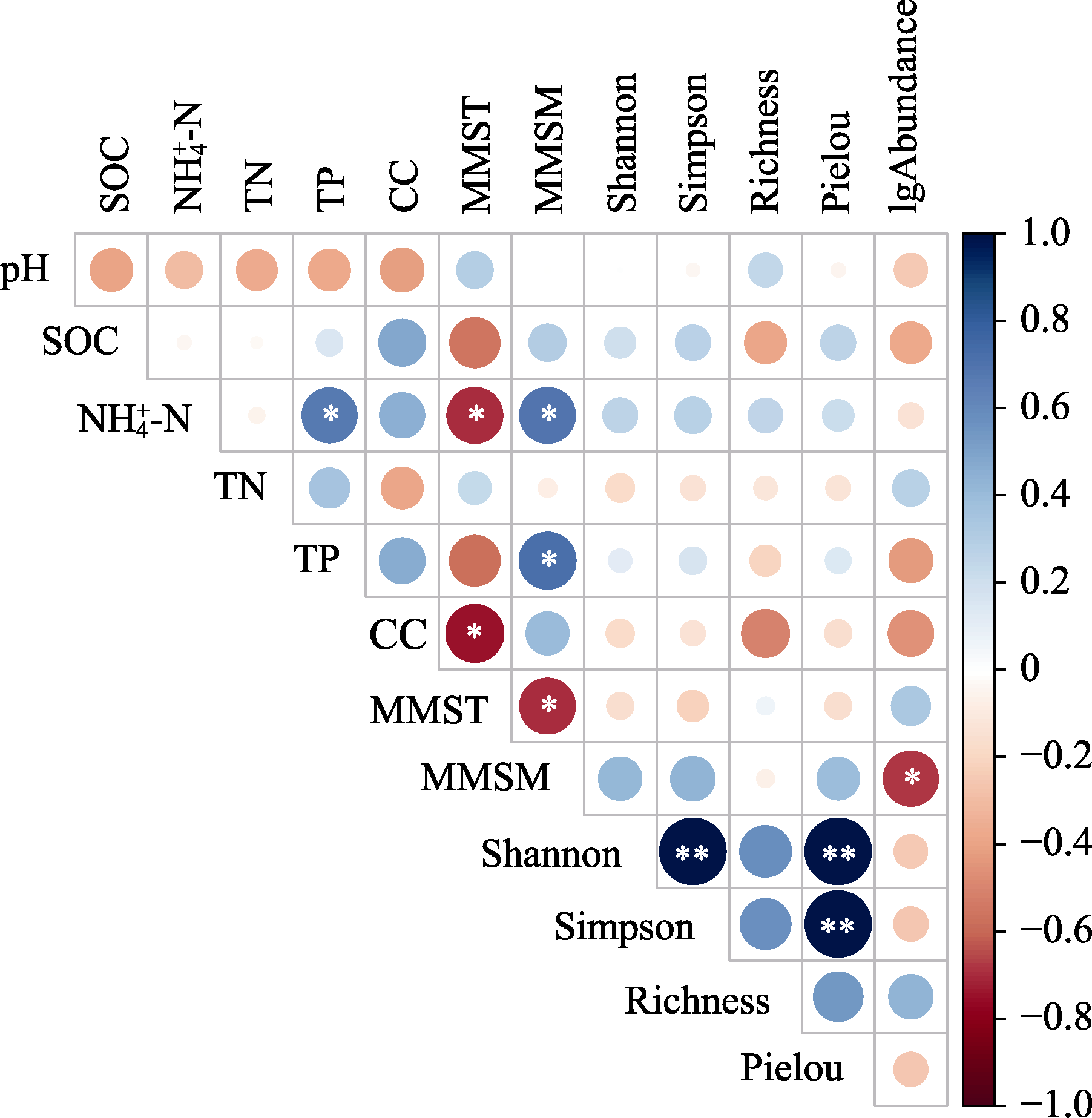
Fig. 4 Correlation analysis of soil Collembola community diversity and environmental factors. The number represents the Pearson correlation coefficient (r) value. Blue represents a positive correlation, and orange represents a negative correlation; The shade of color indicates the strength of the correlation. pH, Soil pH; SOC, Soil organic carbon; NH4+-N, Ammonium nitrogen; TN, Total nitrogen; TP, Total phosphorus; CC, Canopy coverage; MMST, Monthly mean soil temperature; MMSM, Monthly mean soil moisture; Shannon, Shannon-Wiener diversity index; Simpson, Simpson dominance index; Richness, Richness; Pielou, Pielou evenness index. *P<0.05; **P<0.01.
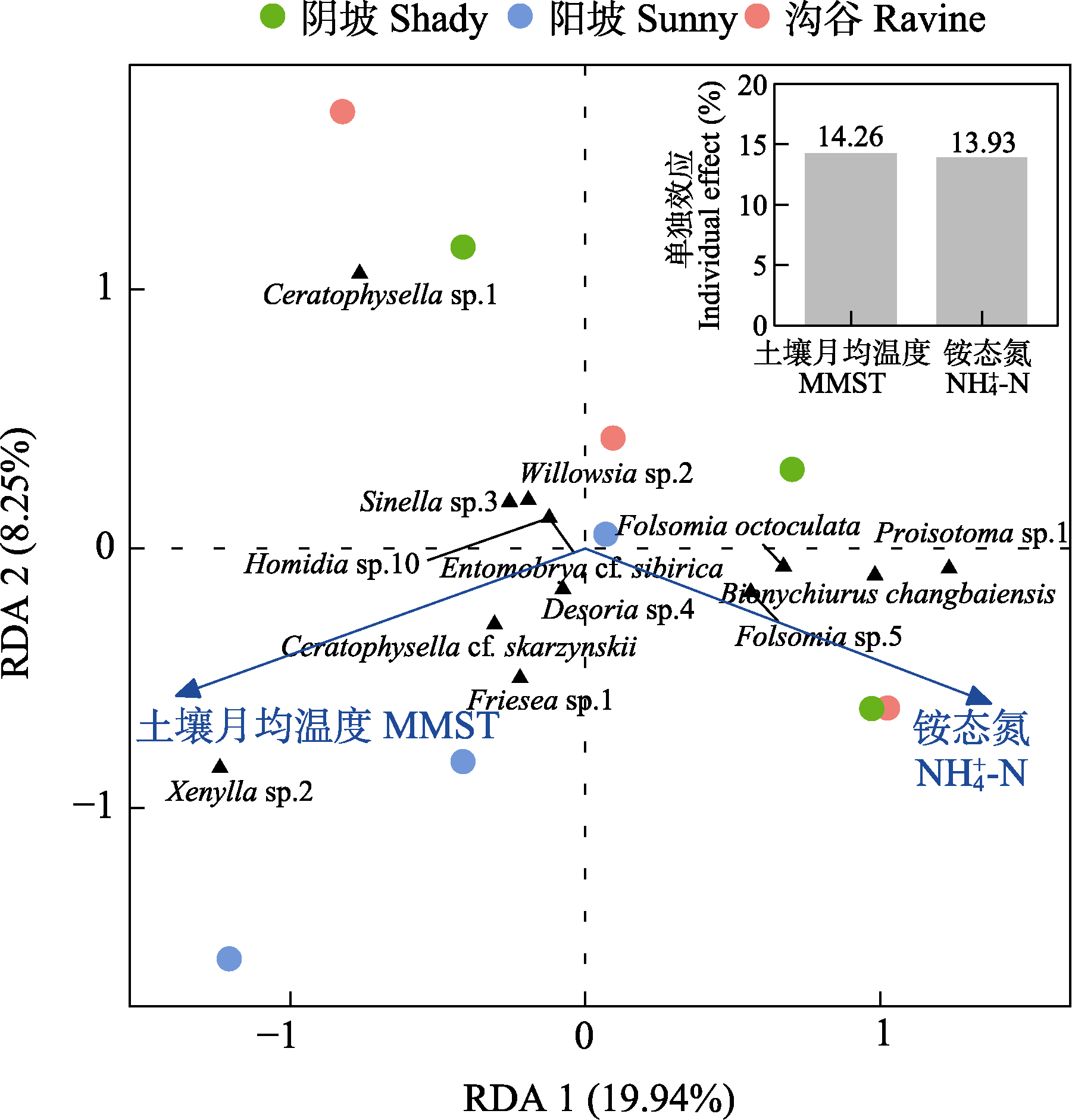
Fig. 5 Redundancy analysis of soil Collembola community structure and environmental factors in different microtopographic habitats. MMST, Monthly mean soil temperature; NH4+-N, Ammonium nitrogen.
| [1] |
Antonelli A, Kissling WD, Flantua SGA, Bermúdez MA, Mulch A, Muellner-Riehl AN, Kreft H, Linder HP, Badgley C, Fjeldså J, Fritz SA, Rahbek C, Herman F, Hooghiemstra H, Hoorn C (2018) Geological and climatic influences on mountain biodiversity. Nature Geoscience, 11, 718-725.
DOI |
| [2] |
Bardgett RD, van der Putten WH (2014) Belowground biodiversity and ecosystem functioning. Nature, 515, 505-511.
DOI |
| [3] | Bellinger PF, Christiansen KA, Janssens F (1996-2024) Checklist of the Collembola of the World. https://www.collembola.org. (accessed on 2024-09-24) |
| [4] |
Bennie J, Huntley B, Wiltshire A, Hill MO, Baxter R (2008) Slope, aspect and climate: Spatially explicit and implicit models of topographic microclimate in chalk grassland. Ecological Modelling, 216, 47-59.
DOI URL |
| [5] |
Chen JX, Ma ZC, Yan HJ, Zhang F (2007) Roles of springtails in soil ecosystem. Biodiversity Science, 15, 154-161.(in Chinese with English abstract)
DOI |
|
[陈建秀, 麻智春, 严海娟, 张峰 (2007) 跳虫在土壤生态系统中的作用. 生物多样性, 15, 154-161.]
DOI |
|
| [6] |
Davidson EA, Janssens IA (2006) Temperature sensitivity of soil carbon decomposition and feedbacks to climate change. Nature, 440, 165-173.
DOI |
| [7] |
De Frenne P, Lenoir J, Luoto M, Scheffers BR, Zellweger F, Aalto J, Ashcroft MB, Christiansen DM, Decocq G, De Pauw K, Govaert S, Greiser C, Gril E, Hampe A, Jucker T, Klinges DH, Koelemeijer IA, Lembrechts JJ, Marrec R, Meeussen C, Ogée J, Tyystjärvi V, Vangansbeke P, Hylander K (2021) Forest microclimates and climate change: Importance, drivers and future research agenda. Global Change Biology, 27, 2279-2297.
DOI PMID |
| [8] |
de Mesquita Lima MG, da Silva BM, Nunes RC, de Oliveira Marques A, da Silva Medeiros G, de Morais Freire FA, da Silva CDD, Winck B, Bellini BC (2024) Collembola diversity across vegetation types of a neotropical island in a river delta. Diversity, 16, 445.
DOI URL |
| [9] |
Dormann CF, Elith J, Bacher S, Buchmann C, Carl G, Carré G, Marquéz JRG, Gruber B, Lafourcade B, Leitão PJ, Münkemüller T, McClean C, Osborne PE, Reineking B, Schröder B, Skidmore AK, Zurell D, Lautenbach S (2013) Collinearity: A review of methods to deal with it and a simulation study evaluating their performance. Ecography, 36, 27-46.
DOI URL |
| [10] |
Ferreira AS, Bellini BC, Vasconcellos A (2013) Temporal variations of Collembola (Arthropoda: Hexapoda) in the semiarid Caatinga in northeastern Brazil. Zoologia (Curitiba), 30, 639-644.
DOI URL |
| [11] |
Fu SL, Liu MQ, Zhang WX, Shao YH (2022) A review of recent advances in the study of geographical distribution and ecological functions of soil fauna diversity. Biodiversity Science, 30, 22435.(in Chinese with English abstract)
DOI |
|
[傅声雷, 刘满强, 张卫信, 邵元虎 (2022) 土壤动物多样性的地理分布及其生态功能研究进展. 生物多样性, 30, 22435.]
DOI |
|
| [12] |
García-Gómez A, Castaño-Meneses G, Palacios-Vargas JG (2009) Diversity of springtails (Hexapoda) according to a altitudinal gradient. Pesquisa Agropecuária Brasileira, 44, 911-916.
DOI URL |
| [13] |
Gong X, Brueck H, Giese KM, Zhang L, Sattelmacher B, Lin S (2008) Slope aspect has effects on productivity and species composition of hilly grassland in the Xilin River Basin, Inner Mongolia, China. Journal of Arid Environments, 72, 483-493.
DOI URL |
| [14] | Guo Q, Wang B, Wang PF, Fan YM, Lu PP, Zhang K, Wang XL (2025) Effects of slope aspect on vegetation characteristics and community assembly of alpine meadows. Pratacultural Science, 42, 1152-1161.(in Chinese with English abstract) |
| [郭倩, 王博, 王平芳, 樊勇明, 卢培培, 张魁, 王喜龙 (2025) 坡向对高寒草甸植被特征和群落构建的影响. 草业科学, 42, 1152-1161.] | |
| [15] |
Haesen S, Lenoir J, Gril E, De Frenne P, Lembrechts JJ, Kopecký M, Macek M, Man M, Wild J, Van Meerbeek K (2023) Microclimate reveals the true thermal niche of forest plant species. Ecology Letters, 26, 2043-2055.
DOI PMID |
| [16] | Han HY, Yin XQ, Kou XC (2017) Community characteristics of soil fauna in the low-mountain of the Changbai Mountains and its respond to the change of environmental factors. Acta Ecologica Sinica, 37, 2197-2205.(in Chinese with English abstract) |
| [韩慧莹, 殷秀琴, 寇新昌 (2017) 长白山地低山区土壤动物群落特征及其对环境因子变化的响应. 生态学报, 37, 2197-2205.] | |
| [17] |
Han L, Liu Y, Liu J, Kang HL, Liu Z, Tuo FW, Gan SA, Ren YX, Yi CH, Hu GM (2025) Microtopography affects the diversity and stability of vegetation communities by regulating soil moisture. Water, 17, 1012.
DOI URL |
| [18] |
Heiniger C, Barot S, Ponge JF, Salmon S, Meriguet J, Carmignac D, Suillerot M, Dubs F (2015) Collembolan preferences for soil and microclimate in forest and pasture communities. Soil Biology and Biochemistry, 86, 181-192.
DOI URL |
| [19] | Hopkin SP (1997) Biology of the Springtails. Oxford University Press, Oxford. |
| [20] |
Huang YM, Liu D, An SS (2015) Effects of slope aspect on soil nitrogen and microbial properties in the Chinese Loess region. Catena, 125, 135-145.
DOI URL |
| [21] | Jiang S, Wei TX, Fan DH, Yu H, Ye XM, Xie Y, Li SJ (2024) Plant diversity in different positions of gullies and valleys in the loess region of western Shanxi Province, northern China. Journal of Beijing Forestry University, 46(6), 20-27.(in Chinese with English abstract) |
| [江姗, 魏天兴, 范德卉, 于欢, 叶小曼, 谢宇, 李世杰 (2024) 晋西黄土区沟谷不同部位植物多样性. 北京林业大学学报, 46(6), 20-27.] | |
| [22] |
Kaneda S, Kaneko N (2011) Influence of Collembola on nitrogen mineralization varies with soil moisture content. Soil Science and Plant Nutrition, 57, 40-49.
DOI URL |
| [23] |
Keppel G, Van Niel KP, Wardell-Johnson GW, Yates CJ, Byrne M, Mucina L, Schut AGT, Hopper SD, Franklin SE (2012) Refugia: Identifying and understanding safe havens for biodiversity under climate change. Global Ecology and Biogeography, 21, 393-404.
DOI URL |
| [24] |
Li CB, Zhang SQ, Wang BF, Ai ZH, Zhang S, Shao YB, Du J, Wang CX, Wajid S, Wu DH, Chang L (2025) Euedaphic rather than hemiedaphic or epedaphic Collembola are more sensitive to different climate conditions in the black soil region of Northeast China. Insects, 16, 275.
DOI URL |
| [25] | Li GY, Yang XD, Shi QR, Ma WJ, Wang XH, Yan ER (2014) Effects of clear-felling on soil nutrient pools and nitrogen mineralization and nitrification in Tiantong, Zhejiang Province. Chinese Journal of Ecology, 33, 709-715.(in Chinese with English abstract) |
| [李光耀, 杨晓东, 史青茹, 马文济, 王希华, 阎恩荣 (2014) 浙江天童森林砍伐对土壤养分库和氮矿化-硝化特征的影响. 生态学杂志, 33, 709-715.] | |
| [26] | Li R, Liu MX, Zhang C, Zhao RD, Shao P (2017) Distribution characteristics of soil microbial communities along different slope direction of Gannan sub-alpine meadows. Ecology and Environmental Sciences, 26, 1884-1891.(in Chinese with English abstract) |
|
[李瑞, 刘旻霞, 张灿, 赵瑞东, 邵鹏 (2017) 甘南亚高寒草甸不同坡向土壤微生物群落分布特征. 生态环境学报, 26, 1884-1891.]
DOI |
|
| [27] | Liu HQ, Wang B, Jia YY, Ba XR, Zhang W (2025) Relationship between freezing damage and age class and slope aspect of Juglans regia in Xinjiang, China. Chinese Journal of Ecology, 44, 49-55.(in Chinese with English abstract) |
| [柳华清, 王博, 贾妍妍, 巴雪瑞, 张维 (2025) 新疆野核桃冻害与龄级和坡向的关系. 生态学杂志, 44, 49-55.] | |
| [28] |
Liu J, Qiu LP, Chen JL, Zheng BY, Wei XR, Gao HL, Zhang YJ, Cheng JM (2019) Responses of plant biomass and nutrients to fire vary with functional group and slope aspect in a semiarid restored grassland on the Loess Plateau. Journal of Arid Environments, 171, 104008.
DOI URL |
| [29] | Liu JL, Li FR (2008) Slope direction and topographic position interact to shape spatial distribution of soil macrofauna in a temperate secondary forest, China. Journal of Desert Research, 28, 1104-1112.(in Chinese with English abstract) |
| [刘继亮, 李锋瑞 (2008) 坡向和微地形对大型土壤动物空间分布格局的影响. 中国沙漠, 28, 1104-1112.] | |
| [30] | Liu MX, Wang G (2013) Responses of plant community diversity and soil factors to slope aspect in alpine meadow. Chinese Journal of Ecology, 32, 259-265.(in Chinese with English abstract) |
| [刘旻霞, 王刚 (2013) 高寒草甸植物群落多样性及土壤因子对坡向的响应. 生态学杂志, 32, 259-265.] | |
| [31] |
Lux J, Xie ZJ, Sun X, Wu DH, Scheu S (2024) Trophic niches of Collembola communities change with elevation, but also with body size and life form. Oecologia, 204, 491-504.
DOI PMID |
| [32] |
Maaß S, Caruso T, Rillig MC (2015) Functional role of microarthropods in soil aggregation. Pedobiologia, 58, 59-63.
DOI URL |
| [33] |
Menta C, Remelli S (2020) Soil health and arthropods: From complex system to worthwhile investigation. Insects, 11, 54.
DOI URL |
| [34] |
Muscarella R, Kolyaie S, Morton DC, Zimmerman JK, Uriarte M (2020) Effects of topography on tropical forest structure depend on climate context. Journal of Ecology, 108, 145-159.
DOI |
| [35] | Nuer MT, Zhang XF, Zhang W (2015) Flora and geographical compositions in the natural conservation area of Juglans cathayensis in Xinjiang, China. Chinese Journal of Ecology, 34, 1838-1846.(in Chinese with English abstract) |
| [努尔买买提, 张相锋, 张维 (2015) 新疆野核桃自然保护区植物区系和地理成分. 生态学杂志, 34, 1838-1846.] | |
| [36] | Oksanen J, Simpson G, Blanchet F, Kindt R, Legendre P, Minchin P, O’Hara R, Solymos P, Stevens M, Szoecs E, Wagner H, Barbour M, Bedward M, Bolker B, Borcard D, Borman T, Carvalho G, Chirico M, De Caceres M, Durand S, Evangelista H, FitzJohn R, Friendly M, Furneaux B, Hannigan G, Hill M, Lahti L, Martino C, McGlinn D, Ouellette M, Ribeiro Cunha E, Smith T, Stier A, Ter Braak C, Weedon J (2025) vegan: Community Ecology Package.R package version 2.8-0. https://vegandevs.github.io/vegan/. (accessed on 2024-09-24) |
| [37] |
Patrignani A, Ochsner TE (2015) Canopeo: A powerful new tool for measuring fractional green canopy cover. Agronomy Journal, 107, 2312-2320.
DOI URL |
| [38] |
Perrigo A, Hoorn C, Antonelli A (2020) Why mountains matter for biodiversity. Journal of Biogeography, 47, 315-325.
DOI |
| [39] |
Potapov AA, Semenina EE, Korotkevich AY, Kuznetsova NA, Tiunov AV (2016) Connecting taxonomy and ecology: Trophic niches of collembolans as related to taxonomic identity and life forms. Soil Biology and Biochemistry, 101, 20-31.
DOI URL |
| [40] |
Potapov AM, Guerra CA, van den Hoogen J, Babenko A, Bellini BC, Berg MP, Chown SL, Deharveng L, Kováč Ľ, Kuznetsova NA, …, Widenfalk LA, Winck BR, Winkler D, Wu DH, Xie ZJ, Yin R, Zeppelini D, Crowther TW, Eisenhauer N, Scheu S (2023) Globally invariant metabolism but density-diversity mismatch in springtails. Nature Communications, 14, 674.
DOI PMID |
| [41] | R Core Team (2024) R: A Language and Environment for Statistical Computing. R Foundation for Statistical Computing, Vienna, Austria. |
| [42] | Skarżyński D, Valle B, Gwiazdowicz DJ, Porco D (2025) Integrative description of two new species of the Xenylla maritima species complex (Collembola: Hypogastruridae) from Crete (Greece), with notes on the high intraspecific genetic divergence found in X. maritima Tullberg, 1869. European Journal of Taxonomy, 976, 77-91. |
| [43] | Sun X, Li Q, Yao HF, Liu MQ, Wu DH, Zhu D, Zhu YG (2021) Soil fauna and soil health. Acta Pedologica Sinica, 58, 1073-1083.(in Chinese with English abstract) |
| [孙新, 李琪, 姚海凤, 刘满强, 吴东辉, 朱冬, 朱永官 (2021) 土壤动物与土壤健康. 土壤学报, 58, 1073-1083.] | |
| [44] |
Tang SS, You GN, Wei X, Ren X, Chen Y, Wang YY, Wu PF (2024) Responses of the epigeic springtails and mites to the degradations of alpine meadow. Chinese Journal of Ecology, 43, 66-74.(in Chinese with English abstract)
DOI |
| [唐思思, 游光年, 魏雪, 任晓, 陈燕, 王玉英, 吴鹏飞 (2024) 表栖跳虫和螨类群落对高寒草甸退化的响应. 生态学杂志, 43, 66-74.] | |
| [45] | Tuo XH, Ai N, Zhou YW, Zhang ZY, Yuan CX, Liu CH (2022) Basic characteristics of soil fauna in typical grasslands on the Loess Plateau in northern Shaanxi. Journal of Arid Land Resources and Environment, 36(8), 125-132.(in Chinese with English abstract) |
| [拓向辉, 艾宁, 周永维, 张智勇, 苑彩霞, 刘长海 (2022) 陕北黄土高原典型草地土壤动物群落的基本特征——以吴起金佛坪小流域为例. 干旱区资源与环境, 36(8), 125-132.] | |
| [46] | Wagg C, Bender SF, Widmer F, van der Heijden MGA (2014) Soil biodiversity and soil community composition determine ecosystem multifunctionality. Proceedings of the National Academy of Sciences, USA, 111, 5266-5270. |
| [47] |
Wang XR, Chen Y, Chen YX, Ding Y, Fang S, Hao ZQ, He ZS, Hu G, Jia SH, Li BH, Lin F, Liu J, Liu L, Luo YH, Luo YH, Shen Y, Song HJ, Song K, Tian ZP, Xing DL, Yang QP, Yang XQ, Yang YC, Yuan ZL, Yuan ZQ, Zhang Q, Zhang ZC, Zhang ZH, Zhang J (2026) Plant community data along elevational gradients in China’s 17 mountains. Scientific Data, 13, 100.
DOI |
| [48] |
Wild J, Kopecký M, Macek M, Šanda M, Jankovec J, Haase T (2019) Climate at ecologically relevant scales: A new temperature and soil moisture logger for long-term microclimate measurement. Agricultural and Forest Meteorology, 268, 40-47.
DOI |
| [49] | Wu F, Sun HL, Tian ZP, Ye M, Liu TY, Yang H, Jin XL (2024) Vertical distribution patterns of soil organic carbon along elevational gradients and its environmental drivers in the montane forests of the western Tianshan Mountains, China. Chinese Journal of Applied and Environmental Biology, 30, 715-725.(in Chinese with English abstract) |
| [吴芳, 孙慧兰, 田中平, 叶茂, 刘天弋, 杨涵, 金晓亮 (2024) 天山西部山地森林土壤有机碳沿海拔的分布格局及环境驱动因素. 应用与环境生物学报, 30, 715-725.] | |
| [50] | Wu JY, Anderson BJ, Buckley HL, Lewis G, Lear G (2017) Aspect has a greater impact on alpine soil bacterial community structure than elevation. FEMS Microbiology Ecology, 93, fiw253. |
| [51] | Xie ZJ, Chang L, Stefan S, Wu DH, Sun X (2022) Taxonomic and functional diversity of Collembola in litter and soil along an altitudinal gradient at Changbai Mountain, China. Acta Ecologica Sinica, 42, 3471-3481.(in Chinese with English abstract) |
| [谢致敬, 常亮, Scheu Stefan, 吴东辉, 孙新 (2022) 长白山森林生态系统凋落物层和土壤层跳虫物种多样性和功能多样性对海拔梯度的响应. 生态学报, 42, 3471-3481.] | |
| [52] |
Xie ZJ, Sun X, Lux J, Chen TW, Potapov M, Wu DH, Scheu S (2022) Drivers of Collembola assemblages along an altitudinal gradient in northeast China. Ecology and Evolution, 12, e8559.
DOI PMID |
| [53] | Xiong JW (2017) Comprehensive Scientific Investigation of the Western Tianshan Mountains in Xinjiang. China Forestry Publishing House, Beijing.(in Chinese) |
| [熊嘉武 (2017) 新疆天山西部山地综合科学考察. 中国林业出版社, 北京.] | |
| [54] | Xu DY (1989) Study on eco-climatic features of Xinjiang wild walnut. Journal of Ecology, 8(4), 24-27.(in Chinese with English abstract) |
| [徐德炎 (1989) 新疆野核桃生态气候特征的研究. 生态学杂志, 8(4), 24-27.] | |
| [55] |
Yan JC, Cui D, Lyu LQ, Jiang ZC, Zhang MR, Liu JH, Cao J, Wang QL (2025) Distribution characteristics of soil fauna communities in the forest-grassland ecotone of the West Tianshan Nature Reserve. Chinese Journal of Ecology, 44, 425-433.(in Chinese with English abstract)
DOI |
| [闫江超, 崔东, 吕立琴, 江智诚, 张敏如, 刘江慧, 曹敬, 王巧莉 (2025) 西天山自然保护区森林-草原交错带土壤动物群落分布特征. 生态学杂志, 44, 425-433.] | |
| [56] |
Yang J, El-Kassaby YA, Guan WB (2020) The effect of slope aspect on vegetation attributes in a mountainous dry valley, Southwest China. Scientific Reports, 10, 16465.
DOI PMID |
| [57] | Yin WY (1992) Subtropical Soil Animals of China. Science Press, Beijing.(in Chinese) |
| [尹文英 (1992) 中国亚热带土壤动物. 科学出版社, 北京.] | |
| [58] | Yin WY (1998) Pictorial Keys to Soil Animals of China. Science Press, Beijing.(in Chinese) |
| [尹文英 (1998) 中国土壤动物检索图鉴. 科学出版社, 北京.] | |
| [59] | Yin WY (2000) Soil Animals of China. Science Press, Beijing.(in Chinese) |
| [尹文英 (2000) 中国土壤动物. 科学出版社, 北京.] | |
| [60] | Zhang C, Liu MX, Li R, Zhao RD, Shao P (2017) Response of soil ciliates community in cold and warm seasons to slope aspects of subalpine meadow in Gannan. Chinese Journal of Ecology, 36, 2465-2472.(in Chinese with English abstract) |
| [张灿, 刘旻霞, 李瑞, 赵瑞东, 邵鹏 (2017) 甘南亚高寒草甸冷暖季土壤纤毛虫群落对坡向的响应. 生态学杂志, 36, 2465-2472.] | |
| [61] | Zhang H, Wu HT (2020) Research progresses in effects of climate warming on soil fauna community structure. Chinese Journal of Ecology, 39, 655-664.(in Chinese with English abstract) |
| [张慧, 武海涛 (2020) 气候变暖对土壤动物群落结构的影响机制. 生态学杂志, 39, 655-664.] | |
| [62] | Zhang Q, Yao BH, Wang C, Kang YK, Guo HL, Yang J, Yang YB, Su JH (2019) Soil physical and chemical characteristics and microbial proportions in an alpine meadow with different slopes. Acta Ecologica Sinica, 39, 3167-3174.(in Chinese with English abstract) |
| [张倩, 姚宝辉, 王缠, 康宇坤, 郭怀亮, 杨晶, 杨莹博, 苏军虎 (2019) 不同坡向高寒草甸土壤理化特性和微生物数量特征. 生态学报, 39, 3167-3174.] | |
| [63] |
Zhang QP, Fang RY, Deng CY, Zhao HJ, Shen MH, Wang Q (2022) Slope aspect effects on plant community characteristics and soil properties of alpine meadows on Eastern Qinghai-Tibetan Plateau. Ecological Indicators, 143, 109400.
DOI URL |
| [64] |
Zhang S, Wu PF, Ma JH, Wang YY, Ren X, Wei X (2024) Short-term responses of epigeic soil arthropod communities to seasonal asymmetric warming in an alpine meadow. Chinese Journal of Applied Ecology, 35, 3477-3487.(in Chinese with English abstract)
DOI |
|
[张戍, 吴鹏飞, 马金豪, 王玉英, 任晓, 魏雪 (2024) 高寒草甸表栖土壤节肢动物群落对季节非对称性增温的短期响应. 应用生态学报, 35, 3477-3487.]
DOI |
|
| [65] | Zhang W, Li HY, Lai XH, Yang YF (2016) Distribution patterns of Juglans cathayensis populations at different slope aspects in Tianshan valley in Xinjiang, China. Chinese Journal of Applied Ecology, 27, 3105-3113.(in Chinese with English abstract) |
|
[张维, 李海燕, 赖晓辉, 杨允菲 (2016) 新疆天山峡谷不同坡向野核桃种群分布格局. 应用生态学报, 27, 3105-3113.]
DOI |
|
| [66] |
Zhang Y, Zhang AJ, Luo RY, Pang XY (2022) Response of soil Collembola to nitrogen and phosphorus deposition: A review. Chinese Journal of Applied Ecology, 33, 2585-2592.(in Chinese with English abstract)
DOI |
|
[张燕, 张阿娟, 罗如熠, 庞学勇 (2022) 土壤跳虫对氮磷养分响应的研究进展. 应用生态学报, 33, 2585-2592.]
DOI |
| Viewed | ||||||
|
Full text |
|
|||||
|
Abstract |
|
|||||
Copyright © 2026 Biodiversity Science
Editorial Office of Biodiversity Science, 20 Nanxincun, Xiangshan, Beijing 100093, China
Tel: 010-62836137, 62836665 E-mail: biodiversity@ibcas.ac.cn

