

Biodiv Sci ›› 2026, Vol. 34 ›› Issue (8): 26176. DOI: 10.17520/biods.2026176 cstr: 32101.14.biods.2026176
• Original Papers: Genetic Diversity • Previous Articles Next Articles
Tianshi Hu1,2, Pengfei Song1, Jingjie Zhang3, Feng Jiang1( ), Ning Chang1,4, Zhongyuan Lin1,4, Xinyu Zhang1,4, Tongzuo Zhang1,2(), Zhenyuan Cai1,2,*()(
 )
Received:2026-05-12
Accepted:2026-08-10
Online:2026-08-20
Published:2026-10-21
Contact:
*E-mail: caizhenyuan@nwipb.cas.cn
Supported by:Tianshi Hu, Pengfei Song, Jingjie Zhang, Feng Jiang, Ning Chang, Zhongyuan Lin, Xinyu Zhang, Tongzuo Zhang, Zhenyuan Cai. Genetic diversity and structure of Procapra przewalskii after population restoration based on mitochondrial DNA and microsatellite markers[J]. Biodiv Sci, 2026, 34(8): 26176.
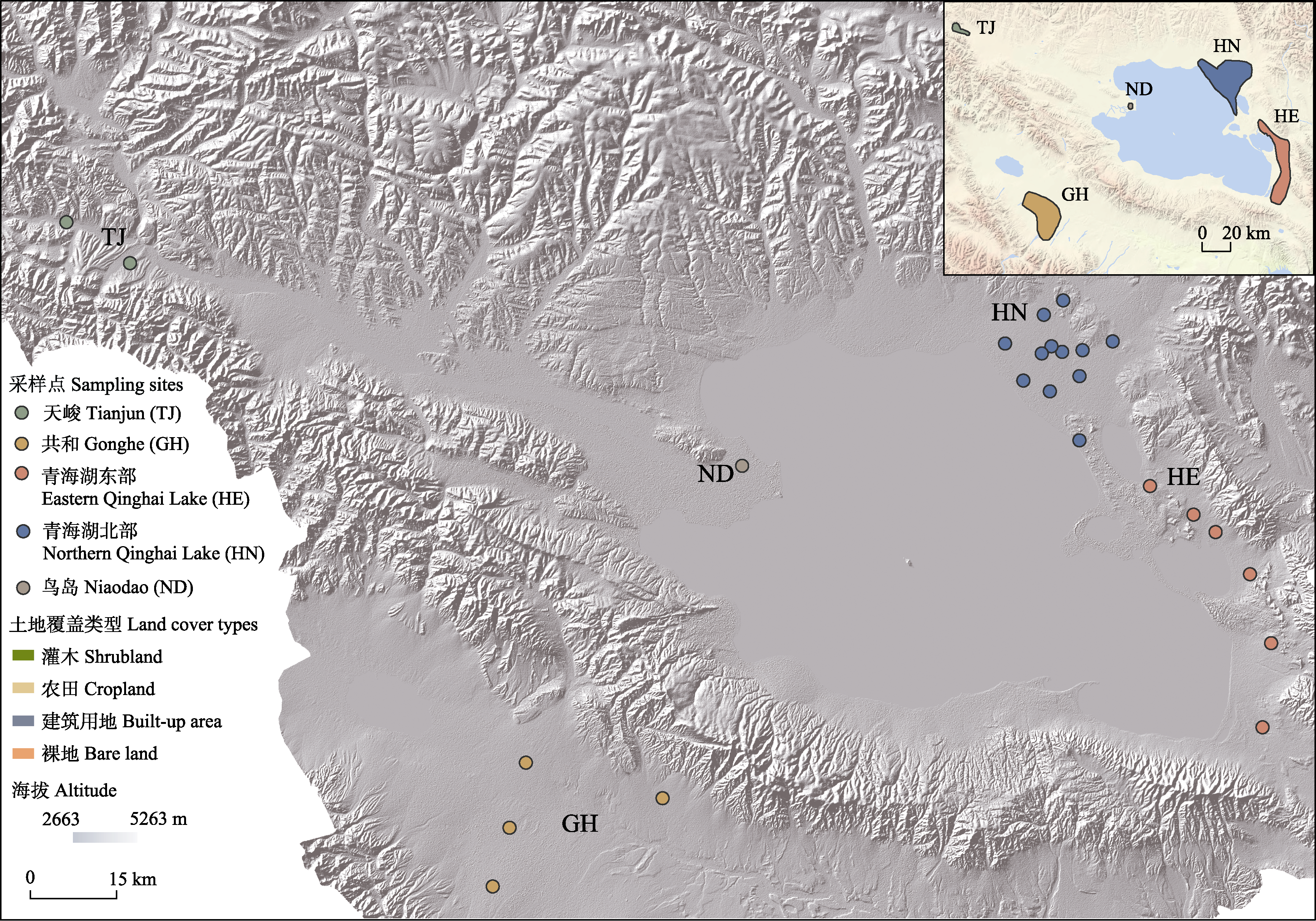
Fig. 1 Geographical populations and fecal sampling sites of Procapra przewalskii. The inset in the upper right shows the distribution ranges of the five extant geographic populations of P. przewalskii, cited and modified from the IUCN Red List account for P. przewalskii (IUCN SSC Antelope Specialist Group, 2016). HN, Northern Qinghai Lake population; HE, Eastern Qinghai Lake population; GH, Gonghe population; TJ, Tianjun population; ND, Niaodao population.
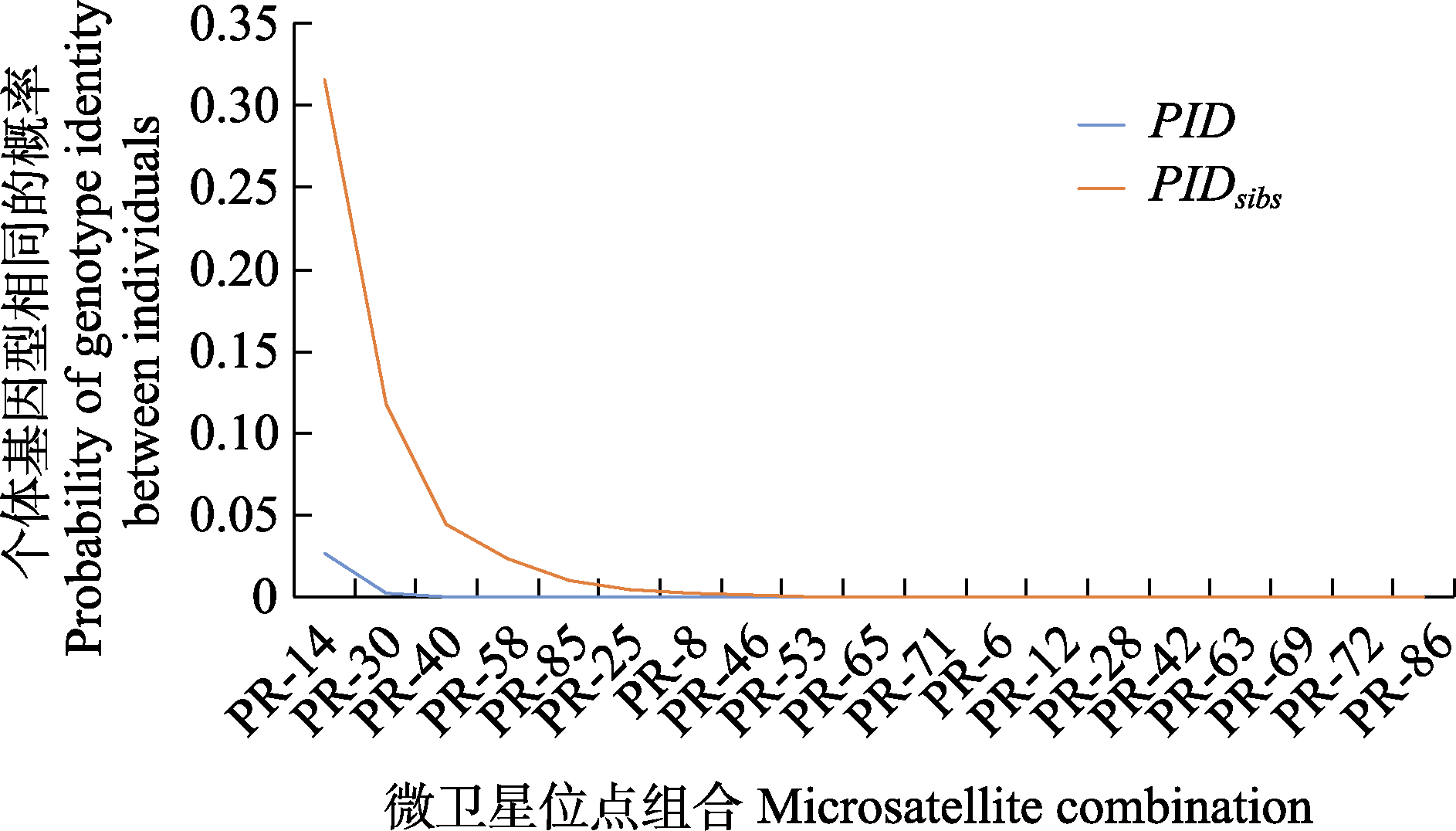
Fig. 2 Results of cumulative gene locus identity consistency resolution testing for the Procapra przewalskii. PID, Probability of identity for individuals; PIDsibs, Probability of identity for siblings.
| 种群 Population | 保留样本数 Retained sample size | 单倍型数 Number of haplotypes (h) | 特有单倍型数 Number of private haplotypes (Ph) | 单倍型多样性 Haplotype diversity (Hd) | 核苷酸多样性 Nucleotide diversity (π) |
|---|---|---|---|---|---|
| 青海湖北部 Northern Qinghai Lake (HN) | 176 | 41 | 33 | 0.864 ± 0.019 | 0.0046 ± 0.0021 |
| 青海湖东部 Eastern Qinghai Lake (HE) | 47 | 18 | 12 | 0.892 ± 0.030 | 0.0022 ± 0.0011 |
| 共和 Gonghe (GH) | 28 | 14 | 10 | 0.902 ± 0.042 | 0.0047 ± 0.0022 |
| 天峻 Tianjun (TJ) | 23 | 9 | 3 | 0.802 ± 0.060 | 0.0012 ± 0.0007 |
| 鸟岛 Niaodao (ND) | 13 | 2 | 0 | 0.154 ± 0.126 | 0.0002 ± 0.0002 |
| 总体 Total | 287 | 67 | 58 | 0.879 ± 0.016 | 0.0039 ± 0.0020 |
Table 1 Genetic diversity indices of mitochondrial DNA in Procapra przewalskii
| 种群 Population | 保留样本数 Retained sample size | 单倍型数 Number of haplotypes (h) | 特有单倍型数 Number of private haplotypes (Ph) | 单倍型多样性 Haplotype diversity (Hd) | 核苷酸多样性 Nucleotide diversity (π) |
|---|---|---|---|---|---|
| 青海湖北部 Northern Qinghai Lake (HN) | 176 | 41 | 33 | 0.864 ± 0.019 | 0.0046 ± 0.0021 |
| 青海湖东部 Eastern Qinghai Lake (HE) | 47 | 18 | 12 | 0.892 ± 0.030 | 0.0022 ± 0.0011 |
| 共和 Gonghe (GH) | 28 | 14 | 10 | 0.902 ± 0.042 | 0.0047 ± 0.0022 |
| 天峻 Tianjun (TJ) | 23 | 9 | 3 | 0.802 ± 0.060 | 0.0012 ± 0.0007 |
| 鸟岛 Niaodao (ND) | 13 | 2 | 0 | 0.154 ± 0.126 | 0.0002 ± 0.0002 |
| 总体 Total | 287 | 67 | 58 | 0.879 ± 0.016 | 0.0039 ± 0.0020 |
| 种群 Population | 平均等位基因数 Number of alleles (Na) | 有效等位基因数 Effective number of alleles (Ne) | 观测杂合度 Observed heterozygosity (Ho) | 期望杂合度 Expected heterozygosity (He) |
|---|---|---|---|---|
| 青海湖北部 Northern Qinghai Lake (HN) | 8.947 ± 0.719 | 3.617 ± 0.308 | 0.703 ± 0.027 | 0.693 ± 0.022 |
| 青海湖东部 Eastern Qinghai Lake (HE) | 6.474 ± 0.421 | 3.373 ± 0.238 | 0.619 ± 0.028 | 0.678 ± 0.022 |
| 共和 Gonghe (GH) | 5.526 ± 0.377 | 3.607 ± 0.318 | 0.684 ± 0.036 | 0.681 ± 0.031 |
| 天峻 Tianjun (TJ) | 4.316 ± 0.242 | 2.632 ± 0.163 | 0.627 ± 0.043 | 0.594 ± 0.024 |
| 鸟岛 Niaodao (ND) | 3.632 ± 0.344 | 2.356 ± 0.224 | 0.563 ± 0.067 | 0.513 ± 0.040 |
| 总体 Total | 5.779 ± 0.275 | 3.117 ± 0.125 | 0.639 ± 0.019 | 0.632 ± 0.014 |
Table 2 Genetic diversity indices of microsatellite in Procapra przewalskii
| 种群 Population | 平均等位基因数 Number of alleles (Na) | 有效等位基因数 Effective number of alleles (Ne) | 观测杂合度 Observed heterozygosity (Ho) | 期望杂合度 Expected heterozygosity (He) |
|---|---|---|---|---|
| 青海湖北部 Northern Qinghai Lake (HN) | 8.947 ± 0.719 | 3.617 ± 0.308 | 0.703 ± 0.027 | 0.693 ± 0.022 |
| 青海湖东部 Eastern Qinghai Lake (HE) | 6.474 ± 0.421 | 3.373 ± 0.238 | 0.619 ± 0.028 | 0.678 ± 0.022 |
| 共和 Gonghe (GH) | 5.526 ± 0.377 | 3.607 ± 0.318 | 0.684 ± 0.036 | 0.681 ± 0.031 |
| 天峻 Tianjun (TJ) | 4.316 ± 0.242 | 2.632 ± 0.163 | 0.627 ± 0.043 | 0.594 ± 0.024 |
| 鸟岛 Niaodao (ND) | 3.632 ± 0.344 | 2.356 ± 0.224 | 0.563 ± 0.067 | 0.513 ± 0.040 |
| 总体 Total | 5.779 ± 0.275 | 3.117 ± 0.125 | 0.639 ± 0.019 | 0.632 ± 0.014 |
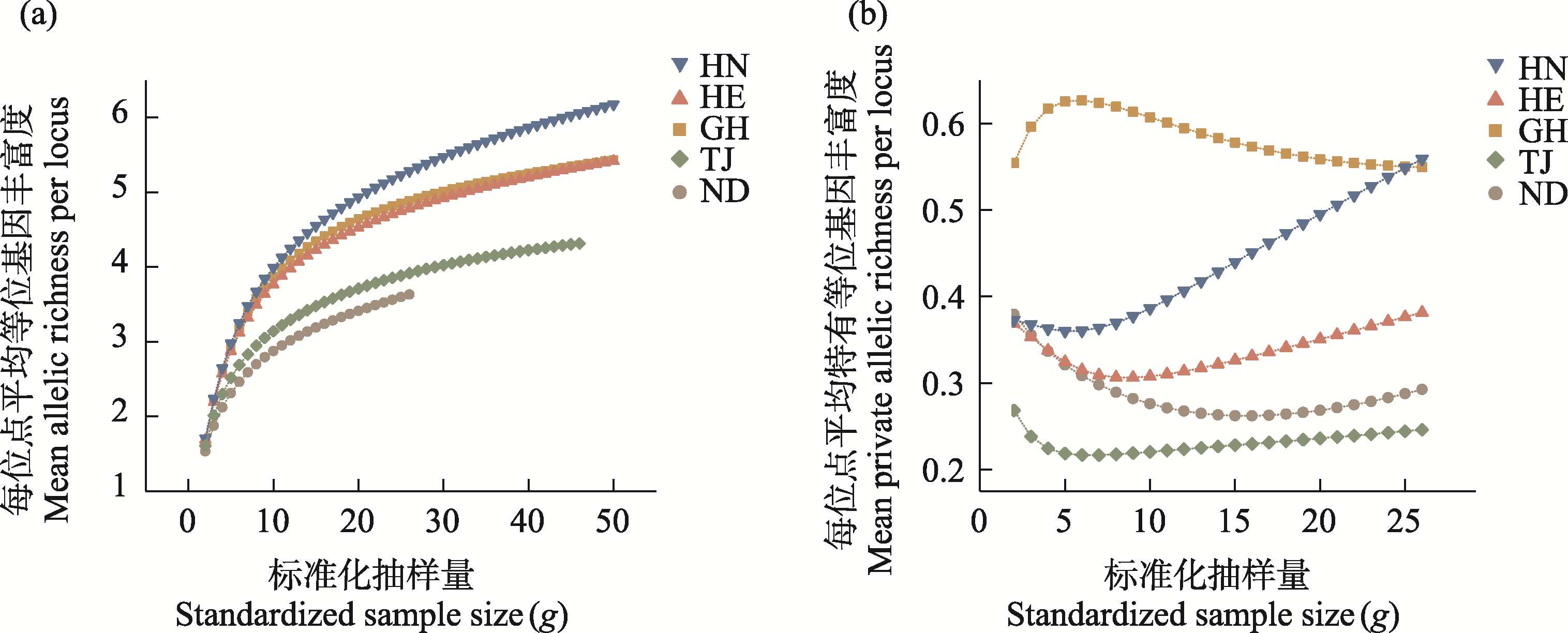
Fig. 3 Rarefaction analysis of microsatellite allelic richness in Procapra przewalskii using ADZE. (a) Rarefaction curves of allelic richness per locus; (b) Rarefaction curves of private allelic richness per locus. HN, Northern Qinghai Lake population; HE, Eastern Qinghai Lake population; GH, Gonghe population; TJ, Tianjun population; ND, Niaodao population.
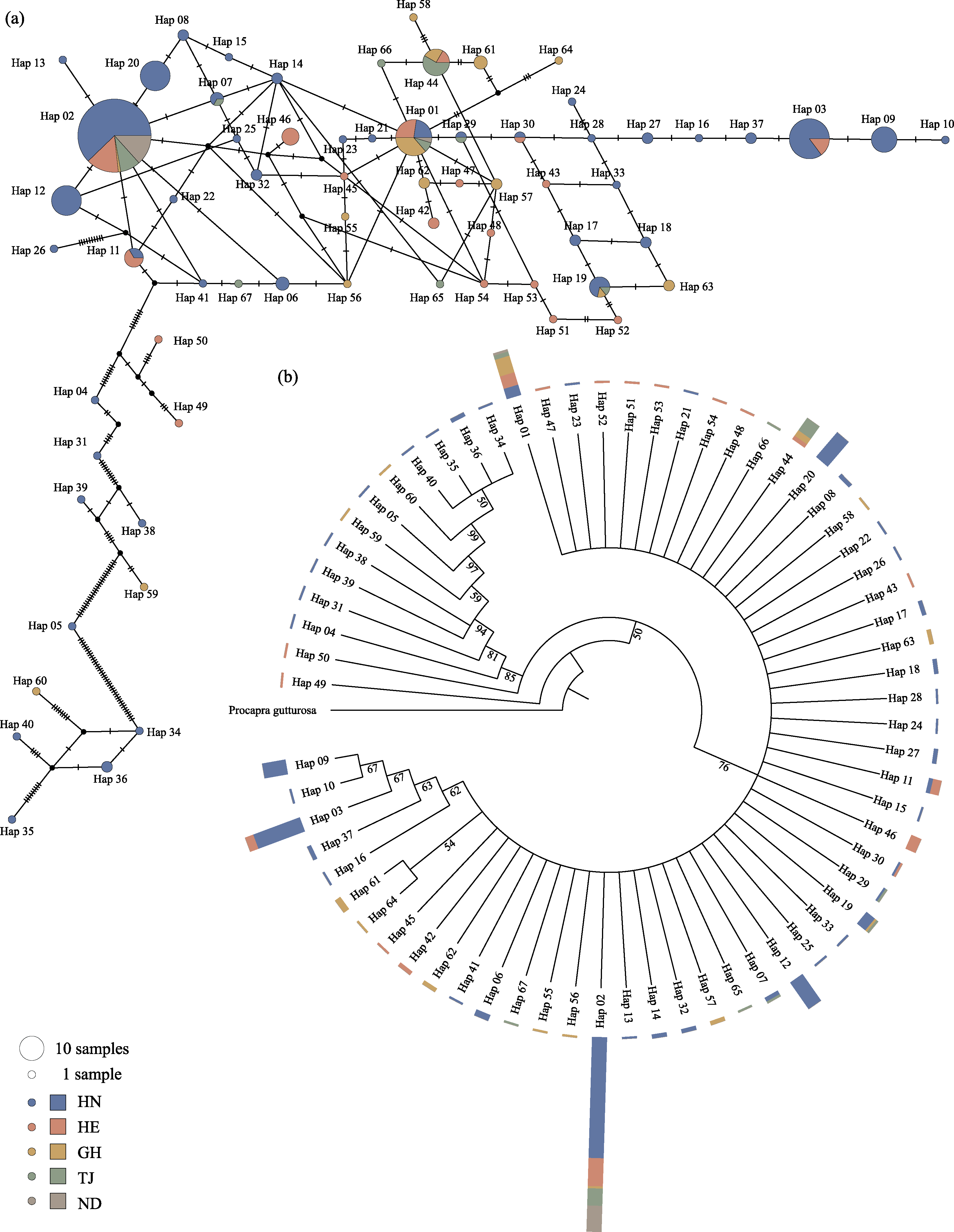
Fig. 4 Haplotype network and maximum likelihood (ML) phylogenetic tree of Procapra przewalskii. (a) Median-joining haplotype network. The size of each circular node represents the number of individuals assigned to the corresponding haplotype, and colors indicate geographic populations. HN, Northern Qinghai Lake population; HE, Eastern Qinghai Lake population; GH, Gonghe population; TJ, Tianjun population; ND, Niaodao population. Small black nodes represent median vectors (hypothetical or unsampled haplotypes). (b) ML phylogenetic tree of P. przewalskii constructed under the TIM2 + ASG + G4 model, with Procapra gutturosa as the outgroup. The height of the terminal bar corresponds to the number of individuals assigned to each haplotype, and the colors are consistent with those in the haplotype network. Branch length differences are not shown. Values on branches indicate bootstrap support, with only values greater than 50 displayed.
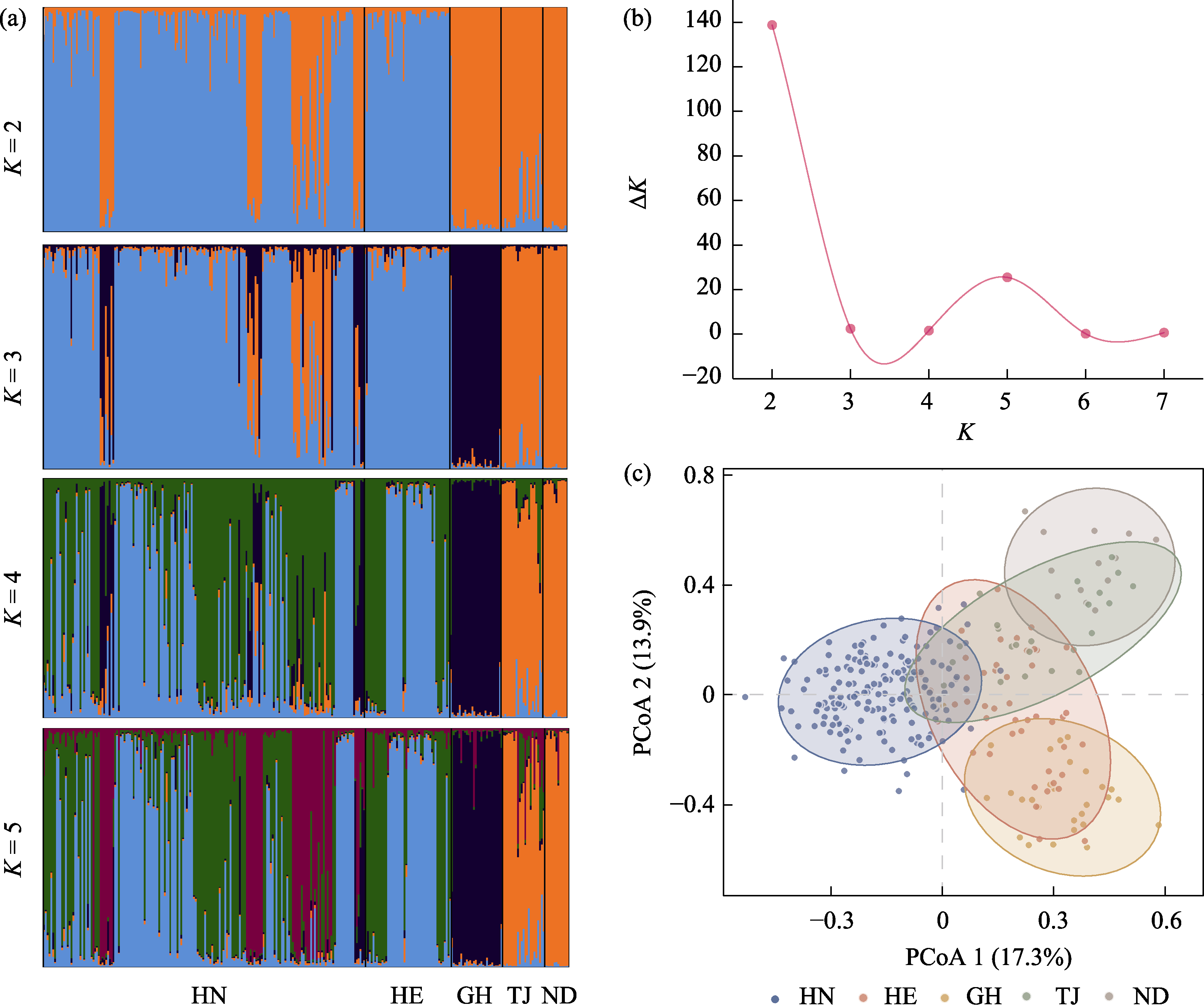
Fig. 5 Genetic structure analysis of Procapra przewalskii based on simple sequence repeats (SSR). (a) Results of Bayesian clustering analysis based on SSR data, showing the assignment of individual genetic components when the preset genetic cluster number K = 2, K = 3, K = 4 and K = 5, respectively. Each vertical bar represents one individual, with individuals ordered by population; the proportion of each color within a bar is the individual’s estimated membership coefficient (Q) in the corresponding genetic cluster. (b) Variation curve of ΔK value against the preset cluster number K calculated by Evanno algorithm, where the highest ΔK indicates the most probable number of genetic clusters. (c) Results of principal coordinate analysis (PCoA) constructed based on Smouse & Peakall (1999) genetic distance between individuals. Dots of different colors represent individuals from different geographic populations, and ellipses represent the 95% confidence intervals of the corresponding populations. HN, Northern Qinghai Lake population; HE, Eastern Qinghai Lake population; GH, Gonghe population; TJ, Tianjun population; ND, Niaodao population.
| 分子标记 Marker | 变异来源 Source of variation | 自由度 df | 平方和 Sum of squares | 变异组成 Variance components | 变异百分比 Percentage of variation (%) | 遗传分化指数 Fixation index (FST) |
|---|---|---|---|---|---|---|
| 线粒体DNA Mitochondrial DNA (mtDNA) | 种群间 Among populations | 4 | 63.371 | 0.275 | 5.89 | |
| 种群内 Within populations | 282 | 1,241.548 | 4.403 | 94.11 | ||
| 总计 Total | 286 | 1,304.919 | 4.678 | 100.00 | 0.059 | |
| 微卫星 Microsatellite (SSR) | 种群间 Among populations | 4 | 271.743 | 0.736 | 10.00 | |
| 种群内 Within populations | 569 | 3,715.743 | 6.532 | 90.00 | ||
| 总计 Total | 573 | 3,987.486 | 7.268 | 100.00 | 0.101 |
Table 3 Results of analysis of molecular variance (AMOVA) in Procapra przewalskii
| 分子标记 Marker | 变异来源 Source of variation | 自由度 df | 平方和 Sum of squares | 变异组成 Variance components | 变异百分比 Percentage of variation (%) | 遗传分化指数 Fixation index (FST) |
|---|---|---|---|---|---|---|
| 线粒体DNA Mitochondrial DNA (mtDNA) | 种群间 Among populations | 4 | 63.371 | 0.275 | 5.89 | |
| 种群内 Within populations | 282 | 1,241.548 | 4.403 | 94.11 | ||
| 总计 Total | 286 | 1,304.919 | 4.678 | 100.00 | 0.059 | |
| 微卫星 Microsatellite (SSR) | 种群间 Among populations | 4 | 271.743 | 0.736 | 10.00 | |
| 种群内 Within populations | 569 | 3,715.743 | 6.532 | 90.00 | ||
| 总计 Total | 573 | 3,987.486 | 7.268 | 100.00 | 0.101 |
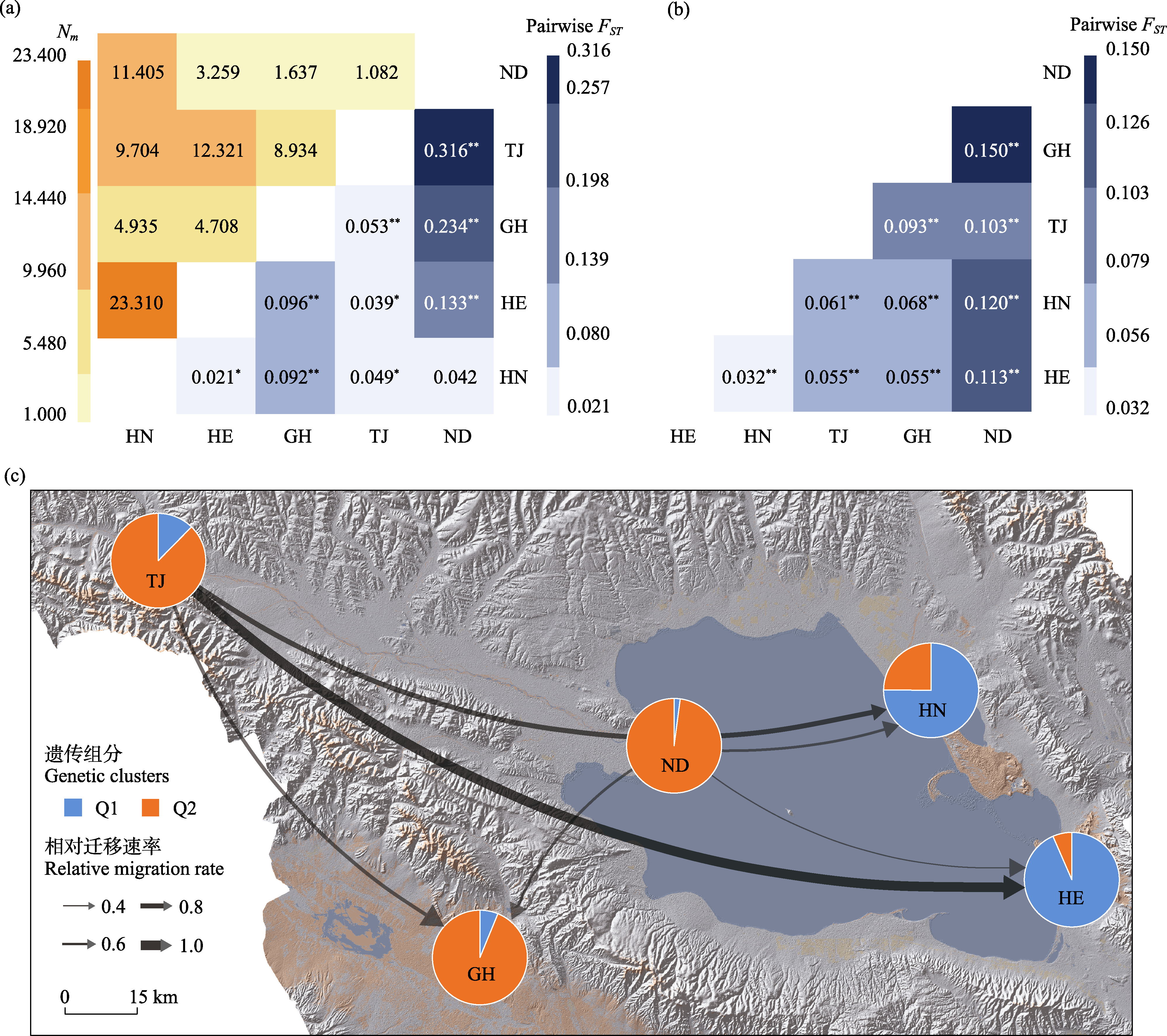
Fig. 6 Genetic differentiation, gene flow and directional migration network among geographic populations of Procapra przewalskii. (a) Heatmap of Pairwise FST and gene flow (Nm) matrix among populations constructed based on mtDNA haplotypes. Pairwise FST values are shown below the diagonal, and the corresponding Nm values above the diagonal. (b) Heatmap of Pairwise FST among populations constructed based on SSR data. (c) Directional relative Nm migration network among populations constructed via the divMigrate method. Pie charts represent the proportional membership (ancestry proportions) of each geographic population to genetic clusters Q1 and Q2 inferred at the optimal number of genetic clusters K = 2. Arrows represent the direction and relative migration rate between populations, with arrow thickness positively correlated with the migration rate. HN, Northern Qinghai Lake population; HE, Eastern Qinghai Lake population; GH, Gonghe population; TJ, Tianjun population; ND, Niaodao population. * P < 0.05; ** P < 0.01.
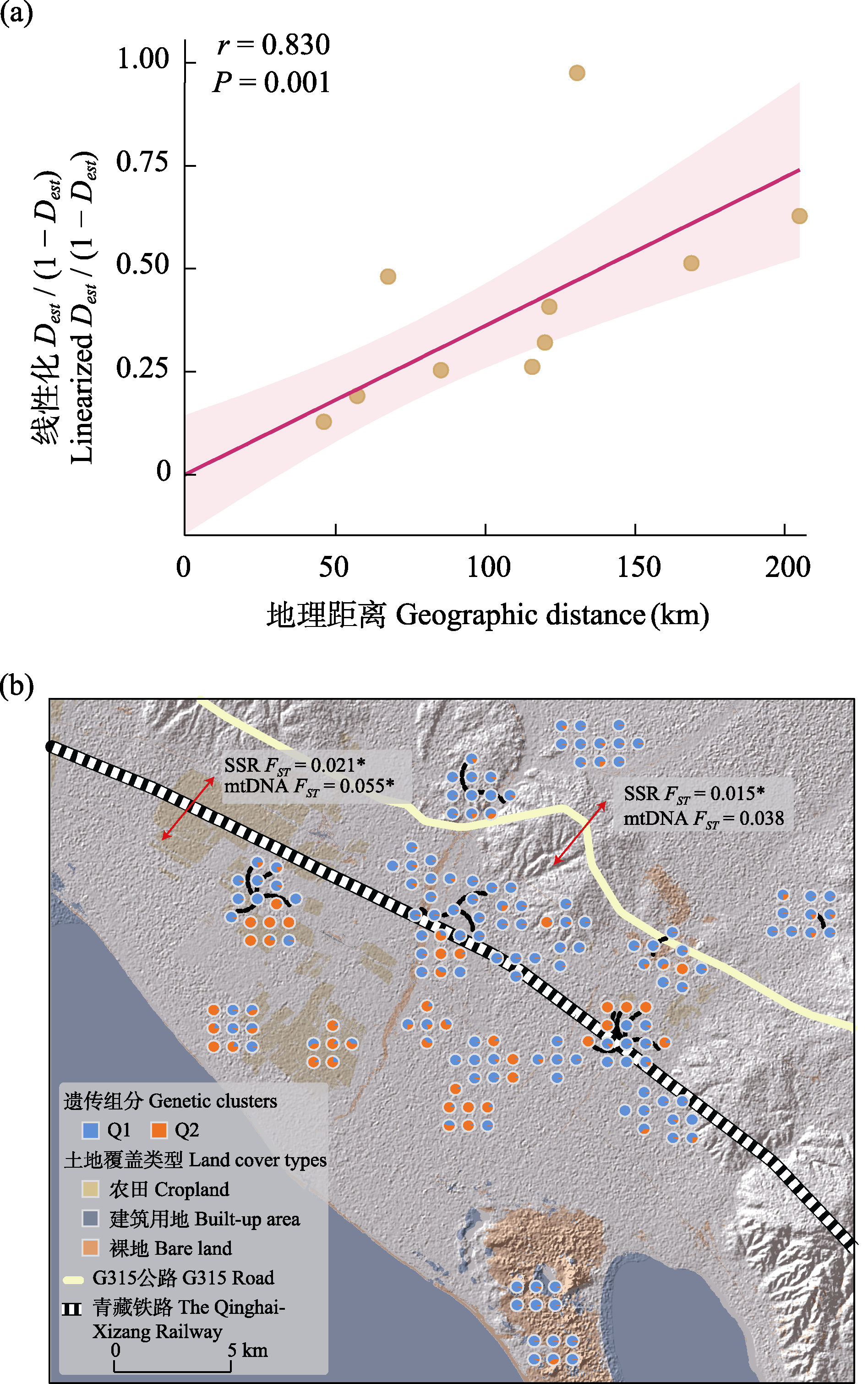
Fig. 7 Effects of geographic isolation and human activities on Procapra przewalskii. (a) Mantel test for isolation by distance (IBD) based on microsatellite data. Each point represents one pairwise population comparison; the solid line is the ordinary least-squares linear fit and the shaded band its 95% confidence interval. Significance was assessed with a Mantel permutation test. (b) Relationships among individuals, ancestral genetic components, Pairwise FST values on both sides of the railway and highway, and transportation infrastructure within the HN population. Q1 and Q2 represent the two genetic components at the optimal number of genetic clusters K = 2. SSR FST and mtDNA FST denote the pairwise genetic differentiation indices (FST) calculated from microsatellite and mitochondrial DNA data, respectively. Red arrows indicate FST values between groups on opposite sides of the railway and highway, respectively. * P < 0.05.
| 种群 Population | Tajima’s D | Fu’s FS | 平方和偏差 Sum of squared deviations test (SSD) | 粗糙度指数 Harpending’s raggedness index (Hri) |
|---|---|---|---|---|
| 青海湖北部 Northern Qinghai Lake (HN) | -1.270 | -3.750 | 0.018 | 0.024 |
| 青海湖东部 Eastern Qinghai Lake (HE) | -0.840 | -3.480 | 0.011 | 0.031 |
| 共和 Gonghe (GH) | -2.120** | 0.500 | 0.056 | 0.010 |
| 天峻 Tianjun (TJ) | 1.000 | -1.540 | 0.033 | 0.103 |
| 总体 Total | -1.430* | -22.900** | 0.005 | 0.011 |
Table 4 Results of neutrality test and mismatch distribution analysis in Procapra przewalskii
| 种群 Population | Tajima’s D | Fu’s FS | 平方和偏差 Sum of squared deviations test (SSD) | 粗糙度指数 Harpending’s raggedness index (Hri) |
|---|---|---|---|---|
| 青海湖北部 Northern Qinghai Lake (HN) | -1.270 | -3.750 | 0.018 | 0.024 |
| 青海湖东部 Eastern Qinghai Lake (HE) | -0.840 | -3.480 | 0.011 | 0.031 |
| 共和 Gonghe (GH) | -2.120** | 0.500 | 0.056 | 0.010 |
| 天峻 Tianjun (TJ) | 1.000 | -1.540 | 0.033 | 0.103 |
| 总体 Total | -1.430* | -22.900** | 0.005 | 0.011 |
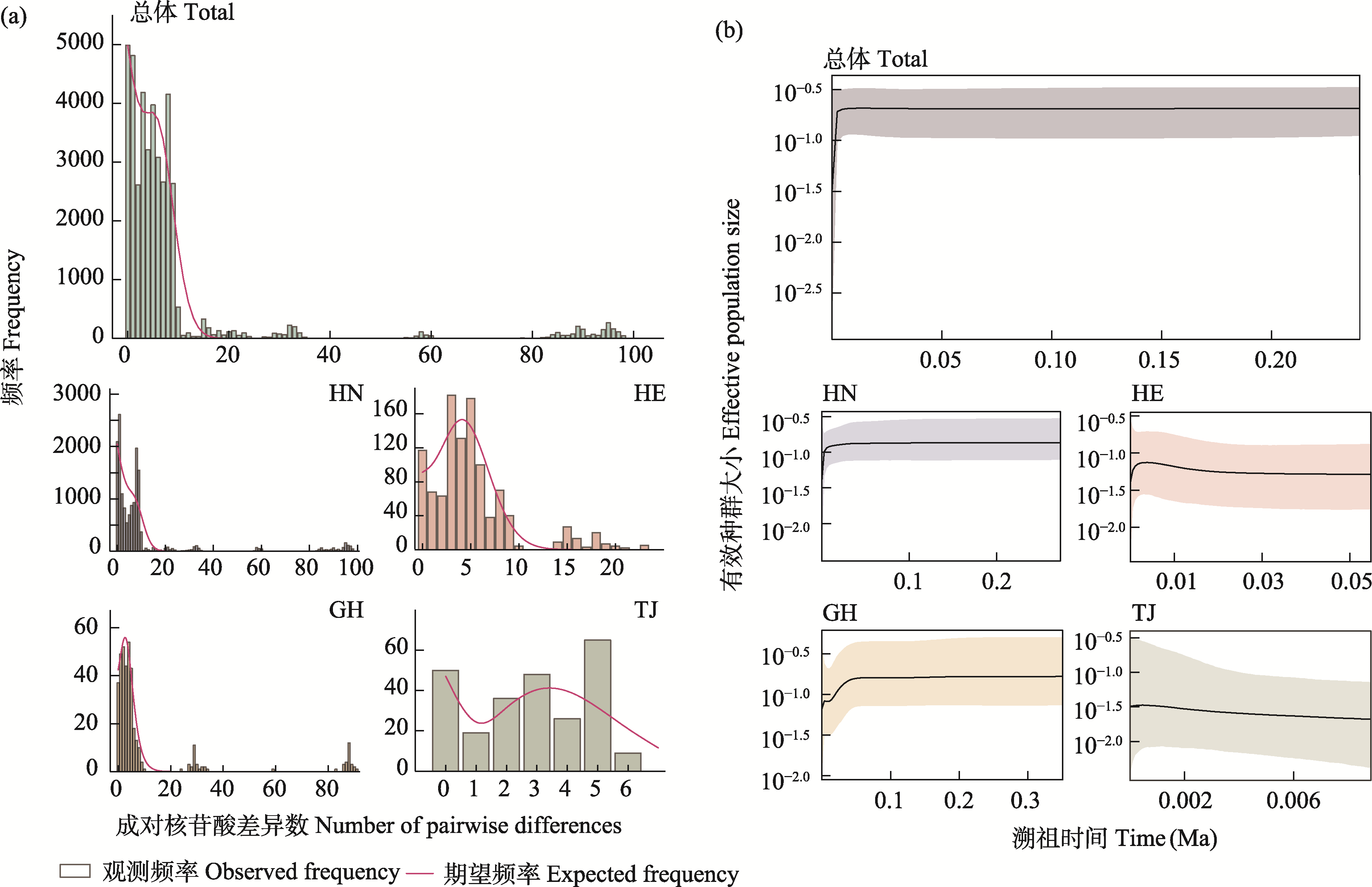
Fig. 8 Demographic history of Procapra przewalskii. (a) Mismatch distribution analysis based on mtDNA haplotypes. (b) Bayesian skyline plot (BSP) showing demographic history. The red curve represents the median estimate of effective population size, and the shaded area around the curve indicates the 95% highest posterior density interval. HN, Northern Qinghai Lake population; HE, Eastern Qinghai Lake population; GH, Gonghe population; TJ, Tianjun population; ND, Niaodao population. The ND population was excluded from the analysis because its coalescent time was too short.
| [1] | Ahrens CW, Miller AD, Silver LW, McLennan EA, Hogg CJ, Weeks AR (2026) Escaping bottlenecks: The demographic path to genetic recovery in koalas (Phascolarctos cinereus). Science, 391, 1010-1014. |
| [2] | Altschul SF, Madden TL, Schäffer AA, Zhang J, Zhang Z, Miller W, Lipman DJ (1997) Gapped BLAST and PSI-BLAST: A new generation of protein database search programs. Nucleic Acids Research, 25, 3389-3402. |
| [3] | Bachtrog D, Agis M, Imhof M, Schlötterer C (2000) Microsatellite variability differs between dinucleotide repeat motifs-Evidence from Drosophila melanogaster. Molecular Biology and Evolution, 17, 1277-1285. |
| [4] | Bu CF, Zheng XC, Zhao XT, Xu TY, Bai X, Jia YK, Chen ML, Hao LL, Xiao JF, Zhang Z, Zhao WM, Tang BX, Bao YM (2024) GenBase: A nucleotide sequence database. Genomics, Proteomics & Bioinformatics, 22, qzae047. |
| [5] | Cai ZY, Zhang JJ, Song PF, Zhang TZ (2022) Protecting Przewalski’s gazelle. Oryx, 56, 652-653. |
| [6] | Cawthorn DM, Steinman HA, Witthuhn RC (2012) Evaluation of the 16S and 12S rRNA genes as universal markers for the identification of commercial fish species in South Africa. Gene, 491, 40-48. |
| [7] | Chakraborty R, Kimmel M, Stivers DN, Davison LJ, Deka R (1997) Relative mutation rates at di-, tri-, and tetranucleotide microsatellite loci. Proceedings of the National Academy, USA, 94, 1041-1046. |
| [8] | Chen FH, Dong GH, Zhang DJ, Liu XY, Jia X, An CB, Ma MM, Xie YW, Barton L, Ren XY, Zhao ZJ, Wu XH, Jones MK (2015) Agriculture facilitated permanent human occupation of the Tibetan Plateau after 3600 B.P. Science, 347, 248-250. |
| [9] | Drummond AJ, Rambaut A (2007) BEAST: Bayesian evolutionary analysis by sampling trees. BMC Evolutionary Biology, 7, 214. |
| [10] | Du YR, Zou XY, Xu YT, Guo XY, Li S, Zhang XZ, Su MY, Ma JB, Guo SC (2016) Microsatellite loci analysis reveals post-bottleneck recovery of genetic diversity in the Tibetan Antelope. Scientific Reports, 6, 35501. |
| [11] | Earl DA, vonHoldt BM (2012) STRUCTURE HARVESTER: A website and program for visualizing STRUCTURE output and implementing the Evanno method. Conservation Genetics Resources, 4, 359-361. |
| [12] | Ellegren H (2004) Microsatellites: Simple sequences with complex evolution. Nature Reviews Genetics, 5, 435-445. |
| [13] | Excoffier L, Lischer HEL (2010) Arlequin suite ver 3.5: A new series of programs to perform population genetics analyses under Linux and Windows. Molecular Ecology Resources, 10, 564-567. |
| [14] | Fagan WF, Holmes EE (2006) Quantifying the extinction vortex. Ecology Letters, 9, 51-60. |
| [15] | Frankham R (2015) Genetic rescue of small inbred populations: Meta-analysis reveals large and consistent benefits of gene flow. Molecular Ecology, 24, 2610-2618. |
| [16] | Grant WS, Bowen BW (1998) Shallow population histories in deep evolutionary lineages of marine fishes: Insights from sardines and anchovies and lessons for conservation. Journal of Heredity, 89, 415-426. |
| [17] | Gupta SK, Kumar A, Angom S, Singh B, Ghazi MGU, Tuboi C, Hussain SA (2018) Genetic analysis of endangered hog deer (Axis porcinus) reveals two distinct lineages from the Indian subcontinent. Scientific Reports, 8, 16308. |
| [18] | Han YY, Fehringer LK, Wang J, Yao JT, Kirkpatrick AG, Scott JR, Chen XC, Wang QQ, Ungar PS, Zhang DJ (2024) Paleodiet reconstruction of Procapra przewalskii from the Qinghai Lake Basin during the Early and Middle Holocene. Journal of Archaeological Science: Reports, 60, 104808. |
| [19] | He RM, Xu XY, Meng XZ, Lu H, Guo JM, Tang HP, Lyu WY, Zhou J, He RT, He RC, Li JL (2026) Genome-wide microsatellite marker development and genetic diversity analysis of Mud Carp (Cirrhinus molitorella) across geographic populations. Journal of Shanghai Ocean University, https://link.cnki.net/urlid/31.2024.S.20260416.1519.002. (in Chinese with English abstract) |
| [何柔梦, 徐晓雁, 孟新展, 陆昊, 郭加民, 唐合平, 吕汶姚, 周洁, 何锐涛, 何锐聪, 李家乐 (2026) 鲮鱼基因组微卫星标记开发及其在不同地理群体中的遗传多样性分析. 上海海洋大学学报, https://link.cnki.net/urlid/31.2024.S.20260416.1519.002.] | |
| [20] | Hedrick PW, Garcia-Dorado A (2016) Understanding inbreeding depression, purging, and genetic rescue. Trends in Ecology & Evolution, 31, 940-952. |
| [21] | Ho SYW, Lanfear R, Bromham L, Phillips MJ, Soubrier J, Rodrigo AG, Cooper A (2011) Time-dependent rates of molecular evolution. Molecular Ecology, 20, 3087-3101. |
| [22] | IUCN SSC Antelope Specialist Group (2016) IUCN Red List of Threatened Species: Procapra przewalskii. http://dx.doi.org/10.2305/IUCN.UK.2016-3.RLTS.T18230A50192807.en. (accessed on 2026-05-01) |
| [23] | Jakobsson M, Rosenberg NA (2007) CLUMPP: A cluster matching and permutation program for dealing with label switching and multimodality in analysis of population structure. Bioinformatics, 23, 1801-1806. |
| [24] | Jiang ZG, Feng ZJ, Wang ZW, Chen LW, Cai P, Li YB (1995) Historical and current distributions of Przewalski’s gazelle. Acta Theriologica Sinica, 15, 241-245. (in Chinese with English abstract) |
| [蒋志刚, 冯祚建, 王祖望, 陈立伟, 蔡平, 李永波 (1995) 普氏原羚的历史分布与现状. 兽类学报, 15, 241-245.] | |
| [25] | Jiang ZG, Lei RH, Liu BW, Li CW (2003) A review on the researches of Przewalski’s gazelle. Chinese Journal of Zoology, 38, 129-132. (in Chinese with English abstract) |
| [蒋志刚, 雷润华, 刘丙万, 李春旺 (2003) 普氏原羚研究概述. 动物学杂志, 38, 129-132.] | |
| [26] | Kaczensky P, Kovtun E, Habibrakhmanov R, Hemami MR, Khaleghi A, Linnell JDC, Rustamov E, Sklyarenko S, Walzer C, Zuther S, Kuehn R (2018) Genetic characterization of free-ranging Asiatic wild ass in Central Asia as a basis for future conservation strategies. Conservation Genetics, 19, 1169-1184. |
| [27] | Kalyaanamoorthy S, Minh BQ, Wong TKF, von Haeseler A, Jermiin LS (2017) ModelFinder: Fast model selection for accurate phylogenetic estimates. Nature Methods, 14, 587-589. |
| [28] | Kocher TD, Thomas WK, Meyer A, Edwards SV, Pääbo S, Villablanca FX, Wilson AC (1989) Dynamics of mitochondrial DNA evolution in animals: Amplification and sequencing with conserved primers. 86, 6196-6200. |
| [29] | Kuang WM, Zhang HF, Jiang YL, Hu H, Huang W, Zhang YP, Wu XM, Yu L (2026) Genomic insights into recurrent demographic collapses and recovery dynamics in Tibetan antelopes (Pantholops hodgsoni). Science China Life Sciences, 69, 1371-1384. |
| [30] | Lei RH, Hu ZA, Jiang ZG, Yang WL (2003) Phylogeography and genetic diversity of the critically endangered Przewalski’s gazelle. Animal Conservation, 6, 361-367. |
| [31] | Leigh JW, Bryant D (2015) POPART: Full-feature software for haplotype network construction. Methods in Ecology and Evolution, 6, 1110-1116. |
| [32] | Lenney WC, Serfass TL, Cogan R, Rhodes OE Jr (2002) Microsatellite variation in the reintroduced Pennsylvania elk herd. Molecular Ecology, 11, 1299-1310. |
| [33] | Leslie DM Jr, Groves CP, Abramov AV (2010) Procapra przewalskii (Artiodactyla: Bovidae). Mammalian Species, 42, 124-137. |
| [34] | Letunic I, Bork P (2024) Interactive Tree of Life (iTOL) v6: Recent updates to the phylogenetic tree display and annotation tool. Nucleic Acids Research, 52, W78-W82. |
| [35] | Li CL, Jiang ZG, Ping XG, Cai J, You ZQ, Li CW, Wu YL (2012) Current status and conservation of the endangered Przewalski’s gazelle Procapra przewalskii, endemic to the Qinghai-Tibetan Plateau, China. Oryx, 46, 145-153. |
| [36] | Lopez JV, Culver M, Stephens JC, Johnson WE, O’Brien SJ (1997) Rates of nuclear and cytoplasmic mitochondrial DNA sequence divergence in mammals. Molecular Biology and Evolution, 14, 277-286. |
| [37] | Ma MM, Ren LL, Li ZP, Wang QQ, Zhao XY, Li R (2021) Early emergence and development of pastoralism in Gan-Qing region from the perspective of isotopes. Archaeological and Anthropological Sciences, 13, 93. |
| [38] | Moritz C (1994) Defining ‘evolutionarily significant units’ for conservation. Trends in Ecology & Evolution, 9, 373-375. |
| [39] | Nguyen LT, Schmidt HA, von Haeseler A, Minh BQ (2015) IQ-TREE: A fast and effective stochastic algorithm for estimating maximum-likelihood phylogenies. Molecular Biology and Evolution, 32, 268-274. |
| [40] | Peakall R, Smouse PE (2012) GenAlEx 6.5: Genetic analysis in Excel. Population genetic software for teaching and research-An update. Bioinformatics, 28, 2537-2539. |
| [41] | Peng Q, E CY, Li XZ, Sun YJ, Zhang J, Zhang SQ, Shi YK, Ji XB, Zhang ZK (2024) Holocene paleoclimate changes around Qinghai Lake in the northeastern Qinghai-Tibet Plateau: Insights from isotope geochemistry of aeolian sediment. Atmosphere, 15, 833. |
| [42] | Ping XG, Li CW, Li CL, Tang SH, Fang HX, Cui SP, Chen J, Wang EG, He YB, Cai P, Zhang Y, Wu YL, Jiang ZG (2018) The distribution, population and conservation status of Przewalski’s gazelle, Procapra przewalskii. Biodiversity Science, 26, 177-184. (in Chinese with English abstract) |
| [平晓鸽, 李春旺, 李春林, 汤宋华, 方红霞, 崔绍朋, 陈静, 王恩光, 何玉邦, 蔡平, 张毓, 吴永林, 蒋志刚 (2018) 普氏原羚分布、种群和保护现状. 生物多样性, 26, 177-184.] | |
| [43] | Pritchard JK, Stephens M, Donnelly P (2000) Inference of population structure using multilocus genotype data. Genetics, 155, 945-959. |
| [44] | Ramadan HAI (2011) Sequence of specific mitochondrial 16S rRNA gene fragment from Egyptian buffalo is used as a pattern for discrimination between river buffaloes, cattle, sheep and goats. Molecular Biology Reports, 38, 3929-3934. |
| [45] | Rosenberg NA (2004) Distruct: A program for the graphical display of population structure. Molecular Ecology Notes, 4, 137-138. |
| [46] | Rousset F (2008) GENEPOP’007: A complete re-implementation of the GENEPOP software for Windows and Linux. Molecular Ecology Resources, 8, 103-106. |
| [47] | Rozas J, Ferrer-Mata A, Sánchez-DelBarrio JC, Guirao-Rico S, Librado P, Ramos-Onsins SE, Sánchez-Gracia A (2017) DnaSP 6:DNA sequence polymorphism analysis of large data sets. Molecular Biology and Evolution, 34, 3299-3302. |
| [48] | Ryder OA (1986) Species conservation and systematics: The dilemma of subspecies. Trends in Ecology & Evolution, 1, 9-10. |
| [49] | Ryman N, Palm S (2006) POWSIM: A computer program for assessing statistical power when testing for genetic differentiation. Molecular Ecology Notes, 6, 600-602. |
| [50] | Sharief A, Singh VK, Kumar V, Singh H, Ghosh A, Joshi BD, Ramesh C, Thakur M, Sharma LK (2025) Range-wide understanding of genetic diversity and population structure of endangered Kashmir musk deer in North-Western Himalaya. Molecular Biology Reports, 52, 136. |
| [51] | Slate J, Marshall T, Pemberton J (2000) A retrospective assessment of the accuracy of the paternity inference program CERVUS. Molecular Ecology, 9, 801-808. |
| [52] | Smouse PE, Peakall R (1999) Spatial autocorrelation analysis of individual multiallele and multilocus genetic structure. Heredity, 82, 561-573. |
| [53] | Song YG, Meng HH, Huang XL, Wang AY (2025) Genetic diversity: An important foundation for maintaining biodiversity and a core task of biodiversity conservation. Biodiversity Science, 33, 25383. (in Chinese with English abstract) |
| [宋以刚, 孟宏虎, 黄晓磊, 王蔼英 (2025) 遗传多样性: 生物多样性维持的重要基础和保护的核心任务. 生物多样性, 33, 25383.] | |
| [54] | Sundqvist L, Keenan K, Zackrisson M, Prodöhl P, Kleinhans D (2016) Directional genetic differentiation and relative migration. Ecology and Evolution, 6, 3461-3475. |
| [55] | Szpiech ZA, Jakobsson M, Rosenberg NA (2008) ADZE: A rarefaction approach for counting alleles private to combinations of populations. Bioinformatics, 24, 2498-2504. |
| [56] | Taberlet P, Griffin S, Goossens B, Questiau S, Manceau V, Escaravage N, Waits LP, Bouvet J (1996) Reliable genotyping of samples with very low DNA quantities using PCR. Nucleic Acids Research, 24, 3189-3194. |
| [57] | Van Oosterhout C, Hutchinson WF, Wills DPM, Shipley P (2004) Micro-checker: Software for identifying and correcting genotyping errors in microsatellite data. Molecular Ecology Notes, 4, 535-538. |
| [58] | Verma SK, Singh L (2003) Novel universal primers establish identity of an enormous number of animal species for forensic application. Molecular Ecology Notes, 3, 28-31. |
| [59] | Wang JL (2011) COANCESTRY: A program for simulating, estimating and analysing relatedness and inbreeding coefficients. Molecular Ecology Resources, 11, 141-145. |
| [60] | Whiteley AR, Fitzpatrick SW, Funk WC, Tallmon DA (2015) Genetic rescue to the rescue. Trends in Ecology & Evolution, 30, 42-49. |
| [61] | Yang J, Jiang ZG (2011) Genetic diversity, population genetic structure and demographic history of Przewalski’s gazelle (Procapra przewalskii): Implications for conservation. Conservation Genetics, 12, 1457-1468. |
| [62] | Yang J, Jiang ZG, Zeng Y, Turghan M, Fang HX, Li CW (2011) Effect of anthropogenic landscape features on population genetic differentiation of Przewalski’s gazelle: Main role of human settlement. PLoS ONE, 6, e20144. |
| [63] | Yang L, Jin H, Yang QE, Poyarkov A, Korablev M, Rozhnov V, Shao JJ, Fu QM, Hernandez-Blanco JA, Zhan XJ, Yu L, Alexandrov D, Dai QY, Munkhtsog B, Du X, Munkhtsog B, Ma LQ, Chen WL, Malykh S, Jin YP, He SF, Zhang TZ, Wu GS, Shi YH, Wei FW, Hu YB (2025) Genomic evidence for low genetic diversity but purging of strong deleterious variants in snow leopards. Genome Biology, 26, 94. |
| [64] | Ye RR, Cai P, Peng M, Lu XF, Ma SZ (2006) The investigation about distribution and population size of Przewalski’s gazelle (Procapra przewalskii) in Qinghai Province, China. Acta Theriologica Sinica, 26, 373-379. (in Chinese with English abstract) |
| [叶润蓉, 蔡平, 彭敏, 卢学峰, 马世震 (2006) 普氏原羚的分布和种群数量调查. 兽类学报, 26, 373-379.] | |
| [65] | Yu H, Song SY, Liu JZ, Li S, Zhang L, Wang DJ, Luo SJ (2017) Effects of the Qinghai-Tibet railway on the landscape genetics of the endangered Przewalski’s gazelle (Procapra przewalskii). Scientific Reports, 7, 17983. |
| [66] | Zhang FF, Jiang ZG, Xu AC, Zeng Y, Li CW (2013) Recent geological events and intrinsic behavior influence the population genetic structure of the chiru and Tibetan gazelle on the Tibetan Plateau. PLoS ONE, 8, e60712. |
| [67] | Zhang NM, Cao XY, Xu QH, Huang XZ, Herzschuh U, Shen ZW, Peng W, Liu SS, Wu D, Wang J, Xia H, Zhang DJ, Chen FH (2022) Vegetation change and human-environment interactions in the Qinghai Lake Basin, northeastern Tibetan Plateau, since the last deglaciation. CATENA, 210, 105892. |
| [68] | Zhao D, Ye T, Gao FL, Jakovlić I, La Q, Tong YD, Liu X, Song R, Liu F, Lian ZM, Zou H, Li WX, Wang GT, Zeng BH, Zhang D (2025) PhyloSuite v2: The development of an all-in-one, efficient and visualization-oriented suite for molecular dating analysis and other advanced features. iMeta, 4, e70095. |
| [1] | Meng Zhang, Yanping Wang. A review of zeta diversity: Analysis methods, conservation applications, and future perspectives [J]. Biodiv Sci, 2026, 34(8): 26138-. |
| [2] | Yishuo Zhao, Yazhen Ma, Tianrui Wang, Qi Zhou, Feng Ling, Qichi Yang, Qing Wang, Yingang Li, Yingxiong Qiu. Resolving population genetic structure and developing an ex situ conservation framework for Parrotia subaequalis [J]. Biodiv Sci, 2026, 34(8): 26207-. |
| [3] | Yihao Pan, Bingran Ma, Leshan Du, Yanpeng Zhu, Xiangwen Fang, Fangzheng Liu. Characteristics of artificial light at night disturbance in the Beijing-Tianjin-Hebei region and its nature reserves [J]. Biodiv Sci, 2026, 34(8): 26245-. |
| [4] | Yu Cai, Xiaochuan Zhang, Mengjia Lian. Urban dragonfly habitats: Ecological stressors, habitat requirements and restoration strategies [J]. Biodiv Sci, 2026, 34(8): 26096-. |
| [5] | Jianping Chen, Xin Zhong, Bin Chen, Binjie Ge, Cheng Du, Yanping Gao, Li Guo, Dongmei Jin, Qixia Ma, Yonghong Hu. AI capability development for China’s national botanical garden system: A reference model, maturity assessment framework, and application architecture [J]. Biodiv Sci, 2026, 34(7): 26124-. |
| [6] | Xiufeng Sun, Xu Li, Chenglong Ding, Junru Yan, Jie Yin, Liangqian Pan. Spatial pattern, retention mechanism, and conservation strategies of ancient trees in Chongqing under the urban-rural dual structure [J]. Biodiv Sci, 2026, 34(7): 26134-. |
| [7] | Peng Xie, Zhibo Zhou, Shaogang Fan, Ping Mo, Kerui Huang, Aihua Deng, Youwei Yang, Fei Wu, Dewei Xiao, Yun Wang. Soil microbial diversity, network structure, and functional potential differ between natural and plantation forests of Cathaya argyrophylla [J]. Biodiv Sci, 2026, 34(7): 26122-. |
| [8] | Fangyuan Hua, Shuangqi Liu, Yangjing Peng, Shanxing Gong, Xiaoli Shen, Kun Jin. A framework for synergistically addressing the risk sources of biodiversity loss and climate change in protected areas and Ecological Conservation Redlines [J]. Biodiv Sci, 2026, 34(6): 25492-. |
| [9] | Weicai Chen, Guohua Yu, Yunming Mo, Yongjian Bei. Revision of the checklist of amphibian species in Guangxi, China [J]. Biodiv Sci, 2026, 34(6): 26002-. |
| [10] | Jinzhao Ke, Yuning Cao, Nan He, Bin Lü, Mona van Schingen-Khan, Thomas Ziegler, Weiguo Du, Yan Hua, Zhengjun Wu, Yin Qi. Research progress and conservation prospects for the endangered crocodile lizard (Shinisaurus crocodilurus) [J]. Biodiv Sci, 2026, 34(6): 25425-. |
| [11] | Qianqian Wang, Xiaoguo Chen, Ruifeng Zhu, Mingchun Zhang, Xin Wang, Shilin Li, Jiangcuo Renzeng, Wu Peng, Biao Yang. Ecological adaptation differences of the black musk deer and sympatric ungulates in southeastern Xizang [J]. Biodiv Sci, 2026, 34(5): 25433-. |
| [12] | Yulu Pu, Shishun Zhou, Ren Li. Ethnobotany of tropical spice plants utilized by ethnic groups in China, Myanmar and Laos [J]. Biodiv Sci, 2026, 34(5): 25041-. |
| [13] | Xiaoxu Jia, Wanqiang Chen, Xiujun Tang, Yanfeng Fan, Jing Zhang, Haiwei Wang, Yushi Gao. Genetic diversity and gene introgression of mitochondrial DNA control region in indigenous chickens from Southwest China [J]. Biodiv Sci, 2026, 34(5): 26003-. |
| [14] | Jianchao Liang, Shutian Chen, Wenxiang He, Chunni Xiong, Zhenzhou Xu, Yuanxin Huang, Yuanzhihong Liu, Lang Zhang, Huijian Hu. Wild terrestrial vertebrate resources in Guangzhou: Diversity, distribution, and conservation gaps [J]. Biodiv Sci, 2026, 34(5): 25422-. |
| [15] | Lijie Zhou, Minhui Huang, Huaijiang He, Yanxia Cheng, Chunyu Zhang, Xiuhai Zhao. Disentangling the patterns, components, and influencing factors of forest β diversity in the Xiaoxing’an Mountains, Northeast China [J]. Biodiv Sci, 2026, 34(4): 25443-. |
| Viewed | ||||||
|
Full text |
|
|||||
|
Abstract |
|
|||||
Copyright © 2026 Biodiversity Science
Editorial Office of Biodiversity Science, 20 Nanxincun, Xiangshan, Beijing 100093, China
Tel: 010-62836137, 62836665 E-mail: biodiversity@ibcas.ac.cn
