

Biodiv Sci ›› 2026, Vol. 34 ›› Issue (7): 26122. DOI: 10.17520/biods.2026122 cstr: 32101.14.biods.2026122
• Special Feature: Soil Biodiversity • Previous Articles Next Articles
Peng Xie1,#( ), Zhibo Zhou1,#(), Shaogang Fan1(), Ping Mo1(), Kerui Huang1(), Aihua Deng1(), Youwei Yang1(), Fei Wu2, Dewei Xiao3, Yun Wang1,*()(
 )
)
Received:2026-04-09
Accepted:2026-07-08
Online:2026-07-20
Published:2026-09-21
Contact:
*E-mail: wy2015@huas.edu.cn
About author:# Co-first author
Supported by:Peng Xie, Zhibo Zhou, Shaogang Fan, Ping Mo, Kerui Huang, Aihua Deng, Youwei Yang, Fei Wu, Dewei Xiao, Yun Wang. Soil microbial diversity, network structure, and functional potential differ between natural and plantation forests of Cathaya argyrophylla[J]. Biodiv Sci, 2026, 34(7): 26122.
| 林分类型 Forest stand type | 样地 Plot | 地点 Location | 海拔 Altitude (m) | 坡向 Slope aspect | 母岩 Parent material | 土壤类型 Soil type | 郁闭度 Canopy closure | 管理方式 Management regime |
|---|---|---|---|---|---|---|---|---|
| 天然林 Natural forest | 马屁股 Mapigu (CBE) | 沙角洞银杉自然保护区 Shajiaodong yinshan Natural reserve | 928 | 北坡 North slope | 石灰岩、页岩和砂岩 Limestone, shale and sandstone | 山地黄壤 Mountain yellow soil | 0.85 | 无 None |
| 乱岩洞 Luanyandong (CBY) | 1,066 | 东北坡 Northeast slope | 石灰岩、页岩和砂岩 Limestone, shale and sandstone | 山地黄壤 Mountain yellow soil | 0.90 | 无 None | ||
| 丝茅坪 Simaoping (SMP) | 八面山国家级自然保护区 Bamianshan National Nature Reserve | 1,137 | 西北坡 Northwest slope | 花岗岩和板岩 Granite and slate | 红壤和黄壤 Red soil and yellow soil | 0.85 | 无 None | |
| 脚盆寮 Jiaopenliao (JPL) | 1,213 | 西北坡 Northwest slope | 花岗岩和板岩 Granite and slate | 红壤和黄壤 Red soil and yellow soil | 0.85 | 无 None | ||
| 人工林 Plantation forest | 城步-1 Chengbu-1 | 青界山国有林场 Qingjieshan State Forest Farm | 600 | 南坡 South slope | 石灰岩、页岩和砂岩 Limestone, shale and sandstone | 山地黄壤 Mountain yellow soil | 0.60 | 粗放 Extensive |
| 新宁-1 Xinning-1 | 崀山珍稀植物研究所 Langshan Rare Plant Research Institute | 400 | 东南坡 Southeast slope | 红色砂砾岩 Red gravelly sandstone | 红壤和紫色土 Red soil and purple soil | 0.75 | 中等 Moderate | |
| 新宁-2 Xinning-2 | 400 | 东南坡 Southeast slope | 红色砂砾岩 Red gravelly sandstone | 红壤和紫色土 Red soil and purple soil | 0.75 | 中等 Moderate | ||
| 新宁-3 Xinning-3 | 400 | 东南坡 Southeast slope | 红色砂砾岩 Red gravelly sandstone | 红壤和紫色土 Red soil and purple soil | 0.75 | 中等 Moderate |
Table 1 Basic information of sampling sites in natural and plantation forests of Cathaya argyrophylla
| 林分类型 Forest stand type | 样地 Plot | 地点 Location | 海拔 Altitude (m) | 坡向 Slope aspect | 母岩 Parent material | 土壤类型 Soil type | 郁闭度 Canopy closure | 管理方式 Management regime |
|---|---|---|---|---|---|---|---|---|
| 天然林 Natural forest | 马屁股 Mapigu (CBE) | 沙角洞银杉自然保护区 Shajiaodong yinshan Natural reserve | 928 | 北坡 North slope | 石灰岩、页岩和砂岩 Limestone, shale and sandstone | 山地黄壤 Mountain yellow soil | 0.85 | 无 None |
| 乱岩洞 Luanyandong (CBY) | 1,066 | 东北坡 Northeast slope | 石灰岩、页岩和砂岩 Limestone, shale and sandstone | 山地黄壤 Mountain yellow soil | 0.90 | 无 None | ||
| 丝茅坪 Simaoping (SMP) | 八面山国家级自然保护区 Bamianshan National Nature Reserve | 1,137 | 西北坡 Northwest slope | 花岗岩和板岩 Granite and slate | 红壤和黄壤 Red soil and yellow soil | 0.85 | 无 None | |
| 脚盆寮 Jiaopenliao (JPL) | 1,213 | 西北坡 Northwest slope | 花岗岩和板岩 Granite and slate | 红壤和黄壤 Red soil and yellow soil | 0.85 | 无 None | ||
| 人工林 Plantation forest | 城步-1 Chengbu-1 | 青界山国有林场 Qingjieshan State Forest Farm | 600 | 南坡 South slope | 石灰岩、页岩和砂岩 Limestone, shale and sandstone | 山地黄壤 Mountain yellow soil | 0.60 | 粗放 Extensive |
| 新宁-1 Xinning-1 | 崀山珍稀植物研究所 Langshan Rare Plant Research Institute | 400 | 东南坡 Southeast slope | 红色砂砾岩 Red gravelly sandstone | 红壤和紫色土 Red soil and purple soil | 0.75 | 中等 Moderate | |
| 新宁-2 Xinning-2 | 400 | 东南坡 Southeast slope | 红色砂砾岩 Red gravelly sandstone | 红壤和紫色土 Red soil and purple soil | 0.75 | 中等 Moderate | ||
| 新宁-3 Xinning-3 | 400 | 东南坡 Southeast slope | 红色砂砾岩 Red gravelly sandstone | 红壤和紫色土 Red soil and purple soil | 0.75 | 中等 Moderate |
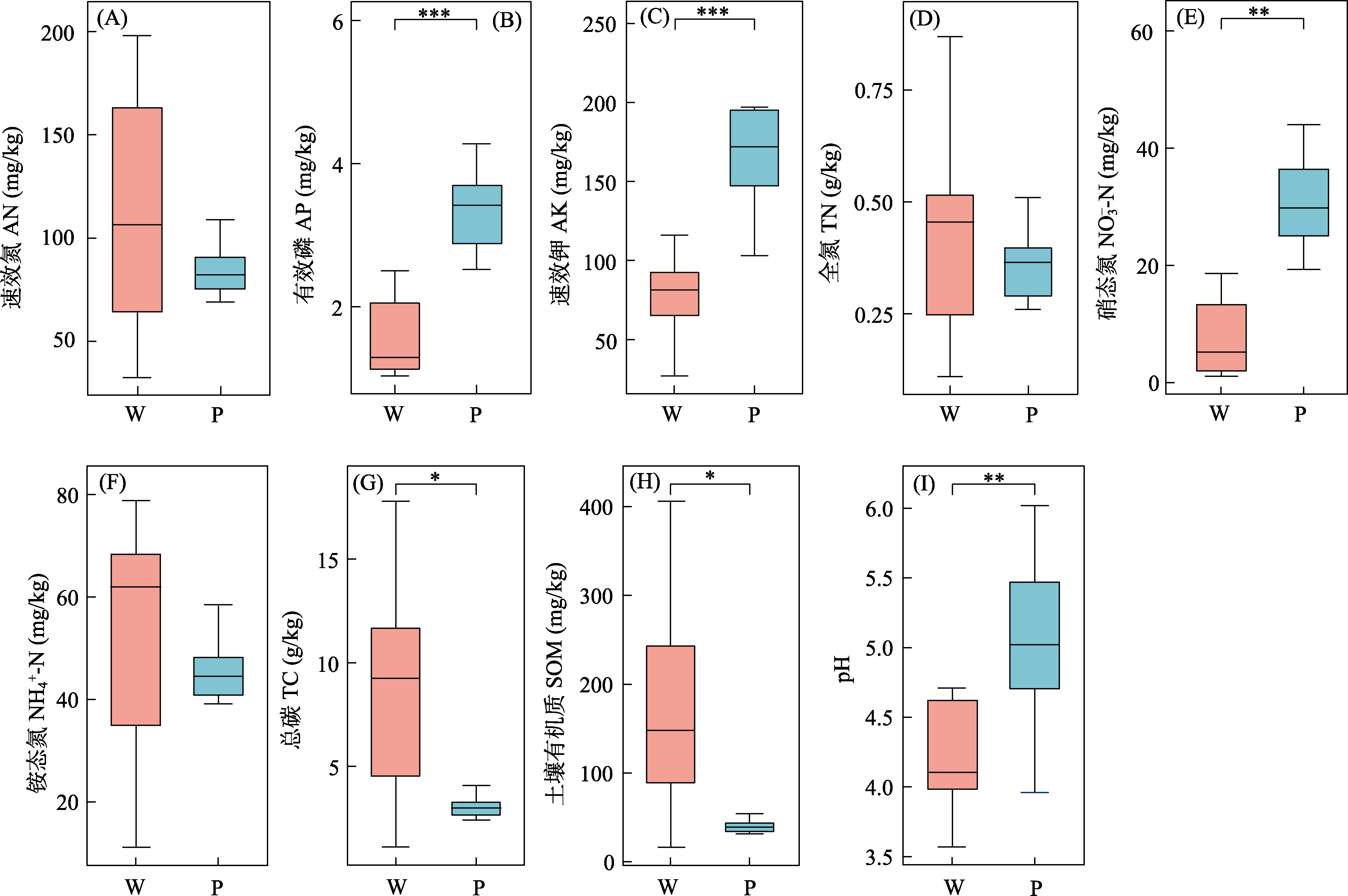
Fig. 1 Differences in soil physicochemical properties between natural (W, n = 12) and plantation (P, n = 12) forests of Cathaya argyrophylla. AN, Available nitrogen; AP, Available phosphorus; AK, Available potassium; TN, Total nitrogen; NO3--N, Nitrate nitrogen; NH4+-N, Ammonium nitrogen; TC, Total carbon; SOM, Soil organic matter. * P < 0.05; ** P < 0.01; *** P < 0.001.
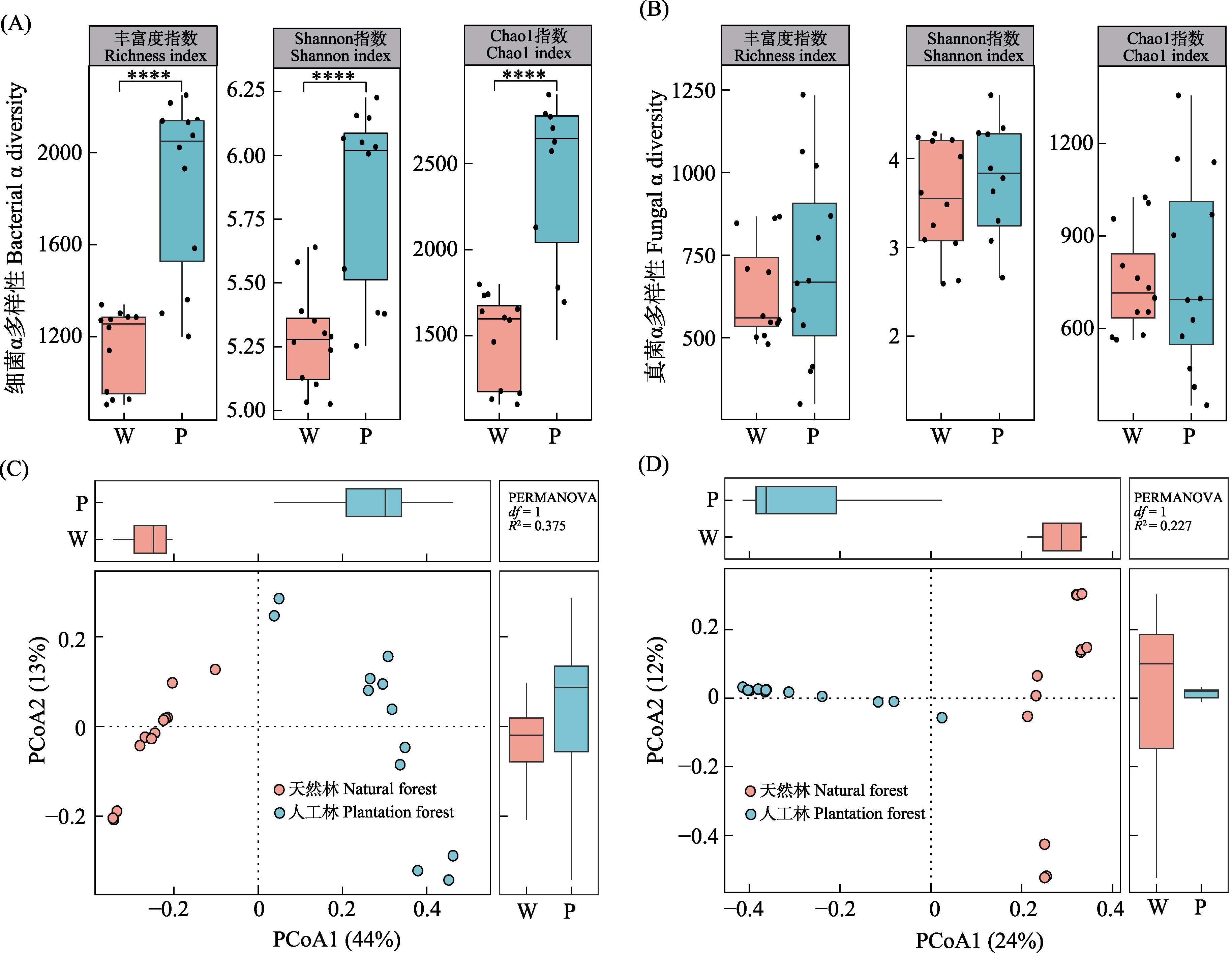
Fig. 2 Soil microbial diversity in natural (W, n = 12) and plantation (P, n = 12) forests of Cathaya argyrophylla. (A) α diversity of bacterial communities; (B) α diversity of fungal communities; (C) β diversity of bacterial communities; (D) β diversity of fungal communities. **** P < 0.0001.
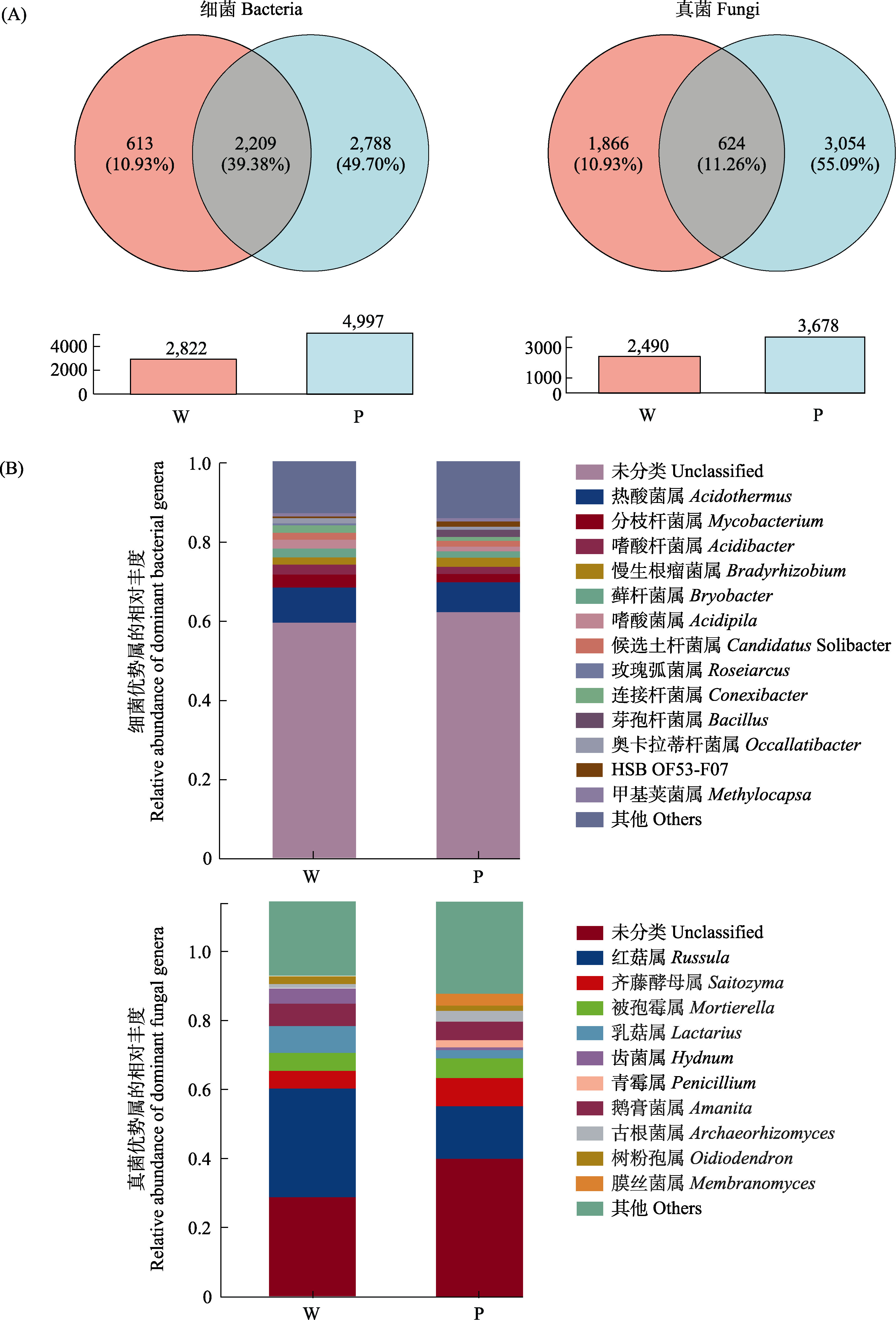
Fig. 3 Microbial community composition in soils of natural (W, n = 12) and plantation (P, n = 12) forests of Cathaya argyrophylla. (A) Venn diagram showing the overlap of bacterial and fungal operational taxonomic units (OTUs); (B) Composition of bacterial communities at the genus level; (C) Composition of dominant fungal communities at the genus level.
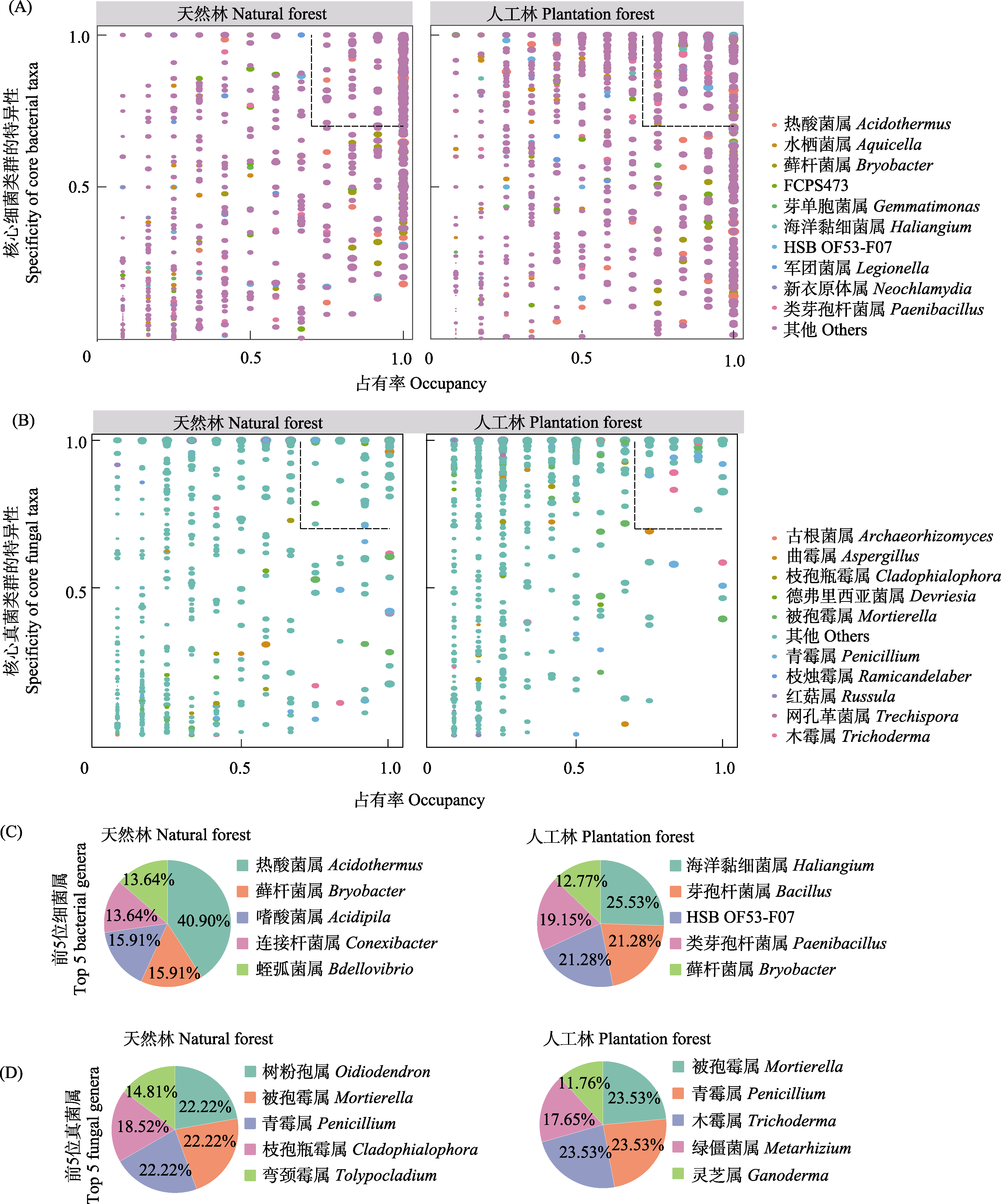
Fig. 4 Occupancy-specificity relationships and dominant genera of bacterial and fungal communities in soils of natural and plantation forests of Cathaya argyrophylla. (A) Specificity-occupancy distribution of bacterial OTUs; (B) Specificity-occupancy distribution of fungal OTUs; (C) Proportions of dominant bacterial genera; (D) Proportions of dominant fungal genera. Dominant genera were defined as core taxa exhibiting high specificity and occupancy in the SPEC-OCCU analysis.
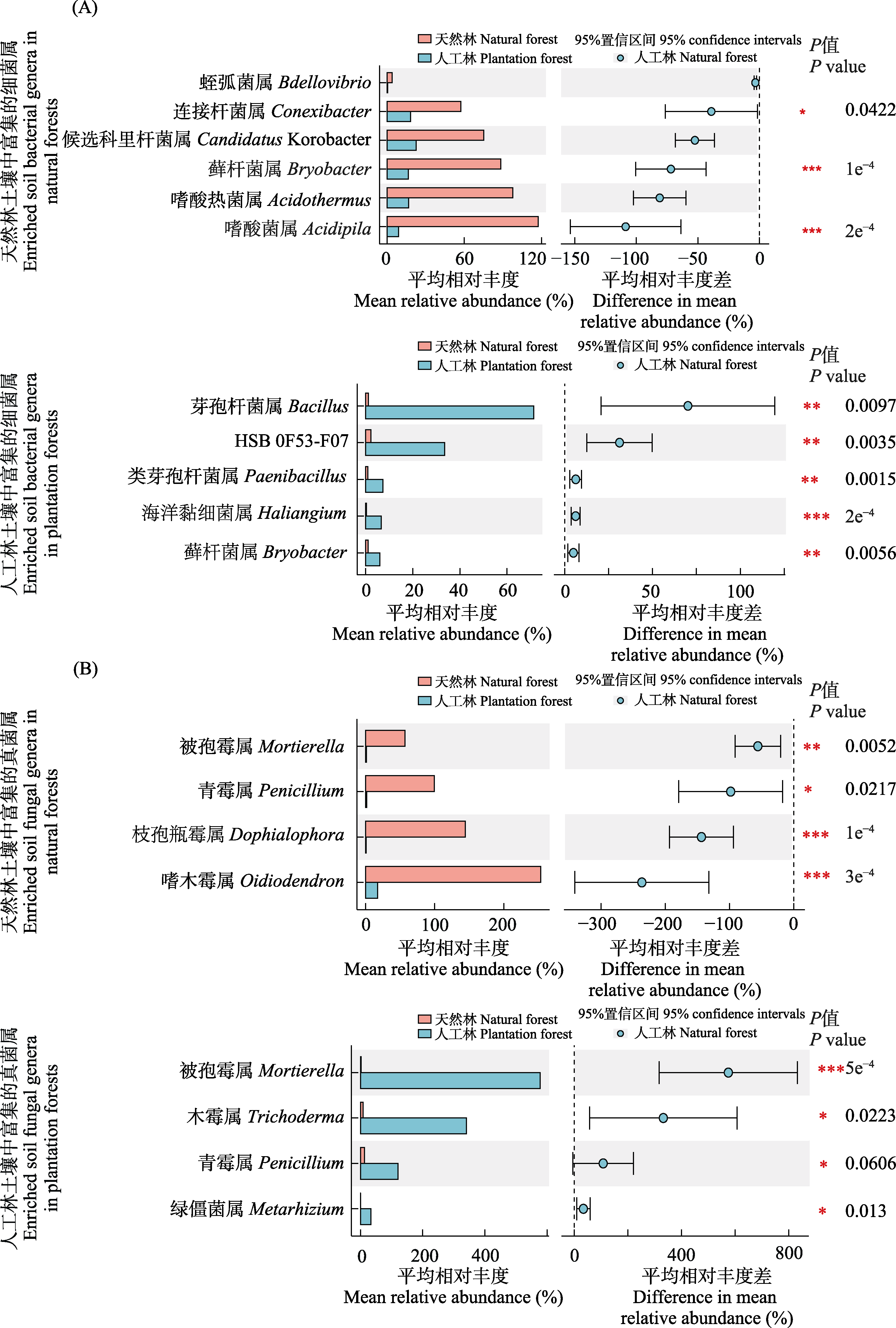
Fig. 5 Differential abundance of enriched bacterial (A) and fungal (B) genera in soils of natural and plantation forests of Cathaya argyrophylla. Bars indicate the mean relative abundance of each taxon, and error bars indicate the standard error. Between-group differences were tested using the Wilcoxon rank-sum test, with Benjamini-Hochberg correction for multiple comparisons. * P < 0.05; ** P < 0.01; *** P < 0.001.
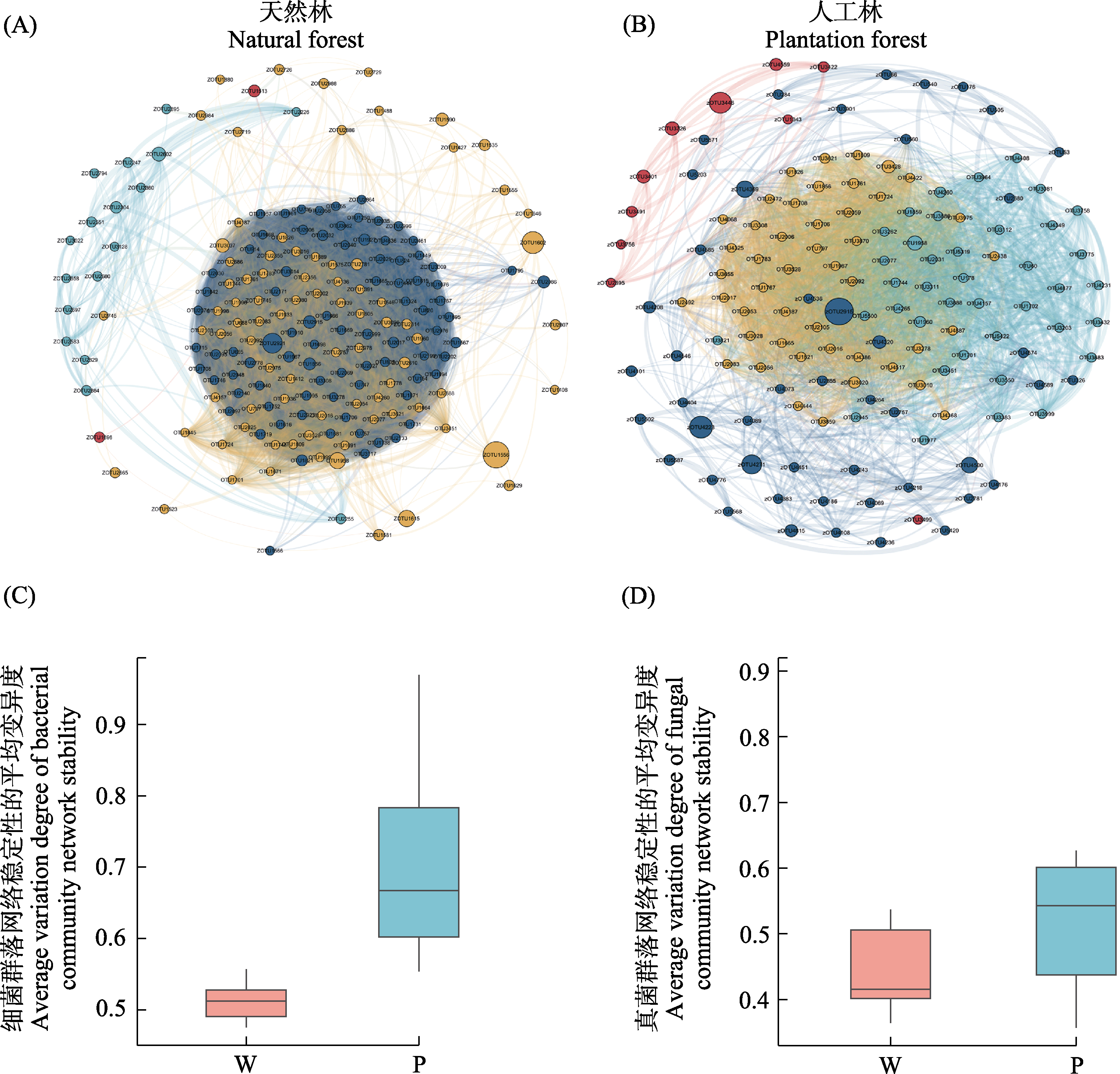
Fig. 6 Microbial co-occurrence networks and connectivity in soils of natural (W, n = 12) and plantation (P, n = 12) forests of Cathaya argyrophylla. Soil microbial co-occurrence networks in natural forest (A) and plantation forest (B) soils, respectively; average variation degree of bacterial (C) and fungal (D) community networks. In A and B, the size of each node is proportional to its abundance, and the co-occurrence networks are colored by module.
| 天然林 Natural forest | 人工林 Plantation forest | |||
|---|---|---|---|---|
| 细菌 Bacteria | 真菌 Fungi | 细菌 Bacteria | 真菌 Fungi | |
| 节点 Nodes | 112.75 ± 1.29 | 47.50 ± 5.20 | 79.17 ± 11.71 | 32.55 ± 6.55 |
| 边数 Edges | 6,062.58 ± 97.86 | 427.42 ± 54.96 | 2,269.08 ± 29.19 | 226.91 ± 95.77 |
| 边密度 Edge density | 0.96 ± 0.01 | 0.39 ± 0.06 | 0.75 ± 0.01 | 0.42 ± 0.07 |
| 度中心化 Degree centralization | 0.03 ± 0.00 | 0.29 ± 0.04 | 0.23 ± 0.08 | 0.26 ± 0.02 |
| 介数中心化 Betweenness centralization | 0.00 ± 0.00 | 0.10 ± 0.05 | 0.02 ± 0.02 | 0.21 ± 0.17 |
| 平均聚类系数 Average clustering coefficient | 0.98 ± 0.01 | 0.80 ± 0.04 | 0.88 ± 0.04 | 0.75 ± 0.00 |
| 网络复杂度 Network complexity | 53.77 ± 0.35 | 9.00 ± 0.64 | 28.71 ± 0.62 | 6.68 ± 1.87 |
| 网络模块化 Network modularity | 0.01 ± 0.00 | 0.19 ± 0.07 | 0.13 ± 0.05 | 0.28 ± 0.09 |
Table 2 Topological properties of co-occurrence networks of soil bacteria and fungi at the genus level in natural and plantation forests of Cathaya argyrophylla
| 天然林 Natural forest | 人工林 Plantation forest | |||
|---|---|---|---|---|
| 细菌 Bacteria | 真菌 Fungi | 细菌 Bacteria | 真菌 Fungi | |
| 节点 Nodes | 112.75 ± 1.29 | 47.50 ± 5.20 | 79.17 ± 11.71 | 32.55 ± 6.55 |
| 边数 Edges | 6,062.58 ± 97.86 | 427.42 ± 54.96 | 2,269.08 ± 29.19 | 226.91 ± 95.77 |
| 边密度 Edge density | 0.96 ± 0.01 | 0.39 ± 0.06 | 0.75 ± 0.01 | 0.42 ± 0.07 |
| 度中心化 Degree centralization | 0.03 ± 0.00 | 0.29 ± 0.04 | 0.23 ± 0.08 | 0.26 ± 0.02 |
| 介数中心化 Betweenness centralization | 0.00 ± 0.00 | 0.10 ± 0.05 | 0.02 ± 0.02 | 0.21 ± 0.17 |
| 平均聚类系数 Average clustering coefficient | 0.98 ± 0.01 | 0.80 ± 0.04 | 0.88 ± 0.04 | 0.75 ± 0.00 |
| 网络复杂度 Network complexity | 53.77 ± 0.35 | 9.00 ± 0.64 | 28.71 ± 0.62 | 6.68 ± 1.87 |
| 网络模块化 Network modularity | 0.01 ± 0.00 | 0.19 ± 0.07 | 0.13 ± 0.05 | 0.28 ± 0.09 |
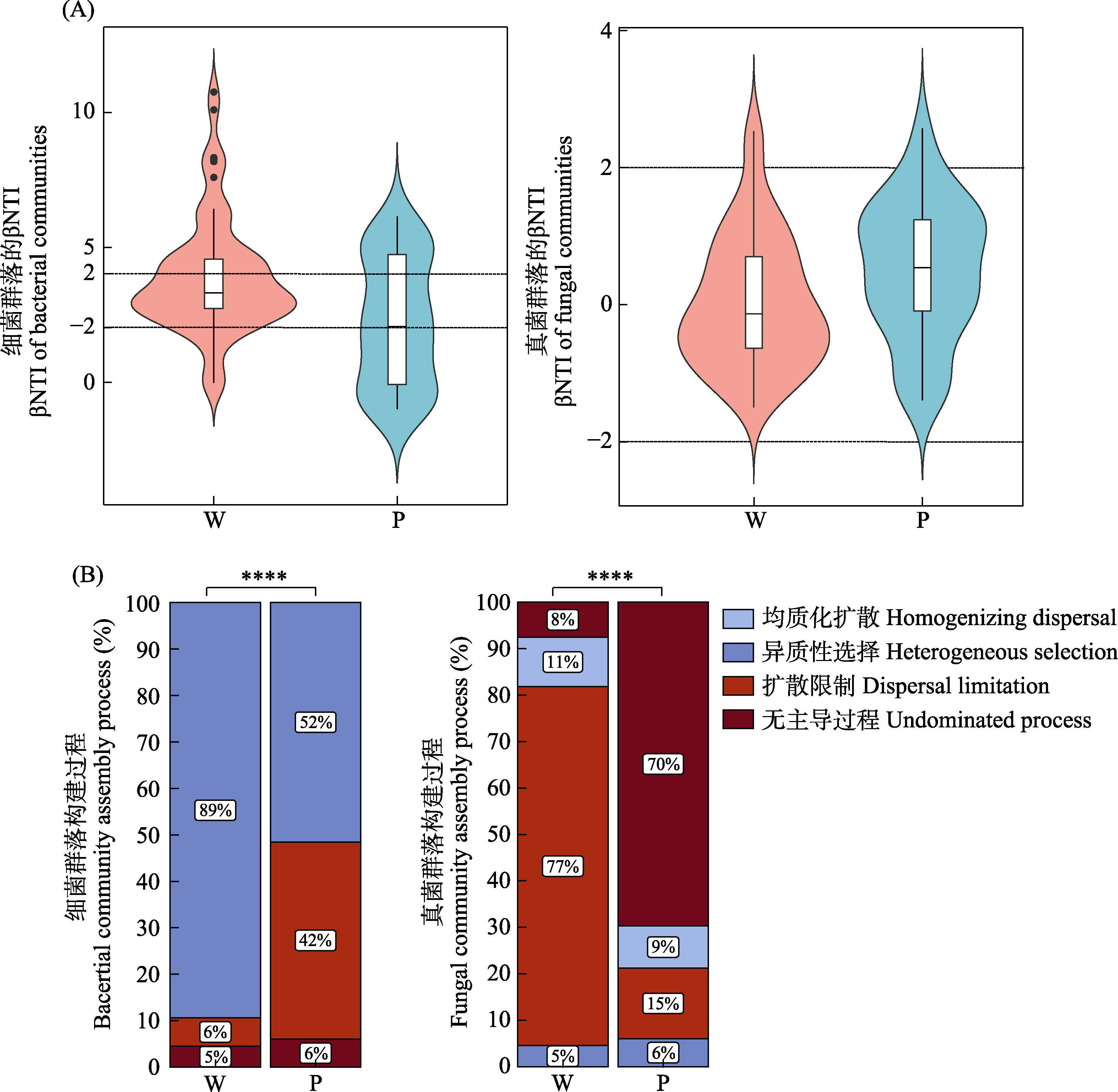
Fig. 7 Community assembly processes of bacteria (W, n = 12) and fungi (P, n = 12) in soils of natural and plantation forests of Cathaya argyrophylla. (A) Distribution of βNTI values for bacterial and fungal communities; (B) Relative contributions of different community assembly processes.
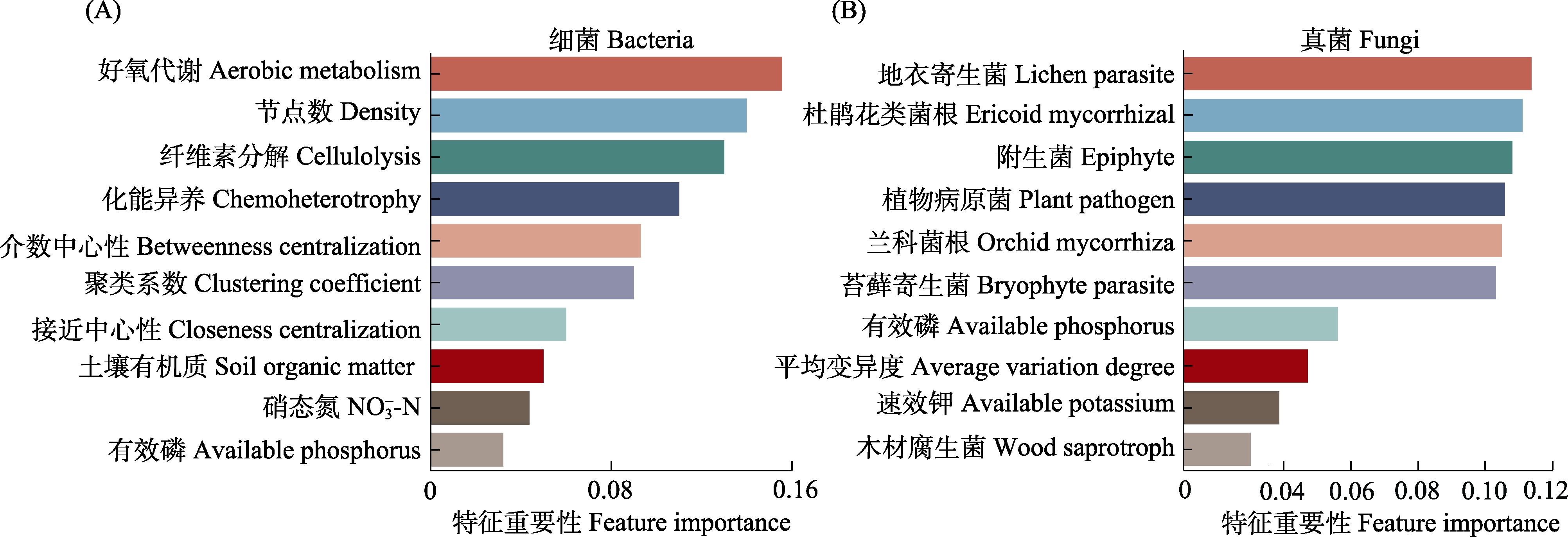
Fig. 8 Random forest analysis of microbe-related variables in natural and plantation forests of Cathaya argyrophylla. (A) Importance of bacteria-related variables. (B) Importance of fungi-related variables.
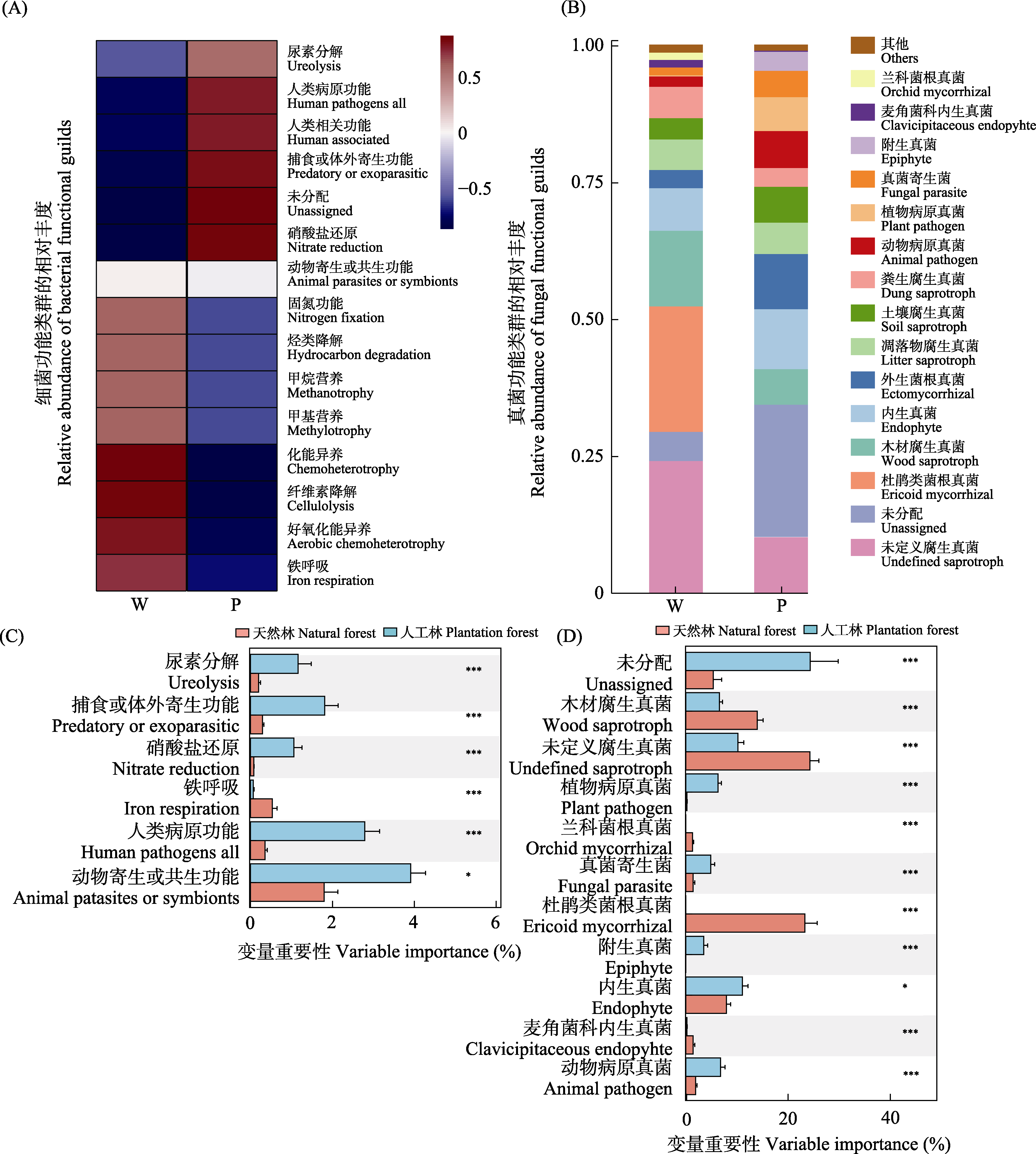
Fig. 9 Functional potential characteristics of soil bacterial and fungal communities in natural and plantation forests of Cathaya argyrophylla. (A) Bacterial functional composition; (B) Fungal functional composition; (C) Differential bacterial functions; (D) Differential fungal functions. * P < 0.05; *** P < 0.001.
| [1] | Banerjee S, Schlaeppi K, van der Heijden MGA (2018) Keystone taxa as drivers of microbiome structure and functioning. Nature Reviews Microbiology, 16, 567-576. |
| [2] | Berendsen RL, Pieterse CMJ, Bakker PAHM (2012) The rhizosphere microbiome and plant health. Trends in Plant Science, 17, 478-486. |
| [3] | Bonfante P, Anca IA (2009) Plants, mycorrhizal fungi, and bacteria: A network of interactions. Annual Review of Microbiology, 63, 363-383. |
| [4] | Cao XQ, Xia K, Zhao HF, Deng PF, Teng Z, Xu XN (2024) Soil organic carbon, pH, and ammonium nitrogen controlled changes in bacterial community structure and functional groups after forest conversion. Frontiers in Forests and Global Change, 7, 1331672. |
| [5] | Caporaso JG, Kuczynski J, Stombaugh J, Bittinger K, Bushman FD, Costello EK, Fierer N, Peña AG, Goodrich JK, Gordon JI, Huttley GA, Kelley ST, Knights D, Koenig JE, Ley RE, Lozupone CA, McDonald D, Muegge BD, Pirrung M, Reeder J, Sevinsky JR, Turnbaugh PJ, Walters WA, Widmann J, Yatsunenko T, Zaneveld J, Knight R (2010) QIIME allows analysis of high-throughput community sequencing data. Nature Methods, 7, 335-336. |
| [6] | David AS, Quintana-Ascencio PF, Menges ES, Thapa-Magar KB, Afkhami ME, Searcy CA (2019) Soil microbiomes underlie population persistence of an endangered plant species. The American Naturalist, 194, 488-494. |
| [7] | Dini-Andreote F, Stegen JC, van Elsas JD, Salles JF (2015) Disentangling mechanisms that mediate the balance between stochastic and deterministic processes in microbial succession. Proceedings of the National Academy of Sciences, USA, 112, E1326-E1332. |
| [8] | Dragone NB, Hoffert M, Strickland MS, Fierer N (2024) Taxonomic and genomic attributes of oligotrophic soil bacteria. ISME Communications, 4, ycae081. |
| [9] | Edgar RC (2010) Search and clustering orders of magnitude faster than BLAST. Bioinformatics, 26, 2460-2461. |
| [10] | Edgar RC (2013) UPARSE: Highly accurate OTU sequences from microbial amplicon reads. Nature Methods, 10, 996-998. |
| [11] | Fan DY, Wang XP, Zhang WF, Zhang XY, Zhang SR, Xie ZQ (2020) Does Cathaya argyrophylla, an ancient and threatened Pinaceae species endemic to China, show eco-physiological outliers to its Pinaceae relatives? Conservation Physiology, 8, coaa094. |
| [12] | Faust K, Raes J (2012) Microbial interactions: From networks to models. Nature Reviews Microbiology, 10, 538-550. |
| [13] | Feng YC, Li QM, Han JH, Gou W (2024) Resource status and protection measures of endangered plants Cathaya argyrophylla. orest Inventory and Planning, 49(6), 125-131. (in Chinese with English abstract) |
| [冯育才, 李乔明, 韩继怀, 勾伟 (2024) 濒危植物银杉资源现状及保护对策. 林业调查规划, 49(6), 125-131.] | |
| [14] | Gao YX, Su YJ, Feng YC, Zhang J, Wang XQ, Liu LL (2025) Research and conservation status of the rare and endangered relict plant Cathaya argyrophylla Chinese Journal of Plant Ecology, 49, 1572-1582. (in Chinese with English abstract) |
| [高雨轩, 苏艳军, 冯育才, 张军, 汪小全, 刘玲莉 (2025) 珍稀濒危孑遗植物银杉的研究与保护现状. 植物生态学报, 49, 1572-1582.] | |
| [15] | Gilliam FS (2025) Linkage of strata of forest vegetation with forest soil microbiomes: A review. Frontiers in Microbiology, 16, 1575691. |
| [16] | Gong SS, Liu S, Li FF, Xu GX, Chen J, Jia L, Shi ZM (2025) Natural forests vs. plantations: A meta-analysis of consequences for soil organic carbon functional fractions. Journal of Environmental Management, 377, 124673. |
| [17] | Guillaume T, Kotowska MM, Hertel D, Knohl A, Krashevska V, Murtilaksono K, Scheu S, Kuzyakov Y (2018) Carbon costs and benefits of Indonesian rainforest conversion to plantations. Nature Communications, 9, 2388. |
| [18] | Gweon HS, Bowes MJ, Moorhouse HL, Oliver AE, Bailey MJ, Acreman MC, Read DS (2021) Contrasting community assembly processes structure lotic bacteria metacommunities along the river continuum. Environmental Microbiology, 23, 484-498. |
| [19] | Hagh-Doust N, Mikryukov V, Anslan S, Bahram M, Puusepp R, Dulya O, Tedersoo L (2023) Effects of nitrogen deposition on carbon and nutrient cycling along a natural soil acidity gradient as revealed by metagenomics. New Phytologist, 238, 2607-2620. |
| [20] | He GX, Peng TS, Guo Y, Wen SZ, Ji L, Luo Z (2022) Forest succession improves the complexity of soil microbial interaction and ecological stochasticity of community assembly: Evidence from Phoebe bournei-dominated forests in subtropical regions. Frontiers in Microbiology, 13, 1021258. |
| [21] | He Z, Zhang C, Dong X, Liu H, Zhou HY, Wang KL, Guo J, Liu YB (2023) History cooling events caused migrations of endangered Cathaya argyrophylla into low latitude refuges. Global Ecology and Conservation, 48, e02733. |
| [22] | Hu ZK, Delgado-Baquerizo M, Fanin N, Chen XY, Zhou Y, Du GZ, Hu F, Jiang L, Hu SJ, Liu MQ (2024) Nutrient-induced acidification modulates soil biodiversity-function relationships. Nature Communications, 15, 2858. |
| [23] | IUCN (2025) The IUCN Red List of Threatened Species. Version 2025-2. https://www.iucnredlist.org. (accessed on 2026-03-31) |
| [24] | Jones MD, Durall DM, Tinker PB (1998) A comparison of arbuscular and ectomycorrhizal Eucalyptus coccifera: Growth response, phosphorus uptake efficiency and external hyphal production. New Phytologist, 140, 125-134. |
| [25] | Labouyrie M, Ballabio C, Romero F, Panagos P, Jones A, Schmid MW, Mikryukov V, Dulya O, Tedersoo L, Bahram M, Lugato E, van der Heijden MGA, Orgiazzi A (2023) Patterns in soil microbial diversity across Europe. Nature Communications, 14, 3311. |
| [26] | Lan GY, Yang C, Wu ZX, Sun R, Chen BQ, Zhang XC (2022) Network complexity of rubber plantations is lower than tropical forests for soil bacteria but not for fungi. Soil, 8, 149-161. |
| [27] | Liu CX, Peng CJ, Liang CF, Wang L, Chen JH (2025) Conversion of broadleaf forest to plantation changes the assembly process and composition of soil microbial communities in a subtropical forest. Plant and Soil, 511, 323-338. |
| [28] | Louca S, Parfrey LW, Doebeli M (2016) Decoupling function and taxonomy in the global ocean microbiome. Science, 353, 1272-1277. |
| [29] | Luo XZ, Zhang LL, Li Z, Zhang R, Le Roux JJ, Reynolds JK, Yu HX, Chen MH, Zheng YH, Hou EQ, Wen DZ (2024) Adaptation mechanisms of soil microbial community to stoichiometric imbalances caused by forest conversion. Applied Soil Ecology, 201, 105529. |
| [30] | Maestre FT, Eldridge DJ, Soliveres S (2016) Structure and functioning of dryland ecosystems in a changing world. Annual Review of Ecology, Evolution, and Systematics, 47, 215-237. |
| [31] | Magoč T, Salzberg SL (2011) FLASH: Fast length adjustment of short reads to improve genome assemblies. Bioinformatics, 27, 2957-2963. |
| [32] | Mai KL, Zhu CS, Feng LX, Gao ZY, Liu H, Qin K, Su JN, Lin SH (2022) Research progress on endangered factors and population expansion of rare plant Cathaya argyrophylla. Guangxi Forestry Science, 51, 51 872-876. (in Chinese with English abstract) |
| [买凯乐, 朱昌叁, 冯立新, 高照阳, 刘宏, 覃琨, 苏杰南, 林上海 (2022) 珍稀植物银杉濒危因素及种群扩大研究进展. 广西林业科学, 51, 872-876.] | |
| [33] | Milke F, Garcia SL, Simon M, Pacheco-Valenciana A, Lennartz ST (2026) Microbial cohorts: Bringing ecological meaning to the modularity concept of co-occurrence networks. ISME Communications, 6, ycag037. |
| [34] | Netherway T, Bengtsson J, Buegger F, Fritscher J, Oja J, Pritsch K, Hildebrand F, Krab EJ, Bahram M (2024) Pervasive associations between dark septate endophytic fungi with tree root and soil microbiomes across Europe. Nature Communications, 15, 159. |
| [35] | Nguyen NH, Song ZW, Bates ST, Branco S, Tedersoo L, Menke J, Schilling JS, Kennedy PG (2016) FUNGuild: An open annotation tool for parsing fungal community datasets by ecological guild. Fungal Ecology, 20, 241-248. |
| [36] | Nilsson RH, Larsson KH, Taylor AFS, Bengtsson-Palme J, Jeppesen TS, Schigel D, Kennedy P, Picard K, Glöckner FO, Tedersoo L, Saar I, Kõljalg U, Abarenkov K (2019) The UNITE database for molecular identification of fungi: Handling dark taxa and parallel taxonomic classifications. Nucleic Acids Research, 47, D259-D264. |
| [37] | Pruesse E, Quast C, Knittel K, Fuchs BM, Ludwig W, Peplies J, Glöckner FO (2007) SILVA: A comprehensive online resource for quality checked and aligned ribosomal RNA sequence data compatible with ARB. Nucleic Acids Research, 35, 7188-7196. |
| [38] | Qian SH, Yang YC, Tang CQ, Momohara A, Yi SR, Ohsawa M (2016) Effective conservation measures are needed for wild Cathaya argyrophylla populations in China: Insights from the population structure and regeneration characteristics. Forest Ecology and Management, 361, 358-367. |
| [39] | Sawada K, Inagaki Y, Sugihara S, Kunito T, Murase J, Toyota K, Funakawa S (2023) Conversion from natural coniferous forests to cedar plantations increase soil nitrogen cycling through changing microbial community structures. Applied Soil Ecology, 191, 105034. |
| [40] | Stegen JC, Lin XJ, Fredrickson JK, Chen XY, Kennedy DW, Murray CJ, Rockhold ML, Konopka A (2013) Quantifying community assembly processes and identifying features that impose them. The ISME Journal, 7, 2069-2079. |
| [41] | Sun JJ, Xia XM, Wei XX, Wang XQ (2023) Tracing the geographic origin of endangered plant species using transcriptome-derived SNPs: An example of Cathaya argyrophylla. Molecular Ecology Resources, 23, 844-854. |
| [42] | Vaario LM, Xing ST, Xie ZQ, Lun ZM, Sun X, Li YH (2006) In situ and in vitro colonization of Cathaya argyrophylla (Pinaceae) by ectomycorrhizal fungi. Mycorrhiza, 16, 137-142. |
| [43] | van der Heijden MGA, Bardgett RD, Van Straalen NM (2008) The unseen majority: Soil microbes as drivers of plant diversity and productivity in terrestrial ecosystems. Ecology Letters, 11, 296-310. |
| [44] | van der Heijden MGA, Martin FM, Selosse MA, Sanders IR (2015) Mycorrhizal ecology and evolution: The past, the present, and the future. New Phytologist, 205, 1406-1423. |
| [45] | Wang C, Yu QY, Ji NN, Zheng Y, Taylor JW, Guo LD, Gao C (2023) Bacterial genome size and gene functional diversity negatively correlate with taxonomic diversity along a pH gradient. Nature Communications, 14, 7437. |
| [46] | Wang LJ, Yang R, Han JH, Gou W, Zhao YY, Gao X (2024) Population structure and dynamic analysis of wild Cathaya argyrophylla in Dashahe National Nature Reserve, Guizhou, China. Journal of Tropical and Subtropical Botany, 32, 571-578. (in Chinese with English abstract) |
| [王林津, 杨瑞, 韩继怀, 勾伟, 赵洋洋, 高旭 (2024) 贵州大沙河国家级自然保护区野生银杉种群结构和动态分析. 热带亚热带植物学报, 32, 571-578.] | |
| [47] | Wang MY, Sui X, Wang X, Zhang XB, Zeng XN (2024) Soil fungal community differences in manual plantation larch forest and natural larch forest in Northeast China. Microorganisms, 12, 1322. |
| [48] | Wang Q, Garrity GM, Tiedje JM, Cole JR (2007) Naïve Bayesian classifier for rapid assignment of rRNA sequences into the new bacterial taxonomy. Applied and Environmental Microbiology, 73, 5261-5267. |
| [49] | Wang Y, Chen L, Xiang WH, Ouyang S, Zhang TD, Zhang XL, Zeng YL, Hu YT, Luo GW, Kuzyakov Y (2021) Forest conversion to plantations: A meta-analysis of consequences for soil and microbial properties and functions. Global Change Biology, 27, 5643-5656. |
| [50] | Wang YF, Li SL, Liu H, Deng T, Ye JT, Hu XH (2025) Differences in rhizosphere soil microbial community structure and function among different populations of Cathaya argyrophylla. Forest Research, 38(1), 73-85. (in Chinese with English abstract) |
| [王玉凤, 李双林, 刘宏, 邓涛, 叶家桐, 胡兴华 (2025) 不同银杉种群根际土壤微生物群落结构与功能差异. 林业科学研究, 38(1), 73-85.] | |
| [51] | Wei HJ, Wang XW, Lei JJ, Yu C (2024) First report of root rot of Cathaya argyrophylla caused by Fusarium oxysporum in China. Plant Disease, 108, 2921. |
| [52] | Wu PP, Wu T, Zhang Y, Ding YD, Liu ZF, Mao R (2026) Laboratory incubation reveals greater soil carbon stabilization by coniferous leaf litter than by broadleaf leaf litter despite slower decomposition. Journal of Plant Ecology, rtag040. |
| [53] | Xiao YM, Wang J, Wang B, Fan B, Zhou GY (2025) Soil microbial network complexity predicts soil multifunctionality better than soil microbial diversity during grassland-farmland-shrubland conversion on the Qinghai-Tibetan Plateau. Agriculture, Ecosystems & Environment, 379, 109356. |
| [54] | Xie P, Huang KR, Deng AH, Mo P, Xiao F, Wu F, Xiao DW, Wang Y (2023) The diversity and abundance of bacterial and fungal communities in the rhizosphere of Cathaya argyrophylla are affected by soil physicochemical properties. Frontiers in Microbiology, 14, 1111087. |
| [55] | Xie ZQ (1995) Cathaya argyrophylla, an endemic species in China, and related studies. Chinese Biodiversity, 3, 99-103. (in Chinese) |
| [谢宗强 (1995) 中国特有植物银杉及其研究. 生物多样性, 3, 99-103.] | |
| [56] | Xie ZQ, Chen WL, Jiang MX, Huang HD, Zhu RG (1995) A preliminary study on the population of Cathaya argyrophylla in Bamianshan Mountain. Acta Botanica Sinica, 37, 58-65. (in Chinese with English abstract) |
| [谢宗强, 陈伟烈, 江明喜, 黄汉东, 朱日光 (1995) 八面山银杉林种群的初步研究. 植物学报, 37, 58-65.] | |
| [57] | Xing ST, Li YH, Sun X, Lun ZM, Vaario LM (2006) An effective in vitro protocol for increasing mycorrhizal formation rate of Cathaya argyrophylla. Acta Phytoecologica Sinica, 30, 323-329. (in Chinese with English abstract) |
| [邢树堂, 李玉花, 孙雪, 伦志明, 瓦里奥禄敏 (2006) 一种有效地提高银杉人工菌根苗诱导率的方法. 植物生态学报, 30, 323-329.] | |
| [58] | Xun WB, Liu YP, Li W, Ren Y, Xiong W, Xu ZH, Zhang N, Miao YZ, Shen QR, Zhang RF (2021) Specialized metabolic functions of keystone taxa sustain soil microbiome stability. Microbiome, 9, 35. |
| [59] | Zhang C, Lei SL, Wu HY, Liao LR, Wang XT, Zhang L, Liu GB, Wang GL, Fang LC, Song ZL (2024) Simplified microbial network reduced microbial structure stability and soil functionality in alpine grassland along a natural aridity gradient. Soil Biology and Biochemistry, 191, 109366. |
| [60] | Zhang QF, Cheng L, Feng JG, Mei KC, Zeng QX, Zhu B, Chen Y (2021) Nitrogen addition stimulates priming effect in a subtropical forest soil. Soil Biology and Biochemistry, 160, 108339. |
| [61] | Zhou HY, Liu XT, Gao XL, Wang Y, Ye LL, Wu JX, Xiang MX (2025) Soil pH and total phosphorus regulate bacterial community assembly in slope restoration areas of the Tibetan Plateau’s metal mining areas. Environmental Research, 275, 121432. |
| [62] | Zhou ZB, Xie P, Huang KR, Mo P, Deng AH, Fan SG, Long BB, Wang Y (2024) Symbiotrophs dominate rhizosphere soil fungal community stability of the Cathaya argyrophylla. Applied Soil Ecology, 204, 105719. |
| [1] | Meng Zhang, Yanping Wang. A review on zeta diversity: Analysis methods, conservation applications and future perspectives [J]. Biodiv Sci, 2026, 34(8): 0-. |
| [2] | Xiangzheng Yin, Haiyan Jiang, Jun Zhang, Chunsheng Luo, Yuanming Zhang. Diversity characteristics of phyllosphere bacterial communities in desert shrubs in hyper-arid regions [J]. Biodiv Sci, 2026, 34(4): 25485-. |
| [3] | Xiao-Yong Chen. On the effective ex situ conservation of rare or endangered plants: Definition, standards and recommendations [J]. Biodiv Sci, 2026, 34(4): 25448-. |
| [4] | Yu Luo, Xuyan Zheng, Li Cao, Bo Wang, Yanqiong Peng, Yinling Luo, Huiping Zhou, Xiaofang Yang, Baige Miao, Chaoya Wang, Jie Gao. Habitat simplification reshapes the fig-fig wasp interaction network: Adaptive responses of volatile composition and community structure [J]. Biodiv Sci, 2026, 34(2): 25328-. |
| [5] | Dongmei Jin, Tuo He, Hui Dong, Qixia Ma, Yonghong Hu. Conserving plant diversity: The role of a botanical garden network in China [J]. Biodiv Sci, 2025, 33(6): 24441-. |
| [6] | Chen Wang, Jiajie Xu, Ruizhi An, Peipei Wei, Xiangjun Wu, Sang Ba. The environmental DNA reveals diversity patterns and geographical distribution of protozoan in the middle reaches of the Yarlung Zangbo River during the dry season [J]. Biodiv Sci, 2025, 33(6): 24486-. |
| [7] | Xiaoyu Zhu, Chenhao Wang, Zhongjun Wang, Yujun Zhang. Research progress and prospect of urban green space biodiversity [J]. Biodiv Sci, 2025, 33(5): 25027-. |
| [8] | Chunsheng Luo, Jun Zhang, Hua Jin, Xiangzheng Yin, Yuanming Zhang. Diversity characteristics and driving factors of phyllosphere bacterial communities in shrubs of the Gurbantunggut Desert [J]. Biodiv Sci, 2025, 33(12): 25340-. |
| [9] | Yuan Liu, Jianqing Du, Liyuan Ma, Gang Yang, Jianqing Tian. Diversity and distribution of methanogen communities in the riparian wetlands of the Nam Co basin [J]. Biodiv Sci, 2025, 33(1): 24247-. |
| [10] | Rui Qu, Zhenjun Zuo, Youxin Wang, Liangjian Zhang, Zhigang Wu, Xiujuan Qiao, Zhong Wang. The biogeochemical niche based on elementome and its applications in different ecosystems [J]. Biodiv Sci, 2024, 32(4): 23378-. |
| [11] | Mengyao Zheng, Yuan Li, Xuerong Wang, Yue Zhang, Tong Jia. Soil protozoa community assembly mechanism in different vegetation types of Luya Mountain [J]. Biodiv Sci, 2024, 32(4): 23419-. |
| [12] | Su Liu, Cheng Du, Yonghong Hu. Ex situ conservation should have clear flexibility [J]. Biodiv Sci, 2024, 32(2): 24037-. |
| [13] | Jin Chen, Xi Yang. Discussion on the plant ex situ conservation [J]. Biodiv Sci, 2024, 32(2): 24064-. |
| [14] | Kailun Xu, Xiaorong Chen, Minhua Zhang, Wanwan Yu, Sumei Wu, Zhicheng Zhu, Dingyun Chen, Rongguang Lan, Shu Dong, Yu Liu. Succession and topography jointly influence the diversity of plant sexual systems in the Baishanzu forest community [J]. Biodiv Sci, 2024, 32(12): 24338-. |
| [15] | Hai Ren, Tuo He, Shifeng Wen, Hui Dong. The main features of the world-class national botanical garden with Chinese characteristics [J]. Biodiv Sci, 2023, 31(9): 23192-. |
| Viewed | ||||||
|
Full text |
|
|||||
|
Abstract |
|
|||||
Copyright © 2026 Biodiversity Science
Editorial Office of Biodiversity Science, 20 Nanxincun, Xiangshan, Beijing 100093, China
Tel: 010-62836137, 62836665 E-mail: biodiversity@ibcas.ac.cn
