

Biodiv Sci ›› 2026, Vol. 34 ›› Issue (5): 25474. DOI: 10.17520/biods.2025474 cstr: 32101.14.biods.2025474
• Technology and Methodology • Previous Articles Next Articles
Zezhou Hao1( ), Xiaoli Shen2(), Xingfeng Si3,4(), Yanyan Zhao5(), Chentao Wei6(), Fei Wu7(), Xiaoqing Xu8(), Pinjia Que9(), Lu Dong10(), Fangyuan Hua11(), Lixun Zhang12(), Chengyun Zhang13,*()(
 ), Yang Liu14,*()()
Received:2025-11-25
Accepted:2026-03-06
Online:2026-05-20
Published:2026-07-01
Contact:
Chengyun Zhang, Yang Liu
Supported by:Zezhou Hao, Xiaoli Shen, Xingfeng Si, Yanyan Zhao, Chentao Wei, Fei Wu, Xiaoqing Xu, Pinjia Que, Lu Dong, Fangyuan Hua, Lixun Zhang, Chengyun Zhang, Yang Liu. Standards and recommendations for passive acoustic monitoring of birds in China[J]. Biodiv Sci, 2026, 34(5): 25474.
| 网络类型 Network type | 项目名称 Project name | 所在区域 Region | 核心监测目标 Core monitoring objective | 标准化与元数据策略 Standardization & metadata strategy |
|---|---|---|---|---|
| 基础设施型 Infrastructural | Australian Acoustic Observatory (A2O) | 大洋洲 Oceania | 建立大陆尺度的长时序声景基准, 评估生态系统健康 To establish a continental-scale, long-term soundscape baseline for assessing ecosystem health | 全流程标准化: 统一采用太阳能传感器, 执行连续录音协议及统一的云端存储工作流 Full-process standardization: Using unified solar-powered sensors, continuous recording protocols, and a unified cloud storage workflow |
| Transnational Acoustic Biodiversity Monitoring Network (TABMON) | 欧洲 Europe | 构建跨越欧洲多国的昆虫、鸟类与蝙蝠自动化监测网络 To build an automated monitoring network for insects, birds, and bats across multiple European countries | 跨国协议标准化: 制定适用于不同国家的通用设备部署指南与数据处理工作流 Transnational protocol standardization: Developing common equipment deployment guidelines and data processing workflows applicable to different countries | |
| 梯度响应型 Gradient-based | Soundscape Baseline Project | 北美洲 North America | 监测气候变化背景下的声景物候与声学多样性演变 To monitor the evolution of soundscape phenology and acoustic diversity under climate change | 梯度标准化: 沿纬度梯度设置标准样地, 统一记录微生境结构与温度等环境元数据 Gradient standardization: Establishing standardized plots along latitudinal gradients, with unified recording of microhabitat structure and environmental metadata |
| Stability of Altered Forest Ecosystems (SAFE) Project | 亚洲 Asia | 评估土地利用变化(雨林砍伐与油棕种植)对生物多样性的影响 To assess the impact of land-use change (deforestation and oil palm plantation) on biodiversity | 实验设计标准化: 采用“原始林-采伐林-人工林”全梯度设计, 严格控制录音时间与频次 Experimental design standardization: Adopting a full-gradient design from old-growth to plantation forests, strictly controlling recording timing and frequency | |
| 技术融合型Multi-source data integration | Soundscapes to Landscapes (S2L) | 北美洲 North America | 结合声学与遥感数据(LiDAR/卫星), 绘制区域生物多样性地图 To map regional biodiversity by integrating acoustic data with remote sensing (LiDAR/satellite) | 多源融合标准化: 统一声学采样阵列, 并与遥感影像的空间分辨率进行时空对齐 Multi-source fusion standardization: Unifying acoustic sampling arrays and aligns them spatiotemporally with the spatial resolution of remote sensing imagery |
Table 1 Comparison of representative international passive acoustic monitoring networks and projects
| 网络类型 Network type | 项目名称 Project name | 所在区域 Region | 核心监测目标 Core monitoring objective | 标准化与元数据策略 Standardization & metadata strategy |
|---|---|---|---|---|
| 基础设施型 Infrastructural | Australian Acoustic Observatory (A2O) | 大洋洲 Oceania | 建立大陆尺度的长时序声景基准, 评估生态系统健康 To establish a continental-scale, long-term soundscape baseline for assessing ecosystem health | 全流程标准化: 统一采用太阳能传感器, 执行连续录音协议及统一的云端存储工作流 Full-process standardization: Using unified solar-powered sensors, continuous recording protocols, and a unified cloud storage workflow |
| Transnational Acoustic Biodiversity Monitoring Network (TABMON) | 欧洲 Europe | 构建跨越欧洲多国的昆虫、鸟类与蝙蝠自动化监测网络 To build an automated monitoring network for insects, birds, and bats across multiple European countries | 跨国协议标准化: 制定适用于不同国家的通用设备部署指南与数据处理工作流 Transnational protocol standardization: Developing common equipment deployment guidelines and data processing workflows applicable to different countries | |
| 梯度响应型 Gradient-based | Soundscape Baseline Project | 北美洲 North America | 监测气候变化背景下的声景物候与声学多样性演变 To monitor the evolution of soundscape phenology and acoustic diversity under climate change | 梯度标准化: 沿纬度梯度设置标准样地, 统一记录微生境结构与温度等环境元数据 Gradient standardization: Establishing standardized plots along latitudinal gradients, with unified recording of microhabitat structure and environmental metadata |
| Stability of Altered Forest Ecosystems (SAFE) Project | 亚洲 Asia | 评估土地利用变化(雨林砍伐与油棕种植)对生物多样性的影响 To assess the impact of land-use change (deforestation and oil palm plantation) on biodiversity | 实验设计标准化: 采用“原始林-采伐林-人工林”全梯度设计, 严格控制录音时间与频次 Experimental design standardization: Adopting a full-gradient design from old-growth to plantation forests, strictly controlling recording timing and frequency | |
| 技术融合型Multi-source data integration | Soundscapes to Landscapes (S2L) | 北美洲 North America | 结合声学与遥感数据(LiDAR/卫星), 绘制区域生物多样性地图 To map regional biodiversity by integrating acoustic data with remote sensing (LiDAR/satellite) | 多源融合标准化: 统一声学采样阵列, 并与遥感影像的空间分辨率进行时空对齐 Multi-source fusion standardization: Unifying acoustic sampling arrays and aligns them spatiotemporally with the spatial resolution of remote sensing imagery |
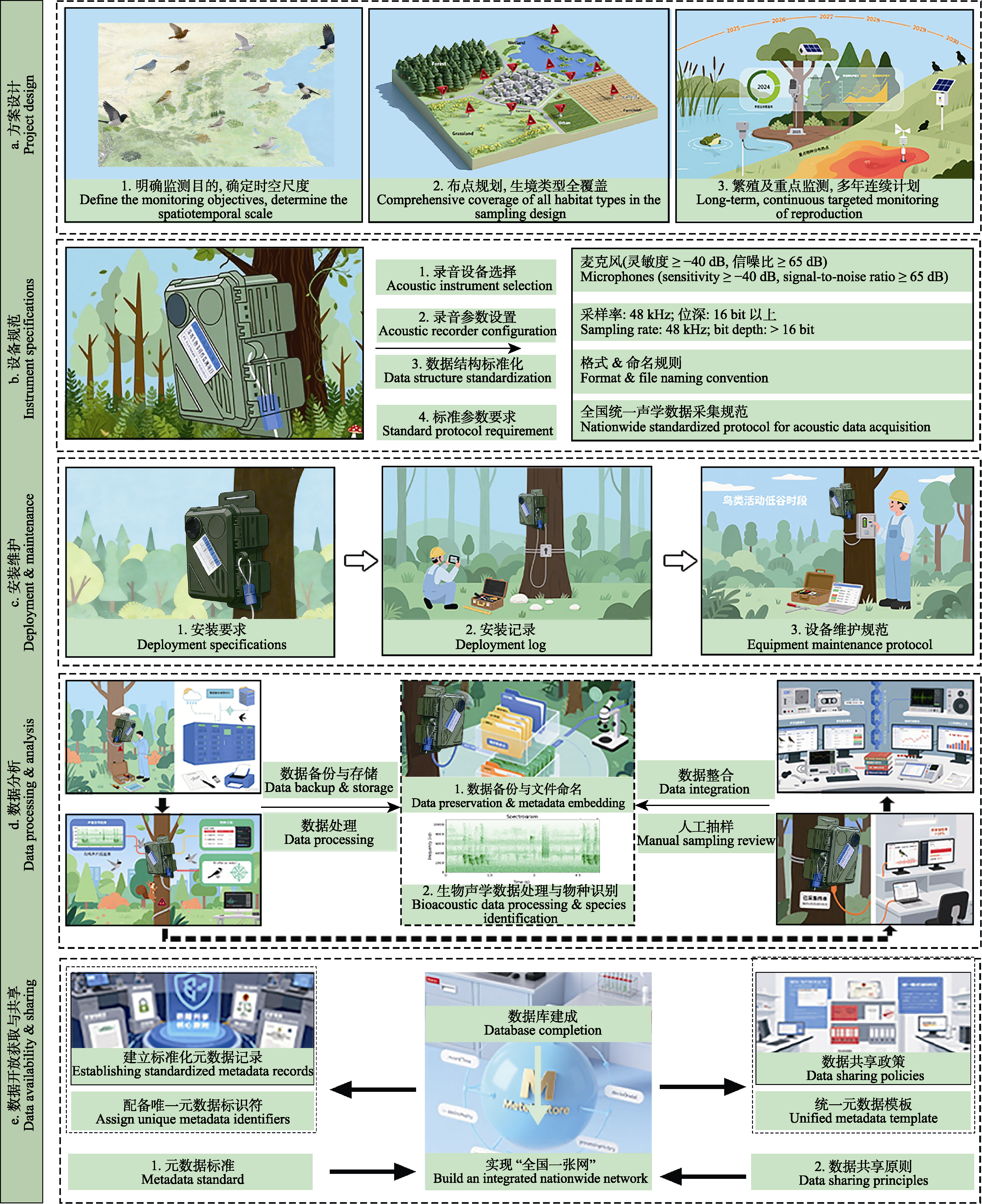
Fig. 1 The standardized workflow for the passive acoustic monitoring of birds in China. a. Project design: Clarify monitoring objectives. Deployment sites should cover major habitat types and be separated by sufficient spatial distance. The monitoring period should span at least one complete biological year. b. Instrument specifications: High-performance autonomous recording units (ARUs) with omnidirectional microphones are recommended. Recording parameters (e.g., sampling rate, bit depth) and file formats must be standardized, and a consistent nationwide naming convention and parameter standards should be adopted. c. Deployment & maintenance: Devices should be installed at a standard height and orientation and be properly secured. Document the deployment with on-site photographs. Conduct regular maintenance, including replacing batteries and memory cards, while meticulously recording all relevant metadata. d. Data processing & analysis: Acoustic data must be backed up promptly and stored hierarchically. Analysis should combine automated acoustic detection and species identification models with manual validation via sampling. All results must be linked back to the original recordings through a unique identifier (ID). e. Data availability & sharing: Establish unified metadata standards and unique identifiers. Adhere to a tiered access policy that benefits data contributors, promoting the development of an integrated nationwide network for sharing avian acoustic monitoring data.
| 参数类别 Category | 参数 Parameter | 推荐标准 Recommended standard | 理由与依据 Rationale & basis |
|---|---|---|---|
| 设备 Equipment | 麦克风类型 Microphone type | 全向性 Omnidirectional | 捕获来自所有方向的声音, 适用于群落监测 Captures sound from all directions, suitable for community-level monitoring |
| 麦克风灵敏度 Microphone sensitivity | ≥ -40 dB | 确保能有效记录远处或微弱的鸟鸣信号 Ensures effective recording of distant or faint birdsong signals | |
| 自身噪声 Equivalent noise level | 信噪比 ≥ 65 dB Signal-to-noise ratio ≥ 65 dB | 降低设备本身产生的噪声, 提高录音质量 Reduces noise generated by the device itself, improving recording quality | |
| 音频设置 Audio settings | 文件格式 File format | WAV | 完整保留原始声学信息, 是科学分析的标准格式 Fully preserves the original acoustic information; the standard format for scientific analysis |
| 采样率 Sampling rate | 48 kHz | 覆盖所有鸟类鸣声频率, 满足AI模型分析要求 Covers the full frequency range of bird vocalizations and meets the requirements for AI model analysis | |
| 位深度 Bit depth | > 16 bit | 提供足够的动态范围, 平衡数据质量与存储需求 Provides sufficient dynamic range, balancing data quality with storage requirements | |
| 设备布设 Equipment deployment | 安装高度 Installation height | 1.5-2 m | 减少地面反射与灌丛干扰, 便于维护 Reduces ground reflections and interference from undergrowth; facilitates maintenance |
| 麦克风朝向 Microphone orientation | 避开持续噪声源 Pointed away from persistent noise | 提高目标信号(鸟鸣)的信噪比 Increases the signal-to-noise ratio of the target signal (birdsong) | |
| 录音日程 Recording schedule | 采样策略 Sampling strategy | 每10 min录1 min, 24 h循环 Record for 1 minute every 10 minutes, on a 24-hour cycle | 系统性时间采样, 兼顾数据代表性与资源消耗(例如电源和存储) Provides a systematic temporal sampling that balances data representativeness with resource consumption (e.g., power, storage) |
Table 2 Recommended core technical parameters for passive acoustic monitoring of birds in China
| 参数类别 Category | 参数 Parameter | 推荐标准 Recommended standard | 理由与依据 Rationale & basis |
|---|---|---|---|
| 设备 Equipment | 麦克风类型 Microphone type | 全向性 Omnidirectional | 捕获来自所有方向的声音, 适用于群落监测 Captures sound from all directions, suitable for community-level monitoring |
| 麦克风灵敏度 Microphone sensitivity | ≥ -40 dB | 确保能有效记录远处或微弱的鸟鸣信号 Ensures effective recording of distant or faint birdsong signals | |
| 自身噪声 Equivalent noise level | 信噪比 ≥ 65 dB Signal-to-noise ratio ≥ 65 dB | 降低设备本身产生的噪声, 提高录音质量 Reduces noise generated by the device itself, improving recording quality | |
| 音频设置 Audio settings | 文件格式 File format | WAV | 完整保留原始声学信息, 是科学分析的标准格式 Fully preserves the original acoustic information; the standard format for scientific analysis |
| 采样率 Sampling rate | 48 kHz | 覆盖所有鸟类鸣声频率, 满足AI模型分析要求 Covers the full frequency range of bird vocalizations and meets the requirements for AI model analysis | |
| 位深度 Bit depth | > 16 bit | 提供足够的动态范围, 平衡数据质量与存储需求 Provides sufficient dynamic range, balancing data quality with storage requirements | |
| 设备布设 Equipment deployment | 安装高度 Installation height | 1.5-2 m | 减少地面反射与灌丛干扰, 便于维护 Reduces ground reflections and interference from undergrowth; facilitates maintenance |
| 麦克风朝向 Microphone orientation | 避开持续噪声源 Pointed away from persistent noise | 提高目标信号(鸟鸣)的信噪比 Increases the signal-to-noise ratio of the target signal (birdsong) | |
| 录音日程 Recording schedule | 采样策略 Sampling strategy | 每10 min录1 min, 24 h循环 Record for 1 minute every 10 minutes, on a 24-hour cycle | 系统性时间采样, 兼顾数据代表性与资源消耗(例如电源和存储) Provides a systematic temporal sampling that balances data representativeness with resource consumption (e.g., power, storage) |
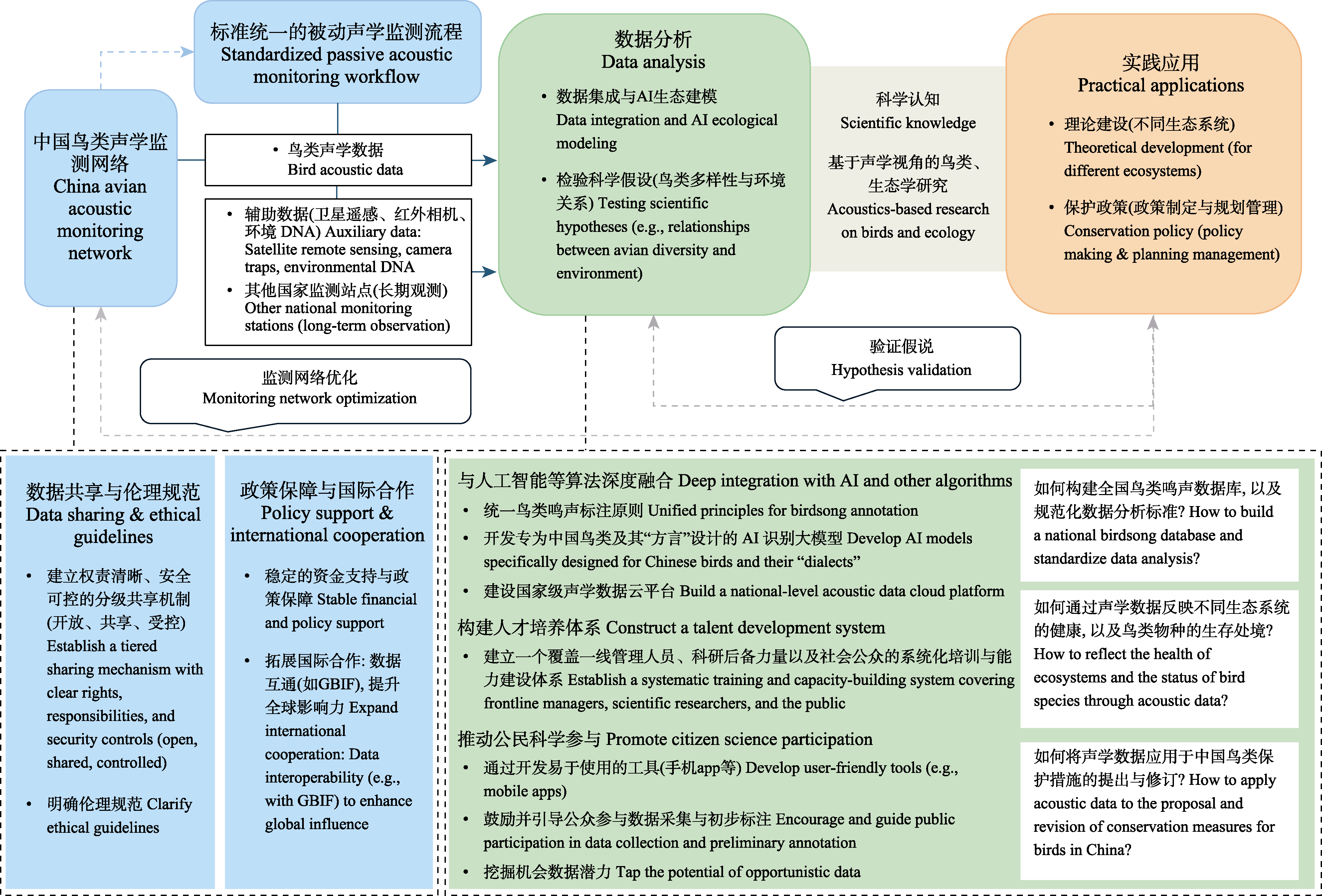
Fig. 2 An action roadmap for establishing a standardized avian acoustic monitoring network in China
| [1] |
Ahumada JA, Fegraus E, Birch T, Flores N, Kays R, O’Brien TG, Palmer J, Schuttler S, Zhao JY, Jetz W, Kinnaird M, Kulkarni S, Lyet A, Thau D, Duong M, Oliver R, Dancer A (2020) Wildlife Insights: A platform to maximize the potential of camera trap and other passive sensor wildlife data for the planet. Environmental Conservation, 47, 1-6.
DOI URL |
| [2] |
Aide TM, Corrada-Bravo C, Campos-Cerqueira M, Milan C, Vega G, Alvarez R (2013) Real-time bioacoustics monitoring and automated species identification. PeerJ, 1, e103.
DOI URL |
| [3] |
Alcocer I, Lima H, Sugai LSM, Llusia D (2022) Acoustic indices as proxies for biodiversity: A meta-analysis. Biological Reviews, 97, 2209-2236.
DOI URL |
| [4] |
Bian Q, Wang C, Hao ZZ (2021) Application of ecoacoustic monitoring in the field of biodiversity science. Chinese Journal of Applied Ecology, 32, 1119-1128. (in Chinese with English abstract)
DOI |
|
[边琦, 王成, 郝泽周 (2021) 生物声音监测研究在生物多样性领域的应用. 应用生态学报, 32, 1119-1128.]
DOI |
|
| [5] |
Blumstein DT, Mennill DJ, Clemins P, Girod L, Yao K, Patricelli G, Deppe JL, Krakauer AH, Clark C, Cortopassi KA, Hanser SF, McCowan B, Ali AM, Kirschel ANG (2011) Acoustic monitoring in terrestrial environments using microphone arrays: Applications, technological considerations and prospectus: Acoustic monitoring. Journal of Applied Ecology, 48, 758-767.
DOI URL |
| [6] |
Bradfer-Lawrence T, Gardner N, Bunnefeld L, Bunnefeld N, Willis SG, Dent DH (2019) Guidelines for the use of acoustic indices in environmental research. Methods in Ecology and Evolution, 10, 1796-1807.
DOI |
| [7] |
Darras K, Batáry P, Furnas BJ, Grass I, Mulyani YA, Tscharntke T (2019) Autonomous sound recording outperforms human observation for sampling birds: A systematic map and user guide. Ecological Applications, 29, e01954.
DOI URL |
| [8] |
Darras K, Deppe F, Fabian Y, Kartono AP, Angulo A, Kolbrek B, Mulyani YA, Prawiradilaga DM (2020) High microphone signal-to-noise ratio enhances acoustic sampling of wildlife. PeerJ, 8, e9955.
DOI PMID |
| [9] | Ding J, Sun Q, Akman A, Schuller BW (2025) Cross-dialect bird species recognition with dialect-calibrated augmentation. arXiv, 2509.22317. |
| [10] |
Donald PF, Sanderson FJ, Burfield IJ, van Bommel FPJ (2006) Further evidence of continent-wide impacts of agricultural intensification on European farmland birds, 1990-2000. Agriculture, Ecosystems & Environment, 116, 189-196.
DOI URL |
| [11] |
Ewers RM, Didham RK, Fahrig L, Ferraz G, Hector A, Holt RD, Kapos V, Reynolds G, Sinun W, Snaddon JL, Turner EC (2011) A large-scale forest fragmentation experiment: The stability of altered forest ecosystems project. Philosophical Transactions of the Royal Society B: Biological Sciences, 366, 3292-3302.
DOI URL |
| [12] | Feng XJ, Mi XC, Xiao ZS, Cao L, Wu H, Ma KP (2019) Overview of Chinese Biodiversity Observation Network (Sino BON). Bulletin of Chinese Academy of Sciences, 34, 1389-1398. (in Chinese with English abstract) |
| [冯晓娟, 米湘成, 肖治术, 曹垒, 吴慧, 马克平 (2019) 中国生物多样性监测与研究网络建设及进展. 中国科学院院刊, 34, 1389-1398.] | |
| [13] |
Funosas D, Sebastián-González E, Morant J, Marín Gómez OH, Mendoza I, Mohedano-Muñoz MA, Santamaría E, Bastianelli G, Márquez-Rodríguez A, Budka M,..., Feldman MJ, Imbeau L, Panwar P, Weed AS, Dehwal A, Attisano A, Theuerkauf J, Goodale E, Darras KFA, Pérez-Granados C (2026) A global assessment of BirdNET performance: Differences among continents, biomes, and species. Ecological Indicators, 182, 114550.
DOI URL |
| [14] |
Gibb R, Browning E, Glover-Kapfer P, Jones KE (2019) Emerging opportunities and challenges for passive acoustics in ecological assessment and monitoring. Methods in Ecology and Evolution, 10, 169-185.
DOI URL |
| [15] |
Hampton SE, Strasser CA, Tewksbury JJ, Gram WK, Budden AE, Batcheller AL, Duke CS, Porter JH (2013) Big data and the future of ecology. Frontiers in Ecology and the Environment, 11, 156-162.
DOI URL |
| [16] | Han LX, Yang L, Zheng BL (1988) The sound spectrographic analyses on the calls of lady Amherst’s pheasant (Chrysolophus amherstiae). Zoological Research, 9, 127-132. (in Chinese with English abstract) |
| [韩联宪, 杨岚, 郑宝赉 (1988) 白腹锦鸡鸣声的声谱分析. 动物学研究, 9, 127-132.] | |
| [17] |
Han P, Zhao YH, Kang Y, Ding P, Si XF (2024) Island biogeography of soundscapes: Island area shapes spatial patterns of avian acoustic diversity. Journal of Biogeography, 51, 511-521.
DOI URL |
| [18] |
He JK, Yi JF, Holyoak M, Goodale E, Yu JH, Liu W, Zhang Q, Xu HG (2025) Decade-long bird trends in China: Stable species richness but increasing biotic homogenization. Global Change Biology, 31, e70654.
DOI URL |
| [19] |
He KY, Xu XH, Zhang CY, Hao ZZ, Xiao ZS, Guo YY (2024) Bioacoustics data archives management standards and management technology progress. Biodiversity Science, 32, 24266. (in Chinese with English abstract)
DOI |
| [何凯莹, 徐心慧, 张承云, 郝泽周, 肖治术, 郭莹莹 (2024) 生物声学数据档案的管理标准及管理技术进展. 生物多样性, 32, 24266.] | |
| [20] |
Hill AP, Prince P, Piña Covarrubias E, Doncaster CP, Snaddon JL, Rogers A (2018) AudioMoth: Evaluation of a smart open acoustic device for monitoring biodiversity and the environment. Methods in Ecology and Evolution, 9, 1199-1211.
DOI URL |
| [21] | Jetz W, McGeoch MA, Guralnick R, Ferrier S, Beck J, Costello MJ, Fernandez M, Geller GN, Keil P, Merow C, Meyer C, Muller-Karger FE, Pereira HM, Regan EC, Schmeller DS, Turak E (2019) Essential biodiversity variables for mapping and monitoring species populations. Nature Ecology & Evolution, 3, 539-551. |
| [22] | Jiang SR, Ding P, Shi QS, Zhuge Y (1996) Studies on the song dialects in Chinese bulbuls. Acta Zoologica Sinica, 42, 361-367. (in Chinese with English abstract) |
| [姜仕仁, 丁平, 施青松, 诸葛阳 (1996) 白头鹎方言的初步研究. 动物学报, 42, 361-367.] | |
| [23] |
Kahl S, Wood CM, Eibl M, Klinck H (2021) BirdNET: A deep learning solution for avian diversity monitoring. Ecological Informatics, 61, 101236.
DOI URL |
| [24] | Kemp J, Azofeifa-Solano JC, Barneche DR, Brooker R, Arévalo JE, Erbe C, Parsons M (2025) Impact of acoustic index parameters on soundscape comparisons. Methods in Ecology and Evolution, 16, 872-885. |
| [25] |
Lees AC, Haskell L, Allinson T, Bezeng SB, Burfield IJ, Renjifo LM, Rosenberg KV, Viswanathan A, Butchart SHM (2022) State of the world’s birds. Annual Review of Environment and Resources, 47, 231-260.
DOI URL |
| [26] |
Li L, Zhang CY, Pei NC, Gao BT, Wang N, Li JR, Wu RC, Hao ZZ (2024) Correlation analysis of urban green landscape patterns and bird diversity based on passive acoustic monitoring technology. Biodiversity Science, 32, 24296. (in Chinese with English abstract)
DOI |
|
[李乐, 张承云, 裴男才, 高丙涛, 王娜, 李嘉睿, 武瑞琛, 郝泽周 (2024) 基于被动声学监测技术的城市绿地景观格局与鸟类多样性关联分析. 生物多样性, 32, 24296.]
DOI |
|
| [27] |
Li S (2020) Development progress and outlook of the wildlife camera-trapping networks in China. Biodiversity Science, 28, 1045-1048. (in Chinese)
DOI |
|
[李晟 (2020) 中国野生动物红外相机监测网络建设进展与展望. 生物多样性, 28, 1045-1048.]
DOI |
|
| [28] |
Li XY, Liang L, Gong P, Liu Y, Liang FF (2013) Bird watching in China reveals bird distribution changes. Chinese Science Bulletin, 58, 649-656.
DOI URL |
| [29] |
Liao ZK, Bai HT, Zhang XH, Yu S, Ling JL, Liu Y (2025) A dataset of common bird vocalizations in Hainan Tropical Rainforest National Park. Biodiversity Science, 33, 25194. (in Chinese with English abstract)
DOI |
|
[廖之锴, 白皓天, 张修瀚, 余上, 凌嘉乐, 刘阳 (2025) 海南热带雨林国家公园常见鸟类鸣声数据集. 生物多样性, 33, 25194.]
DOI |
|
| [30] | Lu TC, He FQ, Lu CL (1986) On the call of the Chinese monal (Lophophorvs lhvysii). Acta Ecologica Sinica, 6, 87-88. (in Chinese) |
| [卢汰春, 何芬奇, 卢春雷 (1986) 绿尾虹雉叫声的声谱分析. 生态学报, 6, 87-88.] | |
| [31] |
Ma KP (2015) Biodiversity monitoring in China: From CForBio to Sino BON. Biodiversity Science, 23, 1-2. (in Chinese)
DOI |
|
[马克平 (2015) 中国生物多样性监测网络建设: 从CForBio到Sino BON. 生物多样性, 23, 1-2.]
DOI |
|
| [32] | MacKenzie DI, Nichols JD, Royle JA, Pollock KH, Bailey L, Hines JE (2017) Occupancy Estimation and Modeling: Inferring Patterns and Dynamics of Species Occurrence, 2nd edn. Academic Press, London. |
| [33] | Mammides C, Goodale E, Dayananda SK, Kang L, Chen J (2017) Do acoustic indices correlate with bird diversity? Insights from two biodiverse regions in Yunnan Province, South China. Ecological Indicators, 82, 470-477. |
| [34] | Marshall-Hawkes R, Gillings S, Wilson MW, Wetherhill AS, Dicks LV, Ashton-Butt A (2025) Estimating how site-level differences in acoustic environments affect species detection by machine learning models. bioRxiv, doi: 10.1101/2025.08.31.673350. |
| [35] |
Marten K, Marler P (1977) Sound transmission and its significance for animal vocalization. I. Temperate habitats. Behavioral Ecology and Sociobiology, 2, 271-290.
DOI URL |
| [36] |
Maxwell SL, Fuller RA, Brooks TM, Watson JEM (2016) Biodiversity: The ravages of guns, nets and bulldozers. Nature, 536, 143-145.
DOI |
| [37] |
McShea WJ, Shen XL, Liu F, Wang TM, Xiao ZS, Li S (2020) China’s wildlife camera-trap monitoring needs a unified standard. Biodiversity Science, 28, 1125-1131. (in Chinese with English abstract)
DOI URL |
| [ William J. McShea,申小莉, 刘芳, 王天明, 肖治术, 李晟 (2020) 中国的野生动物红外相机监测需要统一的标准. 生物多样性, 28, 1125-1131.] | |
| [38] |
Michener WK, Jones MB (2012) Ecoinformatics: Supporting ecology as a data-intensive science. Trends in Ecology & Evolution, 27, 85-93.
DOI URL |
| [39] |
Michielsen RJ, Koprowska D, Mikusiński G, Walesiak M, Zegarek M, Żmihorski M, Budka M (2025) The effectiveness of ecoacoustic indices in representing bird species richness relies on technical parameters. Ecological Informatics, 92, 103493.
DOI URL |
| [40] |
Newbold T, Hudson LN, Hill SLL, Contu S, Lysenko I, Senior RA, Börger L, Bennett DJ, Choimes A, Collen B, Day J, De Palma A, Díaz S, Echeverria-Londoño S, Edgar MJ, Feldman A, Garon M, Harrison MLK, Alhusseini T, Ingram DJ, Itescu Y, Kattge J, Kemp V, Kirkpatrick L, Kleyer M, Correia DLP, Martin CD, Shai MR, Novosolov M, Yuan P, Phillips HRP, Purves DW, Robinson A, Simpson J, Tuck SL, Weiher E, White HJ, Ewers RM, Mace GM, Scharlemann JPW, Purvis A (2015) Global effects of land use on local terrestrial biodiversity. Nature, 520, 45-50.
DOI |
| [41] | Parris KM, Schneider A (2009) Impacts of traffic noise and traffic volume on birds of roadside habitats. Ecology and Society, 14, art29. |
| [42] |
Pereira HM, Ferrier S, Walters M, Geller GN, Jongman RHG, Scholes RJ, Bruford MW, Brummitt N, Butchart SHM, Cardoso AC, Coops NC, Dulloo E, Faith DP, Freyhof J, Gregory RD, Heip C, Höft R, Hurtt G, Jetz W, Karp DS, McGeoch MA, Obura D, Onoda Y, Pettorelli N, Reyers B, Sayre R, Scharlemann JPW, Stuart SN, Turak E, Walpole M, Wegmann M (2013) Essential biodiversity variables. Science, 339, 277-278.
DOI PMID |
| [43] |
Pérez-Granados C, Gómez-Catasús J, Rosa D, Barrero A, Reverter M, Traba J (2019) Effort needed to accurately estimate Vocal Activity Rate index using acoustic monitoring: A case study with a dawn-time singing passerine. Ecological Indicators, 107, 105608.
DOI URL |
| [44] |
Pérez-Granados C, Morant J, Darras KFA, Marín-Gómez OH, Mendoza I, Muñoz-Mohedano MA, Santamaría-García E, Bastianelli G, Márquez-Rodríguez A, Budka M,..., da Paz RV, Salustio-Gomes C, Oliveira-Júnior DD, Lima-Santos CS, Pichorim M, Pan WY, Goodale E, Attisano A, Theuerkauf J, Sebastián-González E (2026) WABAD: A world annotated bird acoustic dataset for passive acoustic monitoring. Ecology, 107, e70317.
DOI URL |
| [45] |
Pérez-Granados C, Traba J (2021) Estimating bird density using passive acoustic monitoring: A review of methods and suggestions for further research. Ibis, 163, 765-783.
DOI URL |
| [46] | Qin YY, Zhao LH, Wang JC (2023) Roles and development trends of passive acoustic monitoring techniques for biodiversity conservation in national parks. National Park, 1, 264-271. (in Chinese with English abstract) |
| [覃远玉, 赵龙辉, 汪继超 (2023) 被动声学监测技术在国家公园生物多样性保护中的作用及发展趋势. 国家公园(中英文), 1, 264-271.] | |
| [47] |
Reichman OJ, Jones MB, Schildhauer MP (2011) Challenges and opportunities of open data in ecology. Science, 331, 703-705.
DOI PMID |
| [48] | Rigal S, Dakos V, Alonso H, Auniņš A, Benkő Z, Brotons L, Chodkiewicz T, Chylarecki P, de Carli E, del Moral JC, Domşa C, Escandell V, Fontaine B, Foppen R, Gregory R, Harris S, Herrando S, Husby M, Ieronymidou C, Jiguet F, Kennedy J, Klvaňová A, Kmecl P, Kuczyński L, Kurlavičius P, Kålås JA, Lehikoinen A, Lindström Å, Lorrillière R, Moshøj C, Nellis R, Noble D, Eskildsen DP, Paquet JY, Pélissié M, Pladevall C, Portolou D, Reif J, Schmid H, Seaman B, Szabo ZD, Szép T, Florenzano GT, Teufelbauer N, Trautmann S, van Turnhout C, Vermouzek Z, Vikstrøm T, Voříšek P, Weiserbs A, Devictor V (2023) Farmland practices are driving bird population decline across Europe. Proceedings of the National Academy of Sciences, USA, 120, e2216573120. |
| [49] |
Roe P, Eichinski P, Fuller RA, McDonald PG, Schwarzkopf L, Towsey M, Truskinger A, Tucker D, Watson DM (2021) The Australian acoustic observatory. Methods in Ecology and Evolution, 12, 1802-1808.
DOI URL |
| [50] |
Rogers DI, Piersma T, Hassell CJ (2006) Roost availability may constrain shorebird distribution: Exploring the energetic costs of roosting and disturbance around a tropical bay. Biological Conservation, 133, 225-235.
DOI URL |
| [51] | Rosenberg KV, Dokter AM, Blancher PJ, Sauer JR, Smith AC, Smith PA, Stanton JC, Panjabi A, Helft L, Parr M, Marra PP (2019) Decline of the North American avifauna. Science, 366, 120-124. |
| [52] | Şekercioğlu ÇH, Daily GC, Ehrlich PR (2004) Ecosystem consequences of bird declines. Proceedings of the National Academy of Sciences, USA, 101, 18042-18047. |
| [53] |
Shen XH, Zhu XY, Shi HF, Wang CZ (2023) Research progress of birdsong recognition algorithms based on machine learning. Biodiversity Science, 31, 23272. (in Chinese with English abstract)
DOI |
|
[申小虎, 朱翔宇, 史洪飞, 王传之 (2023) 基于机器学习鸟声识别算法研究进展. 生物多样性, 31, 23272.]
DOI |
|
| [54] | Shonfield J, Bayne EM (2017) Autonomous recording units in avian ecological research: Current use and future applications. Avian Conservation and Ecology, 12, art14. |
| [55] |
Silvertown J (2009) A new dawn for citizen science. Trends in Ecology & Evolution, 24, 467-471.
DOI URL |
| [56] | Slabbekoorn H, Peet M (2003) Birds sing at a higher pitch in urban noise. Nature, 424, 267. |
| [57] |
Stowell D (2022) Computational bioacoustics with deep learning: A review and roadmap. PeerJ, 10, e13152.
DOI URL |
| [58] |
Sueur J, Farina A (2015) Ecoacoustics: The ecological investigation and interpretation of environmental sound. Biosemiotics, 8, 493-502.
DOI URL |
| [59] |
Sugai LSM, Silva TSF, Ribeiro JW Jr, Llusia D (2019) Terrestrial passive acoustic monitoring: Review and perspectives. BioScience, 69, 15-25.
DOI |
| [60] |
Sun YF, Wang SZ, Feng JW, Wang TM (2023) Diel and seasonal variability of the forest soundscape in the Northeast China Tiger and Leopard National Park. Biodiversity Science, 31, 22523. (in Chinese with English abstract)
DOI |
|
[孙翊斐, 王士政, 冯佳伟, 王天明 (2023) 东北虎豹国家公园森林声景的昼夜和季节变化. 生物多样性, 31, 22523.]
DOI |
|
| [61] | Tscharntke T, Batáry P (2023) Agriculture, urbanization, climate, and forest change drive bird declines. Proceedings of the National Academy of Sciences, USA, 120, e2305216120. |
| [62] | Turgeon PJ, Van Wilgenburg SL, Drake KL (2017) Microphone variability and degradation: Implications for monitoring programs employing autonomous recording units. Avian Conservation and Ecology, 12, art9. |
| [63] |
Wang SZ, Sun YF, Li ZZ, Shu Y, Feng JW, Wang TM (2023) Effects of bird migration on the temporal patterns of the wetland soundscape in the downstream region of the Tumen River Basin of China. Biodiversity Science, 31, 22337. (in Chinese with English abstract)
DOI |
|
[王士政, 孙翊斐, 李珍珍, 舒越, 冯佳伟, 王天明 (2023) 鸟类迁徙对图们江下游湿地声景时间格局的影响. 生物多样性, 31, 22337.]
DOI |
|
| [64] |
Whelan CJ, Şekercioğlu ÇH, Wenny DG (2015) Why birds matter: From economic ornithology to ecosystem services. Journal of Ornithology, 156, 227-238.
DOI |
| [65] |
Wiley RH, Richards DG (1978) Physical constraints on acoustic communication in the atmosphere: Implications for the evolution of animal vocalizations. Behavioral Ecology and Sociobiology, 3, 69-94.
DOI URL |
| [66] |
Wilkinson MD, Dumontier M, Aalbersberg IJ, Appleton G, Axton M, Baak A, Blomberg N, Boiten JW, da Silva Santos LB, Bourne PE, …, Swertz MA, Thompson M, van der Lei J, van Mulligen E, Velterop J, Waagmeester A, Wittenburg P, Wolstencroft K, Zhao J, Mons B (2019) Addendum: The FAIR Guiding Principles for scientific data management and stewardship. Scientific Data, 6, 6.
DOI PMID |
| [67] |
Wimmer J, Towsey M, Roe P, Williamson I (2013) Sampling environmental acoustic recordings to determine bird species richness. Ecological Applications, 23, 1419-1428.
PMID |
| [68] |
Wu KY, Ruan WD, Zhou DF, Chen QC, Zhang CY, Pan XY, Yu S, Liu Y, Xiao RB (2023) Syllable clustering analysis-based passive acoustic monitoring technology and its application in bird monitoring. Biodiversity Science, 31, 22370. (in Chinese with English abstract)
DOI |
|
[吴科毅, 阮文达, 周棣锋, 陈庆春, 张承云, 潘新园, 余上, 刘阳, 肖荣波 (2023) 基于音节聚类分析的被动声学监测技术及其在鸟类监测中的应用. 生物多样性, 31, 22370.]
DOI |
|
| [69] | Xu XQ, Pu BJ, Yu CM, An DJ (2023) Situtaion of acoustic tools to assist biodiversity monitoring in nature reserves and application recommendations. Natural Protected Areas, 3(4), 34-44. (in Chinese with English abstract) |
| [许晓青, 蒲宝婧, 余楚萌, 安德军 (2023) 声学手段辅助自然保护地生物多样性监测现状及应用建议. 自然保护地, 3(4), 34-44.] | |
| [70] |
Yip DA, Bayne EM, Sólymos P, Campbell J, Proppe D (2017) Sound attenuation in forest and roadside environments: Implications for avian point-count surveys. The Condor, 119, 73-84.
DOI URL |
| [71] |
Yong DL, Heim W, Chowdhury SU, Choi CY, Ktitorov P, Kulikova O, Kondratyev A, Round PD, Allen D, Trainor CR, Gibson L, Szabo JK (2021) The state of migratory landbirds in the East Asian flyway: Distributions, threats, and conservation needs. Frontiers in Ecology and Evolution, 9, 613172.
DOI URL |
| [72] |
Zhang CY, Jin NT, Xie J, Hao ZZ (2024) CicadaNet: Deep learning based automatic cicada chorus filtering for improved long-term bird monitoring. Ecological Indicators, 158, 111423.
DOI URL |
| [73] |
Zhang ZX, Zhang CY, Hao ZZ, He KY, Huang YQ, Xiao ZS (2024) The progress and prospects of terrestrial bioacoustics data acquisition equipment. Biodiversity Science, 32, 24265. (in Chinese with English abstract)
DOI |
|
[张梓欣, 张承云, 郝泽周, 何凯莹, 黄泳桥, 肖治术 (2024) 陆地生物声学数据采集设备的进展及展望. 生物多样性, 32, 24265.]
DOI |
|
| [74] |
Zhao Y, Shen XL, Li S, Zhang YY, Peng RH, Ma KP (2020) Progress and outlook for soundscape ecology. Biodiversity Science, 28, 806-820. (in Chinese with English abstract)
DOI |
|
[赵莹, 申小莉, 李晟, 张雁云, 彭任华, 马克平 (2020) 声景生态学研究进展和展望. 生物多样性, 28, 806-820.]
DOI |
|
| [75] | Zheng GM (2023) A Checklist on the Classification and Distribution of the Birds of China, 4th edn. Science Press, Beijing. (in Chinese) |
| [郑光美 (2023) 中国鸟类分类与分布名录 (第四版). 科学出版社, 北京.] |
| [1] | Jiangjian Xie, Mengkun Zhu, Aiwu Jiang, Zhishu Xiao. Future of listening to biodiversity: Limitations and development directions of soundscape-based automatic assessment methods [J]. Biodiv Sci, 2026, 34(2): 25296-. |
| [2] | Huan Xu, Fengfei Xin, Hongliang Shi, Lin Yuan, Shunqi Bo, Xinyi Zhao, Shuaitao Deng, Tingting Pan, Jing Yu, Saisai Sun, Cheng Xue. Evaluation of effects of integrated ecological restoration technology on habitat and bird diversity improvement in the North Branch of Yangtze River Estuary [J]. Biodiv Sci, 2025, 33(5): 24478-. |
| [3] | Zhikai Liao, Haotian Bai, Xiuhan Zhang, Shang Yu, Jiale Ling, Yang Liu. A dataset of common bird vocalizations in Hainan Tropical Rainforest National Park [J]. Biodiv Sci, 2025, 33(11): 25194-. |
| [4] | Haotian Bai, Shang Yu, Xinyuan Pan, Jiale Ling, Juan Wu, Kaiqi Xie, Yang Liu, Xueye Chen. AI-assisted recognition for passive acoustic monitoring of birds in urban wetland parks [J]. Biodiv Sci, 2024, 32(8): 24188-. |
| [5] | Fei Duan, Mingzhang Liu, Hongliang Bu, Le Yu, Sheng Li. Effects of urbanization on bird community composition and functional traits: A case study of the Beijing-Tianjin-Hebei region [J]. Biodiv Sci, 2024, 32(8): 23473-. |
| [6] | Chunxiao Wang, Zhengwang Zhang, Shaoxia Xia, Houlang Duan, Wen Wang, Yifei Jia, Lixun Zhang, Gang Feng, Yaqiao Yang, Tong Li, Changqing Ding, Chunping Wang, Baodong Yuan, Jinyu Lei, Yu Liu, Jianbin Shi, Keqi Lan, Qingqing Shi, Qing Xiao, Xiubo Yu. Seasonal and regional patterns and conservation strategies of waterbird diversity in the Yellow River Basin [J]. Biodiv Sci, 2024, 32(11): 23490-. |
| [7] | Jiangjian Xie, Chen Shen, Feiyu Zhang, Zhishu Xiao. Cross-regional bird species recognition method integrating audio and ecological niche information [J]. Biodiv Sci, 2024, 32(10): 24259-. |
| [8] | Qianrong Guo, Shufei Duan, Jie Xie, Xueyan Dong, Zhishu Xiao. Advances in bird sound annotation methods for passive acoustic monitoring [J]. Biodiv Sci, 2024, 32(10): 24313-. |
| [9] | Lei Chen, Zhiyong Xu, Pukun Su, Xiaotian Lai, Zhao Zhao. Exploring the application of frequency-dependent acoustic diversity index in human-dominated areas [J]. Biodiv Sci, 2024, 32(10): 24286-. |
| [10] | Yingying Liu, Lixin Gong, Hao Zeng, Jiang Feng, Yongjun Dong, Lei Wang, Tinglei Jiang. Application of passive acoustic monitoring in Chiropteran research [J]. Biodiv Sci, 2024, 32(10): 24233-. |
| [11] | Wantao Huang, Zezhou Hao, Zixin Zhang, Zhishu Xiao, Chengyun Zhang. A comparison of bird sound recognition performance among acoustic recorders [J]. Biodiv Sci, 2024, 32(10): 24273-. |
| [12] | Le Li, Chengyun Zhang, Nancai Pei, Bingtao Gao, Na Wang, Jiarui Li, Ruichen Wu, Zezhou Hao. Correlation analysis of urban green landscape patterns and bird diversity based on passive acoustic monitoring technology [J]. Biodiv Sci, 2024, 32(10): 24296-. |
| [13] | Zezhou Hao, Chengyun Zhang, Le Li, Bingtao Gao, Wei Zeng, Chun Wang, Zixuan Wang, Wantao Huang, Yue Zhang, Nancai Pei, Zhishu Xiao. Applications of passive acoustic monitoring and evaluation in urban bird research [J]. Biodiv Sci, 2024, 32(10): 24123-. |
| [14] | Luqin Yin, Cheng Wang, Wenjing Han. Food source characteristics and diversity of birds based on feeding behavior in residential areas of Beijing [J]. Biodiv Sci, 2023, 31(5): 22473-. |
| [15] | Xiaohu Shen, Xiangyu Zhu, Hongfei Shi, Chuanzhi Wang. Research progress of birdsong recognition algorithms based on machine learning [J]. Biodiv Sci, 2023, 31(11): 23272-. |
| Viewed | ||||||
|
Full text |
|
|||||
|
Abstract |
|
|||||
Copyright © 2026 Biodiversity Science
Editorial Office of Biodiversity Science, 20 Nanxincun, Xiangshan, Beijing 100093, China
Tel: 010-62836137, 62836665 E-mail: biodiversity@ibcas.ac.cn

