

Biodiv Sci ›› 2026, Vol. 34 ›› Issue (2): 25337. DOI: 10.17520/biods.2025337 cstr: 32101.14.biods.2025337
• Original Papers: Animal Diversity • Previous Articles Next Articles
Tingting Zhou1( ), Haomiao Zhang2(), Haojie Wang1, Jian Liao1, Xiaodan Chen1, Nan Yang1, Bo-Ping Han1(), Zhenyuan Liu1,*()(
 )
)
Received:2025-08-22
Accepted:2026-01-25
Online:2026-02-20
Published:2026-03-23
Contact:
Zhenyuan Liu
Supported by:Tingting Zhou, Haomiao Zhang, Haojie Wang, Jian Liao, Xiaodan Chen, Nan Yang, Bo-Ping Han, Zhenyuan Liu. Geographical patterns and key influence factors of Odonata species diversity in Guangdong Province[J]. Biodiv Sci, 2026, 34(2): 25337.
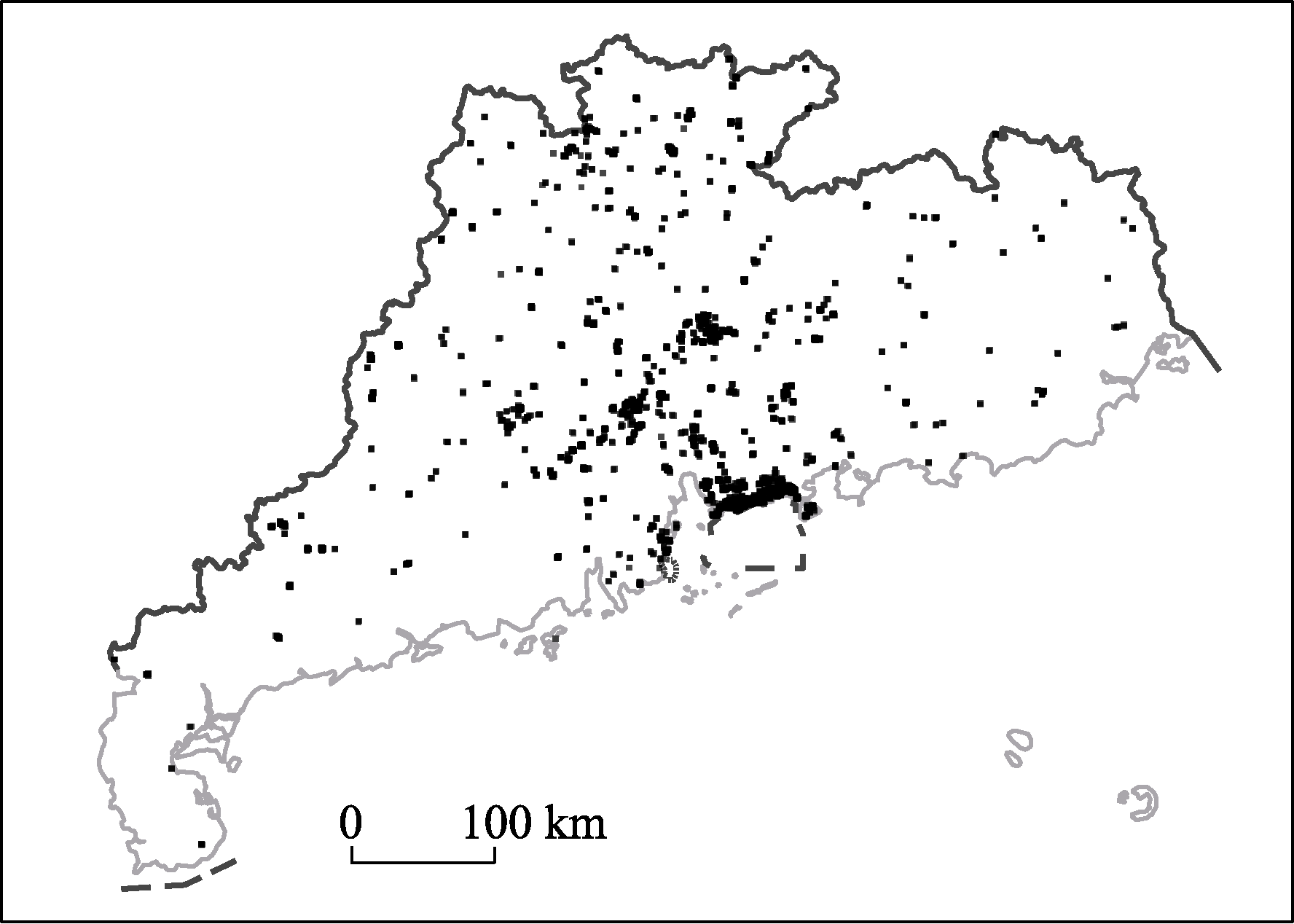
Fig. 1 Spatial distribution of Odonata species records across Guangdong Province
| 区系类型 Fauna types | 物种数 No. of species | 占比 Proportion (%) |
|---|---|---|
| 东洋界分布型 Oriental Realm distribution type | 199 | 76.25 |
| 华南区 South China Region | 63 | 24.14 |
| 华南区-华中区 South China Region-Central China Region | 90 | 34.48 |
| 华南区-西南区 South China Region-Southwest China Region | 4 | 1.53 |
| 华南区-华中区-西南区 South China Region-Central China Region-Southwest China Region | 42 | 16.09 |
| 古北界-东洋界分布型 Palaearctic-Oriental Realm distribution type | 62 | 23.75 |
| 华南区-华中区-华北区 South China Region-Central China Region-North China Region | 3 | 1.15 |
| 华南区-西南区-青藏区 South China Region-Southwest China Region-Qinghai-Xizang Region | 1 | 0.38 |
| 华南区-华中区-西南区-华北区 South China Region-Central China Region-Southwest China Region-North China Region | 28 | 10.73 |
| 华南区-华中区-西南区-青藏区 South China Region-Central China Region-Southwest China Region-Qinghai-Xizang Region | 1 | 0.38 |
| 华南区-华中区-西南区-蒙新区 South China Region-Central China Region-Southwest China Region-Mengxin Region | 1 | 0.38 |
| 华南区-华中区-华北区-东北区 South China Region-Central China Region-North China Region-Northeast China Region | 2 | 0.77 |
| 华南区-华中区-西南区-华北区-东北区 South China Region-Central China Region-Southwest China Region-North China Region-Northeast China Region | 6 | 2.30 |
| 华南区-华中区-西南区-华北区-青藏区 South China Region-Central China Region-Southwest China Region-North China Region-Qinghai-Xizang Region | 6 | 2.30 |
| 华南区-华中区-西南区-华北区-青藏区-蒙新区-东北区 South China Region-Central China Region-Southwest China Region-North China Region-Qinghai-Xizang Region-Mengxin Region-Northeast China Region | 14 | 5.36 |
Table 1 The fauna types of Odonata in Guangdong Province
| 区系类型 Fauna types | 物种数 No. of species | 占比 Proportion (%) |
|---|---|---|
| 东洋界分布型 Oriental Realm distribution type | 199 | 76.25 |
| 华南区 South China Region | 63 | 24.14 |
| 华南区-华中区 South China Region-Central China Region | 90 | 34.48 |
| 华南区-西南区 South China Region-Southwest China Region | 4 | 1.53 |
| 华南区-华中区-西南区 South China Region-Central China Region-Southwest China Region | 42 | 16.09 |
| 古北界-东洋界分布型 Palaearctic-Oriental Realm distribution type | 62 | 23.75 |
| 华南区-华中区-华北区 South China Region-Central China Region-North China Region | 3 | 1.15 |
| 华南区-西南区-青藏区 South China Region-Southwest China Region-Qinghai-Xizang Region | 1 | 0.38 |
| 华南区-华中区-西南区-华北区 South China Region-Central China Region-Southwest China Region-North China Region | 28 | 10.73 |
| 华南区-华中区-西南区-青藏区 South China Region-Central China Region-Southwest China Region-Qinghai-Xizang Region | 1 | 0.38 |
| 华南区-华中区-西南区-蒙新区 South China Region-Central China Region-Southwest China Region-Mengxin Region | 1 | 0.38 |
| 华南区-华中区-华北区-东北区 South China Region-Central China Region-North China Region-Northeast China Region | 2 | 0.77 |
| 华南区-华中区-西南区-华北区-东北区 South China Region-Central China Region-Southwest China Region-North China Region-Northeast China Region | 6 | 2.30 |
| 华南区-华中区-西南区-华北区-青藏区 South China Region-Central China Region-Southwest China Region-North China Region-Qinghai-Xizang Region | 6 | 2.30 |
| 华南区-华中区-西南区-华北区-青藏区-蒙新区-东北区 South China Region-Central China Region-Southwest China Region-North China Region-Qinghai-Xizang Region-Mengxin Region-Northeast China Region | 14 | 5.36 |
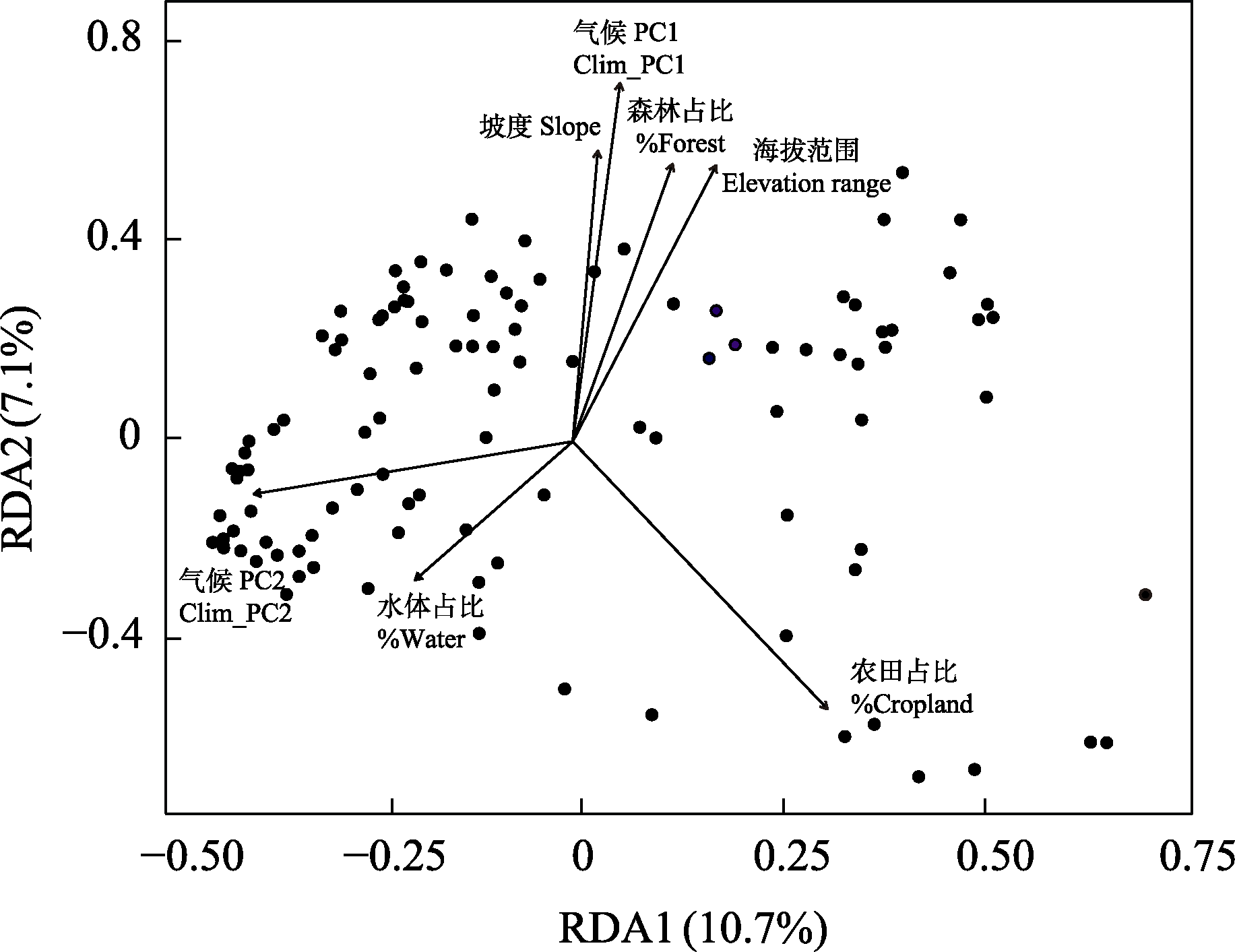
Fig. 2 Redundancy analysis (RDA) of Odonata community structure in relation to environmental factors (topography, climate, and land-use) in Guangdong Province
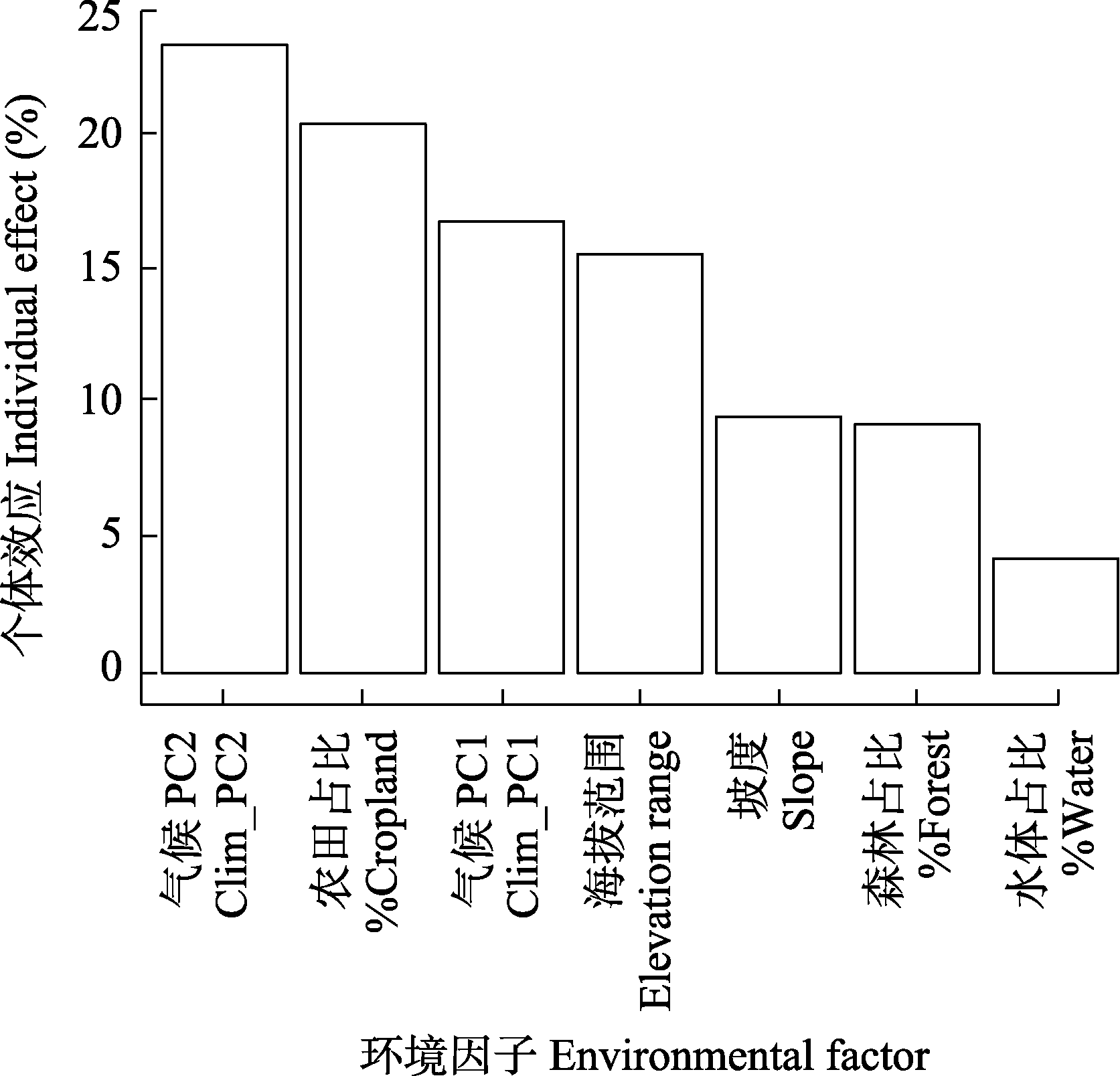
Fig. 3 Hierarchical partitioning analysis of key environmental factors affecting Odonata community structure across Guangdong Province
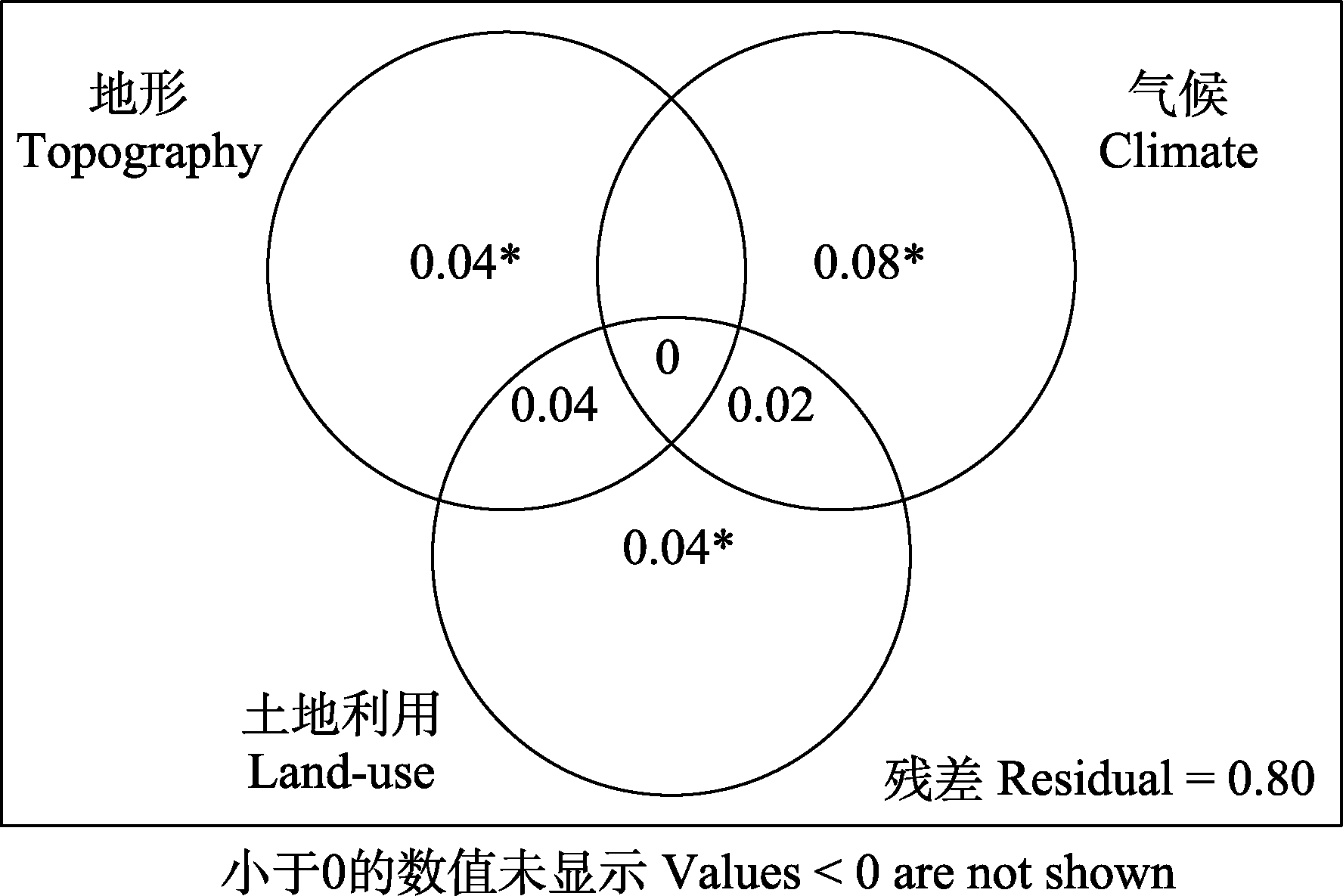
Fig. 4 Variation partitioning of topography, climate, and land-use factors for spatial variation in Odonata community structure across Guangdong Province. * P < 0.05.
| [1] |
Abbott JC, Bota-Sierra CA, Guralnick R, Kalkman V, González-Soriano E, Novelo-Gutiérrez R, Bybee S, Ware J, Belitz MW (2022) Diversity of Nearctic dragonflies and damselflies (Odonata). Diversity, 14, 575.
DOI URL |
| [2] |
Alves-Martins F, Calatayud J, Medina NG, De Marco P, Juen L, Hortal J (2019) Drivers of regional and local diversity of Amazonian stream Odonata. Insect Conservation and Diversity, 12, 251-261.
DOI |
| [3] |
Amatulli G, Domisch S, Tuanmu MN, Parmentier B, Ranipeta A, Malczyk J, Jetz W (2018) A suite of global, cross-scale topographic variables for environmental and biodiversity modeling. Scientific Data, 5, 180040.
DOI URL |
| [4] |
Baeta R, Léauté J, Sansault É, Pincebourde S (2025) Detecting the effect of intensive agriculture on Odonata diversity using citizen science data. Ecological Applications, 35, e3057.
DOI PMID |
| [5] |
Calvão LB, Samways MJ, Faria APJ, Ferreira MFR, Cruz GM, Florentino AC, Juen L (2025) Oviposition strategies of Amazonian dragonflies in response to anthropogenic gradients. Oecologia, 207, 105.
DOI PMID |
| [6] | Chen T, Zhang HD (1994) The floristic geography of Nanling Mountain range, China. I. Floristic composition and characteristics. Journal of Tropical and Subtropical Botany, 2(1), 10-23. (in Chinese with English abstract) |
| [陈涛, 张宏达 (1994) 南岭植物区系地理学研究. I. 植物区系的组成和特点. 热带亚热带植物学报, 2(1), 10-23.] | |
| [7] | Corbet PS (2004) Dragonflies: Behaviour and Ecology of Odonata, 2nd edn. Harley Books, Colchester, United Kingdom. |
| [8] | Cui XD, Wu HD, Chen HF, Zhang YY (2014) Dragonflies of Nankunshan, China. China Forestry Publishing House, Beijing. (in Chinese) |
| [崔晓东, 吴宏道, 陈红锋, 张应扬 (2014) 中国南昆山蜻蜓. 中国林业出版社, 北京.] | |
| [9] | Dijkstra KDB, Clausnitzer V (2006) Thoughts from Africa: How can forest influence species composition, diversity and speciation in tropical Odonata? In: Forests and Dragonflies: Fourth WDA International Symposium of Odonatology (ed. Cordero-Rivera A), pp.127-151. Pensoft Publishers, Sofia. |
| [10] | Editorial Committee of Guangdong Yearbook (2024) Guangdong Yearbook 2024. Guangdong Yearbook Press, Guangzhou. (in Chinese) |
| [广东年鉴编纂委员会 (2024) 广东年鉴2024. 广东年鉴社, 广州.] | |
| [11] | Edzer P, Roger B, Etienne R, Michael S, Ian C, Tim K, Robin L, Hadley W, Jeroen O, Kirill M, Thomas LP, Dan B, Dewey D (2025) sf: Simple Features for R (1.0-21). https://github.com/r-spatial/sf. (accessed on 2025-05-14) |
| [12] |
Guan ZY, Dumont HJ, Han B-P (2012) Archineura incarnata (Karsch, 1892) and Atrocalopteryx melli (Ris, 1912) in Southern China (Odonata: Calopterygidae). International Journal of Odonatology, 15, 229-239.
DOI URL |
| [13] |
Guan ZY, Dumont HJ, Yu X, Han B-P, Vierstraete A (2013) Pyrrhosoma and its relatives: A phylogenetic study (Odonata: Zygoptera). International Journal of Odonatology, 16, 247-257.
DOI URL |
| [14] | Han B-P (2010) Reservoir ecology and limnology in China: A retrospective comment. Journal of Lake Sciences, 22, 151-160. (in Chinese with English abstract) |
| [韩博平 (2010) 中国水库生态学研究的回顾与展望. 湖泊科学, 22, 151-160.] | |
| [15] |
Heiser M, Schmitt T (2013) Tracking the boundary between the Palaearctic and the Oriental region: New insights from dragonflies and damselflies (Odonata). Journal of Biogeography, 40, 2047-2058.
DOI URL |
| [16] |
Holt BG, Lessard JP, Borregaard MK, Fritz SA, Araújo MB, Dimitrov D, Fabre PH, Graham CH, Graves GR, Jønsson KA, Nogués-Bravo D, Wang ZH, Whittaker RJ, Fjeldså J, Rahbek C (2013) An update of Wallace’s zoogeographic regions of the world. Science, 339, 74-78.
DOI PMID |
| [17] |
Huang WD, Zhao TY, Fan MY, Duan YG, Tian L, Li H, Cai WZ, Song F (2025) Phylogenetic relationships and divergence times of Odonata inferred from mitochondrial genome. iScience, 28, 111806.
DOI URL |
| [18] |
Kalkman VJ, Clausnitzer V, Dijkstra KB, Orr AG, Paulson DR, van Tol J (2008) Global diversity of dragonflies (Odonata) in freshwater. Hydrobiologia, 595, 351-363.
DOI URL |
| [19] |
Kennedy CM, Oakleaf JR, Theobald DM, Baruch-Mordo S, Kiesecker J (2019) Managing the middle: A shift in conservation priorities based on the global human modification gradient. Global Change Biology, 25, 811-826.
DOI PMID |
| [20] |
Kohli M, Letsch H, Greve C, Béthoux O, Deregnaucourt I, Liu SL, Zhou X, Donath A, Mayer C, Podsiadlowski L, Gunkel S, Machida R, Niehuis O, Rust J, Wappler T, Yu X, Misof B, Ware J (2021) Evolutionary history and divergence times of Odonata (dragonflies and damselflies) revealed through transcriptomics. iScience, 24, 103324.
DOI URL |
| [21] |
Lai JS, Zou Y, Zhang JL, Peres-Neto PR (2022) Generalizing hierarchical and variation partitioning in multiple regression and canonical analyses using the rdacca.hp R package. Methods in Ecology and Evolution, 13, 782-788.
DOI URL |
| [22] |
Li SY, Zhang YQ, Zou P, Ning ZL, Liao JP (2023) Ex situ conservation of plant diversity status and suggestions for the development of botanical gardens in Guangdong Province. Biodiversity Science, 31, 22647. (in Chinese with English abstract)
DOI URL |
| [李仕裕, 张奕奇, 邹璞, 宁祖林, 廖景平 (2023) 广东省植物园植物多样性迁地保护现状及发展建议. 生物多样性, 31, 22647.] | |
| [23] | Liao J (2023) Faunal Analysis, Phylogeny and Biogeography of Odonata in Pan-South China. PhD dissertation, Jinan University, Guangzhou. (in Chinese with English abstract) |
| [廖健 (2023) 泛华南地区蜻蜓目区系、系统发育与生物地理学研究. 博士学位论文, 暨南大学, 广州.] | |
| [24] |
Liao J, Wang HJ, Xiao SJ, Guan ZY, Zhang HM, Dumont HJ, Han B-P (2022) Modeling and prediction of the species’ range of Neurobasis chinensis (Linnaeus, 1758) under climate change. Biology, 11, 868.
DOI URL |
| [25] | Liu CQ, Zhang YY, Liu X (2020) Geographical fauna of Odonata in Xiangtoushan National Reserve, Guangdong Province. Forestry and Environmental Science, 36(3), 92-99. (in Chinese with English abstract) |
| [刘彩琴, 张艳艳, 刘欣 (2020) 广东象头山国家级自然保护区蜻蜓目昆虫区系地理研究. 林业与环境科学, 36(3), 92-99.] | |
| [26] | Liu ZY (2023) Urbanization Reshapes Macroinvertebrate Diversity in the Subtropical Rivers—A Case Study to Explore the Mechanisms of Species Coexistence and Maintenance in Shenzhen. PhD dissertation, University of Chinese Academy of Sciences, Beijing. (in Chinese with English abstract) |
| [刘振元 (2023) 城市化重塑亚热带河流大型无脊椎动物多样性——以深圳市为例探索物种共存和维持机制. 博士学位论文, 中国科学院大学, 北京.] | |
| [27] |
Liu ZY, Han B-P, Soininen J (2025) Tropical niche conservatism and dispersal limitation jointly determine taxonomic and phylogenetic β-diversities of Odonata in Eastern China. Global Ecology and Biogeography, 34, e70018.
DOI URL |
| [28] |
Liu ZY, Zhang HM, Zhou TT, Tan YX, Han B-P (2025) A dataset on the checklist and geographical distributions of Odonata from Guangdong, China. Biodiversity Science, 33, 25348. (in Chinese with English abstract)
DOI |
|
[刘振元, 张浩淼, 周婷婷, 镡雨欣, 韩博平 (2025) 广东省蜻蜓目物种名录和地理分布数据集. 生物多样性, 33, 25348.]
DOI |
|
| [29] | Ma X, Wang H, Yu W, Du Y, Liang JC, Hu HJ, Qiu SR, Liu L (2021) Analysis on the hotspot and conservation gaps of bird biodiversity in Guangdong Province based on MaxEnt model. Biodiversity Science, 29, 1097-1107. (in Chinese with English abstract) |
| [马星, 王浩, 余蔚, 杜勇, 梁健超, 胡慧建, 邱胜荣, 刘璐 (2021) 基于MaxEnt模型分析广东省鸟类多样性热点分布及保护空缺. 生物多样性, 29, 1097-1107.] | |
| [30] |
Melendez N, Stevens VM, Baguette M (2022) Freshwater Reservoir, ecological traps and source-sink dynamics. Diversity, 14, 1021.
DOI URL |
| [31] |
Oliveira-Junior JMB, Dias-Silva K, Teodósio MA, Juen L (2019) The response of neotropical dragonflies (Insecta: Odonata) to local and regional abiotic factors in small streams of the Amazon. Insects, 10, 446.
DOI URL |
| [32] | Ou JF, Huang H, Liu GQ, Wu H, Zheng JH, Zhang TP (2009) Research on diversity of Odonata in Zhuhai area, Guangdong Province. Journal of Environmental Entomology, 31, 356-360. (in Chinese with English abstract) |
| [欧剑峰, 黄鸿, 刘桂清, 吴华, 郑基焕, 张太平 (2009) 广东省珠海地区蜻蜓目昆虫物种多样性调查. 环境昆虫学报, 31, 356-360.] | |
| [33] |
Pàmies-Harder M, Múrria C, Abbott JC, Abbott K, Kalkman VJ (2024) Timing and direction of faunal exchange between the Nearctic and the Palaearctic in Odonata. Journal of Biogeography, 51, 1974-1985.
DOI URL |
| [34] | Pateiro-López B, Rodríguez-Casal A (2010) Generalizing the convex hull of a sample: The R package alphahull. Journal of Statistical Software, 34, 1-28. |
| [35] | Paulson D, Schorr M, Deliry C (2025) World Odonata List. https://www.pugetsound.edu/puget-sound-museum-natural-history/biodiversity-resources/insects/dragonflies/world-odonata-list. (accessed on 2025-04-05) |
| [36] |
Pinkert S, Dijkstra KB, Zeuss D, Reudenbach C, Brandl R, Hof C (2018) Evolutionary processes, dispersal limitation and climatic history shape current diversity patterns of European dragonflies. Ecography, 41, 795-804.
DOI URL |
| [37] |
Pires MM, Sahlén G, Périco E (2022) Agricultural land use affects the heterogeneity of Odonata communities in the Brazilian Pampa. Journal of Insect Conservation, 26, 503-514.
DOI |
| [38] |
Quan Q, Tang X, Wu Y, Zou FS (2018) β-diversity of bird assemblages in the Nanling Mountain ranges. Tropical Geography, 38, 321-327, 346. (in Chinese with English abstract)
DOI |
| [权擎, 唐璇, 吴毅, 邹发生 (2018) 南岭山脉及周边鸟类β多样性分析. 热带地理, 38, 321-327, 346.] | |
| [39] |
Song ZQ, Ye W, Dong SY, Jin ZC, Zhong XJ, Wang Z, Zhang BY, Xu YC, Chen WL, Li SJ, Yao G, Xu ZF, Liao S, Tong YH, Zeng YP, Zeng YB, Chen YS (2023) A dataset on inventory and geographical distributions of higher plants in Guangdong, China. Biodiversity Science, 31, 23177. (in Chinese with English abstract)
DOI |
| [宋柱秋, 叶文, 董仕勇, 金梓超, 钟星杰, 王震, 张步云, 徐晔春, 陈文俐, 李世晋, 姚纲, 徐洲锋, 廖帅, 童毅华, 曾佑派, 曾云保, 陈又生 (2023) 广东省高等植物多样性编目和分布数据集. 生物多样性, 31, 23177.] | |
| [40] |
Suhling F, Suhling I, Richter O (2015) Temperature response of growth of larval dragonflies—An overview. International Journal of Odonatology, 18, 15-30.
DOI URL |
| [41] |
Wang HJ, Wang L, Liao J, Han BP (2023) The complete mitochondrial genome of Chlorogomphus shanicus Wilson, 2002 (Anisoptera: Chlorogomphidae), an endemic species in South China. Mitochondrial DNA: Part B, 8, 1192-1195.
DOI URL |
| [42] |
Wiens JJ, Donoghue MJ (2004) Historical biogeography, ecology, and species richness. Trends in Ecology and Evolution, 19, 639-644.
DOI URL |
| [43] |
Wiens JJ, Donoghue MJ (2025) The origins of the latitudinal diversity gradient: Revisiting the tropical conservatism hypothesis. Journal of Biogeography, 52, e15172.
DOI URL |
| [44] |
Wilson KDP (2004) Critical species of Odonata in China. International Journal of Odonatology, 7, 409-422.
DOI URL |
| [45] | Xu WB, Guo WY, Serra-Diaz JM, Schrodt F, Eiserhardt WL, Enquist BJ, Maitner BS, Merow C, Violle C, Anand M, Belluau M, Bruun HH, Byun C, Catford JA, Cerabolini BEL, Chacón-Madrigal E, Ciccarelli D, Cornelissen JHC, Dang-Le AT, de Frutos A, Dias AS, Giroldo AB, Gutiérrez AG, Hattingh W, He TH, Hietz P, Hough-Snee N, Jansen S, Kattge J, Komac B, Kraft NJB, Kramer K, Lavorel S, Lusk CH, Martin AR, Ma KP, Mencuccini M, Michaletz ST, Minden V, Mori AS, Niinemets Ü, Onoda Y, Onstein RE, Peñuelas J, Pillar VD, Pisek J, Pound MJ, Robroek BJM, Schamp B, Slot M, Sun M, Sosinski ÊE Jr, Soudzilovskaia NA, Thiffault N, van Bodegom PM, van der Plas F, Zheng JM, Svenning JC, Ordonez A (2023) Global beta-diversity of angiosperm trees is shaped by Quaternary climate change. Science Advances, 9, eadd8553. |
| [46] | Xu XL, Liu JY, Zhang SW, Li RD, Yan CZ, Wu SX (2018) Multi-temporal land use and land cover dataset for China from remote sensing. (in Chinese) |
| [徐新良, 刘纪远, 张树文, 李仁东, 颜长珍, 吴世新 (2018) 中国多时期土地利用遥感监测数据集(CNLUCC).] http://www.resdc.cn. (accessed on 2025-05-15) | |
| [47] | Yu X (2025) Chinese Odonata Application and Observation Manual, Chongqing Part. Chongqing University Press, Chongqing. (in Chinese) |
| [于昕 (2025) 中国蜻蜓应用观察手册: 重庆篇. 重庆大学出版社, 重庆.] | |
| [48] | Yu X, Bu WJ, Zhu L (2012) Research advances in eco-environment assessment using dragonfly as a bioindicator. Chinese Journal of Ecology, 31, 1585-1590. (in Chinese with English abstract) |
| [于昕, 卜文俊, 朱琳 (2012) 应用蜻蜓目昆虫进行生态环境评价的研究进展. 生态学杂志, 31, 1585-1590.] | |
| [49] |
Yu X, Ren YY, Li XG, Li LY, Jin HG (2024) An integrative taxonomy of some close related Palaearctic Macromia spp. (Anisoptera: Macromiidae). Zootaxa, 5481, 260-272.
DOI URL |
| [50] | Zhang BL (2006) Study on the Biodiversity of Odonata from China (Insecta: Odonata). PhD dissertation, Sun Yat-sen University, Guangzhou. (in Chinese with English abstract) |
| [张兵兰 (2006) 中国蜻蜓目昆虫物种多样性研究(昆虫纲: 蜻蜓目). 博士学位论文, 中山大学, 广州.] | |
| [51] | Zhang BL, Pang H, Jia FL, Liang GQ (2003) An investigation of Odonata from Dawuling Nature Reserve of Guangdong. Natural Enemies of Insects, 25(2), 55-58. (in Chinese with English abstract) |
| [张兵兰, 庞虹, 贾凤龙, 梁铬球 (2003) 广东大雾岭自然保护区蜻蜓调查初报. 昆虫天敌, 25(2), 55-58.] | |
| [52] | Zhang HM (2012) Systematic Study of Anisoptera Larvae in China (Insecta: Odonata). PhD dissertation, South China Agricultural University, Guangzhou. (in Chinese with English abstract) |
| [张浩淼 (2012) 中国差翅亚目稚虫的分类学研究(昆虫纲: 蜻蜓目). 博士学位论文, 华南农业大学, 广州.] | |
| [53] | Zhang HM (2019) Dragonflies and Damselflies of China. Chongqing University Press, Chongqing. (in Chinese) |
| [张浩淼 (2019) 中国蜻蜓大图鉴. 重庆大学出版社, 重庆.] | |
| [54] | Zhang HM, Cai QH (2014) Description of Chlorogomphus auripennis spec. nov. from Guangdong Province, with new records of Chlorogomphidae from Yunnan Province, China (Odonata: Chlorogomphidae). Zootaxa, 3790, 477-486. |
| [55] | Zhang HM, Cai QH (2021) Biodiversity and fauna study of Odonata from Shennongjia Mountains. Resources and Environment in the Yangtze Basin, 30, 1393-1399. (in Chinese with English abstract) |
| [张浩淼, 蔡庆华 (2021) 神农架林区蜻蜓目昆虫物种多样性及区系研究. 长江流域资源与环境, 30, 1393-1399.] | |
| [56] |
Zhang M, Tian CP, Che XL, Zhao YY, Chen SW, Zhou X, Zou FS (2022) New bird records in Guangdong Province and their correlation with natural and social-economic factors. Biodiversity Science, 30, 21396. (in Chinese with English abstract)
DOI |
|
[张敏, 田春坡, 车先丽, 赵岩岩, 陈什旺, 周霞, 邹发生 (2022) 广东省鸟类新记录及其与自然和社会经济因素的关联性. 生物多样性, 30, 21396.]
DOI |
|
| [57] | Zhang RZ (2011) Zoogeography of China. Science Press, Beijing. (in Chinese) |
| [张荣祖 (2011) 中国动物地理. 科学出版社, 北京.] |
| [1] | Jianchao Liang, Shutian Chen, Wenxiang He, Chunni Xiong, Zhenzhou Xu, Yuanxin Huang, Yuanzhihong Liu, Lang Zhang, Huijian Hu. Wild terrestrial vertebrate resources in Guangzhou: Diversity, distribution, and conservation [J]. Biodiv Sci, 2026, 34(5): 25422-. |
| [2] | Junce Liang, Kaizhi Li, Yehui Tan. Species diversity and distribution of pteropods in the South China Sea [J]. Biodiv Sci, 2026, 34(5): 25487-. |
| [3] | Dongpo Xia, Jing Li, Jundong Tian, Zhonghao Huang, Chengfeng Wu, Shiwang Chen, Jinhua Li. Research progress of wild Macaca species in China [J]. Biodiv Sci, 2026, 34(3): 25460-. |
| [4] | Li Huang, Zhifa Liu, Yuening Gong, Buhang Li, Jian Zhang. Plant community composition and structure of sixteen 1-ha forest dynamics monitoring plots of Nanling Mountains in Guangdong Province [J]. Biodiv Sci, 2026, 34(3): 25357-. |
| [5] | Ying Feng, Feng Song, Guangzhao Jin, Komiljon Tojibaev, Xuejun Ge. Distribution patterns and species diversity of the genus Calligonum in the desert regions of Central Asia [J]. Biodiv Sci, 2025, 33(8): 25086-. |
| [6] | Yang Yang, Rui Zou, Yaqin Qiao, Xiang Meng, Feiyun Tu. The species diversity of terrestrial mammals in Hainan Province, China [J]. Biodiv Sci, 2025, 33(8): 25044-. |
| [7] | Yang Zhang, Yanping Wang. A review of the SLOSS debate: Analysis methods, theoretical mechanisms and conservation practices [J]. Biodiv Sci, 2025, 33(7): 25081-. |
| [8] | Zhengdong Pan, Xirong Lin, Hua Xue, Zhiying Hu, Hongyi Guo, Ya Zhang, Enuo Wu, Wenqiao Tang. Fish species diversity background and community structure in the main inland water bodies of Shanghai [J]. Biodiv Sci, 2025, 33(6): 24290-. |
| [9] | Wen Peng, Zeshuai Deng, Wenbao Zheng, Lingxuan Gong, Yufeng Zeng, Hao Meng, Jun Chen, Daode Yang. Application of eDNA technology in amphibian surveys: A case study of Hunan Mangshan National Nature Reserve [J]. Biodiv Sci, 2025, 33(6): 24552-. |
| [10] | Lulu Zhang, Zhaojie Ren, Ningning Yu, Fengxi Zhao, Zuntian Zhao. List of bryophytes in Gansu Province, China [J]. Biodiv Sci, 2025, 33(6): 24451-. |
| [11] | Xiaoqing Wu, Meihui Zhang, Suting Ge, Manshu Li, Liangjun Da, Kun Song, Guochun Shen, Jian Zhang. Spatiotemporal dynamics of woody plant species diversity and aboveground biomass during near-nature forest reconstruction in Shanghai: A case study from the eco-island in Minhang District [J]. Biodiv Sci, 2025, 33(5): 24444-. |
| [12] | Wang Tai, Song Fujun, Zhang Yongsheng, Lou Zhongyu, Zhang Yanping, Du Yanyan. Fish diversity and resource status in interior drainage systems of Hexi Corridor [J]. Biodiv Sci, 2025, 33(4): 24387-. |
| [13] | Zhang Jingjing, Huang Wenbin, Chen Yiting, Yang Zepeng, Ke Weiye, Peng Zhaojie, Wei Shichao, Zhang Zhiwei, Hu Yisi, Yu Wenhua, Zhou Wenliang. Reef-building coral diversity and distribution characteristics in the National Nature Reserve for Marine Ecology of Guangdong Nanpeng Islands [J]. Biodiv Sci, 2025, 33(4): 24424-. |
| [14] | Shang Huadan, Zhang Chuqing, Wang Mei, Pei Wenya, Li Guohong, Wang Hongbin. Species diversity and geographic distribution of poplar pests in China [J]. Biodiv Sci, 2025, 33(2): 24370-. |
| [15] | Wu Yuxuan, Wang Ping, Hu Xiaosheng, Ding Yi, Peng Tiantian, Zhi Qiuying, Bademu Qiqige, Li Wenjie, Guan Xiao, Li Junsheng. Evaluation of grassland degradation status and vegetation characteristics changes in Hulunbuir [J]. Biodiv Sci, 2025, 33(2): 24118-. |
| Viewed | ||||||
|
Full text |
|
|||||
|
Abstract |
|
|||||
Copyright © 2026 Biodiversity Science
Editorial Office of Biodiversity Science, 20 Nanxincun, Xiangshan, Beijing 100093, China
Tel: 010-62836137, 62836665 E-mail: biodiversity@ibcas.ac.cn

