

Biodiv Sci ›› 2026, Vol. 34 ›› Issue (1): 25326. DOI: 10.17520/biods.2025326 cstr: 32101.14.biods.2025326
• Original Paper: Ecosystem Diversity • Previous Articles Next Articles
Ya Gao1,2,3, Qi Liu3, Minfeng Liu4, Ruixia Ma3, Fuzhao Huang3, Dongxing Li3, Wusheng Xiang3, Tao Ding3, Bin Wang3, Xiankun Li3, Yili Guo2,3,*( )(
)( )
)
Received:2025-08-18
Accepted:2025-12-17
Online:2026-01-20
Published:2026-01-21
Contact:
Yili Guo
Supported by:Ya Gao, Qi Liu, Minfeng Liu, Ruixia Ma, Fuzhao Huang, Dongxing Li, Wusheng Xiang, Tao Ding, Bin Wang, Xiankun Li, Yili Guo. Spatiotemporal dynamics of litterfall production and driving factors in the Fangcheng seasonal rainforest, Guangxi[J]. Biodiv Sci, 2026, 34(1): 25326.
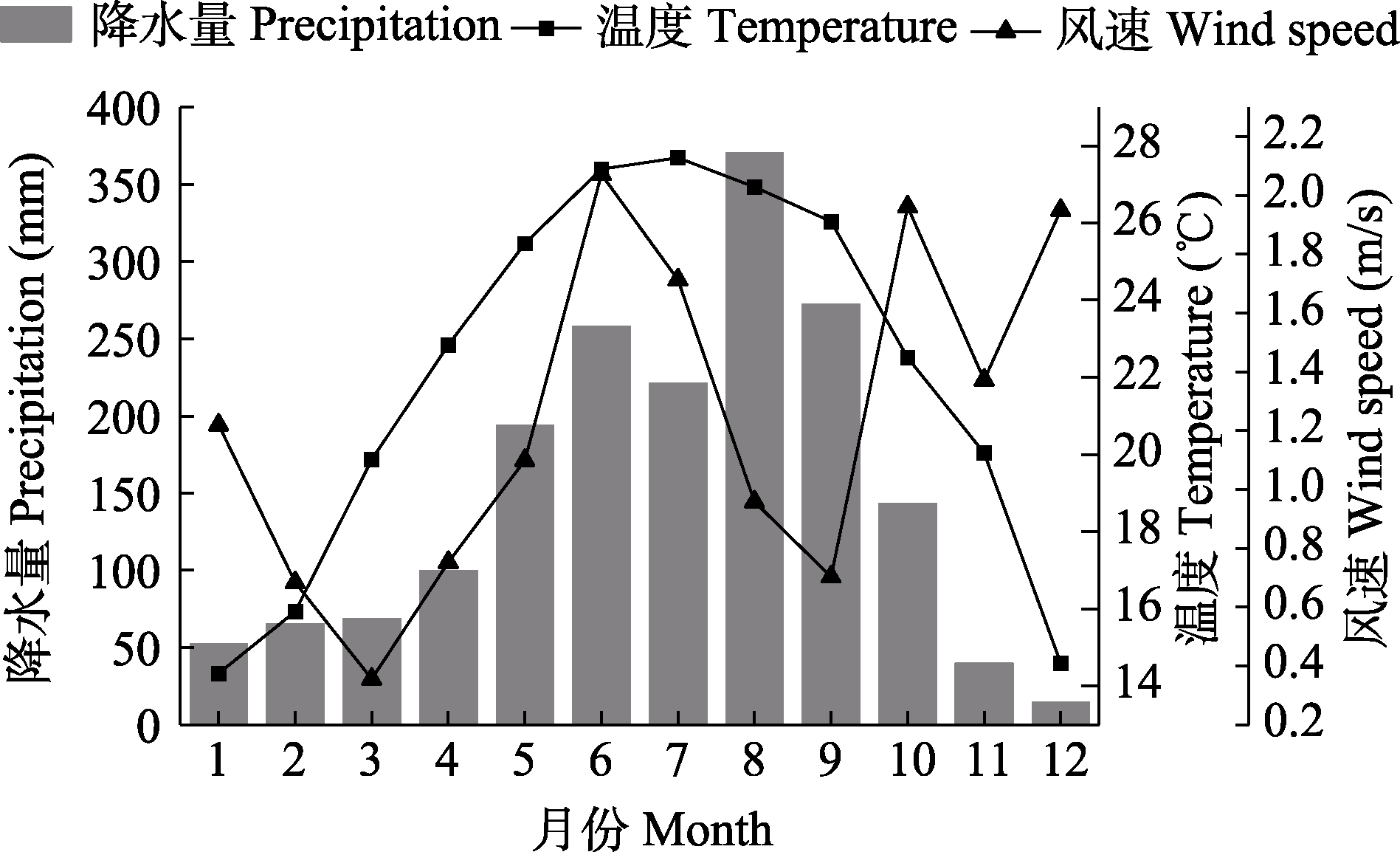
Fig. 1 Temporal variation in monthly average precipitation, temperature, and wind speed at Guangxi Fangcheng Golden Camellia National Nature Reserve from 2019 to 2024
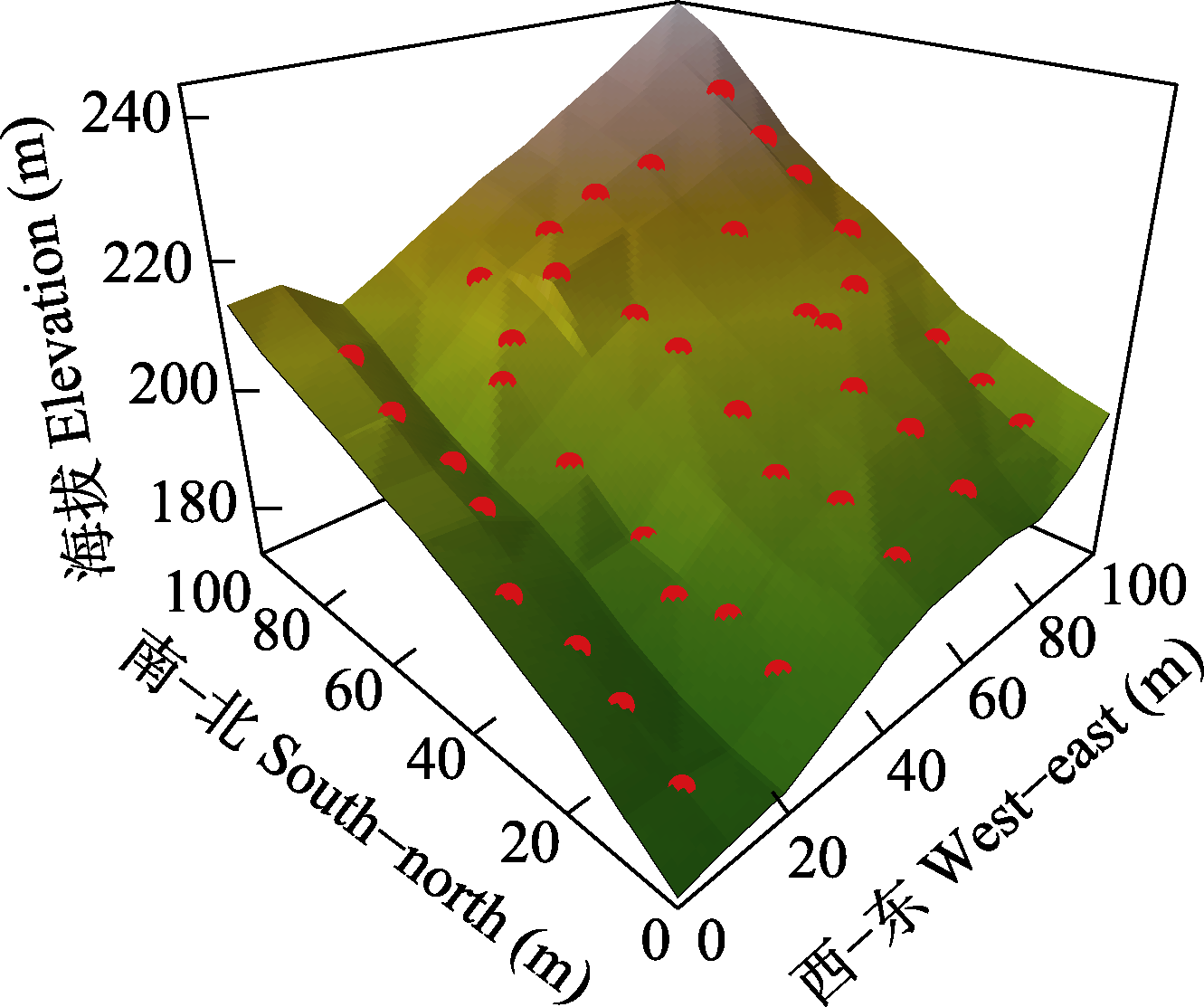
Fig. 2 Distribution of litterfall collectors within 1-ha forest dynamics plot in Guangxi Fangcheng Golden Camellia National Nature Reserve
| 组分 Components | 凋落物量 Litterfall production (kg/ha) | 比例 Proportion (%) |
|---|---|---|
| 叶 Leaf | 4,521.60 ± 413.30 | 60.24 |
| 枝 Twig | 1,451.97 ± 245.09 | 19.34 |
| 繁殖组织 Reproductive structure | 204.21 ± 32.80 | 2.72 |
| 杂物 Debris | 1,328.60 ± 166.86 | 17.70 |
| 总计 Total | 7,506.38 ± 766.94 | 100.00 |
Table 1 Annual average production of each litterfall component in Guangxi Fangcheng Golden Camellia National Nature Reserve from 2019 to 2024 (mean ± SE)
| 组分 Components | 凋落物量 Litterfall production (kg/ha) | 比例 Proportion (%) |
|---|---|---|
| 叶 Leaf | 4,521.60 ± 413.30 | 60.24 |
| 枝 Twig | 1,451.97 ± 245.09 | 19.34 |
| 繁殖组织 Reproductive structure | 204.21 ± 32.80 | 2.72 |
| 杂物 Debris | 1,328.60 ± 166.86 | 17.70 |
| 总计 Total | 7,506.38 ± 766.94 | 100.00 |
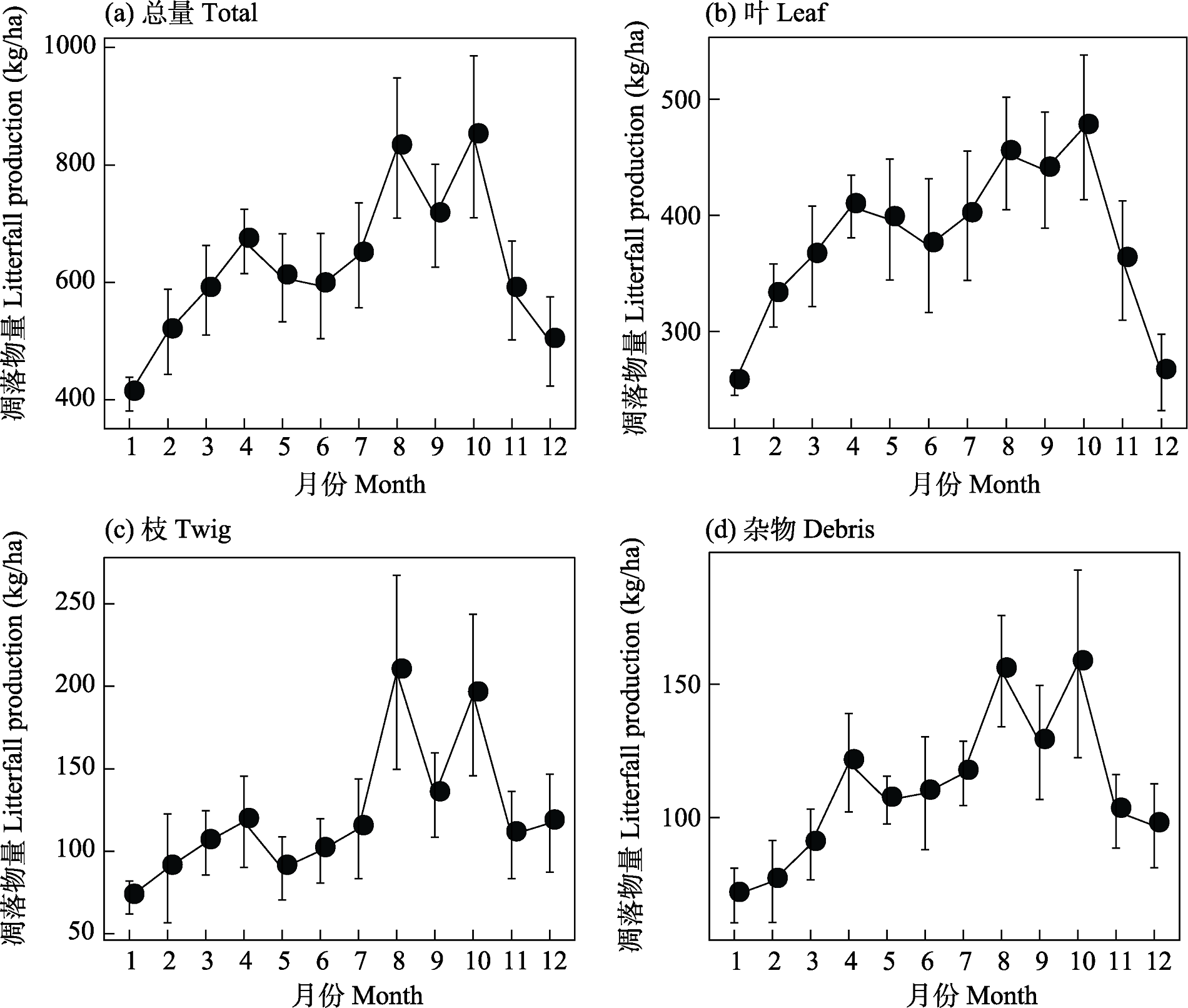
Fig. 3 Monthly dynamics of the total and each component litterfall production in Guangxi Fangcheng Golden Camellia National Nature Reserve from 2019 to 2024
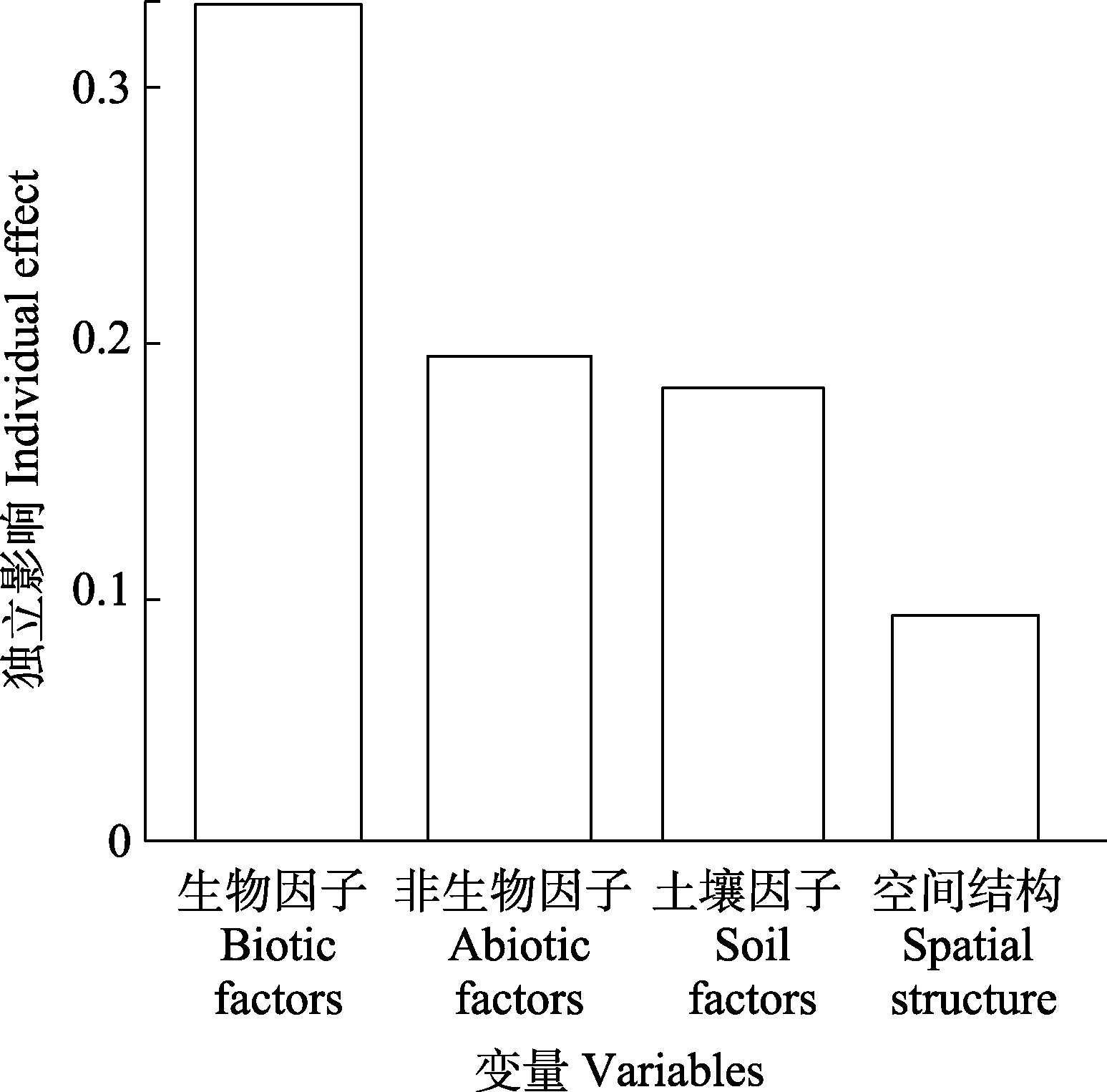
Fig. 4 Additive decomposition analysis of independent effects from ecological factors and spatial structure on total litterfall production in Guangxi Fangcheng Golden Camellia National Nature Reserve
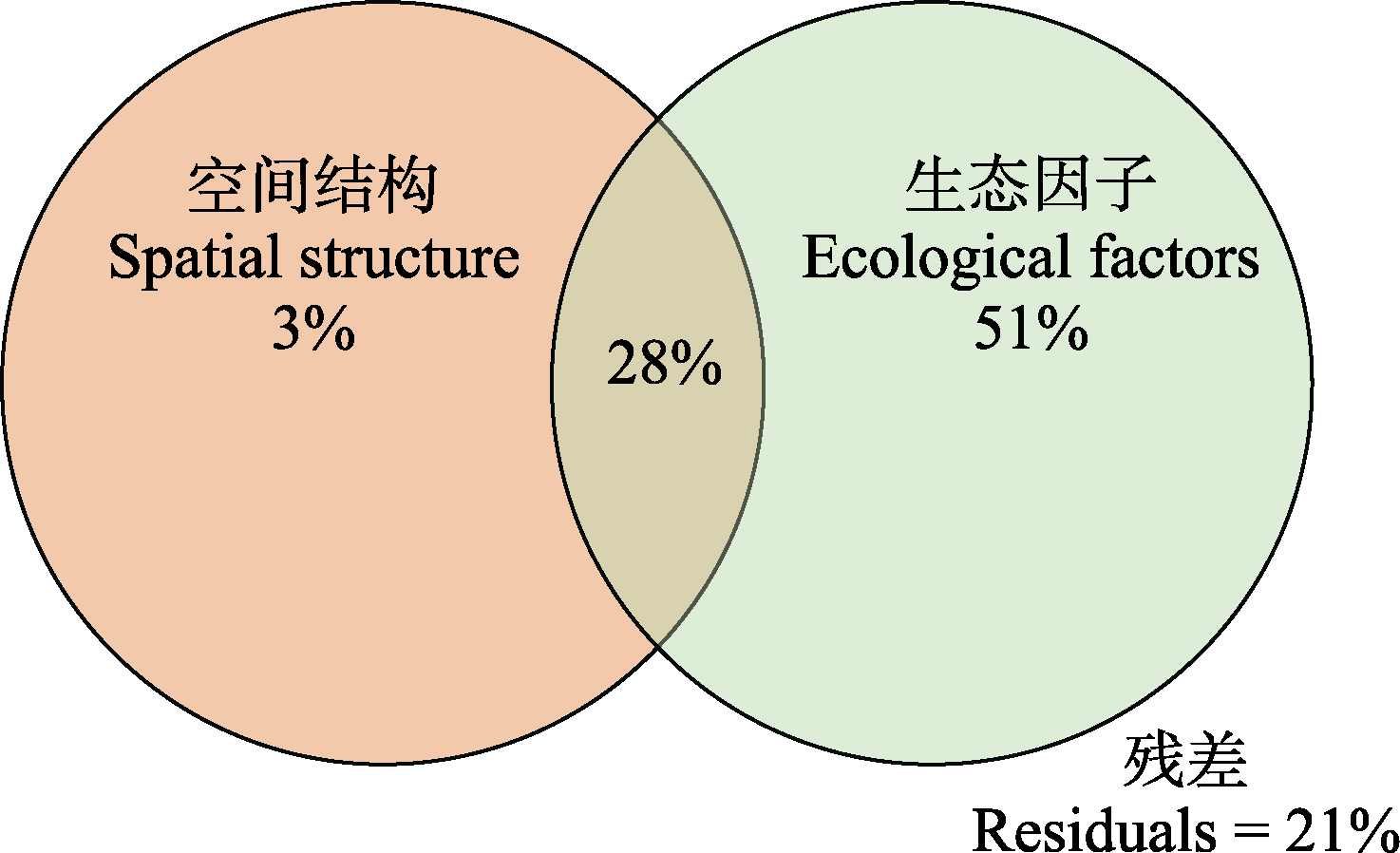
Fig. 5 Variance partitioning analysis of total litterfall production in relation to ecological factors and spatial structure
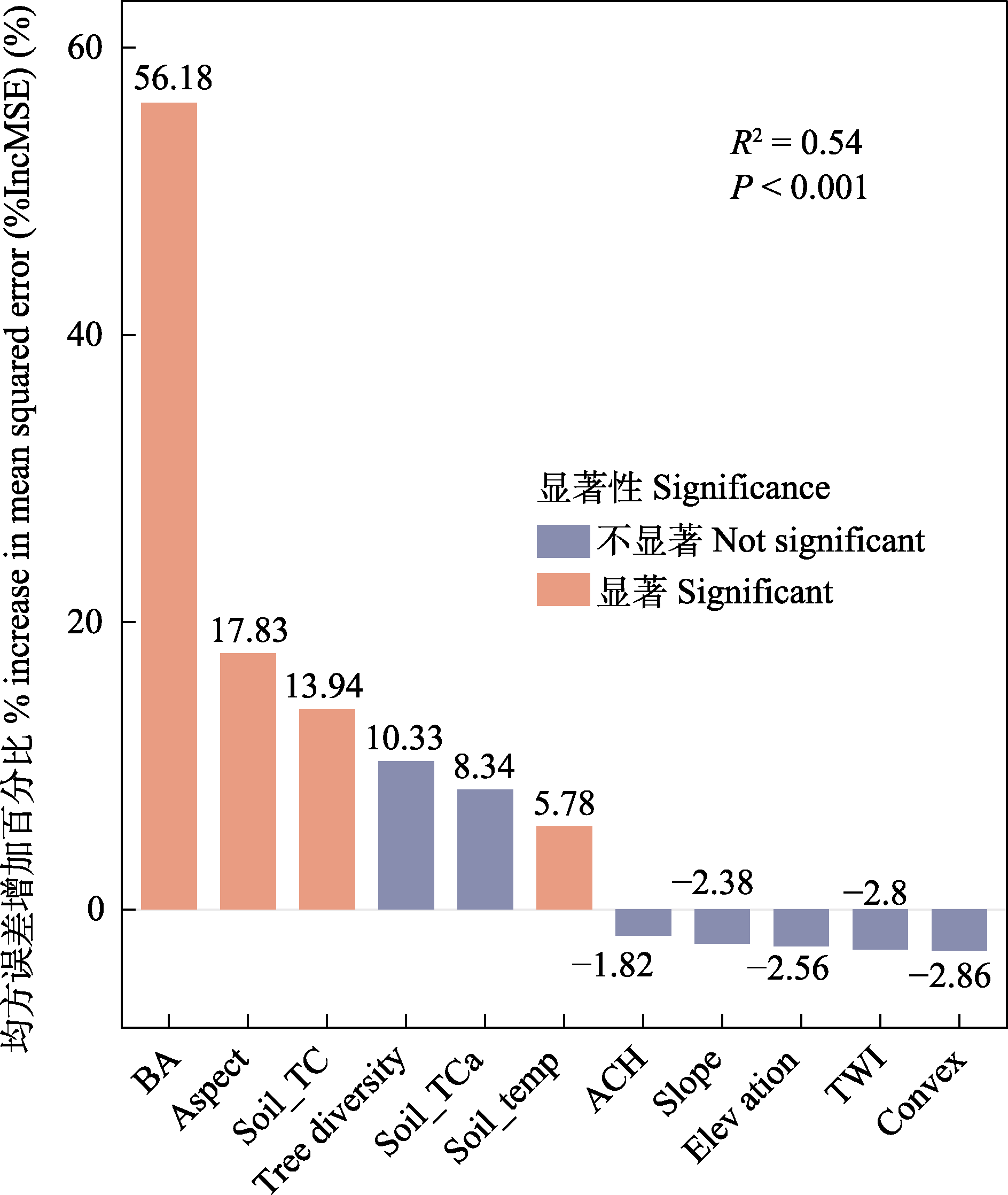
Fig. 6 Relative importance of biotic and abiotic factors for the total litterfall production. BA, Sum of basal area; Soil_TC, Soil total carbon content; Soil_TCa, Soil total calcium content; Soil_temp, Soil temperature; ACH, Altitude above channel; TWI, Topographic wetness index; Convex, Convexity.
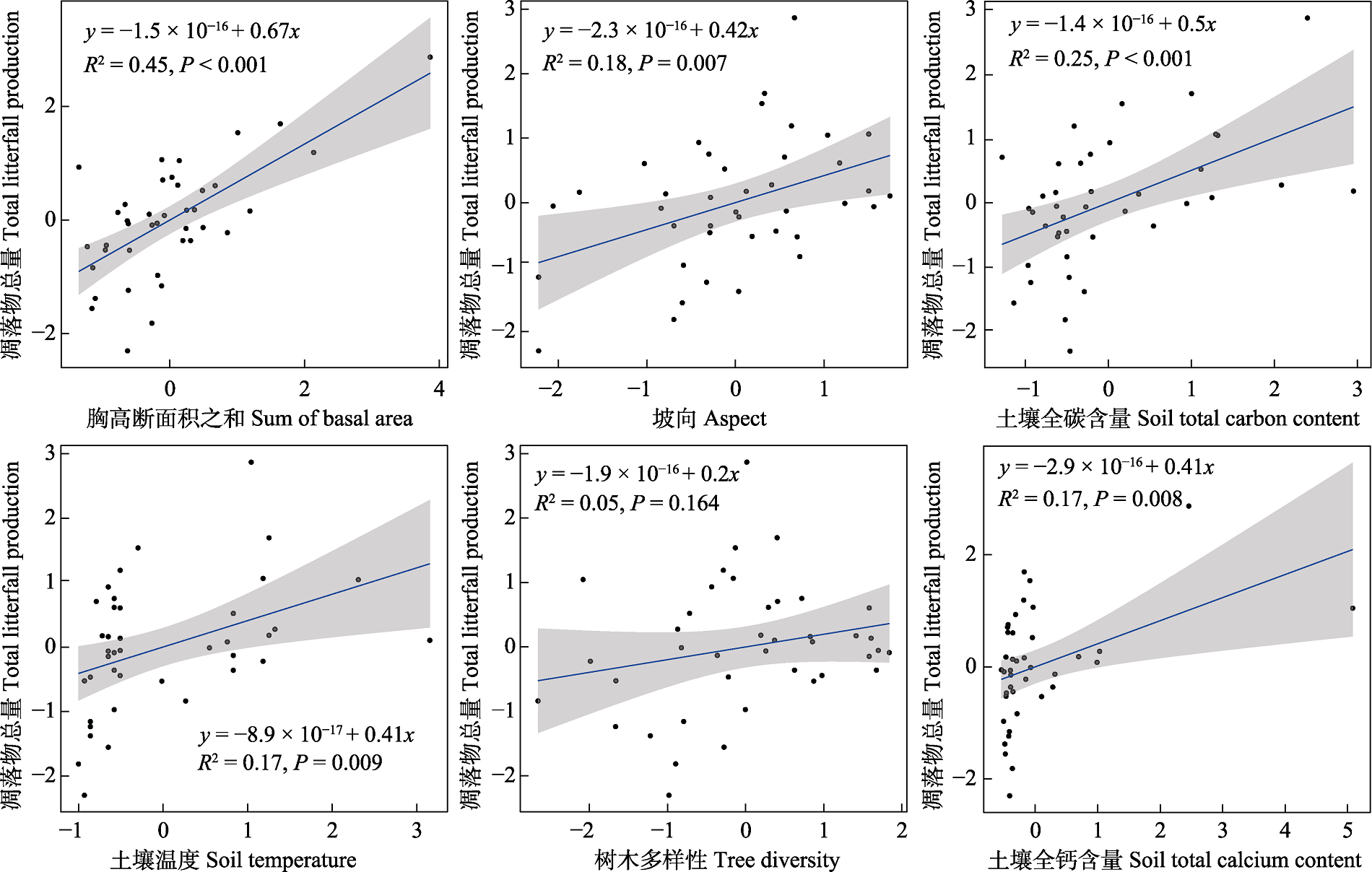
Fig. 7 Regression analysis of each factor and the total litterfall production. Shaded area represents 95% confidence intervals of the fitted line.
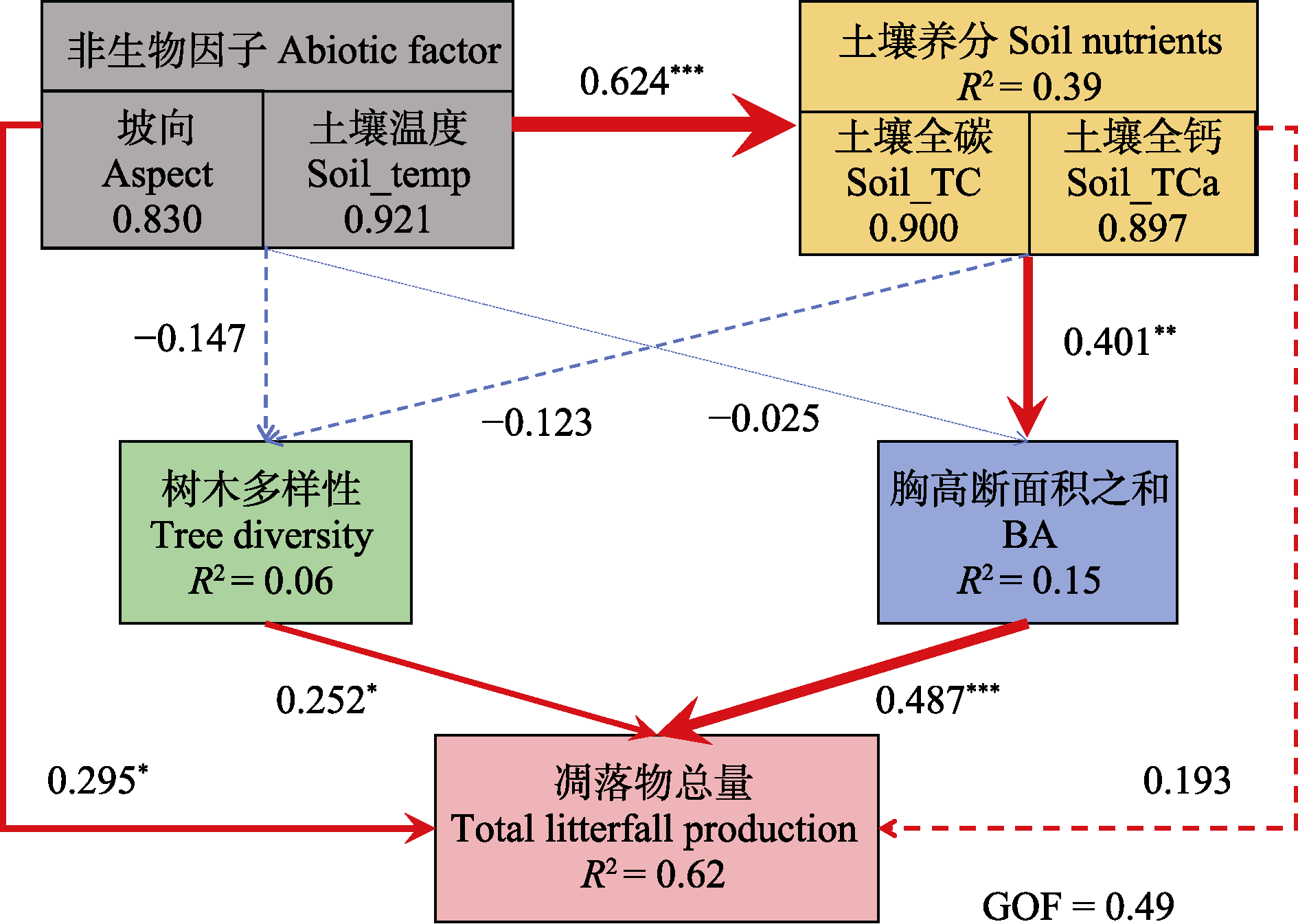
Fig. 8 Partial least square-structural equation model (PLS-SEM) of total litterfall production and its influencing factors. BA, Sum of basal area; Soil_TC, Soil total carbon content; Soil_TCa, Soil total calcium content; Soil_temp, Soil temperature. Arrows represent the hypothesized causal relationships between variables. The solid line indicates that the action path is significant, and the dashed line indicates that the action path is not significant. Red color indicates positive relationships. Blue color indicates negative relationships. The arrow width indicates the strength of the relationship. Values next to the arrows are the normalized pathway coefficients with the corresponding statistical significance. Values of R2 represent the percentage of variance explained by the model. The GOF value represents the goodness-of-fit of the model. * P < 0.05; ** P < 0.01; *** P < 0.001.
| 组分 Components | 凋落物总量 Total litterfall production | 叶 Leaf | 枝 Twig | 杂物 Debris |
|---|---|---|---|---|
| 月平均降水量 Monthly average precipitation | 0.26* | 0.21 | 0.29* | 0.27* |
| 月平均温度 Monthly average temperature | 0.30* | 0.36** | 0.14 | 0.29* |
| 月平均风速 Monthly average wind speed | 0.05 | -0.01 | 0.05 | 0.20 |
Table 2 Correlation analysis between total litterfall and its components and climatic factors. * P < 0.05; ** P < 0.01
| 组分 Components | 凋落物总量 Total litterfall production | 叶 Leaf | 枝 Twig | 杂物 Debris |
|---|---|---|---|---|
| 月平均降水量 Monthly average precipitation | 0.26* | 0.21 | 0.29* | 0.27* |
| 月平均温度 Monthly average temperature | 0.30* | 0.36** | 0.14 | 0.29* |
| 月平均风速 Monthly average wind speed | 0.05 | -0.01 | 0.05 | 0.20 |
| [1] |
Ahirwal J, Saha P, Nath A, Nath AJ, Deb S, Sahoo UK (2021) Forests litter dynamics and environmental patterns in the Indian Himalayan region. Forest Ecology and Management, 499, 119612.
DOI URL |
| [2] |
Berg B (2000) Litter decomposition and organic matter turnover in northern forest soils. Forest Ecology and Management, 133, 13-22.
DOI URL |
| [3] |
Chen HYH, Brant AN, Seedre M, Brassard BW, Taylor AR (2017) The contribution of litterfall to net primary production during secondary succession in the boreal forest. Ecosystems, 20, 830-844.
DOI URL |
| [4] |
Dai SY, Wei T, Tang J, Xu ZX, Gong HD (2023) Temporal changes in litterfall and nutrient cycling from 2005-2015 in an evergreen broad-leaved forest in the Ailao Mountains, China. Plants, 12, 1277.
DOI URL |
| [5] | Dai WX, Lou CY, Xu DM, Zhang YF, Huang GD, Luo ZR (2021) Spatial distribution of litter yield in an evergreen broadleaf forest and its effects on the heterogeneity of soil nutrients. Acta Ecologica Sinica, 41, 513-521. (in Chinese with English abstract) |
| [戴雯笑, 楼晨阳, 许大明, 张亚芬, 黄国栋, 骆争荣 (2021) 浙西南常绿阔叶林凋落物空间分布及其对土壤养分的影响. 生态学报, 41, 513-521.] | |
| [6] |
Dai YH, Gong FX, Yang XQ, Chen XZ, Su YX, Liu LY, Wu JP, Liu XD, Sun QL (2022) Litterfall seasonality and adaptive strategies of tropical and subtropical evergreen forests in China. Journal of Plant Ecology, 15, 320-334.
DOI |
| [7] |
de Castilho CV, Magnusson WE, Luizão RCC, Luizão FJ, Lima AP, Higuchi N (2006) Variation in aboveground tree live biomass in a central Amazonian forest: Effects of soil and topography. Forest Ecology and Management, 234, 85-96.
DOI URL |
| [8] | Guan LL, Zhou GY, Zhang DQ, Liu JX, Zhang QM (2004) Twenty years of litter fall dynamics in subtropical evergreen broad-leaved forests at the Dinghushan forest ecosystem research station. Acta Phytoecologica Sinica, 28, 449-456. (in Chinese with English abstract) |
|
[官丽莉, 周国逸, 张德强, 刘菊秀, 张倩媚 (2004) 鼎湖山南亚热带常绿阔叶林凋落物量20年动态研究. 植物生态学报, 28, 449-456.]
DOI |
|
| [9] |
Guo YL, Chen HYH, Mallik AU, Wang B, Li DX, Xiang WS, Li XK (2019) Predominance of abiotic drivers in the relationship between species diversity and litterfall production in a tropical karst seasonal rainforest. Forest Ecology and Management, 449, 117452.
DOI URL |
| [10] |
Guo YL, Li DX, Wang B, He YL, Xiang WS, Jiang YL, Li XK (2017) Composition and spatio-temporal dynamics of litter fall in a northern tropical karst seasonal rainforest in Nonggang, Guangxi, southern China. Biodiversity Science, 25, 265-274. (in Chinese with English abstract)
DOI |
|
[郭屹立, 李冬兴, 王斌, 何运林, 向悟生, 蒋裕良, 李先琨 (2017) 北热带喀斯特季节性雨林凋落物组分构成及时空动态. 生物多样性, 25, 265-274.]
DOI |
|
| [11] |
Guo YL, Wang B, Xiang WS, Ding T, Lu SH, Huang FZ, Wen SJ, Li DX, He YL, Li XK (2016) Responses of spatial pattern of woody plants’ basal area to topographic factors in a tropical karst seasonal rainforest in Nonggang, Guangxi, southern China. Biodiversity Science, 24, 30-39. (in Chinese with English abstract)
DOI URL |
|
[郭屹立, 王斌, 向悟生, 丁涛, 陆树华, 黄甫昭, 文淑均, 李冬兴, 何运林, 李先琨(2016) 喀斯特季节性雨林木本植物胸高断面积分布格局及其对地形因子的响应. 生物多样性, 24, 30-39.]
DOI |
|
| [12] |
Lai JS, Zou Y, Zhang S, Zhang XG, Mao LF (2022) glmm.hp: An R package for computing individual effect of predictors in generalized linear mixed models. Journal of Plant Ecology, 15, 1302-1307.
DOI |
| [13] | Lai JS, Zhu WJ, Cui DF, Mao LF (2023) Extension of the glmm.hp package to zero-inflated generalized linear mixed models and multiple regression. Journal of Plant Ecology 16, rtad038. |
| [14] |
Lan GF, Zhang Q, Chen XB, Chen SD, Xiong DC, Liu XF, Yang ZJ, Yang YS (2024) Seasonal dynamics of litterfall of a Castanopsis kawakamii evergreen broadleaf forest in mid-subtropical China and their influencing factors. Chinese Journal of Plant Ecology, 48, 1589-1601. (in Chinese with English abstract)
DOI URL |
|
[兰光飞, 张强, 陈相标, 陈仕东, 熊德成, 刘小飞, 杨智杰, 杨玉盛 (2024) 中亚热带格氏栲林凋落物季节动态特征及其影响因素. 植物生态学报, 48, 1589-1601.]
DOI |
|
| [15] |
Li JQ, Pei JM, Dijkstra FA, Nie M, Pendall E (2021) Microbial carbon use efficiency, biomass residence time and temperature sensitivity across ecosystems and soil depths. Soil Biology and Biochemistry, 154, 108117.
DOI URL |
| [16] |
Li Q, Zhang MH, Geng QH, Jin CS, Zhu JQ, Ruan HH, Xu X (2020) The roles of initial litter traits in regulating litter decomposition: A “common plot” experiment in a subtropical evergreen broadleaf forest. Plant and Soil, 452, 207-216.
DOI |
| [17] | Lin B, Liu Q, Wu Y, He H (2004) Advances in the studies of forest litter. Chinese Journal of Ecology, 23, 60-64. (in Chinese with English abstract) |
| [林波, 刘庆, 吴彦, 何海 (2004) 森林凋落物研究进展. 生态学杂志, 23, 60-64.] | |
| [18] |
Liu Q, Chen XL, Huang FZ, Li JX, Chen T, Lu F, Li XK, Li DX, Xiang WS, Wang B, Zhao HM, Ma RX, Wang SQ, Guo YL (2025) Divergent drivers of litter decomposition in karst and non-karst tropical rainforests: A comparison. Catena, 258, 109316.
DOI URL |
| [19] |
Liu SG, Plaza C, Ochoa-Hueso R, Trivedi C, Wang JT, Trivedi P, Zhou GY, Piñeiro J, Martins CSC, Singh BK, Delgado-Baquerizo M (2023) Litter and soil biodiversity jointly drive ecosystem functions. Global Change Biology, 29, 6276-6285.
DOI PMID |
| [20] | Liu SL, Zheng JP, Fan CN, Yang BG, Guo ZL (2017) Research progress in litter accumulation of forest ecosystem in China. World Forestry Research, 30(1), 66-71. (in Chinese with English abstract) |
| [刘士玲, 郑金萍, 范春楠, 杨保国, 郭忠玲 (2017) 我国森林生态系统枯落物现存量研究进展. 世界林业研究, 30(1), 66-71.] | |
| [21] |
Liu XD, Feng YJ, Zhao XY, Cui ZJ, Liu PL, Chen XZ, Zhang QM, Liu JX (2024) Climatic drivers of litterfall production and its components in two subtropical forests in South China: A 14-year observation. Agricultural and Forest Meteorology, 344, 109798.
DOI URL |
| [22] |
Punchi-Manage R, Getzin S, Wiegand T, Kanagaraj R, Savitri Gunatilleke CV, Nimal Gunatilleke IAU, Wiegand K, Huth A (2013) Effects of topography on structuring local species assemblages in a Sri Lankan mixed dipterocarp forest. Journal of Ecology, 101, 149-160.
DOI URL |
| [23] |
Qi JH, Zhang YJ, Zhang YP, Liu YH, Lu ZY, Wu CS, Wen HD (2013) The impacts of the Southwest China drought on the litterfall and leaf area index of an evergreen broadleaf forest on Ailao Mountain. Acta Ecologica Sinica, 33, 2877-2885. (in Chinese with English abstract)
DOI URL |
| [杞金华, 章永江, 张一平, 刘玉洪, 鲁志云, 武传胜, 温韩东 (2013) 西南干旱对哀牢山常绿阔叶林凋落物及叶面积指数的影响. 生态学报, 33, 2877-2885.] | |
| [24] | Shen GR, Xiang QQ, Chen DM, Wu Y, Liu CJ (2017) Spatio-temporal distribution characteristics of forest litterfall in China. Chinese Journal of Applied Ecology, 28, 2452-2460. (in Chinese with English abstract) |
|
[申广荣, 项巧巧, 陈冬梅, 吴裕, 刘春江 (2017) 中国森林凋落量时空分布特征. 应用生态学报, 28, 2452-2460.]
DOI |
|
| [25] |
Song YJ, Tian WB, Liu XY, Yin F, Cheng JY, Zhu DN, Arshad A, Yan ER (2016) Associations between litterfall dynamics and micro-climate in forests of Putuoshan Island, Zhejiang, China. Chinese Journal of Plant Ecology, 40, 1154-1163. (in Chinese with English abstract)
DOI |
|
[宋彦君, 田文斌, 刘翔宇, 尹芳, 程浚洋, 朱丹妮, Ali Arshad, 阎恩荣 (2016) 浙江普陀山岛森林凋落物动态与微气候的关联性. 植物生态学报, 40, 1154-1163.]
DOI |
|
| [26] |
Sun XF, Liu F, Zhang QZ, Li YC, Zhang LF, Wang J, Zhang HY, Wang CK, Wang XC (2021) Biotic and climatic controls on the interannual variation in canopy litterfall of a deciduous broad-leaved forest. Agricultural and Forest Meteorology, 307, 108483.
DOI URL |
| [27] |
Wan XH, Joly FX, Jia H, Zhu M, Fu YR, Huang ZQ (2023) Functional identity drives tree species richness-induced increases in litterfall production and forest floor mass in young tree communities. New Phytologist, 240, 1003-1014.
DOI URL |
| [28] |
Wiesmeier M, Urbanski L, Hobley E, Lang B, Von Lützow M, Marin-Spiotta E, van Wesemael B, Rabot E, Ließ M, Garcia-Franco N, Wollschläger U, Vogel HJ, Kögel-Knabner I (2019) Soil organic carbon storage as a key function of soils—A review of drivers and indicators at various scales. Geoderma, 333, 149-162.
DOI |
| [29] |
Wilcke W, Zimmer V, Bauhus J, Schöning I, Schrumpf M, Michalzik B, Siemens J (2024) Disentangling the effects of region, forest-management intensity and plant diversity on litterfall quantity, quality and turnover in temperate forests. Plant and Soil, 497, 397-412.
DOI |
| [30] |
Xiong S, Gan J, Xie YJ, Deng XZ, Qin GL, Peng WX, Zeng FP, Zhan ZL, Tan WN, Huang GQ, Du H (2024) Dynamics of litter production and its determinants in a subtropical mixed evergreen and deciduous broad-leaved forest in a karst ecosystem. Biodiversity Science, 32, 24248. (in Chinese with English abstract)
DOI |
|
[熊松, 淦江, 谢彦军, 邓晰朝, 覃国乐, 彭晚霞, 曾馥平, 占志立, 谭卫宁, 黄国勤, 杜虎 (2024) 喀斯特常绿落叶阔叶林凋落物产量动态及影响因素. 生物多样性, 32, 24248.]
DOI |
|
| [31] | Xuluc-Tolosa FJ, Vester HFM, Ramı́rez-Marcial N, Castellanos-Albores J, Lawrence D (2003) Leaf litter decomposition of tree species in three successional phases of tropical dry secondary forest in Campeche, Mexico. Forest Ecology and Management, 174, 401-412. |
| [32] |
Xu WM, Yan WD, Li JB, Zhao J, Wang GJ (2013) Amount and dynamic characteristics of litterfall in four forest types in subtropical China. Acta Ecologica Sinica, 33, 7570-7575. (in Chinese with English abstract)
DOI URL |
| [徐旺明, 闫文德, 李洁冰, 赵晶, 王光军 (2013) 亚热带4种森林凋落物量及其动态特征. 生态学报, 33, 7570-7575.] | |
| [33] |
Zhang HC, Yuan WP, Dong WJ, Liu SG (2014) Seasonal patterns of litterfall in forest ecosystem worldwide. Ecological Complexity, 20, 240-247.
DOI URL |
| [34] |
Zhang LL, Yadav V, Zhu HC, Shi YY, Hu XX, Wang XX, Zhou XP, Subhash B, Kang YX (2024) Climate drivers of litterfall biomass dynamics in three types of forest stands on the Loess Plateau. Ecological Indicators, 163, 112088.
DOI URL |
| [35] | Zhang XP, Wang XP, Zhu B, Zong ZJ, Peng CH, Fang JY (2008) Litter fall production in relation to environmental factors in Northeast China’s forests. Journal of Plant Ecology (Chinese Version), 32, 1031-1040. (in Chinese with English abstract) |
| [张新平, 王襄平, 朱彪, 宗占江, 彭长辉, 方精云 (2008) 我国东北主要森林类型的凋落物产量及其影响因素. 植物生态学报, 32, 1031-1040.] | |
| [36] | Zhao XY, Guan MR, Sun MY, Wang ZF, Xu XN (2020) Effects of nitrogen and phosphorus additions on litterfall production and nutrient dynamics in evergreen broad-leaved forests. Journal of Nanjing Forestry University (Natural Sciences Edition), 44(6), 55-62. (in Chinese with English abstract) |
|
[赵晓雅, 关梦冉, 孙孟瑶, 王泽夫, 徐小牛 (2020) 氮磷添加对亚热带常绿阔叶林凋落物产量及其养分含量的影响. 南京林业大学学报(自然科学版), 44(6), 55-62.]
DOI |
|
| [37] |
Zheng LT, Chen HYH, Yan ER (2019) Tree species diversity promotes litterfall productivity through crown complementarity in subtropical forests. Journal of Ecology, 107, 1852-1861.
DOI URL |
| [38] | Zheng Z, Li YR, Liu HM, Feng ZL, Gan JM, Kong WJ (2005) Litterfall of tropical rain forests at different altitudes, Xishuangbanna, Southwest China. Acta Phytoecologica Sinica, 29, 884-893. (in Chinese with English abstract) |
|
[郑征, 李佑荣, 刘宏茂, 冯志立, 甘建民, 孔维静 (2005) 西双版纳不同海拔热带雨林凋落量变化研究. 植物生态学报, 29, 884-893.]
DOI |
|
| [39] |
Zhu XA, Zou X, Lu EF, Deng Y, Luo Y, Chen H, Liu WJ (2021) Litterfall biomass and nutrient cycling in karst and nearby non-karst forests in tropical China: A 10-year comparison. Science of the Total Environment, 758, 143619.
DOI URL |
| [40] | Zhu Y, Yang YC, Zhou LH, Long YX, Huang L, Chen H (2023) Litterfall amount and dynamic characteristics of evergreen broad-leaved forest in Jinyun Mountain. Science of Soil and Water Conservation, 21(3), 110-118. (in Chinese with English abstract) |
| [朱茵, 杨永川, 周礼华, 龙宇潇, 黄力, 陈华 (2023) 缙云山常绿阔叶林凋落物量及动态特征. 中国水土保持科学, 21(3), 110-118.] |
| [1] | Ping Fan, Huan Wang, Zhixin Wen, Gang Song, Fuming Lei. Impact of climatic factors on the genetic diversity-species area relationship of birds [J]. Biodiv Sci, 2025, 33(8): 25072-. |
| [2] | Feifei Zhang, Tianfeng Yang, Lirong Chen, Dongmei Liu, Liuyuan Yang, Duyu Yang, Peng Ju, Lu Lu. Review of pollen color diversity in Angiosperms [J]. Biodiv Sci, 2024, 32(1): 23346-. |
| [3] | Jiaqi Li, Yili Guo, Dongxing Li, Bin Wang, Wusheng Xiang, Fuzhao Huang, Fang Lu, Shujun Wen, Jianxing Li, Shuhua Lu, Xiankun Li. Spatial distribution characteristics of soil potassium, calcium, and magnesium and their influencing factors in a northern tropical karst seasonal rainforest in southwestern Guangxi [J]. Biodiv Sci, 2023, 31(2): 22352-. |
| [4] | Ruixia Ma, Yili Guo, Dongxing Li, Bin Wang, Wusheng Xiang, Fuzhao Huang, Fang Lu, Shujun Wen, Jianxing Li, Shuhua Lu, Xiankun Li. Spatial distribution pattern and mechanism of sapling regeneration in karst seasonal rainforest in southwestern Guangxi [J]. Biodiv Sci, 2023, 31(2): 22251-. |
| [5] | Shihang Zhang, Ye Tao, Yusen Chen, Hao Guo, Yongxing Lu, Xing Guo, Chaohong Liu, Xiaobing Zhou, Yuanming Zhang. Spatial pattern of soil multifunctionality and its correlation with environmental and vegetation factors in the Junggar Desert, China [J]. Biodiv Sci, 2022, 30(8): 22097-. |
| [6] | Ping Liu, Hongwen Liu, Miao Zhang, Yan Gao, Mengting Zhang, Aizhen Liang, Shixiu Zhang. Latitude distribution and associated environmental factors of soil nematodes in a typical black soil region [J]. Biodiv Sci, 2022, 30(12): 22269-. |
| [7] | Mengke Jia,Yili Guo,Dongxing Li,Bin Wang,Wusheng Xiang,Ailong Wang,Shengyuan Liu,Tao Ding,Fuzhao Huang,Shujun Wen,Shuhua Lu,Xiankun Li. Spatio-temporal dynamics of leaf litter in a karst seasonal rainforest in southwest Guangxi [J]. Biodiv Sci, 2020, 28(4): 455-462. |
| [8] | Changyan Zhou, Bin Wang, Yun Deng, Junjie Wu, Min Cao, Luxiang Lin. Canopy structure is an important factor driving local-scale woody plant functional beta diversity [J]. Biodiv Sci, 2020, 28(12): 1546-1557. |
| [9] | Xuerui Dong, Hong Zhang, Minggang Zhang. Explaining the diversity and endemic patterns based on phylogenetic approach for woody plants of the Loess Plateau [J]. Biodiv Sci, 2019, 27(12): 1269-1278. |
| [10] | Kexiao Gao, Feifei Li, Xiaoyan Liu, Yunqi Xiong, Junsheng Li, Caiyun Zhao. Elevational patterns of invasive nonnative and native herbaceous species in Jiuwan Mountain National Nature Reserve of Guangxi [J]. Biodiv Sci, 2019, 27(10): 1047-1055. |
| [11] | Yili Guo, Dongxing Li, Bin Wang, Yunlin He, Wusheng Xiang, Yuliang Jiang, Xiankun Li. Composition and spatio-temporal dynamics of litter fall in a northern tropical karst seasonal rainforest in Nonggang, Guangxi, southern China [J]. Biodiv Sci, 2017, 25(3): 265-274. |
| [12] | Yili Guo, Dongxing Li, Bin Wang, Kundong Bai, Wusheng Xiang, Xiankun Li. C, N and P stoichiometric characteristics of soil and litter fall for six common tree species in a northern tropical karst seasonal rainforest in Nonggang, Guangxi, southern China [J]. Biodiv Sci, 2017, 25(10): 1085-1094. |
| [13] | Yili Guo, Bin Wang, Wusheng Xiang, Tao Ding, Shuhua Lu, Fuzhao Huang, Shujun Wen, Dongxing Li, Yunlin He, Xiankun Li. Responses of spatial pattern of woody plants’ basal area to topographic factors in a tropical karst seasonal rainforest in Nonggang, Guangxi, southern China [J]. Biodiv Sci, 2016, 24(1): 30-39. |
| [14] | Yili Guo, Bin Wang, Wusheng Xiang, Tao Ding, Shuhua Lu, Yusong Huang, Fuzhao Huang, Dongxing Li, Xiankun Li. Spatial distribution of tree species in a tropical karst seasonal rainforest in Nonggang, Guangxi, southern China [J]. Biodiv Sci, 2015, 23(2): 183-191. |
| [15] | Fuzhao Huang,Bin Wang,Tao Ding,Wusheng Xiang,Xiankun Li,Aiping Zhou. Numerical classification of associations in a northern tropical karst seasonal rain forest and the relationships of these associations with environmental factors [J]. Biodiv Sci, 2014, 22(2): 157-166. |
| Viewed | ||||||
|
Full text |
|
|||||
|
Abstract |
|
|||||
Copyright © 2026 Biodiversity Science
Editorial Office of Biodiversity Science, 20 Nanxincun, Xiangshan, Beijing 100093, China
Tel: 010-62836137, 62836665 E-mail: biodiversity@ibcas.ac.cn

