Please wait a minute...
Table of Content
    Volume 34 Issue 7
    20 July 2026
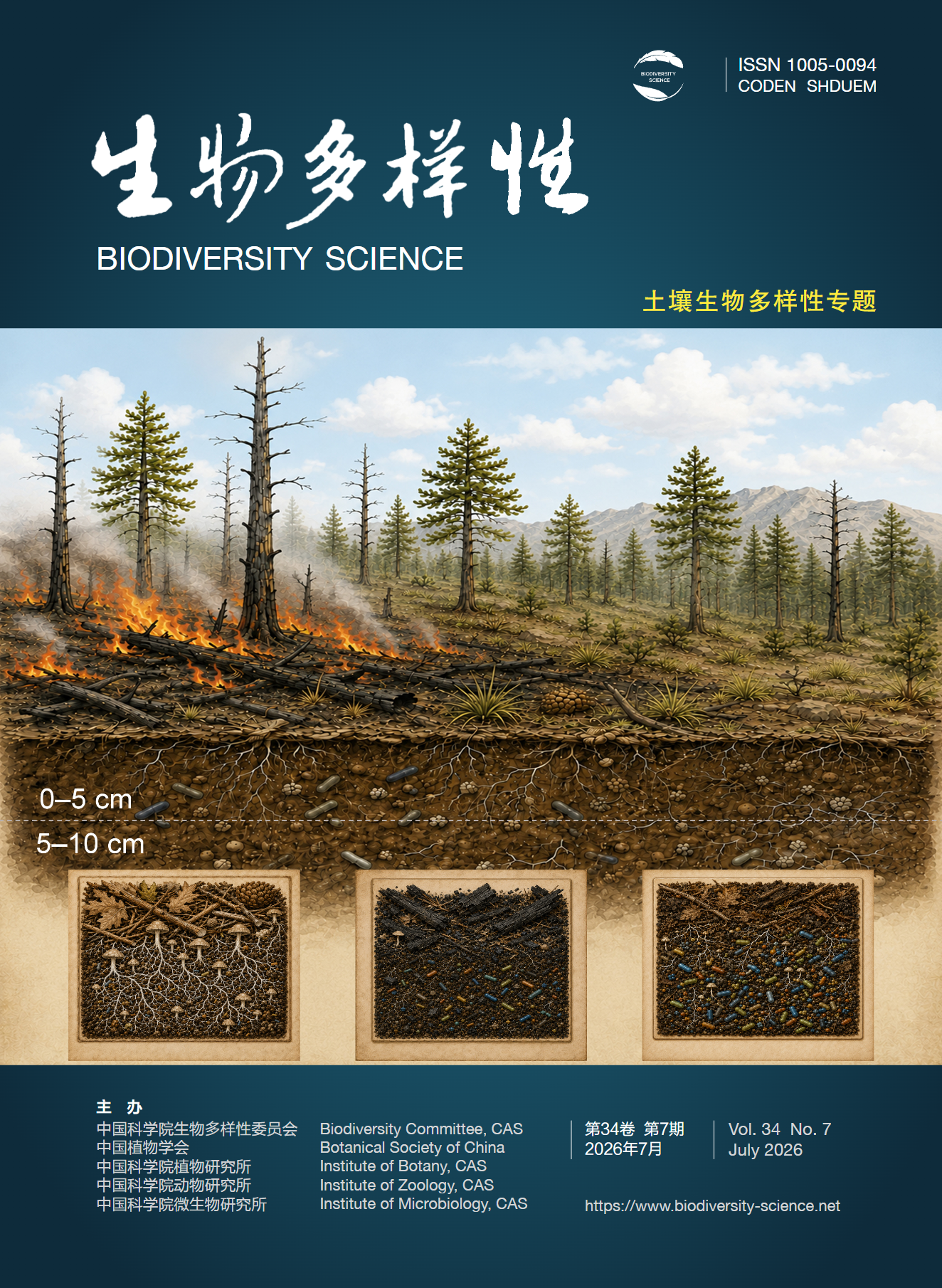
    Under the background of global climate change, forest fire disturbance has become an important ecological driver affecting ecosystem structure, functioning, and recovery processes. By altering soil environments, fire disturbance profoundly influences belowground microbial communities and their ecological functions. Subalpine forest ecosystems are highly sensitive to environmental changes and exhibit complex recovery processes, making them ideal systems for investigating forest fire responses and the mechanisms underlying post-fire underground microbial ecosystem restructuring. In this issue, Wen Hao et al. (26080) investigated soils from Pinus densata forests in Yajiang County, Ganzi Tibetan Autonomous Prefecture, at 5 and 14 years after fire disturbance on the eastern margin of the Qinghai–Tibet Plateau. They analyzed the recovery characteristics of microbial community structures and fungal trophic modes in the 0–5 cm and 5–10 cm soil layers. The results showed that post-fire recovery time significantly shaped shallow soil microbial community structures, along with changes in soil nutrient status and fungal functional groups. The cover illustration integrates the post-fire forest landscape, shallow soil profile, and microbial communities, highlighting the responses of belowground microbial ecosystems following fire disturbance.
      
    Molecular Identification of Triplophysa Species Using Cyt b Gene-Based Machine Learning Methods
    Rigui Yi, Delin Qi, Shihai Zhu, Tingting Yang, Dan Liu, Qiang Gao, Mingzhe Xia, Wei Wang, Miaomiao Nie, Junmei Jia, Cunfang Zhang
    Biodiv Sci. 2026, 34 (7):  0.  doi: 10.17520/biods.2026044
    Abstract ( 58 )   PDF (2555KB) ( 15 )   Save
    Related Articles | Metrics

    Aims: The genus Triplophysa is a key component of the fish fauna of the Qinghai-Tibet Plateau and its adjacent regions. Traditional morphological classification and conventional molecular identification encounter considerable challenges attributable to convergent evolution, phenotypic plasticity, and other confounding factors, thereby posing substantial obstacles to precise species delimitation. This study systematically compared the application efficacy of phylogenetic approaches and machine learning techniques based on the mitochondrial cytochrome b (Cyt b) gene in the molecular identification of seven Triplophysa fishes, aiming to establish a reliable technical system for species delimitation of this genus and further provide critical technical support for its biodiversity conservation and quantitative resource assessment. 

    Methods: In this study, we integrated 395 newly generated Cyt b gene sequences (experimentally obtained) and 247 sequences retrieved from the NCBI database, constructing a comprehensive dataset comprising 642 sequences across seven Triplophysa species. It systematically compared the identification efficacy of phylogenetic methods (NJ/ML/BI trees, GMYC/bPTP, K2P genetic distance) with machine learning approaches (BLOG and WEKA platform classifiers including SMO, J48, JRip and Naïve Bayes). 

    Results: The Cyt b gene sequences exhibited substantial genetic variation, with a haplotype diversity (Hd) of 0.975±0.003 and a nucleotide diversity (π) of 0.107±0.007, as well as a significant A+T base bias (56.5%). These characteristics fully fulfilled the core requirement of genetic polymorphism for molecular identification markers. Due to the interference of recent divergence time, interspecific gene flow, and hybridization events among closely related species, phylogenetic approaches and species delimitation models showed limited performance in delimiting closely related species, only effectively distinguishing 5 out of the 7 studied species, accounting for 62% of all haplotypes. In contrast, machine learning techniques demonstrated superior overall performance: the SMO classifier achieved 100% accuracy in species identification, the BLOG algorithm yielded a correct classification rate of 96.23% on the test set, and the classification accuracies of J48, JRip, and Naïve Bayes classifiers all exceeded 98%. Furthermore, these machine learning methods could identify species-specific diagnostic sites and generate interpretable classification rules. 

    Conclusion: This study demonstrates that machine learning methods, characterized by high accuracy and efficiency, can serve as reliable auxiliary tools for the accurate identification of the seven Triplophysa species examined in this study. These methods provide technical support for the biodiversity conservation and resource assessment of these species, and simultaneously offer new perspectives and technical references for the molecular identification of other fish groups facing morphological discrimination challenges.

    The Molecular Mechanisms Underlying Homoploid Hybrid Speciation in the Amazonian Golden-crowned Manakin
    Zhiheng Yang, Zefu Wang, Jianquan Liu, Kangshan Mao, Jialiang Li
    Biodiv Sci. 2026, 34 (7):  25205.  doi: 10.17520/biods2025205
    Abstract ( 63 )   PDF (864KB) ( 16 )   Save
    Related Articles | Metrics

    Aims: This study aims to investigate the evolutionary origin and molecular mechanisms underlying homoploid hybrid speciation in the golden-crowned manakin (Lepidothrix vilasboasi), a hybrid bird species distributed in the Amazon Basin. 

    Methods: Using genome-wide SNP data from L. vilasboasi and its two parental species, the snow-capped manakin (L. nattereri) and the opal-crowned manakin (L. iris), we conducted population genetic analyses with ADMIXTURE and PCA to infer genetic structure, and employed D-statistics (ABBA-BABA tests) to examine gene flow patterns. We further applied a recently proposed molecular model of homoploid hybrid speciation to explore how hybridization contributes to reproductive isolation. Finally, gene family analyses of those positively selected genes were carried out using BLASTP, MAFFT alignments, and phylogenetic reconstruction to assess gene duplication and evolutionary constraint. 

    Results: Our results support the hypothesis that L. vilasboasi has an ancient hybrid origin. The establishment of reproductive isolation in this hybrid species may have been facilitated by the inheritance of alternate parental premating isolation-related candidate genes from both parental species. Genes related to skin pigmentation and reproductive system development were identified as potential contributors to both prezygotic and postzygotic isolation mechanisms. Gene family analysis revealed that ADAMTS10, ASTL, and ALX4 underwent multiple duplication events; ESRRG showed extensive gene expansion; and OCA2 exhibited strong evolutionary constraint and high sequence conservation. 

    Conclusion: This study highlights the important role of hybridization in avian speciation and phenotypic diversification, providing new molecular evidence for the genetic basis of reproductive isolation in homoploid hybrid species. Our findings further support the applicability of the proposed molecular model of homoploid hybrid speciation across different lineages and suggest that the inheritance of alternate parental genomic components associated with reproductive isolation may facilitate the origin of new species.

    Avian checklist of the Hengduan Mountains
    Han Li, Xingcheng He, Shangmingyu Zhang, Yiwei Cao, Jiayu Zhang, Kexin Peng, Yongjie Wu
    Biodiv Sci. 2026, 34 (7):  25375.  doi: 10.17520/biods.2025375
    Abstract ( 143 )   PDF (951KB) ( 61 )   Save
    Related Articles | Metrics

    Aims: The Hengduan Mountains, as a global biodiversity hotspot and one of China's most diverse regions for bird species, have not seen an update to their bird checklist in 30 years. As a core component of baseline biodiversity data, a species checklist is fundamental to regional biodiversity research and conservation, making its updating an urgent priority. 

    Method: This study systematically updated the bird checklist of the Hengduan Mountains by integrating multiple sources of species distribution data (as of July 30, 2025) based on the Avilist Checklist v2025 taxonomic system. 

    Results: A total of 1,012 bird species belonging to 26 orders and 97 families were recorded in the Hengduan Mountains, accounting for 67.3% of China's total bird species. This represents an increase of 427 species compared to the previous checklist (Birds of the Hengduan Mountains, 585 species), including 402 new distribution records and 25 species elevated from subspecies status.The bird assemblage was dominated by Passeriformes (609 species), and resident breeding birds were predominant (75.2%), reflecting the region's importance as a key breeding area for birds.The area contains 258 nationally protected bird species (65.5% of China's total of 394), 64 IUCN threatened species, and 102 CITES-listed species, highlighting its significant and prominent role in biodiversity conservation.Three bird species with questionable distribution records were identified, suggesting the need for further validation through field evidence. Additionally, based on the “Greater Hengduan” region delineated by similarities in geography, fauna, environment, and species composition, this study identified 26 bird species not previously recorded within the traditional Hengduan Mountains area, which helps to further reveal the characteristics of avian diversity in this region. 

    Conclusion: This updated checklist represents significant progress in the foundational work on bird diversity in the Hengduan Mountains. It addresses a long-standing data gap and provides an important scientific basis for regional biodiversity conservation, ecosystem research, and sustainable development decision-making.

    Update of the checklist of birds in Guizhou Province
    Haibo Zhang, Zhongrong Wu, Canshi Hu, Zhongfan Kuang, Yi Li, Mingming Zhang, Xiongwei Yang, Haijun Su, Zhumei Li
    Biodiv Sci. 2026, 34 (7):  25381.  doi: 10.17520/biods.2025381
    Abstract ( 94 )   PDF (717KB) ( 37 )   Save
    Related Articles | Metrics

    Aims: The list of bird species in Guizhou Province was revised and updated to provide reference for bird research and protection in this province. 

    Methods: Based on The avifauna of Guizhou published in 1986, combined with multiple data sources, according to A checklist on the classification and distribution of the birds of China (Fourth Edition), the distribution and classification status of birds in Guizhou Province were revised, updated and a checklist was compiled. 

    Results: The results show that as of June 2025, there are 606 species of birds in 21 orders, 88 families, and 303 genera in Guizhou Province. Based on The avifauna of Guizhou, 175 species of birds have been added to be effectively distributed. Passeriformes have the most abundant species of birds, with 340 species in 51 families. There are 134 species of national key protected birds, including 24 species of national first-level protected birds and 110 species of national second-level protected birds. There are 3 species of critically endangered (CR) birds, 17 species of endangered (EN) birds, 86 species of near-endangered (NT) birds, and 24 species of vulnerable (VU) birds in the "China Red List of Biodiversity  Vertebrate Animals". 470 species of birds are in the List of Terrestrial Wildlife of Important Ecological, Scientific and Social Value. 9 species and 62 species of birds are listed in Appendix I and Appendix II of the Convention on International Trade in Endangered Species of Wild Fauna and Flora respectively. There are 145 species of waterbirds, and 54 species of raptors. Resident birds are the richest, with 295 species, 151 species of traveling birds, 149 species of winter migratory birds, 125 species of summer migratory birds, and 6 species of lost birds. There are 401 species of breeding birds, with the largest number of species in the Oriental realm, with 262 species, 83 species of widely distributed species, and 56 Palaearctic species. The bird composition in Guizhou is rich in Oriental characteristics. 

    Conclusion: This compilation and update of the bird checklist of Guizhou Province provides important reference materials for the protection of bird diversity in the province and even the country. It is recommended to increase efforts in the province's bird monitoring network construction, bird species database update and bird nature education in the future.

    Research on the design logic and tool construction of the biodiversity net gain system under China’s territorial spatial planning framework
    Zheng Huan
    Biodiv Sci. 2026, 34 (7):  25440.  doi: 10.17520/biods.2025440
    Abstract ( 56 )   PDF (833KB) ( 10 )   Save
    Related Articles | Metrics

    Background: Biodiversity net gain (BNG) requires development to deliver a measurable improvement in biodiversity relative to the pre-development baseline after avoidance, minimization, and restoration measures have been applied. 

    Review results: Drawing on the United Kingdom’s mandatory BNG regime and the United States’ wetland mitigation banking, this paper focuses on how BNG can be integrated into China’s territorial spatial planning system. It finds that the “Three Zones and Three Lines” framework, detailed planning, land-use control, paid use of state-owned construction land, and the “One Map” supervision system provide institutional interfaces for target allocation, permission control, delivery, and monitoring. Major barriers remain in technical standards, legal authorization, interdepartmental coordination, and market infrastructure. 

    Suggestions: The paper proposes a “1+N” hierarchical metric linked to the Third National Land Survey, a government-regulated territorial habitat banking system and a registration mechanism for biodiversity gain entitlements, and the integration of BNG obligations into planning preparation and approval, detailed planning, land conversion, land transfer, environmental impact assessment, and full-lifecycle supervision. Together, these measures translate BNG into a measurable, enforceable, and traceable obligation within China’s territorial spatial planning system.

    Research progress and prospects of mechanisms by which millipedes influence soil greenhouse gas emissions
    Mingliu Wang, Yulian Ren, Mei Lu
    Biodiv Sci. 2026, 34 (7):  26016.  doi: 10.17520/biods.2026016
    Abstract ( 52 )   PDF (1571KB) ( 13 )   Save
    Related Articles | Metrics

    Backgrounds & Aims: Global warming caused by the sharp increase in atmospheric greenhouse gas (CO2, CH4, and N2O) emissions has become a major concern for both the international and scientific communities. Understanding how soil fauna mediate the carbon and nitrogen processes to drive greenhouse gas emissions is a frontier scientific issue in global climate change research. As a key arthropod group with extremely high species diversity globally (with over 12,000 species), millipedes can directly or indirectly regulate soil carbon and nitrogen cycle processes and the associated emissions of greenhouse gases (i.e., CO2, CH4, and N2O) through their multiple roles as consumers, decomposers, predators, and soil engineers. At present, research on the mechanism by which soil fauna affect greenhouse gas emissions mainly focuses on groups such as earthworms and termites, while studies on millipedes regulating soil greenhouse gas emissions are extremely scarce. Most of them are microscopic or control experiments conducted in the past 20 years on dozens of model species from 25 families and 34 genera under 5 orders. This paper systematically reviews relevant domestic and international research findings about the effects of millipedes on soil carbon and nitrogen cycling as well as the emissions of greenhouse gases such as CO2, CH4, and N2O. We also preliminarily summarize the underlying processes and mechanisms. 

    Review Results: (1) Millipedes directly promoted CO2, CH4, and N2O emissions by stimulating their own respiration, gut enzyme activities, and functional microbial activities during litter feeding and decomposition; simultaneously, they indirectly affected greenhouse gas emissions through litter fragmentation and the mediation of microbial and soil faunal activities via fecal pellets. (2) Millipedes regulated soil greenhouse gas production by affecting soil carbon and nitrogen mineralization and microbial respiration processes through secretion, digestion, and excretion. (3) By mediating changes in soil functional microorganisms, functional enzymes, and aerobic-anaerobic conditions, millipedes influenced soil nitrification, denitrification, oxidation, and reduction processes, thereby regulating CO2, CH4, and N2O emissions. (4) Through interactions with plant roots, soil, microorganisms, and other arthropods, millipede activities mediated changes in plants and the soil environment, thereby indirectly driving soil greenhouse gas emissions by influencing key processes such as carbon and nitrogen mineralization, nitrification, denitrification, methane oxidation and reduction. 

    Conclusion: Future research should focus on the mechanism analysis based on in-situ field control and microcosmic experiments, exploring the mechanisms by which different feeding-habit millipedes affect key processes in soil carbon and nitrogen, as well as carbon and nitrogen fixation and greenhouse gas emissions. It is also essential to scientifically evaluate the promoting or inhibiting effects of millipede activities on the releases of CO2, CH4, and N2O.

    Species composition and community structure of the 30-ha mid-montane evergreen ‌broadleaf‌ forest dynamics plot in Jiulongshan, Zhejiang, Eastern China
    Qiwei Kong, Yunquan Wang, Shuisheng Yu, Zhibin Mao, Julian Liu, Yuxuan Bian, Jianwei Liao, Libin Liu, Wenjie Zhou, Donghao Wu, Jianhua Chen, Dongmei Yang, Jian Ni, Mingjian Yu
    Biodiv Sci. 2026, 34 (7):  26022.  doi: 10.17520/biods.2026022
    Abstract ( 314 )   PDF (5037KB) ( 112 )   Save
    Related Articles | Metrics

    Aims: Mid-montane evergreen broadleaf‌ forests constitute an important component of subtropical forest ecosystems in China, yet they remain scientifically understudied. Strikingly, the mid-montane zone of Jiulongshan National Nature Reserve contains a large and exceptionally well-preserved primary evergreen broadleaf‌ forest that is highly representative of eastern subtropical China. 

    Methods: Following the protocols of the Chinese Forest Biodiversity Monitoring Network (CForBio), we established a 30-ha forest dynamics plot in this region and conducted the first full census of all woody stems with a diameter at breast height (DBH) ≥ 1 cm. Based on these data, we analyzed species composition, community structure, vegetation formations, and habitat differentiation. 

    Results: A total of 179,533 woody individuals were recorded in the plot, belonging to 201 species, 96 genera, and 49 families. Ericaceae, Theaceae, and Fagaceae were the dominant families. Twenty-one species had importance values ≥ 1%, with Rhododendron simiarum, Schima superba, and R. latoucheae as the top three dominant species. The importance values of evergreen broadleaf‌, deciduous broadleaf‌, and coniferous species were 69.49%, 21.75%, and 8.76%, respectively. Vegetation formations were dominated by evergreen broadleaf‌ forest and showed a mosaic distribution with other vegetation types along topographic gradients, indicating stronger transitional characteristics than those of lower-elevation subtropical forests. The mean DBH of all woody individuals was 6.8 cm, and the DBH-class distribution showed a typical inverse J-shape, indicating good regeneration potential. Vertical stratification was pronounced, with the canopy layer dominated by S. superba, Pinus taiwanensis, Cyclobalanopsis multinervis, and C. stewardiana, and the sub-canopy and shrub layers dominated by Ericaceae species, especially R. simiarum and R. latoucheae, reflecting a vertical stratification pattern typical of mid-montane forests. Floristic composition exhibited a clear transitional pattern, with tropical elements dominating at the family level (51.0%) and temperate elements dominating at the genus level (57.3%). Rare species accounted for 51.24% of all species. Multivariate regression tree analysis showed that the plot could be classified into five habitat types. Total phosphorus, available sodium, aspect, and slope were identified as the key environmental factors distinguishing habitat types. Rare species were proportionally more concentrated in the transitional habitat characterized by high phosphorus and steep slopes. 

    Conclusion: The Jiulongshan plot well reflects the characteristics of primary montane evergreen broadleaf‌ forest in the mid-subtropics, including high species richness, complex community composition and pronounced vegetation differentiation. This plot provides baseline data and a research platform for long-term monitoring, cross-regional comparison, and related ecological studies.

    Spatiotemporal beta diversity and influencing factors of macroinvertebrates in the tributaries of the Qingyi River
    Guanglai Xu, Wenjun Ye, Liuyan Tian, Ting Zhang, Shun Wu2, Jianwei Ma, Zongdi Wu, Hanxu Zhang, Jianyu Chi
    Biodiv Sci. 2026, 34 (7):  26024.  doi: 10.17520/biods.2026024
    Abstract ( 56 )   PDF (4962KB) ( 35 )   Save
    Related Articles | Metrics

    Aims: Taking the tributaries of the Qingyi River as the study site and using macroinvertebrates as indicator species, this study aims to investigate: (1) the extent of spatiotemporal beta diversity in this area and which components are dominant; (2) the primary environmental factors influencing spatiotemporal beta diversity; and (3) which species and sites are key species and key sites. 

    Methods: Four surveys of biological and environmental factors were conducted in August 2023, May 2024, September 2024, and April 2025 at 16 sampling sites across five tributaries—Qingxi, Zhuxi, Machuan, Gufeng and Zhouhan River. Using abundance-based spatial beta diversity index (Btotal) and temporal beta diversity index (TBI), methods such as Mantel test and variance partitioning were applied to explore the spatiotemporal beta diversity of macroinvertebrate communities and their environmental drivers. 

    Results: (1) The average spatial beta diversity index (Btotal) was 0.69, with turnover being the dominant factor (accounting for 55.8%). Across the entire study period (Summer 2023–Spring 2025), temporal beta diversity (TBI) did not reach statistical significance overall, although a significant increase in species richness was observed at a single site (S8). In the sub-period from Spring 2024 to Autumn 2024, species richness increased, and TBI reached a significant level overall. In the other two sub-periods (Summer 2023–Spring 2024 and Autumn 2024–Spring 2025), the overall change in TBI did not reach a significant level. (2) Spatial beta diversity (Btotal) was primarily positively correlated with differences in substrate, river width and total phosphorus. Environmental factors collectively explained 19.0% of the variation in Btotal, with substrate and water environment exhibiting relatively high explanatory power. Environmental factors collectively explained 5.9% of the variation in the turnover component (Repl) and 5.1% of the variation in the nested component (Abdiff), with substrate and water environment again exhibiting relatively high explanatory power. (3) Environmental factors collectively explained 21.8% of the variation in temporal beta diversity (TBI), primarily due to substrate, water environment, and their combined explanatory power. Environmental factors collectively explained 33.4% of the variation in beta diversity loss (B), with the water environment exhibiting a high explanatory power. Environmental factors collectively explained 20.4% of the variation in beta diversity gain (C), with substrate and water environment exhibiting high explanatory power. (4) Species with high species richness, such as those in the families Bithyniidae, Elmidae, Palaemonidae, Viviparidae, and Lymnaeidae, are key species influencing the spatiotemporal variation of regional macroinvertebrate communities. Sites in the lower reaches of tributaries such as S8 and S16, where human activity is frequent, the substrate is relatively homogeneous and species richness is relatively low, are key locations influencing the spatiotemporal variation of the regional community. 

    Conclusion: The composition of macroinvertebrate communities in the tributaries of the Qingyi River basin exhibits significant spatial variation, with turnover being the dominant factor. Over the three-year period, there was a slight increase in community composition at all sampling sites, with the increase at S8 reaching statistical significance. However, the overall regional trend did not reach statistical significance. Substrate and water environment are the primary factors influencing the spatiotemporal variation in regional community composition. Species with high abundance are the key species influencing the spatiotemporal variation in regional communities. Sampling sites in the lower reaches of tributaries are the key locations influencing community spatiotemporal variation. The findings of this study can provide data support for the conservation of benthic invertebrate species diversity in regional rivers and also offer a theoretical reference for other similar regions.

    Research progress and future prospects of sustainable development research on National Parks in China under the implementation of the National Park Law
    Lu Bai, Wei Wang
    Biodiv Sci. 2026, 34 (7):  26069.  doi: 10.17520/biods.2026069
    Abstract ( 72 )   PDF (1673KB) ( 18 )   Supplementary Material   Save
    Related Articles | Metrics

    Background & Aims: As a core component of China’s protected area system, national parks play a critical role in biodiversity conservation, ecological security, and regional sustainable development. With the ongoing advancement of the national park system reform and implementation of the National Park Law of the People’s Republic of China (hereafter referred to as the National Park Law), sustainable development research on national parks has become an important topic in recent studies. 

    Methods: Grounded in the National Park Law, this study integrates literature related to the sustainable development of national parks published in the China National Knowledge Infrastructure (CNKI) database from 2016 to 2025. By combining legal text analysis with bibliometric methods, this study systematically examines policy-oriented sustainability themes, major research topics, and their evolutionary trajectories. 

    Results: Through a comparative analysis between policy-derived keywords and research keywords, this study reveals the degree of alignment and divergence between research hotspots and policy priorities. The results indicate that: (1) sustainability-related policy terms in the National Park Law are relatively evenly distributed across ecological, social, and governance dimensions, with a greater emphasis on the ecological dimension; (2) research on the sustainable development of China’s national parks has shown a rapid growth trend, with research themes shifting from institutional exploration toward integrated issues involving ecological conservation, community development, and governance mechanisms; (3) a high degree of alignment exists between academic research and the National Park Law in areas such as ecological protection, biodiversity conservation, and ecotourism, whereas significant research gaps remain in institutional aspects, including ecosystem integrity, science-based conservation, and integrated management. 

    Conlusions: This study identifies priorities for future research. Future research should focus on integrated analyses of social–ecological systems, strengthen evaluations of governance mechanisms within a rule-of-law framework, explore synergistic pathways between ecological conservation and sustainable use, and promote the application of multi-scale dynamic monitoring approaches. The results provide a scientific basis for advancing the sustainable development of China’s national parks and improving their management effectiveness.

    Soil microbial diversity and community characteristics in post-fire recovery stages of Pinus densata forests
    Hao Wen, Bo Lin, Jing Chen, He Shang, Zhan Chen
    Biodiv Sci. 2026, 34 (7):  26080.  doi: 10.17520/biods.2026080
    Abstract ( 79 )   PDF (1274KB) ( 33 )   Supplementary Material   Save
    Related Articles | Metrics

    Aims: This study aimed to evaluate the effects of fire disturbance on soil microbial communities in Pinus densata forests and to characterize their recovery trajectories across different post-fire recovery stages. 

    Methods: Soil microbial communities in unburned plots and fire-affected plots at 5 and 14 years post-fire in Pinus densata forests were investigated using Illumina MiSeq high-throughput sequencing combined with bioinformatic analyses. 

    Results: (1) By fourteen years post-fire, several soil nutrient indices had recovered to, and in some cases exceeded, the levels of the unburned plots. In the 0–5 cm layer, soil organic matter, total nitrogen, total phosphorus, nitrate nitrogen, and pH increased significantly (P < 0.05), while in the 5–10 cm layer, significant increases were observed only in soil organic matter, total phosphorus, and nitrate nitrogen (P < 0.05). (2) In the 0-5 cm soil layer, the Shannon index of bacterial communities in Fire5 and Fire14 was significantly higher than that in the unburned plots (P < 0.05), whereas no significant differences were observed among the different post-fire recovery stages for bacteria in the 5-10 cm layer or for fungi in either soil layer (P > 0.05). (3) In both 0-5 cm and 5-10 cm soil layers, bacterial communities were dominated by Actinobacteriota, Proteobacteria, and Acidobacteriota, While fungal were primarily composed of Ascomycota and Basidiomycota. By 14 years post-fire bacterial absolute abundance exceeded that in unburned plots, whereas fungal absolute remained lower. (4) Symbiotrophic and saprotrophic fungi exhibited differentiated recovery trends across soil layers, whereas the relative abundance of multitrophic fungi showed an initial increase followed by a decrease. (5) Post-fire recovery time significantly affected the community structures of both soil bacteria and fungi in the 0-5 cm and 5-10 cm layers (P < 0.05), with pH, organic matter, and nitrogen and phosphorus availability closely associated with microbial community differentiation. 

    Conclusion: Long-term recovery following fire disturbance led to significant changes in soil organic matter, total nitrogen, total phosphorus, pH, and nitrate nitrogen, which indirectly influenced the Shannon index of bacterial communities in the 0–5 cm layer and the overall microbial community structure in both soil layers. Multitrophic fungi, capable of utilizing multiple carbon sources simultaneously, gained a competitive advantage for resources after fire disturbance, resulting in a relative increase in abundance in the short term. As recovery time increases, the ecosystem gradually stabilizes, allowing monotrophic fungi to reoccupy their ecological niches. Because environmental factors were highly synchronized between the two soil layers, microbial community structure did not differ significantly along the vertical (depth) gradient within any given recovery stage.

    Soil microbial diversity, network structure, and functional potential differ between natural and plantation forests of Cathaya argyrophylla
    Peng Xie, Zhibo Zhou, Shaogang Fan, Ping Mo, Kerui Huang, Aihua Deng, Youwei Yang, Fei Wu, Dewei Xiao, Yun Wang
    Biodiv Sci. 2026, 34 (7):  26122.  doi: 10.17520/biods2026122
    Abstract ( 66 )   PDF (2967KB) ( 27 )   Save
    Related Articles | Metrics

    Aims: Cathaya argyrophylla is the only extant species of the genus Cathaya in the family Pinaceae and has great evolutionary significance. As a typical ectomycorrhizal-dependent tree species, its ex situ conservation and artificial propagation are often constrained by low seedling survival and slow population regeneration. These limitations may be associated with disturbances to the rhizosphere microecosystem under artificial cultivation. This study aimed to reveal the effects of artificial cultivation on the soil microecology of C. argyrophylla and to provide a scientific basis for improving conservation strategies. 

    Methods: We used 16S rRNA gene and ITS high-throughput sequencing, we compared soil physicochemical properties, microbial diversity, community assembly processes, co-occurrence network characteristics, and functional potential between C. argyrophylla plantations and natural forests. 

    Results: Compared with natural forests, plantation soils had significantly higher available phosphorus, available potassium, nitrate nitrogen, and pH, but lower total carbon and soil organic matter contents. Bacterial α-diversity was significantly higher in plantation soils, whereas the connectivity and stability of microbial co-occurrence networks markedly decreased. Community assembly shifted from deterministic selection-dominated processes in natural forests to increased stochastic processes in plantations. In terms of taxonomic composition, natural forests were enriched with acid-tolerant and symbiotic taxa such as Acidothermus and Oidiodendron, whereas plantations were dominated by copiotrophic taxa such as Bacillus and Trichoderma

    Conclusion: Current plantation management practices may enhance soil nutrient availability and bacterial diversity in the short term, but they are also associated with fragmented microbial network structures, loss of key symbiotic taxa, and degradation of functional potential. These changes may constrain the long-term recovery and self-maintenance of C. argyrophylla populations by weakening mycorrhizal nutrient acquisition and the buffering capacity of soil ecosystems. Therefore, ex situ conservation of C. argyrophylla should shift from a sole focus on plant survival to the maintenance of soil microecological network integrity. Management practices such as reducing chemical fertilizer inputs, promoting litter return, maintaining moderately acidic soil conditions, and introducing indigenous keystone symbiotic taxa may help reconstruct a functionally stable and mutualism-dominated rhizosphere interaction system, thereby providing microecological support for the sustainable conservation of C. argyrophylla and other mycorrhizal-dependent rare species.

    AI capability development for China’s National Botanical Garden System: A reference model, maturity assessment framework, and application architecture
    Jianping Chen, Xin Zhong, Bin Chen, Binjie Ge, Cheng Du, Yanping Gao, Li Guo, Dongmei Jin, Qixia Ma, Yonghong Hu
    Biodiv Sci. 2026, 34 (7):  26124.  doi: 10.17520/biods.2026124
    Abstract ( 138 )   PDF (2000KB) ( 50 )   Save
    Related Articles | Metrics

    Aims: The development of China’s National Botanical Garden System has made digitalization and artificial intelligence (AI) increasingly important for enhancing the effectiveness of ex situ plant conservation. However, AI applications in many botanical gardens remain fragmented, with limited system-level design and few quantitative tools for capability assessment. This study aims to address this gap by constructing a comprehensive AI capability reference model, an associated maturity assessment framework, and an application architecture tailored to the National Botanical Garden system. 

    Methods: Grounded in practical experience at Shanghai Chenshan Botanical Garden, we developed the National Botanical Gardens–AI Capability Reference Model (NBG-AICRM). The model follows a bottom-up architecture that links infrastructure support, data acquisition, data governance, intelligent analytics, and scenario-based applications. It consists of five logical layers—infrastructure, data sensing, data management, intelligent analytics, and application scenario—which together cover 25 key capability items and several extended items. Each capability item is assessed using a six-level maturity scale from Level 0 to Level 5. Based on this framework, we formulated an application-scenario-driven reverse architecture design method and a "Smart Conservation Matrix", a nine-grid strategic framework that maps conservation priorities to AI solutions. To validate the architectural guidance of the model, we built the Smart Plant Attendant (SPA), a large language model-based system that uses Text-to-SQL technology to support natural-language-driven, management-oriented analysis of conservation data. The system was trialed at Shanghai Chenshan Botanical Garden. 

    Results: The NBG-AICRM provided a structured diagnosis of AI maturity levels, identified specific capability gaps in infrastructure and algorithm application, and outlined a phased upgrade path. The SPA system converted natural language queries into executable SQL statements, enabling conservation staff to retrieve and analyze conservation-relevant information—such as living-collection status trends and the representation of endangered species—without writing code. The initial deployment demonstrated that the model can help address the planning gap in the AI-enabled transformation of botanical gardens and strengthen the linkage among heterogeneous data resources, AI technologies, and day-to-day conservation operations. 

    Conclusion: The NBG-AICRM and its companion design methods offer a unified and replicable reference framework for building AI capabilities across China’s national botanical garden system. By formalizing maturity assessment and application architecture, this approach provides both a theoretical paradigm and a practical pathway for integrating data, intelligence, and conservation operations, thereby supporting the digital transformation of plant ex situ conservation. It may also provide a basis for coordinating future AI investment, capability planning, and policy support within the national botanical garden system.

    Divergence of retention mechanisms and multidimensional conservation strategies for ancient trees under the urban-rural dual structure in Chongqing
    Xiufeng Sun, Xu Li, Chenglong Ding, Junru Yan, Jie Yin, Liangqian Pan
    Biodiv Sci. 2026, 34 (7):  26134.  doi: 10.17520/biods.2026134
    Abstract ( 45 )   PDF (5155KB) ( 12 )   Save
    Related Articles | Metrics

    Aims:Ancient trees serve as vital carriers of natural environmental evolution and human history, and revealing their resource characteristics, spatial patterns, and retention mechanisms is of great significance for scientific conservation. Chongqing is located in the core distribution area of endemic genera of seed plants in China and harbors high plant diversity, yet systematic studies on its ancient tree resources remain insufficient. 

    Methods:Based on data of 29,104 ancient trees in Chongqing, this study constructed a multi dimensional environmental factor system covering natural environment, socio economy, and historical culture. By integrating tree species diversity indices, spatial autocorrelation analysis, Spearman correlation analysis, and the MaxEnt model, we explored the distribution patterns and driving mechanisms of ancient trees at both rural and urban scales. 

    Result:(1) The ancient trees in Chongqing belong to 73 families, 158 genera, and 304 species, exhibiting a coexistence of concentrated dominant species and a high proportion of rare species, with 38.82% of the species represented by fewer than three individuals. The floristic composition shows transitional characteristics between tropical and temperate zones. (2) The number of ancient trees, species diversity, and rarity level are significantly uneven in space, with obvious clustering in the southeastern and northeastern mountainous areas. There is a significant positive spatial correlation between diversity and tree age. (3) The diversity of ancient trees in rural areas is mainly driven by natural factors, showing a significant negative correlation with land surface temperature and positive correlations with precipitation, elevation, and terrain relief. The distribution of ancient trees in urban areas is primarily influenced by socio cultural factors, among which distance to urban parks, NDVI, and elevation are the core driving factors, with a cumulative contribution rate of 82.4%. Different tree species also show varying responses to these drivers. 

    Conclusion: The ancient tree resources in Chongqing exhibit significant regional transition characteristics and local traits, and their retention mechanism reflects a differentiated pattern: natural filtering dominates in rural areas, whereas human activities shape the pattern in urban areas. Based on these findings, a three dimensional conservation strategy framework integrating urban rural gradient, rarity level, and tree species type was constructed, aiming to provide a theoretical basis and scientific reference for the precise conservation of ancient tree resources and the maintenance of cultural ecological diversity.

    Vegetation classification system and alliance diversity of the Yarlung Zangbo Grand Canyon National Nature Reserve
    Qi Yang, Popo Wu, Zi Wang, Ningxia Jia, Shisong Wang, Jun Hu, Yongsheng Wang, Beilei Han, Xinyi Xie, Ke Guo, Changcheng Liu
    Biodiv Sci. 2026, 34 (7):  26139.  doi: 10.17520/biods.2026139
    Abstract ( 77 )   PDF (929KB) ( 16 )   Save
    Related Articles | Metrics

    Aims: The Yarlung Zangbo Grand Canyon National Nature Reserve, characterized by unique topographic and climatic conditions, harbors the world’s most complete montane vertical vegetation spectrum and supports highly diverse, distinctive, and well-developed vegetation. Previous studies in the Reserve have mainly focused on forest and primary vegetation at low and middle elevations, whereas high elevation shrublands, herbaceous vegetation, and secondary vegetation have received much less attention. As a consequence, existing vegetation surveys and classification systems have not fully reflected the vegetation diversity of the region. This study aims to compile a more complete vegetation classification system for the Reserve and to clarify its newly recorded alliances. 

    Methods: Based on surveys of 493 plots, 590 quadrats, and 16,648 survey points conducted within the Reserve, together with previous literature, and following the principles of A revised scheme of vegetation classification system of China, we compiled a vegetation classification system for the Reserve. 

    Results: The vegetation of the Reserve was classified into 5 Vegetation Formation Groups, 20 Vegetation Formations, 34 Vegetation Subformations, and 162 Alliances. Compared with previous studies, 75 Alliance types were newly recorded (27 for forest types, 25 for shrubland types, 20 for herbaceous vegetation types, and 3 for swamp and aquatic vegetation types). Representative newly recorded types include Castanopsis indica Forest, Juniperus squamata Forest, Quercus semecarpifolia Forest, Ficus glaberrima Forest, Aster motuoensis Shrubland, evergreen broadleaf forest dominated by Lithocarpus species, high-elevation cold-temperate evergreen broadleaf shrubland dominated by Rhododendron species and forb alpine meadow grassland, secondary vegetation types such as Exbucklandia populnea Forest and Beilschmiedia robusta Forest. 

    Conclusions: This study further develops the vegetation classification system of the Reserve, resulting in a more complete classification scheme, including more fully documented forest vegetation as well as previously underrepresented shrublands and herbaceous vegetation at high elevations, and secondary vegetation. Together with the newly recorded alliance types, this provides a more complete account of the abundant of vegetation diversity as well as the baseline data on vegetation types in the Reserve, offering a scientific basis for future vegetation research, biodiversity conservation and ecological protection in the region.

    Distribution characteristics of arthropod eDNA in the solid, liquid, and gas phases of farmland soil
    Zhongjun Gong, Weizheng Li, Yongsheng Yao, Xuqi Zuo, Yuqing Wu, Jin Miao
    Biodiv Sci. 2026, 34 (7):  26146.  doi: 10.17520/biods.2026146
    Abstract ( 73 )   PDF (1419KB) ( 17 )   Save
    Related Articles | Metrics

    Aims: Environmental DNA (eDNA) metabarcoding technology provides a novel approach for assessing soil arthropod diversity. This study aimed to compare the performance of three eDNA sampling methods for detecting soil arthropod. 

    Methods: Soil samples were collected from eight crop fields. Three eDNA sampling methods were employed: direct soil extraction (SOL), air filtration (AIR), and water filtration (WAT). Arthropod community composition was analyzed using high-throughput sequencing. 

    Results: No significant differences in alpha diversity were observed among the three methods; however, beta diversity differed significantly. The results of PERMANOVA indicated extremely significant differences in soil arthropod community structures among the three sampling methods (R² = 0.2816, P = 0.001). The sampling method accounted for 28.16% of the total variation in community composition. Furthermore, PCoA showed that samples from the three methods were distinctly separated along the ordination plot, forming three obvious clusters. SOL detected the highest number of OTUs (3,314), followed by AIR (1,023) and WAT (871). At the family level, SOL showed a clear advantage in detecting soil-dwelling groups such as Isotomidae; WAT exhibited the highest relative abundance of Chironomidae (exceeding 95% in some samples); AIR demonstrated superior detection efficiency for Scarabaeidae. Among natural enemy groups, Staphylinidae and Empididae were detected in all three methods, and Thomisidae and Oonopidae were detected only by SOL. Network analysis revealed dense OTU clusters around SOL nodes in SOL vs. AIR and SOL vs. WAT comparisons, while in the AIR vs. WAT comparison, high-abundance OTUs were largely method-specific. Rank occurrence curves indicated that SOL detected the most species (169) with the most even distribution, followed by WAT (113) and AIR (83), with AIR dominated by a few abundant species. 

    Conclusions: This study clarifies that the distribution of eDNA in the solid, gaseous, and liquid phases of soil is closely related to the ecological niche and behavioral types of arthropods, exhibiting significant distributional heterogeneity. SOL provides stable and broad-spectrum detection for soil-dwelling groups and various natural enemy taxa. AIR shows advantages in detecting groups such as Diptera and Scarabaeidae. WAT is particularly effective in enriching taxa like Chironomidae that prefer moist environments. For biodiversity assessment of farmland soil, the SOL method is recommended as the foundation. If the research focuses on specific taxa such as Diptera or Coleoptera, the AIR method can be added as a supplement to SOL. If the study involves taxa that prefer moist environments, such as Chironomidae, the WAT method should be additionally incorporated. This study provides a scientific basis for understanding the spatial distribution characteristics of eDNA in soil ecosystems and for the selection and optimization of methods for monitoring soil animal diversity in agricultural fields.


  • wechat:swdyx_wx