

Biodiv Sci ›› 2026, Vol. 34 ›› Issue (6): 25441. DOI: 10.17520/biods.2025441 cstr: 32101.14.biods.2025441
• Original Papers: Microbial Diversity • Previous Articles Next Articles
Shasha Hu1,2, Zhipeng Li2,*( )(
)( ), Weixin Zhang4(), Haifeng Yao2,3(), Lei Ma4, Xiao Zhang5(), Xiaojing Liu6, Xin Gong2(), Xin Sun1,2(), Shenglei Fu4,*()()
Received:2025-11-05
Accepted:2026-04-22
Online:2026-06-20
Published:2026-07-30
Contact:
*Co-authors for correspondence. E-mail: zpli@iue.ac.cn; fsl@vip.henu.edu.cn
Supported by:Shasha Hu, Zhipeng Li, Weixin Zhang, Haifeng Yao, Lei Ma, Xiao Zhang, Xiaojing Liu, Xin Gong, Xin Sun, Shenglei Fu. Divergent responses of protist functional groups to litter and root resource changes in a warm-temperate forest[J]. Biodiv Sci, 2026, 34(6): 25441.
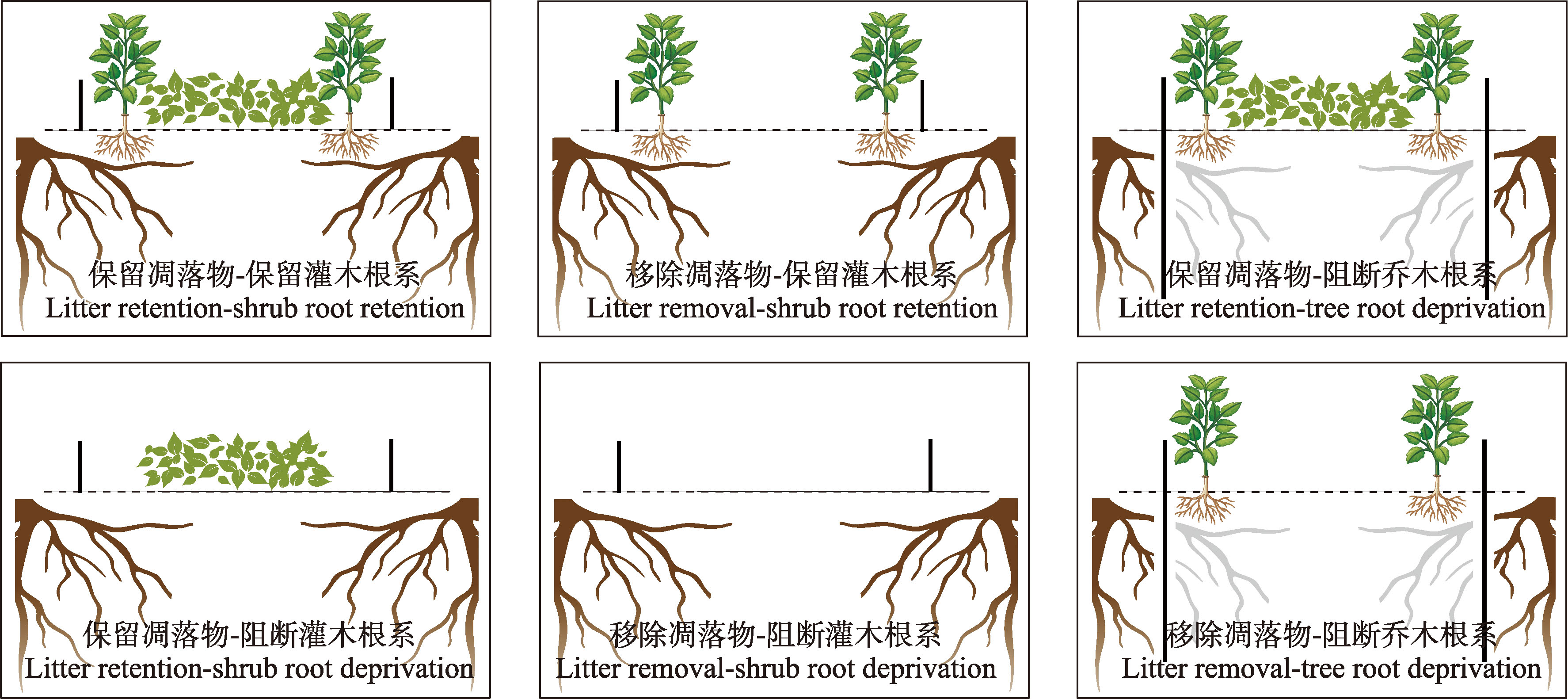
Fig. 1 Diagram of combined treatment of litter removal, tree root deprivation and shrub root deprivation
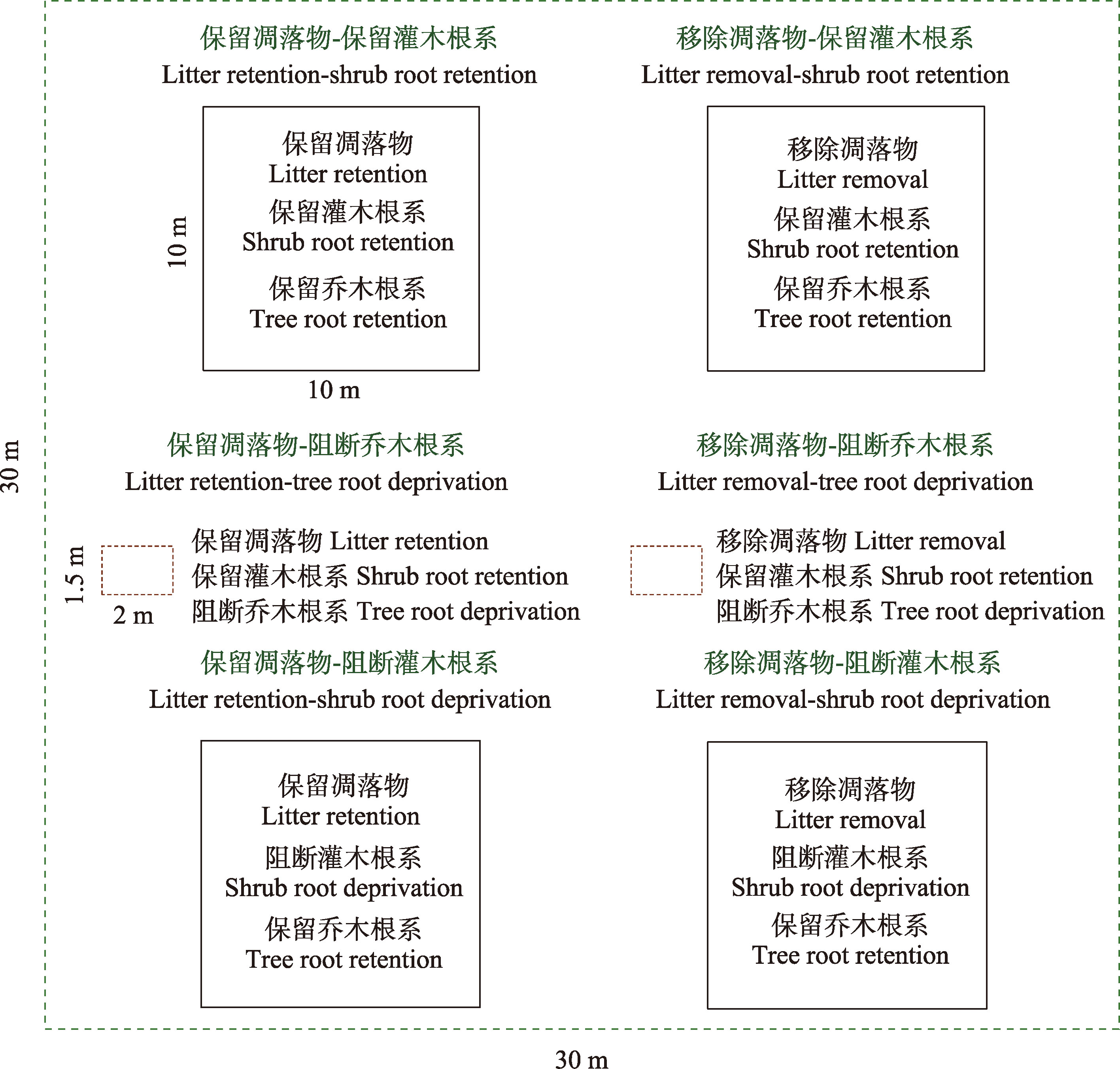
Fig. 2 Spatial schematic diagram of the experimental plot design
| 土壤理化性质及微生物资源丰富度 Soil properties and microbial resources richness | 移除凋落物 Litter removal (df = 1) | 阻断根系 Root deprivation (df = 2) | 交互作用 Interaction (df = 2) | |||
|---|---|---|---|---|---|---|
| F | P | F | P | F | P | |
| 含水率 Moisture content (%) | 3.42 | 0.08 | 4.42 | < 0.05 | 0.68 | 0.52 |
| 酸碱度 pH | 0.22 | 0.65 | 0.58 | 0.57 | 2.37 | 0.12 |
| 总碳 TC (g/kg) | 6.29 | < 0.05 | 1.88 | 0.18 | 1.75 | 0.20 |
| 总氮 TN (g/kg) | 21.00 | < 0.001 | 2.51 | 0.11 | 1.85 | 0.18 |
| 总磷 TP (g/kg) | 5.76 | < 0.05 | 0.47 | 0.63 | 0.17 | 0.84 |
| 总硫 TS (g/kg) | 4.72 | < 0.05 | 0.0001 | 0.10 | 0.31 | 0.74 |
| 真菌丰富度 Fungal richness | 20.22 | < 0.001 | 2.74 | 0.09 | 0.55 | 0.59 |
| 细菌丰富度 Bacterial richness | 27.75 | < 0.001 | 3.55 | 0.05 | 3.76 | < 0.05 |
Table 1 Effects of litter removal and root deprivation on soil physicochemical properties and microbial resource richness based on two-way analysis of variance (ANOVA). Bold font indicates significant differences (P < 0.05). TP, Total phosphorus; TC, Total carbon; TN, Total nitrogen; TS, Total sulfur.
| 土壤理化性质及微生物资源丰富度 Soil properties and microbial resources richness | 移除凋落物 Litter removal (df = 1) | 阻断根系 Root deprivation (df = 2) | 交互作用 Interaction (df = 2) | |||
|---|---|---|---|---|---|---|
| F | P | F | P | F | P | |
| 含水率 Moisture content (%) | 3.42 | 0.08 | 4.42 | < 0.05 | 0.68 | 0.52 |
| 酸碱度 pH | 0.22 | 0.65 | 0.58 | 0.57 | 2.37 | 0.12 |
| 总碳 TC (g/kg) | 6.29 | < 0.05 | 1.88 | 0.18 | 1.75 | 0.20 |
| 总氮 TN (g/kg) | 21.00 | < 0.001 | 2.51 | 0.11 | 1.85 | 0.18 |
| 总磷 TP (g/kg) | 5.76 | < 0.05 | 0.47 | 0.63 | 0.17 | 0.84 |
| 总硫 TS (g/kg) | 4.72 | < 0.05 | 0.0001 | 0.10 | 0.31 | 0.74 |
| 真菌丰富度 Fungal richness | 20.22 | < 0.001 | 2.74 | 0.09 | 0.55 | 0.59 |
| 细菌丰富度 Bacterial richness | 27.75 | < 0.001 | 3.55 | 0.05 | 3.76 | < 0.05 |
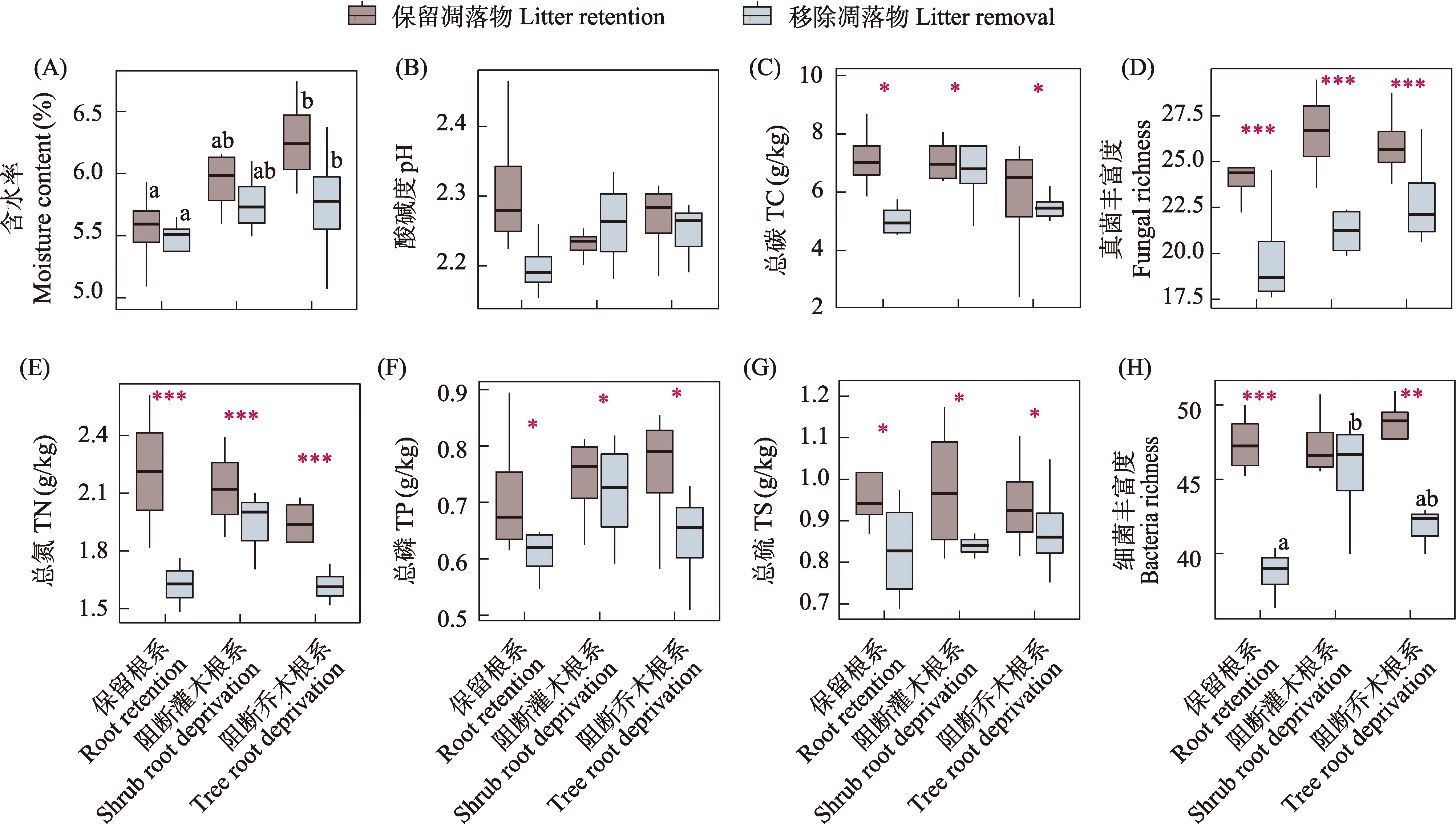
Fig. 3 Effects of litter removal and root deprivation on soil physicochemical properties and microbial resource richness. Different letters indicate significant differences among root treatments; asterisks indicate significant differences between litter treatments. *** P < 0.001, ** P < 0.01, * P < 0.05. TP, Total phosphorus; TC, Total carbon; TN, Total nitrogen; TS, Total sulfur.
| 原生生物功能类群 Functional groups of protists | 移除凋落物 Litter removal (df = 1) | 阻断根系 Root deprivation (df = 2) | 交互作用 Interaction (df = 2) | |||
|---|---|---|---|---|---|---|
| F | P | F | P | F | P | |
| 食细菌者 Bacterivores | 44.30 | < 0.001 | 6.20 | < 0.01 | 0.38 | 0.70 |
| 食真核生物者 Eukaryvores | 30.59 | < 0.001 | 7.40 | < 0.01 | 4.12 | < 0.05 |
| 杂食者 Omnivores | 54.52 | < 0.001 | 4.76 | < 0.05 | 0.27 | 0.77 |
| 食碎屑者 Detritivores | 9.75 | < 0.01 | 2.73 | 0.09 | 4.16 | < 0.05 |
Table 2 Effects of litter removal and root deprivation on the richness of different protists functional groups based on two-way analysis of variance (ANOVA). Bold font indicates significant differences (P < 0.05).
| 原生生物功能类群 Functional groups of protists | 移除凋落物 Litter removal (df = 1) | 阻断根系 Root deprivation (df = 2) | 交互作用 Interaction (df = 2) | |||
|---|---|---|---|---|---|---|
| F | P | F | P | F | P | |
| 食细菌者 Bacterivores | 44.30 | < 0.001 | 6.20 | < 0.01 | 0.38 | 0.70 |
| 食真核生物者 Eukaryvores | 30.59 | < 0.001 | 7.40 | < 0.01 | 4.12 | < 0.05 |
| 杂食者 Omnivores | 54.52 | < 0.001 | 4.76 | < 0.05 | 0.27 | 0.77 |
| 食碎屑者 Detritivores | 9.75 | < 0.01 | 2.73 | 0.09 | 4.16 | < 0.05 |
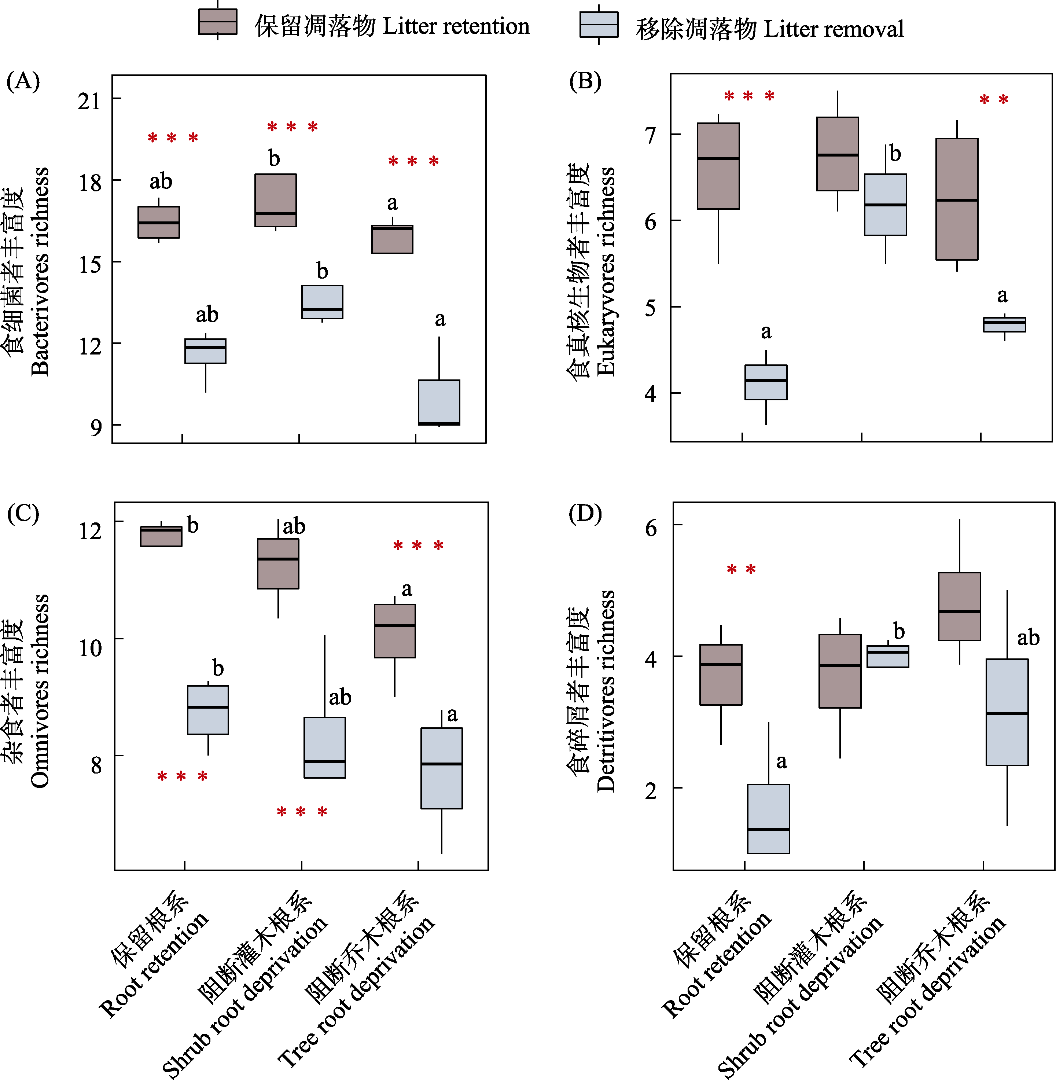
Fig. 4 Effects of litter removal and root deprivation on the richness of bacterivore (A), eukaryvore (B), omnivore (C), and detritivore (D) protists. Different letters indicate significant differences among root treatments. Asterisks denote significant differences between litter treatments. *** P < 0.001, ** P < 0.01, * P < 0.05.
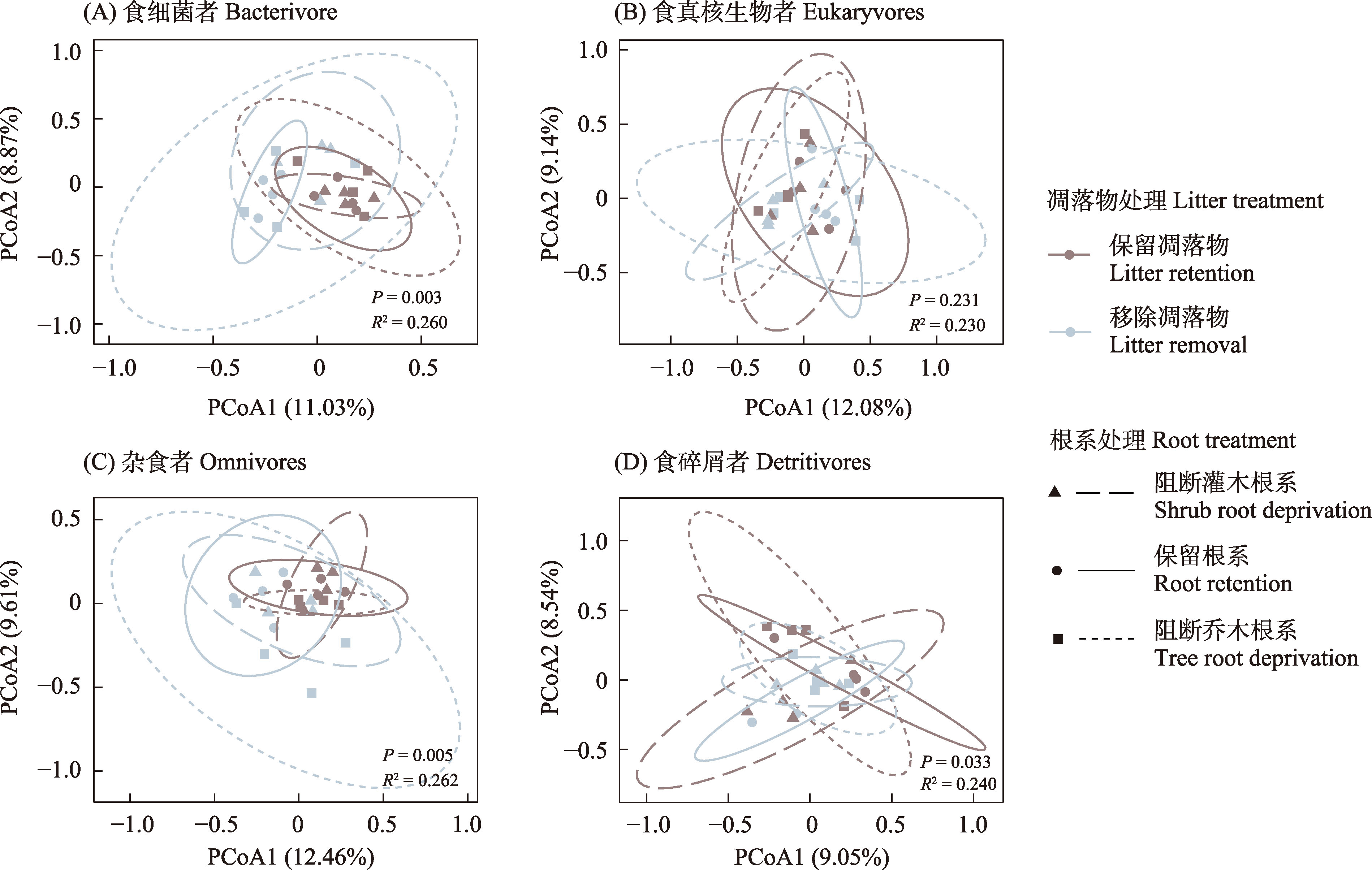
Fig. 5 Principal coordinate analysis (PCoA) of community composition of bacterivores, eukaryvores, omnivores, and detritivores protist under litter removal and root deprivation. Colors indicate litter treatments, while point shapes and ellipse line types represent root treatments. Ellipses denote 95% confidence intervals. R2 indicates the proportion of variation in community composition explained by litter removal and root deprivation.
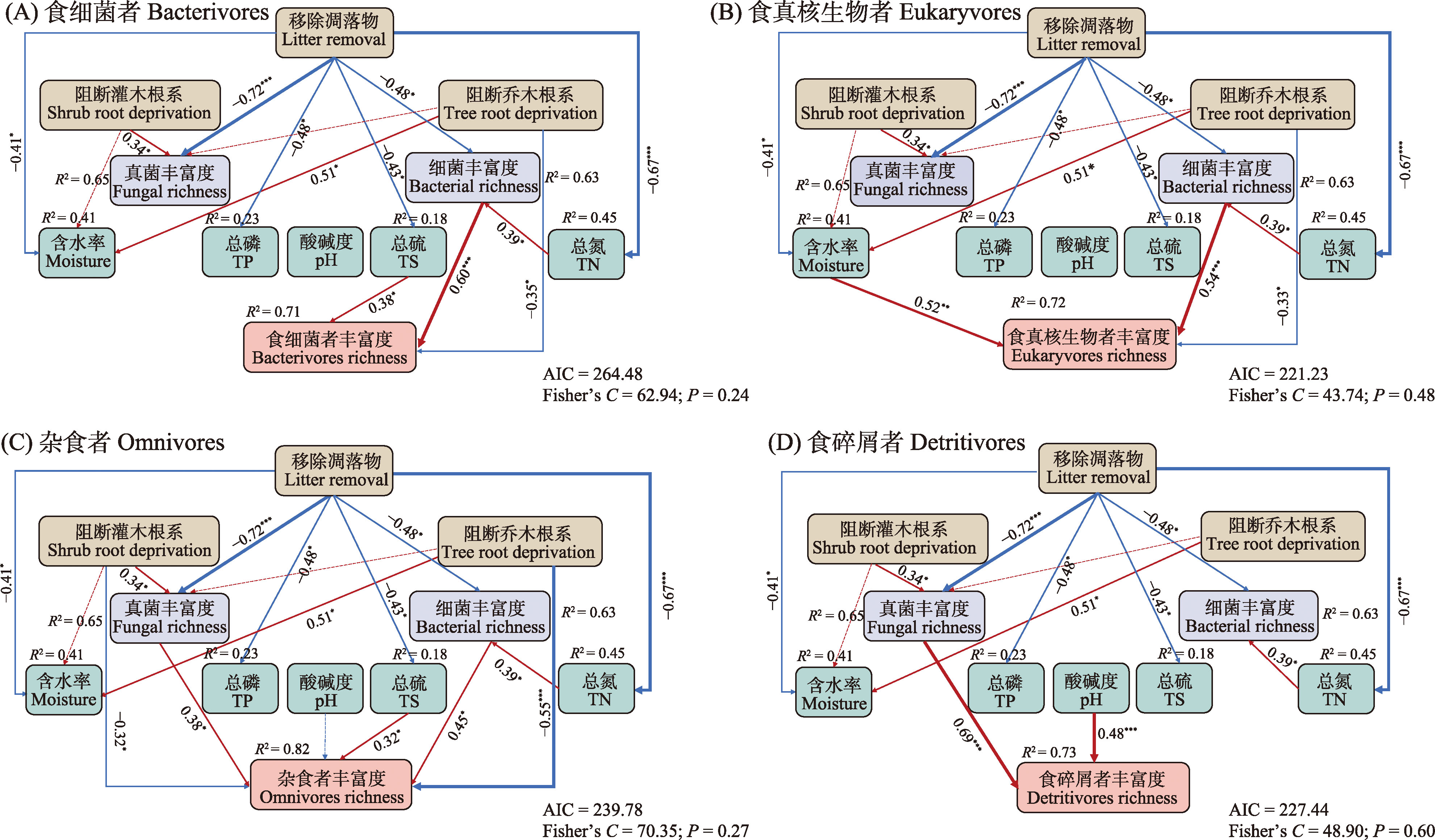
Fig. 6 Piecewise structural equation models (PSEM) showing the direct and indirect effects of litter removal, root deprivation, and soil physicochemical properties and microbial resources on the richness of soil protist functional groups. Red arrows indicate positive correlations, and blue arrows indicate negative correlations. Solid lines represent significant effects (P < 0.05), whereas dashed lines represent non-significant effects (P > 0.05). *** P < 0.001, ** P < 0.01, * P < 0.05. Values adjacent to arrows indicate standardized path coefficients. Line thickness indicates the significance of path coefficients; thicker lines represent stronger effects. R² indicates the proportion of variance in soil physicochemical properties, microbial resources and protist functional group richness explained by the model variables. TC, Total carbon; TN, Total nitrogen; TS, Total sulfur; TP, Total phosphorus.
| 原生生物功能类群 Functional groups of protists | 效应 Effects | 移除凋落物 Litter removal | 阻断灌木根系 Shrub root deprivation | 阻断乔木根系 Tree root deprivation |
|---|---|---|---|---|
| 食细菌者 Bacterivores | 直接效应 Direct effects | 0 | 0 | -0.35 |
| 间接效应 Indirect effects | -0.61 | 0 | 0 | |
| 总效应 Total effects | -0.61 | 0 | -0.35 | |
| 食真核生物者 Eukaryvores | 直接效应 Direct effects | 0 | 0 | -0.33 |
| 间接效应 Indirect effects | -0.61 | 0 | 0.27 | |
| 总效应 Total effects | -0.61 | 0 | -0.06 | |
| 杂食者 Omnivores | 直接效应 Direct effects | 0 | -0.32 | -0.55 |
| 间接效应 Indirect effects | -0.77 | 0.13 | 0 | |
| 总效应 Total effects | -0.77 | -0.19 | -0.55 | |
| 食碎屑者 Detritivores | 直接效应 Direct effects | 0 | 0 | 0 |
| 间接效应 Indirect effects | -0.49 | 0.23 | 0 | |
| 总效应 Total effects | -0.49 | 0.23 | 0 |
Table 3 Significant direct, indirect, and total effects of litter removal and root deprivation on the richness of protist functional groups in the piecewise structural equation models (PSEM)
| 原生生物功能类群 Functional groups of protists | 效应 Effects | 移除凋落物 Litter removal | 阻断灌木根系 Shrub root deprivation | 阻断乔木根系 Tree root deprivation |
|---|---|---|---|---|
| 食细菌者 Bacterivores | 直接效应 Direct effects | 0 | 0 | -0.35 |
| 间接效应 Indirect effects | -0.61 | 0 | 0 | |
| 总效应 Total effects | -0.61 | 0 | -0.35 | |
| 食真核生物者 Eukaryvores | 直接效应 Direct effects | 0 | 0 | -0.33 |
| 间接效应 Indirect effects | -0.61 | 0 | 0.27 | |
| 总效应 Total effects | -0.61 | 0 | -0.06 | |
| 杂食者 Omnivores | 直接效应 Direct effects | 0 | -0.32 | -0.55 |
| 间接效应 Indirect effects | -0.77 | 0.13 | 0 | |
| 总效应 Total effects | -0.77 | -0.19 | -0.55 | |
| 食碎屑者 Detritivores | 直接效应 Direct effects | 0 | 0 | 0 |
| 间接效应 Indirect effects | -0.49 | 0.23 | 0 | |
| 总效应 Total effects | -0.49 | 0.23 | 0 |
| [1] | Adams RI, Miletto M, Taylor JW, Bruns TD (2013) Dispersal in microbes: Fungi in indoor air are dominated by outdoor air and show dispersal limitation at short distances. The ISME Journal, 7, 1262-1273. |
| [2] | Adl SM, Bass D, Lane CE, Lukeš J, Schoch CL, Smirnov A, Agatha S, Berney C, Brown MW, Burki F, Cárdenas P, Čepička I, Chistyakova L, Del Campo J, Dunthorn M, Edvardsen B, Eglit Y, Guillou L, Hampl V, Heiss AA, Hoppenrath M, James TY, Karnkowska A, Karpov S, Kim E, Kolisko M, Kudryavtsev A, Lahr DJG, Lara E, Le Gall L, Lynn DH, Mann DG, Massana R, Mitchell EAD, Morrow C, Park JS, Pawlowski JW, Powell MJ, Richter DJ, Rueckert S, Shadwick L, Shimano S, Spiegel FW, Torruella G, Youssef N, Zlatogursky V, Zhang Q (2019) Revisions to the classification, nomenclature, and diversity of eukaryotes. Journal of Eukaryotic Microbiology, 66, 4-119. |
| [3] | Beni A, Soki E, Lajtha K, Fekete I (2014) An optimized HPLC method for soil fungal biomass determination and its application to a detritus manipulation study. Journal of Microbiological Methods, 103, 124-130. |
| [4] | Bolyen E, Rideout JR, Dillon MR, Bokulich NA, Abnet CC, Al-Ghalith GA, Alexander H, Alm EJ, Arumugam M, Asnicar F, …, Warren J, Weber KC, Williamson CHD, Willis AD, Xu ZZ, Zaneveld JR, Zhang Y, Zhu Q, Knight R, Caporaso JG (2019) Reproducible, interactive, scalable and extensible microbiome data science using QIIME 2. Nature Biotechnology, 37, 852-857. |
| [5] | Bonkowski M, Clarholm M (2012) Stimulation of plant growth through interactions of bacteria and protozoa: Testing the auxiliary microbial loop hypothesis. Acta Protozoologica, 55, 237-247. |
| [6] | Bradford MA (2016) Re-visioning soil food webs. Soil Biology and Biochemistry, 102, 1-3. |
| [7] | Burki F, Roger AJ, Brown MW, Simpson AGB (2020) The new tree of eukaryotes. Trends in Ecology & Evolution, 35, 43-55. |
| [8] | Caporaso JG, Kuczynski J, Stombaugh J, Bittinger K, Bushman FD, Costello EK, Fierer N, Peña AG, Goodrich JK, Gordon JI, Huttley GA, Kelley ST, Knights D, Koenig JE, Ley RE, Lozupone CA, McDonald D, Muegge BD, Pirrung M, Reeder J, Sevinsky JR, Turnbaugh PJ, Walters WA, Widmann J, Yatsunenko T, Zaneveld J, Knight R (2010) QIIME allows analysis of high-throughput community sequencing data. Nature Methods, 7, 335-336. |
| [9] | Doblas-Miranda E, Sánchez-Piñero F, González-Megías A (2009) Different structuring factors but connected dynamics shape litter and belowground soil macrofaunal food webs. Soil Biology and Biochemistry, 41, 2543-2550. |
| [10] | Fang K, Kou YP, Tang N, Liu J, Zhang XY, He HL, Xia RX, Zhao WQ, Li DD, Liu Q (2024) Differential responses of soil bacteria, fungi and protists to root exudates and temperature. Microbiological Research, 286, 127829. |
| [11] | Fanin N, Bertrand I (2016) Aboveground litter quality is a better predictor than belowground microbial communities when estimating carbon mineralization along a land-use gradient. Soil Biology and Biochemistry, 94, 48-60. |
| [12] | Fekete I, Kotroczó Z, Varga C, Nagy PT, Várbíró G, Bowden RD, Tóth JA, Lajtha K (2014) Alterations in forest detritus inputs influence soil carbon concentration and soil respiration in a central-european deciduous forest. Soil Biology and Biochemistry, 74, 106-114. |
| [13] | Feng B, Chen L, Lou JY, Wang M, Xiong W, Sun RB, Ouyang Z, Sun ZG, Zhao BZ, Zhang JB (2025) Rhizosphere Cercozoa reflect the physiological response of wheat plants to salinity stress. Soil Ecology Letters, 7, 240268. |
| [14] | Frey SD, Elliott ET, Paustian K (1999) Bacterial and fungal abundance and biomass in conventional and no-tillage agroecosystems along two climatic gradients. Soil Biology and Biochemistry, 31, 573-585. |
| [15] | Fu XL, Guo DL, Wang HM, Dai XQ, Li ML, Chen FS (2017) Differentiating between root- and leaf-litter controls on the structure and stability of soil micro-food webs. Soil Biology and Biochemistry, 113, 192-200. |
| [16] | Fu XL, Wang JL, Di YB, Wang HM (2015) Differences in fine-root biomass of trees and understory vegetation among stand types in subtropical forests. PLoS ONE, 10, e0128894. |
| [17] | Geddes N, Dunkerley D (1999) The influence of organic litter on the erosive effects of raindrops and of gravity drops released from desert shrubs. Catena, 36, 303-313. |
| [18] | Geisen S, Mitchell EAD, Wilkinson DM, Adl S, Bonkowski M, Brown MW, Fiore-Donno AM, Heger TJ, Jassey VEJ, Krashevska V, Lahr DJG, Marcisz K, Mulot M, Payne R, Singer D, Anderson OR, Charman DJ, Ekelund F, Griffiths BS, Rønn R, Smirnov A, Bass D, Belbahri L, Berney C, Blandenier Q, Chatzinotas A, Clarholm M, Dunthorn M, Feest A, Fernández LD, Foissner W, Fournier B, Gentekaki E, Hájek M, Helder J, Jousset A, Koller R, Kumar S, La Terza A, Lamentowicz M, Mazei Y, Santos SS, Seppey CVW, Spiegel FW, Walochnik J, Winding A, Lara E (2017) Soil protistology rebooted: 30 fundamental questions to start with. Soil Biology and Biochemistry, 111, 94-103. |
| [19] | Hao YZ, Zhao JY, Lu M, Wang Q, Peng WQ, Chen Z (2020) Effect of plant roots on river bank stabilization after composite vegetation planting. Journal of Hydroecology, 41(3), 42-50. (in Chinese with English abstract) |
| [郝由之, 赵进勇, 路明, 王琦, 彭文启, 陈卓 (2020) 复合植被根系作用对生态岸坡稳定性的影响. 水生态学杂志, 41(3), 42-50.] | |
| [20] | Huang WJ, Spohn M (2015) Effects of long-term litter manipulation on soil carbon, nitrogen, and phosphorus in a temperate deciduous forest. Soil Biology and Biochemistry, 83, 12-18. |
| [21] | Juhos K, Madarász B, Kotroczó Z, Béni Á, Makádi M, Fekete I (2021) Carbon sequestration of forest soils is reflected by changes in physicochemical soil indicators—A comprehensive discussion of a long-term experiment on a detritus manipulation. Geoderma, 385, 114918. |
| [22] | Kelly JJ, Favila E, Hundal LS, Marlin JC (2007) Assessment of soil microbial communities in surface applied mixtures of illinois river sediments and biosolids. Applied Soil Ecology, 36, 176-183. |
| [23] | Li MJ, Niu BL, Chen ZC, Liu YC, Liu SR (2025) Effects of tree species diversity on soil organic carbon in natural forests of Quercus aliena var. acuteserrata in Baotianman. Acta Ecologica Sinica, 45, 10687-10697. (in Chinese with English abstract) |
| [李铭杰, 牛保亮, 陈志成, 刘彦春, 刘世荣 (2025) 树种多样性对宝天曼天然栎林土壤有机碳的影响. 生态学报, 45, 10687-10697.] | |
| [24] | Li Z, Bluhm SL, Scheu S, Pollierer MM (2022) Amino acid isotopes in functional assemblages of Collembola reveal the influence of vertical resource heterogeneity and root energy supply on trophic interactions in soil food webs. Soil Biology and Biochemistry, 174, 108815. |
| [25] | Nguyen BT, Chen QL, Yan ZZ, Li CY, He JZ, Hu HW (2021) Distinct factors drive the diversity and composition of protistan consumers and phototrophs in natural soil ecosystems. Soil Biology and Biochemistry, 160, 108317. |
| [26] | Niu XD, Chen ZC, Yan CY, Niu BL, Liu SR (2025) A dataset of half-hour meteorological observations at Henan Baotianman Forest Ecosystem National Observation and Research Station (2015-2023). China Scientific Data, 10(1), 294-304. (in Chinese with English abstract) |
| [牛晓栋, 陈志成, 闫崇宇, 牛保亮, 刘世荣 (2025) 2015-2023年河南宝天曼森林生态系统国家野外科学观测研究站半小时尺度气象数据集. 中国科学数据(中英文网络版), 10(1), 294-304.] | |
| [27] | Noh NJ, Chung H, Ryu SR, Son Y, Lee SK, Yoon TK, Yang AR, Kim J (2012) Changes in soil properties of Abies holophylla and Quercus-dominated stands 4 years after trenching. Scandinavian Journal of Forest Research, 27, 597-604. |
| [28] | Ogée J, Brunet Y (2002) A forest floor model for heat and moisture including a litter layer. Journal of Hydrology, 255, 212-233. |
| [29] | Oliverio AM, Geisen S, Delgado-Baquerizo M, Maestre FT, Turner BL, Fierer N (2020) The global-scale distributions of soil protists and their contributions to belowground systems. Science Advances, 6, eaax8787. |
| [30] | R Core Team (2025) R: A Language and Environment for Statistical Computing. R Foundation for Statistical Computing. https://www.R-project.org/. (accessed on 2026-03-23) |
| [31] | Sanderman J, Baldock JA, Amundson R (2008) Dissolved organic carbon chemistry and dynamics in contrasting forest and grassland soils. Biogeochemistry, 89, 181-198. |
| [32] | Sang CP, Wan XH, Yu ZP, Wang MH, Lin Y, Huang ZQ (2017) Effects of litter and root exclusion on soil microbial community composition and function of four plantations in subtropical sandy coastal plain area, China. Chinese Journal of Applied Ecology, 28, 1184-1196. (in Chinese with English abstract) |
| [桑昌鹏, 万晓华, 余再鹏, 王民煌, 林宇, 黄志群 (2017) 凋落物和根系去除对滨海沙地土壤微生物群落组成和功能的影响. 应用生态学报, 28, 1184-1196.] | |
| [33] | Scott-Denton LE, Rosenstiel TN, Monson RK (2006) Differential controls by climate and substrate over the heterotrophic and rhizospheric components of soil respiration. Global Change Biology, 12, 205-216. |
| [34] | Shao YH, Wang XL, Zhao J, Wu JP, Zhang WX, Neher DA, Li YX, Lou YP, Fu SL (2016) Subordinate plants sustain the complexity and stability of soil micro-food webs in natural bamboo forest ecosystems. Journal of Applied Ecology, 53, 130-139. |
| [35] | Stefan G, Cornelia B, Jörg R, Michael B (2014) Soil water availability strongly alters the community composition of soil protists. Pedobiologia, 57, 205-213. |
| [36] | Stoeck T, Bass D, Nebel M, Christen R, Jones MDM, Breiner HW, Richards TA (2010) Multiple marker parallel tag environmental DNA sequencing reveals a highly complex eukaryotic community in marine anoxic water. Molecular Ecology, 19, 21-31. |
| [37] | Xiao Y, Chen HX, Qiu LJ, Zhang Y, Wan SZ (2021) Effects of understory removal on soil microbial community composition in subtropical Phyllostachys edulis plantations. Chinese Journal of Applied Ecology, 32, 3089-3096. (in Chinese with English abstract) |
| [肖意, 陈慧娴, 邱丽君, 张扬, 万松泽 (2021) 林下植物剔除对毛竹林土壤微生物群落结构的影响. 应用生态学报, 32, 3089-3096.] | |
| [38] | Zhalnina K, Louie KB, Hao Z, Mansoori N, Da Rocha UN, Shi S, Cho H, Karaoz U, Loqué D, Bowen BP, Firestone MK, Northen TR, Brodie EL (2018) Dynamic root exudate chemistry and microbial substrate preferences drive patterns in rhizosphere microbial community assembly. Nature Microbiology, 3, 470-480. |
| [39] | Zhao CC, Guo EH, Shao YH, Zhang WX, Zhang CL, Liu YC, Li Y, Zou XM, Fu SL (2021) Impacts of litter addition and root presence on soil nematode community structure in a young Eucalyptus plantation in Southern China. Forest Ecology and Management, 479, 118633. |
| [40] | Zhou Z, Lu JZ, Preiser J, Widyastuti R, Scheu S, Potapov A (2023) Plant roots fuel tropical soil animal communities. Ecology Letters, 26, 742-753. |
| [41] | Zhu HQ, Gong L, Luo Y, Tang JH, Ding ZL, Li XC (2022) Effects of litter and root manipulations on soil bacterial and fungal community structure and function in a Schrenk’s spruce (Picea schrenkiana) forest. Frontiers in Plant Science, 13, 849483. |
| [42] | Zieger SL, Eissfeller V, Maraun M, Scheu S (2015) Incorporation of carbon and nitrogen from leaf litter differing in structural compounds into soil microarthropods of a deciduous forest. Pedobiologia, 58, 219-227. |
| [1] | Zhongjun Gong, Weizheng Li, Yongsheng Yao, Xuqi Zuo, Yuqing Wu, Jin Miao. Distribution characteristics of arthropod eDNA in the solid, liquid, and gas phases of farmland soil [J]. Biodiv Sci, 2026, 34(7): 26146-. |
| [2] | Ziling Yan, Xiaoyu Chen, Meng Yao. A comparative evaluation of bioinformatic pipelines for invertebrate biodiversity profiling via environmental DNA metabarcoding [J]. Biodiv Sci, 2026, 34(1): 25369-. |
| [3] | Yun’ao Li, Wenfu Zhang, Guigang Zhao, Chunyan Yang, Xiangqing Chen, Shengdong Yuan, Min Cao, Wang Cai, Jie Yang. Application of airborne eDNA for terrestrial animal diversity monitoring: A case study of 20-ha forest dynamics plot in Xishuangbanna, Yunnan, China [J]. Biodiv Sci, 2025, 33(6): 24318-. |
| [4] | Wen Peng, Zeshuai Deng, Wenbao Zheng, Lingxuan Gong, Yufeng Zeng, Hao Meng, Jun Chen, Daode Yang. Application of eDNA technology in amphibian surveys: A case study of Hunan Mangshan National Nature Reserve [J]. Biodiv Sci, 2025, 33(6): 24552-. |
| [5] | Yixiu Kou, Zhaohong Weng, Fenfen Ji, Kit Yue Kwan, Yangjie Xie, Jiaqiao Wang, Hangzhao Pan, Yunting Zhao, Kun Ye. Applications of environmental DNA techniques in monitoring endangered aquatic animals [J]. Biodiv Sci, 2025, 33(11): 24574-. |
| [6] | Yihui Jiang, Yue Liu, Xu Zeng, Zheying Lin, Nan Wang, Jihao Peng, Ling Cao, Cong Zeng. Fish diversity and connectivity in six national marine protected areas in the East China Sea [J]. Biodiv Sci, 2024, 32(6): 24128-. |
| [7] | Zhiyuan Dong, Linlin Chen, Naipeng Zhang, Li Chen, Debin Sun, Yanmei Ni, Baoquan Li. Response of fish diversity to hydrological connectivity of typical tidal creek system in the Yellow River Delta based on environmental DNA metabarcoding [J]. Biodiv Sci, 2023, 31(7): 23073-. |
| [8] | Li Yiyuan, C. Molik David, E. Pfrender Michael. EPPS, a metabarcoding bioinformatics pipeline using Nextflow [J]. Biodiv Sci, 2019, 27(5): 567-575. |
| Viewed | ||||||
|
Full text |
|
|||||
|
Abstract |
|
|||||
Copyright © 2026 Biodiversity Science
Editorial Office of Biodiversity Science, 20 Nanxincun, Xiangshan, Beijing 100093, China
Tel: 010-62836137, 62836665 E-mail: biodiversity@ibcas.ac.cn
