

Biodiv Sci ›› 2026, Vol. 34 ›› Issue (4): 25334. DOI: 10.17520/biods.2025334 cstr: 32101.14.biods.2025334
• Reviews • Previous Articles Next Articles
Jinyue Zhang1( ), Baole Bian1(), Tairan Tang1, Wenhao Nong1(), Shufeng Zhu1, Xinmin Lu1,2,3,*()(
 )
)
Received:2025-08-20
Accepted:2026-01-26
Online:2026-04-20
Published:2026-05-27
Contact:
*E-mail: lxm3412@mail.hzau.edu.cn
Supported by:Jinyue Zhang, Baole Bian, Tairan Tang, Wenhao Nong, Shufeng Zhu, Xinmin Lu. Plant-rhizosphere microbe interaction and its response to herbivory: A review[J]. Biodiv Sci, 2026, 34(4): 25334.
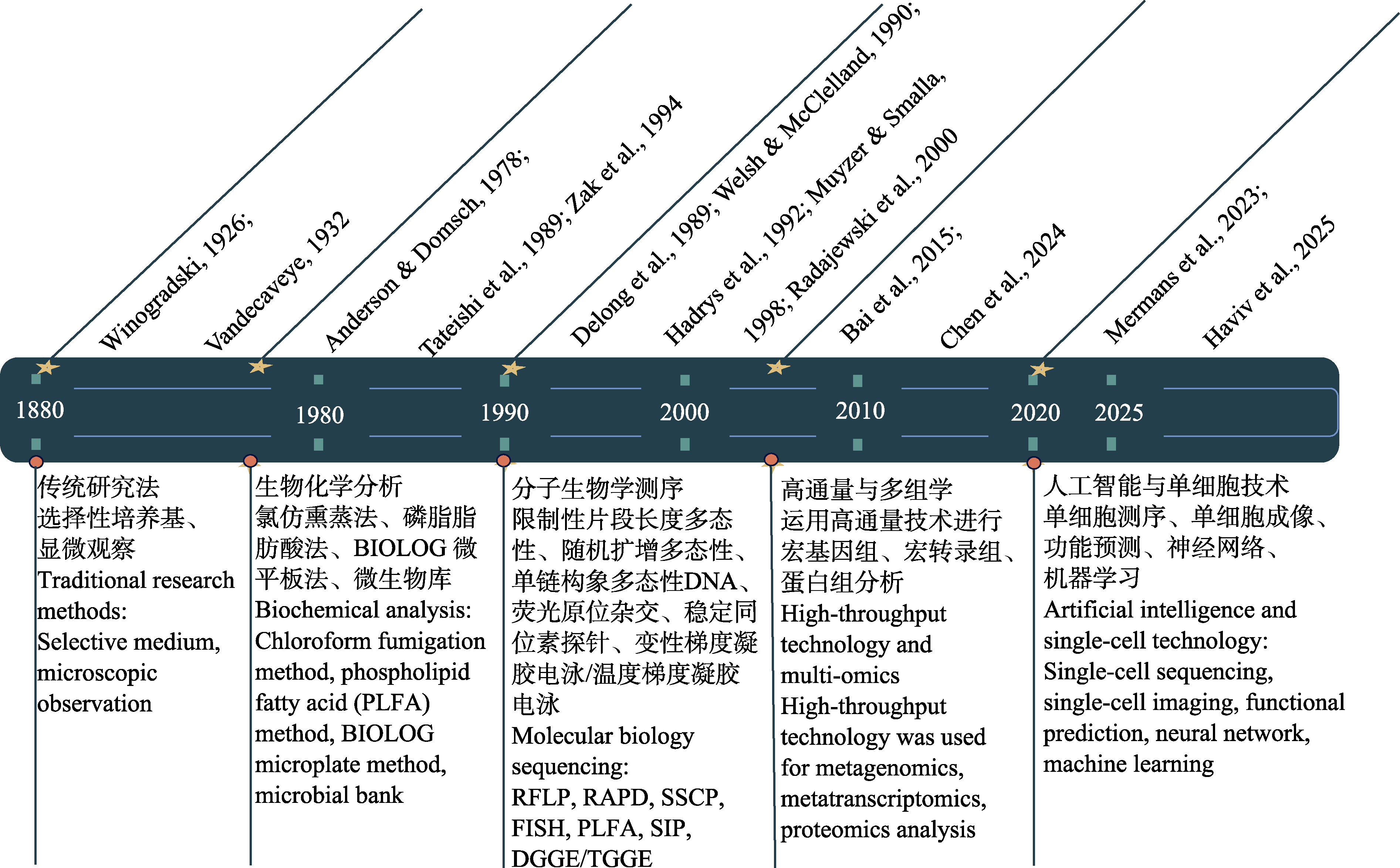
Fig. 1 The development course of plant-rhizosphere microbe research technologies from 1880 to 2025. RFLP, Restriction fragment length polymorphism; RAPD, Random amplified polymorphic DNA; SSCP, Single-strand conformation polymorphism; FISH, Fluorescence in situ hybridization; SIP, Stable isotope probing; DGGE/TGGE, Denaturing gradient gel electrophoresis/temperature gradient gel electrophoresis.
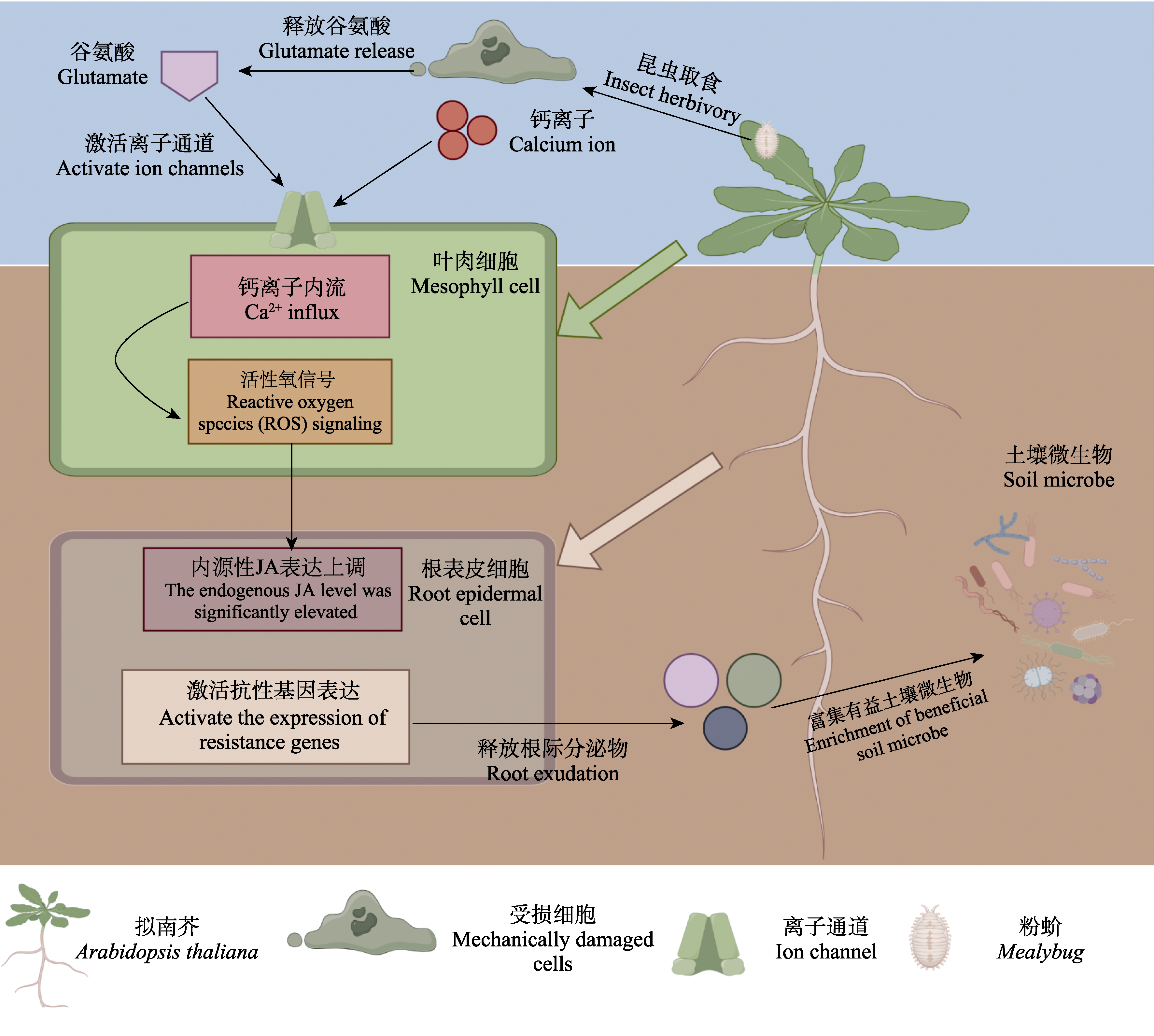
Fig. 2 Conceptual diagram of plant-soil microbe-herbivore interactions. Upon herbivory of plant foliage by phytophagous insects, the jasmonic acid (JA) signaling pathway and other induced systemic resistance responses are triggered. The plant rhizosphere releases secondary metabolites that selectively recruit specific soil microbe communities. The graphical elements were created using illustration resources from www.figdraw.com.
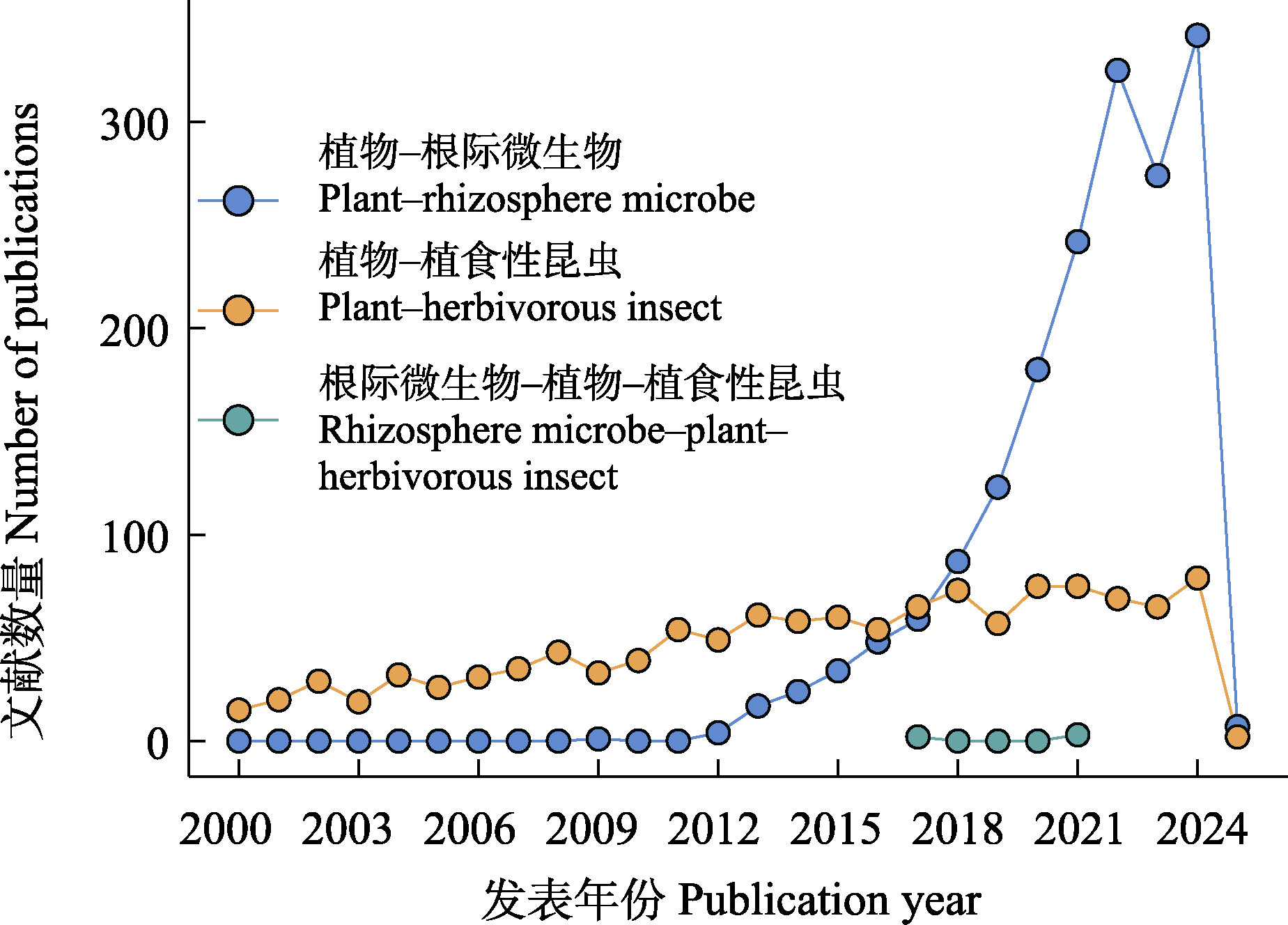
Fig. 3 Article growth statistics in the field of plant-rhizosphere microbe-herbivorous insect interactions. Research on plant-rhizosphere microbe interactions has developed rapidly in recent years, while studies on tripartite interactions remain limited. Based on a Web of Science search using the keywords “interaction AND plant AND herbivorous”, “interaction AND plant AND rhizosphere microbiome”, and “interaction AND plant AND rhizosphere microbiome AND herbivorous” (document type: Article; language: English; Year: 2000-2023), a total of 2,991 valid articles were retrieved.
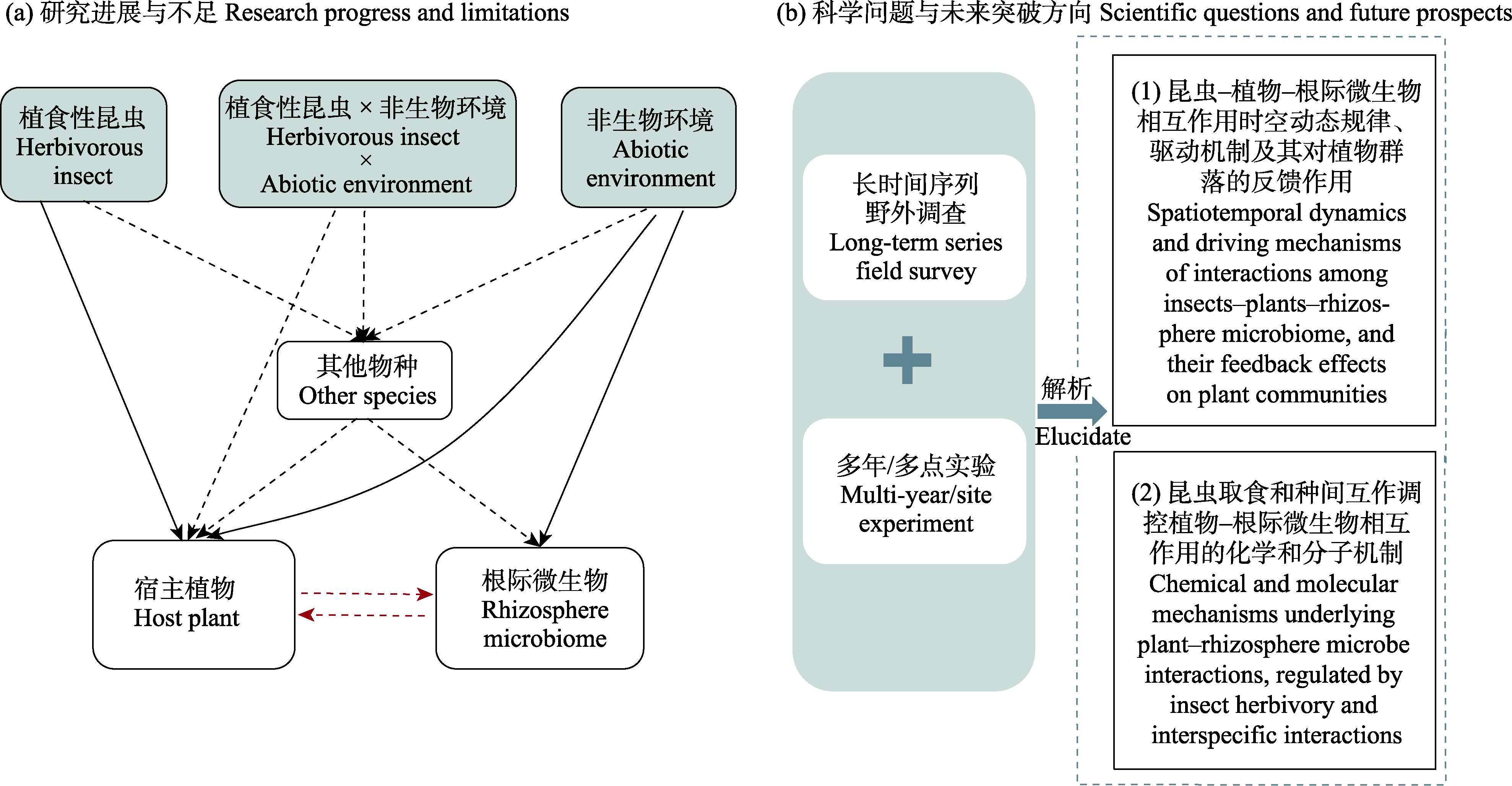
Fig. 4 The progress, limitations, outstanding questions and future research directions in the field of plant-rhizosphere microbe interactions. (a) The dashed arrows represent the interaction processes that are yet to be explored, while “×” mark indicates interactions. The parts marked in red represent the scientific questions that urgently need investigation. (b) Integrating long-term time-series field surveys with multi-year, multi-site controlled experiments aiming to elucidate: (1) the spatiotemporal dynamics and driving mechanisms of interactions among insect-plant-rhizosphere microbe interactions, and their feedback effects on plant communities; (2) the chemical and molecular mechanisms underlying plant-rhizosphere microbe interactions, regulated by insect herbivory and interspecific interactions.
| [1] | Agron PG, Ditta GS, Helinski DR (1993) Oxygen regulation of nifA transcription in vitro. Proceedings of the National Academy of Sciences, USA, 90, 3506-3510. |
| [2] |
Allsup CM, George I, Lankau RA (2023) Shifting microbial communities can enhance tree tolerance to changing climates. Science, 380, 835-840.
DOI PMID |
| [3] |
Anderson JPE, Domsch KH (1978) Physiological method for quantitative measurement of microbial biomass in soils. Soil Biology & Biochemistry, 10, 215-221.
DOI URL |
| [4] | Anthony MA, Bender SF, van der Heijden MGA (2023) Enumerating soil biodiversity. Proceedings of the National Academy of Sciences, USA, 120, e2304663120. |
| [5] |
Badri DV, Zolla G, Bakker MG, Manter DK, Vivanco JM (2013) Potential impact of soil microbiomes on the leaf metabolome and on herbivore feeding behavior. New Phytologist, 198, 264-273.
DOI PMID |
| [6] |
Bahram M, Hildebrand F, Forslund SK, Anderson JL, Soudzilovskaia NA, Bodegom PM, Bengtsson-Palme J, Anslan S, Coelho LP, Harend H, Huerta-Cepas J, Medema MH, Maltz MR, Mundra S, Olsson PA, Pent M, Põlme S, Sunagawa S, Ryberg M, Tedersoo L, Bork P (2018) Structure and function of the global topsoil microbiome. Nature, 560, 233-237.
DOI |
| [7] | Bai Y, Müller DB, Srinivas G, Garrido-Oter R, Potthoff E, Rott M, Dombrowski N, Münch PC, Spaepen S, Remus-Emsermann M, Hüttel B, McHardy AC, Vorholt JA, Schulze-Lefert P (2015) Functional overlap of the Arabidopsis leaf and root microbiota. Nature, 528, 364-369. |
| [8] |
Bailey BA (1995) Purification of a protein from culture filtrates of Fusarium oxysporum that induces ethylene and necrosis in leaves of Erythroxylum coca. Phytopathology, 85, 1250.
DOI URL |
| [9] |
Bardgett RD, Mommer L, De Vries FT (2014) Going underground: Root traits as drivers of ecosystem processes. Trends in Ecology & Evolution, 29, 692-699.
DOI URL |
| [10] |
Bardgett RD, van der Putten WH (2014) Belowground biodiversity and ecosystem functioning. Nature, 515, 505-511.
DOI |
| [11] |
Callaway RM, Thelen GC, Barth S, Ramsey PW, Gannon JE (2004a) Soil fungi alter interactions between the invader Centaurea maculosa and North American natives. Ecology, 85, 1062-1071.
DOI URL |
| [12] |
Callaway RM, Thelen GC, Rodriguez A, Holben WE (2004b) Soil biota and exotic plant invasion. Nature, 427, 731-733.
DOI |
| [13] | Chen CY, Liu YQ, Song WM, Chen DY, Chen FY, Chen XY, Chen ZW, Ge SX, Wang CZ, Zhan S, Chen XY, Mao YB (2019) An effector from cotton bollworm oral secretion impairs host plant defense signaling. Proceedings of the National Academy of Sciences, USA, 116, 14331-14338. |
| [14] | Chen JW, Jia YY, Sun Y, Liu K, Zhou CH, Liu C, Li DH, Liu GL, Zhang CS, Yang T, Huang L, Zhuang YY, Wang DZ, Xu DY, Zhong QL, Guo Y, Li AD, Seim I, Jiang L, Wang LS, Lee SM Y, Liu YJ, Wang DT, Zhang GQ, Liu SS, Wei XF, Yue Z, Zheng SM, Shen XC, Wang S, Qi C, Chen J, Ye C, Zhao F, Wang J, Fan J, Li BT, Sun JH, Jia XD, Xia ZY, Zhang H, Liu JN, Zheng Y, Liu X, Wang J, Yang HM, Kristiansen K, Xu X, Mock T, Li SY, Zhang WW, Fan GY (2024) Global marine microbial diversity and its potential in bioprospecting. Nature, 633, 371-379 |
| [15] |
Chen L, Swenson NG, Ji NN, Mi XC, Ren HB, Guo LD, Ma KP (2019) Differential soil fungus accumulation and density dependence of trees in a subtropical forest. Science, 366, 124-128.
DOI PMID |
| [16] |
Chen W, Zhu B, Yang CQ, Wei CQ, He YF, Zheng L, Liu XY, Yang JY, Tedersoo L, Lu XM, Wilschut RA (2025) Decoupling responses of phyllosphere and rhizosphere bacterial communities to spatiotemporal environmental changes. Global Change Biology, 31, e70175.
DOI URL |
| [17] |
Cotton TEA, Pétriacq P, Al Meselmani M, Schwarzenbacher R, Rolfe SA, Ton J (2019) Metabolic regulation of the maize rhizobiome by benzoxazinoids. The ISME Journal, 13, 1647-1658.
DOI URL |
| [18] |
Crowther TW, van den Hoogen J, Wan J, Mayes MA, Keiser AD, Mo L, Averill C, Maynard DS (2019) The global soil community and its influence on biogeochemistry. Science, 365, eaav0550.
DOI URL |
| [19] |
Delaux PM, Schornack S (2021) Plant evolution driven by interactions with symbiotic and pathogenic microbes. Science, 371, eaba6605.
DOI URL |
| [20] |
Delong EF, Wickham GS, Pace NR (1989) Phylogenetic stains-ribosomal RNA-based probes for the identification of single cells. Science, 243, 1360-1363.
DOI URL |
| [21] |
Fan XY, Ge AH, Qi SS, Guan YF, Wang R, Yu N, Wang ET (2025) Root exudates and microbial metabolites: Signals and nutrients in plant-microbe interactions. Science China Life Sciences, 68, 2290-2302.
DOI |
| [22] |
Fisher RF, Long SR (1992) Rhizobium-plant signal exchange. Nature, 357, 655-660.
DOI |
| [23] | Fitzpatrick CR, Copeland J, Wang PW, Guttman DS, Kotanen PM, Johnson MTJ (2018) Assembly and ecological function of the root microbiome across angiosperm plant species. Proceedings of the National Academy of Sciences, USA, 115, E1157-E1165. |
| [24] |
Galloway AF, Pedersen MJ, Merry B, Marcus SE, Blacker J, Benning LG, Field KJ, Knox JP (2018) Xyloglucan is released by plants and promotes soil particle aggregation. New Phytologist, 217, 1128-1136.
DOI PMID |
| [25] |
Gao LL, Wei CQ, He YF, Tang XF, Chen W, Xu H, Wu YQ, Wilschut RA, Lu XM (2023) Aboveground herbivory can promote exotic plant invasion through intra- and interspecific aboveground-belowground interactions. New Phytologist, 237, 2347-2359.
DOI URL |
| [26] | Gehring CA, Sthultz CM, Flores-Rentería L, Whipple AV, Whitham TG (2017) Tree genetics defines fungal partner communities that may confer drought tolerance. Proceedings of the National Academy of Sciences, USA, 114, 11169-11174. |
| [27] |
Green JL, Holmes AJ, Westoby M, Oliver I, Briscoe D, Dangerfield M, Gillings M, Beattie AJ (2004) Spatial scaling of microbial eukaryote diversity. Nature, 432, 747-750.
DOI |
| [28] |
Guo DS, Liu ZL, Raaijmakers JM, Xu YC, Yang JH, Erb M, Zhang JB, Zhu YG, Xu JM, Hu LF (2025) Linalool-triggered plant-soil feedback drives defense adaptation in dense maize plantings. Science, 389, eadv6675.
DOI URL |
| [29] |
Hadrys H, Balick M, Schierwater B (1992) Applications of random amplified polymorphic DNA (RAPD) in molecular ecology. Molecular Ecology, 1, 55-63.
PMID |
| [30] |
Haviv D, Remsík J, Gatie M, Snopkowski C, Takizawa M, Pereira N, Bashkin J, Jovanovich S, Nawy T, Chaligne R, Boire A, Hadjantonakis AK, Pe’er D (2025) The covariance environment defines cellular niches for spatial inference. Nature Biotechnology, 43, 269-280.
DOI |
| [31] |
He YF, Jia BB, Wei CQ, Fan FY, Wilschut RA, Lu XM (2023) Leaf litter presence in the non-growing season prolongs plant legacy effects on soil fungal communities and succeeding plant growth. Journal of Ecology, 111, 1997-2009.
DOI URL |
| [32] |
Hu LF, Robert CAM, Cadot S, Zhang X, Ye M, Li BB, Manzo D, Chervet N, Steinger T, van der Heijden MGA, Schlaeppi K, Erb M (2018) Root exudate metabolites drive plant-soil feedbacks on growth and defense by shaping the rhizosphere microbiota. Nature Communications, 9, 2738.
DOI PMID |
| [33] |
Janoušková M, Pavlíková D (2010) Cadmium immobilization in the rhizosphere of arbuscular mycorrhizal plants by the fungal extraradical Mycelium. Plant and Soil, 332, 511-520.
DOI URL |
| [34] |
Janzen DH (1970) Herbivores and the number of tree species in tropical forests. The American Naturalist, 104, 501-528.
DOI URL |
| [35] |
Jiang SY, Jardinaud MF, Gao JP, Pecrix Y, Wen JQ, Mysore K, Xu P, Sanchez-Canizares C, Ruan YT, Li QJ, Zhu MJ, Li FY, Wang ET, Poole PS, Gamas P, Murray JD (2021) NIN-like protein transcription factors regulate leghemoglobin genes in legume nodules. Science, 374, 625-628.
DOI PMID |
| [36] |
Jiao S, Chen WM, Wang JL, Du NN, Li QP, Wei GH (2018) Soil microbiomes with distinct assemblies through vertical soil profiles drive the cycling of multiple nutrients in reforested ecosystems. Microbiome, 6, 146.
DOI PMID |
| [37] |
Kulkarni OS, Mazumder M, Kini S, Hill ED, Aow JSB, Phua SML, Elejalde U, Kjelleberg S, Swarup S (2024) Volatile methyl jasmonate from roots triggers host-beneficial soil microbiome biofilms. Nature Chemical Biology, 20, 473-483.
DOI |
| [38] | Lau JA, Lennon JT (2012) Rapid responses of soil microorganisms improve plant fitness in novel environments. Proceedings of the National Academy of Sciences, USA, 109, 14058-14062. |
| [39] |
Liu YP, Zhang HH, Wang J, Gao WT, Sun XT, Xiong Q, Shu X, Miao YZ, Shen QR, Xun WB, Zhang RF (2024) Nonpathogenic Pseudomonas syringae derivatives and its metabolites trigger the plant “cry for help” response to assemble disease suppressing and growth promoting rhizomicrobiome. Nature Communications, 15, 1907.
DOI |
| [40] |
Lu XM, He MY, Ding JQ, Siemann E (2018) Latitudinal variation in soil biota: Testing the biotic interaction hypothesis with an invasive plant and a native congener. The ISME Journal, 12, 2811-2822.
DOI URL |
| [41] |
Lucas JM, Jonas J, Laws AN, Branson DH, Pennings SC, Prather CM, Strickland MS (2021) Functional and taxonomic diversity of grasshoppers differentially shape above- and below-ground communities and their function. Functional Ecology, 35, 167-180.
DOI URL |
| [42] |
Martín-Robles N, Lehmann A, Seco E, Aroca R, Rillig MC, Milla R (2018) Impacts of domestication on the arbuscular mycorrhizal symbiosis of 27 crop species. New Phytologist, 218, 322-334.
DOI PMID |
| [43] |
Mendes R, Kruijt M, de Bruijn I, Dekkers E, van der Voort M, Schneider JHM, Piceno YM, DeSantis TZ, Andersen GL, Bakker PAHM, Raaijmakers JM (2011) Deciphering the rhizosphere microbiome for disease-suppressive bacteria. Science, 332, 1097-1100.
DOI PMID |
| [44] |
Mermans F, Mattelin V, van den Eeckhoudt R, Garcia-Timermans C, Van Landuyt J, Guo YT, Taurino I, Tavernier F, Kraft M, Khan H, Boon N (2023) Opportunities in optical and electrical single-cell technologies to study microbial ecosystems. Frontiers in Microbiology, 14, 1233705.
DOI URL |
| [45] |
Mulder CP, Koricheva J, Huss-Danell K, Högberg P, Joshi J (1999) Insects affect relationships between plant species richness and ecosystem processes. Ecology Letters, 2, 237-246.
DOI URL |
| [46] |
Muyzer G, Smalla K (1998) Application of denaturing gradient gel electrophoresis (DGGE) and temperature gradient gel electrophoresis (TGGE) in microbial ecology. Antonie van Leeuwenhoek, 73, 127-141.
DOI |
| [47] |
Ngou BPM, Ahn HK, Ding PT, Jones JDG (2021) Mutual potentiation of plant immunity by cell-surface and intracellular receptors. Nature, 592, 110-115.
DOI |
| [48] | Nunez-Mir GC, McCary MA (2024) Invasive plants and their root traits are linked to the homogenization of soil microbial communities across the United States. Proceedings of the National Academy of Sciences, USA, 121, e2418632121. |
| [49] |
Ochoa-López S, Damián X, Rebollo R, Fornoni J, Domínguez CA, Boege K (2020) Ontogenetic changes in the targets of natural selection in three plant defenses. New Phytologist, 226, 1480-1491.
DOI PMID |
| [50] |
Pérez-Jaramillo JE, Carrión VJ, Bosse M, de Hollander M, Garcia AAF, Ramírez CA, Mendes R, Raaijmakers JM (2017) Linking rhizosphere microbiome composition of wild and domesticated Phaseolus vulgaristo genotypic and root phenotypic traits. The ISME Journal, 11, 2244-2257.
DOI URL |
| [51] |
Petersen M, Brodersen P, Naested H, Andreasson E, Lindhart U, Johansen B, Nielsen HB, Lacy M, Austin MJ, Parker JE, Sharma SB, Klessig DF, Martienssen R, Mattsson O, Jensen AB, Mundy J (2000) Arabidopsis MAP kinase 4 negatively regulates systemic acquired resistance. Cell, 103, 1111-1120.
DOI PMID |
| [52] | Radajewski S, Ineson P, Parekh NR, Murrell JC (2000) Stable-isotope probing as a tool in microbial ecology. Nature, 403, 646-649. |
| [53] |
Rudrappa T, Czymmek KJ, Paré PW, Bais HP (2008) Root-secreted malic acid recruits beneficial soil bacteria. Plant Physiology, 148, 1547-1556.
DOI PMID |
| [54] |
Schulz-Bohm K, Gerards S, Hundscheid M, Melenhorst J, de Boer W, Garbeva P (2018) Calling from distance: Attraction of soil bacteria by plant root volatiles. The ISME Journal, 12, 1252-1262.
DOI URL |
| [55] |
Spitzer CM, Wardle DA, Lindahl BD, Sundqvist MK, Gundale MJ, Fanin N, Kardol P (2022) Root traits and soil micro-organisms as drivers of plant-soil feedbacks within the sub-Arctic tundra meadow. Journal of Ecology, 110, 466-478.
DOI URL |
| [56] | Steinbrenner AD, Muñoz-Amatriaín M, Chaparro AF, Aguilar-Venegas JM, Lo S, Okuda S, Glauser G, Dongiovanni J, Shi D, Hall M, Crubaugh D, Holton N, Zipfel C, Abagyan R, Turlings TCJ, Close TJ, Huffaker A, Schmelz EA (2020) A receptor-like protein mediates plant immune responses to herbivore-associated molecular patterns. Proceedings of the National Academy of Sciences, USA, 117, 31510-31518. |
| [57] | Tateishi T, Horikoshi T, Tsubota H, Takahashi F (1989) Application of the chloroform fumigation-incubation method to the estimation of soil microbial biomass in burned and unburned Japanese red pine forests. Fems Microbiology Ecology, 62, 163-172. |
| [58] |
Tedersoo L, Bahram M, Põlme S, Kõljalg U, Yorou NS, Wijesundera R, Ruiz LV, Vasco-Palacios AM, Thu PQ, Suija A, Smith ME, Sharp C, Saluveer E, Saitta A, Rosas M, Riit T, Ratkowsky D, Pritsch K, Põldmaa K, Piepenbring M, Phosri C, Peterson M, Parts K, Pärtel K, Otsing E, Nouhra E, Njouonkou AL, Nilsson RH, Morgado LN, Mayor J, May TW, Majuakim L, Lodge DJ, Lee SS, Larsson KH, Kohout P, Hosaka K, Hiiesalu I, Henkel TW, Harend H, Guo LD, Greslebin A, Grelet G, Geml J, Gates G, Dunstan W, Dunk C, Drenkhan R, Dearnaley J, De Kesel A, Dang T, Chen X, Buegger F, Brearley FQ, Bonito G, Anslan S, Abell S, Abarenkov K (2014) Global diversity and geography of soil fungi. Science, 346, 1256688.
DOI URL |
| [59] |
Tedersoo L, Bahram M, Zobel M (2020) How mycorrhizal associations drive plant population and community biology. Science, 367, eaba1223.
DOI URL |
| [60] |
Tian HN, Wu ZS, Chen SY, Ao K, Huang WJ, Yaghmaiean H, Sun TJ, Xu F, Zhang YJ, Wang SC, Li X, Zhang YL (2021) Activation of TIR signalling boosts pattern-triggered immunity. Nature, 598, 500-503.
DOI |
| [61] |
Toro M, Azcón R, Barea JM (1998) The use of isotopic dilution techniques to evaluate the interactive effects of Rhizobium genotype, mycorrhizal fungi, phosphate-solubilizing rhizobacteria and rock phosphate on nitrogen and phosphorus acquisition by Medicago sativa. New Phytologist, 138, 265-273.
DOI PMID |
| [62] |
Toyota M, Spencer D, Sawai-Toyota S, Wang JQ, Tong Z, Koo AJ, Howe GA, Gilroy S (2018) Glutamate triggers long-distance, calcium-based plant defense signaling. Science, 361, 1112-1115.
DOI PMID |
| [63] |
Trdá L, Fernandez O, Boutrot F, Héloir MC, Kelloniemi J, Daire X, Adrian M, Clément C, Zipfel C, Dorey S, Poinssot B (2014) The grapevine flagellin receptor VvFLS 2 differentially recognizes flagellin-derived epitopes from the endophytic growth-promoting bacterium Burkholderia phytofirmans and plant pathogenic bacteria. New Phytologist, 201, 1371-1384.
DOI URL |
| [64] |
van der Putten WH, Bardgett RD, Bever JD, Bezemer TM, Casper BB, Fukami T, Kardol P, Klironomos JN, Kulmatiski A, Schweitzer JA, Suding KN, Van de Voorde TFJ, Wardle DA (2013) Plant-soil feedbacks: The past, the present and future challenges. Journal of Ecology, 101, 265-276.
DOI URL |
| [65] |
Vandecaveye SC (1932) Effects of stable manure and certain fertilizers on the microbiological activities in virgin peat. Soil Science, 33, 279-299.
DOI URL |
| [66] |
Wang GZ, Burrill HM, Podzikowski LY, Eppinga MB, Zhang FS, Zhang JL, Schultz PA, Bever JD (2023) Dilution of specialist pathogens drives productivity benefits from diversity in plant mixtures. Nature Communications, 14, 8417.
DOI PMID |
| [67] |
Wang L, Einig E, Almeida-Trapp M, Albert M, Fliegmann J, Mithöfer A, Kalbacher H, Felix G (2018) The systemin receptor SYR1 enhances resistance of tomato against herbivorous insects. Nature Plants, 4, 152-156.
DOI PMID |
| [68] |
Wang NQ, Wang TQ, Chen Y, Wang M, Lu QF, Wang KG, Dou ZC, Chi ZG, Qiu W, Dai J, Niu L, Cui JY, Wei Z, Zhang FS, Kümmerli R, Zuo YM (2024) Microbiome convergence enables siderophore-secreting-rhizobacteria to improve iron nutrition and yield of peanut intercropped with maize. Nature Communications, 15, 839.
DOI PMID |
| [69] |
Wardle DA, Bardgett RD, Klironomos JN, Setälä H, van der Putten WH, Wall DH (2004) Ecological linkages between aboveground and belowground biota. Science, 304, 1629-1633.
DOI PMID |
| [70] |
Wardle DA, Williamson WM, Yeates GW, Bonner KI (2005) Trickle-down effects of aboveground trophic cascades on the soil food web. Oikos, 111, 348-358.
DOI URL |
| [71] |
Welsh J, McClelland M (1990) Fingerprinting genomes using PCR with arbitrary primers. Nucleic Acids Research, 18, 7213-7218.
DOI PMID |
| [72] |
Wilschut RA, van der Putten WH, Garbeva P, Harkes P, Konings W, Kulkarni P, Martens H, Geisen S (2019) Root traits and belowground herbivores relate to plant-soil feedback variation among congeners. Nature Communications, 10, 1564.
DOI PMID |
| [73] | Winogradski S (1926) The spontaneous cultures of fixative microbes. Comptes Rendus Hebdomadaires Des Seances De L Academie Des Sciences, 182, 999-1001. |
| [74] |
Wright SF, Upadhyaya A (1998) A survey of soils for aggregate stability and glomalin, a glycoprotein produced by hyphae of arbuscular mycorrhizal fungi. Plant and Soil, 198, 97-107.
DOI |
| [75] |
Young IM, Crawford JW (2004) Interactions and self-organization in the soil-microbe complex. Science, 304, 1634-1637.
PMID |
| [76] |
Yue H, Yue WJ, Jiao S, Kim H, Lee YH, Wei GH, Song WN, Shu DT (2023) Plant domestication shapes rhizosphere microbiome assembly and metabolic functions. Microbiome, 11, 70.
DOI PMID |
| [77] | Zak JC, Willig MR, Moorhead DL, Wildman HG (1994) Functional diversity of microbial communities—A quantitative approach. Soil Biology & Biochemistry, 26, 1101-1108. |
| [78] |
Zhalnina K, Louie KB, Hao Z, Mansoori N, da Rocha UN, Shi SJ, Cho H, Karaoz U, Loqué D, Bowen BP, Firestone MK, Northen TR, Brodie EL (2018) Dynamic root exudate chemistry and microbial substrate preferences drive patterns in rhizosphere microbial community assembly. Nature Microbiology, 3, 470-480.
DOI PMID |
| [79] |
Zhang JY, Wang B, Xu HR, Liu WD, Yu JW, Wang QX, Yu H, Wei JW, Dai R, Zhou JH, He YH, Zou D, Yang JH, Ban XW, Hu QL, Meng XB, Liu YX, Wang BL, Hu B, Wang MY, Xin PY, Chu JF, Li CS, Garrido-Oter R, Yu P, van Dijk ADJ, Dong LM, Bouwmeester H, Gao S, Huang AC, Chu CC, Li JY, Bai Y (2025) Root microbiota regulates tiller number in rice. Cell, 188, 3152-3166.
DOI URL |
| Viewed | ||||||
|
Full text |
|
|||||
|
Abstract |
|
|||||
Copyright © 2026 Biodiversity Science
Editorial Office of Biodiversity Science, 20 Nanxincun, Xiangshan, Beijing 100093, China
Tel: 010-62836137, 62836665 E-mail: biodiversity@ibcas.ac.cn

