

生物多样性 ›› 2026, Vol. 34 ›› Issue (6): 25492. DOI: 10.17520/biods.2025492 cstr: 32101.14.biods.2025492
华方圆1,*( )(
)( ), 刘双祺1(), 彭杨靖2(), 龚善星1(), 申小莉3, 金崑2,*()
收稿日期:2025-12-11
接受日期:2026-02-25
出版日期:2026-06-20
发布日期:2026-07-31
通讯作者:
*共同通讯作者 E-mail: fhua@pku.edu.cn; jk2002@caf.ac.cn
基金资助:
Fangyuan Hua1,*()(), Shuangqi Liu1(), Yangjing Peng2(), Shanxing Gong1(), Xiaoli Shen3, Kun Jin2,*()
Received:2025-12-11
Accepted:2026-02-25
Online:2026-06-20
Published:2026-07-31
Contact:
*Co-authors for correspondence. E-mail: fhua@pku.edu.cn; jk2002@caf.ac.cn
Supported by:摘要: 生物多样性丧失与气候变化是当前全球面临的两大环境挑战, 且两者之间存在紧密联系, 迫切需要通过基于自然的解决方案(nature-based solutions, NbS)协同应对。作为我国开展生态保护工作、实现“30 × 30”目标的重要空间单元, 自然保护地和生态保护红线在这两大危机的协同治理方面具有重要潜力, 但其当前的管理与规划体系在此方面的设计仍显薄弱。本文基于适应性管理理念, 构建了一个“风险源识别–协同治理–成效评估”的闭环框架, 以NbS为路径实现生物多样性与气候变化风险源的协同治理。具体而言, 该框架将风险源划分为4类: (1)导致自然生态系统丧失与退化的因素; (2)阻碍生态系统恢复的因素; (3)不可持续的生产管理方式; (4)关键地块有效保护的缺失, 并提出从生态系统保护、恢复、可持续管理及空间格局优化4条路径来开展协同治理。该框架为在全球变化背景下提升自然保护地和生态保护红线协同治理的长期成效提供了方法支撑, 有望助力我国对《生物多样性公约》和《联合国气候变化框架公约》的协同履约。
华方圆, 刘双祺, 彭杨靖, 龚善星, 申小莉, 金崑 (2026) 自然保护地和生态保护红线生物多样性与气候变化风险源的协同治理框架. 生物多样性, 34, 25492. DOI: 10.17520/biods.2025492.
Fangyuan Hua, Shuangqi Liu, Yangjing Peng, Shanxing Gong, Xiaoli Shen, Kun Jin (2026) A framework for synergistically addressing the risk sources of biodiversity loss and climate change in protected areas and Ecological Conservation Redlines. Biodiversity Science, 34, 25492. DOI: 10.17520/biods.2025492.
| 风险源类别 Risk source category | 具体形式 Specific form | 相应的NbS路径 Corresponding NbS pathways |
|---|---|---|
| 导致自然生态系统丧失与退化的因素 Factors causing loss and degradation of natural ecosystems | (1)土地利用改变: 人类对自然生态系统所在土地的侵占、改变或利用 (1) Land use change: Conversion, alteration, or utilization of lands supporting natural ecosystems | 保护、恢复 Protection, restoration |
| (2)过度利用: 人类对野生动植物不可持续的采伐、采摘、盗猎 (2) Over-exploitation: Unsustainable harvesting, collecting, or poaching of wild plants and animals | ||
| (3)其他: 其他人类活动干扰、外来种入侵、污染、各类人为或自然灾害 (3) Others: Other anthropogenic disturbances, invasive alien species, pollution, and various human-induced or natural disasters | ||
| 阻碍生态系统恢复的因素 Factors impeding ecosystem recovery | 土壤退化、种源缺乏、其他适宜的非生物或生物条件缺乏 Soil degradation, lack of propagule sources, and absence of other suitable abiotic or biotic conditions | 恢复 Restoration |
| 不可持续的生产管理方式 Unsustainable production and management practices | 过度施用农药化肥、破坏土壤、欠缺污染处理机制、过度放牧或捕捞 Excessive application of pesticides and fertilizers, soil disturbance, lack of pollution control measures, overgrazing, or overfishing | 可持续管理 Sustainable management |
| 关键地块有效保护的缺失 Lack of effective protection for key sites | 在当前或未来气候情境下, 现有自然保护地和生态保护红线网络对高保护价值地块的覆盖不足, 或其连通性较差 The existing network of protected areas and Ecological Conservation Redlines currently, or under future climate scenarios, fails to sufficiently cover sites of high conservation value, or lacks adequate connectivity | 空间格局优化 Spatial optimization |
表1 本文提出的“自然保护地和生态保护红线生物多样性与气候变化风险源的协同治理框架”涉及的风险源类别、具体形式及相应的基于自然的解决方案(NbS)
Table 1 Categories and specific forms of risk sources as well as corresponding nature-based solutions (NbS) in our framework on synergistically addressing the risk sources of biodiversity loss and climate change in protected areas and Ecological Conservation Redlines
| 风险源类别 Risk source category | 具体形式 Specific form | 相应的NbS路径 Corresponding NbS pathways |
|---|---|---|
| 导致自然生态系统丧失与退化的因素 Factors causing loss and degradation of natural ecosystems | (1)土地利用改变: 人类对自然生态系统所在土地的侵占、改变或利用 (1) Land use change: Conversion, alteration, or utilization of lands supporting natural ecosystems | 保护、恢复 Protection, restoration |
| (2)过度利用: 人类对野生动植物不可持续的采伐、采摘、盗猎 (2) Over-exploitation: Unsustainable harvesting, collecting, or poaching of wild plants and animals | ||
| (3)其他: 其他人类活动干扰、外来种入侵、污染、各类人为或自然灾害 (3) Others: Other anthropogenic disturbances, invasive alien species, pollution, and various human-induced or natural disasters | ||
| 阻碍生态系统恢复的因素 Factors impeding ecosystem recovery | 土壤退化、种源缺乏、其他适宜的非生物或生物条件缺乏 Soil degradation, lack of propagule sources, and absence of other suitable abiotic or biotic conditions | 恢复 Restoration |
| 不可持续的生产管理方式 Unsustainable production and management practices | 过度施用农药化肥、破坏土壤、欠缺污染处理机制、过度放牧或捕捞 Excessive application of pesticides and fertilizers, soil disturbance, lack of pollution control measures, overgrazing, or overfishing | 可持续管理 Sustainable management |
| 关键地块有效保护的缺失 Lack of effective protection for key sites | 在当前或未来气候情境下, 现有自然保护地和生态保护红线网络对高保护价值地块的覆盖不足, 或其连通性较差 The existing network of protected areas and Ecological Conservation Redlines currently, or under future climate scenarios, fails to sufficiently cover sites of high conservation value, or lacks adequate connectivity | 空间格局优化 Spatial optimization |
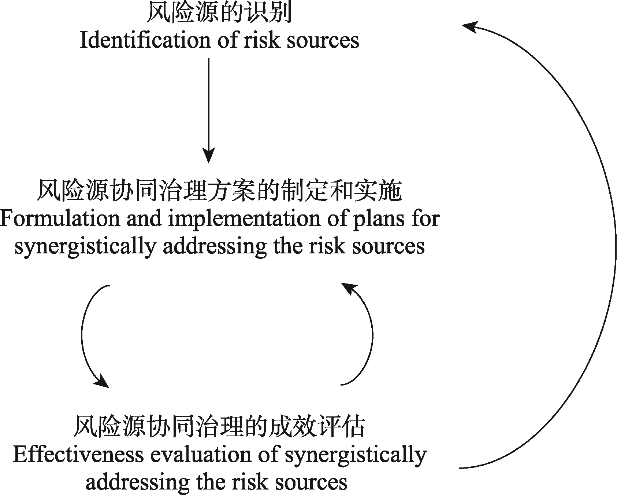
图1 基于适应性管理的生物多样性和气候变化风险源协同治理流程总览
Fig. 1 Overview of the adaptive management framework for synergistically addressing the risk sources of biodiversity loss and climate change
| [1] | Beazley KF, Hum JD, Lemieux CJ (2023) Enabling a National Program for Ecological Corridors in Canada in support of biodiversity conservation, climate change adaptation, and indigenous leadership. Biological Conservation, 286, 110286. |
| [2] | Betts MG, Phalan B, Frey SJK, Rousseau JS, Yang ZQ (2018) Old-growth forests buffer climate-sensitive bird populations from warming. Diversity and Distributions, 24, 439-447. |
| [3] | Brennan A, Naidoo R, Greenstreet L, Mehrabi Z, Ramankutty N, Kremen C (2022) Functional connectivity of the world’s protected areas. Science, 376, 1101-1104. |
| [4] | Carrasco L, Giam X, Papeş M, Sheldon KS (2019) Metrics of LiDAR-derived 3D vegetation structure reveal contrasting effects of horizontal and vertical forest heterogeneity on bird species richness. Remote Sensing, 11, 743. |
| [5] | CBD (Convention on Biological Diversity) (2022) Decision Adopted by the Conference of the Parties to the Convention on Biological Diversity 15/4:Kunming-Montreal Global Biodiversity Framework. CBD, Montreal, Canada. |
| [6] | Cohen-Shacham E, Walters G, Janzen C, Maginnis S (2016) Nature-based Solutions to Address Global Societal Challenges. IUCN, Gland, Switzerland. |
| [7] | De Boeck HJ, Bloor JMG, Kreyling J, Ransijn JCG, Nijs I, Jentsch A, Zeiter M (2018) Patterns and drivers of biodiversity-stability relationships under climate extremes. Journal of Ecology, 106, 890-902. |
| [8] | Deng SY, Dong XZ, Ma MZ, Zang ZH, Xu WT, Zhao CM, Xie ZQ, Shen GZ (2018) Evaluating the effectiveness of Shennongjia National Nature Reserve based on the dynamics of forest carbon pools. Biodiversity Science, 26, 27-35. (in Chinese with English abstract) |
| [邓舒雨, 董向忠, 马明哲, 臧振华, 徐文婷, 赵常明, 谢宗强, 申国珍 (2018) 基于森林碳库动态评估神农架国家级自然保护区的保护成效. 生物多样性, 26, 27-35.] | |
| [9] | Didham RK, Barker GM, Bartlam S, Deakin EL, Denmead LH, Fisk LM, Peters JMR, Tylianakis JM, Wright HR, Schipper LA (2015) Agricultural intensification exacerbates spillover effects on soil biogeochemistry in adjacent forest remnants. PLoS ONE, 10, e0116474. |
| [10] | Fan XY, Xu WH, Zang ZH, Ouyang ZY (2023) Representativeness of China’s protected areas in conserving its diverse terrestrial ecosystems. Ecosystem Health and Sustainability, 9, 0029. |
| [11] | Fletcher RJ Jr, Green RE, Bladon EK, Atkinson PW, Phalan BT, Williams D, Visconti P, Balmford A (2025) Beyond species richness for biological conservation. Conservation Letters, 18, e13124. |
| [12] | Frey SJK, Hadley AS, Johnson SL, Schulze M, Jones JA, Betts MG (2016) Spatial models reveal the microclimatic buffering capacity of old-growth forests. Science Advances, 2, e1501392. |
| [13] | Gann GD, McDonald T, Walder B, Aronson J, Nelson CR, Jonson J, Hallett JG, Eisenberg C, Guariguata MR, Liu JG, Hua FY, Echeverría C, Gonzales E, Shaw N, Decleer K, Dixon KW (2019) International Principles and Standards for the Practice of Ecological Restoration, Second Edition. Restoration Ecology, 27(S1), S1-S46. |
| [14] | Gillingham PK, Britton JR, Jones G, Miller-Rushing A, Stafford R, Slater H (2024) Climate change adaptation for biodiversity in protected areas: An overview of actions. Biological Conservation, 289, 110375. |
| [15] | Hua FY, Bruijnzeel LA, Meli P, Martin PA, Zhang J, Nakagawa S, Miao XR, Wang WY, McEvoy C, Peña-Arancibia JL, Brancalion PHS, Smith P, Edwards DP, Balmford A (2022) The biodiversity and ecosystem service contributions and trade-offs of forest restoration approaches. Science, 376, 839-844. |
| [16] | IPBES (Intergovernmental Science-Policy Platform on Biodiversity and Ecosystem Services) (2019) Global Assessment Report on Biodiversity and Ecosystem Services of the Intergovernmental Science-Policy Platform on Biodiversity and Ecosystem Services. IPBES Secretariat, Bonn, Germany. |
| [17] | IPCC (Intergovernmental Panel on Climate Change) (2023) Climate Change 2023:Synthesis Report. Contribution of Working Groups I, II and III to the Sixth Assessment Report of the Intergovernmental Panel on Climate Change. IPCC, Geneva, Switzerland. |
| [18] | Lawler JJ (2009) Climate change adaptation strategies for resource management and conservation planning. Annals of the New York Academy of Sciences, 1162, 79-98. |
| [19] | Lelli C, Bruun HH, Chiarucci A, Donati D, Frascaroli F, Fritz Ö, Goldberg I, Nascimbene J, Tøttrup AP, Rahbek C, Heilmann-Clausen J (2019) Biodiversity response to forest structure and management: Comparing species richness, conservation relevant species and functional diversity as metrics in forest conservation. Forest Ecology and Management, 432, 707-717. |
| [20] | Lessmann M, Ros GH, Young MD, de Vries W (2022) Global variation in soil carbon sequestration potential through improved cropland management. Global Change Biology, 28, 1162-1177. |
| [21] | Li BV, Wu SY, Hua FY, Mi XC (2024) The past and future of ecosystem restoration in China. Current Biology, 34, R379-R387. |
| [22] | Li YJ, Zhang XX, Huang QN, Pathera D, An ZC, Jiao XQ, Zhang FS (2024) Improving smallholders’ capacity building by creating an enabling environment for sustainable crop production. Agricultural Systems, 220, 104083. |
| [23] | Liu NN, Ma ZJ (2024) Ecological restoration of coastal wetlands in China: Current status and suggestions. Biological Conservation, 291, 110513. |
| [24] | Lü Z (2022) Meeting China’s “3030 Goal” on biodiversity conservation. Frontiers, (4), 24-34. (in Chinese with English abstract) |
| [吕植 (2022) 中国生物多样性保护与“3030目标”. 人民论坛·学术前沿, (4), 24-34.] | |
| [25] | Mahecha MD, Bastos A, Bohn FJ, Eisenhauer N, Feilhauer H, Hickler T, Kalesse-Los H, Migliavacca M, Otto FEL, Peng J, Sippel S, Tegen I, Weigelt A, Wendisch M, Wirth C, Al-Halbouni D, Deneke H, Doktor D, Dunker S, Duveiller G, Ehrlich A, Foth A, García-García A, Guerra CA, Guimarães-Steinicke C, Hartmann H, Henning S, Herrmann H, Hu P, Ji C, Kattenborn T, Kolleck N, Kretschmer M, Kühn I, Luttkus ML, Maahn M, Mönks M, Mora K, Pöhlker M, Reichstein M, Rüger N, Sánchez-Parra B, Schäfer M, Stratmann F, Tesche M, Wehner B, Wieneke S, Winkler AJ, Wolf S, Zaehle S, Zscheischler J, Quaas J (2024) Biodiversity and climate extremes: Known interactions and research gaps. Earth’s Future, 12, e2023EF003963. |
| [26] | Maxwell SL, Butt N, Maron M, McAlpine CA, Chapman S, Ullmann A, Segan DB, Watson JEM (2019) Conservation implications of ecological responses to extreme weather and climate events. Diversity and Distributions, 25, 613-625. |
| [27] | McCarthy MA, Possingham HP (2007) Active adaptive management for conservation. Conservation Biology, 21, 956-963. |
| [28] | Mori AS (2020) Advancing nature-based approaches to address the biodiversity and climate emergency. Ecology Letters, 23, 1729-1732. |
| [29] | Mott R, Prowse TAA, Jackson MV, Rogers DJ, O’Connor JA, Brookes JD, Cassey P (2023) Measuring habitat quality for waterbirds: A review. Ecology and Evolution, 13, e9905. |
| [30] | Newbold T, Hudson LN, Hill SLL, Contu S, Lysenko I, Senior RA, Börger L, Bennett DJ, Choimes A, Collen B, Day J, De Palma A, Díaz S, Echeverria-Londoño S, Edgar MJ, Feldman A, Garon M, Harrison MLK, Alhusseini T, Ingram DJ, Itescu Y, Kattge J, Kemp V, Kirkpatrick L, Kleyer M, Correia DLP, Martin CD, Meiri S, Novosolov M, Pan Y, Phillips HRP, Purves DW, Robinson A, Simpson J, Tuck SL, Weiher E, White HJ, Ewers RM, Mace GM, Scharlemann JPW, Purvis A (2015) Global effects of land use on local terrestrial biodiversity. Nature, 520, 45-50. |
| [31] | Norris K (2008) Agriculture and biodiversity conservation: Opportunity knocks. Conservation Letters, 1, 2-11. |
| [32] | Peng YJ, Huang ZH, Lin LL, Wang RF, Cui GF (2021) Exploring evaluation methods for integrity and authenticity of terrestrial natural ecosystems in national parks: The case of Qianjiangyuan National Park system pilot. Biodiversity Science, 29, 1295-1307. (in Chinese with English abstract) |
| [彭杨靖, 黄治昊, 林乐乐, 王锐锋, 崔国发 (2021) 国家公园陆地自然生态系统完整性与原真性评价方法探索: 以钱江源国家公园体制试点为例. 生物多样性, 29, 1295-1307.] | |
| [33] | Pörtner HO, Scholes RJ, Agard J, Archer E, Arneth A, Bai X, Barnes D, Burrows M, Chan L, Cheung WL, Diamond S, Donatti C, Duarte C, Eisenhauer N, Foden W, Gasalla MA, Handa C, Hickler T, Hoegh-Guldberg O, Ichii K, Jacob U, Insarov G, Kiessling W, Leadley P, Leemans R, Levin L, Lim M, Maharaj S, Managi S, Marquet PA, McElwee P, Midgley G, Oberdorff T, Obura D, Osman E, Pandit R, Pascual U, Pires APF, Popp A, Reyes-García V, Sankaran M, Settele J, Shin YJ, Sintayehu DW, Smith P, Steiner N, Strassburg B, Sukumar R, Trisos C, Val AL, Wu J, Aldrian E, Parmesan C, Pichs-Madruga R, Roberts DC, Rogers AD, Díaz S, Fischer M, Hashimoto S, Lavorel S, Wu N, Ngo HT (2021) IPBES-IPCC Co-sponsored Workshop Report on Biodiversity and Climate Change. IPBES, Bonn, Germany & IPCC, Geneva, Switzerland. |
| [34] | Pörtner HO, Scholes RJ, Arneth A, Barnes DKA, Burrows MT, Diamond SE, Duarte CM, Kiessling W, Leadley P, Managi S, McElwee P, Midgley G, Ngo HT, Obura D, Pascual U, Sankaran M, Shin YJ, Val AL (2023) Overcoming the coupled climate and biodiversity crises and their societal impacts. Science, 380, eabl4881. |
| [35] | Potapov P, Hansen MC, Laestadius L, Turubanova S, Yaroshenko A, Thies C, Smith W, Zhuravleva I, Komarova A, Minnemeyer S, Esipova E (2017) The last frontiers of wilderness: Tracking loss of intact forest landscapes from 2000 to 2013. Science Advances, 3, e1600821. |
| [36] | Rayden T, Jones KR, Austin K, Radachowsky J (2023) Improving climate and biodiversity outcomes through restoration of forest integrity. Conservation Biology, 37, e14163. |
| [37] | Ren H, Corlett RT, Hui DF, Guo QF (2025) Rewilding artificial forests in China and the world. The Innovation Life, 3, 100113. |
| [38] | Saura S, Bertzky B, Bastin L, Battistella L, Mandrici A, Dubois G (2018) Protected area connectivity: Shortfalls in global targets and country-level priorities. Biological Conservation, 219, 53-67. |
| [39] | Saura S, Bertzky B, Bastin L, Battistella L, Mandrici A, Dubois G (2019) Global trends in protected area connectivity from 2010 to 2018. Biological Conservation, 238, 108183. |
| [40] | Shin YJ, Midgley GF, Archer ERM, Arneth A, Barnes DKA, Chan LN, Hashimoto S, Hoegh-Guldberg O, Insarov G, Leadley P, Levin LA, Ngo HT, Pandit R, Pires APF, Pörtner HO, Rogers AD, Scholes RJ, Settele J, Smith P (2022) Actions to halt biodiversity loss generally benefit the climate. Global Change Biology, 28, 2846-2874. |
| [41] | Smith P, Arneth A, Barnes DKA, Ichii K, Marquet PA, Popp A, Pörtner HO, Rogers AD, Scholes RJ, Strassburg B, Wu JG, Ngo H (2022) How do we best synergize climate mitigation actions to co-benefit biodiversity? Global Change Biology, 28, 2555-2577. |
| [42] | Stralberg D, Carroll C, Nielsen SE (2020) Toward a climate-informed North American protected areas network: Incorporating climate-change refugia and corridors in conservation planning. Conservation Letters, 13, e12712. |
| [43] | Strassburg BBN, Iribarrem A, Beyer HL, Cordeiro CL, Crouzeilles R, Jakovac CC, Braga Junqueira A, Lacerda E, Latawiec AE, Balmford A, Brooks TM, Butchart SHM, Chazdon RL, Erb KH, Brancalion P, Buchanan G, Cooper D, Díaz S, Donald PF, Kapos V, Leclère D, Miles L, Obersteiner M, Plutzar C, de M Scaramuzza CA, Scarano FR, Visconti P (2020) Global priority areas for ecosystem restoration. Nature, 586, 724-729. |
| [44] | Tanner-McAllister SL, Rhodes J, Hockings M (2017) Managing for climate change on protected areas: An adaptive management decision making framework. Journal of Environmental Management, 204, 510-518. |
| [45] | Wang CH, Cui LJ, Mao XF (2012) Local households’ perceptions of green agriculture. Biodiversity Science, 20, 735-744. (in Chinese with English abstract) |
| [王昌海, 崔丽娟, 毛旭锋 (2012) 保护区周边农户对绿色农业认知度分析. 生物多样性, 20, 735-744.] | |
| [46] | Wang SP, Hong PB, Adler PB, Allan E, Hautier Y, Schmid B, Spaak JW, Feng YH (2024) Towards mechanistic integration of the causes and consequences of biodiversity. Trends in Ecology & Evolution, 39, 689-700. |
| [47] | Warren R, Price J, Graham E, Forstenhaeusler N, VanDerWal J (2018) The projected effect on insects, vertebrates, and plants of limiting global warming to 1.5℃ rather than 2℃. Science, 360, 791-795. |
| [48] | Warren RJ II, Bradford MA (2014) Mutualism fails when climate response differs between interacting species. Global Change Biology, 20, 466-474. |
| [49] | Watson JEM, Evans T, Venter O, Williams B, Tulloch A, Stewart C, Thompson I, Ray JC, Murray K, Salazar A, McAlpine C, Potapov P, Walston J, Robinson JG, Painter M, Wilkie D, Filardi C, Laurance WF, Houghton RA, Maxwell S, Grantham H, Samper C, Wang S, Laestadius L, Runting RK, Silva-Chávez GA, Ervin J, Lindenmayer D (2018) The exceptional value of intact forest ecosystems. Nature Ecology & Evolution, 2, 599-610. |
| [50] | Weiskopf SR, Isbell F, Arce-Plata MI, Di Marco M, Harfoot M, Johnson J, Lerman SB, Miller BW, Morelli TL, Mori AS, Weng ES, Ferrier S (2024) Biodiversity loss reduces global terrestrial carbon storage. Nature Communications, 15, 4354. |
| [51] | Wu H, Fang SM, Yu L, Hu SG, Chen X, Cao Y, Du ZR, Shen XL, Liu XH, Ma KP (2023a) Limited co-benefits of protected areas in Southwest China under current climate change and human modification. Journal of Environmental Management, 330, 117190. |
| [52] | Wu H, Yu L, Shen XL, Hua FY, Ma KP (2023b) Maximizing the potential of protected areas for biodiversity conservation, climate refuge and carbon storage in the face of climate change: A case study of Southwest China. Biological Conservation, 284, 110213. |
| [53] | WWF-Hong Kong (World Wide Fund for Nature Hong Kong) (2024) Mai Po Management Plan: 2024-2029. WWF-Hong Kong, Hong Kong, China. |
| [54] | Xu DM, Peng J, Dong JQ, Jiang H, Liu ML, Luo YH, Xu ZH (2024) Expanding China’s protected areas network to enhance resilience of climate connectivity. Science Bulletin, 69, 2273-2280. |
| [55] | Zhao X, Zhu ZY, Lü Z, Xiao LY, Mei S, Wang H (2018) An observation to the new initiative of community conservation guard posts in the pilot Three-River-Source National Park. Biodiversity Science, 26, 210-216. (in Chinese with English abstract) |
| [赵翔, 朱子云, 吕植, 肖凌云, 梅索南措, 王昊 (2018) 社区为主体的保护: 对三江源国家公园生态管护公益岗位的思考. 生物多样性, 26, 210-216.] | |
| [56] | Zhou ZH, Jin XH, Luo Y, Li DQ, Yue JB, Liu F, He T, Li X, Dong H, Luo P (2025) Analyses and suggestions on mechanisms of forestry and grassland administrations in China to achieve targets of Kunming-Montreal Global Biodiversity Framework. Biodiversity Science, 33, 24487. (in Chinese with English abstract) |
| [周志华, 金效华, 罗颖, 李迪强, 岳建兵, 刘芳, 何拓, 李希, 董晖, 罗鹏 (2025) 中国林草部门落实《昆明-蒙特利尔全球生物多样性框架》的机制、成效分析及建议. 生物多样性, 33, 24487.] |
| [1] | 李菡, 何兴成, 张尚明玉, 曹一唯, 张家语, 彭可欣, 吴永杰. 横断山区鸟类名录[J]. 生物多样性, 2026, 34(7): 25375-. |
| [2] | 白璐, 王伟. 国家公园法实施背景下中国国家公园可持续发展研究的进展与展望[J]. 生物多样性, 2026, 34(7): 26069-. |
| [3] | 巩中军, 李为争, 姚永生, 左旭琦, 武予清, 苗进. 农田土壤节肢动物eDNA在固-液-气三相中的分布特征[J]. 生物多样性, 2026, 34(7): 26146-. |
| [4] | 郑欢. 面向国土空间规划制度的生物多样性净增益设计逻辑与工具构建研究[J]. 生物多样性, 2026, 34(7): 25440-. |
| [5] | 张洁, 路昊明, 陈佳杰, 陈江源, 毛宇帆, 胡骏熙, 张保卫. 中国软骨鱼类拉-英-汉-日物种名录及各海域多样性比较[J]. 生物多样性, 2026, 34(6): 25522-. |
| [6] | 田瑜, 耿宜佳, 李俊生, 李明. 《昆明-蒙特利尔全球生物多样性框架》全球目标与执行尺度差异及解决路径[J]. 生物多样性, 2026, 34(6): 26086-. |
| [7] | 李保平, 张展豪, 魏雅丹. 人工智能背景下中国履行《生物多样性公约》获取与惠益分享制度的挑战与优化路径[J]. 生物多样性, 2026, 34(6): 26073-. |
| [8] | 蔡莉, 葛丽萍, 彭丹晓, 胡海花, 陈之端, 牛艳婷. 未来气候变化情景下东亚-北美间断分布属植物潜在分布区比较[J]. 生物多样性, 2026, 34(6): 25478-. |
| [9] | 魏能, 周亚东, 张彩飞, 王生位, 胡光万, Geoffrey Mwachala, 王青锋. 《肯尼亚植物志》编研概况和阶段性成果[J]. 生物多样性, 2026, 34(5): 25423-. |
| [10] | 郭蓉, 吴旭东, 张雨, 康瑞红, 王一凡, 王占军, 蒋齐, 俞鸿千, 马琨. 荒漠草原土壤丛枝菌根真菌群落对降水变化的响应[J]. 生物多样性, 2026, 34(5): 26028-. |
| [11] | 梁竣策, 李开枝, 谭烨辉. 南海翼足类物种多样性与分布[J]. 生物多样性, 2026, 34(5): 25487-. |
| [12] | 周丽洁, 郝珉辉, 何怀江, 程艳霞, 张春雨, 赵秀海. 小兴安岭森林β多样性格局、组分及其影响因素[J]. 生物多样性, 2026, 34(4): 25443-. |
| [13] | 彭昀月, 彭奎, 刘昕然, 孙天怡, 张小全. 生物多样性信用的企业参与途径、市场发展障碍与建议[J]. 生物多样性, 2026, 34(4): 26031-. |
| [14] | 李伯尧, 盛天成, 幸小云. 生物多样性风险对企业财务绩效的影响: 来自中国上市公司的证据[J]. 生物多样性, 2026, 34(4): 25330-. |
| [15] | 刘昊, 张玉霄, 刘冰, 李飞飞, 马洪峥, 覃海宁, 李德铢, 陈文俐. 中国禾本科植物多样性及其物种名录[J]. 生物多样性, 2026, 34(4): 25438-. |
| 阅读次数 | ||||||
|
全文 |
|
|||||
|
摘要 |
|
|||||
备案号:京ICP备16067583号-7
Copyright © 2026 版权所有 《生物多样性》编辑部
地址: 北京香山南辛村20号, 邮编:100093
电话: 010-62836137, 62836665 E-mail: biodiversity@ibcas.ac.cn
