

生物多样性 ›› 2026, Vol. 34 ›› Issue (6): 25452. DOI: 10.17520/biods.2025452 cstr: 32101.14.biods.2025452
顾怀毅( ), 白新祥, 李美君*(
 )
)
收稿日期:2025-11-11
接受日期:2026-03-18
出版日期:2026-06-20
发布日期:2026-07-30
通讯作者:
*E-mail: 59787607@qq.com
基金资助:
Huaiyi Gu(), Xinxiang Bai, Meijun Li*()
Received:2025-11-11
Accepted:2026-03-18
Online:2026-06-20
Published:2026-07-30
Contact:
*E-mail: 59787607@qq.com
Supported by:摘要: 植物标本对植物分类学研究至关重要, 20世纪初我国科学界才开始自主开展区域性植物调查和标本采集。20世纪30年代贵州籍植物采集家邓世纬的植物采集活动正是在这一背景下展开的, 梳理邓世纬采集的植物标本, 对理解我国尤其是贵州省早期植物采集历史具有重要意义。本研究通过整理馆藏标本的物种名称、采集地点及日期等原始数据, 对邓世纬采集植物的名实进行校正, 并重新核查了采集人、采集地点和采集日期信息。结果表明: 1930年3月至1936年10月, 邓世纬共参与采集了2,968号(含4,778份)植物标本, 涵盖184科878属1,913种植物, 主要采自贵州省、江苏省和湖北省。通过标本记录整理出邓世纬1930–1936年的采集路线, 并首次展示了邓世纬及助手的珍贵影像。我们建议对未明确物种的标本再次进行鉴定, 以便进一步挖掘这批标本的潜在价值。本研究可为中国早期植物采集历史以及贵州省植物资源研究提供数据支持。
顾怀毅, 白新祥, 李美君 (2026) 邓世纬(S. W. Teng) 1930–1936年植物标本采集及其科学价值. 生物多样性, 34, 25452. DOI: 10.17520/biods.2025452.
Huaiyi Gu, Xinxiang Bai, Meijun Li (2026) S. W. Teng’s plant specimen collections in 1930–1936 and their scientific value. Biodiversity Science, 34, 25452. DOI: 10.17520/biods.2025452.
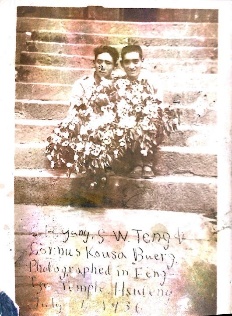
图1 邓世纬与杨昌汉合影。左图: 杨昌汉(左)和邓世纬(右)合影; 右图: 1936年7月1日邓世纬(左)和杨昌汉(右)与采集的植物合影。照片由杨昌汉后人提供。
Fig. 1 Shiwei (S. W.) Teng and Changhan (C. H.) Yang in a photo. Left, C. H. Yang (left) and S. W. Teng (right); Right, S. W. Teng (left) and C. H. Yang (right) with collected plants on July 1, 1936. Photos provided by C. H. Yang’s descendants.
| 序号 No. | 标本馆名称及代码 Herbarium name and code | 份数 Sheets | 标本馆地点 Herbarium location |
|---|---|---|---|
| 1 | 中国科学院华南植物园标本馆 Herbarium, South China Botanical Garden, Chinese Academy of Sciences (IBSC) | 2,346 | 中国广东广州 Guangzhou, Guangdong, China |
| 2 | 江苏省中国科学院植物研究所标本馆 Herbarium, Institute of Botany, Jiangsu Province and Chinese Academy of Sciences (NAS) | 776 | 中国江苏南京 Nanjing, Jiangsu, China |
| 3 | 广西植物研究所标本馆 Herbarium, Guangxi Institute of Botany (IBK) | 752 | 中国广西桂林 Guilin, Guangxi, China |
| 4 | 中国科学院植物研究所标本馆 Herbarium, Institute of Botany, Chinese Academy of Sciences (PE) | 358 | 中国北京 Beijing, China |
| 5 | 中国科学院昆明植物研究所标本馆 Herbarium, Kunming Institute of Botany, Chinese Academy of Sciences (KUN) | 187 | 中国云南昆明 Kunming, Yunnan, China |
| 6 | 厦门大学生命科学学院植物标本室 Herbarium, School of Life Sciences, Xiamen University (AU) | 166 | 中国福建厦门 Xiamen, Fujian, China |
| 7 | 四川大学生命科学学院植物标本室 Herbarium, College of Life Sciences, Sichuan University (SZ) | 114 | 中国四川成都 Chengdu, Sichuan, China |
| 8 | 华南师范大学生命科学学院植物标本室 Herbarium, School of Life Sciences, South China Normal University (SN) | 26 | 中国广东广州 Guangzhou, Guangdong, China |
| 9 | 中山大学植物标本室 Herbarium of Sun Yat-sen University (SYS) | 20 | 中国广东广州 Guangzhou, Guangdong, China |
| 10 | 北京大学生物系植物标本室 Herbarium, Department of Biology, Peking University (PEY) | 10 | 中国北京 Beijing, China |
| 11 | 南京大学生命科学学院植物标本室 Herbarium, School of Life Sciences, Nanjing University (N) | 9 | 中国江苏南京 Nanjing, Jiangsu, China |
| 12 | 西北农林科技大学生命科学学院植物标本馆 Herbarium, College of Life Sciences, Northwest A&F University (WUK) | 6 | 中国陕西杨凌 Yangling, Shaanxi, China |
| 13 | 中国科学院武汉植物园标本馆 Herbarium, Wuhan Botanical Garden, Chinese Academy of Sciences (HIB) | 4 | 中国湖北武汉 Wuhan, Hubei, China |
| 14 | 中国科学院沈阳应用生态研究所标本馆 Herbarium of Northeast China, Institute of Applied Ecology, Chinese Academy of Sciences (IFP) | 2 | 中国辽宁沈阳 Shenyang, Liaoning, China |
| 15 | 哈佛大学阿诺德树木园植物标本馆 Herbarium of the Arnold Arboretum, Harvard University Herbaria (A) | 1 | 美国马萨诸塞州剑桥 Cambridge, Massachusetts, US |
| 16 | 密苏里植物园植物标本馆 Missouri Botanical Garden Herbarium (MO) | 1 | 美国密苏里州路易斯 Saint Louis, Missouri, US |
表1 邓世纬所采植物标本收藏机构基本信息
Table 1 Basic information of the herbarium for Shiwei Teng’s plant specimens
| 序号 No. | 标本馆名称及代码 Herbarium name and code | 份数 Sheets | 标本馆地点 Herbarium location |
|---|---|---|---|
| 1 | 中国科学院华南植物园标本馆 Herbarium, South China Botanical Garden, Chinese Academy of Sciences (IBSC) | 2,346 | 中国广东广州 Guangzhou, Guangdong, China |
| 2 | 江苏省中国科学院植物研究所标本馆 Herbarium, Institute of Botany, Jiangsu Province and Chinese Academy of Sciences (NAS) | 776 | 中国江苏南京 Nanjing, Jiangsu, China |
| 3 | 广西植物研究所标本馆 Herbarium, Guangxi Institute of Botany (IBK) | 752 | 中国广西桂林 Guilin, Guangxi, China |
| 4 | 中国科学院植物研究所标本馆 Herbarium, Institute of Botany, Chinese Academy of Sciences (PE) | 358 | 中国北京 Beijing, China |
| 5 | 中国科学院昆明植物研究所标本馆 Herbarium, Kunming Institute of Botany, Chinese Academy of Sciences (KUN) | 187 | 中国云南昆明 Kunming, Yunnan, China |
| 6 | 厦门大学生命科学学院植物标本室 Herbarium, School of Life Sciences, Xiamen University (AU) | 166 | 中国福建厦门 Xiamen, Fujian, China |
| 7 | 四川大学生命科学学院植物标本室 Herbarium, College of Life Sciences, Sichuan University (SZ) | 114 | 中国四川成都 Chengdu, Sichuan, China |
| 8 | 华南师范大学生命科学学院植物标本室 Herbarium, School of Life Sciences, South China Normal University (SN) | 26 | 中国广东广州 Guangzhou, Guangdong, China |
| 9 | 中山大学植物标本室 Herbarium of Sun Yat-sen University (SYS) | 20 | 中国广东广州 Guangzhou, Guangdong, China |
| 10 | 北京大学生物系植物标本室 Herbarium, Department of Biology, Peking University (PEY) | 10 | 中国北京 Beijing, China |
| 11 | 南京大学生命科学学院植物标本室 Herbarium, School of Life Sciences, Nanjing University (N) | 9 | 中国江苏南京 Nanjing, Jiangsu, China |
| 12 | 西北农林科技大学生命科学学院植物标本馆 Herbarium, College of Life Sciences, Northwest A&F University (WUK) | 6 | 中国陕西杨凌 Yangling, Shaanxi, China |
| 13 | 中国科学院武汉植物园标本馆 Herbarium, Wuhan Botanical Garden, Chinese Academy of Sciences (HIB) | 4 | 中国湖北武汉 Wuhan, Hubei, China |
| 14 | 中国科学院沈阳应用生态研究所标本馆 Herbarium of Northeast China, Institute of Applied Ecology, Chinese Academy of Sciences (IFP) | 2 | 中国辽宁沈阳 Shenyang, Liaoning, China |
| 15 | 哈佛大学阿诺德树木园植物标本馆 Herbarium of the Arnold Arboretum, Harvard University Herbaria (A) | 1 | 美国马萨诸塞州剑桥 Cambridge, Massachusetts, US |
| 16 | 密苏里植物园植物标本馆 Missouri Botanical Garden Herbarium (MO) | 1 | 美国密苏里州路易斯 Saint Louis, Missouri, US |
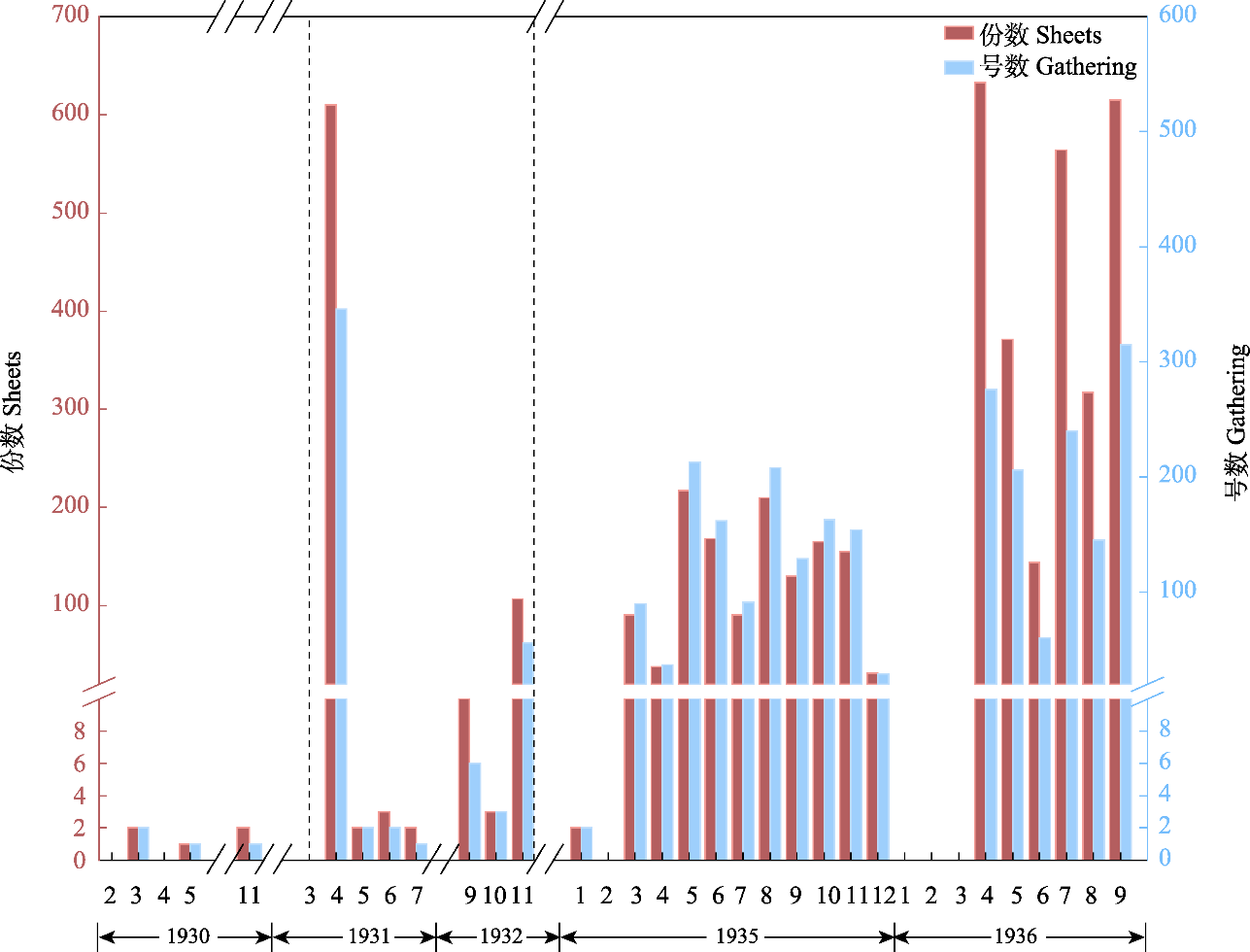
图2 邓世纬采集植物标本的不同阶段
Fig. 2 Stages of the specimen collection in China by Shiwei (S. W.) Teng
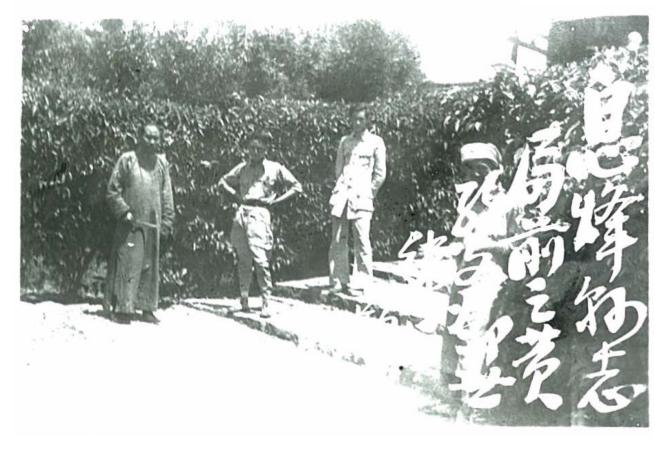
图3 邓世纬在息烽县采集植物(照片由杨昌汉后人提供)
Fig. 3 Shiwei (S. W.) Teng collected plants in Xifeng County (Photos provided by Changhan Yang’s descendants)
| 序号 No. | 标本号 Specimen number | 种名 Species name | 模式标本类型 Type status | 馆藏机构 Herbarium | 来源 References |
|---|---|---|---|---|---|
| 1 | 陈长年, 邓君 193 | 独花兰 Changnienia amoena S. S. Chien | 后选模式标本 Lectotype 等模式标本 Isotype | PE | 钱崇澍, |
| 2 | Chen & Teng 154 | 宝华山虾脊兰 Calanthe cheniana Hand.-Mazz. (现接受名: 虾脊兰 Calanthe discolor Lindl.) | 合模式标本 Syntype | PE | Handel-Mazzetti, |
| 3 | 邓世纬 51048 | 长柄蹄盖蕨 Athyrium longius Ching | 合模式标本 Syntype | PE | 秦仁昌, |
| 4 | 邓世纬 90995 | 长梗罗伞 Brassaiopsis glomerulata var. longipedicellata H. L. Li (现接受名: 罗伞 Brassaiopsis glomerulata (Blume) Regel) | 副模式标本 Paratype | IBK | 李惠林, |
| 5 | 邓世纬 91032 | Sinoboea microcarpa Chun (现接受名: 贵州喜鹊苣苔 Ornithoboea feddei (H. Lév.) Burtt) | 等模式标本 Isotype | NAS | 陈焕镛, |
| 6 | 邓世纬 90380 | Didymocarpus secundiflorus Chun (现接受名: 清镇报春苣苔 Primulina secundiflora (Chun) Mich. Möller & A. Weber) | 等模式标本 Isotype | PE | 陈焕镛, |
| 7 | 邓世纬 90422 | 粉绿钻地风 Schizophragma integrifolium var. glaucescens Rehder | 合模式标本 Syntype | NAS | 陈焕镛, |
| 8 | 邓世纬 90397 | 尖顶耳蕨 Polystichum excellens Ching | 副模式标本 Paratype | PE | 秦仁昌, |
| 9 | 邓世纬 90189 | 伞房荚蒾 Viburnum corymbiflorum P. S. Hsu et S. C. Hsu | 等模式标本 Isotype | NAS, IBK | 徐炳声, |
| 10 | 邓世纬 90817 | 田林细子龙 Amesiodendron tienlinensis H. S. Lo (现接受名: 细子龙 Amesiodendron chinense (Merr.) Hu) | 副模式标本 Paratype | IBK | 罗献瑞和陈德昭, |
| 11 | 邓世纬 90181, 邓世纬 693 | 贵州红山茶 Camellia kweichowensis Hung T. Chang (现接受名: 滇山茶 Camellia reticulata Lindl.) | 主模式标本 Holotype 副模式标本 Paratype | SYS | 张宏达, |
| 12 | 邓世纬 90392 | 贵州缫丝花 Rosa kweichowensis T. T. Yu & T. C. Ku | 主模式标本 Holotype | PE | 俞德浚和谷粹芝, |
| 13 | 邓世纬 1655 | 贵州叉蕨 Tectaria kweichowensis Ching & Chu H. Wang (现接受名: 洛克三叉蕨 Tectaria rockii C. Chr.) | 主模式标本 Holotype 等模式标本 Isotype | PE | 秦仁昌和王助华, |
| 14 | 邓世纬 90846 | 柔毛尖叶悬钩子 Rubus acuminatus var. puberulus T. T. Yu & L. T. Lu | 副模式标本 Paratype | PE, NAS | 俞德浚和陆玲娣, |
| 15 | 邓世纬 90874 | 薄叶楼梯草 Elatostema tenuifolium W. T. Wang | 等模式标本 Isotype | IBK | 王文采, |
| 16 | 邓世纬 90002 | 世纬盾蕨 Neolepisorus dengii Ching et P. S. Wang (现接受名: 盾蕨 Lepisorus ovatus (Wall. ex Bedd.) C. F. Zhao, R. Wei & X. C. Zhang) | 主模式标本 Holotype 等模式标本 Isotype | PE, NAS | 秦仁昌和王培善, |
| 17 | 邓世纬 90788 | Croton urticifolius Y. T. Chang & Q. T. Chen (现接受名: 荨麻叶巴豆 Croton cnidophyllus Radcl.-Sm. & Govaerts) | 等模式标本 Isotype | IBK | 张永田, |
| 18 | 邓世纬 90837 | 合萼半蒴苣苔 Hemiboea gamosepala Z. Yu Li | 等模式标本 Isotype | IBK | 李振宇, |
| 19 | 邓世纬 90347 | 倒卵叶猕猴桃 Actinidia obovata Chun ex C. F. Liang | 等模式标本 Isotype | IBK | 梁畴芬等, |
| 20 | 邓世纬 90396, 邓世纬/S. W. Deng 90396 | 光蕊滇黔石蝴蝶 Petrocosmea martinii var. leiandra W. T. Wang (现接受名: 光蕊石蝴蝶 Petrocosmea leiandra (W. T. Wang) Z. J. Qiu) | 主模式标本 Holotype 等模式标本 Isotype | IBK | 王文采, |
| 21 | 邓世纬 90529 | 毛枝桂樱 Laurocerasus phaeosticta f. puberula Yü et Lu (现接受名: 腺叶桂樱 Prunus phaeosticta (Hance) Maxim.) | 副模式标本 Paratype | PE | 俞德浚和陆玲娣, |
| 22 | 邓世纬 90131 | 贵州虾脊兰 Calanthe tsoongiana var. guizhouensis Z. H. Tsi | 等模式标本 Isotype | IBK | 吉占和, |
| 23 | S. W. Teng 90155 | 世纬小檗 Berberis tengii Harber | 主模式标本 Holotype 等模式标本 Isotype | A, MO | Harber, |
表2 邓世纬采集模式标本基本信息
Table 2 Basic information of type specimen collected by Shiwei Teng
| 序号 No. | 标本号 Specimen number | 种名 Species name | 模式标本类型 Type status | 馆藏机构 Herbarium | 来源 References |
|---|---|---|---|---|---|
| 1 | 陈长年, 邓君 193 | 独花兰 Changnienia amoena S. S. Chien | 后选模式标本 Lectotype 等模式标本 Isotype | PE | 钱崇澍, |
| 2 | Chen & Teng 154 | 宝华山虾脊兰 Calanthe cheniana Hand.-Mazz. (现接受名: 虾脊兰 Calanthe discolor Lindl.) | 合模式标本 Syntype | PE | Handel-Mazzetti, |
| 3 | 邓世纬 51048 | 长柄蹄盖蕨 Athyrium longius Ching | 合模式标本 Syntype | PE | 秦仁昌, |
| 4 | 邓世纬 90995 | 长梗罗伞 Brassaiopsis glomerulata var. longipedicellata H. L. Li (现接受名: 罗伞 Brassaiopsis glomerulata (Blume) Regel) | 副模式标本 Paratype | IBK | 李惠林, |
| 5 | 邓世纬 91032 | Sinoboea microcarpa Chun (现接受名: 贵州喜鹊苣苔 Ornithoboea feddei (H. Lév.) Burtt) | 等模式标本 Isotype | NAS | 陈焕镛, |
| 6 | 邓世纬 90380 | Didymocarpus secundiflorus Chun (现接受名: 清镇报春苣苔 Primulina secundiflora (Chun) Mich. Möller & A. Weber) | 等模式标本 Isotype | PE | 陈焕镛, |
| 7 | 邓世纬 90422 | 粉绿钻地风 Schizophragma integrifolium var. glaucescens Rehder | 合模式标本 Syntype | NAS | 陈焕镛, |
| 8 | 邓世纬 90397 | 尖顶耳蕨 Polystichum excellens Ching | 副模式标本 Paratype | PE | 秦仁昌, |
| 9 | 邓世纬 90189 | 伞房荚蒾 Viburnum corymbiflorum P. S. Hsu et S. C. Hsu | 等模式标本 Isotype | NAS, IBK | 徐炳声, |
| 10 | 邓世纬 90817 | 田林细子龙 Amesiodendron tienlinensis H. S. Lo (现接受名: 细子龙 Amesiodendron chinense (Merr.) Hu) | 副模式标本 Paratype | IBK | 罗献瑞和陈德昭, |
| 11 | 邓世纬 90181, 邓世纬 693 | 贵州红山茶 Camellia kweichowensis Hung T. Chang (现接受名: 滇山茶 Camellia reticulata Lindl.) | 主模式标本 Holotype 副模式标本 Paratype | SYS | 张宏达, |
| 12 | 邓世纬 90392 | 贵州缫丝花 Rosa kweichowensis T. T. Yu & T. C. Ku | 主模式标本 Holotype | PE | 俞德浚和谷粹芝, |
| 13 | 邓世纬 1655 | 贵州叉蕨 Tectaria kweichowensis Ching & Chu H. Wang (现接受名: 洛克三叉蕨 Tectaria rockii C. Chr.) | 主模式标本 Holotype 等模式标本 Isotype | PE | 秦仁昌和王助华, |
| 14 | 邓世纬 90846 | 柔毛尖叶悬钩子 Rubus acuminatus var. puberulus T. T. Yu & L. T. Lu | 副模式标本 Paratype | PE, NAS | 俞德浚和陆玲娣, |
| 15 | 邓世纬 90874 | 薄叶楼梯草 Elatostema tenuifolium W. T. Wang | 等模式标本 Isotype | IBK | 王文采, |
| 16 | 邓世纬 90002 | 世纬盾蕨 Neolepisorus dengii Ching et P. S. Wang (现接受名: 盾蕨 Lepisorus ovatus (Wall. ex Bedd.) C. F. Zhao, R. Wei & X. C. Zhang) | 主模式标本 Holotype 等模式标本 Isotype | PE, NAS | 秦仁昌和王培善, |
| 17 | 邓世纬 90788 | Croton urticifolius Y. T. Chang & Q. T. Chen (现接受名: 荨麻叶巴豆 Croton cnidophyllus Radcl.-Sm. & Govaerts) | 等模式标本 Isotype | IBK | 张永田, |
| 18 | 邓世纬 90837 | 合萼半蒴苣苔 Hemiboea gamosepala Z. Yu Li | 等模式标本 Isotype | IBK | 李振宇, |
| 19 | 邓世纬 90347 | 倒卵叶猕猴桃 Actinidia obovata Chun ex C. F. Liang | 等模式标本 Isotype | IBK | 梁畴芬等, |
| 20 | 邓世纬 90396, 邓世纬/S. W. Deng 90396 | 光蕊滇黔石蝴蝶 Petrocosmea martinii var. leiandra W. T. Wang (现接受名: 光蕊石蝴蝶 Petrocosmea leiandra (W. T. Wang) Z. J. Qiu) | 主模式标本 Holotype 等模式标本 Isotype | IBK | 王文采, |
| 21 | 邓世纬 90529 | 毛枝桂樱 Laurocerasus phaeosticta f. puberula Yü et Lu (现接受名: 腺叶桂樱 Prunus phaeosticta (Hance) Maxim.) | 副模式标本 Paratype | PE | 俞德浚和陆玲娣, |
| 22 | 邓世纬 90131 | 贵州虾脊兰 Calanthe tsoongiana var. guizhouensis Z. H. Tsi | 等模式标本 Isotype | IBK | 吉占和, |
| 23 | S. W. Teng 90155 | 世纬小檗 Berberis tengii Harber | 主模式标本 Holotype 等模式标本 Isotype | A, MO | Harber, |
| [1] | APG IV (Angiosperm Phylogeny Group IV) (2016) An update of the Angiosperm Phylogeny Group classification for the orders and families of flowering plants: APG IV. Botanical Journal of the Linnean Society, 181, 1-20. |
| [2] | Chang HD (1981) A Taxonomy of the Genus Camellia, pp. 61-62. Editorial Staff of the Journal of Sun Yatsen University, Guangzhou. (in Chinese) |
| [张宏达 (1981) 山茶属植物的系统研究, 61-62页. 中山大学学报编辑部, 广州.] | |
| [3] | Chang YT (1983) Materiae ad Floram Euphorbiacearum Sinensium (II). Guihaia, 3, 171-176. (in Chinese) |
| [张永田 (1983) 中国大戟科植物志资料(二). 广西植物, 3, 171-176.] | |
| [4] | Chien SS (1935) Changnienia, a new genus of Orchidaceae. Contributions from the Biological Laboratory of the Science Society of China (Botanical Series), 10, 89-92. (in Chinese) |
| [钱崇澍 (1935) 独花兰属(新属). 中国科学社生物研究所论文集(植物学篇), 10, 89-92.] | |
| [5] | Ching RC (1940) New ferns from Kwangsi. Bulletin of the Fan Memorial Institute of Biology: Botany, 10, 173-182. (in Chinese) |
| [秦仁昌 (1940) 广西蕨类新植物. 静生生物调查所汇报(植物学), 10, 173-182.] | |
| [6] | Ching RC (1958) Icones Filicum Sinicarum, Vol. 5, pl. 234. Science Press, Beijing (in Chinese) |
| [秦仁昌 (1958) 中国蕨类植物图谱(第五卷), 图版234. 科学出版社, 北京.] | |
| [7] | Ching RC, Wang PS (1983) A Monographic revision of the fern genus Neolepisorus. Acta Phytotaxonomica Sinica, 21, 266-276. (in Chinese) |
| [秦仁昌, 王培善 (1983) 中国盾蕨属的订正研究. 植物分类学报, 21, 266-276.] | |
| [8] | Ching RC, Wang ZH (1981) Breviarum plantarum novarum Aspidiacearum Sinicarum. Acta Phytotaxonomica Sinica, 19, 118-130. (in Chinese) |
| [秦仁昌, 王助华 (1981) 中国三叉蕨科新植物纲要. 植物分类学报, 19, 118-130.] | |
| [9] | Chun WY (1946) Gesneriacearum Plantae Novae Sinicarum. Sunyatsenia, 6, 271-304. (in Chinese) |
| [陈焕镛 (1946) 中国苦苣苔科新植物. 中山专刊, 6, 271-304.] | |
| [10] | Chun WY (1954) A census and preliminary study of the Chinese Hydrangeoideae. Acta Phytotaxonomica Sinica, 3, 101-205. (in Chinese) |
| [陈焕镛 (1954) 绣球亚科资料的研究. 植物分类学报, 3, 101-205.] | |
| [11] | Fordham DA, Jackson ST, Brown SC, Huntley B, Brook BW, Dahl-Jensen D, Gilbert MTP, Otto-Bliesner BL, Svensson A, Theodoridis S, Wilmshurst JM, Buettel JC, Canteri E, McDowell M, Orlando L, Pilowsky JA, Rahbek C, Nogues-Bravo D (2020) Using paleo-archives to safeguard biodiversity under climate change. Science, 369, eabc5654. |
| [12] | Group for the Compilation of the Fifty Years History in the Botanical Society of China (1985) Fifty Years in the Botanical Society of China. Chinese Journal for the History of Science and Technology, 6(2), 50-55, 49. (in Chinese) |
| [《中国植物学会五十年》编写组 (1985) 中国植物学会五十年. 中国科技史料, 6(2), 50-55, 49.] | |
| [13] | Handel-Mazzetti H (1936) Kleine Beiträge zur Kenntnis der Flora von China. Österreichische Botanische Zeitschrift, 85, 213-228. |
| [14] | Harber J (2020) The Berberis of China and Vietnam: A Revision. Missouri Botanical Garden Press, St. Louis, Missouri. |
| [15] | Hsu PS (1966) Some new plants of Chinese Viburnum. Acta Phytotaxonomica Sinica, 11, 67-90. (in Chinese) |
| [徐炳声 (1966) 中国荚蒾属(Viburnum)的新植物. 植物分类学报, 11, 67-90.] | |
| [16] | Hu ZG (2017) Early History of the Institute of Botany, Jiangsu Province and Chinese Academy of Sciences (Nanjing Botanical Garden Mem. Sun Yat-sen), pp. 123-128. Shanghai Jiao Tong University Press, Shanghai. (in Chinese) |
| [胡宗刚 (2017) 江苏省中国科学院植物研究所南京中山植物园早期史, 123-128页. 上海交通大学出版社, 上海.] | |
| [17] | Li HL (1942) The Araliaceae of China. Sargentia, (2), 1-137. (in Chinese) |
| [李惠林 (1942) 中国五加科植物. 萨金特氏研究论文集, (2), 1-137.] | |
| [18] | Li XC, Wang ZW, Wang Q, Ge BJ, Chen B, Yu P, Zhong X (2022) Viola shiweii, a new species of Viola (Violaceae) from karst forest in Guizhou, China. PhytoKeys, 196, 63-89. |
| [19] | Li ZY (1983) Taxa Nova Hemiboea (Gesneriaceae). Acta Phytotaxonomica Sinica, 21, 194-203. (in Chinese) |
| [李振宇 (1983) 半蒴苣苔属新分类群. 植物分类学报, 21, 194-203.] | |
| [20] | Liang CF, Chen YC, Wang YS (1984) Actinidiaceae. In: Flora of Reipublicae Popularis Sinicae (Delecti Florae Reipublicae Popularis Sinicae Agendae Academiae Sinicae), Tomus 49(2), pp. 267, 323-324. Science Press, Beijing. (in Chinese) |
| [梁畴芬, 陈永昌, 王育生 (1984) 猕猴桃科. 中国植物志(中国科学院中国植物志编辑委员会) (第49卷第2分册), 267页, 323-324页. 科学出版社, 北京.] | |
| [21] | Lin CR, Liu Y, He CX, Shen XL, Zou R, Yu XX (2008) Statistics and analysis of digital information in the herbarium of Guangxi Institute of Botany. Guihaia, 28, 278-284. (in Chinese with English abstract) |
| [林春蕊, 刘演, 何成新, 沈晓琳, 邹蓉, 于息息 (2008) 广西植物标本馆标本数字化信息统计与分析. 广西植物, 28, 278-284.] | |
| [22] | Lo HS, Chen TC (1979) Notes on Chinese Sapindaceae. Acta Phytotaxonomica Sinica, 17(2), 30-39. (in Chinese) |
| [罗献瑞, 陈德昭 (1979) 中国无患子科简记. 植物分类学报, 17(2), 30-39.] | |
| [23] | Luo GH (1994) Botanical expeditions and collections made by westerners in China since the Qing Dynasty. Chinese Journal for the History of Science and Technology, 15(2), 17-31. (in Chinese with English abstract) |
| [罗桂环 (1994) 近代西方人在华的植物学考察和收集. 中国科技史料, 15(2), 17-31.] | |
| [24] | PPG I (2016) A community-derived classification for extant lycophytes and ferns. Journal of Systematics and Evolution, 54, 563-603. |
| [25] | Qu XL (2014) The lines of westerners collected mountain plants in Southwest Region of China in modern times. Journal of Chinese Culture, (6), 16-22, 191. (in Chinese with English abstract) |
| [屈小玲 (2014) 近代西方人进入中国西南地区采集山地植物线路考略. 中华文化论坛, (6), 16-22, 191.] | |
| [26] | Tsi ZH (1985) Taxa nova Orchidacearum Sinicarum. Acta Phytotaxonomica Sinica, 23, 385-389. (in Chinese) |
| [吉占和 (1985) 兰科新植物. 植物分类学报, 23, 385-389.] | |
| [27] | Wang PS, Wang XY (1988) A brief history on the botanical exploration of Guizhou Province. Guizhou Science, 6(1), 19-21. (in Chinese with English abstract) |
| [王培善, 王筱英 (1988) 贵州植物学考察、研究简史. 贵州科学, 6(1), 19-21.] | |
| [28] | Wang RJ (2022) A concise introduction to the plant taxonomy and specimen collection in China. Guihaia, 42(S1), 62-70. (in Chinese with English abstract) |
| [王瑞江 (2022) 中国植物分类及标本采集史简述. 广西植物, 42(S1), 62-70.] | |
| [29] | Wang RZ, Li SJ, Zhang DX (2012) Statistical analyses of vascular plant specimen data from the herbarium of South China Botanical Garden, Chinese Academy of Sciences (IBSC). Journal of Tropical and Subtropical Botany, 20, 634-641. (in Chinese with English abstract) |
| [王仁赞, 李世晋, 张奠湘 (2012) 中国科学院华南植物园标本馆维管植物标本数据统计分析. 热带亚热带植物学报, 20, 634-641.] | |
| [30] | Wang WT (1982) Taxa nova Pellioniae Elatostematisque e Sina. Bulletin of Botanical Research, 2(1), 1-31. (in Chinese) |
| [王文采 (1982) 赤车属和楼梯草属新分类群. 植物研究, 2(1), 1-31.] | |
| [31] | Wang WT (1984) Notulae De Gesneriaceae Sinensibu (v). Bulletin of Botanical Research, 4(1), 9-35. (in Chinese) |
| [王文采 (1984) 中国苦苣苔科的研究(五). 植物研究, 4(1), 9-35.] | |
| [32] | Wu CY (1953) The historical development and current status of botany in China. Chinese Science Bulletin, (2), 12-20. (in Chinese) |
| [吴征镒 (1953) 中国植物学历史发展的过程和现况. 科学通报, (2), 12-20.] | |
| [33] | Xiong YX, Cao W (2017) Review of researches on plant taxonomy in Guizhou. Journal of Mountain Agriculture and Biology, 36(1), 1-11. (in Chinese with English abstract) |
| [熊源新, 曹威 (2017) 贵州植物分类学研究概述. 山地农业生物学报, 36(1), 1-11.] | |
| [34] | Xu LF (2009) Wild Herbaceous Flowers in Guizhou, pp. 1-2. Guizhou Science and Technology Publishing House, Guiyang. (in Chinese) |
| [徐来富 (2009) 贵州野生草本花卉, 1-2页. 贵州科技出版社, 贵阳.] | |
| [35] | Xu ZW (2023) Research on Approaches to Science Enlightenment in Modern China. PhD dissertation, Jilin University, Changchun. (in Chinese with English abstract) |
| [徐子雯 (2023) 近代中国科学启蒙的路径研究. 博士学位论文, 吉林大学, 长春.] | |
| [36] | Yang Y, Ferguson DK, Liu B, Mao KS, Gao LM, Zhang SZ, Wan T, Rushforth K, Zhang ZX (2022) Recent advances on phylogenomics of gymnosperms and a new classification. Plant Diversity, 44, 340-350. |
| [37] | Yu TS, Ku TC (1981) Taxa nova Rosacearum Sinicarum (III). Bulletin of Botanical Research, 1(4), 1-33. (in Chinese) |
| [俞德浚, 谷粹芝 (1981) 中国蔷薇科植物分类之研究(三). 植物研究, 1(4), 1-33.] | |
| [38] | Yu TS, Lu LT (1982) Taxa nova Rosacearum sinicarum (IV). Acta Phytotaxonomica Sinica, 20, 295-310. (in Chinese) |
| [俞德浚, 陆玲娣 (1982) 中国蔷薇科植物分类之研究(四). 植物分类学报, 20, 295-310.] | |
| [39] | Yu TS, Lu LT (1984) A study on the taxonomy of the genus Laurocerasus in China. Bulletin of Botanical Research, 4(4), 37-59. (in Chinese) |
| [俞德浚, 陆玲娣 (1984) 中国桂樱属植物的分类研究. 植物研究, 4(4), 37-59.] |
| [1] | 张海波, 吴忠荣, 胡灿实, 匡中帆, 李毅, 张明明, 杨雄威, 粟海军, 李筑眉. 贵州省鸟类名录更新[J]. 生物多样性, 2026, 34(7): 25381-. |
| [2] | 冉辉, 杨天友, 米小其. 贵州省爬行动物更新名录[J]. 生物多样性, 2024, 32(4): 23348-. |
| [3] | 吴仁武, 南歆格, 晏海, 杨凡, 史琰, 包志毅. 美国在华采集竹类植物标本的历史(1840-2010年)[J]. 生物多样性, 2021, 29(7): 960-970. |
| [4] | 朱鑫鑫, 王君, 廖帅, 马金双. 中国马兜铃属和关木通属(马兜铃科)概览[J]. 生物多样性, 2019, 27(10): 1143-1146. |
| [5] | 孟世勇, 刘慧圆, 余梦婷, 刘全儒, 马金双. 中国植物采集先行者钟观光的采集考证[J]. 生物多样性, 2018, 26(1): 79-88. |
| [6] | 张金龙, 朱慧玲, 刘金刚, Gunter A. Fischer. 植物标本标签设计的原则及R程序包herblabel[J]. 生物多样性, 2016, 24(12): 1345-1352. |
| [7] | 张大才, 孙航. 横断山区树线以上区域种子植物的标本分布与物种丰富度[J]. 生物多样性, 2008, 16(4): 381-388. |
| 阅读次数 | ||||||
|
全文 |
|
|||||
|
摘要 |
|
|||||
备案号:京ICP备16067583号-7
Copyright © 2026 版权所有 《生物多样性》编辑部
地址: 北京香山南辛村20号, 邮编:100093
电话: 010-62836137, 62836665 E-mail: biodiversity@ibcas.ac.cn
