

Biodiv Sci ›› 2025, Vol. 33 ›› Issue (11): 25203. DOI: 10.17520/biods.2025203 cstr: 32101.14.biods.2025203
• Original Papers: Animal Diversity • Previous Articles Next Articles
Junhan Shen1,2,3( ), Haiyang Gao3(), Song Sun3(), Fei Wu3, Nan He4, He Wang5, Yan Hua3,*()(
 ), Zhengjun Wu1,2,*()()
Received:2025-05-29
Accepted:2025-09-21
Online:2025-11-20
Published:2025-12-26
Contact:
Yan Hua, Zhengjun Wu
Supported by:Junhan Shen, Haiyang Gao, Song Sun, Fei Wu, Nan He, He Wang, Yan Hua, Zhengjun Wu. Microhabitat selection characteristics and conservation implications of the Chinese crocodile lizard (Shinisaurus crocodilurus)[J]. Biodiv Sci, 2025, 33(11): 25203.
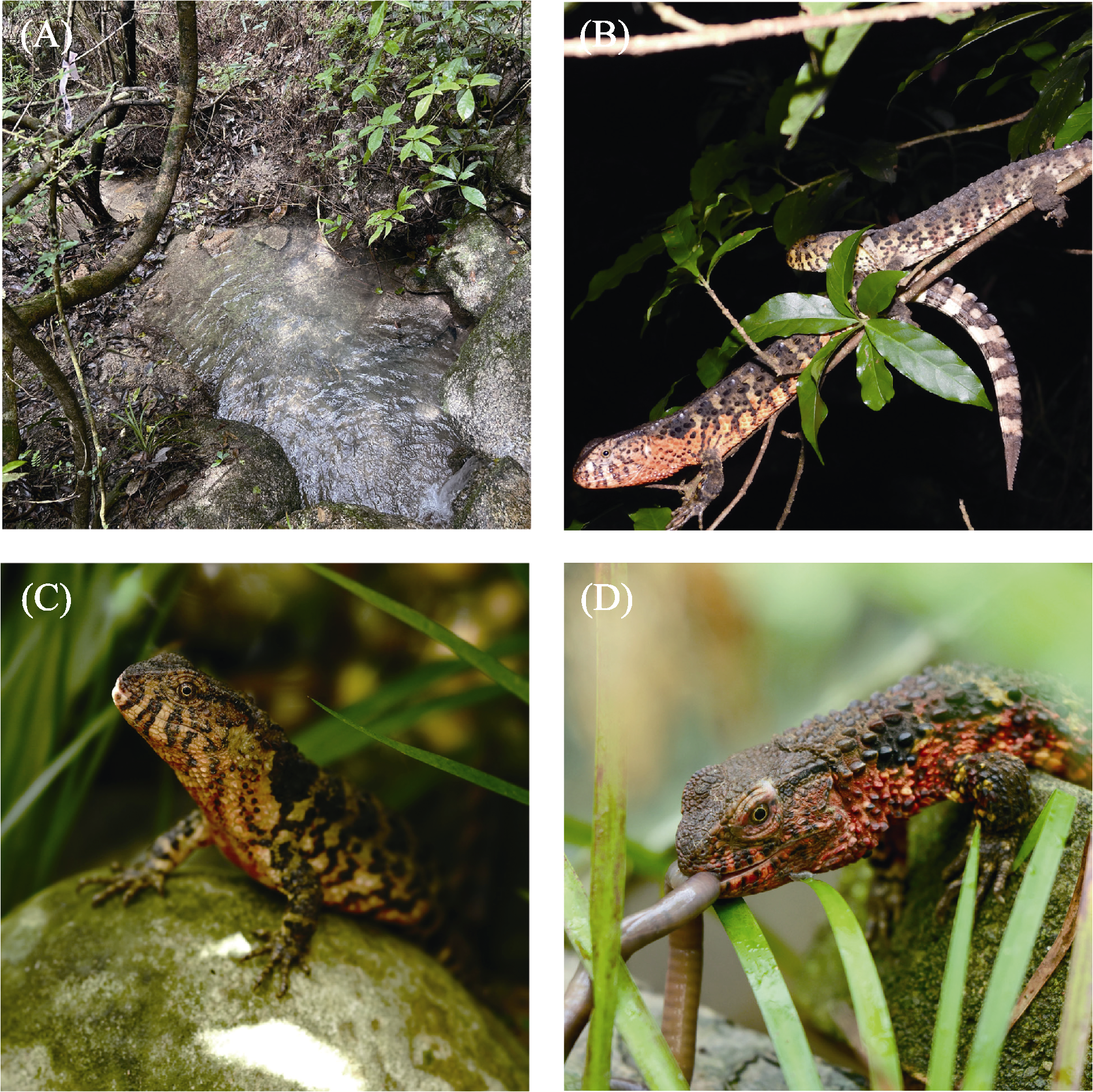
Fig. 1 Habitat and behavior of the Chinese crocodile lizard (Shinisaurus crocodilurus) population in Guangdong Luokeng Crocodile Lizard National Nature Reserve. (A) Suitable microhabitat; (B) Nocturnal perching and resting on branches; (C) Basking on a rock during daytime; (D) Preying on an earthworm.
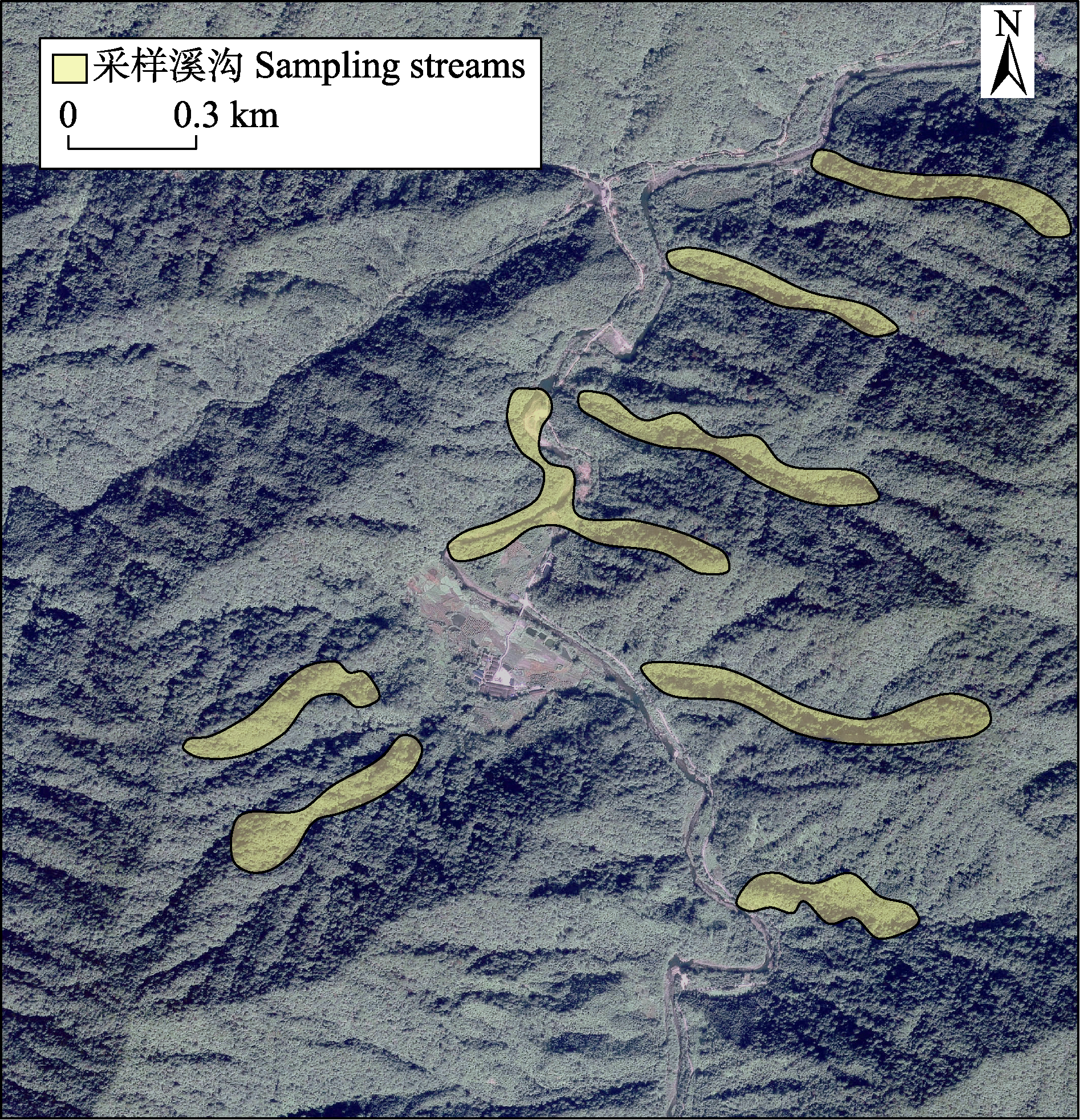
Fig. 2 Location map of the eight sampling streams
| 变量名 Variable | 变量介绍 Variable introduction | 测量方法 Measurement methods | 平均值 Mean | 中位数 Median | 标准差 SD | 频数 Frequency | |||
|---|---|---|---|---|---|---|---|---|---|
| 连续变量 Continuous variables | |||||||||
| 树冠层高度 Canopy height (m) | 从地面至乔木树冠顶部的垂直距离 Vertical height from the ground level to the top of the tree canopy | 采用2 m标准枝杆作为视觉参照标尺进行目测估算 Visual estimation was performed using a 2-meter standard branch pole as a visual reference scale | 8.93 | 8.10 | 3.65 | - | |||
| 灌木层高度 Shrub layer height (cm) | 从地面至灌木层顶部的垂直距离 Vertical height from the ground to the top of the shrub layer | 利用钢卷尺测量样方内5个随机选择的灌木斑块的高度, 并计算其平均值 The height of five randomly selected woody patches within the quadrat was measured using a measuring tape, and the average value was calculated | 84.70 | 77.00 | 36.70 | - | |||
| 郁闭度 Canopy closure (%) | 林冠层枝叶垂直投影面积占林地总面积的比例 Canopy cover percentage | 通过测量样方内4个角点及中心点的垂直冠层投影面积与样方总面积的比值, 并计算5个测量点的平均值来确定 It was determined by measuring the ratio of the vertical canopy projection area to the total quadrat area at the four corners and the center point within the quadrat, and then calculating the mean value from these five measurement points | 52.90 | 52.60 | 16.20 | - | |||
| 溪流深度 Stream depth (cm) | 溪流的平均深度 Mean depth of the stream | 在每个样方的上、中、下部测量, 包括最大/最小宽度和深度, 最终计算平均值 Measurements of maximum/minimum width and depth were taken at the upper, middle, and lower sections of each quadrat, with the mean values subsequently calculated | 19.30 | 17.10 | 9.77 | - | |||
| 溪流宽度 Stream width (cm) | 溪流的平均宽度 Mean width of the stream | 151.00 | 143.00 | 56.00 | - | ||||
| 溪流流速 Stream velocity (cm/s) | 溪流的平均流速 Mean flow velocity of the stream | 采用LS300-A型便携式流速仪测定样方上、中、下游的表面流速(cm/s), 测定值经算术平均与对数转换后用于统计分析 Surface flow velocity (cm/s) at the upstream, midstream, and downstream sections of the quadrat was measured using a portable LS300-A current meter. The measured values were arithmetically averaged and log-transformed for statistical analysis | 24.60 | 26.40 | 14.40 | - | |||
| 溪沟壁坡度 Gully bank slope (°) | 溪流两侧土坡或石壁的坡度 Streambank slope | 采用坡度仪测量样方上部、中部和下部的两侧溪沟壁坡度, 计算平均值 The gradient of both streambanks at the upper, middle, and lower sections of the quadrat was measured using a clinometer, and the mean value was calculated | 46.30 | 48.20 | 18.10 | - | |||
| 溪沟坡度 Gully slope (°) | 样方沿溪流的整体坡度 Overall longitudinal slope of the quadrat along the stream | 使用坡度计测量样方的4个角点和中心位置, 共5个点, 计算所得数据的平均值 The mean value was calculated from measurements taken with a clinometer at five locations: the four corners and the center of the quadrat | 8.72 | 7.67 | 6.42 | - | |||
| 溪沟坡向 Gully aspect (°) | 溪流流向的朝向 Flow direction azimuth | 使用罗盘(0-360°)进行测量。为处理统计分析中的循环特性, 将数据进行正弦变换处理 Measured using a compass (0-360°). To address the circular nature of the data in statistical analysis, the values were transformed using a sine transformation | -0.34 | -0.84 | 2.71 | - | |||
| 溪流沙覆盖比 Stream sand coverage percentage (%) | 溪流中沙在基质表面的覆盖比例 Percent sand cover on the streambed | 基于溪流宽度测量数据, 构建样地俯视平面图。将样方划分为0.5 m × 0.5 m的单元网格, 基于目视判读记录各网格属性参数, 通过网格法定量测算溪流沙质基底覆盖率、灌草盖度及溪流面积(关法春等, | 59.20 | 57.80 | 22.90 | - | |||
| 灌草盖度 Shrub and herb coverage (%) | 灌木层与草本层植被的垂直投影面积占样方内陆地总面积的百分比 Percent shrub and herb cover | 43.70 | 43.40 | 19.00 | - | ||||
| 溪流面积 Stream area (m²) | 溪流的面积 Area of stream | 6.67 | 6.20 | 2.94 | - | ||||
| 栖枝密度 Perch density (unit/m²) | 溪流水面上每平方米有多少根可供鳄蜥栖息使用的树枝 Density of branches suitable for Chinese crocodile lizard perching per square meter of stream water surface | 统计被认为是鳄蜥可用的悬垂于水面的栖枝数量(罗树毅等, | 0.86 | 0.71 | 0.90 | - | |||
| 逻辑变量 Logical variables | |||||||||
| 回水塘有无 Backwater pond existence | 有 Yes (1) | 样方里有没有小池塘 Presence of small ponds within the quadrat | 通过直接观察将其分类为1 (存在)或0 (不存在) It was categorized as 1 (present) or 0 (absent) through direct observation | - | - | - | 156 | ||
| 无 No (0) | - | - | - | 80 | |||||
| 字符变量 Character variables | |||||||||
| 林型 Forest type | 常绿阔叶林 Evergreen broad-leaved forest | 植被类型 Vegetation type | 依据实地评估, 将其归类为常绿阔叶林或竹林 It was classified as either evergreen broad-leaved forest or bamboo forest based on field assessment | - | - | - | 170 | ||
| 竹林 Bamboo forest | - | - | - | 66 | |||||
Table 1 Descriptive table of microhabitat variables for Chinese crocodile lizards in Guangdong Luokeng Crocodile Lizard National Nature Reserve
| 变量名 Variable | 变量介绍 Variable introduction | 测量方法 Measurement methods | 平均值 Mean | 中位数 Median | 标准差 SD | 频数 Frequency | |||
|---|---|---|---|---|---|---|---|---|---|
| 连续变量 Continuous variables | |||||||||
| 树冠层高度 Canopy height (m) | 从地面至乔木树冠顶部的垂直距离 Vertical height from the ground level to the top of the tree canopy | 采用2 m标准枝杆作为视觉参照标尺进行目测估算 Visual estimation was performed using a 2-meter standard branch pole as a visual reference scale | 8.93 | 8.10 | 3.65 | - | |||
| 灌木层高度 Shrub layer height (cm) | 从地面至灌木层顶部的垂直距离 Vertical height from the ground to the top of the shrub layer | 利用钢卷尺测量样方内5个随机选择的灌木斑块的高度, 并计算其平均值 The height of five randomly selected woody patches within the quadrat was measured using a measuring tape, and the average value was calculated | 84.70 | 77.00 | 36.70 | - | |||
| 郁闭度 Canopy closure (%) | 林冠层枝叶垂直投影面积占林地总面积的比例 Canopy cover percentage | 通过测量样方内4个角点及中心点的垂直冠层投影面积与样方总面积的比值, 并计算5个测量点的平均值来确定 It was determined by measuring the ratio of the vertical canopy projection area to the total quadrat area at the four corners and the center point within the quadrat, and then calculating the mean value from these five measurement points | 52.90 | 52.60 | 16.20 | - | |||
| 溪流深度 Stream depth (cm) | 溪流的平均深度 Mean depth of the stream | 在每个样方的上、中、下部测量, 包括最大/最小宽度和深度, 最终计算平均值 Measurements of maximum/minimum width and depth were taken at the upper, middle, and lower sections of each quadrat, with the mean values subsequently calculated | 19.30 | 17.10 | 9.77 | - | |||
| 溪流宽度 Stream width (cm) | 溪流的平均宽度 Mean width of the stream | 151.00 | 143.00 | 56.00 | - | ||||
| 溪流流速 Stream velocity (cm/s) | 溪流的平均流速 Mean flow velocity of the stream | 采用LS300-A型便携式流速仪测定样方上、中、下游的表面流速(cm/s), 测定值经算术平均与对数转换后用于统计分析 Surface flow velocity (cm/s) at the upstream, midstream, and downstream sections of the quadrat was measured using a portable LS300-A current meter. The measured values were arithmetically averaged and log-transformed for statistical analysis | 24.60 | 26.40 | 14.40 | - | |||
| 溪沟壁坡度 Gully bank slope (°) | 溪流两侧土坡或石壁的坡度 Streambank slope | 采用坡度仪测量样方上部、中部和下部的两侧溪沟壁坡度, 计算平均值 The gradient of both streambanks at the upper, middle, and lower sections of the quadrat was measured using a clinometer, and the mean value was calculated | 46.30 | 48.20 | 18.10 | - | |||
| 溪沟坡度 Gully slope (°) | 样方沿溪流的整体坡度 Overall longitudinal slope of the quadrat along the stream | 使用坡度计测量样方的4个角点和中心位置, 共5个点, 计算所得数据的平均值 The mean value was calculated from measurements taken with a clinometer at five locations: the four corners and the center of the quadrat | 8.72 | 7.67 | 6.42 | - | |||
| 溪沟坡向 Gully aspect (°) | 溪流流向的朝向 Flow direction azimuth | 使用罗盘(0-360°)进行测量。为处理统计分析中的循环特性, 将数据进行正弦变换处理 Measured using a compass (0-360°). To address the circular nature of the data in statistical analysis, the values were transformed using a sine transformation | -0.34 | -0.84 | 2.71 | - | |||
| 溪流沙覆盖比 Stream sand coverage percentage (%) | 溪流中沙在基质表面的覆盖比例 Percent sand cover on the streambed | 基于溪流宽度测量数据, 构建样地俯视平面图。将样方划分为0.5 m × 0.5 m的单元网格, 基于目视判读记录各网格属性参数, 通过网格法定量测算溪流沙质基底覆盖率、灌草盖度及溪流面积(关法春等, | 59.20 | 57.80 | 22.90 | - | |||
| 灌草盖度 Shrub and herb coverage (%) | 灌木层与草本层植被的垂直投影面积占样方内陆地总面积的百分比 Percent shrub and herb cover | 43.70 | 43.40 | 19.00 | - | ||||
| 溪流面积 Stream area (m²) | 溪流的面积 Area of stream | 6.67 | 6.20 | 2.94 | - | ||||
| 栖枝密度 Perch density (unit/m²) | 溪流水面上每平方米有多少根可供鳄蜥栖息使用的树枝 Density of branches suitable for Chinese crocodile lizard perching per square meter of stream water surface | 统计被认为是鳄蜥可用的悬垂于水面的栖枝数量(罗树毅等, | 0.86 | 0.71 | 0.90 | - | |||
| 逻辑变量 Logical variables | |||||||||
| 回水塘有无 Backwater pond existence | 有 Yes (1) | 样方里有没有小池塘 Presence of small ponds within the quadrat | 通过直接观察将其分类为1 (存在)或0 (不存在) It was categorized as 1 (present) or 0 (absent) through direct observation | - | - | - | 156 | ||
| 无 No (0) | - | - | - | 80 | |||||
| 字符变量 Character variables | |||||||||
| 林型 Forest type | 常绿阔叶林 Evergreen broad-leaved forest | 植被类型 Vegetation type | 依据实地评估, 将其归类为常绿阔叶林或竹林 It was classified as either evergreen broad-leaved forest or bamboo forest based on field assessment | - | - | - | 170 | ||
| 竹林 Bamboo forest | - | - | - | 66 | |||||
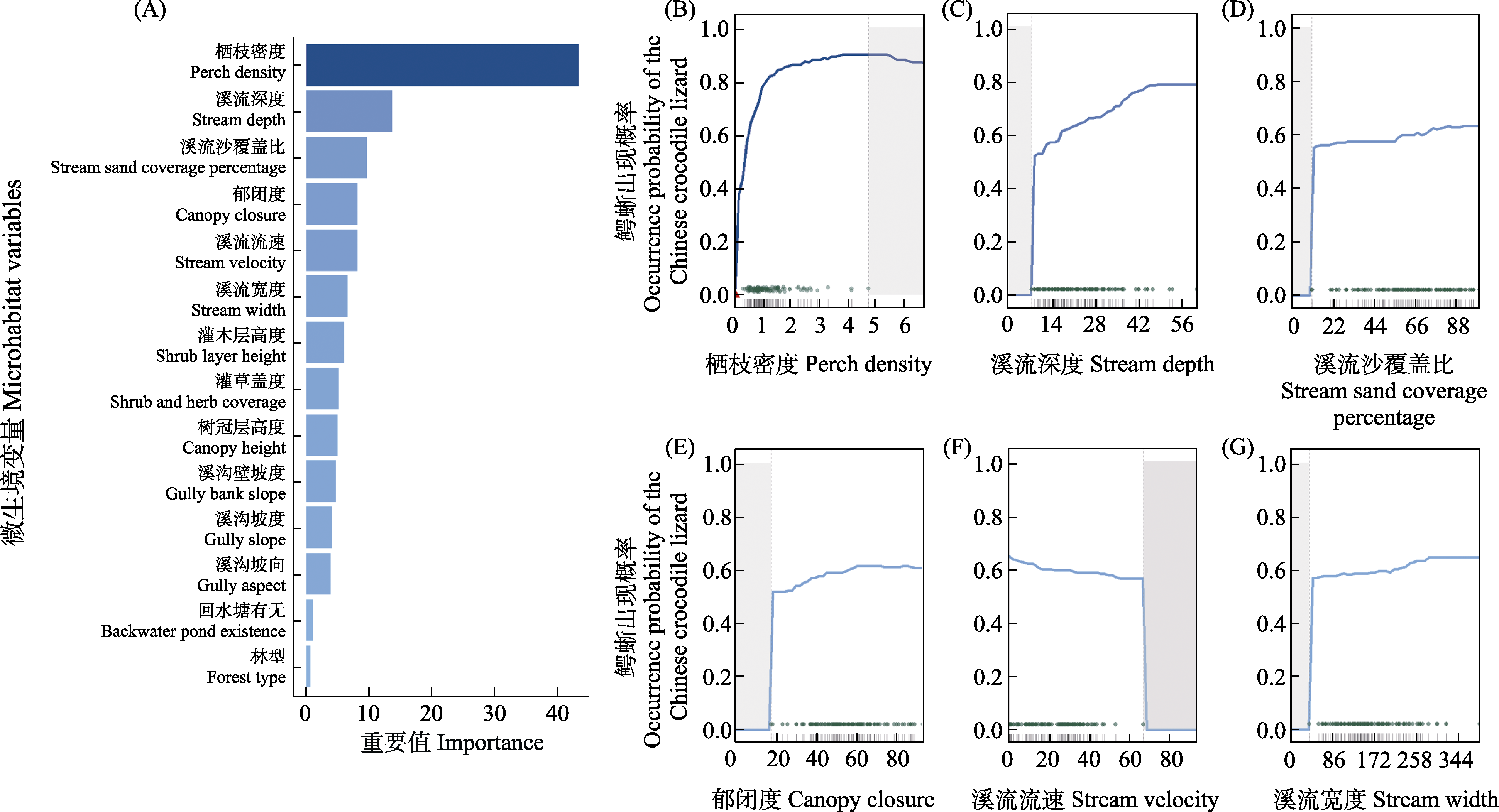
Fig. 3 Analysis of key variable selection for the Chinese crocodile lizard population in Guangdong Luokeng Crocodile Lizard National Nature Reserve. (A) Variable importance ranking from random forest model analysis for microhabitat selection; (B-G) Partial dependence plots for six key habitat variables. Grey areas indicate the range with no data observation.
| 变量名 Variable | 平均效应值 β_avg | 标准误 SE | Z | P |
|---|---|---|---|---|
| 截距 Intercept | -6.322 | 1.007 | -6.280 | 3.39e-10*** |
| 栖枝密度 Perch density (PD) | 1.906 | 0.315 | 6.052 | 1.43e-09*** |
| 溪流深度 Stream depth (SD) | 0.114 | 0.025 | 4.497 | 6.89e-06*** |
| 郁闭度 Canopy closure (CC) | 0.031 | 0.011 | 2.880 | 0.004** |
| 溪流宽度 Stream width (SW) | 0.008 | 0.004 | 2.080 | 0.038* |
Table 2 Optimal and final generalized linear mixed model statistical summary table for Chinese crocodile lizards in Guangdong Luokeng Crocodile Lizard National Nature Reserve
| 变量名 Variable | 平均效应值 β_avg | 标准误 SE | Z | P |
|---|---|---|---|---|
| 截距 Intercept | -6.322 | 1.007 | -6.280 | 3.39e-10*** |
| 栖枝密度 Perch density (PD) | 1.906 | 0.315 | 6.052 | 1.43e-09*** |
| 溪流深度 Stream depth (SD) | 0.114 | 0.025 | 4.497 | 6.89e-06*** |
| 郁闭度 Canopy closure (CC) | 0.031 | 0.011 | 2.880 | 0.004** |
| 溪流宽度 Stream width (SW) | 0.008 | 0.004 | 2.080 | 0.038* |
| 变量名 Variable | 平均效应值 β_avg | 标准误 SE | 置信区间下限 CI_Low | 置信区间上限 CI_High | 相对重要性 Relative importance (RI) | P |
|---|---|---|---|---|---|---|
| 截距 Intercept | -6.432 | 1.148 | -8.692 | -4.172 | < 0.001 | |
| 栖枝密度 Perch density (PD) | 1.825 | 0.324 | 1.190 | 2.460 | 1.000 | < 0.001 |
| 溪流深度 Stream depth (SD) | 0.120 | 0.027 | 0.068 | 0.172 | 1.000 | < 0.001 |
| 郁闭度 Canopy closure (CC) | 0.031 | 0.011 | 0.009 | 0.053 | 1.000 | 0.005 |
| 溪流宽度 Stream width (SW) | 0.008 | 0.004 | -0.001 | 0.016 | 0.747 | 0.051 |
| 溪流沙覆盖比 Stream sand coverage percentage (SSCP) | 0.011 | 0.008 | -0.005 | 0.027 | 0.506 | 0.160 |
| 溪流流速 Stream velocity (SV) | 0.144 | 0.161 | -0.172 | 0.459 | 0.315 | 0.372 |
Table 3 Summary statistics of the 95% cumulative weight model averaging results from the global generalized linear mixed model (GLMM) for Chinese crocodile lizards population in Guangdong Luokeng Crocodile Lizard National Nature Reserve
| 变量名 Variable | 平均效应值 β_avg | 标准误 SE | 置信区间下限 CI_Low | 置信区间上限 CI_High | 相对重要性 Relative importance (RI) | P |
|---|---|---|---|---|---|---|
| 截距 Intercept | -6.432 | 1.148 | -8.692 | -4.172 | < 0.001 | |
| 栖枝密度 Perch density (PD) | 1.825 | 0.324 | 1.190 | 2.460 | 1.000 | < 0.001 |
| 溪流深度 Stream depth (SD) | 0.120 | 0.027 | 0.068 | 0.172 | 1.000 | < 0.001 |
| 郁闭度 Canopy closure (CC) | 0.031 | 0.011 | 0.009 | 0.053 | 1.000 | 0.005 |
| 溪流宽度 Stream width (SW) | 0.008 | 0.004 | -0.001 | 0.016 | 0.747 | 0.051 |
| 溪流沙覆盖比 Stream sand coverage percentage (SSCP) | 0.011 | 0.008 | -0.005 | 0.027 | 0.506 | 0.160 |
| 溪流流速 Stream velocity (SV) | 0.144 | 0.161 | -0.172 | 0.459 | 0.315 | 0.372 |
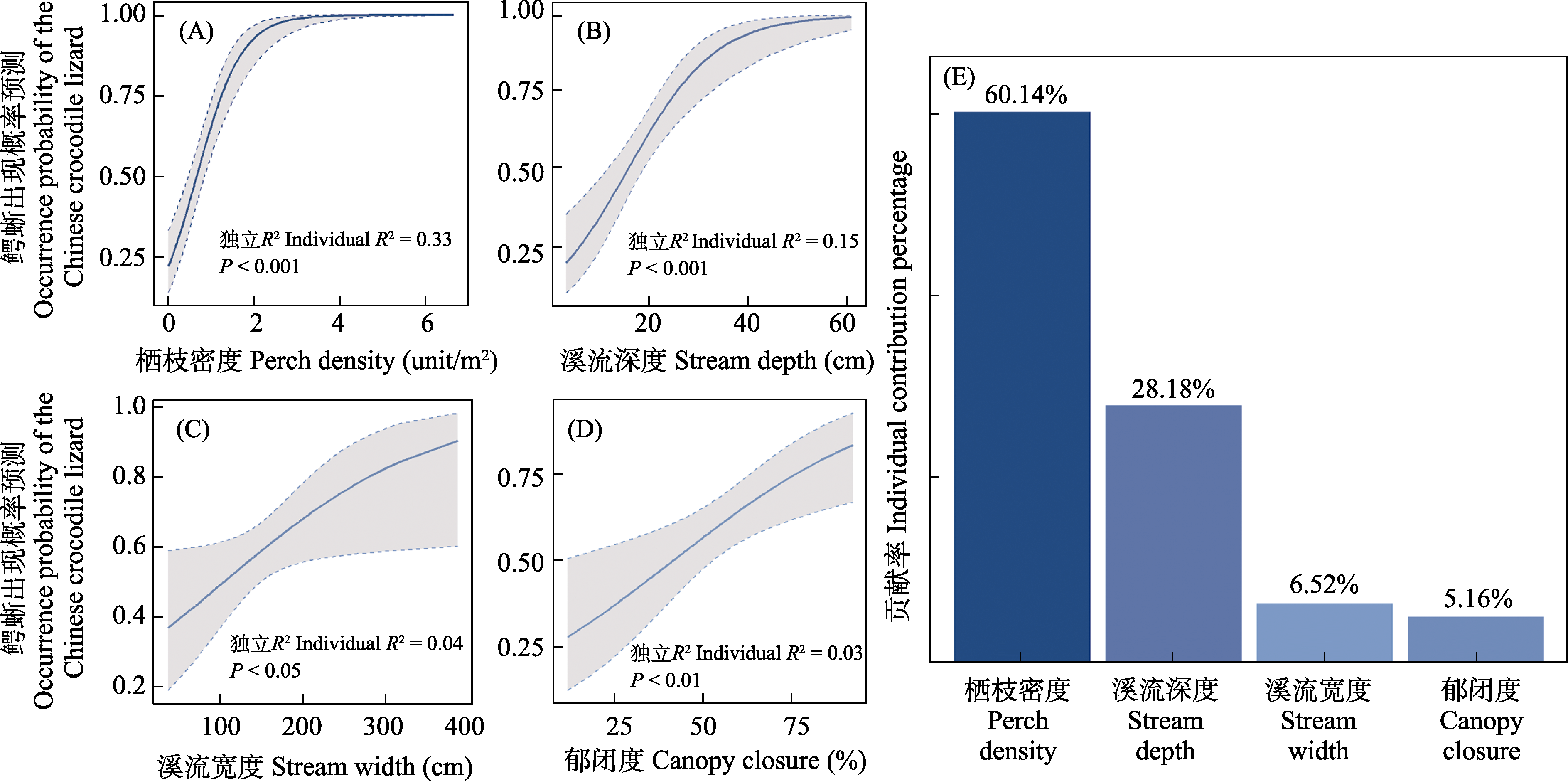
Fig. 4 Final generalized linear mixed model analysis for the Chinese crocodile lizards population in Guangdong Luokeng Crocodile Lizard National Nature Reserve
| [1] |
Barends JM, Petford MA, Tolley KA (2024) Comparing perch availability and perch use between African dwarf chameleon (Bradypodion) ecomorphs. Current Zoology, 71, 633-644.
DOI URL |
| [2] | Buckland S, Cole NC, Aguirre-Gutiérrez J, Gallagher LE, Henshaw SM, Besnard A, Tucker RM, Bachraz V, Ruhomaun K, Harris S (2014) Ecological effects of the invasive giant Madagascar day gecko on endemic Mauritian geckos: Applications of binomial-mixture and species distribution models. PLoS ONE, 9, e88798. |
| [3] | Burnham KP, Anderson DR (2002) Model Selection and Multimodel Inference: A Practical Information-Theoretic Approach, 2nd edn. Springer-Verlag, New York. |
| [4] | Butler MA (2005) Foraging mode and the evolution of vision in lizards. In: Lizard Ecology:The Evolutionary Consequences of Foraging Mode (eds Reilly SM, McBrayer LD, Miles DB), pp. 375-377. Cambridge University Press, Cambridge. |
| [5] |
Button KS, Ioannidis JPA, Mokrysz C, Nosek BA, Flint J, Robinson ESJ, Munafò MR (2013) Power failure: Why small sample size undermines the reliability of neuroscience. Nature Reviews Neuroscience, 14, 365-376.
DOI PMID |
| [6] |
Chen X, Liang Y, Feng X (2024) Influence of model complexity, training collinearity, collinearity shift, predictor novelty and their interactions on ecological forecasting. Global Ecology and Biogeography, 33, 371-384.
DOI URL |
| [7] | CITES (Convention on International Trade in Endangered Species of Wild Fauna and Flora) (2016) Appendices I, II and III. https://cites.org/eng/app/appendices.php. (accessed on 2024-05-17) |
| [8] |
Craigie ID, Baillie JEM, Balmford A, Carbone C, Collen B, Green JL, Hutton J, Leader-Williams N, Milner-Gulland EJ (2010) Large mammal population declines in Africa’s protected areas. Biological Conservation, 143, 2221-2228.
DOI URL |
| [9] | Dai DL, Wu ZJ, Huang CM, Ning JJ, Yu H, Zhong YM (2007) Application of stomach flushing in dietary study of the crocodile lizard (Shinisaurus crocodilurus). Sichuan Journal of Zoology, 26, 438-441. (in Chinese with English abstract) |
| [ 戴冬亮, 武正军, 黄乘明, 宁加佳, 于海, 钟移明 (2007) 洗胃法在鳄蜥食性研究中的应用. 四川动物, 26, 438-441.] | |
| [10] |
Dormann CF, Elith J, Bacher S, Buchmann C, Carl G, Carré G, García MJR, Gruber B, Lafourcade B, Leitão PJ, McClean C, Osborne PE, Reineking B, Schröder B, Skidmore AK, Zurell D, Lautenbach S (2013) Collinearity: A review of methods to deal with it and a simulation study evaluating their performance. Ecography, 36, 27-46.
DOI URL |
| [11] |
Fahrig L (2003) Effects of habitat fragmentation on biodiversity. Annual Review of Ecology, Evolution, and Systematics, 34, 487-515.
DOI URL |
| [12] |
Fisher R, Wilson SK, Sin TM, Lee AC, Langlois TJ (2018) A simple function for full-subsets multiple regression in ecology with R. Ecology and Evolution, 8, 6104-6113.
DOI PMID |
| [13] |
Fleishman LJ (2024) Lizard visual ecology. Frontiers in Amphibian and Reptile Science, 2, 1426675.
DOI URL |
| [14] |
Genuer R, Poggi JM, Tuleau-Malot C (2010) Variable selection using random forests. Pattern Recognition Letters, 31, 2225-2236.
DOI URL |
| [15] | Guan FC, Liang ZW, Wang ZH, Guan ZH (2010) Comparison of digital image method and graticulation method for vegetation coverage measurement in salinized grassland. Journal of Northeast Agricultural University, 41(1), 130-133. (in Chinese with English abstract) |
| [ 关法春, 梁正伟, 王忠红, 关志华 (2010) 方格法与数字图像法测定盐碱化草地植被盖度的比较. 东北农业大学学报, 41(1), 130-133.] | |
| [16] |
Hackenberger DK, Hackenberger BK (2023) Spatial patterns and species associations of earthworms in relation to micro-topography and insolation. Applied Soil Ecology, 190, 104995.
DOI URL |
| [17] | Herrel A, Taft JM, Main DC, da Silva JM, Tolley KA (2024) Branching out: Perch diameter and orientation affect pull strength in chameleons (genus: Bradypodion). Biological Journal of the Linnean Society, 143, blae003. |
| [18] | Huang CM, Yu H, Li YB, Gong MH (2005) Rare national first-class protected animal—Crocodile lizard in Yaoshan. Chinese Wildlife, 26(4), 17. (in Chinese) |
| [ 黄乘明, 于海, 李友邦, 龚明昊 (2005) 珍稀的国家一级保护动物——瑶山鳄蜥. 野生动物, 26(4), 17.] | |
| [19] | Huang QY, Fei YX, Yang HB, Gu XD, Songer M (2020) Giant Panda National Park, a step towards streamlining protected areas and cohesive conservation management in China. Global Ecology and Conservation, 22, e00947. |
| [20] | IUCN (International Union for Conservation of Nature) (2020) The IUCN Red List of Threatened Species. https://www.iucnredlist.org/species/57287221/57287235. (accessed on 2024-05-17) |
| [21] |
Jayne BC, Herrmann MP (2011) Perch size and structure have species-dependent effects on the arboreal locomotion of rat snakes and boa constrictors. Journal of Experimental Biology, 214, 2189-2201.
DOI URL |
| [22] |
Kyriazos T, Poga M (2023) Dealing with multicollinearity in factor analysis: The problem, detections, and solutions. Open Journal of Statistics, 13, 404-424.
DOI URL |
| [23] |
Lai JS, Zou Y, Zhang S, Zhang XG, Mao LF (2022) glmm.hp: An R package for computing individual effect of predictors in generalized linear mixed models. Journal of Plant Ecology, 15, 1302-1307.
DOI |
| [24] |
Lakens D (2013) Calculating and reporting effect sizes to facilitate cumulative science: A practical primer for t-tests and ANOVAs. Frontiers in Psychology, 4, 863.
DOI PMID |
| [25] |
Li XM, Jiang JB, Zhang ZL, Liu XJ, Wang YL, Wu YZ, Li YS, Qiu JP, Zhao Q (2024) Earthworm biodiversity and its influencing factors in Baotianman National Nature Reserve. Biodiversity Science, 32, 23352. (in Chinese with English abstract)
DOI URL |
|
[ 李雪萌, 蒋际宝, 张曾鲁, 刘晓静, 王亚利, 吴宜钊, 李银生, 邱江平, 赵琦 (2024) 宝天曼国家级自然保护区蚯蚓物种多样性及其影响因素. 生物多样性, 32, 23352.]
DOI |
|
| [26] | Lin XL, Li ZQ (2006) The status and evaluation of resource of Qujiang Luokeng Nature Reserve in Guangdong Province. Guangdong Forestry Science and Technology, 22(2), 46-49. (in Chinese with English abstract) |
| [ 林雪玲, 黎植权 (2006) 广东曲江罗坑自然保护区资源现状与评价. 广东林业科技, 22(2), 46-49.] | |
| [27] |
Liu RJ, Guo XG, Zhao CF, Zhao YF, Peng PY, Jin DC (2024) An ecological survey of chiggers (Acariformes: Trombiculidae) associated with small mammals in an epidemic focus of scrub typhus on the China-Myanmar border in southwest China. Insects, 15, 812.
DOI URL |
| [28] |
Lüdecke D (2018) ggeffects: Tidy data frames of marginal effects from regression models. Journal of Open Source Software, 3, 772.
DOI URL |
| [29] | Luo SY, Li YT, Wu ZJ, Cheng R, Chen YH, He JS (2021) Influencing factors of perch height of Shinisaurus crocodilurus in Daguishan Mountain, China. Journal of Guangxi Normal University (Natural Science Edition), 39(5), 182-189. (in Chinese with English abstract) |
| [ 罗树毅, 黎永泰, 武正军, 程瑞, 陈耀还, 何家松 (2021) 广西大桂山鳄蜥的栖枝高度及其影响因素. 广西师范大学学报(自然科学版), 39(5), 182-189.] | |
| [30] | Luo SY, Wang K, Zeng ZG, Yang YJ, Yang CS, He JS, Wu SF, Wu ZJ, Ma ZP (2020) Predation on crocodile lizards by Ahaetulla prasina. Chinese Journal of Zoology, 55, 101-104. (in Chinese with English abstract) |
| [ 罗树毅, 王坤, 曾治高, 杨羽婕, 阳春生, 何家松, 吴少风, 武正军, 马寨璞 (2020) 绿瘦蛇捕食鳄蜥的现象. 动物学杂志, 55, 101-104.] | |
| [31] |
Mitra P, Lian H, Mitra R, Liang H, Xie M (2019) A general framework for frequentist model averaging. Science China: Mathematics, 62, 205-226.
DOI |
| [32] |
Muff S, Signer J, Fieberg J (2020) Accounting for individual- specific variation in habitat-selection studies: Efficient estimation of mixed-effects models using Bayesian or frequentist computation. Journal of Animal Ecology, 89, 80-92.
DOI URL |
| [33] |
Nakagawa S, Cuthill IC (2007) Effect size, confidence interval and statistical significance: A practical guide for biologists. Biological Reviews, 82, 591-605.
DOI PMID |
| [34] |
Nakagawa S, Johnson PCD, Schielzeth H (2017) The coefficient of determination R2 and intra-class correlation coefficient from generalized linear mixed-effects models revisited and expanded. Journal of the Royal Society Interface, 14, 20170213.
DOI URL |
| [35] | Ning JJ, Huang CM, Yu H, Dai DL, Wu ZJ, Zhong YM (2006) Summer habitat characteristics of the Chinese crocodile lizard (Shinisaurus crocodilurus) in the Luokeng Nature Reserve, Guangdong. Zoological Research, 27, 419-426. (in Chinese with English abstract) |
| [ 宁加佳, 黄乘明, 于海, 戴冬亮, 武正军, 钟移明 (2006) 广东罗坑自然保护区鳄蜥夏季生境特征. 动物学研究, 27, 419-426.] | |
| [36] | Pyke GH (2019) Optimal foraging theory:An introduction. In:Encyclopedia of Animal Behavior (ed. Choe JC), pp. 111-117. Elsevier Academic Press, Amsterdam. |
| [37] | Quaglietta L, Mira A, Boitani L (2018) Extrinsic and intrinsic factors affecting the daily rhythms of a semiaquatic carnivore in a Mediterranean environment. Hystrix, the Italian Journal of Mammalogy, 29, 128-138. |
| [38] |
Royle JA, Kéry M (2007) A Bayesian state-space formulation of dynamic occupancy models. Ecology, 88, 1813-1823.
PMID |
| [39] | Schober P, Boer C, Schwarte LA (2018) Correlation coefficients: Appropriate use and interpretation. Anesthesia & Analgesia, 126, 1763-1768. |
| [40] |
Shapiro SS, Wilk MB (1965) An analysis of variance test for normality (complete samples). Biometrika, 52, 591-611.
DOI URL |
| [41] | Soberón J, Peterson AT (2005) Interpretation of models of fundamental ecological niches and species’ distributional areas. Biodiversity Informatics, 2, 1-10. |
| [42] | Umuhoza J, Jiapaer G, Tao Y, Bai J, Hakorimana E, Zhang LC, Liang HW, Lin KX, Ju TW (2025) Impacts of climate extremes on vegetation health in the tropical savannas of Africa. Global Ecology and Conservation, 61, e03649. |
| [43] |
Wang T, Graves B, Rosseel Y, Merkle EC (2022) Computation and application of generalized linear mixed model derivatives using lme4. Psychometrika, 87, 1173-1193.
DOI PMID |
| [44] | Wang ZX, Wu ZJ, Cai FJ, He N, Jiang J, Yu H, Huang CM (2010) Breeding technique of Chinese crocodile lizard (Shinisaurus crocodilurus). Guangdong Forestry Science and Technology, 26(5), 51-55. (in Chinese with English abstract) |
| [ 王振兴, 武正军, 蔡凤金, 何南, 蒋洁, 于海, 黄乘明 (2010) 鳄蜥人工饲养技术. 广东林业科技, 26(5), 51-55.] | |
| [45] | Wu ZJ, Dai DL, Huang CM, Yu H, Ning JJ, Zhong YM (2007) Selection of Shinisaurus crocodilurus on forest type in mountain streams in Luokeng Nature Reserve of Guangdong Province. Chinese Journal of Ecology, 26, 1777-1781. (in Chinese with English abstract) |
| [ 武正军, 戴冬亮, 黄乘明, 于海, 宁加佳, 钟移明 (2007) 广东省罗坑自然保护区鳄蜥对溪沟林型的选择. 生态学杂志, 26, 1777-1781.] | |
| [46] |
Wu ZJ, Dai DL, Ning JJ, Huang CM, Yu H (2012) Seasonal differences in habitat selection of the crocodile lizard (Shinisaurus crocodilurus) in Luokeng Nature Reserve, Guangdong. Acta Ecologica Sinica, 32, 4691-4699. (in Chinese with English abstract)
DOI URL |
| [ 武正军, 戴冬亮, 宁加佳, 黄乘明, 于海 (2012) 广东罗坑自然保护区鳄蜥生境选择的季节性差异. 生态学报, 32, 4691-4699.] | |
| [47] | Xiao FR, Bu RP, Ye ZH, Wang JC, Shi HT (2023) Microhabitat characteristics of the critically endangered big-headed turtle Platysternon megacephalum. Ecology and Evolution, 13, e10633. |
| [48] | Xie H, Chen L, Huang HY, He N, Liu HY, Wu ZJ (2017) Research on movement pattern and the influencing factors of Shinisaurus crocodilurus in the Luokeng Nature Reserve, Guangdong, China. Journal of Guangxi Normal University (Natural Science Edition), 35(4), 106-113. (in Chinese with English abstract) |
| [ 谢海, 陈亮, 黄海燕, 何南, 刘海洋, 武正军 (2017) 广东罗坑自然保护区鳄蜥的移动格局及其影响因子. 广西师范大学学报(自然科学版), 35(4), 106-113.] | |
| [49] |
Xu YH, Tang J (2024) Examining the rationality of Giant Panda National Park’s zoning designations and management measures for habitat conservation: Insights from interpretable machine learning methods. Science of the Total Environment, 920, 170955.
DOI URL |
| [50] | Yu H, Huang CM, Wu ZJ, Ning JJ, Dai DL (2006) Observation on habit of Chinese crocodilian lizard. Sichuan Journal of Zoology, 25, 364-366. (in Chinese with English abstract) |
| [ 于海, 黄乘明, 武正军, 宁加佳, 戴冬亮 (2006) 鳄蜥生活习性的观察. 四川动物, 25, 364-366.] | |
| [51] | Zhang B, Ding XY, Li SH, Li LH, Wen ZQ, Li YH, Chen J, Yang DD (2023) Habitat choice for narrowly distributed species: Multiple spatial scales of habitat selection for the Mangshan pit viper. Global Ecology and Conservation, 45, e02512. |
| [52] |
Zhang XL, Shen HW, Huang TB, Wu Y, Guo BB, Liu Z, Luo HB, Tang J, Zhou H, Wang LG, Xu WH, Ou GL (2024) Improved random forest algorithms for increasing the accuracy of forest aboveground biomass estimation using sentinel-2 imagery. Ecological Indicators, 159, 111752.
DOI URL |
| [1] | Wenqi Gao, Jingrong Xiang, Yao Zhao, Lingshuang Fan, Yuan Gu, Weihan Shao, Gaojun Li, Guangjun Zhao, Mingbin Chen, Xingwei Cai, Kai Chen. Stream fish community characteristics and their response to land use in Limushan and Jianfengling of Hainan Tropical Rainforest National Park [J]. Biodiv Sci, 2026, 34(2): 25374-. |
| [2] | Tingting Li, Xihong Zhu, Guangnian Wu, Xiao Song, Aichun Xu. Spawning ground microhabitat selection by the Chinhai spiny newt (Echinotriton chinhaiensis) [J]. Biodiv Sci, 2023, 31(1): 22293-. |
| [3] | Jiaxing Li, Christos Mammides, Liping Zhou, Jiajie Sun, Xiaocai Tan, Aiwu Jiang. Bird diversity in different habitats under agriculturalization in Guangxi, China [J]. Biodiv Sci, 2022, 30(5): 21515-. |
| [4] | Bochi Wang, Wen Pei, Jucai Yang, Yongjun Se, Xuezhu Li, Hairong Yang. Nesting habitat preference of the black-necked crane and influence of anthropogenic disturbance in Yanchiwan, Gansu [J]. Biodiv Sci, 2022, 30(1): 21241-. |
| [5] | Ming Cao, Junsheng Li, Wei Wang, Juyi Xia, Chunting Feng, Gang Fu, Wenjie Huang, Fangzheng Liu. Assessing the effectiveness of water retention ecosystem service in Qinling National Nature Reserve based on InVEST and propensity score matching model [J]. Biodiv Sci, 2021, 29(5): 617-628. |
| [6] | Heming Liu, Zunping Ma, Qingsong Yang, Xiaofeng Fang, Qingkai Lin, Yi Zong, , Xihua Wang. Relationships between established seedling survival and growth in evergreen broad-leaved forest in Tiantong [J]. Biodiv Sci, 2017, 25(1): 11-22. |
| [7] | Xiaojing Liu, Siyuan Ren, Luxin Li, Yongzhong Ye, Zhiliang Yuan, Ting Wang. Detecting density dependence on tree survival in a deciduous broad- leaved forest in Baotianman National Nature Reserve [J]. Biodiv Sci, 2016, 24(6): 639-648. |
| [8] | JIANG Hong-Xing, CHU Guo-Zhong, QIAN Fa-Wen, LU Jun. Breeding microhabitat selection of Saunders′ Gull ( Larus saundersi ) in Yancheng of Jiangsu Province, China [J]. Biodiv Sci, 2002, 10(2): 170-174. |
| Viewed | ||||||
|
Full text |
|
|||||
|
Abstract |
|
|||||
Copyright © 2026 Biodiversity Science
Editorial Office of Biodiversity Science, 20 Nanxincun, Xiangshan, Beijing 100093, China
Tel: 010-62836137, 62836665 E-mail: biodiversity@ibcas.ac.cn

