

Biodiv Sci ›› 2026, Vol. 34 ›› Issue (6): 26035. DOI: 10.17520/biods.2026035 cstr: 32101.14.biods.2026035
• Original Papers: Plant Diversity • Previous Articles Next Articles
Duli Wang1,#, Jiasi He2,#, Kun Sun1, Qiaoxia Li1,*( )
)
Received:2026-02-03
Accepted:2026-05-15
Online:2026-06-20
Published:2026-07-31
Contact:
*E-mail: liqiaoxia8024@nwnu.edu.cn
About author:#Co-first authors
Supported by:Duli Wang, Jiasi He, Kun Sun, Qiaoxia Li. Flower type changes and morphological differences of two different ploidy species in Viola under different photoperiods[J]. Biodiv Sci, 2026, 34(6): 26035.
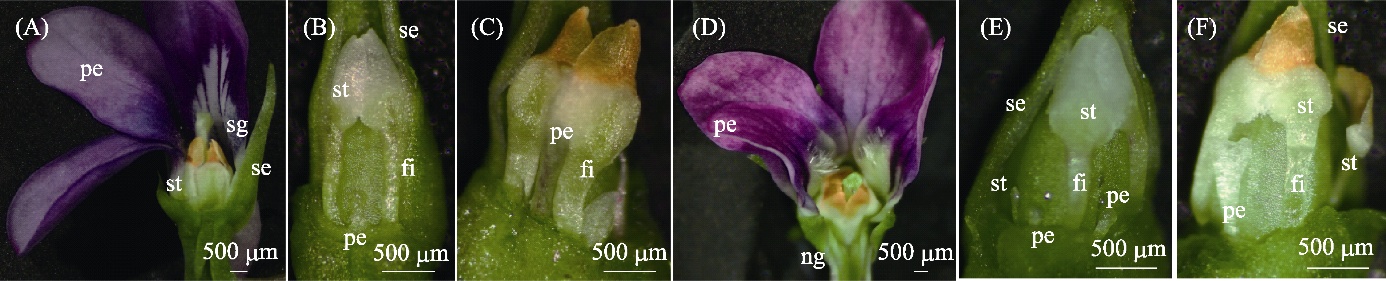
Fig. 1 The different flower shapes of Viola philippica (A-C) and V. prionantha (D-F). (A), (D), Chasmogamous flower; (B), (E), Cleistogamous flower; (C), (F), Intermediate cleistogamous flower. pe, Petal; st, Stamen; se, Sepal; sg, Stigma, fi, Filament, ng, Nectary.
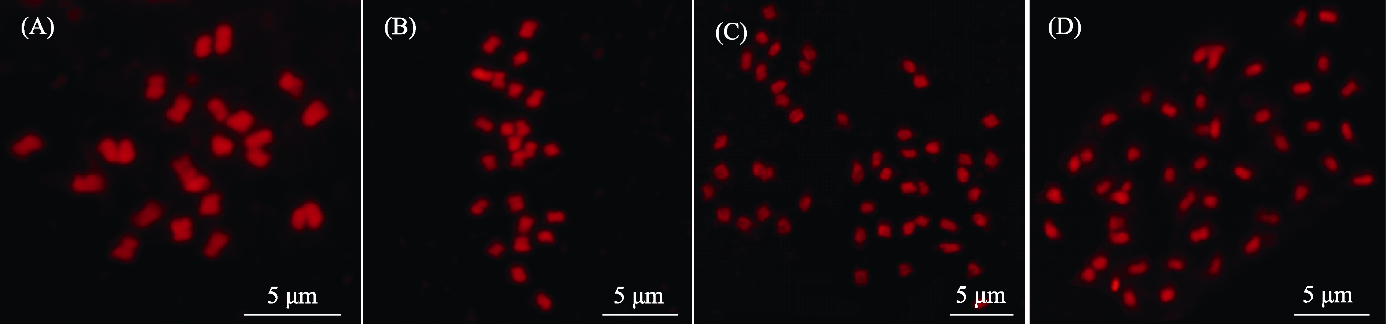
Fig. 2 Comparison of chromosome numbers between Viola philippica (A-B) and V. prionantha (C-D)
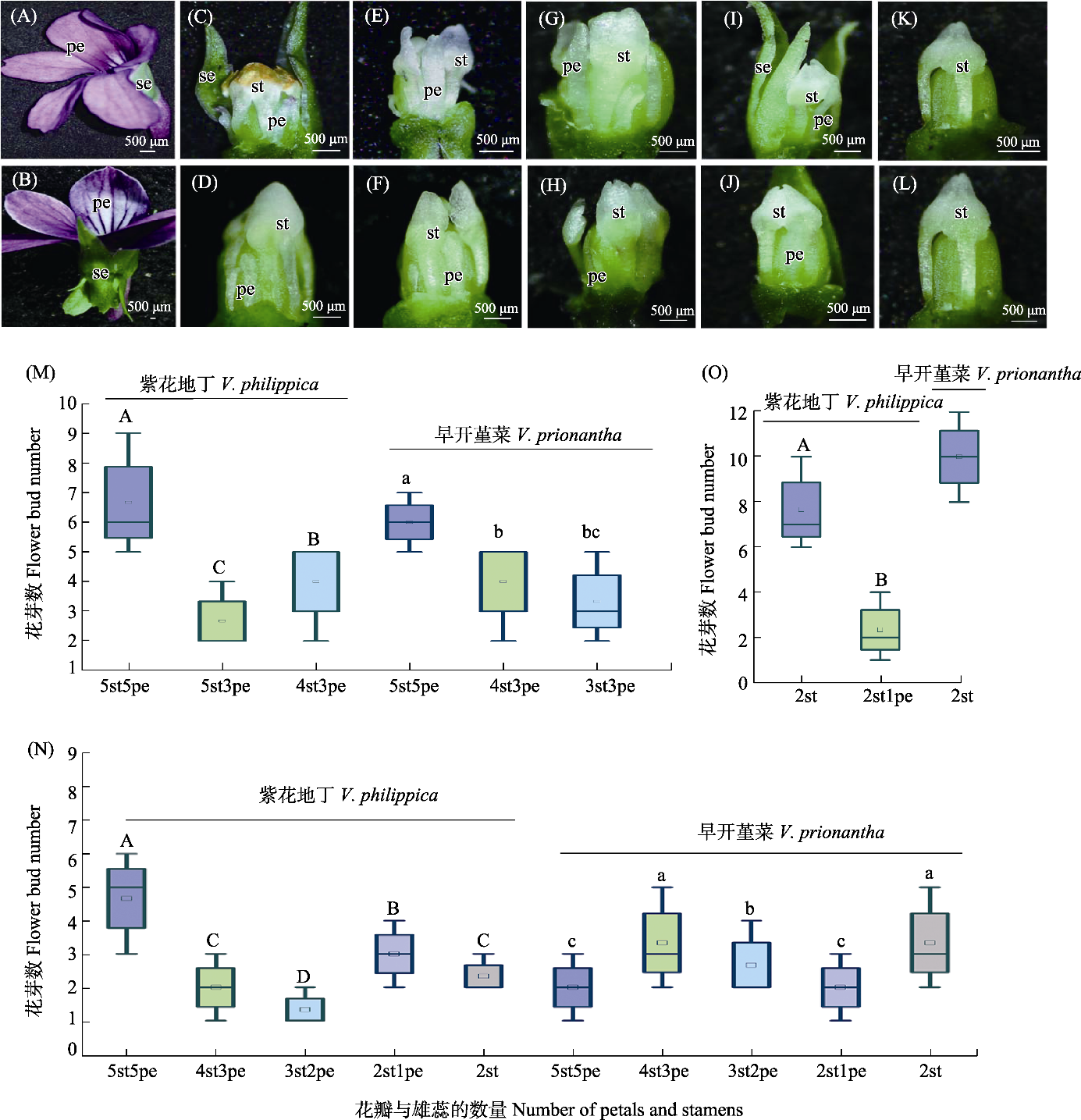
Fig. 3 Observation and statistical analysis of floral morphology of Viola philippica and V. prionantha under different photoperiods. (A-B), Chasmogamous flowers; (C-J), Intermediate cleistogamous flowers; (K-L), Cleistogamous flowers. (A), (C), (E), (G), (I), (K) show the flower morphology of V. philippica; (B), (D), (F), (H), (J), (L) show that of V. prionantha; (M), (N), (O), Quantitative analysis of flower buds in different forms under 10 h/14 h, 12 h/12 h, 16 h/8 h photoperiod, respectively. pe, Petal; st, Stamen; se, Sepal. Uppercase and lowercase letters indicate significant differences in the proportions of V. philippica and V. prionantha with different flower morphologies under the same photoperiod, respectively (P < 0.05).
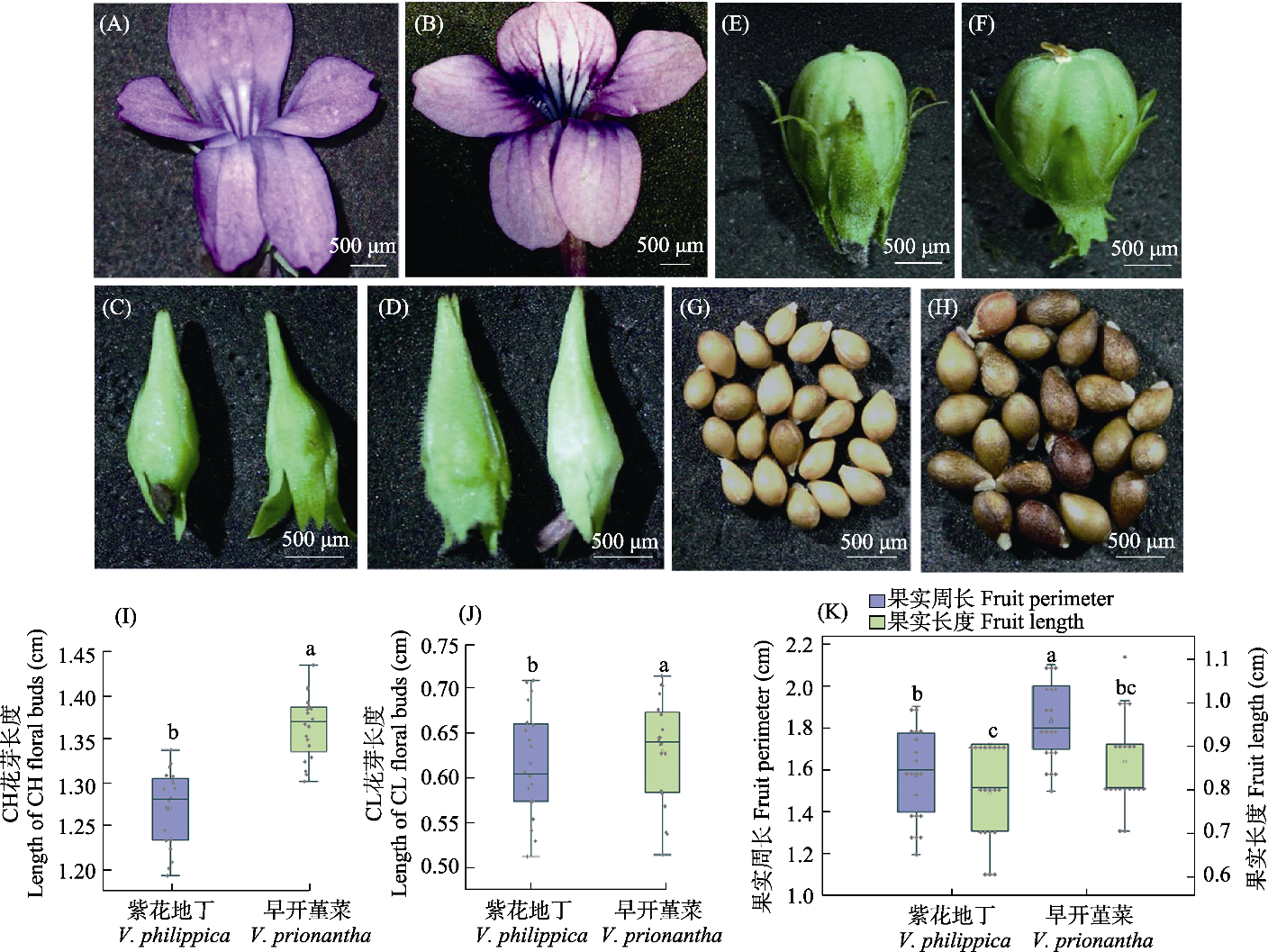
Fig. 4 Comparison of flowers, fruits, and seeds between Viola philippica (A, C, E, G) and V. prionantha (B, D, F, H). (A-B) Chasmogamous (CH) flower; (C-D) Cleistogamous (CL) flower; (E-F) Fruit; (G-H) Seeds. Different lowercase letters indicate significant differences (P < 0.05).
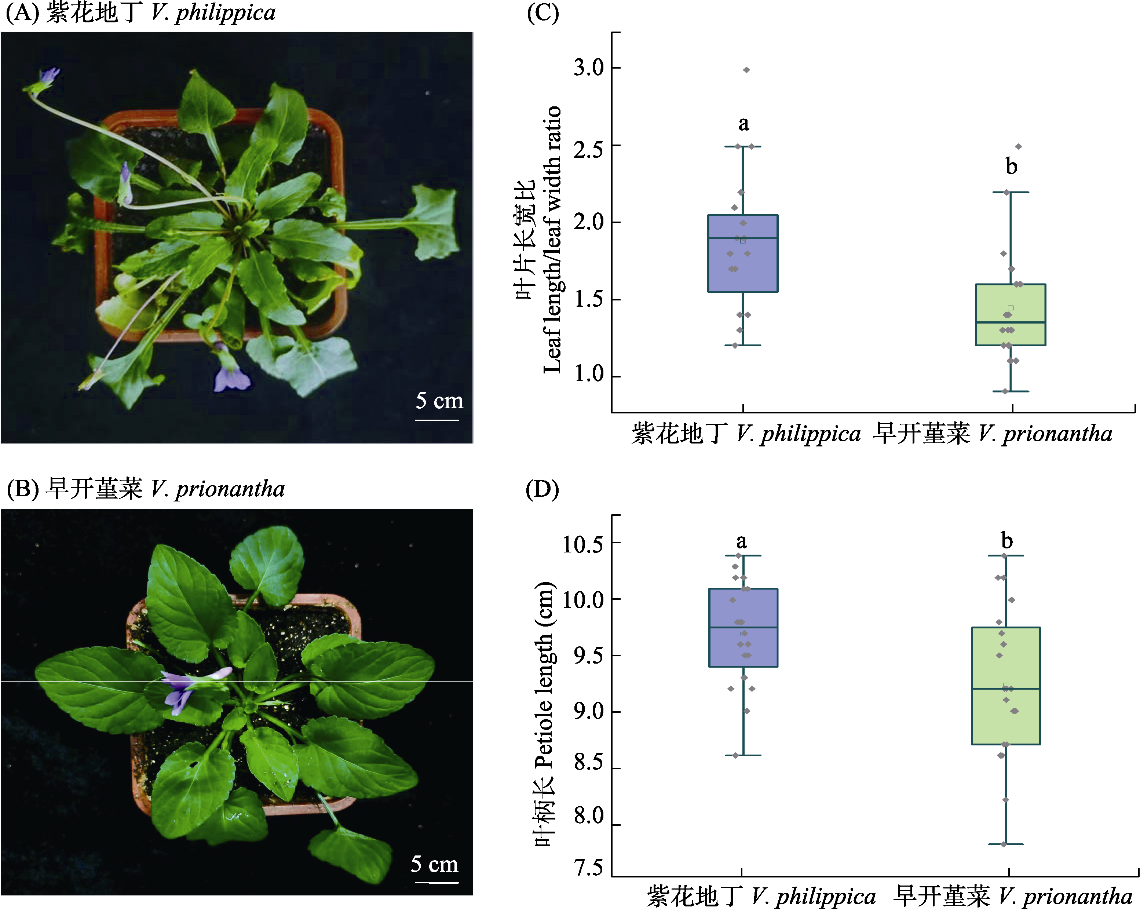
Fig. 5 Comparison of leaf morphology between Viola philippica and V. prionantha. Different lowercase letters indicate significant differences (P < 0.05).
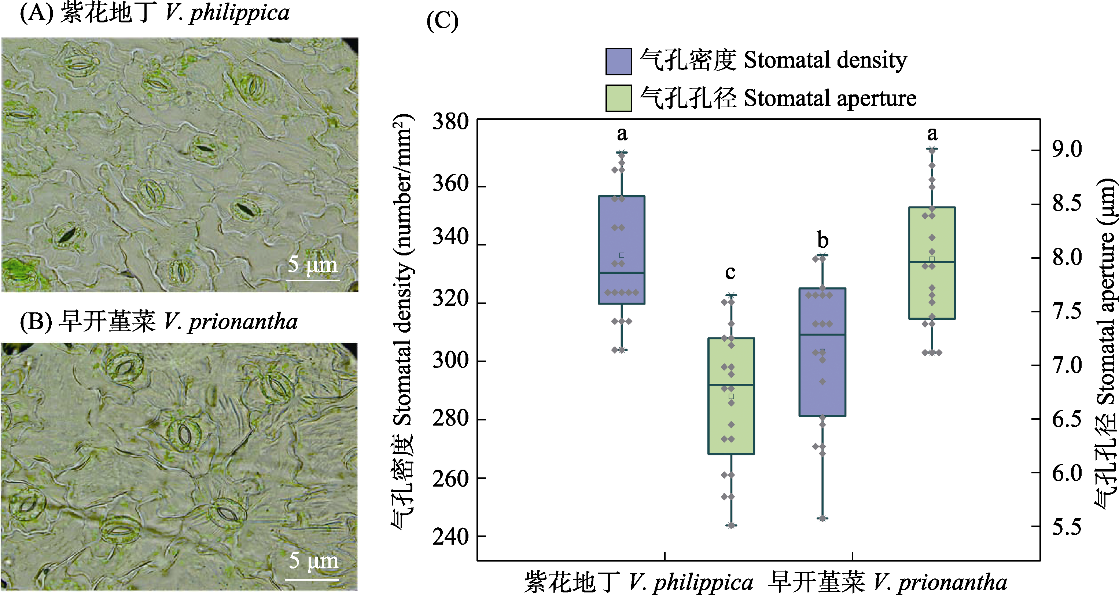
Fig. 6 Comparison of stomata between Viola philippica and V. prionantha. Different lowercase letters indicate significant differences (P < 0.05).
| [1] | Cao DL, Zhang XJ, Xie SQ, Fan SJ, Qu XJ (2022) Application of chloroplast genome in the identification of traditional Chinese medicine Viola philippica. BMC Genomics, 23, 540. |
| [2] | Correia S, Braga A, Martins J, Correia B, Pinto G, Canhoto J (2023) Effects of polyploidy on physiological performance of acclimatized Solanum betaceum Cav. plants under water deficit. Forests, 14, 208. |
| [3] | Cui HL, Guo HH, Yang LX, Ma XX, Li T, Chen CX, Liang HY (2023) Leaf morphology and photosynthetic characteristics analysis of diploid and polyploid Ulmus pumila. Heilongjiang Agricultural Sciences, 30(3), 68-72. (in Chinese with English abstract) |
| [崔华蕾, 郭欢欢, 杨丽晓, 马小欣, 李探, 陈彩霞, 梁海永 (2023) 二倍体及多倍体白榆叶片形态与光合特性分析. 黑龙江农业科学, 30(3), 68-72.] | |
| [4] | Culley TM (2000) Inbreeding depression and floral type fitness differences in Viola canadensis (Violaceae), a species with chasmogamous and cleistogamous flowers. Canadian Journal of Botany, 78, 1420-1429. |
| [5] | Culley TM, Grubb TC Jr (2003) Genetic effects of habitat fragmentation in Viola pubescens (Violaceae), a perennial herb with chasmogamous and cleistogamous flowers. Molecular Ecology, 12, 2919-2930. |
| [6] | Gao R, Wang HB, Dong B, Yang XD, Chen SM, Jiang JF, Zhang ZH, Liu C, Zhao N, Chen FD (2016) Morphological, genome and gene expression changes in newly induced autopolyploid Chrysanthemum lavandulifolium (Fisch. ex Trautv.) Makino. International Journal of Molecular Sciences, 17, 1690. |
| [7] | Islam MM, Deepo DM, Nasif SO, Siddique AB, Hassan O, Siddique AB, Paul NC (2022) Cytogenetics and consequences of polyploidization on different biotic-abiotic stress tolerance and the potential mechanisms involved. Plants, 11, 2684. |
| [8] | Li JY (1995) Key to the Plants of Northeast China, 2nd edn, pp. 418-429. Science Press, Beijing. (in Chinese) |
| [李骥云 (1995) 东北植物检索表(第二版), 418-429页. 科学出版社, 北京.] | |
| [9] | Li QX, An ZH, Zhao GF, Chen CL, Sun K, He CY (2025a) Interspecies transcriptomic comparisons reveal potential molecular genetic mechanisms underlying the evolutionary development of dimorphic flowers in Viola. Journal of Systematics and Evolution, 63, 892-909. |
| [10] | Li QX, Huo QD, Wang J, Zhao J, Sun K, He CY (2016) Expression of B-class MADS-box genes in response to variations in photoperiod is associated with chasmogamous and cleistogamous flower development in Viola philippica. BMC Plant Biology, 16, 151. |
| [11] | Li QX, Li KP, Zhang ZR, Li JG, Wang B, Zhang ZM, Zhu YY, Pan CC, Sun K, He CY (2022) Transcriptomic comparison sheds new light on regulatory networks for dimorphic flower development in response to photoperiod in Viola prionantha. BMC Plant Biology, 22, 336. |
| [12] | Li QX, Li YL, Li JG, Chen CL, Sun K (2024) Effects of photoperiods on the development of chasmogamous and cleistogamous flowers in Viola monbeigii and V. dissecta. Biodiversity Science, 32, 23484. (in Chinese with English abstract) |
| [李巧峡, 李有龙, 李纪纲, 陈晨龙, 孙坤 (2024) 光周期调控维西堇菜与裂叶堇菜开放花和闭锁花的发育. 生物多样性, 32, 23484.] | |
| [13] | Li QX, Zhu YY, Li YL, Chen CL, Li JG, Sun K, He CY (2025b) Expression variation of Viola APETALA3 orthologous genes is correlated with chasmogamous and cleistogamous flower development. BMC Plant Biology, 25, 319. |
| [14] | Lord EM, Eckard KJ (1984) Incompatibility between the dimorphic flowers of Collomia grandiflora, a cleistogamous species. Science, 223, 695-696. |
| [15] | Luo Y, Hu JY, Li L, Luo YL, Wang PF, Song BH (2016) Genome-wide analysis of gene expression reveals gene regulatory networks that regulate chasmogamous and cleistogamous flowering in Pseudostellaria heterophylla (Caryophyllaceae). BMC Genomics, 17, 382. |
| [16] | Luque JMR, Sara Moreno EM, Kovalsky IE, Seijo JG, SolÍs Neffa VG (2022) Polyploidy, genome size variation and diversification in an autopolyploid complex: The case of Turnera sidoides (Passifloraceae, Turneroideae). Systematics and Biodiversity, 20, 1-18. |
| [17] | Song Y, Chen RC, Zhang HB, Wang C (2023) Comparative study on leaf characters between diploid and tetraploid in Clivia miniata. Horticulture & Seed, 43(3), 4-5, 16. (in Chinese with English abstract) |
| [宋阳, 陈睿聪, 张宏斌, 王冲 (2023) 君子兰二倍体与四倍体叶片性状的比较研究. 园艺与种苗, 43(3), 4-5, 16.] | |
| [18] | Sternberger AL, Ruhil AVS, Rosenthal DM, Ballard HE, Wyatt SE (2020) Environmental impact on the temporal production of chasmogamous and cleistogamous flowers in the mixed breeding system of Viola pubescens. PLoS ONE, 15, e0229726. |
| [19] | Sun K, Wang QR (1991) Notes on the Chinese Violaceae (II)—Cytological studies on some violets of China. Bulletin of Botanical Research, 11(1), 69-72. (in Chinese with English abstract) |
| [孙坤, 王庆瑞 (1991) 中国堇菜科小志(二)——堇菜属植物细胞学的初步研究. 植物研究, 11(1), 69-72.] | |
| [20] | Sun K, Wang QR (1996) Cytological studies on six species of Viola in Northwest China. Chinese Bulletin of Botany, 13(1), 46-47. (in Chinese) |
| [孙坤, 王庆瑞 (1996) 西北地区6种堇菜属植物的细胞学研究. 植物学通报, 13(1), 46-47.] | |
| [21] | Tao DH, Li XH, Wang LQ, Zhou JL, Chen Y, Huo WG (2009) Progresses on determination of cell chromosome ploidy level of plants. Life Science Research, 13, 453-458. (in Chinese with English abstract) |
| [陶抵辉, 李小红, 王利群, 周杰良, 陈涌, 霍稳根 (2009) 植物染色体倍性鉴定方法研究进展. 生命科学研究, 13, 453-458.] | |
| [22] | Varga S, Soulsbury CD (2020) Environmental stressors affect sex ratios in sexually dimorphic plant sexual systems. Plant Biology, 22, 890-898. |
| [23] | Wu ZY, Raven PH, Hong DY (2007) Flora of China, Vol. 13. Science Press, Beijing & Missouri Botanical Garden Press, St. Louis. |
| [24] | Yamagishi M, Jitsuyama Y, Hoshino Y (2023) Agronomic performance in tetraploid Lilium leichtlinii: Larger flowers and earlier flowering. Euphytica, 219, 126. |
| [25] | Ye TW, Li SF, Li YM, Xiao SX, Yuan DY (2024) Impact of polyploidization on genome evolution and phenotypic diversity in oil-tea Camellia. Industrial Crops and Products, 218, 118928. |
| [26] | Zhang DY (2004) Evolution of Plant Life History and Reproductive Ecology. Science Press, Beijing. (in Chinese) |
| [张大勇 (2004) 植物生活史进化与繁殖生态学. 科学出版社, 北京.] | |
| [27] | Zhang JY, Wu F, Yan Q, John UP, Cao MS, Xu P, Zhang ZS, Ma TT, Zong XF, Li J, Liu RJ, Zhang YF, Zhao YF, Kanzana G, Lv YY, Nan ZB, Spangenberg G, Wang YR (2021) The genome of Cleistogenes songorica provides a blueprint for functional dissection of dimorphic flower differentiation and drought adaptability. Plant Biotechnology Journal, 19, 532-547. |
| [28] | Zhu MJ, Wang ZY, Yang YZ, Wang ZF, Mu WJ, Liu JQ (2023) Multi-omics reveal differentiation and maintenance of dimorphic flowers in an alpine plant on the Qinghai-Tibet Plateau. Molecular Ecology, 32, 1411-1424. |
| [1] | Yongbo Liu. The mechanism of constructing mixed-ploidy populations in polyploid species [J]. Biodiv Sci, 2021, 29(8): 1128-1133. |
| [2] | Siqi Liang, Xianchun Zhang, Ran Wei. Integrative taxonomy resolved species delimitation in a fern complex: A case study of the Asplenium coenobiale complex [J]. Biodiv Sci, 2019, 27(11): 1205-1220. |
| [3] | Jia-Jian Wang, Zhi-Bang Peng, Hang Sun, Ze-Long Nie, Ying Meng. Cytogeographic patterns of angiosperms flora of the Qinghai-Tibet Plateau and Hengduan Mountains [J]. Biodiv Sci, 2017, 25(2): 218-225. |
| [4] | HUANG Hong-Wen, GONG Jun-Jie, WANG Sheng-Mei, HE Zi-Can, ZHANG Zhong-Hui, LI Jian-Qiang. Genetic diversity in the genus Actinidia [J]. Biodiv Sci, 2000, 08(1): 1-12. |
| Viewed | ||||||
|
Full text |
|
|||||
|
Abstract |
|
|||||
Copyright © 2026 Biodiversity Science
Editorial Office of Biodiversity Science, 20 Nanxincun, Xiangshan, Beijing 100093, China
Tel: 010-62836137, 62836665 E-mail: biodiversity@ibcas.ac.cn

