

Biodiv Sci ›› 2026, Vol. 34 ›› Issue (5): 25475. DOI: 10.17520/biods.2025475 cstr: 32101.14.biods.2025475
• Original Papers: Genetic Diversity • Previous Articles Next Articles
Shanshan Wang1,2, Qi Liu2,3, Yu Li2, Tianrui Wang2, Xiling Dai3, Gregor Kozlowski2,4,5, Jin Xu1,*( ), Yigang Song2,*(
 )()
)()
Received:2025-12-12
Accepted:2026-03-12
Online:2026-05-20
Published:2026-07-01
Contact:
Jin Xu, Yigang Song
Supported by:Shanshan Wang, Qi Liu, Yu Li, Tianrui Wang, Xiling Dai, Gregor Kozlowski, Jin Xu, Yigang Song. Cautions on using chloroplast genome-based phylogeny for species identification and biogeography: A case study of Pterocarya[J]. Biodiv Sci, 2026, 34(5): 25475.
| 物种 Species | 采集地 Location | 缩写 Abbreviation | 纬度 Latitude | 经度 Longitude | 海拔 Altitude (m) | 标本号 Specimen no. | 登录号 GenBank no. | 来源 Source |
|---|---|---|---|---|---|---|---|---|
| 水胡桃 P. rhoifolia | Niigata University Forest, Sado City, Niigata, Japan | PR_NS | 38.23° N | 138.40° E | 370 | NUF3 | PV130126 | 自测 This study |
| 甘肃枫杨 P. macroptera var. macroptera | 甘肃省天水市党川乡 Dangchuan Township, Tianshui City, Gansu Province, China | PMM_TS | 34.27° N | 106.06° E | 1,503 | DM15793-2 | PV130121 | 自测 This study |
| 甘肃枫杨 P. macroptera var. macroptera | 四川省冕宁县森荣乡 Senrong Township, Mianning County, Sichuan Province, China | PMM_MN | 28.35° N | 101.98° E | 2,620 | DM17327 | PV130122 | 自测 This study |
| 甘肃枫杨 P. macroptera var. macroptera | 四川省峨眉山景区 Emei Mountain Scenic Area, Sichuan Province, China | PMM_EM | 29.54° N | 103.34° E | 2,055 | LXC00013 | PV130125 | 自测 This study |
| 华西枫杨 P. macroptera var. insignis | 浙江省西天目山 West Tianmu Mountain, Zhejiang Province, China | PMI_TM | 28.35° N | 118.87° E | 950 | SYG00006-3 | PV130127 | 自测 This study |
| 云南枫杨 P. macroptera var. delavayi | 云南省迪庆藏族自治州维西傈僳族自治县 Weixi Lisu Autonomous County, Diqing Tibetan Autonomous Prefecture, Yunnan Province, China | PMD_DQ | 27.76° N | 99.02° E | 2,240 | DM21298 | PV130123 | 自测 This study |
| 云南枫杨 P. macroptera var. delavayi | 云南省怒江傈僳族自治州贡山独龙族怒族自治县 Gongshan Derung and Nu Autonomous County, Nujiang Lisu Autonomous Prefecture, Yunnan Province, China | PMD_NJ | 28.07° N | 98.74° E | 2,899 | DM21322 | PV130124 | 自测 This study |
Table 1 Basic information on field sampling of plant materials of Pterocarya
| 物种 Species | 采集地 Location | 缩写 Abbreviation | 纬度 Latitude | 经度 Longitude | 海拔 Altitude (m) | 标本号 Specimen no. | 登录号 GenBank no. | 来源 Source |
|---|---|---|---|---|---|---|---|---|
| 水胡桃 P. rhoifolia | Niigata University Forest, Sado City, Niigata, Japan | PR_NS | 38.23° N | 138.40° E | 370 | NUF3 | PV130126 | 自测 This study |
| 甘肃枫杨 P. macroptera var. macroptera | 甘肃省天水市党川乡 Dangchuan Township, Tianshui City, Gansu Province, China | PMM_TS | 34.27° N | 106.06° E | 1,503 | DM15793-2 | PV130121 | 自测 This study |
| 甘肃枫杨 P. macroptera var. macroptera | 四川省冕宁县森荣乡 Senrong Township, Mianning County, Sichuan Province, China | PMM_MN | 28.35° N | 101.98° E | 2,620 | DM17327 | PV130122 | 自测 This study |
| 甘肃枫杨 P. macroptera var. macroptera | 四川省峨眉山景区 Emei Mountain Scenic Area, Sichuan Province, China | PMM_EM | 29.54° N | 103.34° E | 2,055 | LXC00013 | PV130125 | 自测 This study |
| 华西枫杨 P. macroptera var. insignis | 浙江省西天目山 West Tianmu Mountain, Zhejiang Province, China | PMI_TM | 28.35° N | 118.87° E | 950 | SYG00006-3 | PV130127 | 自测 This study |
| 云南枫杨 P. macroptera var. delavayi | 云南省迪庆藏族自治州维西傈僳族自治县 Weixi Lisu Autonomous County, Diqing Tibetan Autonomous Prefecture, Yunnan Province, China | PMD_DQ | 27.76° N | 99.02° E | 2,240 | DM21298 | PV130123 | 自测 This study |
| 云南枫杨 P. macroptera var. delavayi | 云南省怒江傈僳族自治州贡山独龙族怒族自治县 Gongshan Derung and Nu Autonomous County, Nujiang Lisu Autonomous Prefecture, Yunnan Province, China | PMD_NJ | 28.07° N | 98.74° E | 2,899 | DM21322 | PV130124 | 自测 This study |
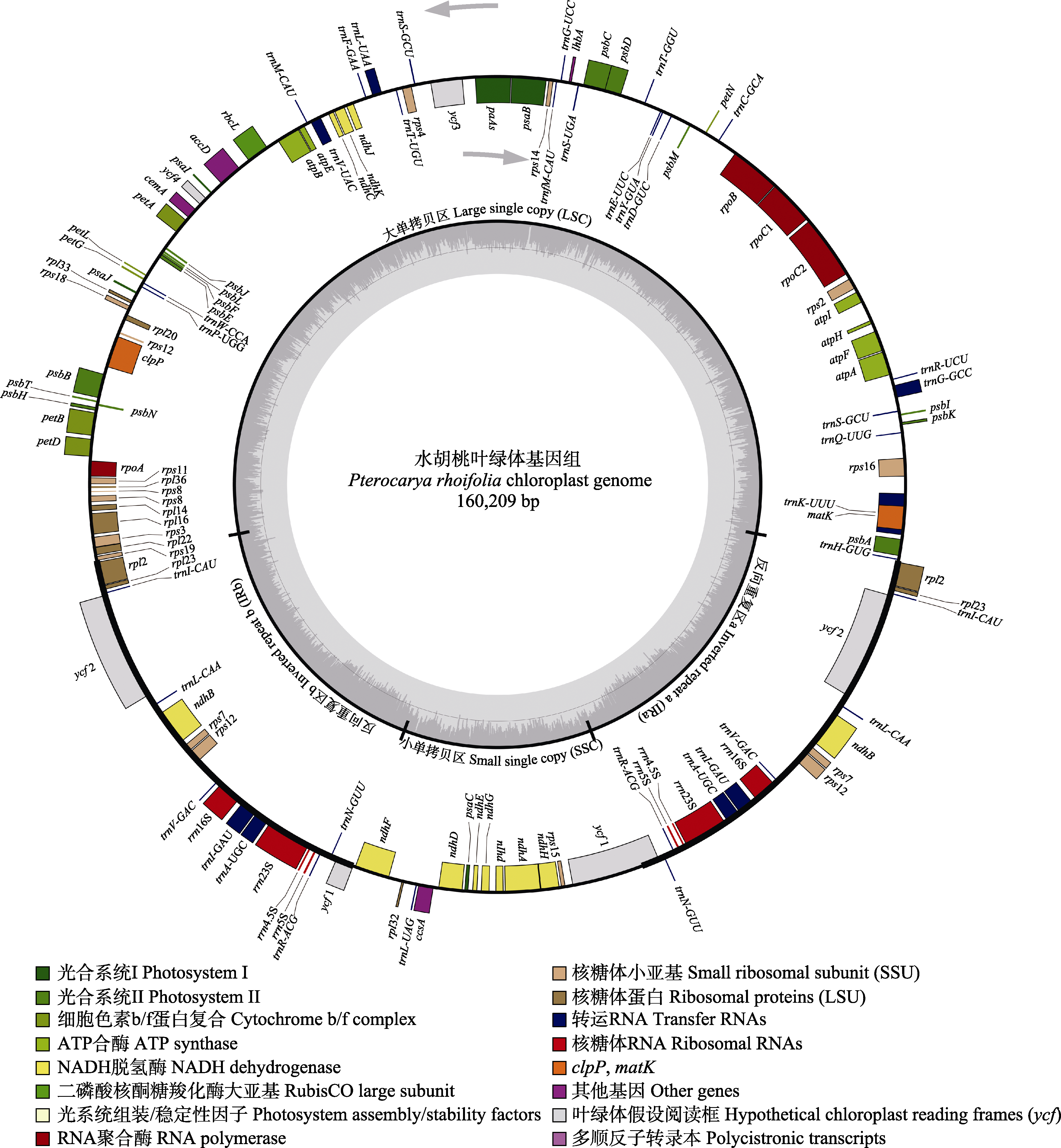
Fig. 1 Genomic map of the Pterocarya rhoifolia chloroplast genome (the chloroplast genome maps of other six individuals are similar). The outer circle shows the gene structure on the plastome. Genes outside the circle are transcribed counterclockwise, while genes inside the circle are transcribed clockwise. Genes are color-coded according to their functional categories.
| 基因组特征 Genome characteristics | 水胡桃 PR_NS | 甘肃枫杨PMM_TS | 甘肃枫杨PMM_MN | 甘肃枫杨PMM_EM | 华西枫杨PMI_TM | 云南枫杨PMD_DQ | 云南枫杨PMD_NJ |
|---|---|---|---|---|---|---|---|
| 序列全长 Genome size (bp) | 160,209 | 160,210 | 160,238 | 160,318 | 160,236 | 160,176 | 160,232 |
| 大单拷贝区长度 Large single copy (LSC) length (bp) | 89,708 | 89,731 | 89,770 | 89,810 | 89,768 | 89,701 | 89,757 |
| 小单拷贝区长度 Small single copy (SSC) length (bp) | 18,459 | 18,451 | 18,412 | 18,446 | 18,412 | 18,443 | 18,443 |
| 反向重复区长度 Inverted repeat (IR) length (bp) | 26,021 | 26,014 | 26,028 | 26,031 | 26,028 | 26,016 | 26,016 |
| GC含量 GC content (%) | 36.20 | 36.20 | 36.20 | 36.10 | 36.20 | 36.20 | 36.20 |
| 大单拷贝区GC含量 GC content of LSC (%) | 33.77 | 33.77 | 33.78 | 33.72 | 33.72 | 33.77 | 33.79 |
| 小单拷贝区GC含量 GC content of SSC (%) | 29.86 | 29.86 | 29.86 | 29.85 | 29.85 | 29.89 | 29.87 |
| 反向重复区GC含量 GC content of IR (%) | 42.57 | 42.57 | 42.56 | 42.57 | 42.57 | 42.54 | 42.55 |
| A碱基占比 A base content (%) | 31.60 | 31.50 | 31.60 | 31.60 | 31.60 | 31.50 | 31.60 |
| T碱基占比 T base content (%) | 32.30 | 32.30 | 32.30 | 32.30 | 32.30 | 32.30 | 32.30 |
| C碱基占比 C base content (%) | 18.40 | 18.40 | 18.40 | 18.40 | 18.40 | 18.40 | 18.40 |
| G碱基占比 G base content (%) | 17.80 | 17.80 | 17.80 | 17.80 | 17.80 | 17.80 | 17.80 |
| 基因总数 No. of total genes | 131 | 131 | 131 | 131 | 131 | 131 | 131 |
| 蛋白质编码基因数 No. of protein coding genes | 86 | 86 | 86 | 86 | 86 | 86 | 86 |
| tRNA基因数 No. of tRNA genes | 37 | 37 | 37 | 37 | 37 | 37 | 37 |
| rRNA基因数 No. of rRNA genes | 8 | 8 | 8 | 8 | 8 | 8 | 8 |
Table 2 Comparison of chloroplast genomic characteristics of seven newly sequenced individuals in this study
| 基因组特征 Genome characteristics | 水胡桃 PR_NS | 甘肃枫杨PMM_TS | 甘肃枫杨PMM_MN | 甘肃枫杨PMM_EM | 华西枫杨PMI_TM | 云南枫杨PMD_DQ | 云南枫杨PMD_NJ |
|---|---|---|---|---|---|---|---|
| 序列全长 Genome size (bp) | 160,209 | 160,210 | 160,238 | 160,318 | 160,236 | 160,176 | 160,232 |
| 大单拷贝区长度 Large single copy (LSC) length (bp) | 89,708 | 89,731 | 89,770 | 89,810 | 89,768 | 89,701 | 89,757 |
| 小单拷贝区长度 Small single copy (SSC) length (bp) | 18,459 | 18,451 | 18,412 | 18,446 | 18,412 | 18,443 | 18,443 |
| 反向重复区长度 Inverted repeat (IR) length (bp) | 26,021 | 26,014 | 26,028 | 26,031 | 26,028 | 26,016 | 26,016 |
| GC含量 GC content (%) | 36.20 | 36.20 | 36.20 | 36.10 | 36.20 | 36.20 | 36.20 |
| 大单拷贝区GC含量 GC content of LSC (%) | 33.77 | 33.77 | 33.78 | 33.72 | 33.72 | 33.77 | 33.79 |
| 小单拷贝区GC含量 GC content of SSC (%) | 29.86 | 29.86 | 29.86 | 29.85 | 29.85 | 29.89 | 29.87 |
| 反向重复区GC含量 GC content of IR (%) | 42.57 | 42.57 | 42.56 | 42.57 | 42.57 | 42.54 | 42.55 |
| A碱基占比 A base content (%) | 31.60 | 31.50 | 31.60 | 31.60 | 31.60 | 31.50 | 31.60 |
| T碱基占比 T base content (%) | 32.30 | 32.30 | 32.30 | 32.30 | 32.30 | 32.30 | 32.30 |
| C碱基占比 C base content (%) | 18.40 | 18.40 | 18.40 | 18.40 | 18.40 | 18.40 | 18.40 |
| G碱基占比 G base content (%) | 17.80 | 17.80 | 17.80 | 17.80 | 17.80 | 17.80 | 17.80 |
| 基因总数 No. of total genes | 131 | 131 | 131 | 131 | 131 | 131 | 131 |
| 蛋白质编码基因数 No. of protein coding genes | 86 | 86 | 86 | 86 | 86 | 86 | 86 |
| tRNA基因数 No. of tRNA genes | 37 | 37 | 37 | 37 | 37 | 37 | 37 |
| rRNA基因数 No. of rRNA genes | 8 | 8 | 8 | 8 | 8 | 8 | 8 |
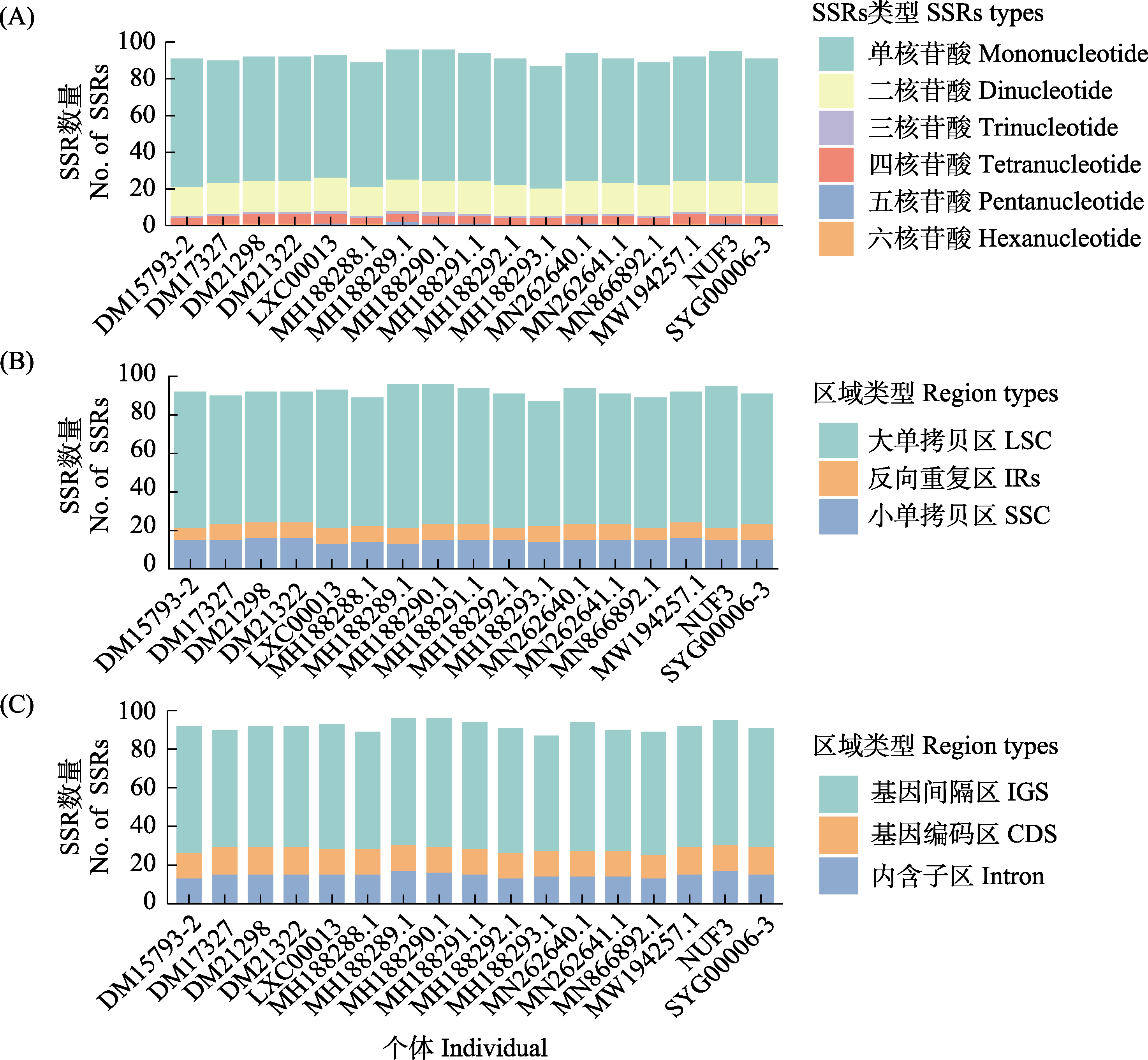
Fig. 2 Simple sequence repeat (SSRs) analysis of the chloroplast genomes of 17 individuals. (A) Number of SSRs in different types; (B) Number of SSRs in the large single copy (LSC), inverted repeats (IRs) and small single copy (SSC); (C) Number of SSRs in the intergenic spacer (IGS), coding sequence (CDS) and intron regions.
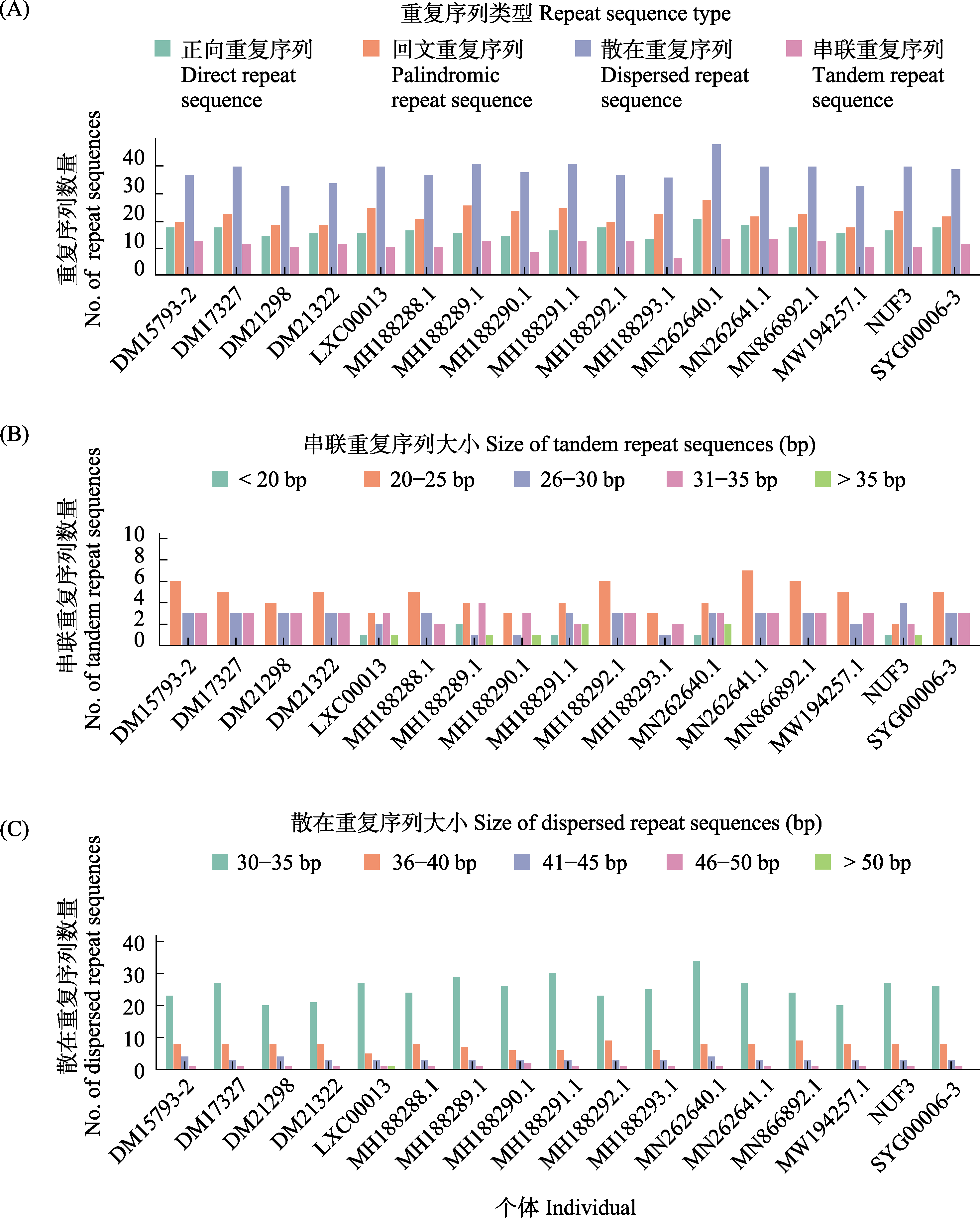
Fig. 3 Analysis of repeat sequences in the chloroplast genomes of 17 individuals, including tandem and dispersed repeats. (A) Distribution and counts of different repeat sequence types; (B) Counts of tandem repeats across different length ranges; (C) Counts of dispersed repeats across different length ranges.
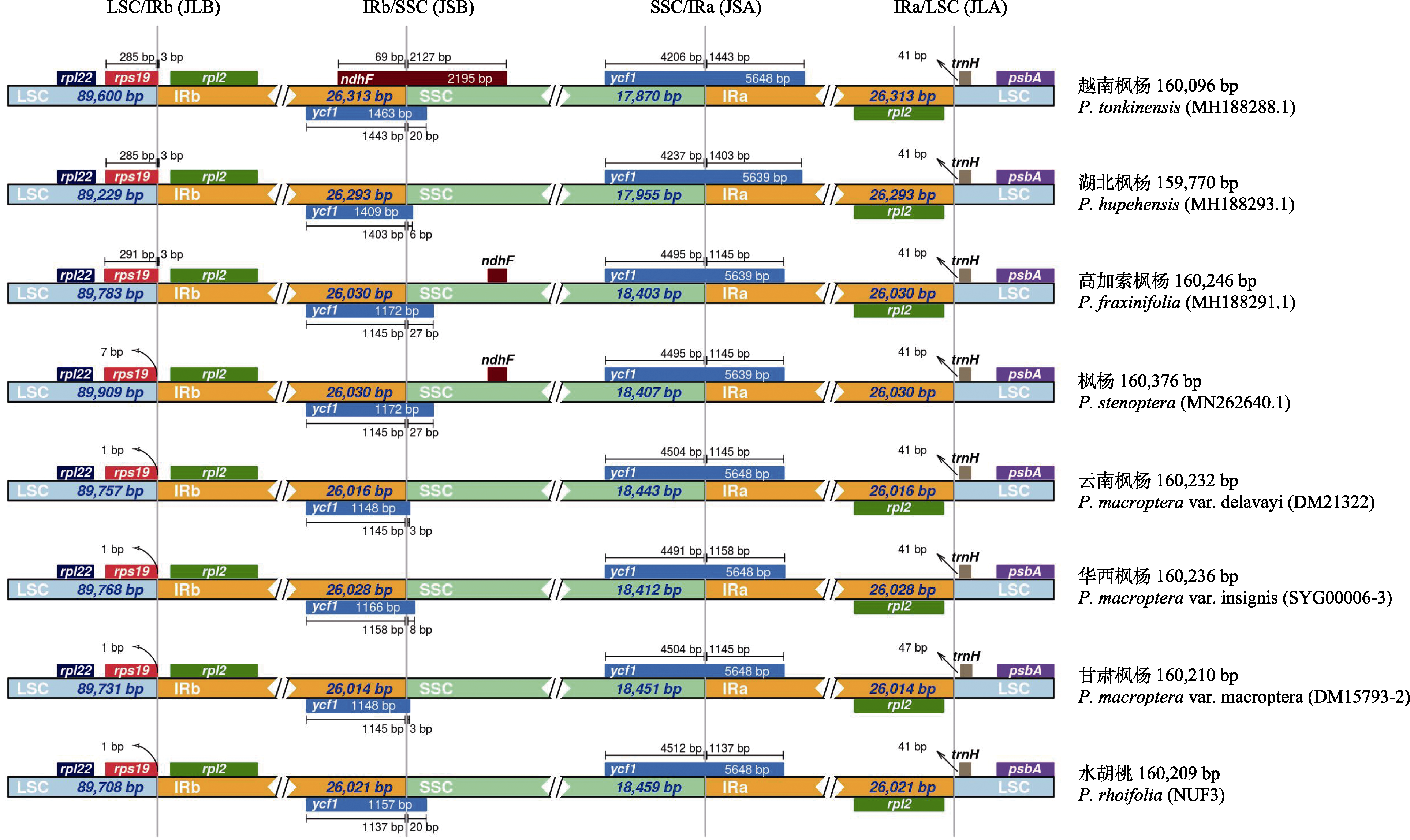
Fig. 4 Analysis of the contraction and expansion of the inverted repeat (IR) region boundaries in the chloroplast genomes of Pterocarya species: IRa/LSC (JLA), LSC/IRb (JLB), IRb/SSC (JSB), SSC/IRa (JSA). LSC, Large single copy; SSC, Small single copy; IRa, Inverted repeat a; IRb, Inverted repeat b.
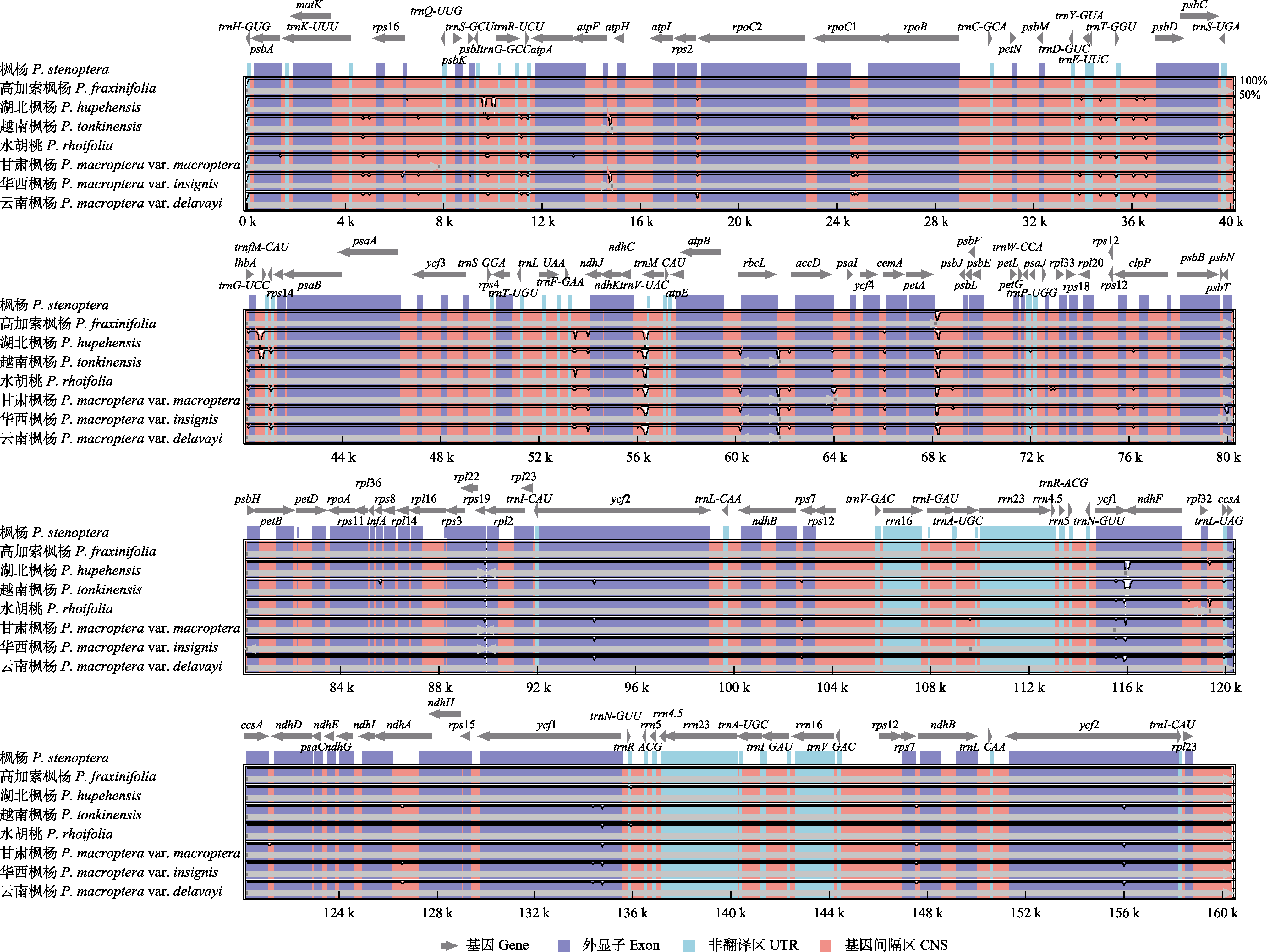
Fig. 5 Visualization of the eight chloroplast genomes of Pterocarya with Pterocarya stenoptera as a reference using mVISTA. The gray arrows above show the position of the reference sequence genes, in either the forward or reverse direction. Alignment similarity percentages are shown on the right side of the figure (vertical axis).
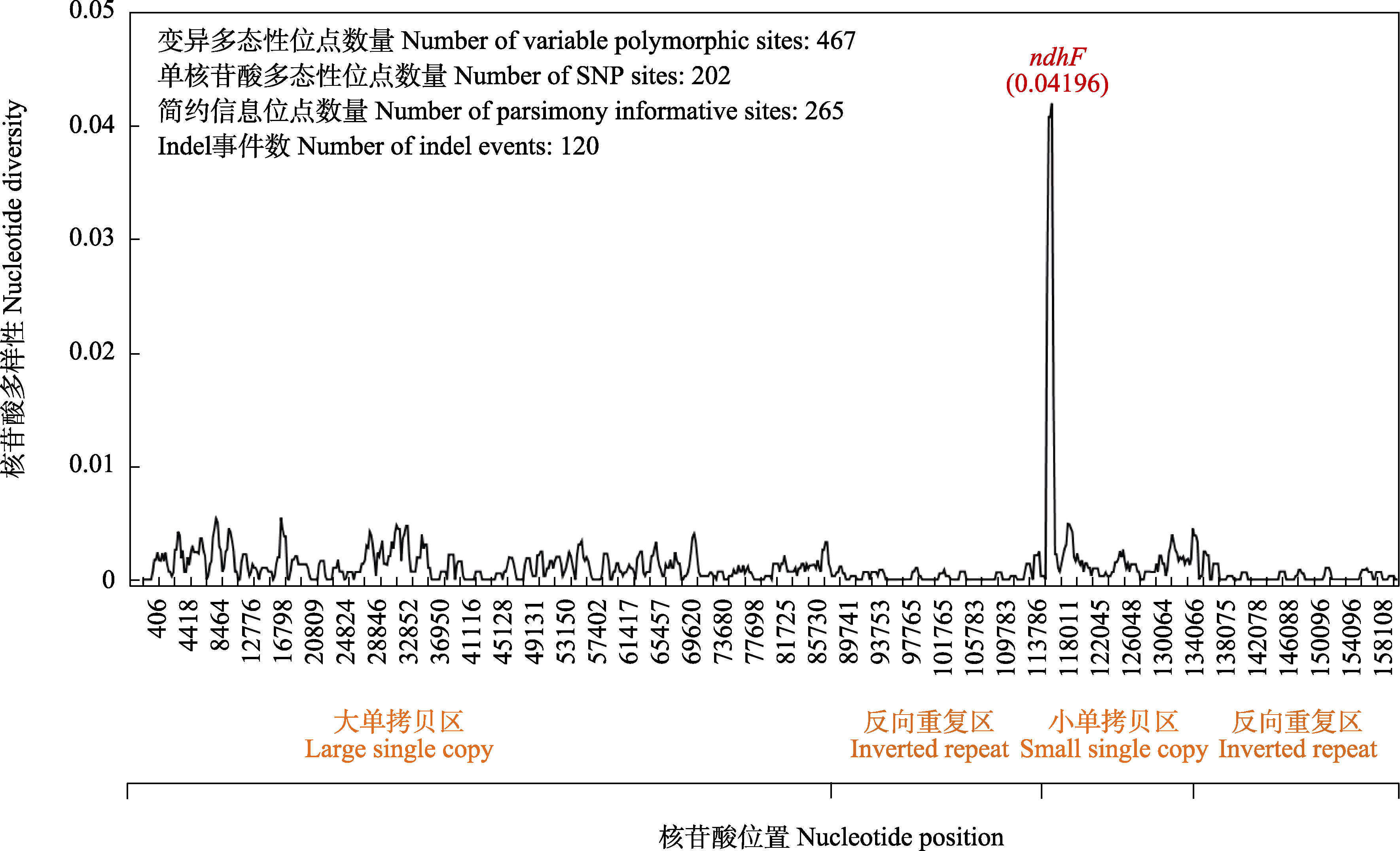
Fig. 6 Sliding window analysis of chloroplast genome of Pterocarya. The X-axis represents the nucleotide positions and the Y-axis represents the value of nucleotide diversity (Pi) per window. SNP, Single nucleotide polymorphism.
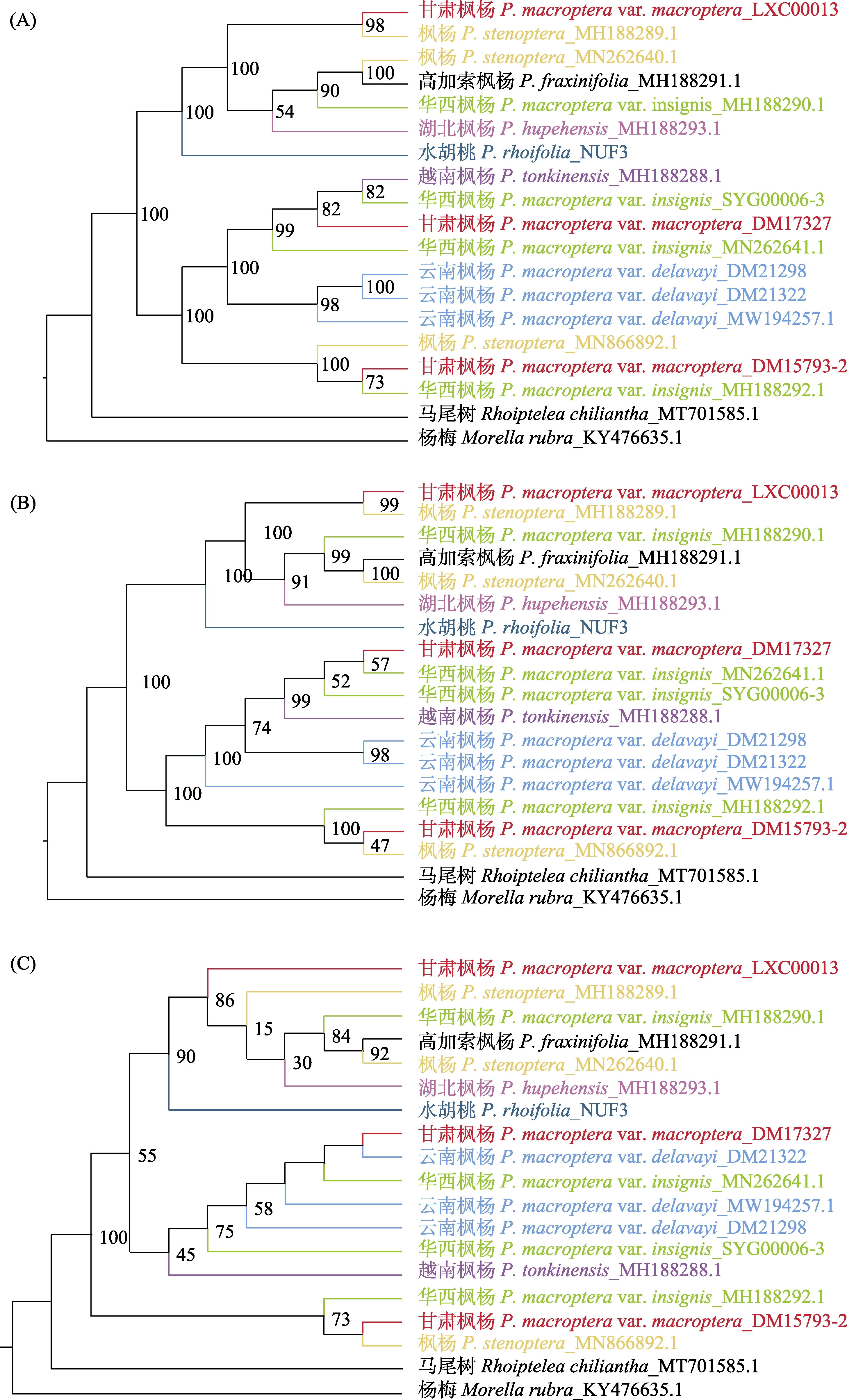
Fig. 7 Maximum likelihood phylogenetic trees of Pterocarya based on different datasets. (A) Based on the complete chloroplast genomes of 17 individuals of Pterocarya; (B) Based on the coding sequences (CDS) of 17 individuals of Pterocarya; (C) Based on the highly variable ndhF region sequences of 17 individuals of Pterocarya. The bootstrap support values (BS) are labeled at branches in the evolutionary tree.
| [1] | Amiryousefi A, Hyvönen J, Poczai P (2018) IRscope: An online program to visualize the junction sites of chloroplast genomes. Bioinformatics, 34, 3030-3031. |
| [2] |
Arredondo A, Mourato B, Nguyen K, Boitard S, Rodríguez W, Mazet O, Chikhi L (2021) Inferring number of populations and changes in connectivity under the n-island model. Heredity, 126, 896-912.
DOI PMID |
| [3] | Avise JC (2000) Phylogeography:The History and Formation of Species. Harvard University Press, Harvard. |
| [4] |
Beier S, Thiel T, Münch T, Scholz U, Mascher M (2017) MISA-web: A web server for microsatellite prediction. Bioinformatics, 33, 2583-2585.
DOI PMID |
| [5] |
Benson G (1999) Tandem repeats finder: A program to analyze DNA sequences. Nucleic Acids Research, 27, 573-580.
DOI PMID |
| [6] |
Cao DL, Zhang XJ, Qu XJ, Fan SJ (2022) Plastid phylogenomics sheds light on divergence time and ecological adaptations of the tribe Persicarieae (Polygonaceae). Frontiers in Plant Science, 13, 1046253.
DOI URL |
| [7] |
Chase MW, Cowan RS, Hollingsworth PM, van den Berg C, Madriñán S, Petersen G, Seberg O, Jørgsensen T, Cameron KM, Carine M, Pedersen N, Hedderson TAJ, Conrad F, Salazar GA, Richardson JE, Hollingsworth ML, Barraclough TG, Kelly L, Wilkinson M (2007) A proposal for a standardised protocol to barcode all land plants. Taxon, 56, 295-299.
DOI URL |
| [8] | Chen SJ (2015) Analysis of causes of failure of introduction and cultivation of Pterocarya stenoptera C. DC in Zhongwei municipality. Ningxia Journal of Agriculture and Forestry Science and Technology, 56(8), 26-27. (in Chinese with English abstract) |
| [陈淑瑾 (2015) 中卫市引种栽培枫杨失败原因分析. 宁夏农林科技, 56(8), 26-27.] | |
| [9] |
Chen T, Xiang TT, Zheng Q, Kuang XK, Kong QB, Zhou JS, Wang H, Zhou LJ, Feng SL, Yuan M, Yang HY, Ding CB (2025) Deciphering the evolutionary imprints of Camellia oleifera Abel.: Delineating its distinct phylogeographic structure and demographic history through microsatellite and plastid fragment. BMC Plant Biology, 25, 526.
DOI PMID |
| [10] | Chen YX, Chen YS, Shi CM, Huang ZB, Zhang Y, Li SK, Li Y, Ye J, Yu C, Li Z, Zhang XQ, Wang J, Yang HM, Fang L, Chen Q (2018) SOAPnuke: A MapReduce acceleration-supported software for integrated quality control and preprocessing of high-throughput sequencing data. GigaScience, 7, gix120. |
| [11] |
Degnan JH, Rosenberg NA (2009) Gene tree discordance, phylogenetic inference and the multispecies coalescent. Trends in Ecology & Evolution, 24, 332-340.
DOI URL |
| [12] |
Dong Q, Zhang YL, Zhong SF, Zhang QY, Yang H, Yang H, Yi XX, Tan FQ, Chen C, Luo PG (2024) Conserved DNA sequence analysis reveals the phylogeography and evolutionary events of Akebia trifoliata in the region across the eastern edge of the Tibetan Plateau and subtropical China. BMC Ecology and Evolution, 24, 52.
DOI |
| [13] |
Dong WP, Gao LM, Xu C, Song Y, Poczai P (2023) Editorial: Rise to the challenges in plastome phylogenomics. Frontiers in Plant Science, 14, 1200302.
DOI URL |
| [14] | Doyle JJ, Doyle JL (1987) A rapid DNA isolation procedure for small quantities of fresh leaf tissue. Phytochemical Bulletin, 19, 11-15. |
| [15] |
Ewing B, Green P (1998) Base-calling of automated sequencer traces using Phred. II. Error probabilities. Genome Research, 8, 186-194.
PMID |
| [16] |
Fazekas AJ, Burgess KS, Kesanakurti PR, Graham SW, Newmaster SG, Husband BC, Percy DM, Hajibabaei M, Barrett SCH (2008) Multiple multilocus DNA barcodes from the plastid genome discriminate plant species equally well. PLoS ONE, 3, e2802.
DOI URL |
| [17] |
Frazer KA, Pachter L, Poliakov A, Rubin EM, Dubchak I (2004) VISTA: Computational tools for comparative genomics. Nucleic Acids Research, 32, W273-W279.
DOI PMID |
| [18] | Fu T, Wang ZL, Lin LJ, Lin L, Li W, Yuan DM (2018) Molecular phylogenetic analysis of wild Cerasus plants in South China. Journal of Nuclear Agricultural Sciences, 32, 2126-2134. (in Chinese with English abstract) |
|
[付涛, 王志龙, 林乐静, 林立, 李文, 袁冬明 (2018) 我国南方野生樱属植物的分子系统发育分析. 核农学报, 32, 2126-2134.]
DOI |
|
| [19] | Geng YF, Hu GX, Wang S, Xu JC (2019) Complete chloroplast genome of the threatened Rhoiptelea chiliantha (Juglandaceae s.l.). Conservation Genetics Resources, 11, 317-319. |
| [20] |
Gou W, Jia SB, Price M, Guo XL, Zhou SD, He XJ (2020) Complete plastid genome sequencing of eight species from Hansenia, Haplosphaera and Sinodielsia (Apiaceae): Comparative analyses and phylogenetic implications. Plants, 9, 1523.
DOI URL |
| [21] | Han YW, Duan D, Ma XF, Jia Y, Liu ZL, Zhao GF, Li ZH (2016) Efficient identification of the forest tree species in Aceraceae using DNA barcodes. Frontiers in Plant Science, 7, 1707. |
| [22] |
Hansen DR, Dastidar SG, Cai ZQ, Penaflor C, Kuehl JV, Boore JL, Jansen RK (2007) Phylogenetic and evolutionary implications of complete chloroplast genome sequences of four early-diverging angiosperms: Buxus (Buxaceae), Chloranthus (Chloranthaceae), Dioscorea (Dioscoreaceae), and Illicium (Schisandraceae). Molecular Phylogenetics and Evolution, 45, 547-563.
DOI PMID |
| [23] |
He L, Qian J, Li XW, Sun ZY, Xu XL, Chen SL (2017) Complete chloroplast genome of medicinal plant Lonicera japonica: Genome rearrangement, intron gain and loss, and implications for phylogenetic studies. Molecules, 22, 249.
DOI URL |
| [24] |
Hipp AL, Manos PS, Hahn M, Avishai M, Bodénès C, Cavender-Bares J, Crowl AA, Deng M, Denk T, Fitz-Gibbon S, Gailing O, González-Elizondo MS, González-Rodríguez A, Grimm GW, Jiang XL, Kremer A, Lesur I, McVay JD, Plomion C, Rodríguez-Correa H, Schulze ED, Simeone MC, Sork VL, Valencia-Avalos S (2020) Genomic landscape of the global oak phylogeny. New Phytologist, 226, 1198-1212.
DOI PMID |
| [25] | Hollingsworth PM, Li DZ, van der Bank M, Twyford AD (2016) Telling plant species apart with DNA: From barcodes to genomes. Philosophical Transactions of the Royal Society B: Biological Sciences, 371, 20150338. |
| [26] |
Hu Y, Wang Q, Zhang XX, Zhou W, Chen XY, Hu XS (2019) Advancing phylogeography with chloroplast DNA markers. Biodiversity Science, 27, 219-234. (in Chinese with English abstract)
DOI |
|
[胡颖, 王茜, 张新新, 周玮, 陈晓阳, 胡新生 (2019) 叶绿体DNA标记在谱系地理学中的应用研究进展. 生物多样性, 27, 219-234.]
DOI |
|
| [27] | Hu YH, Woeste KE, Zhao P (2017a) Completion of the chloroplast genomes of five Chinese Juglans and their contribution to chloroplast phylogeny. Frontiers in Plant Science, 7, 1955. |
| [28] |
Hu YH, Yan J, Feng XJ, Dang M, Woeste KE, Zhao P (2017b) Characterization of the complete chloroplast genome of wheel wingnut (Cyclocarya paliurus), an endemic in China. Conservation Genetics Resources, 9, 273-275.
DOI URL |
| [29] |
Huang H, Shi C, Liu Y, Mao SY, Gao LZ (2014) Thirteen Camellia chloroplast genome sequences determined by high-throughput sequencing: Genome structure and phylogenetic relationships. BMC Evolutionary Biology, 14, 151.
DOI PMID |
| [30] |
Huang Y, Jin XJ, Zhang CY, Li P, Meng HH, Zhang YH (2024) Plastome evolution of Engelhardia facilitates phylogeny of Juglandaceae. BMC Plant Biology, 24, 634.
DOI PMID |
| [31] |
Jiang S, Chen FL, Qin P, Xie H, Peng G, Li YL, Guo XH (2022) The specific DNA barcodes based on chloroplast genes for species identification of Theaceae plants. Physiology and Molecular Biology of Plants, 28, 837-848.
DOI |
| [32] |
Jin JJ, Yu WB, Yang JB, Song Y, DePamphilis CW, Yi TS, Li DZ (2020) GetOrganelle: A fast and versatile toolkit for accurate de novo assembly of organelle genomes. Genome Biology, 21, 241.
DOI |
| [33] |
Katoh K, Standley DM (2013) MAFFT multiple sequence alignment software version 7: Improvements in performance and usability. Molecular Biology and Evolution, 30, 772-780.
DOI PMID |
| [34] | Kozlowski G, Bétrisey S, Song YG (2018) Wingnuts (Pterocarya) and Walnut Family: Relict Trees: Linking the Past, Present and Future. Natural History Museum Fribourg, Fribourg, Switzerland. |
| [35] |
Kress WJ, Erickson DL (2007) A two-locus global DNA barcode for land plants: The coding rbcL gene complements the non-coding trnH-psbA spacer region. PLoS ONE, 2, e508.
DOI PMID |
| [36] | Kuang KR, Zheng SX, Li PQ, Lu AM (1979) Angiospermae, Dicotyledoneae: Myricaceae, Juglandaceae, Betulaceae. In: Flora Reipublicae Popularis Sinicae, Tomus 21 (ed. Delectis Florae Reipublicae Popularis Sinicae Agendae Academiae Sinicae Edita). Science Press, Beijing. (in Chinese) |
| [匡可任, 郑世铨, 李沛琼, 路安民 (1979) 杨梅科、胡桃科、桦木科. 见: 中国植物志(第21卷) (中国科学院中国植物志编辑委员会). 科学出版社, 北京.] | |
| [37] | Kurtz S (2003) The Vmatch large scale sequence analysis software. Computer Program, 4-12. http://www.vmatch.de/. (accessed on 2026-05-20) |
| [38] |
Lee WS, Donrung W, Hung BM, Muhamad Rusly NH, Lee SY, Tanee T (2025) The complete plastid genome of Citrus hystrix DC. 1813 (Rutaceae) and its phylogenetic analysis. Mitochondrial DNA Part B, 10, 94-98.
DOI URL |
| [39] | Li JJ, Liu HX, Mao SZ, Zhao B, Huang SX (2016) Adaptive evolution of the ndhF gene in the genus Rheum (Polygonaceae). Guihaia, 36, 101-106. (in Chinese with English abstract) |
| [李景剑, 刘合霞, 毛世忠, 赵博, 黄仕训 (2016) 大黄属(蓼科)植物ndhF基因的适应性进化. 广西植物, 36, 101-106.] | |
| [40] |
Li PW, Lu YB, Qin XM, Zhang Q (2025) Plastome phylogenomics unravels the evolutionary relationships and biogeographic history of Chloranthaceae. BMC Plant Biology, 25, 543.
DOI |
| [41] | Li TZ, Zhang SY, Wu SD, Liao SY, Tang CQ, Li YL (2024) Chloroplast genome and characteristic analysis of Cyclocarya paliurus (batalin) iljinsk. Journal of Guangxi Academy of Sciences, 40, 407-423. (in Chinese with English abstract) |
| [李廷章, 章双玉, 吴书德, 廖水意, 汤楚乔, 李玉玲 (2024) 青钱柳叶绿体基因组特征分析. 广西科学院学报, 40, 407-423.] | |
| [42] |
Li XP, Xu H, Yu JY, Han Y, Han S, Niu Y, Zhang FQ (2025) Comparative and phylogenetic analysis of Potentilla and Dasiphora (Rosaceae) based on plastid genome. BMC Plant Biology, 25, 176.
DOI |
| [43] |
Liang CL, Wang L, Lei J, Duan BZ, Ma WS, Xiao SM, Qi HJ, Wang Z, Liu YQ, Shen XF, Guo S, Hu HY, Xu J, Chen SL (2019) A comparative analysis of the chloroplast genomes of four Salvia medicinal plants. Engineering, 5, 907-915.
DOI URL |
| [44] | Liu JQ, Fu MJ, Wu HY, Tian B (2021) Phylogeography of the Loess Plateau endemic plant Prinsepia uniflora inferred from the chloroplast DNA. Guihaia, 41, 396-403. (in Chinese with English abstract) |
| [刘家奇, 付孟娇, 吴海洋, 田斌 (2021) 基于叶绿体DNA的黄土高原特有植物蕤核的谱系地理学. 广西植物, 41, 396-403.] | |
| [45] |
Liu KJ, Cui HX, Wu LD, Yang HM, Cao LL, Sun JH, Li B, Dong WP, Wang YH (2025) Chloroplast genome-based genetic variation and genetic diversity of Ulmus pumila (Ulmaceae) germplasm. Industrial Crops and Products, 233, 121452.
DOI URL |
| [46] |
Lohse M, Drechsel O, Kahlau S, Bock R (2013) OrganellarGenomeDRAW—A suite of tools for generating physical maps of plastid and mitochondrial genomes and visualizing expression data sets. Nucleic Acids Research, 41, W575-W581.
DOI URL |
| [47] | Lu ZJ, Wang TR, Zheng SS, Meng HH, Cao JG, Song YG, Kozlowski G (2024) Phylogeography of Pterocarya hupehensis reveals the evolutionary patterns of a Cenozoic relict tree around the Sichuan Basin. Forestry Research, 4, e008. |
| [48] |
Luo J, Chen JH, Guo WL, Yang ZF, Lim KJ, Wang ZJ (2022) Reassessment of Annamocarya sinesis (Carya sinensis) taxonomy through concatenation and coalescence phylogenetic analysis. Plants, 11, 52.
DOI URL |
| [49] |
Ma WB, Ou YF, Dayananda B, Ji HJ, Yu T (2024) The complete chloroplast genome of Rhododendron ambiguum and comparative genomics of related species. Comparative Cytogenetics, 18, 143-159.
DOI URL |
| [50] |
Mo ZH, Lou WR, Chen YQ, Jia XD, Zhai M, Guo ZR, Xuan JP (2020) The chloroplast genome of Carya illinoinensis: Genome structure, adaptive evolution, and phylogenetic analysis. Forests, 11, 207.
DOI URL |
| [51] |
Mu XY, Tong L, Sun M, Zhu YX, Wen J, Lin QW, Liu B (2020) Phylogeny and divergence time estimation of the walnut family (Juglandaceae) based on nuclear RAD-Seq and chloroplast genome data. Molecular Phylogenetics and Evolution, 147, 106802.
DOI URL |
| [52] |
Nguyen LT, Schmidt HA, von Haeseler A, Minh BQ (2015) IQ-TREE: A fast and effective stochastic algorithm for estimating maximum-likelihood phylogenies. Molecular Biology and Evolution, 32, 268-274.
DOI URL |
| [53] |
O’Donnell RP, Wong DCJ, Phillips RD, Peakall R, Linde CC (2025) Discordance down under: Combining phylogenomics and fungal symbioses to detangle difficult nodes in a diverse tribe of Australian terrestrial orchids. Systematic Biology, 74, 434-452.
DOI URL |
| [54] | Pachter L, Batzoglou S, Spitkovsky VI, Beebee Jr WS, Lander ES, Berger B, Kleitman DJ (1999) A dictionary based approach for gene annotation. Proceedings of the Third Annual International Conference on Computational Molecular Biology, 6, 419-430. |
| [55] |
Pei JW, Zhang YM, Nielsen R, Wu YF (2020) Inferring the ancestry of parents and grandparents from genetic data. PLoS Computational Biology, 16, e1008065.
DOI URL |
| [56] |
Petit RJ, Duminil J, Fineschi S, Hampe A, Salvini D, Vendramin GG (2005) Comparative organization of chloroplast, mitochondrial and nuclear diversity in plant populations. Molecular Ecology, 14, 689-701.
PMID |
| [57] | Rieseberg LH, Soltis DE (1991) Phylogenetic consequences of cytoplasmic gene flow in plants. American Journal of Botany, 5, 65-84. |
| [58] | Rozas J, Ferrer-Mata A, Sánchez-DelBarrio JC, Guirao-Rico S, Librado P, Ramos-Onsins SE, Sánchez-Gracia A (2017) DnaSP 6: DNA sequence polymorphism analysis of large data sets. Molecular Biology and Evolution, 34, 3299-3302. |
| [59] |
Ruhlman TA, Jansen RK (2021) Plastid genomes of flowering plants: Essential principles. Methods in Molecular Biology, 2317, 3-47.
DOI PMID |
| [60] |
Shen JS, Li XQ, Chen X, Huang XL, Jin SH (2022) The complete chloroplast genome of Carya cathayensis and phylogenetic analysis. Genes, 13, 369.
DOI URL |
| [61] |
Shen Z, Zhou BF, Liang YY, Wang JS, Yu RX, Shi Y, Ling SJ, Luo WJ, Lin QQ, Niu JW, Qiao LJ, Manos PS, Wang BS (2025) Teasing apart the sources of phylogenetic tree discordance across three genomes in the oak family (Fagaceae). BMC Plant Biology, 25, 919.
DOI PMID |
| [62] |
Shi LC, Chen HM, Jiang M, Wang LQ, Wu X, Huang LF, Liu C (2019) CPGAVAS2, an integrated plastome sequence annotator and analyzer. Nucleic Acids Research, 47, W65-W73.
DOI |
| [63] |
Song YG, Li Y, Meng HH, Fragnière Y, Ge BJ, Sakio H, Yousefzadeh H, Bétrisey S, Kozlowski G (2020) Phylogeny, taxonomy, and biogeography of Pterocarya (Juglandaceae). Plants, 9, 1524.
DOI URL |
| [64] |
Song YG, Walas Ł, Pietras M, Sâm HV, Yousefzadeh H, Ok T, Farzaliyev V, Worobiec G, Worobiec E, Stachowicz-Rybka R, Boratyński A, Boratyńska K, Kozlowski G, Jasińska AK (2021) Past, present and future suitable areas for the relict tree Pterocarya fraxinifolia (Juglandaceae): Integrating fossil records, niche modeling, and phylogeography for conservation. European Journal of Forest Research, 140, 1323-1339.
DOI |
| [65] |
Wang Q, Cheng X, Zhou W, Zhang XX, Hu Y, Chen XY, Hu XS (2019) Assessing the ecological and evolutionary processes underlying cytonuclear interactions. Scientia Sinica Vitae, 49, 951-964. (in Chinese with English abstract)
DOI URL |
| [王茜, 程祥, 周玮, 张新新, 胡颖, 陈晓阳, 胡新生 (2019) 细胞核质互作形成的生态与进化过程分析. 中国科学: 生命科学, 49, 951-964.] | |
| [66] |
Wang W, Yang T, Wang HL, Li ZJ, Ni JW, Su S, Xu XQ (2020) Comparative and phylogenetic analyses of the complete chloroplast genomes of six almond species (Prunus spp. L.). Scientific Reports, 10, 10137.
DOI PMID |
| [67] | Wu Q, Zheng PP, Hu YB, Wei FW (2014) Genome-scale analysis of demographic history and adaptive selection. Protein & Cell, 5, 99-112. |
| [68] |
Wu Y, Liu R, Wang WJ, Li DZ, Burgess KS, Yu WB, Wang H (2025) High species discrimination in Pedicularis (Orobanchaceae): Plastid genomes and traditional barcodes equally effective via parsimony-informative sites. Plant Diversity, 47, 920-930.
DOI URL |
| [69] |
Xu J, Song YG, Deng M, Jiang XL, Zheng SS, Li Y (2020) Seed germination schedule and environmental context shaped the population genetic structure of subtropical evergreen oaks on the Yun-Gui Plateau, Southwest China. Heredity, 124, 499-513.
DOI PMID |
| [70] |
Yan H, Zhang JS, Ye JF, Guo CC, Xiang XG (2021) Characterization of the complete chloroplast genome of Pterocarya macroptera var. delavayi (Juglandaceae). Mitochondrial DNA Part B, 6, 1344-1345.
DOI URL |
| [71] |
Yan H, Zhou P, Wang W, Ye JF, Tan SL, Guo CC, Zhang WG, Zhu ZW, Liu YZ, Xiang XG (2024) Biogeographic history of Pterocarya (Juglandaceae) inferred from phylogenomic and fossil data. Journal of Systematics and Evolution, 62, 1165-1176.
DOI URL |
| [72] |
Yan J, Han K, Zeng SY, Zhao P, Woeste K, Li JF, Liu ZL (2017) Characterization of the complete chloroplast genome of Platycarya strobilacea (Juglandaceae). Conservation Genetics Resources, 9, 79-81.
DOI URL |
| [73] |
Yan M, Zhao XQ, Zhou JQ, Huo Y, Ding Y, Yuan ZH (2019) The complete chloroplast genomes of Punica granatum and a comparison with other species in Lythraceae. International Journal of Molecular Sciences, 20, 2886.
DOI URL |
| [74] |
Yan MX, Dong SJ, Gong QY, Xu Q, Ge YQ (2023) Comparative chloroplast genome analysis of four Polygonatum species insights into DNA barcoding, evolution, and phylogeny. Scientific Reports, 13, 16495.
DOI |
| [75] | Yang Y, Forsythe ES, Ding YM, Zhang DY, Bai WN (2023) Genomic analysis of plastid-nuclear interactions and differential evolution rates in coevolved genes across Juglandaceae species. Genome Biology and Evolution, 15, evad145. |
| [76] |
Yang YY, Qu XJ, Zhang R, Stull GW, Yi TS (2021) Plastid phylogenomic analyses of Fagales reveal signatures of conflict and ancient chloroplast capture. Molecular Phylogenetics and Evolution, 163, 107232.
DOI URL |
| [77] |
Zhang CY, Wang FY, Yan HF, Hao G, Hu CM, Ge XJ (2012) Testing DNA barcoding in closely related groups of Lysimachia L. (Myrsinaceae). Molecular Ecology Resources, 12, 98-108.
DOI URL |
| [78] | Zhang J, Zhang HX (2024) Characteristics and evolutionary history of the chloroplast genome of Malus sieversii in Xinjiang. Arid Zone Research, 41, 2110-2119. (in Chinese with English abstract) |
|
[张健, 张宏祥 (2024) 新疆野苹果叶绿体基因组特征及其进化历史. 干旱区研究, 41, 2110-2119.]
DOI |
|
| [79] |
Zhang R, Stull GW, Jin JJ, Wang YH, Guo Y, Yang ZY, Li HT, An KL, Charboneau JLM, Folk RA, Cardoso D, de Queiroz LP, Bruneau A, Soltis PS, Soltis DE, Smith SA, Li DZ, Yi TS (2026) Phylogenetic resolution and conflict in the species-rich flowering plant family Leguminosae. Systematic Biology, 75, 236-258.
DOI URL |
| [80] |
Zhang ZR, Yang X, Li WY, Peng YQ, Gao J (2022) Comparative chloroplast genome analysis of Ficus (Moraceae): Insight into adaptive evolution and mutational hotspot regions. Frontiers in Plant Science, 13, 965335.
DOI URL |
| [81] |
Zhang ZR, Shi WB, Hu SQ, Mou LR, Shi C, Zhu BY, Yang J (2025) Comprehensive chloroplast genome analysis of four Callitriche (Plantaginaceae) species for phylogenetic and conservation insights. Horticulturae, 11, 66.
DOI URL |
| [82] |
Zhao XQ, Yan M, Ding Y, Huo Y, Yuan ZH (2019) Characterization and comparative analysis of the complete chloroplast genome sequence from Prunus avium ‘Summit’. PeerJ, 7, e8210.
DOI URL |
| [83] |
Zhou BF, Yuan S, Crowl AA, Liang YY, Shi Y, Chen XY, An QQ, Kang M, Manos PS, Wang BS (2022) Phylogenomic analyses highlight innovation and introgression in the continental radiations of Fagaceae across the Northern Hemisphere. Nature Communications, 13, 1320.
DOI |
| [84] |
Zhou HJ, Hu YH, Ebrahimi A, Liu PL, Woeste K, Zhao P, Zhang SX (2021) Whole genome based insights into the phylogeny and evolution of the Juglandaceae. BMC Ecology and Evolution, 21, 191.
DOI |
| [1] | Tenzin Nyima, Wei Sun, Cong Li, Shuyi Zhang, Zhunan Zhao, Yongqiang Xu, Zhuoma Pubu, Shiqi Luo, Wa Da, Xin Zhou. The chloroplast genome dataset of flowering plants from the Jilong Valley region in Xizang [J]. Biodiv Sci, 2025, 33(9): 25270-. |
| [2] | Huixia Li, Yu Li, Xin Ning, Xiaochen Li, Tianrui Wang, Yigang Song, Xiling Dai, Sisi Zheng, Xin Zhong. Genetic diversity and genetic structure of Gymnospermium kiangnanense based on chloroplast genome [J]. Biodiv Sci, 2025, 33(8): 25149-. |
| [3] | Aiying Wang, Wanjin Liao. Coevolutionary processes: Methods and advances in cophylogenetic analysis [J]. Biodiv Sci, 2025, 33(8): 25112-. |
| [4] | Yunwei Dong, Menghuan Bao, Jiao Cheng, Yiyong Chen, Jianguo Du, Yangchun Gao, Lisha Hu, Xincheng Li, Chunlong Liu, Geng Qin, Jin Sun, Xin Wang, Guang Yang, Chongliang Zhang, Xiong Zhang, Yuyang Zhang, Zhixin Zhang, Aibin Zhan, Qiang He, Jun Sun, Bin Chen, Zhongli Sha, Qiang Lin. Advances of marine biogeography in China: Species distribution model and its applications [J]. Biodiv Sci, 2024, 32(5): 23453-. |
| [5] | Qingduo Li, Dongmei Li. Analysis for the prevalence of global bat-borne Bartonella [J]. Biodiv Sci, 2023, 31(9): 23166-. |
| [6] | Yanqiu Xie, Hui Huang, Chunxiao Wang, Yaqin He, Yixuan Jiang, Zilin Liu, Chuanyuan Deng, Yushan Zheng. Determinants of species-area relationship and species richness of coastal endemic plants in the Fujian islands [J]. Biodiv Sci, 2023, 31(5): 22345-. |
| [7] | De Gao, Yanping Wang. A review of the small-island effect detection methods and method advancement [J]. Biodiv Sci, 2023, 31(12): 23299-. |
| [8] | Yanping Wang, Minchu Zhang, Chengxiu Zhan. A review on the nested distribution pattern (nestedness): Analysis methods, mechanisms and conservation implications [J]. Biodiv Sci, 2023, 31(12): 23314-. |
| [9] | Xiaofan Shang, Jian Zhang, Haojie Gao, Weipeng Ku, Yuke Bi, Xiupeng Li, Enrong Yan. Island area and climate jointly impact seed plant richness patterns across the Zhoushan Archipelago [J]. Biodiv Sci, 2023, 31(12): 23392-. |
| [10] | Honghu Meng, Yigang Song. Biogeographic patterns in Southeast Asia: Retrospectives and perspectives [J]. Biodiv Sci, 2023, 31(12): 23261-. |
| [11] | Min Kang. Wallace’s anthropological thought and its contemporary value [J]. Biodiv Sci, 2023, 31(12): 23304-. |
| [12] | Yajun Sun. Why do we believe in Darwin’s theory of evolution—On the 25 folds of aesthetic parsimony of On the Origin of Species [J]. Biodiv Sci, 2022, 30(9): 22243-. |
| [13] | Weinuo Liang, Liang Hu. Geographical distribution of freshwater and estuarial fish archaeological remains since the Neolithic Age in China and its biogeographical implications [J]. Biodiv Sci, 2022, 30(8): 21471-. |
| [14] | Fei Fu, Huiyu Wei, Yuteng Chang, Beixin Wang, Kai Chen. Elevational patterns of life history and ecological trait diversity of aquatic insects in the middle of the Lancang River: The effects of climate and land use variables [J]. Biodiv Sci, 2022, 30(5): 21332-. |
| [15] | Qi Zhao, Jibao Jiang, Zenglu Zhang, Qing Jin, Jiali Li, Jiangping Qiu. Species composition and phylogenetic analysis of earthworms on Hainan Island [J]. Biodiv Sci, 2022, 30(12): 22224-. |
| Viewed | ||||||
|
Full text |
|
|||||
|
Abstract |
|
|||||
Copyright © 2026 Biodiversity Science
Editorial Office of Biodiversity Science, 20 Nanxincun, Xiangshan, Beijing 100093, China
Tel: 010-62836137, 62836665 E-mail: biodiversity@ibcas.ac.cn

