

Biodiv Sci ›› 2026, Vol. 34 ›› Issue (4): 25218. DOI: 10.17520/biods.2025218 cstr: 32101.14.biods.2025218
• Original Papers: Animal Diversity • Next Articles
Zitong Bai1,2( ), Cheng Wang1,2,*()(
 ), Zhiyong Qi3()
Received:2025-06-10
Accepted:2025-08-29
Online:2026-04-20
Published:2026-05-28
Contact:
*E-mail: wch8361@163.com
Supported by:Zitong Bai, Cheng Wang, Zhiyong Qi. Biophony responses to different vegetation structure in urban central parks of Beijing[J]. Biodiv Sci, 2026, 34(4): 25218.
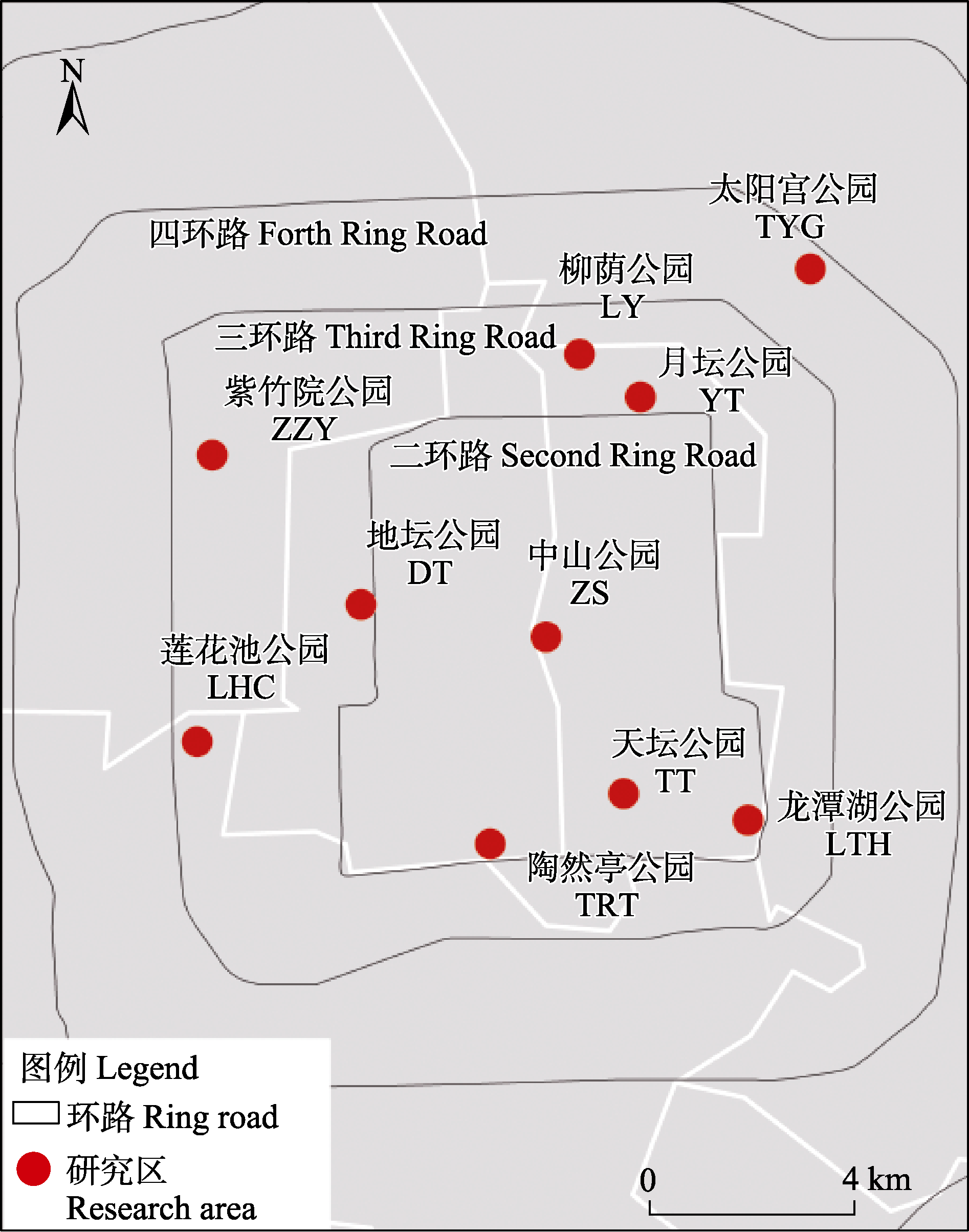
Fig. 1 Map of the research area and sampling point distribution. TT, Temple of Heaven Park; TRT, Taoranting Park; ZZY, Zizhuyuan Park; LHC, Lianhuachi Park; LTH, Longtanhu Park; ZS, Zhongshan Park; LY, Liuyin Park; TYG, Taiyanggong Park; DT, Ditan Park; YT, Yuetan Park.
| 生物声指标 Biophony indices | 含义 Explanations | |
|---|---|---|
| 平均功率谱密度 Power spectral density (PSD) | PSD2-4 | 用于表征频率2-4 kHz中声学群落的能量(Watts/kHz), 多集中分布着低频鸟鸣声(Joo et al., |
| PSD4-6 | 用于表征频率4-6 kHz中声学群落的能量(Watts/kHz), 主要分布着中频的鸟鸣声和部分昆虫声。往往与更丰富的鸣禽谱系或活跃的宣告或求偶行为相关 This metric represents the acoustic energy (Watts/kHz) of sound communities within the 4-6 kHz frequency range, which is mainly composed of mid-frequency bird vocalizations along with some insect sounds. It is often associated with a richer assemblage of songbird taxa or heightened levels of territorial or courtship vocal activity | |
| PSD6-10 | 用于表征频率6-10 kHz中声学群落的能量(Watts/kHz), 在夏秋季多集中分布着高频虫鸣声(Joo et al., | |
| 声学指数 Acoustic index (AIS) | 生物声多样性指数 Bioacoustic index (BIO) | 基于soundecology包的bioacoustic_index函数, 计算每个频率(Hz)曲线在最小分贝值(dB)以上的区域, 频率阈值设定在2-11 kHz之间(Boelman et al., |
| 声学复杂度指数 Acoustic complexity index (ACI) | 基于soundecology包中的acoustic_complexity函数, 频率阈值设置在2-11 kHz之间, FFT=1,024, 通过计算声强的变异性来表征声音群落在时间维度的多变性(Pieretti et al., | |
| 声学多样性指数 Acoustic diversity index (ADI) | 基于soundecology包中的acoustic_diversity函数, 通过Shannon指数来计算光谱复杂性(Pekin et al., | |
Table 1 Six soundscape indices and their corresponding biophony explanations
| 生物声指标 Biophony indices | 含义 Explanations | |
|---|---|---|
| 平均功率谱密度 Power spectral density (PSD) | PSD2-4 | 用于表征频率2-4 kHz中声学群落的能量(Watts/kHz), 多集中分布着低频鸟鸣声(Joo et al., |
| PSD4-6 | 用于表征频率4-6 kHz中声学群落的能量(Watts/kHz), 主要分布着中频的鸟鸣声和部分昆虫声。往往与更丰富的鸣禽谱系或活跃的宣告或求偶行为相关 This metric represents the acoustic energy (Watts/kHz) of sound communities within the 4-6 kHz frequency range, which is mainly composed of mid-frequency bird vocalizations along with some insect sounds. It is often associated with a richer assemblage of songbird taxa or heightened levels of territorial or courtship vocal activity | |
| PSD6-10 | 用于表征频率6-10 kHz中声学群落的能量(Watts/kHz), 在夏秋季多集中分布着高频虫鸣声(Joo et al., | |
| 声学指数 Acoustic index (AIS) | 生物声多样性指数 Bioacoustic index (BIO) | 基于soundecology包的bioacoustic_index函数, 计算每个频率(Hz)曲线在最小分贝值(dB)以上的区域, 频率阈值设定在2-11 kHz之间(Boelman et al., |
| 声学复杂度指数 Acoustic complexity index (ACI) | 基于soundecology包中的acoustic_complexity函数, 频率阈值设置在2-11 kHz之间, FFT=1,024, 通过计算声强的变异性来表征声音群落在时间维度的多变性(Pieretti et al., | |
| 声学多样性指数 Acoustic diversity index (ADI) | 基于soundecology包中的acoustic_diversity函数, 通过Shannon指数来计算光谱复杂性(Pekin et al., | |
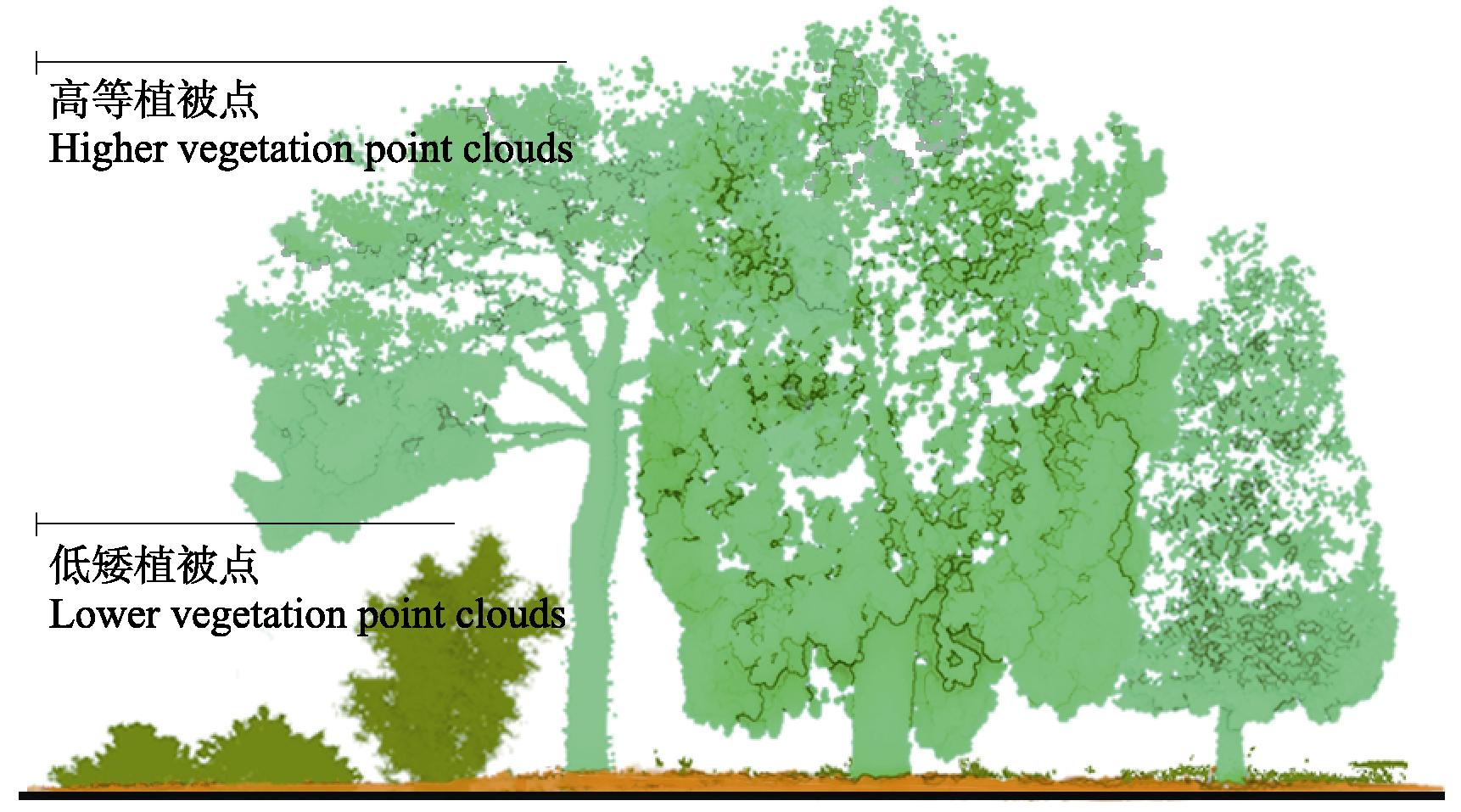
Fig. 2 Illustration of vegetation point cloud semantic segmentation. The light green points represent tall trees, denoted as higher vegetation points, while the dark green points represent the point clouds of shrub and grass layers, classified as lower vegetation points.
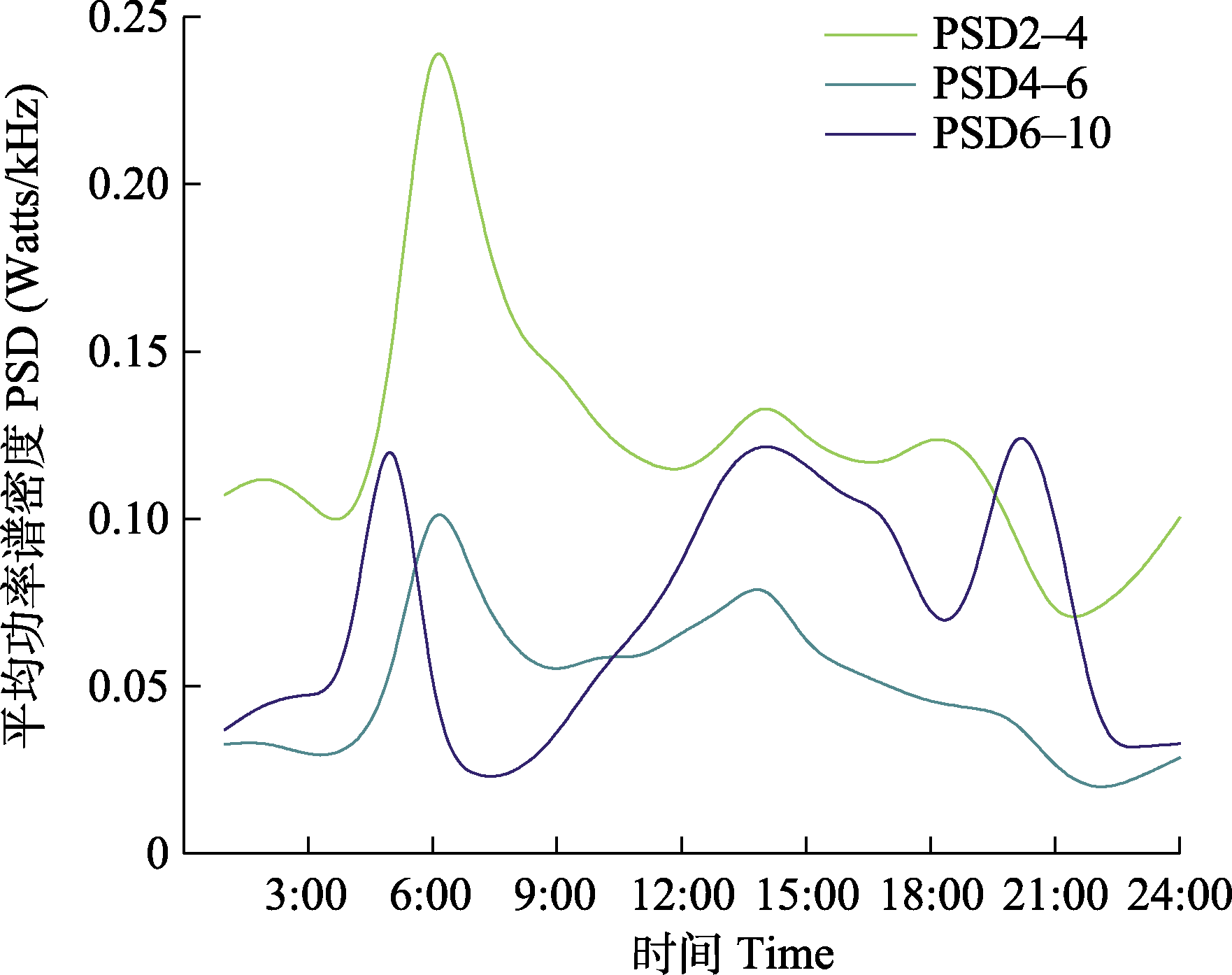
Fig. 3 Diurnal variation of biophony power spectral density (PSD) across different bands
| 主成分 PC | 成分1 Component 1 | 成分2 Component 2 | 成分3 Component 3 | 成分4 Component 4 | 成分5 Component 5 | 累积方差 Cumulative variance (%) |
|---|---|---|---|---|---|---|
| PC1 | H.p80 | H.p70 | H.p90 | H-mean | VCI | 30.67 |
| PC2 | H-cv | LAI | H.p20 | H.p30 | CRR | 54.38 |
| PC3 | Oligo_LA | Eu_LA | Oligo_volume | DBHm | CC | 66.43 |
| PC4 | Eu_Depth | Eu_volume | CWm | Filled_VR | Empty_VR | 75.93 |
| PC5 | UN_TCH | UN_RI | UND | RI | H.p10 | 82.70 |
Table 2 Key vegetation structural variables corresponding to the first five principal components (PC)
| 主成分 PC | 成分1 Component 1 | 成分2 Component 2 | 成分3 Component 3 | 成分4 Component 4 | 成分5 Component 5 | 累积方差 Cumulative variance (%) |
|---|---|---|---|---|---|---|
| PC1 | H.p80 | H.p70 | H.p90 | H-mean | VCI | 30.67 |
| PC2 | H-cv | LAI | H.p20 | H.p30 | CRR | 54.38 |
| PC3 | Oligo_LA | Eu_LA | Oligo_volume | DBHm | CC | 66.43 |
| PC4 | Eu_Depth | Eu_volume | CWm | Filled_VR | Empty_VR | 75.93 |
| PC5 | UN_TCH | UN_RI | UND | RI | H.p10 | 82.70 |
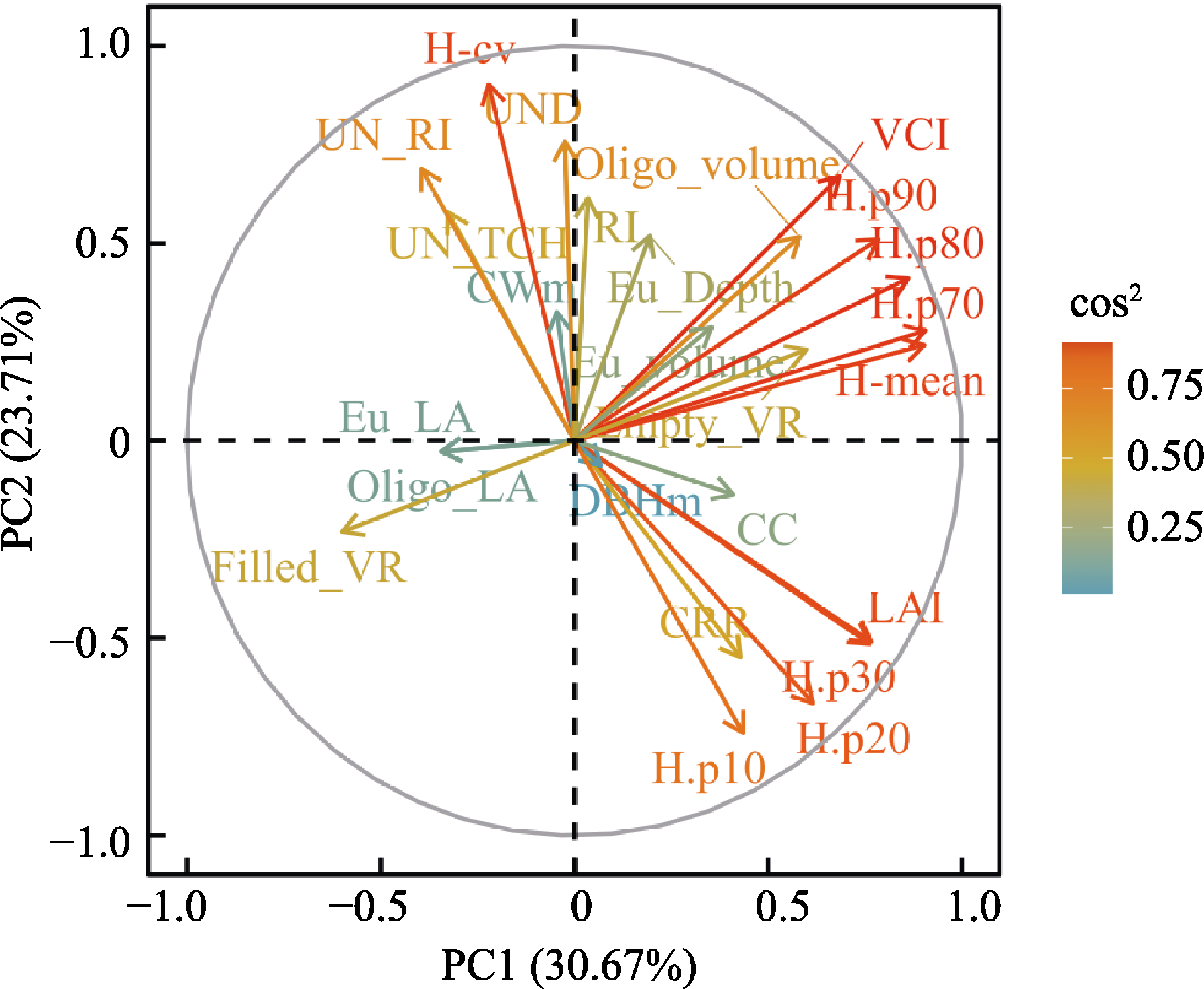
Fig. 4 Contribution plot of principal component analysis variables. Colors indicate the degree of correlation (cos2 values) between 25 vegetation structural variables and the first two principal components, with warmer tones signifying stronger correlations and higher contributions. The length and direction of the arrows reflect each variable’s importance and explanatory power, with those closer to the perimeter of the correlation circle contributing more significantly to the principal component structure. The ecological descriptions of the abbreviations in the figure are detailed in Appendix 2.
| 声景指标Soundscape indices | 决定系数 Coefficient of determination (R2) | 相对均方根误差 Relative root mean square error (rRMSE, %) | 相对平均绝对误差 Relative mean absolute error (rMAE, %) |
|---|---|---|---|
| PSD2-4 | 0.82 | 8.39 | 6.13 |
| PSD4-6 | 0.83 | 10.25 | 7.45 |
| PSD6-10 | 0.88 | 10.69 | 7.76 |
| ACI | 0.69 | 19.25 | 14.10 |
| ADI | 0.77 | 20.37 | 15.72 |
| BIO | 0.78 | 19.74 | 25.93 |
Table 3 Goodness of fit evaluation of XGBoost models
| 声景指标Soundscape indices | 决定系数 Coefficient of determination (R2) | 相对均方根误差 Relative root mean square error (rRMSE, %) | 相对平均绝对误差 Relative mean absolute error (rMAE, %) |
|---|---|---|---|
| PSD2-4 | 0.82 | 8.39 | 6.13 |
| PSD4-6 | 0.83 | 10.25 | 7.45 |
| PSD6-10 | 0.88 | 10.69 | 7.76 |
| ACI | 0.69 | 19.25 | 14.10 |
| ADI | 0.77 | 20.37 | 15.72 |
| BIO | 0.78 | 19.74 | 25.93 |
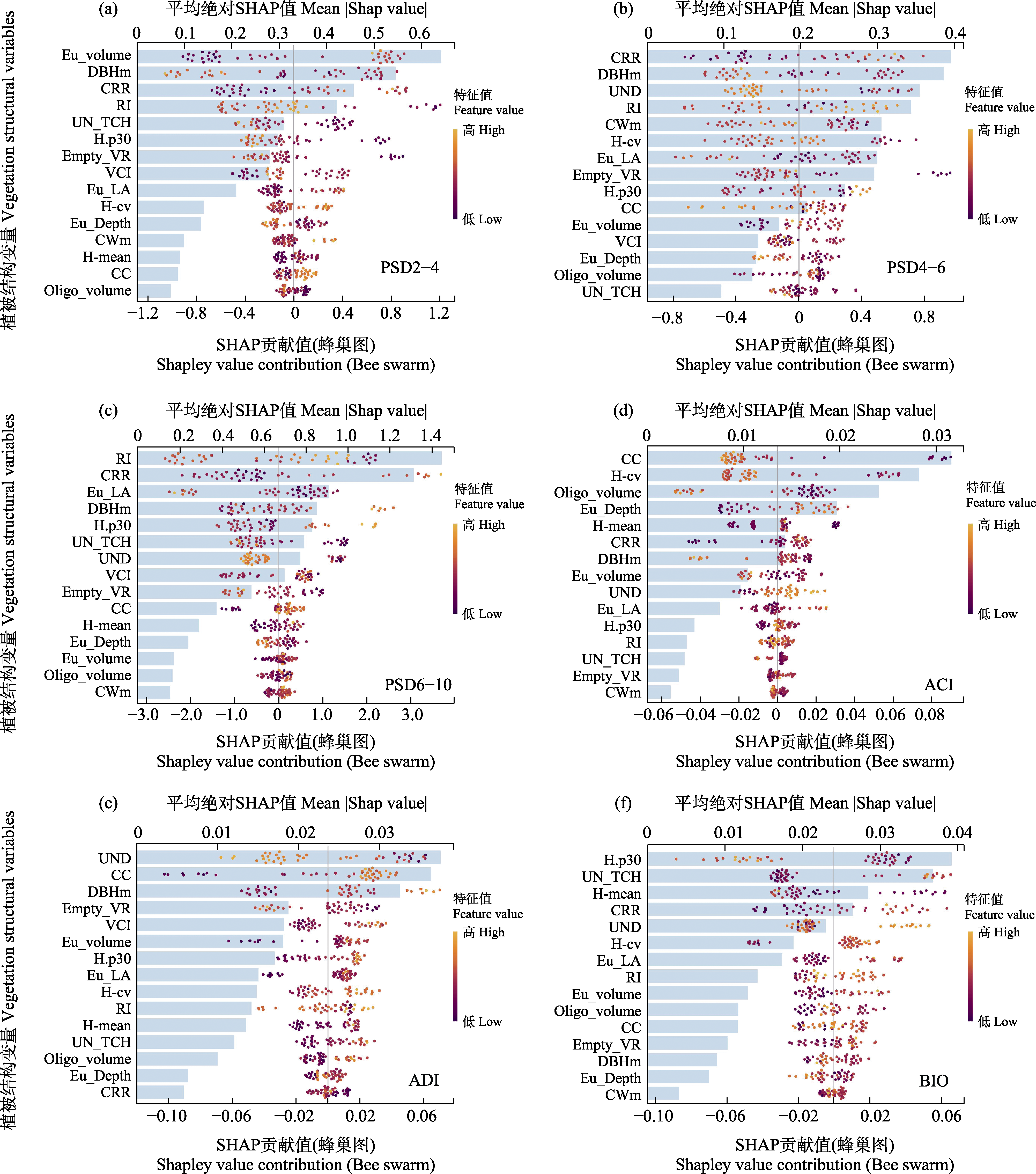
Fig. 5 Importance and summary plots of vegetation structural variables based on SHAP values. The ecological meanings corresponding to the abbreviations of vegetation structural variables in the figure are detailed in Appendix 2. The ecological descriptions of the abbreviations of soundscape indices are detailed in Table 1.
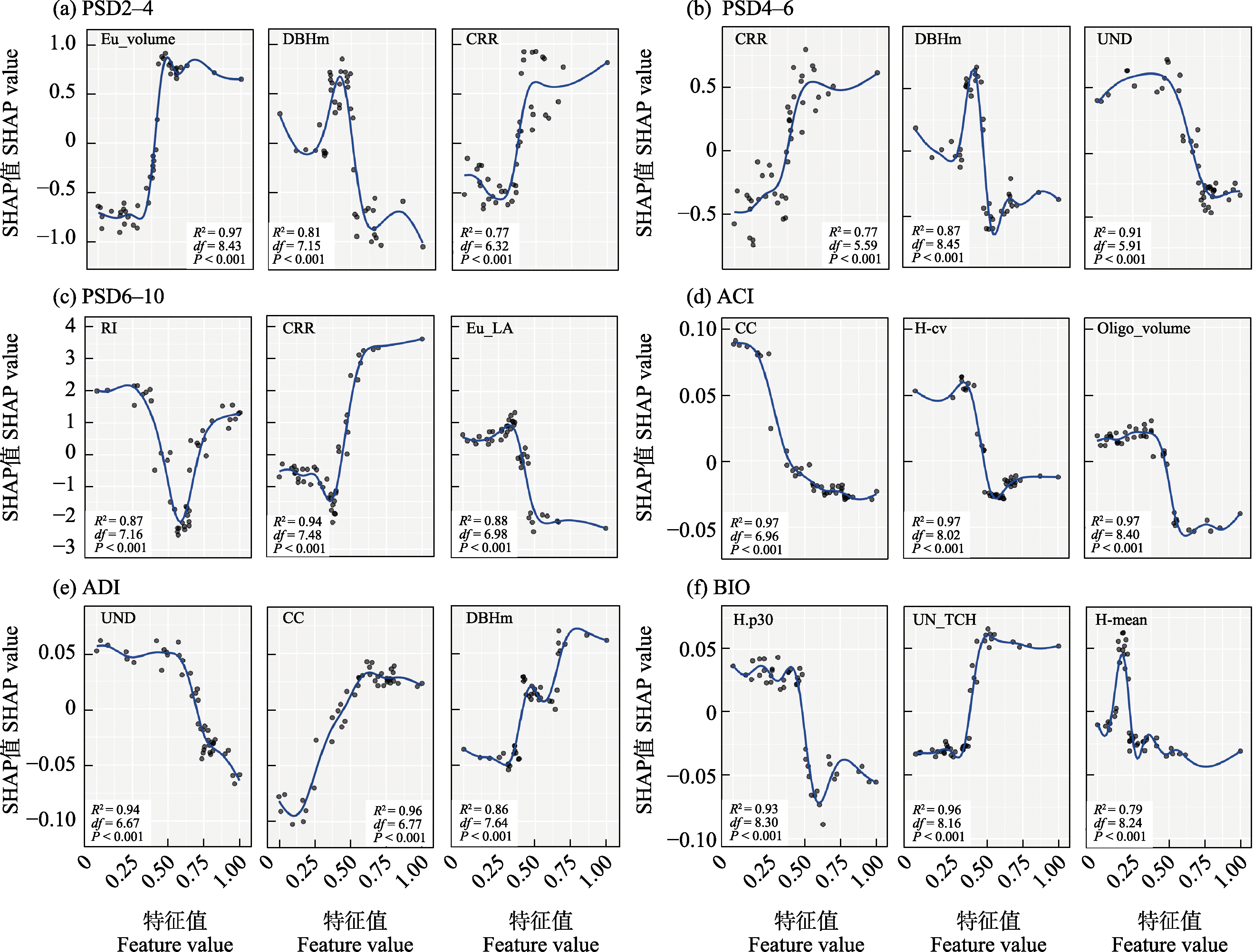
Fig. 6 SHAP dependence plots showing nonlinear responses of key vegetation structural variables on biophony indices. The ecological meanings corresponding to the abbreviations of vegetation structural variables in the figure are detailed in Appendix 2.
| [1] |
Aylor D (1972) Noise reduction by vegetation and ground. The Journal of the Acoustical Society of America, 51, 197-205.
DOI URL |
| [2] | Bai ZT, Meng LY, Qi ZY, Jiang SS, Jin JL, Wang C (2026) Inter-annual and campaign-based diel dynamics of spring bird vocal activity in a central urban park. Urban Forestry & Urban Greening, 120, 129391. |
| [3] | Bai ZT, Qi ZY, Wang C, Hao ZZ, Guo QH (2025) Elucidating the influence of vegetation spatial characteristics on bio-anthrophonic soundscapes in urban parks using LiDAR data. Urban Forestry & Urban Greening, 114, 129131. |
| [4] | Bai ZT, Wang C, Zhao YL, Hao ZZ, Sun ZK (2021) Characteristics and temporal variation of spring anthrophony in urban parks in Beijing. Chinese Landscape Architecture, 37(4), 99-104.(in Chinese with English abstract) |
| [白梓彤, 王成, 赵伊琳, 郝泽周, 孙振凯 (2021) 北京城市公园春季人工声景构成及其变化. 中国园林, 37(4), 99-104.] | |
| [5] |
Bai ZT, Wang C, Zhao YL, Sun ZK, Yin LQ (2023) Soundscape characteristics of urban park in winter in Beijing. Journal of Applied Acoustics, 42, 333-339.(in Chinese with English abstract)
DOI URL |
| [白梓彤, 王成, 赵伊琳, 孙振凯, 殷鲁秦 (2023) 北京城市公园冬季声景特征. 应用声学, 42, 333-339.] | |
| [6] |
Beason RD, Riesch R, Koricheva J (2023) Investigating the effects of tree species diversity and relative density on bird species richness with acoustic indices. Ecological Indicators, 154, 110652.
DOI URL |
| [7] | Bennet-Clark HC (1998) How cicadas make their noise. Scientific American, 278, 58-61. |
| [8] |
Bian Q, Wang C, Hao ZZ (2021) Application of ecoacoustic monitoring in the field of biodiversity science. Chinese Journal of Applied Ecology, 32, 1119-1128.(in Chinese with English abstract)
DOI |
|
[边琦, 王成, 郝泽周 (2021) 生物声音监测研究在生物多样性领域的应用. 应用生态学报, 32, 1119-1128.]
DOI |
|
| [9] | Bian Q, Wang C, Sun ZK, Yin LQ, Jiang SS, Cheng H, Zhao YL (2022) Research on spatiotemporal variation characteristics of soundscapes in a newly established suburban forest park. Urban Forestry & Urban Greening, 78, 127766. |
| [10] |
Boelman NT, Asner GP, Hart PJ, Martin RE (2007) Multi-trophic invasion resistance in Hawaii: Bioacoustics, field surveys, and airborne remote sensing. Ecological Applications, 17, 2137-2144.
DOI PMID |
| [11] | Chen TQ, Guestrin C (2016) XGBoost: A scalable tree boosting system.In: Proceedings of the 22nd ACM SIGKDD International Conference on Knowledge Discovery and Data Mining, pp. 785-794. ACM, New York. |
| [12] |
Chen YF, Luo YH, Mammides C, Cao KF, Zhu SD, Goodale E (2021) The relationship between acoustic indices, elevation, and vegetation, in a forest plot network of Southern China. Ecological Indicators, 129, 107942.
DOI URL |
| [13] |
Daryaei A, Trailovic Z, Sohrabi H, Atzberger C, Hochbichler E, Immitzer M (2025) Optimal integration of forest inventory data and aerial image-based canopy height models for forest stand management. Forest Ecosystems, 13, 100299.
DOI URL |
| [14] |
Davison CW, Assmann JJ, Normand S, Rahbek C, Morueta Holme N (2023) Vegetation structure from LiDAR explains the local richness of birds across Denmark. Journal of Animal Ecology, 92, 1332-1344.
DOI PMID |
| [15] |
Do Nascimento LA, Campos-Cerqueira M, Beard KH (2020) Acoustic metrics predict habitat type and vegetation structure in the Amazon. Ecological Indicators, 117, 106679.
DOI URL |
| [16] |
Dröge S, Martin DA, Andriafanomezantsoa R, Burivalova Z, Fulgence TR, Osen K, Rakotomalala E, Schwab D, Wurz A, Richter T, Kreft H (2021) Listening to a changing landscape: Acoustic indices reflect bird species richness and plot-scale vegetation structure across different land-use types in north-eastern Madagascar. Ecological Indicators, 120, 106929.
DOI URL |
| [17] |
Fairbairn AJ, Meyer ST, Mühlbauer M, Jung K, Apfelbeck B, Berthon K, Frank A, Guthmann L, Jokisch J, Kerler K, Müller N, Obster C, Unterbichler M, Webersberger J, Matejka J, Depner P, Weisser WW (2024) Urban biodiversity is affected by human-designed features of public squares. Nature Cities, 1, 706-715.
DOI |
| [18] |
Fang CF, Ling DL (2003) Investigation of the noise reduction provided by tree belts. Landscape and Urban Planning, 63, 187-195.
DOI URL |
| [19] | Farina A, Gage SH (2017) Ecoacoustics: The Ecological Role of Sounds. John Wiley & Sons, Hoboken. |
| [20] |
Farina A, Pieretti N (2014) Sonic environment and vegetation structure: A methodological approach for a soundscape analysis of a Mediterranean maqui. Ecological Informatics, 21, 120-132.
DOI URL |
| [21] |
Fuller S, Axel AC, Tucker D, Gage SH (2015) Connecting soundscape to landscape: Which acoustic index best describes landscape configuration? Ecological Indicators, 58, 207-215.
DOI URL |
| [22] | Ghadiri Khanaposhtani M, Gasc A, Francomano D, Villanueva-Rivera LJ, Jung J, Mossman MJ, Pijanowski BC (2019) Effects of highways on bird distribution and soundscape diversity around Aldo Leopold’s shack in Baraboo, Wisconsin, USA. Landscape and Urban Planning, 192, 103666. |
| [23] | Gogala M, Riede K (1995) Time sharing of song activity by cicadas in Temengor Forest Reserve, Hulu Perak, and in Sabah, Malaysia. Malayan Nature Journal, 48, 297-305. |
| [24] |
Guo C, Yan ER, Cornelissen JHC (2022) Size matters for linking traits to ecosystem multifunctionality. Trends in Ecology & Evolution, 37, 803-813.
DOI URL |
| [25] |
Guo QH, Hu TY, Jiang YX, Jin SC, Wang R, Guan HC, Yang QL, Li YM, Wu FF, Zhai QP, Liu J, Su YJ (2018) Advances in remote sensing application for biodiversity research. Biodiversity Science, 26, 789-806.(in Chinese with English abstract)
DOI |
|
[郭庆华, 胡天宇, 姜媛茜, 金时超, 王瑞, 关宏灿, 杨秋丽, 李玉美, 吴芳芳, 翟秋萍, 刘瑾, 苏艳军 (2018) 遥感在生物多样性研究中的应用进展. 生物多样性, 26, 789-806.]
DOI |
|
| [26] |
Hao ZZ, Wang C, Sun ZK, Zhao DX, Sun BQ, Wang HJ, Konijnendijk van den Bosch C(2021) Vegetation structure and temporality influence the dominance, diversity, and composition of forest acoustic communities. Forest Ecology and Management, 482, 118871.
DOI URL |
| [27] |
Hao ZZ, Zhang CY, Li L, Sun B, Luo SX, Liao JY, Wang QF, Wu RC, Xu XH, Lepczyk CA, Pei NC (2024) Can urban forests provide acoustic refuges for birds? Investigating the influence of vegetation structure and anthropogenic noise on bird sound diversity. Journal of Forestry Research, 35, 33.
DOI |
| [28] |
He XL, Deng Y, Dong AR, Lin LX (2022) The relationship between acoustic indices, vegetation, and topographic characteristics is spatially dependent in a tropical forest in southwestern China. Ecological Indicators, 142, 109229.
DOI URL |
| [29] | Joo W, Gage SH, Kasten EP (2011) Analysis and interpretation of variability in soundscapes along an urban-rural gradient. Landscape and Urban Planning, 103, 259-276. |
| [30] | Joo W, Napoletano B, Qi J, Gage SH, Biswas S (2007) Soundscape characteristics of an environment:A new ecological indicator of ecosystem health. In: Wetland and Water Resource Modeling and Assessment (ed. Ji W), pp. 201-211. CRC Press, Boca Raton. |
| [31] |
Kamoske AG, Dahlin KM, Stark SC, Serbin SP (2019) Leaf area density from airborne LiDAR: Comparing sensors and resolutions in a temperate broadleaf forest ecosystem. Forest Ecology and Management, 433, 364-375.
DOI |
| [32] |
Kane VR, McGaughey RJ, Bakker JD, Gersonde RF, Lutz JA, Franklin JF (2010) Comparisons between field- and LiDAR-based measures of stand structural complexity. Canadian Journal of Forest Research, 40, 761-773.
DOI URL |
| [33] |
Lin MQ, Chau CK, Hou HY, Tang SK (2025) Development of an interpretable machine-learning model for capturing nonlinear dynamics of multisensory interactions in public open spaces. Building and Environment, 280, 113072.
DOI URL |
| [34] |
Lundberg SM, Erion G, Chen H, DeGrave A, Prutkin JM, Nair B, Katz R, Himmelfarb J, Bansal N, Lee SI (2020) From local explanations to global understanding with explainable AI for trees. Nature Machine Intelligence, 2, 56-67.
DOI PMID |
| [35] | Lundberg SM, Lee SI (2017) A unified approach to interpreting model predictions. In:Proceedings of the 31st International Conference on Neural Information Processing Systems, pp. 4768-4777. Currant Associates Inc., New York. |
| [36] |
Ma HG, Fan PL (2023) Application, progress, and future perspective of passive acoustic monitoring in terrestrial mammal research. Biodiversity Science, 31, 22374.(in Chinese with English abstract)
DOI |
|
[马海港, 范鹏来 (2023) 被动声学监测技术在陆生哺乳动物研究中的应用、进展和展望. 生物多样性, 31, 22374.]
DOI |
|
| [37] |
Martens MJM, Michelsen A (1981) Absorption of acoustic energy by plant leaves. The Journal of the Acoustical Society of America, 69, 303-306.
DOI URL |
| [38] |
Mitchell SL, Bicknell JE, Edwards DP, Deere NJ, Bernard H, Davies ZG, Struebig MJ (2020) Spatial replication and habitat context matters for assessments of tropical biodiversity using acoustic indices. Ecological Indicators, 119, 106717.
DOI URL |
| [39] |
Ouyang S, Gou MM, Lei PF, Liu Y, Chen L, Deng XW, Zhao ZH, Zeng YL, Hu YT, Peng CH, Xiang WH (2023) Plant functional trait diversity and structural diversity co-underpin ecosystem multifunctionality in subtropical forests. Forest Ecosystems, 10, 100093.
DOI URL |
| [40] |
Pekin BK, Jung J, Villanueva-Rivera LJ, Pijanowski BC, Ahumada JA (2012) Modeling acoustic diversity using soundscape recordings and LiDAR-derived metrics of vertical forest structure in a Neotropical rainforest. Landscape Ecology, 27, 1513-1522.
DOI URL |
| [41] |
Pieretti N, Farina A, Morri D (2011) A new methodology to infer the singing activity of an avian community: The acoustic complexity index (ACI). Ecological Indicators, 11, 868-873.
DOI URL |
| [42] |
Pijanowski BC, Farina A, Gage SH, Dumyahn SL, Krause BL (2011a) What is soundscape ecology? An introduction and overview of an emerging new science. Landscape Ecology, 26, 1213-1232.
DOI URL |
| [43] |
Pijanowski BC, Villanueva-Rivera LJ, Dumyahn SL, Farina A, Krause BL, Napoletano BM, Gage SH, Pieretti N (2011b) Soundscape ecology: The science of sound in the landscape. BioScience, 61, 203-216.
DOI URL |
| [44] |
Priyadarshani N, Castro I, Marsland S (2018) The impact of environmental factors in birdsong acquisition using automated recorders. Ecology and Evolution, 8, 5016-5033.
DOI PMID |
| [45] |
Rodriguez A, Gasc A, Pavoine S, Grandcolas P, Gaucher P, Sueur J (2014) Temporal and spatial variability of animal sound within a neotropical forest. Ecological Informatics, 21, 133-143.
DOI URL |
| [46] |
Roussel JR, Auty D, Coops NC, Tompalski P, Goodbody TRH, Meador AS, Bourdon JF, de Boissieu F, Achim A (2020) LidR: An R package for analysis of airborne laser scanning (ALS) data. Remote Sensing of Environment, 251, 112061.
DOI URL |
| [47] | Sethi SS, Bick A, Ewers RM, Klinck H, Ramesh V, Tuanmu MN, Coomes DA (2023) Limits to the accurate and generalizable use of soundscapes to monitor biodiversity. Nature Ecology & Evolution, 7, 1373-1378. |
| [48] |
Sheppard LW, Mechtley B, Walter JA, Reuman DC (2020) Self-organizing cicada choruses respond to the local sound and light environment. Ecology and Evolution, 10, 4471-4482.
DOI PMID |
| [49] |
Stadtler S, Betancourt C, Roscher R (2022) Explainable machine learning reveals capabilities, redundancy, and limitations of a geospatial air quality benchmark dataset. Machine Learning and Knowledge Extraction, 4, 150-171.
DOI URL |
| [50] |
Sun YF, Wang SZ, Feng JW, Wang TM (2023) Diel and seasonal variability of the forest soundscape in the Northeast China Tiger and Leopard National Park. Biodiversity Science, 31, 22523.(in Chinese with English abstract)
DOI |
|
[孙翊斐, 王士政, 冯佳伟, 王天明 (2023) 东北虎豹国家公园森林声景的昼夜和季节变化. 生物多样性, 31, 22523.]
DOI |
|
| [51] |
Taki H, Inoue T, Tanaka H, Makihara H, Sueyoshi M, Isono M, Okabe K (2010) Responses of community structure, diversity, and abundance of understory plants and insect assemblages to thinning in plantations. Forest Ecology and Management, 259, 607-613.
DOI URL |
| [52] |
Tao SL, Wu FF, Guo QH, Wang YC, Li WK, Xue BL, Hu XY, Li P, Tian D, Li C, Yao H, Li YM, Xu GC, Fang JY (2015) Segmenting tree crowns from terrestrial and mobile LiDAR data by exploring ecological theories. ISPRS Journal of Photogrammetry and Remote Sensing, 110, 66-76.
DOI URL |
| [53] |
Wang M, Li YX, Yuan HJ, Zhou SQ, Wang YK, Adnan Ikram RM, Li JJ (2023) An XGBoost-SHAP approach to quantifying morphological impact on urban flooding susceptibility. Ecological Indicators, 156, 111137.
DOI URL |
| [54] |
Waser PM, Brown CH (1986) Habitat acoustics and primate communication. American Journal of Primatology, 10, 135-154.
DOI PMID |
| [55] |
Welch P (1967) The use of fast Fourier transform for the estimation of power spectra: A method based on time averaging over short, modified periodograms. IEEE Transactions on Audio and Electroacoustics, 15, 70-73.
DOI URL |
| [56] |
Wiley RH, Richards DG (1978) Physical constraints on acoustic communication in the atmosphere: Implications for the evolution of animal vocalizations. Behavioral Ecology and Sociobiology, 3, 69-94.
DOI URL |
| [57] |
Xiao ZS (2024) Application of passive acoustic methods in biodiversity monitoring and research. Biodiversity Science, 32, 24462.(in Chinese with English abstract)
DOI |
|
[肖治术 (2024) 被动声学技术在生物多样性监测与研究中的应用. 生物多样性, 32, 24462.]
DOI |
|
| [58] |
Xiao ZS, Cui JG, Wang DP, Wang ZT, Luo JH, Xie J (2023) Interdisciplinary development trends of contemporary bioacoustics and the opportunities for China. Biodiversity Science, 31, 22423.(in Chinese with English abstract)
DOI |
|
[肖治术, 崔建国, 王代平, 王志陶, 罗金红, 谢捷 (2023) 现代生物声学的学科发展趋势及中国机遇. 生物多样性, 31, 22423.]
DOI |
|
| [59] |
Yang HT, Su YJ, Li BG, Guo QH (2025) Synchronizing 3D LiDAR-based reconstruction of animals and environment for in situ ecosystem characterization. Information Geography, 1, 100019.
DOI URL |
| [60] |
Yang YF, Chen YX, Ye ZW, Song ZQ, Xiong Y (2024) Springtime spatio-temporal distribution of bird diversity in urban parks based on acoustic indices. Global Ecology and Conservation, 53, e02995.
DOI URL |
| [61] | Young AM (1976) Notes on the faunstic complexity of cicadas (Homoptera; Cicadidae) in Northern Costa Rica. Revista de Biología Tropical, 24, 267-279. |
| [62] |
Zhang W, Qi J, Wan P, Wang H, Xie D, Wang X, Yan G (2016) An easy-to-use airborne LiDAR data filtering method based on cloth simulation. Remote Sensing, 8, 501.
DOI URL |
| [63] | Zhao YL, Bai ZT, Wang C, Yin LQ, Sun ZK, Zhang C, Sun RL, Xu S, Bian Q, Sun BQ (2021) Urban parks soundscape and its relationship with vegetation structure: A pilot study. Acta Ecologica Sinica, 41, 8040-8051.(in Chinese with English abstract) |
| [赵伊琳, 白梓彤, 王成, 殷鲁秦, 孙振凯, 张昶, 孙睿霖, 徐诗, 边琦, 孙宝强 (2021) 城市公园春季声景观与植被结构的关系. 生态学报, 41, 8040-8051.] | |
| [64] |
Zhao YL, Sun ZK, Bai ZT, Jin JL, Wang C (2025) How vegetation structure shapes the soundscape: Acoustic community partitioning and its implications for urban forestry management. Forests, 16, 669.
DOI URL |
| [65] |
Zhao Z, Xu ZY, Bellisario K, Zeng RW, Li N, Zhou WY, Pijanowski BC (2019) How well do acoustic indices measure biodiversity? Computational experiments to determine effect of sound unit shape, vocalization intensity, and frequency of vocalization occurrence on performance of acoustic indices. Ecological Indicators, 107, 105588.
DOI URL |
| Viewed | ||||||
|
Full text |
|
|||||
|
Abstract |
|
|||||
Copyright © 2026 Biodiversity Science
Editorial Office of Biodiversity Science, 20 Nanxincun, Xiangshan, Beijing 100093, China
Tel: 010-62836137, 62836665 E-mail: biodiversity@ibcas.ac.cn

