

Biodiv Sci ›› 2025, Vol. 33 ›› Issue (12): 25483. DOI: 10.17520/biods.2025483 cstr: 32101.14.biods.2025483
Special Issue: 数据论文
• Bioinventories • Previous Articles
Zhangjie Huang1,3,#( ), Chi Xiong2,#(), Zhenhao Feng3,#(), Shuai Liao4(), Jun Liu5(), Cheng Du4,*()(
 )
)
Received:2025-12-03
Accepted:2026-01-02
Online:2025-12-20
Published:2026-01-09
About author:#Co-first author
Supported by:Zhangjie Huang, Chi Xiong, Zhenhao Feng, Shuai Liao, Jun Liu, Cheng Du. Annual report on new taxa and nomenclatural changes in Chinese plants for 2024[J]. Biodiv Sci, 2025, 33(12): 25483.
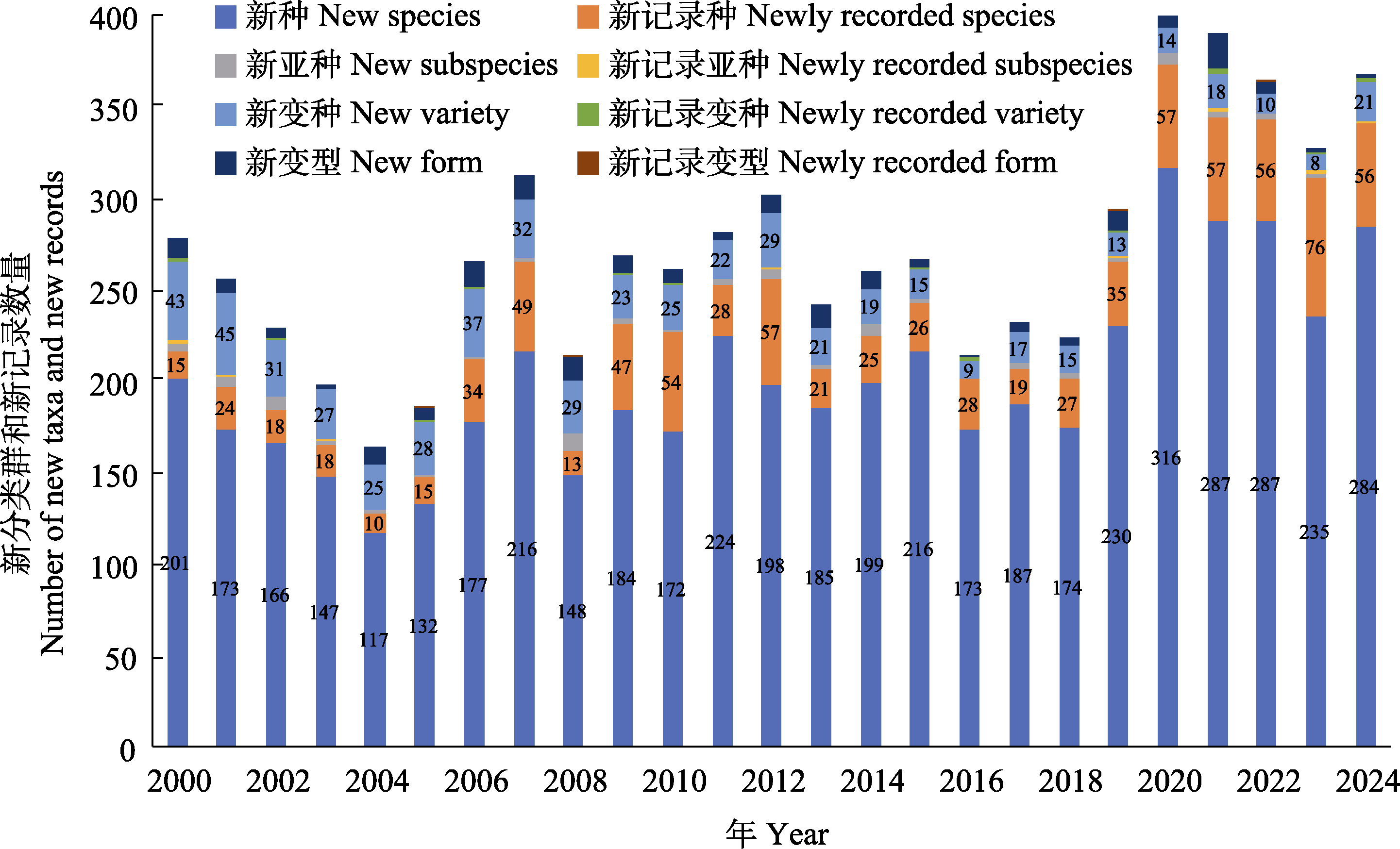
Fig. 1 Annual number of new taxa and new records of Chinese plants since 2000
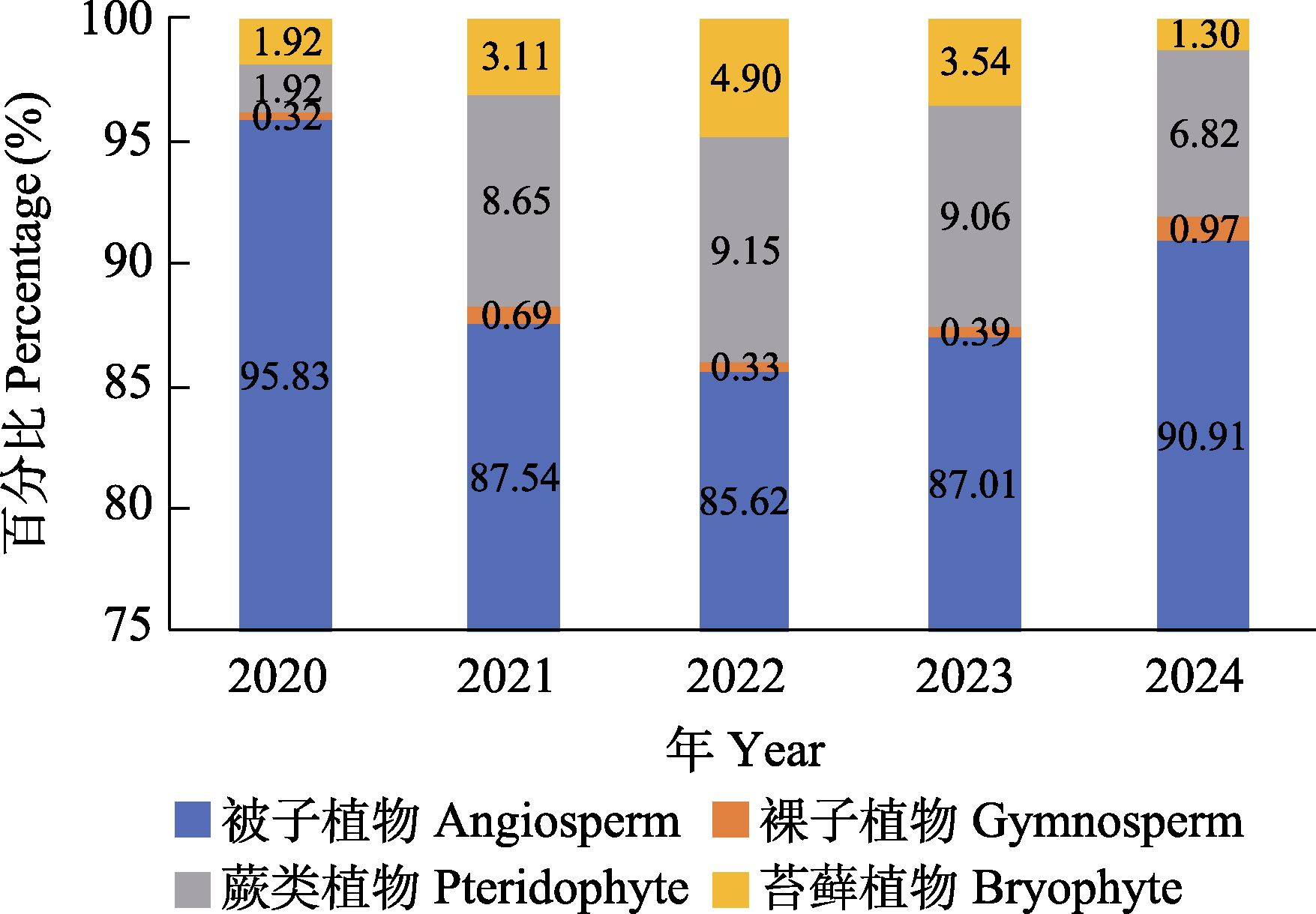
Fig. 2 Proportion of major groups in new taxa of Chinese plants since 2020
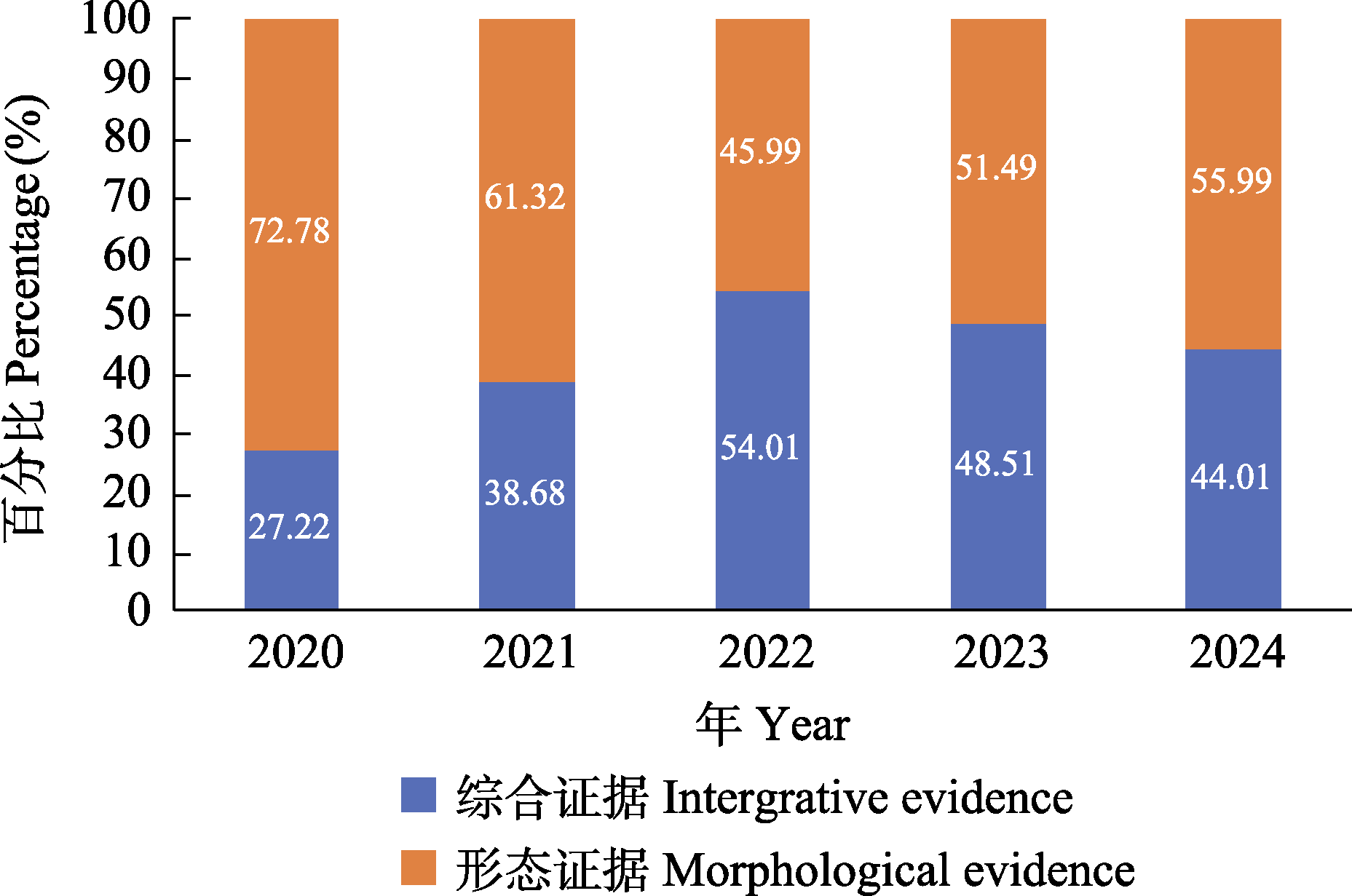
Fig. 3 Proportion of new taxa descriptions based on intergrative evidence of Chinese plants since 2020
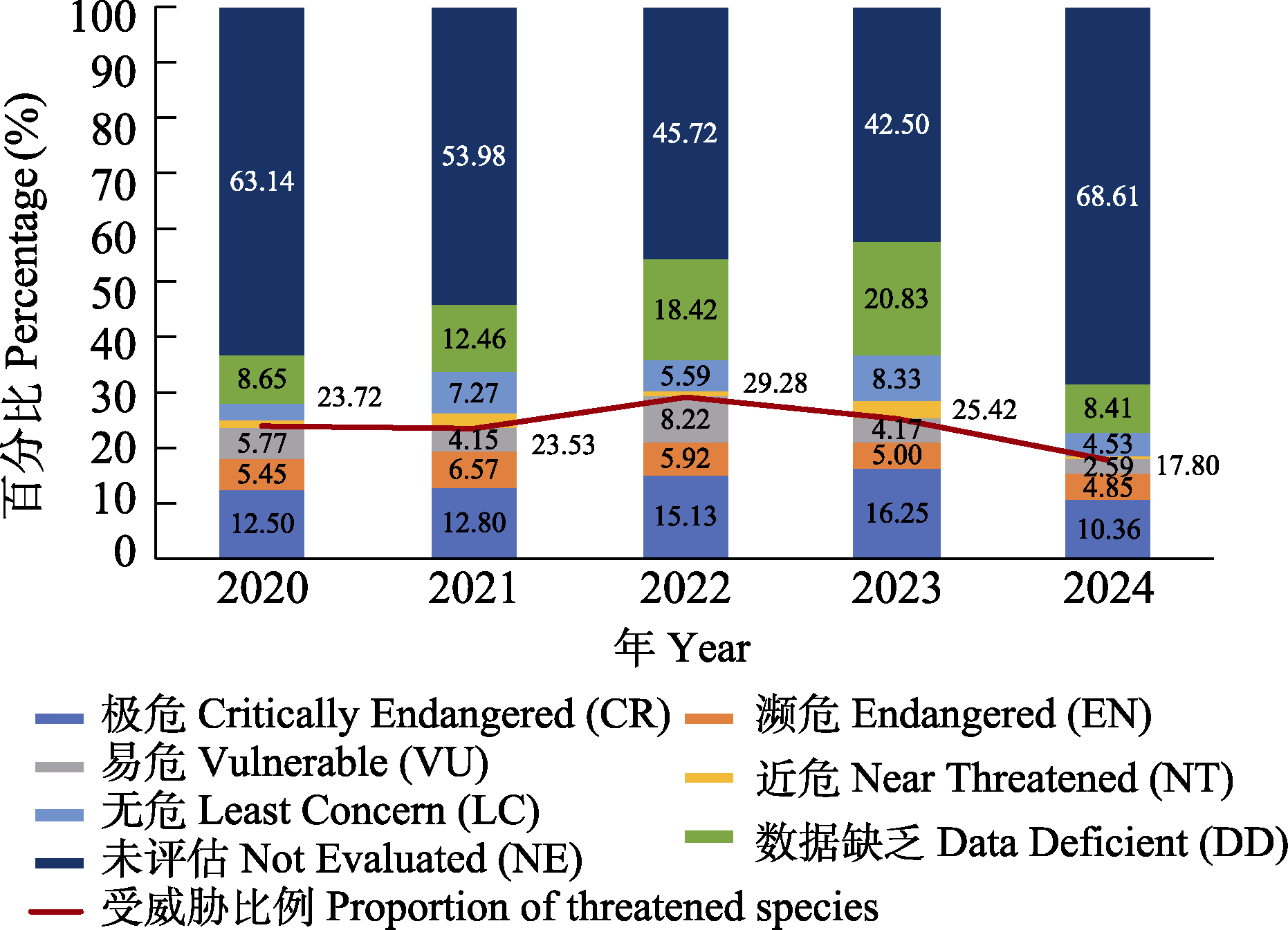
Fig. 4 Threat status assessment of new taxa of Chinese plants since 2020
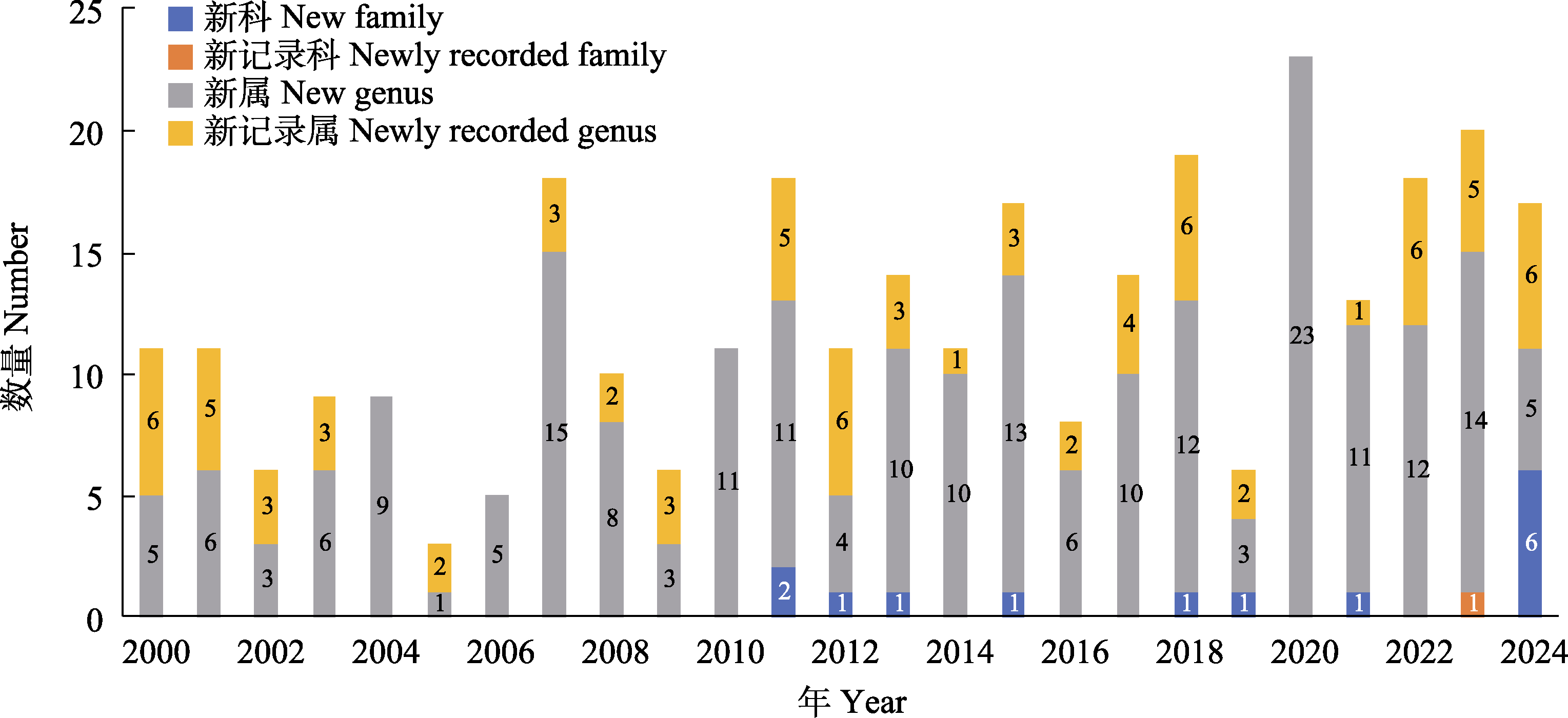
Fig. 5 Annual number of new families and genera and newly recorded families and genera of Chinese plants since 2000
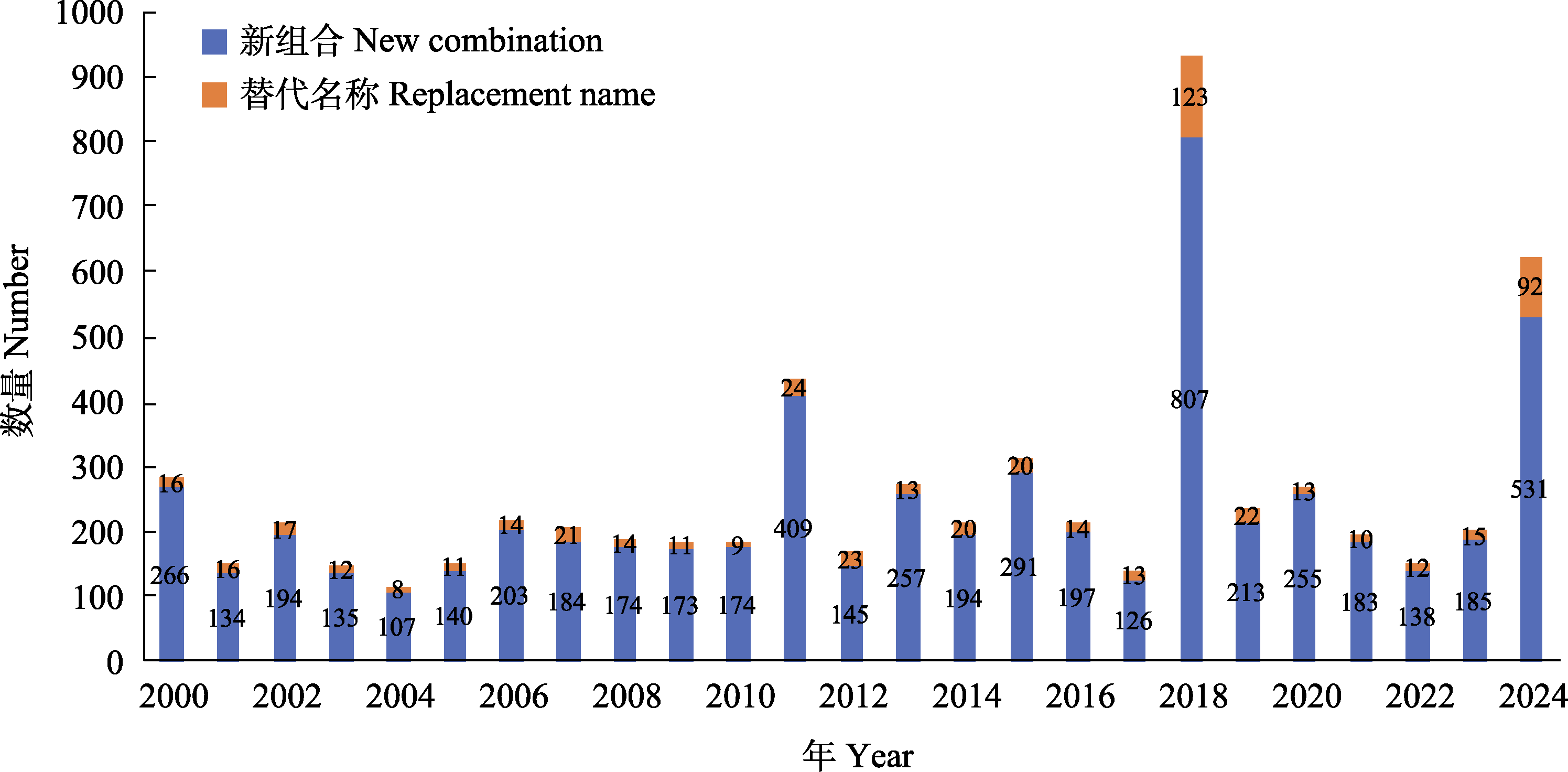
Fig. 6 Annual number of new combinations and replacement names of Chinese plants since 2000
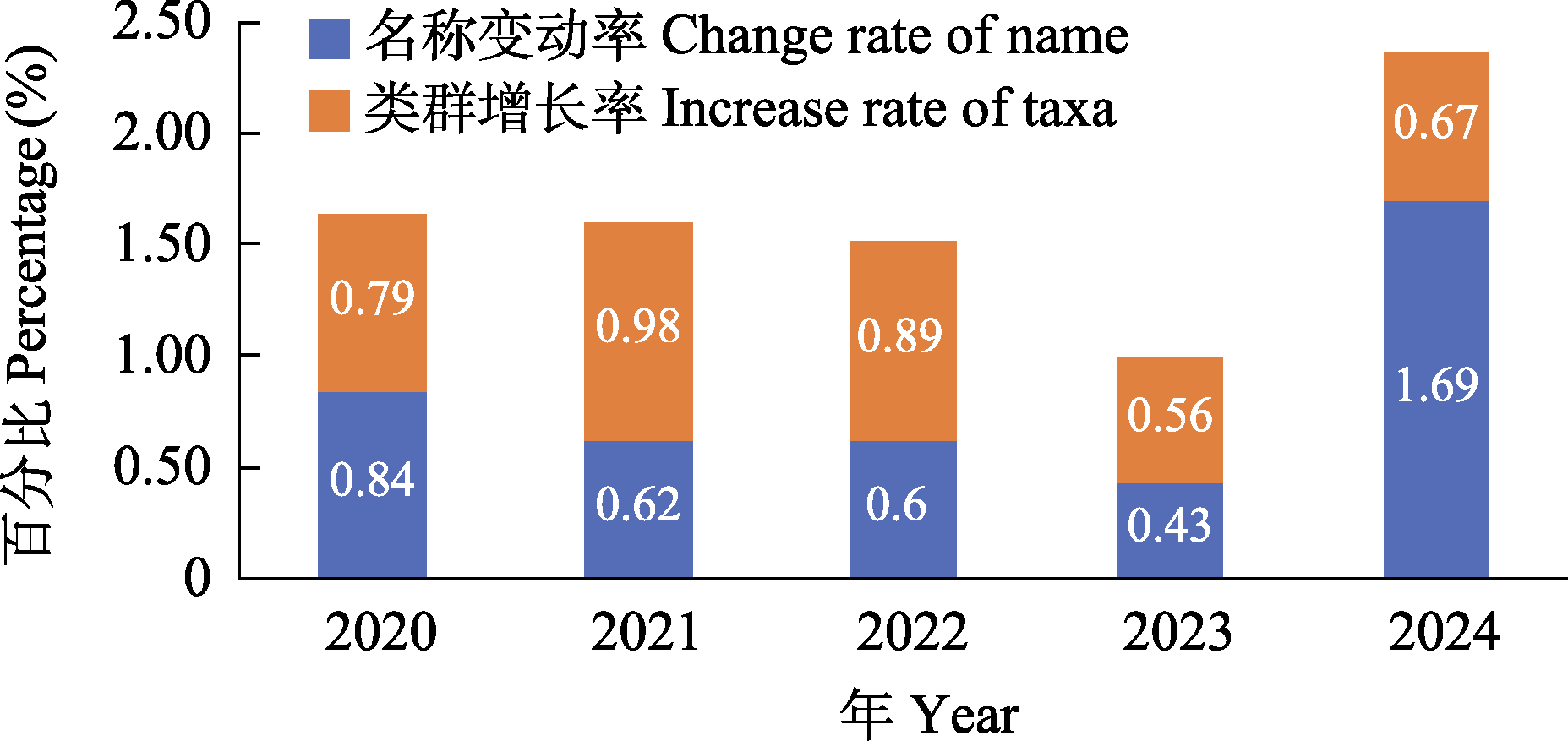
Fig. 7 The increase rate of taxa and change rate of names of Chinese plant since 2020
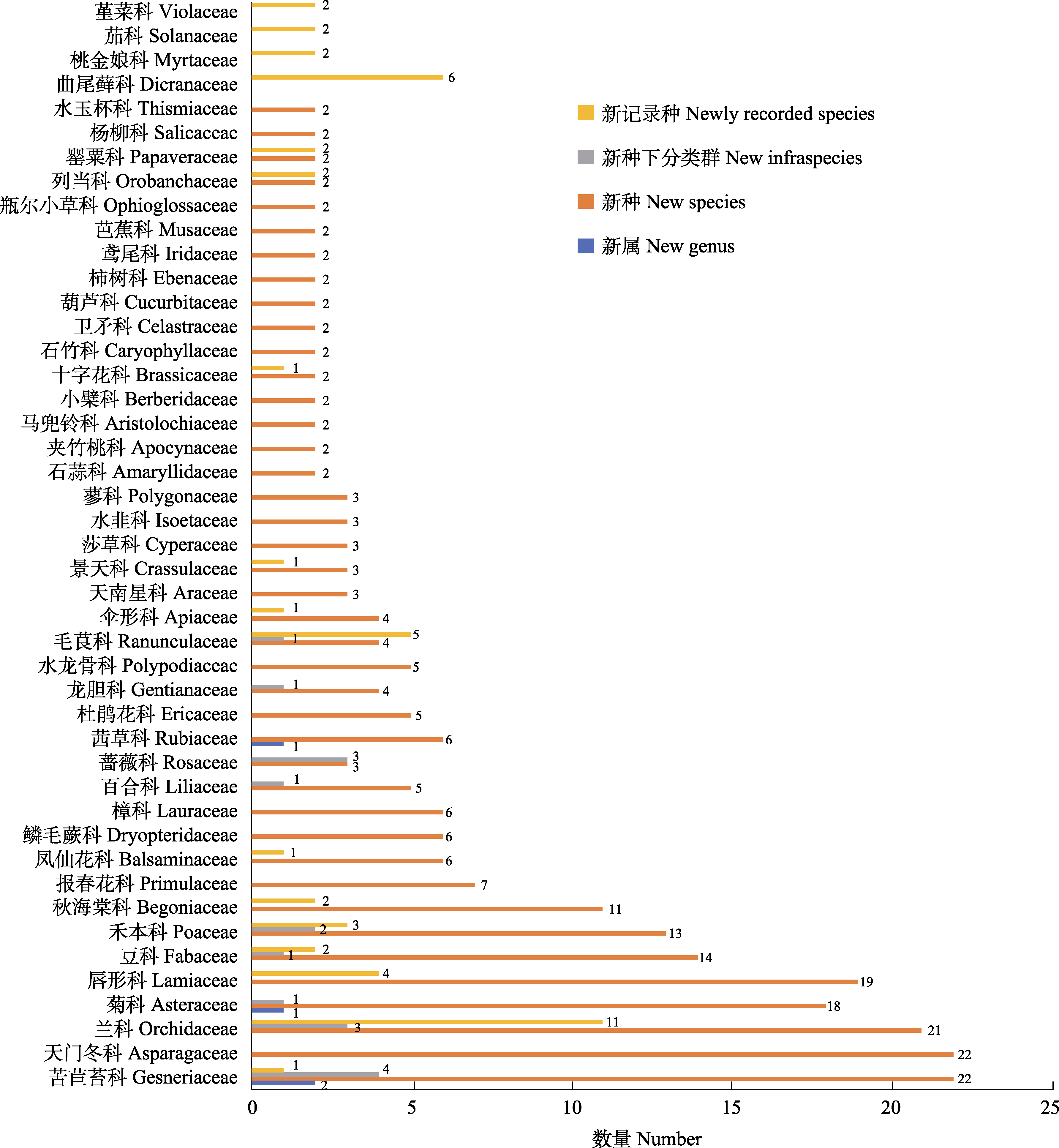
Fig. 8 Families of more than two new taxa or newly recorded species from China in 2024
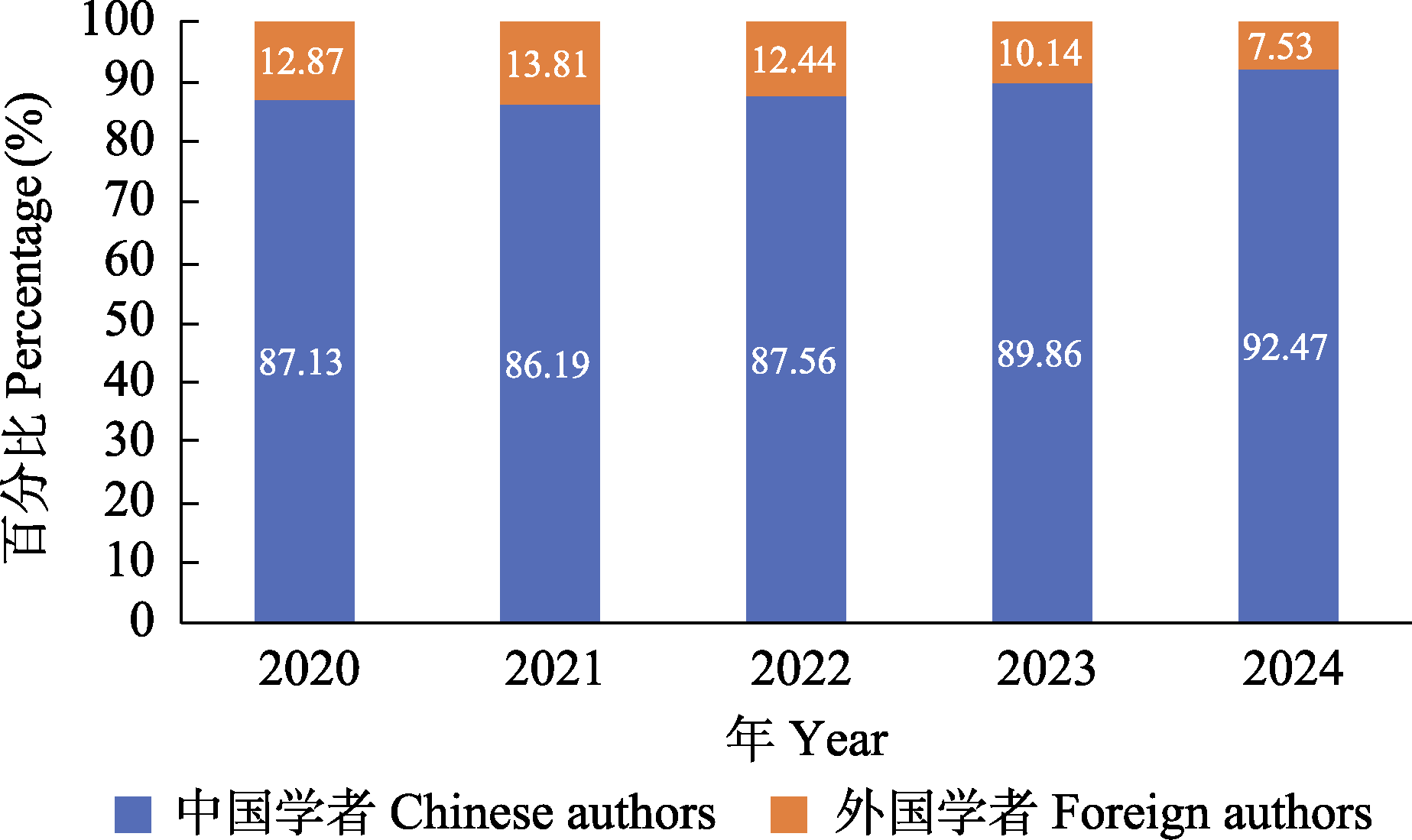
Fig. 9 Comparison of the number of Chinese and foreign scholars publishing on new taxa in China since 2020
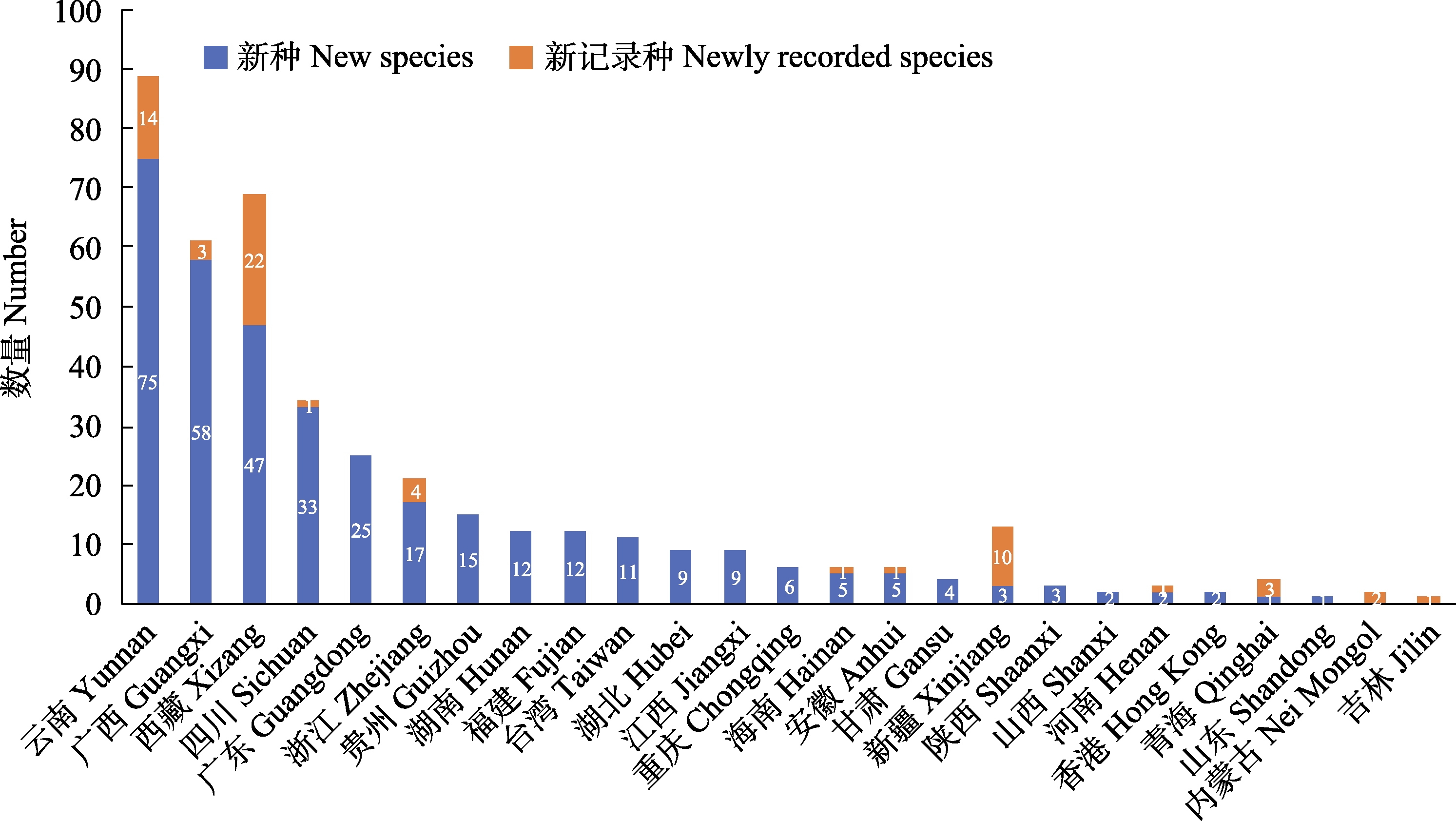
Fig. 10 The provincial number of Chinese new species and newly recorded species published in 2024 (No new species or newly recorded species have been published from other provincial regions)
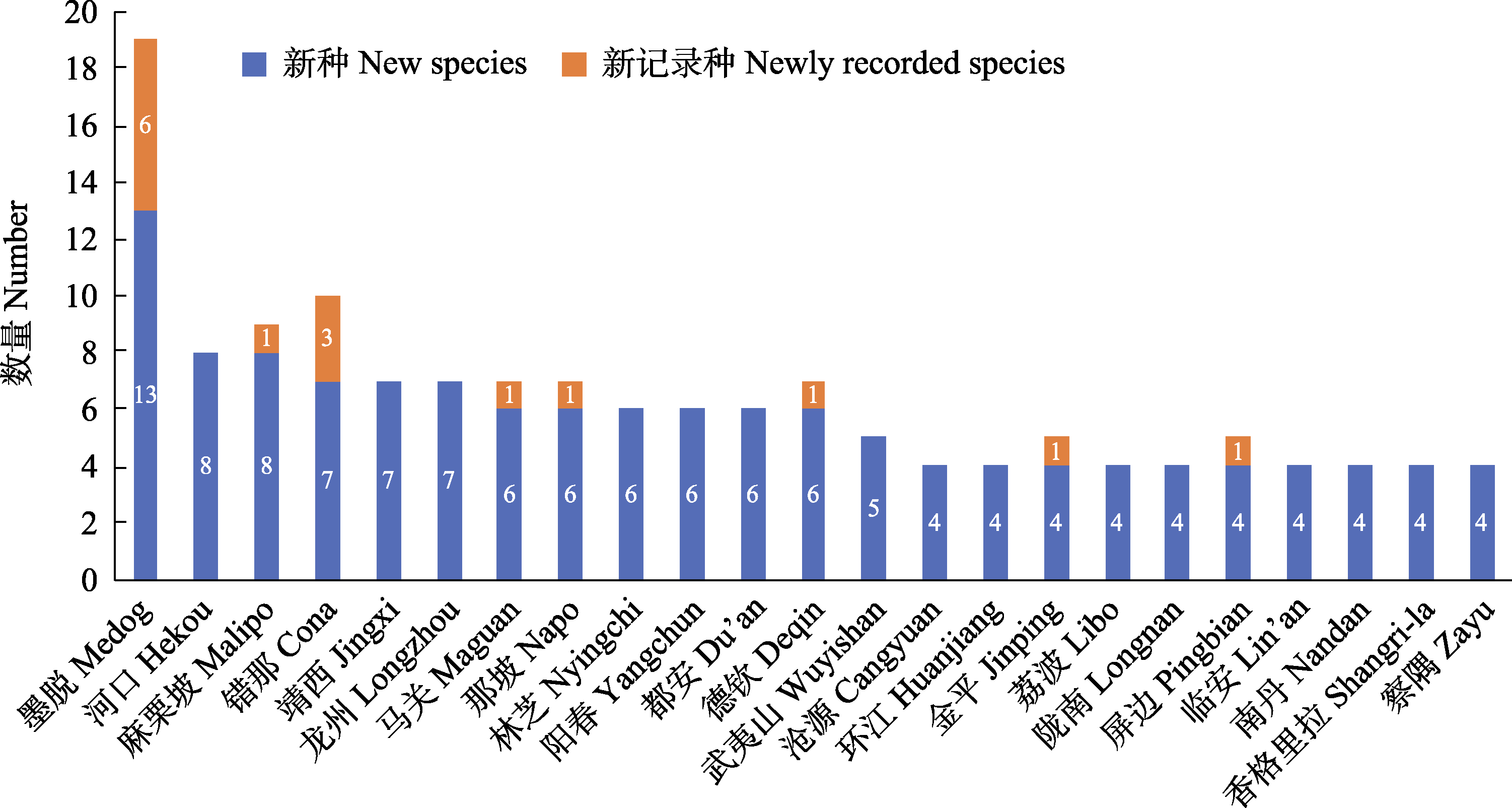
Fig. 11 Number of new species and national new records published by various county-level units from China in 2024
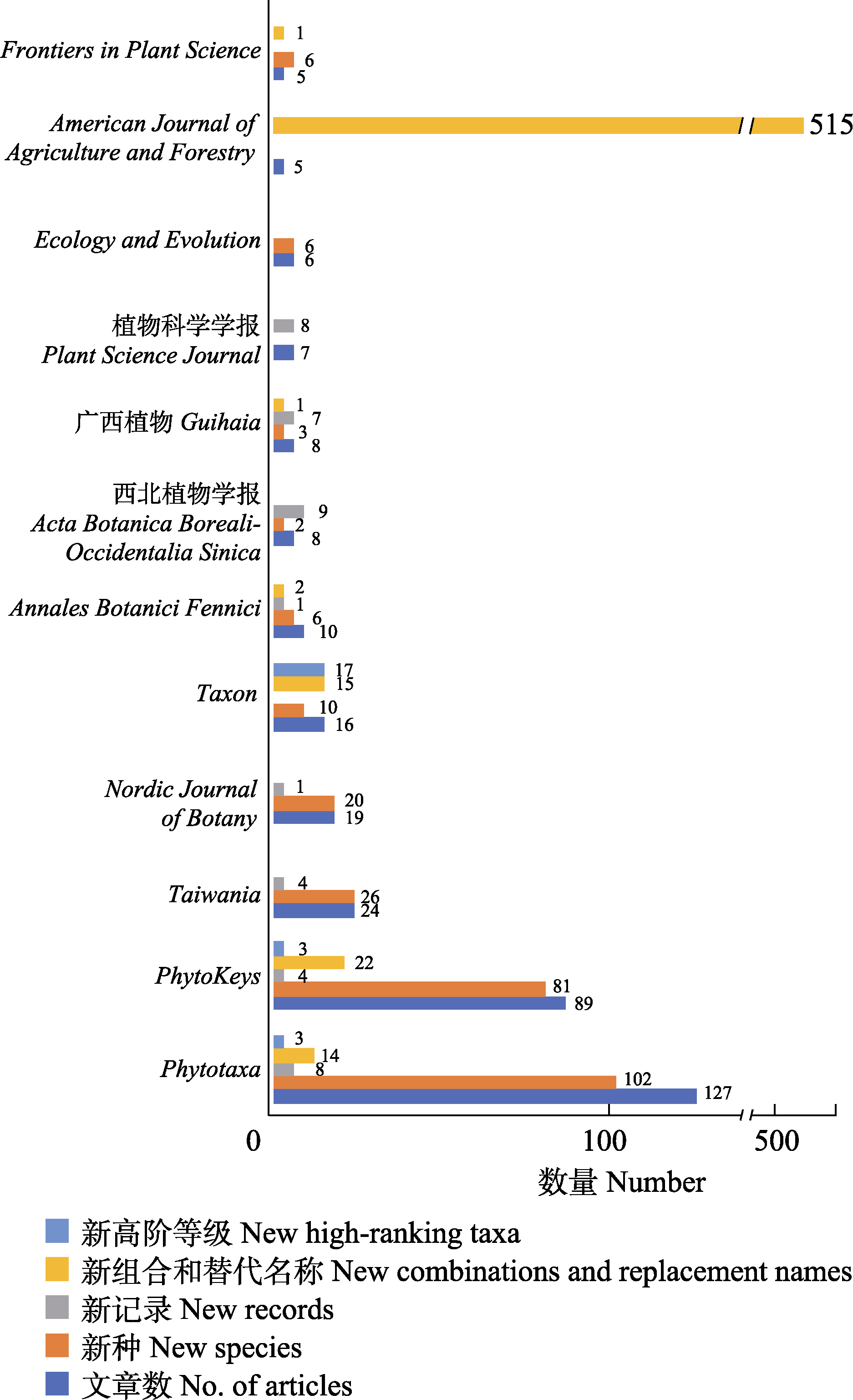
Fig. 12 Articles and data entry on new plant taxa and nomenclatural changes of Chinese plants in selected journals in 2024
| [1] | Antonelli A, Fry C, Smith RJ, Eden J, Govaerts RHA, Kersey P, Nic Lughadha E, Onstein RE, Simmonds MSJ, Zizka A, …, Wilson KL, Winter M, Wirth C, Wölke FJR, Wright IJ, Zedek F, Zhigila DA, Zimmermann NE, Zuluaga A, Zuntini AR (2023) State of the World’s Plants and Fungi 2023. Royal Botanic Gardens, Kew. |
| [2] | Antonelli A, Fry C, Smith RJ, Simmonds MSJ, Kersey PJ, Pritchard HW, Abbo MS, Acedo C, Adams J, Ainsworth AM, …, Wilkin P, Wilkinson T, Williams C, Winterton D, Wong KM, Woodfield-Pascoe N, Woodman J, Wyatt L, Wynberg R, Zhang BG (2020) State of the World’s Plants and Fungi 2020. Royal Botanic Gardens, Kew. |
| [3] |
Bruneau A, de Queiroz LP, Ringelberg JJ, Borges LM, Bortoluzzi RL da C, Brown GK, Cardoso DBOS, Clark RP, de Conceição AS, Cota MMT, …, Oliveira ACS, Rando JG, Ribeiro PG, Ribeiro CL, Santos FS, Seigler DS, da Silva GS, Simon MF, Soares MVB, Terra V (2024) Advances in legume systematics 14. Classification of Caesalpinioideae. Part 2: Higher-level classification. PhytoKeys, 240, 1-552.
DOI PMID |
| [4] |
Cai ZY, Zhang YY, Tong YH, Vu TC, Xia NH (2024) Temochloa (Poaceae, Bambusoideae), a newly-recorded bamboo genus for China and Vietnam, with new taxa and a re-interpretation of flowering structures. PhytoKeys, 246, 229-236.
DOI URL |
| [5] | Christenhusz MJM, Fay MF, Byng JW (2018) Plant Gateway’s the Global Flora: A Practical Flora to Vascular Plant Species of the World. GLOVAP Nomenclature Part 1, Plant Gateway Ltd., Bradford. |
| [6] |
de Almeida RF, de Morais IL, Alves-Silva T, Antonio-Domingues H, Pellegrini MOO (2024) A new classification system and taxonomic synopsis for Malpighiaceae (Malpighiales, Rosids) based on molecular phylogenetics, morphology, palynology, and chemistry. PhytoKeys, 242, 69-138.
DOI PMID |
| [7] |
Du C, Liao S, Boufford DE, Ma JS (2020) Twenty years of Chinese vascular plant novelties, 2000 through 2019. Plant Diversity, 42, 393-398.
DOI |
| [8] |
Du C, Liu J, Ye W, Liao S (2022) 2021 annual report on new taxa and nomenclatural changes of Chinese plants. Biodiversity Science, 30, 22207. (in Chinese with English abstract)
DOI |
| [杜诚, 刘军, 叶文, 廖帅 (2022) 中国植物新分类群、新名称变化2021年年度报告. 生物多样性, 30, 22207.] | |
| [9] |
Du C, Liu J, Ye W, Liao S (2023) 2022 annual report on new taxa and nomenclatural changes of Chinese plants. Biodiversity Science, 31, 23244. (in Chinese with English abstract)
DOI |
| [杜诚, 刘军, 叶文, 廖帅 (2023) 中国植物新分类群、新名称变化2022年度报告. 生物多样性, 31, 23244.] | |
| [10] |
Du C, Liu J, Ye W, Liao S (2024) 2023 annual report on new taxa and nomenclatural changes for Chinese plants. Biodiversity Science, 32, 24253. (in Chinese with English abstract)
DOI |
| [杜诚, 刘军, 叶文, 廖帅 (2024) 中国植物新分类群、新名称变化2023年度报告. 生物多样性, 32, 24253.] | |
| [11] |
Du C, Liu J, Ye W, Liao S, Ge BJ, Liu B, Ma JS (2021) Annual report of new taxa and new names for Chinese plants in 2020. Biodiversity Science, 29, 1011-1020. (in Chinese with English abstract)
DOI URL |
| [杜诚, 刘军, 叶文, 廖帅, 葛斌杰, 刘冰, 马金双 (2021) 中国植物新分类群、新名称2020年度报告. 生物多样性, 29, 1011-1020.] | |
| [12] | Ezedin Z (2024) A conspectus of angiosperm supertribes. Harvard Papers in Botany, 29, 63-78. |
| [13] | Feng ZH, Huang ZJ, Sun HN, Liu S (2024) Meeting necessity instead of serendipity: Miscellaneous nomenclatural notes on Asteraceae. Phytotaxa, 644, 124-134. |
| [14] |
Fu DL (2024a) New genus Lobidiscus and new combinations of genera of Moutan, Liquidambar and Hamamelis (Hamamelidales). American Journal of Agriculture and Forestry, 12, 346-355.
DOI URL |
| [15] | Fu DL (2024b) New names and new combinations of the genera of Bambusa, Dinochloa and Guadua (Bambusaceae). American Journal of Agriculture and Forestry, 12, 174-184. |
| [16] |
Fu DL (2024c) New names and new combinations of Jarava, Cinna, Coleanthus, Sclerochloa and Graphephorum (Poales). American Journal of Agriculture and Forestry, 12, 242-259.
DOI URL |
| [17] |
Fu DL (2024d) New names and new combinations of some genera of Aegilopaceae and Andropogonaceae (Scutellopsida). American Journal of Agriculture and Forestry, 12, 289-306.
DOI URL |
| [18] |
Fu DL, Fu H (2024) New names and new combinations of Phyllostachys Sieb. & Zucc. (Bambusaceae). American Journal of Agriculture and Forestry, 12, 87-106.
DOI URL |
| [19] |
Huang WZ, Shen C, Xu H, Shu L, Sulayman M, Wu YH, Zhu RL (2024a) A synopsis of Dicranum Hedw. (Dicranaceae, Bryophyta) in China, with special references to four species newly reported and re-evaluation of Dicranum psathyrum Klazenga. Plants, 13, 1759.
DOI URL |
| [20] | Huang WZ, Xu H, Shen C, Xiang YL, Zhao ZF, Zhu RL (2024b) Re-evaluation of the taxonomic status of Campylopus longigemmatus (Leucobryaceae, Bryophyta). Annales Botanici Fennici, 61, 63-74. |
| [21] |
Jiang JP, Du C, Liu B, Wang K, Cai L, Li Q, Huang XL (2022) Bio-inventory in China: Progress and perspectives. Biodiversity Science, 30, 22531. (in Chinese with English abstract)
DOI |
| [江建平, 杜诚, 刘冰, 王科, 蔡磊, 李强, 黄晓磊 (2022) 中国生物物种编目进展与展望. 生物多样性, 30, 22531.] | |
| [22] |
Jiang KW, Song ZQ, Pan B, Zhao XL, Li SJ, Tu TY, Gong YX (2024) Hegnera obcordata (Fabaceae: Desmodieae), a newly recorded genus and species for the flora of China. Phytotaxa, 644, 145-153.
DOI URL |
| [23] |
Krzempek M, Klichowska E, Nobis M (2024) Insights to the taxonomy and phylogeny of the genus Ptilagrostis worldwide (Poaceae, Stipeae) with a key to species identification, checklist and outlines for further studies. PhytoKeys, 249, 115-180.
DOI PMID |
| [24] |
Li YF, Luo L, Liu Y, He Q, Yu NN, Gaowa N, Yi ZQ, Wang JJ, Han W, Peng T, Ho BC, He X, Zhang L, Chen ZD, Jia Y, Wang QH (2024) The Bryophyte Phylogeny Group: A revised familial classification system based on plastid phylogenomic data. Journal of Systematics and Evolution, 62, 577-588.
DOI URL |
| [25] |
Liu B, Qin HN (2022) Recent advances in the national inventory of higher plant species in China. Biodiversity Science, 30, 22397. (in Chinese with English abstract)
DOI |
| [刘冰, 覃海宁 (2022) 中国高等植物多样性编目进展. 生物多样性, 30, 22397.] | |
| [26] |
Liu F, Han M, Li P, Wang Y (2025) Phylogenetic reconstruction of Didymocarpus and related genera in Gesneriaceae with establishment of two new genera. Journal of Systematics and Evolution, 63, 401-415.
DOI URL |
| [27] |
Moller M, Middleton D, Nishii K, Wei YG, Sontag S, Weber A (2011) A new delineation for Oreocharis incorporating an additional ten genera of Chinese Gesneriaceae. Phytotaxa, 23, 1-36.
DOI URL |
| [28] | Nge FJ, Chaowasku T, Damthongdee A, Wiya C, Soulé VRC, Rodrigues-Vaz C, Bruy D, Mariac C, Chatrou LW, Chen J, Choo LM, Dagallier LPMJ, Erkens RHJ, Johnson DM, Leeratiwong C, Lobão AQ, Lopes JC, Martínez-Velarde MF, Munzinger J, Murray NA, Neo WL, Rakotoarinivo M, Ortiz-Rodriguez AE, Sonké B, Thomas DC, Wieringa JJ, Couvreur TLP (2024) Complete genus-level phylogenomics and new subtribal classification of the pantropical plant family Annonaceae. Taxon, 73, 1341-1369. |
| [29] |
Peng HW, Xiang KL, Lian L, Liu B, Erst AS, Gao TG, Ortiz RDC, Jabbour F, Chen ZD, Wang W (2024) A revised tribal classification of Papaveraceae (poppy family) based on molecular and morphological data. Taxon, 73, 762-783.
DOI URL |
| [30] |
Peng X, Jiang KW, Xie Z, Gu SR, Wang XP, Li SJ, Shi MM, Tu TY, Zhang DX (2024) Rediscovery, amplified description, and taxonomic re-evaluation of Phanera erythropoda var. guangxiensis (Leguminosae, Cercidoideae). Phytotaxa, 665, 55-62.
DOI URL |
| [31] | Pillon Y, Crayn D, Streiff SJR, de Vos JM (2024) A suprageneric classification of Oxalidales. Swainsona, 38, 153-160. |
| [32] |
Sungkaew S, Arthan W, Teerawatananon A, Chamchumroon V, Neo L, Wong KM (2024) Thaigardenia (Rubiaceae: Gardenieae), a new genus distributed from Thailand to South China. Thai Forest Bulletin (Botany), 52, 25-43.
DOI URL |
| [33] | The Biodiversity Committee of Chinese Academy of Sciences (2025) Catalogue of Life China:2025 Annual Checklist. Beijing. China. |
| [34] | Turland NJ (2025) From the Shenzhen code to the Madrid code: New rules and recommendations for naming algae, fungi, and plants. American Journal of Botany, 112, e70026. |
| [35] | Wang L, Ren C, Yang QE (2024) The Sino-Himalayan Endemic Genus Cremanthodium (Asteraceae): Morphology, Karyology, Phylogeny, Taxonomy, and Phytogeography. Science Press, EDP Sciences, Beijing. |
| [36] | Wang X, Yang GL, Luo K, Bai XX (2024) Supplementary description of Primula lithophila and two new recorded species of Primula in Guizhou Province. Bulletin of Botanical Research, 44, 510-516. (in Chinese with English abstract) |
|
[王逍, 杨桂丽, 罗康, 白新祥 (2024) 习水报春的补充描述和贵州省报春花属2新记录种. 植物研究, 44, 510-516.]
DOI |
|
| [37] |
Wang ZH, Yang Y, Wang Y, Chen L, Zhao F, Li YY (2024) Tuberowithania pengiana (Withaninae, Physalideae, Solanaceae), a new species and genus from southwest Yunnan, China. Taxon, 73, 519-529.
DOI URL |
| [38] | Xiong C, Chen B, Li ZL, Zhao Q, Do VT, Wen F (2024a) Tetraphyllum Griff. ex C. B. Clarke, a newly recorded genus of Gesneriaceae from China. Guihaia, 44, 998-1002. (in Chinese with English abstract) |
| [熊驰, 陈彬, 李政隆, 赵琼, Do VT, 温放 (2024a) 中国苦苣苔科一新记录属——四轮苣苔属. 广西植物, 44, 998-1002.] | |
| [39] | Xiong C, Zhou HL, Chen F, Yi SR, Wen F (2024b) Supplementary description of Oreocharis humilis and Oreocharis sichuanensis and a new record species of Oreocharis in Chongqing. Journal of Sichuan Forestry Science and Technology, 45(5), 118-125. (in Chinese with English abstract) |
| [熊驰, 周厚林, 陈锋, 易思荣, 温放 (2024b) 矮直瓣苣苔和全唇苣苔的补充描述及重庆市马铃苣苔属1新记录种. 四川林业科技, 45(5), 118-125.] | |
| [40] |
Xu LS, Song ZQ, Liao SY, Chen YS (2024) Qineryangia, a new genus from the Hengduan Mountains and new insights into the phylogeny of the subtribe Crepidinae (Cichorieae, Asteraceae). Journal of Systematics and Evolution, 62, 1227-1237.
DOI URL |
| [41] |
Yang X, Xue T, Gao T, Liang Y, Smets EF, Gadagkar SR, Yu S (2024) An updated infrageneric classification based on phylogenomics and character evolution in Hydrangea (Hydrangeaceae). Taxon, 73, 503-518.
DOI URL |
| [42] | Yang ZZ, Huang YH, Zhao XL, Zhang YL (2024) Didymophysa Boiss., a newly recorded genus of Brassicaceae from Xinjiang, China. Guihaia, 44, 646-649. (in Chinese with English abstract) |
| [杨宗宗, 黄亚慧, 赵晓林, 张云玲 (2024) 中国十字花科一新记录属——双袋荠属. 广西植物, 44, 646-649.] | |
| [43] |
Yuan TH, Wang Z, Shen CQ, Hu GW, Peng S (2024) A taxonomic correction of Impatiens (Balsaminaceae) in Xizang, China—The record of Impatiens bracteata is a misidentification of I. darjeekhandui. Phytotaxa, 672, 121-125.
DOI URL |
| [44] |
Zhang CF, Tian J, Cheng YH, Peng S, Chen YS, Gao TG, Hu GW, Wang QF (2024) An updated phylogeny of Ainsliaea (Asteraceae: Pertyoideae) and its implications for classification and habit evolution. Taxon, 73, 1030-1052.
DOI URL |
| [45] | Zhao MX, Tan YH, Yang ZC, Li JH, Ai WD, Chen F (2024) Pterocymbium R. Br (Malvaceae, Sterculioideae), a genus new to China. Acta Botanica Boreali-Occidentalia Sinica, 44, 824-831. |
| [1] | Junce Liang, Kaizhi Li, Yehui Tan. Species diversity and distribution of pteropods in the South China Sea [J]. Biodiv Sci, 2026, 34(5): 25487-. |
| [2] | Xiaoxu Jia, Wanqiang Chen, Xiujun Tang, Yanfeng Fan, Jing Zhang, Haiwei Wang, Yushi Gao. Genetic diversity and gene introgression of mitochondrial DNA control region in indigenous chickens from Southwest China [J]. Biodiv Sci, 2026, 34(5): 26003-. |
| [3] | Hao Liu, Yuxiao Zhang, Bing Liu, Feifei Li, Hongzheng Ma, Haining Qin, Dezhu Li, Wenli Chen. Diversity and checklist of grasses (Poaceae) in China [J]. Biodiv Sci, 2026, 34(4): 25438-. |
| [4] | Tingting Zhou, Haomiao Zhang, Haojie Wang, Jian Liao, Xiaodan Chen, Nan Yang, Bo-Ping Han, Zhenyuan Liu. Geographical patterns and key influence factors of Odonata species diversity in Guangdong Province [J]. Biodiv Sci, 2026, 34(2): 25337-. |
| [5] | Zonggang Hu. A brief history of Chinese botany (1921-1950) [J]. Biodiv Sci, 2025, 33(9): 25235-. |
| [6] | Xianna Lan, Yixin Li, Luyao Hai, Zhengwei Luo, Xuelin Jin, Xinghu Qin, Defu Hu, Gang Liu. Identification and geographical distribution of wild musk deer species in North China [J]. Biodiv Sci, 2025, 33(7): 24505-. |
| [7] | Yaohui Chen, Zihua Zhou, Hong Qiu, Jinghuai Zhang. Distribution, threats, and protection recommendations for oyster reefs in the coastal zones of Guangdong Province [J]. Biodiv Sci, 2025, 33(7): 24414-. |
| [8] | Qinwen Lin, Na Zhang, Qiang Wang. A dataset on inventory and geographical distribution of halophytes of China [J]. Biodiv Sci, 2025, 33(7): 25030-. |
| [9] | Tian Zhiqi, Su Yang. China’s implementation model of international environmental conventions and its application to the Convention on Biological Diversity—Achieving the Kunming-Montreal Global Biodiversity Framework targets and the role of national parks [J]. Biodiv Sci, 2025, 33(3): 24593-. |
| [10] | Zhou Zhihua, Jin Xiaohua, Luo Ying, Li Diqiang, Yue Jianbing, Liu Fang, He Tuo, Li Xi, Dong Hui, Luo Peng. Analyses and suggestions on mechanisms of forestry and grassland administrations in China to achieve targets of Kunming-Montreal Global Biodiversity Framework [J]. Biodiv Sci, 2025, 33(3): 24487-. |
| [11] | Yali Lin, Shuyun Lin, Lingyun Liao, Weiyi Zhang, Daliang Chen, Siren Lan, Weilun Yin. Evolutionary trend and enlightenment of the evaluation of the management effectiveness of protected areas under the background of the Kunming-Montreal Global Biodiversity Framework [J]. Biodiv Sci, 2025, 33(12): 25260-. |
| [12] | Xiangxiang Wang, Chen Lin, Ding Yang. New taxa of Diptera from China in 2024 [J]. Biodiv Sci, 2025, 33(10): 25325-. |
| [13] | Tingting Zhang, Huanxi Cao, Pu Tang, Zhenghui Xu, Tao Li, Qin Li, Qingsong Zhou, Arong Luo, Chaodong Zhu. New taxa of extant Hymenoptera in 2024 [J]. Biodiv Sci, 2025, 33(10): 25341-. |
| [14] | Jianping Jiang, Weitao Chen, Zhixin Wen, Dezhi Zhang, Shun Ma, Lulu Sui, Yaqian Cui, Yujuan Guo, Bo Cai, Bin Wang. New taxa of vertebrate in China published in 2024 [J]. Biodiv Sci, 2025, 33(10): 25317-. |
| [15] | Yongkang Li, Mujie Qi, Shulian Hao. Annual report of new taxa for Chinese Lepidoptera in 2024 [J]. Biodiv Sci, 2025, 33(10): 25307-. |
| Viewed | ||||||
|
Full text |
|
|||||
|
Abstract |
|
|||||
Copyright © 2026 Biodiversity Science
Editorial Office of Biodiversity Science, 20 Nanxincun, Xiangshan, Beijing 100093, China
Tel: 010-62836137, 62836665 E-mail: biodiversity@ibcas.ac.cn

