

Biodiv Sci ›› 2026, Vol. 34 ›› Issue (4): 25377. DOI: 10.17520/biods.2025377 cstr: 32101.14.biods.2025377
• Reviews • Previous Articles Next Articles
Xuan Su1,2,3, Leilei Shi1,2,3, Juanjuan Chen4, Yanxiang Shan3,5, Ji Zhang6, Hongzhi Zhang1,2,3,*( ), Shenglei Fu1,2,3,*()
Received:2025-09-25
Accepted:2026-02-20
Online:2026-04-20
Published:2026-05-28
Contact:
*E-mail: hongzhi-0729@163.com;fsl@vip.henu.edu.cn
Supported by:Xuan Su, Leilei Shi, Juanjuan Chen, Yanxiang Shan, Ji Zhang, Hongzhi Zhang, Shenglei Fu. Advances of the trophic ecology and ecological functions of soil enchytraeids[J]. Biodiv Sci, 2026, 34(4): 25377.
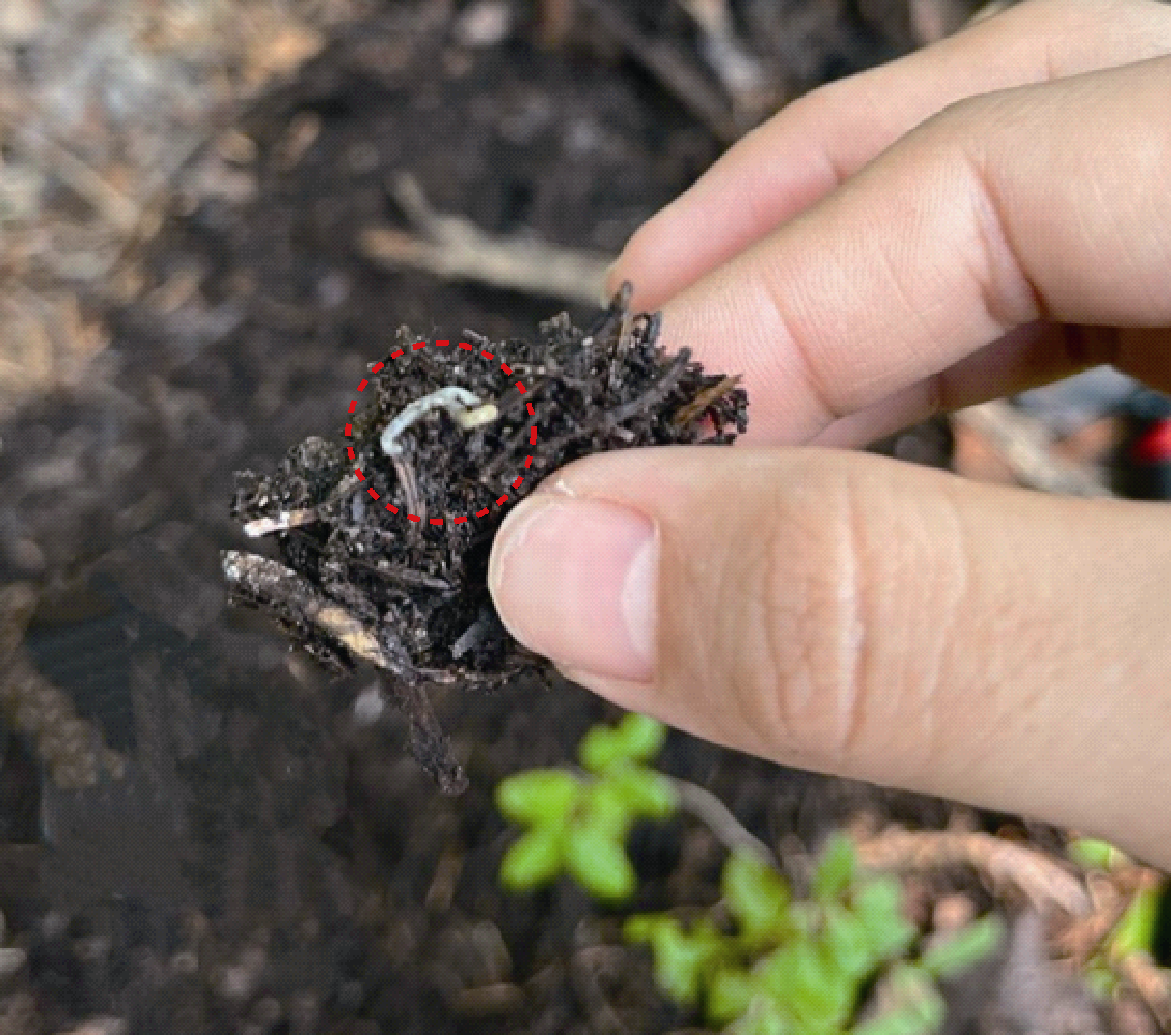
Fig. 1 Morphology and habitat of an enchytraeid specimen found in the soil layer under a larch forest at the Jilin Changbai Mountain Forest Ecosystem National Field Observation and Research Station.
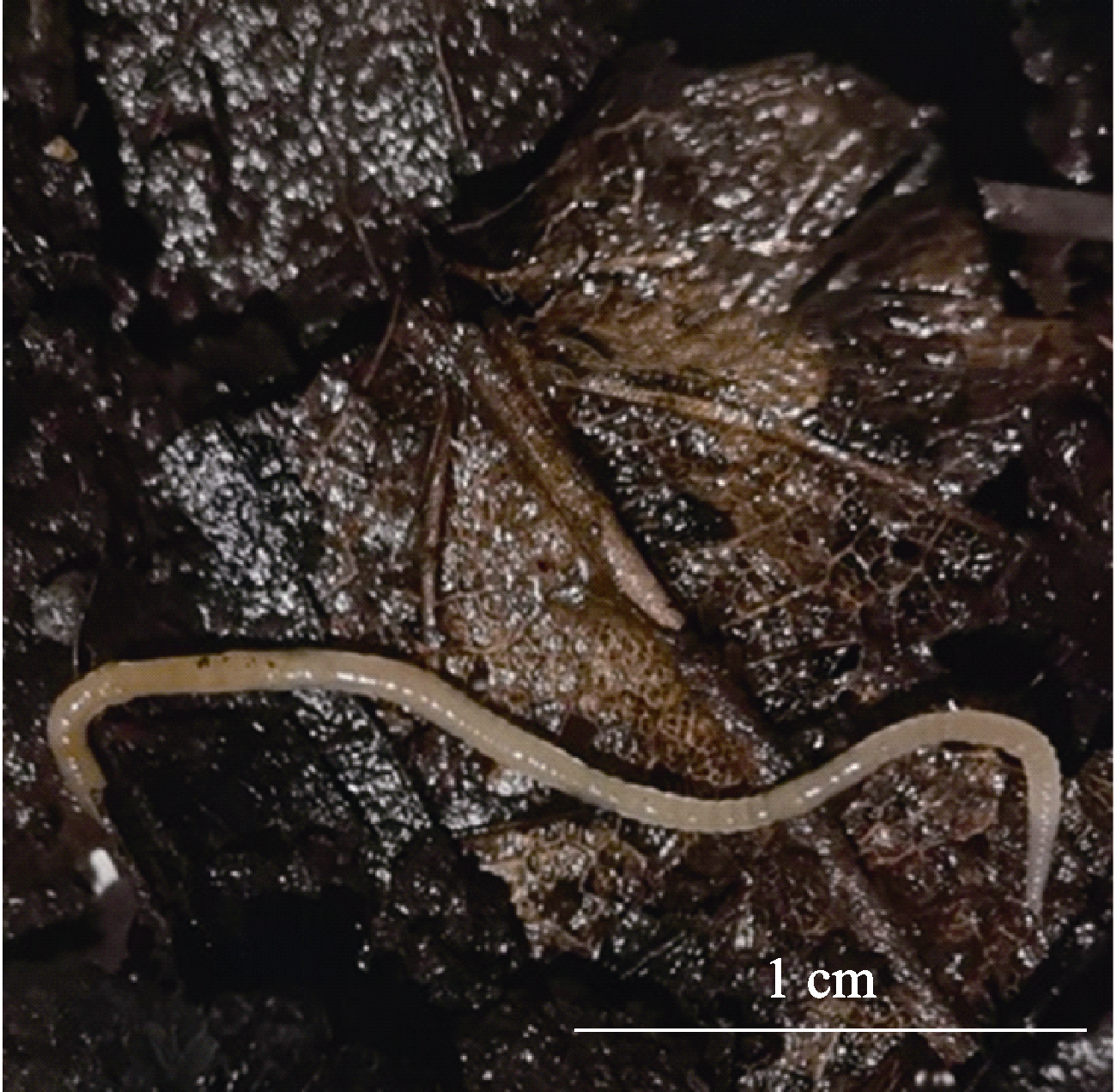
Fig. 2 An enchytraeid specimen collected from the soil layer under the larch forest at the Jilin Changbai Mountain Forest Ecosystem National Field Observation and Research Station
| 物种 Species | δ13C (or Δ13C) (‰) | δ13N/ (orΔ15N) (‰) | 参考文献 Reference |
|---|---|---|---|
| 线蚓 Enchytraeids | -11.5 | 4.9 | Briones & Ineson, |
| Fridericia christeri | -25.4 | 13.9 | Schmidt et al., |
| Fridericia galba | -25.6 | 12.9 | Schmidt et al., |
| 巴氏线蚓 Enchytraeus buchholzi | -24.4±0.2 | 7.0±0.8 | Schmidt et al., |
| Achaeta pannonica | 6.6±0.2 | 11.5±0.9 | Korobushkin et al., |
| 附支巴氏蚓 Buchholzia appendiculata | 5.5±0 | 5.5±0 | Korobushkin et al., |
| Cognettia sphagnetorum | 8.3±0.2 | 8.3±0.3 | Korobushkin et al., |
| Cognettia glandulosa | 3.8±0.4 | 6.5±0.6 | Korobushkin et al., |
| Cognettia lapponica | 4.6±0.3 | 7.8±0.5 | Korobushkin et al., |
| Cognettia sp. | 6.1±0.1 | 6.4±0.1 | Korobushkin et al., |
| Enchytraeus albidus | 1.7±0.2 | 4.0±0.3 | Korobushkin et al., |
| Enchytraeus dichaetus | 6.3±0.8 | 9.0±0 | Korobushkin et al., |
| 巴氏线蚓 Enchytraeus buchholzi | 5.1±0.3 | 7.7±0.3 | Korobushkin et al., |
| 类球白线蚓 Fridericia bulboides | 3.9±0.5 | 8.7±0.8 | Korobushkin et al., |
| Fridericia galba | 2.1±0.1 | 5.4±0.3 | Korobushkin et al., |
| Globulidrilus riparius | 0.9±0 | 3.0±0 | Korobushkin et al., |
| Lumbricillus lineatus | 1.5±1.2 | 5.5±0.3 | Korobushkin et al., |
| Lumbricillus pagenstecheri | 1.2±0.7 | 4.0±0.4 | Korobushkin et al., |
| Lumbricillus rivalis | 1.7±0.2 | 3.5±0.2 | Korobushkin et al., |
| Lumbricillus viridis | 0.6±0.1 | 5.0±0.1 | Korobushkin et al., |
Table 1 Summary of δ13C (or Δ13C) and δ13N (or Δ15N) values for enchytraeids. δ13C and δ15N values are presented for enchytraeids, Fridericia christeri, F. galba, and Enchytraeus buchholzi, relative to international standards. Δ13C and Δ15N values for other species were calculated as Δ=δ_sample ‒ δ_baseline, where δ_baseline is the local baseline food source. This calculation effectively eliminates fluctuations in isotopic baselines caused by differences in environmental backgrounds across study areas, thereby more accurately revealing the isotopic enrichment characteristics and trophic niche differences of each species relative to local basal food sources in their respective ecosystems.
| 物种 Species | δ13C (or Δ13C) (‰) | δ13N/ (orΔ15N) (‰) | 参考文献 Reference |
|---|---|---|---|
| 线蚓 Enchytraeids | -11.5 | 4.9 | Briones & Ineson, |
| Fridericia christeri | -25.4 | 13.9 | Schmidt et al., |
| Fridericia galba | -25.6 | 12.9 | Schmidt et al., |
| 巴氏线蚓 Enchytraeus buchholzi | -24.4±0.2 | 7.0±0.8 | Schmidt et al., |
| Achaeta pannonica | 6.6±0.2 | 11.5±0.9 | Korobushkin et al., |
| 附支巴氏蚓 Buchholzia appendiculata | 5.5±0 | 5.5±0 | Korobushkin et al., |
| Cognettia sphagnetorum | 8.3±0.2 | 8.3±0.3 | Korobushkin et al., |
| Cognettia glandulosa | 3.8±0.4 | 6.5±0.6 | Korobushkin et al., |
| Cognettia lapponica | 4.6±0.3 | 7.8±0.5 | Korobushkin et al., |
| Cognettia sp. | 6.1±0.1 | 6.4±0.1 | Korobushkin et al., |
| Enchytraeus albidus | 1.7±0.2 | 4.0±0.3 | Korobushkin et al., |
| Enchytraeus dichaetus | 6.3±0.8 | 9.0±0 | Korobushkin et al., |
| 巴氏线蚓 Enchytraeus buchholzi | 5.1±0.3 | 7.7±0.3 | Korobushkin et al., |
| 类球白线蚓 Fridericia bulboides | 3.9±0.5 | 8.7±0.8 | Korobushkin et al., |
| Fridericia galba | 2.1±0.1 | 5.4±0.3 | Korobushkin et al., |
| Globulidrilus riparius | 0.9±0 | 3.0±0 | Korobushkin et al., |
| Lumbricillus lineatus | 1.5±1.2 | 5.5±0.3 | Korobushkin et al., |
| Lumbricillus pagenstecheri | 1.2±0.7 | 4.0±0.4 | Korobushkin et al., |
| Lumbricillus rivalis | 1.7±0.2 | 3.5±0.2 | Korobushkin et al., |
| Lumbricillus viridis | 0.6±0.1 | 5.0±0.1 | Korobushkin et al., |
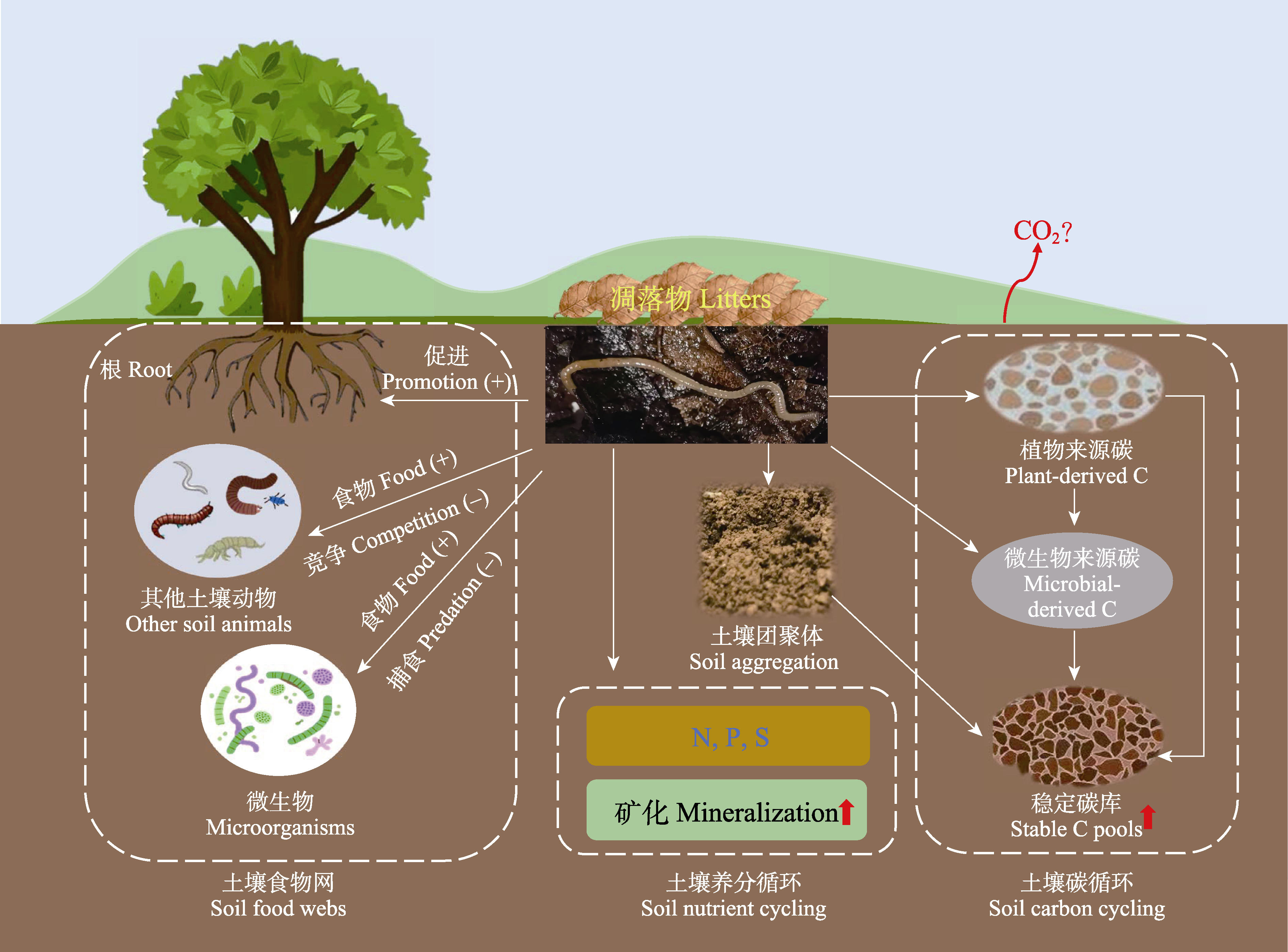
Fig. 3 Ecological functions of enchytraeids. Key roles of enchytraeids in soil ecosystems include three aspects: soil structure improvement; nutrient and carbon cycle regulation; and soil food web maintenance.
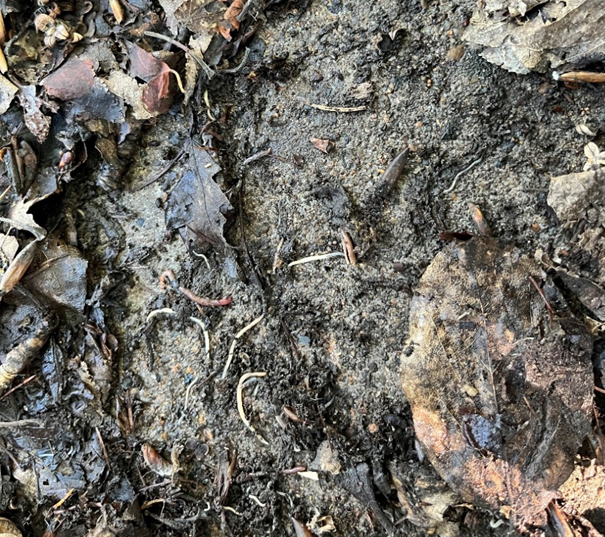
Fig. 4 Enchytraeids aggregating on the surface of a manhole cover and earthworms in the surrounding environment under a Populus cathayana forest at the Jilin Changbai Mountain Forest Ecosystem National Field Observation and Research Station. Enchytraeids densely aggregated on the manhole cover surface, while numerous earthworms inhabit the adjacent soil and litter, presenting distinct the habitat preferences of these two clitellate groups.
| [1] |
Ameloot N, Graber ER, Verheijen FGA, De Neve S (2013) Interactions between biochar stability and soil organisms: Review and research needs. European Journal of Soil Science, 64, 379-390.
DOI URL |
| [2] |
Bardgett RD, van der Putten WH (2014) Belowground biodiversity and ecosystem functioning. Nature, 515, 505-511.
DOI |
| [3] | Briones MJI (2014) Soil fauna and soil functions: A jigsaw puzzle. Frontiers in Environmental Science, 2, 7. |
| [4] |
Briones MJI, Carreira J, Ineson P (1998) Cognettia sphagnetorum (Enchytraeidae) and nutrient cycling in organic soils: A microcosm experiment. Applied Soil Ecology, 9, 289-294.
DOI URL |
| [5] |
Briones MJI, Ineson P (2002) Use of 14C carbon dating to determine feeding behaviour of enchytraeids. Soil Biology and Biochemistry, 34, 881-884.
DOI URL |
| [6] |
Brockmeyer V, Schmid R, Westheide W (1990) Quantitative investigations of the food of two terrestrial enchytraeid species (Oligochaeta). Pedobiologia, 34, 151-156.
DOI URL |
| [7] |
Carrera N, Barreal ME, Rodeiro J, Briones MJI (2011) Interactive effects of temperature, soil moisture and enchytraeid activities on C losses from a peatland soil. Pedobiologia, 54, 291-299.
DOI URL |
| [8] | Chen JJ (2024) Integrative Taxonomy of Enchytraeidae (Annelida: Clitellata) from China.PhD dissertation, Institute of Hydrobiology, Chinese Academy of Sciences, Wuhan.(in Chinese with English abstract) |
| [陈娟娟 (2024) 中国线蚓科(环节动物门: 环带纲)整合分类研究. 博士学位论文, 中国科学院水生生物研究所, 武汉.] | |
| [9] |
Cole L, Bardgett RD, Ineson P (2000) Enchytraeid worms (Oligochaeta) enhance mineralization of carbon in organic upland soils. European Journal of Soil Science, 51, 185-192.
DOI URL |
| [10] |
Coyle DR, Nagendra UJ, Taylor MK, Campbell JH, Cunard CE, Joslin AH, Mundepi A, Phillips CA, Callaham MA (2017) Soil fauna responses to natural disturbances, invasive species, and global climate change: Current state of the science and a call to action. Soil Biology and Biochemistry, 110, 116-133.
DOI URL |
| [11] |
Crotty FV, Blackshaw RP, Murray PJ (2011) Tracking the flow of bacterially derived 13C and 15N through soil faunal feeding channels. Rapid Communications in Mass Spectrometry, 25, 1503-1513.
DOI PMID |
| [12] |
Darrah PR (1991) Models of the rhizosphere. I. Microbial population dynamics around a root releasing soluble and insoluble carbon. Plant and Soil, 133, 187-199.
DOI URL |
| [13] |
Dash MC, Nanda B, Mishra PC (1981) Digestive enzymes in three species of Enchytraeidae (Oligochaeta). Oikos, 36, 316-318.
DOI URL |
| [14] |
Didden WAM (1990) Involvement of Enchytraeidae (Oligochaeta) in soil structure evolution in agricultural fields. Biology and Fertility of Soils, 9, 152-158.
DOI URL |
| [15] |
Didden WAM (1993) Ecology of terrestrial Enchytraeidae. Pedobiologia, 37, 2-29.
DOI URL |
| [16] |
Didden WAM, Marinissen JCY, Vreeken-Buijs MJ, Burgers SLGE, de Fluiter R, Geurs M, Brussaard L (1994) Soil meso- and macrofauna in two agricultural systems: Factors affecting population dynamics and evaluation of their role in carbon and nitrogen dynamics. Agriculture, Ecosystems & Environment, 51, 171-186.
DOI URL |
| [17] | Dózsa-Farkas K (1976) Über die Nahrungswahl zweier Enchytraeiden-Arten (Oligochaeta: Enchytraeidae). Pedobiologia, 16, 57-69. |
| [18] | Dózsa-Farkas K (1991) Neue EnchytraeidenArt aus tieferen Bodenschichten eines Hainbuchen-Eichenwaldes in Ungarn (Oligochaeta, Enchytraeidae). Acta Zoologica Academiae Scientiarum Hungaricae, 37, 21-25. |
| [19] |
Erséus C, Rota E, Matamoros L, De Wit P (2010) Molecular phylogeny of Enchytraeidae (Annelida, Clitellata). Molecular Phylogenetics and Evolution, 57, 849-858.
DOI PMID |
| [20] |
Gajda Ł, Daszkowska-Golec A, Świątek P (2024) Discovery and characterization of the α-amylases cDNAs from Enchytraeus albidus shed light on the evolution of “Enchytraeus-Eisenia type” Amy homologs in Annelida. Biochimie, 221, 38-59.
DOI URL |
| [21] |
Gajda Ł, Gorgoń S, Urbisz AZ (2017) Food preferences of enchytraeids. Pedobiologia, 63, 19-36.
DOI URL |
| [22] |
Gelder SR (1984) Diet and histophysiology of the alimentary canal of Lumbricillus lineatus (Oligochaeta, Enchytraeidae). Hydrobiologia, 115, 71-81.
DOI URL |
| [23] | Giere O, Hauschildt D (1979) Experimental studies on the life cycle and production of the littoral oligochaete Lumbricillus lineatus, and its response to oil pollution. In: Cyclic Phenomena in Marine Plants and Animals (eds Naylor E, Hartnall RG), pp. 113-122. Elsevier, Oxford. |
| [24] |
Hartzell S (2005) Calculation of broadband time histories of ground motion, Part II: Kinematic and dynamic modeling using theoretical Green’s functions and comparison with the 1994 Northridge earthquake. Bulletin of the Seismological Society of America, 95, 614-645.
DOI URL |
| [25] | Haukka JK (1987) Growth and survival of Eisenia fetida (Sav.) (Oligochaeta: Lumbricidae) in relation to remperature, moisture and presence of Enchytraeus albidus (Henle) (Enchytraeidae). Biology and Fertility of Soils, 3, 99-102. |
| [26] |
Jaffee BA, Santos PF, Muldoon AE (1997) Suppression of nematophagous fungi by enchytraeid worms: A field exclosure experiment. Oecologia, 112, 412-423.
DOI PMID |
| [27] |
John K, Degtyarev M, Gorbunova A, Korobushkin D, Knöss H, Wolters V, Zaitsev AS (2019) Enchytraeids simultaneously stimulate rice straw degradation and mitigate CO2 release in a paddy soil. Soil Biology and Biochemistry, 131, 191-194.
DOI URL |
| [28] |
Kato R, Ritz K, Toyota K (2024) Enchytraeid-stimulation of nitrogen mineralization from green plant residues in an organic soil. Pedobiologia, 104, 150957.
DOI URL |
| [29] |
Korobushkin DI, Guseva PA, Gongalsky KB, Saifutdinov RA, Zaitsev AS, Degtyarev MI (2024) Are there different trophic niches of enchytraeids? A stable isotopic (δ13C, δ15N) evidence. Soil Biology and Biochemistry, 194, 109422.
DOI URL |
| [30] |
Krištůfek V, Fischer S, Bührmann J (1999) In situ monitoring of chitin degradation by Streptomyces lividans pCHIO12 within Enchytraeus crypticus (Oligochaeta) feeding on Aspergillus proliferans. FEMS Microbiology Ecology, 28, 41-48.
DOI URL |
| [31] |
Lagerlof J, Andren O, Paustian K (1989) Dynamics and contribution to carbon flows of Enchytraeidae (Oligochaeta) under four cropping systems. Journal of Applied Ecology, 26, 183-199.
DOI URL |
| [32] |
Larsen T, Pollierer MM, Holmstrup M, D’Annibale A, Maraldo K, Andersen N, Eriksen J (2016) Substantial nutritional contribution of bacterial amino acids to earthworms and enchytraeids: A case study from organic grasslands. Soil Biology and Biochemistry, 99, 21-27.
DOI URL |
| [33] |
Latter PM, Howson G (1978) Studies on the microfauna of blanket bog with particular reference to Enchytraeidae. Journal of Animal Ecology, 47, 425-448.
DOI URL |
| [34] | Laurén A, Lappalainen M, Saari P, Kukkonen JVK, Koivusalo H, Piirainen S, Setälä H, Sarjala T, Bylund D, Heinonen J, Nieminen M, Palviainen M, Launiainen S, Finér L (2012) Nitrogen and carbon dynamics and the role of enchytraeid worms in decomposition of L, F and H layers of boreal mor. Water, Air, & Soil Pollution, 223, 3701-3719. |
| [35] | Laverack MS (1963) The Physiology of Earthworms. Pergamon, Oxford. |
| [36] |
Maraldo K, Christensen B, Holmstrup M (2011) The excretion of ammonium by enchytraeids (Cognettia sphagnetorum). Soil Biology and Biochemistry, 43, 991-996.
DOI URL |
| [37] |
Maraun M, Thomas T, Fast E, Treibert N, Caruso T, Schaefer I, Lu JZ, Scheu S (2023) New perspectives on soil animal trophic ecology through the lens of C and N stable isotope ratios of oribatid mites. Soil Biology and Biochemistry, 177, 108890.
DOI URL |
| [38] |
Marinissen JCY, Didden WAM (1997) Influence of the Enchytraeid worm Buchholzia appendiculata on aggregate formation and organic matter decomposition. Soil Biology and Biochemistry, 29, 387-390.
DOI URL |
| [39] |
Martin A, Marinissen JCY (1993) Biological and physico-chemical processes in excrements of soil animals. Geoderma, 56, 331-347.
DOI URL |
| [40] | Nagy H, Dózsa-Farkas K, Felföldi T (2023) New insights into the Enchytraeus albidus complex (Annelida, Enchytraeidae), with the description of three new species from seashores in Italy and Croatia. European Journal of Taxonomy, 870, 1-24. |
| [41] | O’Connor FB (1967) The Enchytraeidae. In: Soil Biology (eds Burgess A, Raw F), pp. 213-257. Academic Press, London. |
| [42] |
Osler GHR, Sommerkorn M (2007) Toward a complete soil C and N cycle: Incorporating the soil fauna. Ecology, 88, 1611-1621.
PMID |
| [43] |
Pélosi C, Thiel P, Bart S, Amossé J (2021) The contributions of enchytraeids and earthworms to the soil mineralization process in soils with fungicide. Ecotoxicology, 30, 1910-1921.
DOI PMID |
| [44] |
Pélosi C, Römbke J (2016) Are Enchytraeidae (Oligochaeta, Annelida) good indicators of agricultural management practices? Soil Biology and Biochemistry, 100, 255-263.
DOI URL |
| [45] | Poinar G Jr, Lambert JB, Wu YY (2007) Araucarian source of fossiliferous Burmese amber: Spectroscopic and anatomical evidence. Journal of the Botanical Research Institute of Texas, 1, 449-455. |
| [46] |
Ponge JF (1991) Food resources and diets of soil animals in a small area of Scots pine litter. Geoderma, 49, 33-62.
DOI URL |
| [47] | Ponge, JF (2010) The Soil under the Microscope: The Optical Examination of a Small Area of Scots Pine Litter (Pinus sylvestris L.). PhD dissertation, Éditions Universitaires Européennes, Saarbrücken. |
| [48] |
Potapov AM, Beaulieu F, Birkhofer K, Bluhm SL, Degtyarev MI, Devetter M, Goncharov AA, Gongalsky KB, Klarner B, Korobushkin DI, Liebke DF, Maraun M, Mc Donnell RJ, Pollierer MM, Schaefer I, Shrubovych J, Semenyuk II, Sendra A, Tuma JR, Tůmová M, Vassilieva AB, Chen TW, Geisen S, Schmidt O, Tiunov AV, Scheu S (2022) Feeding habits and multifunctional classification of soil-associated consumers from protists to vertebrates. Biological Reviews, 97, 1057-1117.
DOI URL |
| [49] |
Prantoni AL, De Wit P, Erséus C (2016) First reports of Grania (Clitellata: Enchytraeidae) from Africa and South America: Molecular phylogeny and descriptions of nine new species. Zoological Journal of the Linnean Society, 176, 485-510.
DOI URL |
| [50] |
Prendergast-Miller M, Cole L, Standen V, Rees R, Parker J, Leith I, Sheppard L (2008) Are enchytraeid worms (Oligochaeta) sensitive indicators of ammonia-N impacts on an ombrotrophic bog? European Journal of Soil Biology, 44, 101-108.
DOI URL |
| [51] | Sandor M, Schrader S (2012) Interaction of earthworms and enchytraeids in organically amended soil. North-western Journal of Zoology, 8, 46-56 |
| [52] | Schmelz RM (2003) Taxonomy of Fridericia (Oligochaeta, Enchytraeidae) Revision of Species with Morphological and Biochemical Methods. Naturwissenschaftlicher Verein in Hamburg, Hamburg. |
| [53] | Schmelz RM, Collado R (2013) Enchytraeidae (Oligochaeta, Annelida) from a field site in Portugal, with the description of five new species and a redescription of Enchylea heteroducta Nielsen & Christensen, 1963. Zootaxa, 3647, 307-328. |
| [54] |
Schmidt O, Curry JP, Dyckmans J, Rota E, Scrimgeour CM (2004) Dual stable isotope analysis (δ13C and δ15N) of soil invertebrates and their food sources. Pedobiologia, 48, 171-180.
DOI URL |
| [55] |
Schrader S, Seibel C (2001) Impact of cultivation management in an agroecosystem on hot spot effects of earthworm middens. European Journal of Soil Biology, 37, 309-313.
DOI URL |
| [56] |
Serbource C, Sammartino S, Cornu S, Papillon J, Adrien J, Pélosi C (2025) Enchytraeids: Small but important ecosystem engineers. Geoderma, 453, 117150.
DOI URL |
| [57] |
Setälä H (2002) Sensitivity of ecosystem functioning to changes in trophic structure, functional group composition and species diversity in belowground food webs. Ecological Research, 17, 207-215.
DOI URL |
| [58] |
Standen V, Latter PM (1977) Distribution of a population of Cognettia sphagnetorum (Enchytraeidae) in relation to microhabitats in a blanket bog. Journal of Animal Ecology, 46, 213-229.
DOI URL |
| [59] |
Šustr V, Chalupský J (1996) Activity of digestive enzymes in two species of potworms (Oligochaeta, Enchytraeidae). Pedobiologia, 40, 255-259.
DOI URL |
| [60] |
Šustr V, Chalupský J, Krištůfek V (1997) Effects of artificial acidification and liming on the activity of digestive enzymes in Cognettia sphagnetorum (Vejdovský, 1878) (Annelida, Enchytraeidae). Biology and Fertility of Soils, 24, 227-230.
DOI URL |
| [61] |
Topoliantz S, Ponge JF, Viaux P (2000) Earthworm and enchytraeid activity under different arable farming systems, as exemplified by biogenic structures. Plant and Soil, 225, 39-51.
DOI |
| [62] |
Toutain F, Villemin G, Albrecht A, Reisinger O (1982) Etude ultrastructurale des Processus de biodegradation. II. Modèle Enchytraeicles-Litière de feuillus. Pedobiologia, 23, 145-156.
DOI URL |
| [63] |
Tyler AN, Carter S, Davidson DA, Long DJ, Tipping R (2001) The extent and significance of bioturbation on 137Cs distributions in upland soils. Catena, 43, 81-99.
DOI URL |
| [64] |
Urbášek F, Chalupský J (1992) Effects of artificial acidification and liming on biomass and on the activity of digestive enzymes in Enchytraeidae (Oligochaeta): Results of an ongoing study. Biology and Fertility of Soils, 14, 67-70.
DOI URL |
| [65] |
van Vliet PCJ, Beare MH, Coleman DC, Hendrix PF (2004) Effects of enchytraeids (Annelida: Oligochaeta) on soil carbon and nitrogen dynamics in laboratory incubations. Applied Soil Ecology, 25, 147-160.
DOI URL |
| [66] |
van Vliet PCJ, West LT, Hendrix PF, Coleman DC (1993) The influence of Enchytraeidae (Oligochaeta) on the soil porosity of small microcosms. Geoderma, 56, 287-299.
DOI URL |
| [67] |
Williams BL, Griffiths BS (1989) Enhanced nutrient mineralization and leaching from decomposing Sitka spruce litter by enchytraeid worms. Soil Biology and Biochemistry, 21, 183-188.
DOI URL |
| [68] |
Wolters V (1988) Effects of Mesenchytraeus glandulosus (Oligochaeta, Enchytraeidae) on decomposition processes. Pedobiologia, 32, 387-398.
DOI URL |
| [1] | Xinyi Hong, Yilang Cai, Jiale Fang, Kekan Yao, Jiale Li, Yixiang Wang, Shangbin Bai, Nan Wang, Xiumei Zhou. Soil viral diversity and carbon metabolism genes profiling in Xixi Wetland [J]. Biodiv Sci, 2025, 33(9): 25190-. |
| [2] | Zhang Mingyi, Wang Xiaomei, Zheng Yanxin, Wu Nan, Li Donghao, Fan Enyuan, Li Na, Shan Xiujuan, Yu Tao, Zhao Chunnuan, Li Bo, Xu Shuai, Wu Yuping, Ren Liqun. Resource status and habitat function of typical oyster reef areas in the Yellow River Estuary [J]. Biodiv Sci, 2025, 33(4): 24208-. |
| [3] | Chen Dingsong, Liu Zikai, He Ziyang, Chen Weidong. Advances in tardigrade diversity, distribution characteristics and ecological functions [J]. Biodiv Sci, 2025, 33(2): 24406-. |
| [4] | Baomin Yao, Qing Zeng, Limei Zhang. Research progress on the biodiversity and ecological function of soil protists [J]. Biodiv Sci, 2022, 30(12): 22353-. |
| [5] | Shixiong Li, Yanlong Wang, Yuqin Wang, Yali Yin. Response of soil bacterial community characteristics to alpine meadow degradation [J]. Biodiv Sci, 2021, 29(1): 53-64. |
| [6] | Jingqi Sun, Quan Chen, Hangyu Li, Yanfen Chang, Hede Gong, Liang Song, Huazheng Lu. Progress on the clonality of epiphytic ferns [J]. Biodiv Sci, 2019, 27(11): 1184-1195. |
| [7] | Xiuqin Yin, Yan Tao, Haixia Wang, Chen Ma, Xinchang Kou, Huan Xu, Dong Cui. Forest soil fauna ecology in Northeast China: Review and prospect [J]. Biodiv Sci, 2018, 26(10): 1083-1090. |
| [8] | Xiaoke Zhang, Wenju Liang, Qi Li. Recent progress and future directions of soil nematode ecology in China [J]. Biodiv Sci, 2018, 26(10): 1060-1073. |
| [9] | Mengru Wang, Shenglei Fu, Haixiang Xu, Meina Wang, Leilei Shi. Ecological functions of millipedes in the terrestrial ecosystem [J]. Biodiv Sci, 2018, 26(10): 1051-1059. |
| [10] | Gongqi Sun,Yi Qu,Meiqing Tang,Xiao Liu,Xiaofeng Luan. Priority conservation plans of ecological function areas for terrestrial endangered mammals in China [J]. Biodiv Sci, 2013, 21(1): 47-53. |
| [11] | Weixin Zhang, Dima Chen, Cancan Zhao. Functions of earthworm in ecosystem [J]. Biodiv Sci, 2007, 15(2): 142-153. |
| [12] | Jihua Wu, Ciyu Song, Jiakuan Chen. Effect of microbivorous nematodes on plant growth and soil nutrient cy-cling: a review [J]. Biodiv Sci, 2007, 15(2): 124-133. |
| [13] | YU Guang-Zhi, JIANG Zhi-Gang. Buffer zones: pattern, function and design principles [J]. Biodiv Sci, 2003, 11(3): 256-261. |
| Viewed | ||||||
|
Full text |
|
|||||
|
Abstract |
|
|||||
Copyright © 2026 Biodiversity Science
Editorial Office of Biodiversity Science, 20 Nanxincun, Xiangshan, Beijing 100093, China
Tel: 010-62836137, 62836665 E-mail: biodiversity@ibcas.ac.cn

