

Biodiv Sci ›› 2026, Vol. 34 ›› Issue (8): 25205. DOI: 10.17520/biods.2025205 cstr: 32101.14.biods.2025205
• Original Papers: Genetic Diversity • Next Articles
Zhiheng Yang1, Zefu Wang2,*( )(
 ), Jianquan Liu1,3(), Kangshan Mao1(), Jialiang Li1,*()()
Received:2026-03-13
Accepted:2026-07-20
Online:2026-08-20
Published:2026-10-21
Contact:
*Co-authors for correspondence: E-mail: wangzefu@njfu.edu.cn;
lijl459@scu.edu.cn
Supported by:Zhiheng Yang, Zefu Wang, Jianquan Liu, Kangshan Mao, Jialiang Li. Molecular mechanisms underlying homoploid hybrid speciation in the Amazonian golden-crowned manakin[J]. Biodiv Sci, 2026, 34(8): 25205.
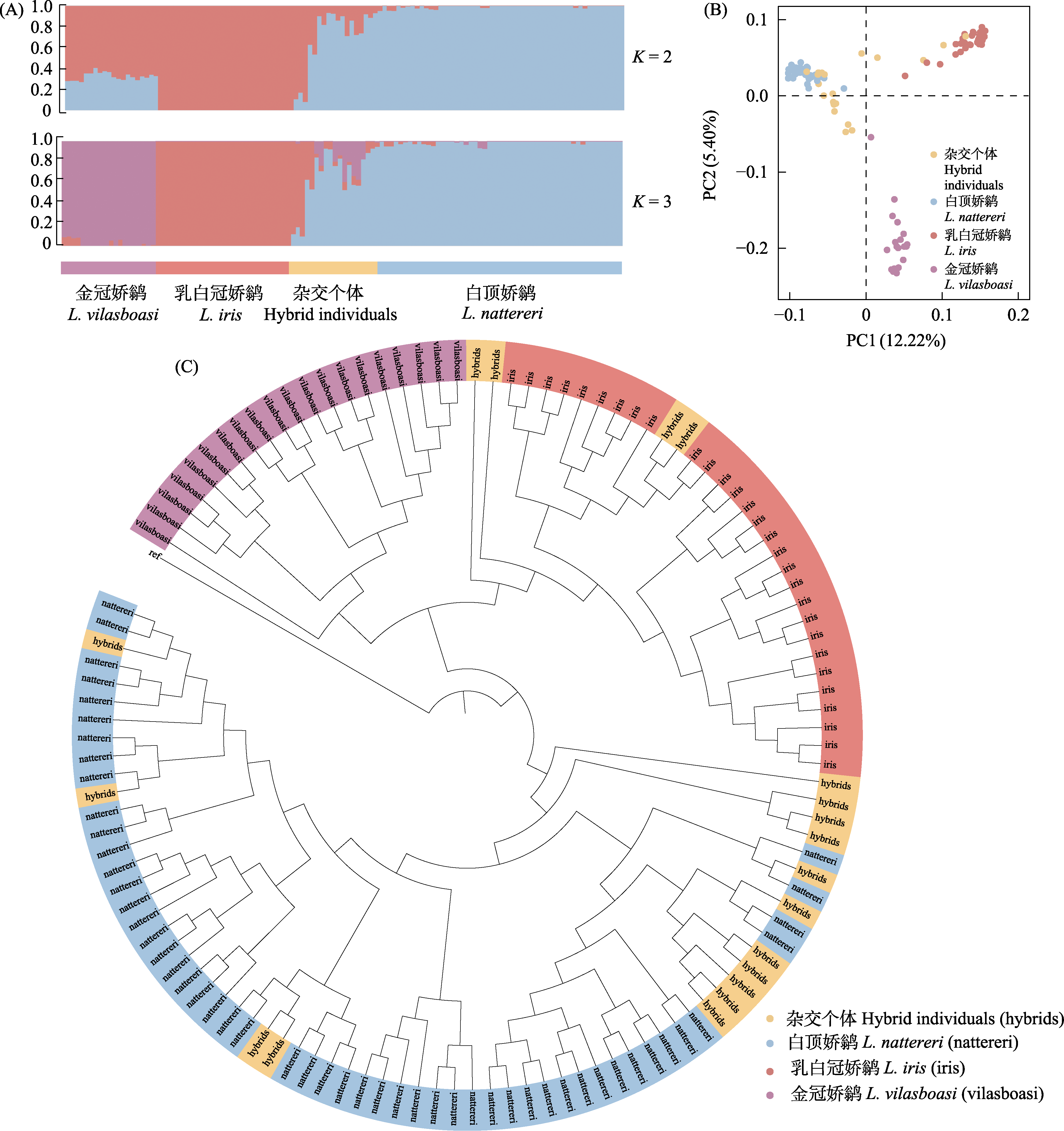
Fig. 1 Population genetic analyses of the Lepidothrix vilasboasi, L. iris and L. nattereri based on 120 individuals. (A) ADMIXTURE analysis; (B) Principal component analysis (PCA); (C) Maximum-likelihood phylogenetic tree.
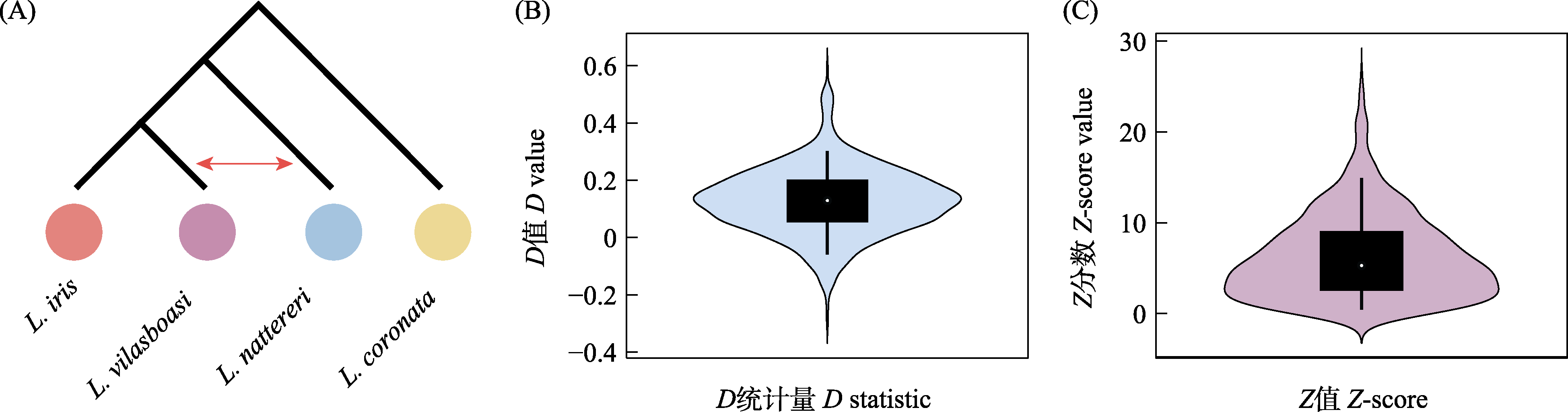
Fig. 2 Analysis of gene flow among the Lepidothrix vilasboasi, L. iris and L. nattereri. (A) Schematic representation of the ABBA-BABA test, with species ordered from left to right as P1 (L. iris), P2 (L. vilasboasi), P3 (L. nattereri), and Outgroup (L. coronata); (B) Violin plot showing the distribution of D-statistics from the ABBA-BABA tests. The black bar and thin line within each violin represent the interquartile range and the full data range, respectively. The white dot denotes the mean value. The width of the violin indicates the density of the distribution; (C) Violin plot illustrating the distribution of Z-score obtained from the ABBA-BABA tests.
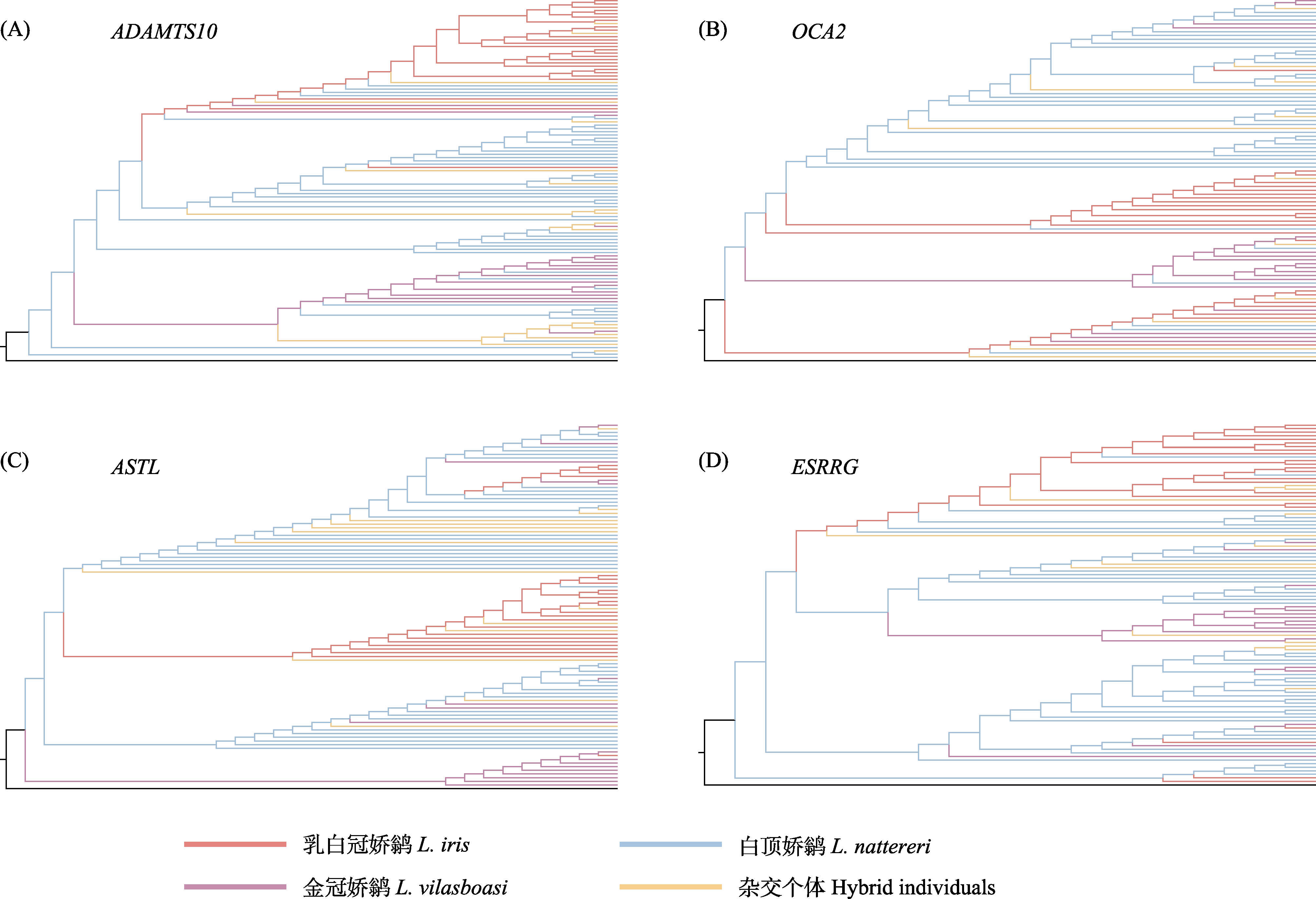
Fig. 3 Phylogenetic analysis of candidate reproductive isolation-related genes in Lepidothrix vilasboasi. Candidate genes associated with plumage coloration and development, including ADAMTS10 (A) and OCA2 (B); Candidate genes associated with reproductive development, including ASTL (C) and ESRRG (D).
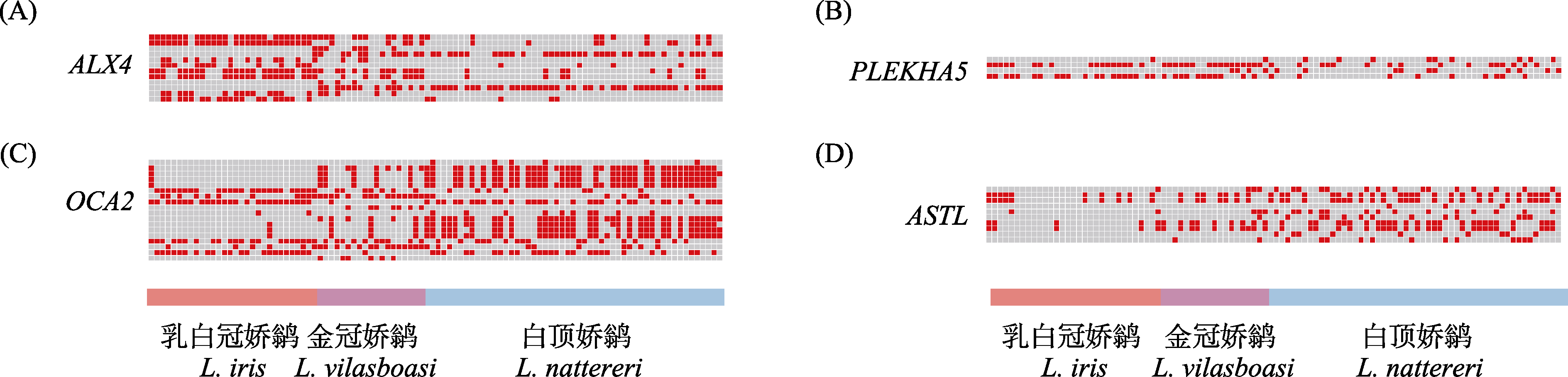
Fig. 4 Heatmap of haplotype structures of candidate reproductive isolation-related genes. Each column represents an individual, arranged according to population order (from left to right: Lepidothrix iris, L. vilasboasi, and L. nattereri). Each single nucleotide polymorphism (SNP) site is represented by two haplotype copies (Hap1 and Hap2), with two adjacent rows corresponding to the two haplotypes of the same SNP site. Gray and red indicate the reference allele (0) and alternative allele (1), respectively, illustrating differences in haplotype composition across candidate gene regions between the hybrid species and its parental species.
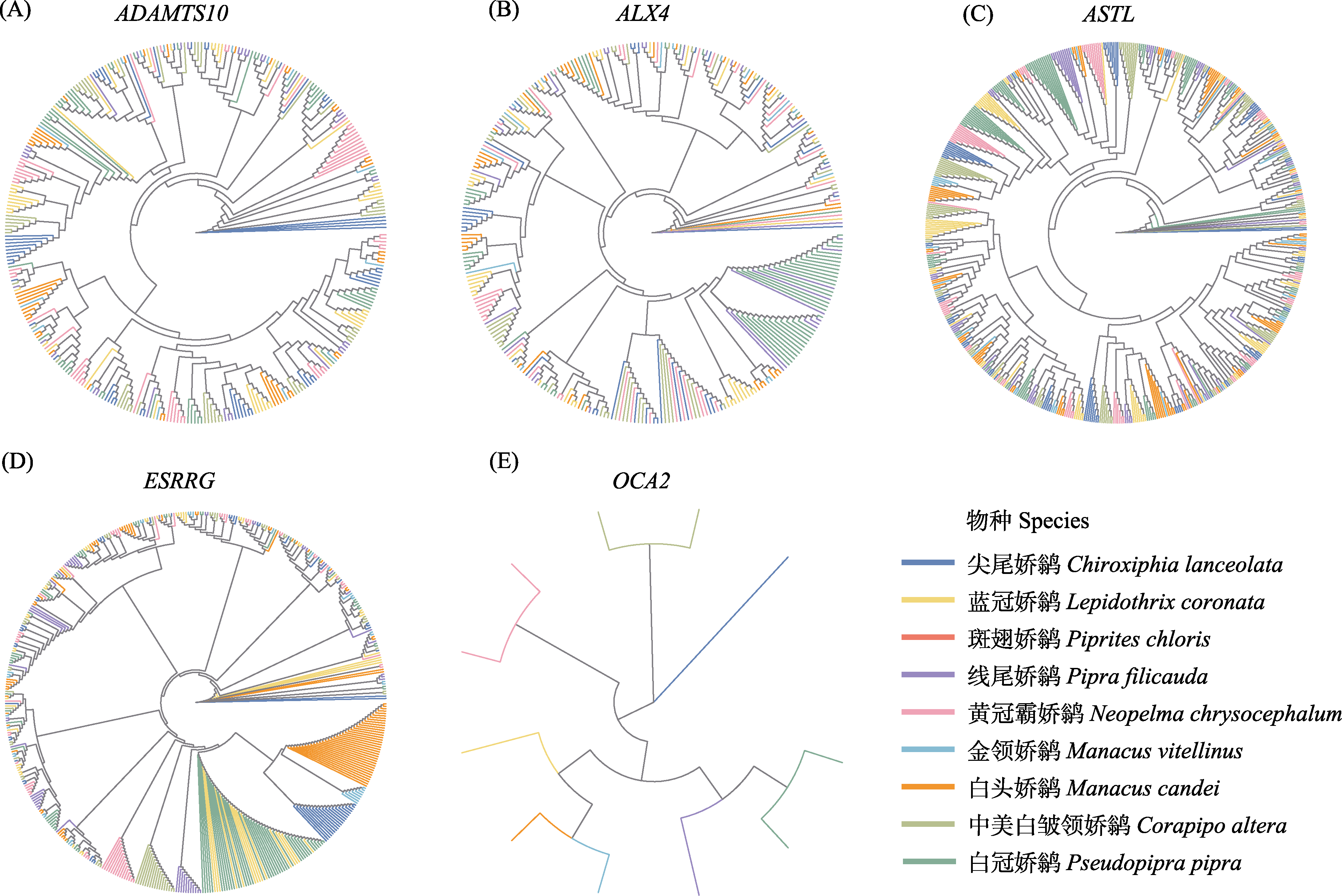
Fig. 5 Comparison of positive selection signal intensities for five candidate genes (ADAMTS10, ALX4, ASTL, ESRRG, and OCA2) across nine Pipridae species
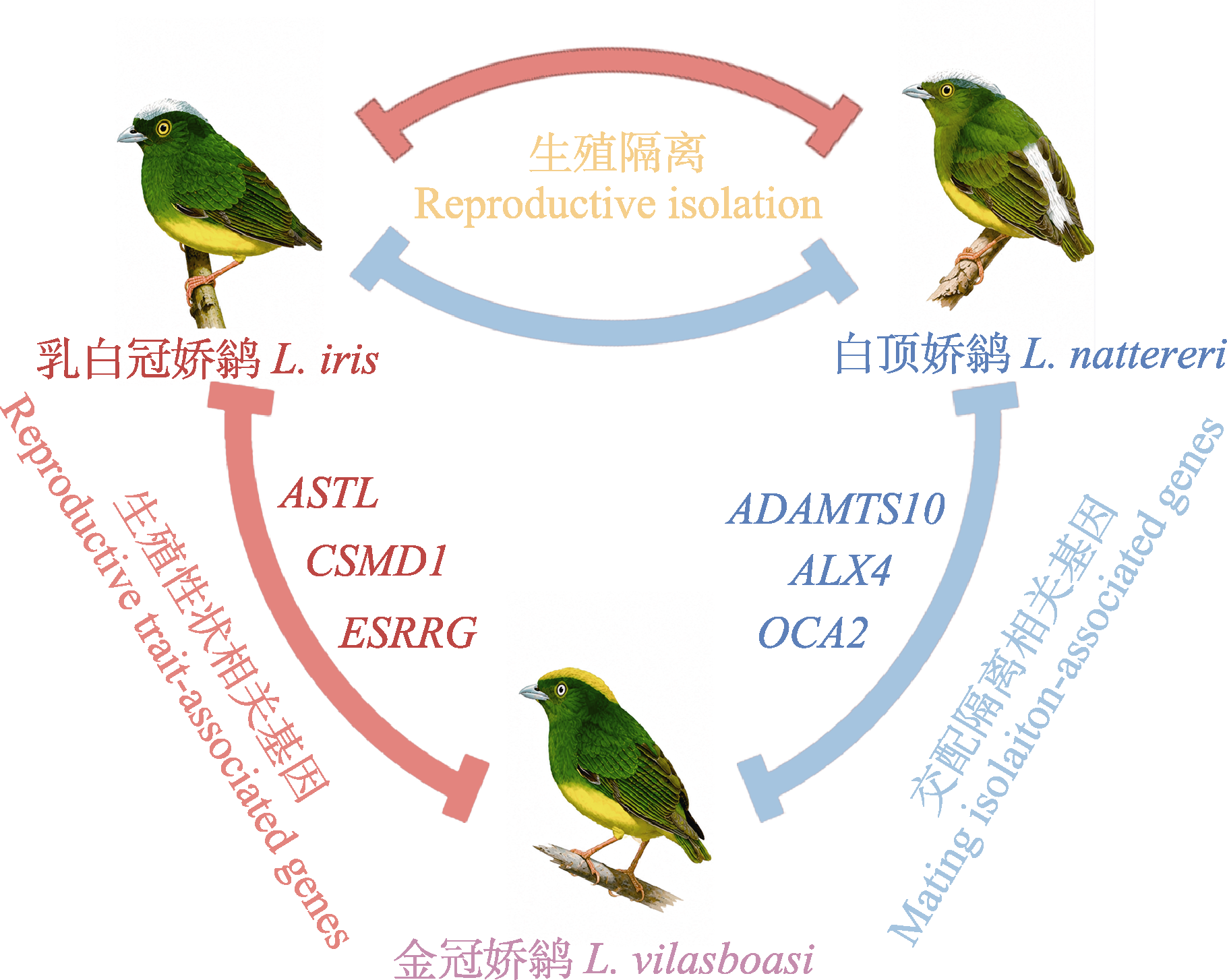
Fig. 6 A proposed model of homoploid hybrid speciation in Lepidothrix vilasboasi. The genome of the L. vilasboasi originated through historical hybridization between the L. iris (parental species A) and the L. nattereri (parental species B). Following hybridization, genes inherited from parental species B, including ADAMTS10, ALX4, and OCA2, which are involved in plumage pigmentation and skin development, may have produced the distinctive plumage phenotype of L. vilasboasi, thereby promoting mate recognition and assortative mating and establishing prezygotic reproductive isolation through mating isolation. In contrast, genes inherited from parental species A, including ASTL, CSMD1, and ESRRG, which are associated with spermatogenesis, oocyte maturation, and reproductive system development, may have contributed secondarily to postzygotic reproductive isolation. Bird images adapted from Barrera-Guzmán et al. (2018).
| [1] | Abbott R, Albach D, Ansell S, Arntzen JW, Baird SJE, Bierne N, Boughman J, Brelsford A, Buerkle CA, Buggs R, Butlin RK, Dieckmann U, Eroukhmanoff F, Grill A, Cahan SH, Hermansen JS, Hewitt G, Hudson AG, Jiggins C, Jones J, Keller B, Marczewski T, Mallet J, Martinez-Rodriguez P, Möst M, Mullen S, Nichols R, Nolte AW, Parisod C, Pfennig K, Rice AM, Ritchie MG, Seifert B, Smadja CM, Stelkens R, Szymura JM, Väinölä R, Wolf JBW, Zinner D (2013) Hybridization and speciation. Journal of Evolutionary Biology, 26, 229-246. |
| [2] | Abbott RJ, Barton NH, Good JM (2016) Genomics of hybridization and its evolutionary consequences. Molecular Ecology, 25, 2325-2332. |
| [3] | Alexander DH, Novembre J, Lange K (2009) Fast model-based estimation of ancestry in unrelated individuals. Genome Research, 19, 1655-1664. |
| [4] | Altschul SF, Gish W, Miller W, Myers EW, Lipman DJ (1990) Basic local alignment search tool. Journal of Molecular Biology, 215, 403-410. |
| [5] | Balakrishnan CN, Toda Y, Ko MC, Wirthlin ME, Driver RJ, Bolton PE, Miller ET, Mendez-Aranda D, Dikow RB, Frandsen PB (2026) Genomic and physiological changes in a sexually selected and frugivorous bird radiation. Current Biology, 36, 3061-3076. |
| [6] | Barrera-Guzmán AO, Aleixo A, Shawkey MD, Weir JT (2018) Hybrid speciation leads to novel male secondary sexual ornamentation of an Amazonian bird. Proceedings of the National Academy of Sciences, USA, 115, E218-E225. |
| [7] | Bellono NW, Escobar IE, Lefkovith AJ, Marks MS, Oancea E (2014) An intracellular anion channel critical for pigmentation. eLife, 3, e04543. |
| [8] | Browning BL, Tian XW, Zhou Y, Browning SR (2021) Fast two-stage phasing of large-scale sequence data. The American Journal of Human Genetics, 108, 1880-1890. |
| [9] | Catchen J, Hohenlohe PA, Bassham S, Amores A, Cresko WA (2013) Stacks: An analysis tool set for population genomics. Molecular Ecology, 22, 3124-3140. |
| [10] | Danecek P, Auton A, Abecasis G, Albers CA, Banks E, DePristo MA, Handsaker RE, Lunter G, Marth GT, Sherry ST, McVean G, Durbin R, Group GPA (2011) The variant call format and VCFtools. Bioinformatics, 27, 2156-2158. |
| [11] | Hoang DT, Chernomor O, von Haeseler A, Minh BQ, Vinh LS (2018) UFBoot2: Improving the ultrafast bootstrap approximation. Molecular Biology and Evolution, 35, 518-522. |
| [12] | Hong H, Yang L, Stallcup MR (1999) Hormone-independent transcriptional activation and coactivator binding by novel orphan nuclear receptor ERR3. Journal of Biological Chemistry, 274, 22618-22626. |
| [13] | Jia DR, Wang YJ, Liu TL, Wu GL, Kou YX, Cheng K, Liu JQ (2016) Diploid hybrid origin of Hippophaë gyantsensis (Elaeagnaceae) in the western Qinghai-Tibet Plateau. Biological Journal of the Linnean Society, 117, 658-671. |
| [14] | Kalyaanamoorthy S, Minh BQ, Wong TKF, von Haeseler A, Jermiin LS (2017) ModelFinder: Fast model selection for accurate phylogenetic estimates. Nature Methods, 14, 587-589. |
| [15] | Karoulias SZ, Taye N, Stanley S, Hubmacher D (2020) The ADAMTS/Fibrillin connection: Insights into the biological functions of ADAMTS10 and ADAMTS17 and their respective sister proteases. Biomolecules, 10, 596. |
| [16] | Katoh K, Misawa K, Kuma K, Miyata T (2002) MAFFT: A novel method for rapid multiple sequence alignment based on fast Fourier transform. Nucleic Acids Research, 30, 3059-3066. |
| [17] | Kayserili H, Uz E, Niessen C, Vargel I, Alanay Y, Tuncbilek G, Yigit G, Uyguner O, Candan S, Okur H, Kaygin S, Balci S, Mavili E, Alikasifoglu M, Haase I, Wollnik B, Akarsu NA (2009) ALX4 dysfunction disrupts craniofacial and epidermal development. Human Molecular Genetics, 18, 4357-4366. |
| [18] | Knaus BJ, Grünwald NJ (2017) VCFR: A package to manipulate and visualize variant call format data in R. Molecular Ecology Resources, 17, 44-53. |
| [19] | Langmead B, Salzberg SL (2012) Fast gapped-read alignment with Bowtie 2. Nature Methods, 9, 357-359. |
| [20] | Lee AS, Rusch J, Lima AC, Usmani A, Huang N, Lepamets M, Vigh-Conrad KA, Worthington RE, Mägi R, Wu XB, Aston KI, Atkinson JP, Carrell DT, Hess RA, O’Bryan MK, Conrad DF (2019) Rare mutations in the complement regulatory gene CSMD1 are associated with male and female infertility. Nature Communications, 10, 4626. |
| [21] | Long ZQ, Rieseberg LH (2025) Documenting homoploid hybrid speciation. Molecular Ecology, 34, e17412. |
| [22] | Maddirevula S, Coskun S, Al-Qahtani M, Aboyousef O, Alhassan S, Aldeery M, Alkuraya FS (2022) ASTL is mutated in female infertility. Human Genetics, 141, 49-54. |
| [23] | Mallet J (2005) Hybridization as an invasion of the genome. Trends in Ecology & Evolution, 20, 229-237. |
| [24] | Mallet J (2007) Hybrid speciation. Nature, 446, 279-283. |
| [25] | Minh BQ, Schmidt HA, Chernomor O, Schrempf D, Woodhams MD, von Haeseler A, Lanfear R (2020) IQ-TREE 2: New models and efficient methods for phylogenetic inference in the genomic era. Molecular Biology and Evolution, 37, 1530-1534. |
| [26] | Nevado B, Chapman MA, Brennan AC, Clark JW, Wong ELY, Batstone T, McCarthy SA, Tracey A, Torrance J, Sims Y, Abbott RJ, Filatov D, Hiscock SJ (2024) Genomic changes and stabilization following homoploid hybrid speciation of the Oxford ragwort Senecio squalidus. Current Biology, 34, 4412-4423. |
| [27] | Price AL, Patterson NJ, Plenge RM, Weinblatt ME, Shadick NA, Reich D (2006) Principal components analysis corrects for stratification in genome-wide association studies. Nature Genetics, 38, 904-909. |
| [28] | Rieseberg LH (1997) Hybrid origins of plant species. Annual Review of Ecology and Systematics, 28, 359-389. |
| [29] | Ru DF, Sun YS, Wang DL, Chen Y, Wang TJ, Hu QJ, Abbott RJ, Liu JQ (2018) Population genomic analysis reveals that homoploid hybrid speciation can be a lengthy process. Molecular Ecology, 27, 4875-4887. |
| [30] | Schumer M, Rosenthal GG, Andolfatto P (2014) How common is homoploid hybrid speciation? Evolution, 68, 1553-1560. |
| [31] | Semenov GA, Scordato ESC, Khaydarov DR, Smith CCR, Kane NC, Safran RJ (2017) Effects of assortative mate choice on the genomic and morphological structure of a hybrid zone between two bird subspecies. Molecular Ecology, 26, 6430-6444. |
| [32] | Stre GP, Moum T, Bureš S, Král M, Adamjan M, Moreno J (1997) A sexually selected character displacement in flycatchers reinforces premating isolation. Nature, 387, 589-592. |
| [33] | Turbek SP, Browne M, Di Giacomo AS, Kopuchian C, Hochachka WM, Estalles C, Lijtmaer DA, Tubaro PL, Silveira LF, Lovette IJ, Safran RJ, Taylor SA, Campagna L (2021) Rapid speciation via the evolution of pre-mating isolation in the Iberá Seedeater. Science, 371, eabc0256. |
| [34] | Wang ZF, Jiang YZ, Bi H, Lu ZQ, Ma YZ, Yang XY, Chen NN, Tian B, Liu BB, Mao XX, Ma T, DiFazio SP, Hu QJ, Abbott RJ, Liu JQ (2021) Hybrid speciation via inheritance of alternate alleles of parental isolating genes. Molecular Plant, 14, 208-222. |
| [35] | Wang ZF, Liu JQ (2025) Speciation studies in the genomic era. Hereditas (Beijing), 47, 71-100. (in Chinese with English abstract) |
| [王则夫, 刘建全 (2025) 基因组时代的物种形成研究. 遗传, 47, 71-100.] | |
| [36] | Wickham H, François R, Henry L, Müller K, Vaughan D (2023) dplyr: A Grammar of Data Manipulation. R package version 1.1.4. https://CRAN.R-project.org/package=dplyr. (accessed on 2026-02-02) |
| [37] | Wickham H, Vaughan D, Girlich M (2024) tidyr: Tidy Messy Data. R package version 1.3.1. https://CRAN.R-project.org/package=tidyr. (accessed on 2026-02-02) |
| [38] | Zou TT, Kuang WM, Yin TT, Frantz L, Zhang C, Liu JQ, Wu H, Yu L (2022) Uncovering the enigmatic evolution of bears in greater depth: The hybrid origin of the Asiatic black bear. Proceedings of the National Academy of Sciences, USA, 119, e2120307119. |
| [1] | Nan Zhou, Meiling Huang, Xiaocai Tan, Junjie Liu, Ke Wen, Aiwu Jiang. Bird community characteristics and their environmental drivers in urban parks across Chinese prefecture-level cities based on citizen science data [J]. Biodiv Sci, 2026, 34(5): 25347-. |
| [2] | Xingke Fan, Xia Yan, Yuanyuan Feng, Jinhua Ran, Chaoju Qian, Xiaoyue Yin, Shanshan Zhou, Tingzhou Fang, Xiaofei Ma. Genome size variations and species differentiation of Reaumuria soongarica [J]. Biodiv Sci, 2021, 29(10): 1308-1320. |
| [3] | Yuguo Wang. Natural hybridization and speciation [J]. Biodiv Sci, 2017, 25(6): 565-576. |
| [4] | Xiaolong Zhang, Lihua Yang, Ming Kang. Post-pollination reproductive isolation of sympatric populations of Primulina eburnea and P. mabaensis (Gesneriaceae) [J]. Biodiv Sci, 2017, 25(6): 615-620. |
| [5] | Ping Xie. A brief review on the historical changes in the concept of species [J]. Biodiv Sci, 2016, 24(9): 1014-1019. |
| [6] | Dexing Zhang. Why is it so difficult to reach a consensus in species concept? [J]. Biodiv Sci, 2016, 24(9): 1009-1013. |
| [7] | Zhenna Qian, Qianwan Meng, Mingxun Ren. Pollination ecotypes and herkogamy variation of Hiptage benghalensis (Malpighiaceae) with mirror-image flowers [J]. Biodiv Sci, 2016, 24(12): 1364-1372. |
| [8] | Haomin Lyu, Renchao Zhou, Suhua Shi. Recent advances in the study of ecological speciation [J]. Biodiv Sci, 2015, 23(3): 398-407. |
| [9] | Zhonghu Li,Zhanlin Liu,Mali Wang,Zengqiang Qian,Peng Zhao,Juan Zhu,Yixin Yang,Xiaohao Yan,Yinjun Li,Guifang Zhao. A review on studies of speciation in the presence of gene flow: evolution of reproductive isolation [J]. Biodiv Sci, 2014, 22(1): 88-96. |
| [10] | Peng Li, Yibo Luo. Reproductive biology of an endemic orchid Cypripedium smithii in China and reproductive isolation between C. smithii and C. tibeticum [J]. Biodiv Sci, 2009, 17(4): 406-413. |
| [11] | HU Hui-Jian, JIANG Zhi-Gang, WANG Zu-Wang. Correlation between avian and mammalian species richness in different geographic regions in China [J]. Biodiv Sci, 2001, 09(2): 95-101. |
| Viewed | ||||||
|
Full text |
|
|||||
|
Abstract |
|
|||||
Copyright © 2026 Biodiversity Science
Editorial Office of Biodiversity Science, 20 Nanxincun, Xiangshan, Beijing 100093, China
Tel: 010-62836137, 62836665 E-mail: biodiversity@ibcas.ac.cn
