Mechanisms regulating caste and behavior differentiation in social insects
Received date: 2020-05-29
Accepted date: 2020-09-01
Online published: 2020-09-30
Background & Aims: Eusociality is a critical evolutionary innovation. Understanding the origin of eusociality and related regulating mechanisms has theoretical and practical significance to several research fields. A clear hierarchy and division of labor exists among individuals of social insects. The behavioral differentiation and extensive cooperation between castes are beneficial for their adaptation to complicated environmental changes. Understanding how social insects can produce individuals with differences in morphology, behavior and life-history characteristics is an important goal of much evolutionary and developmental biology research. With the rapid development of sequencing technology and bioinformatics, there have been many studies on the mechanisms underlying social insect behavioral differentiation. Here, we present recent advances on the environmental factors and physiological and molecular mechanisms regulating caste and behavioral differentiation in social insects by summarizing the current results of social insect studies, and propose the future research directions.
Progresses: Both biotic factors (e.g., nutrients, pheromones, cuticular hydrocarbons) and abiotic factors (e.g., temperature, climate) can directly and indirectly affect the differentiation of insect social behavior and castes. Endocrine hormones, such as juvenile hormone (JH), ecdysteroids (20E), insulin-like peptides (ILPs), and neurohormonal bioamines, also play important roles. In addition, evolutionary changes in gene sequences or genome structure, including heritable differences and novel genes, as well as gene regulatory mechanisms, such as DNA methylation and differential expression of genes, can also affect the caste and behavior differentiation of social insects to different degrees.
Prospects: We suggest strengthening the study of social behavior and regulating mechanisms in other social insect lineages, such as aphids and thrips, which are relatively understudied and which will improve the understanding of the origins and evolution of eusociality and social behaviors in insects.
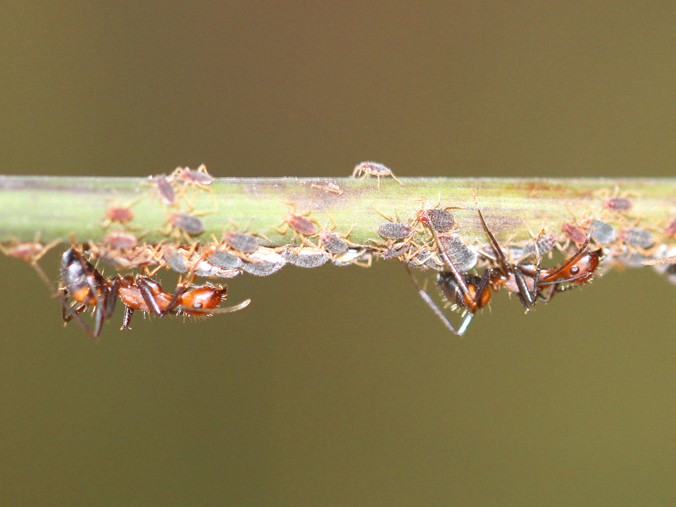
Hui Zhang , Qian Liu , Xiaolei Huang . Mechanisms regulating caste and behavior differentiation in social insects[J]. Biodiversity Science, 2021 , 29(4) : 507 -516 . DOI: 10.17520/biods.2020224
| [1] | Ament SA, Corona M, Pollock HS, Robinson GE (2008) Insulin signaling is involved in the regulation of worker division of labor in honey bee colonies. Proceedings of the National Academy of Sciences, USA, 105,4226-4231. |
| [2] | Ament SA, Velarde RA, Kolodkin MH, Moyse D, Robinson GE (2011) Neuropeptide Y-like signalling and nutritionally mediated gene expression and behaviour in the honey bee. Insect Molecular Biology, 20,335-345. |
| [3] | Amsalem E, Malka O, Grozinger C, Hefetz A (2014) Exploring the role of juvenile hormone and vitellogenin in reproduction and social behavior in bumble bees. BMC Evolutionary Biology, 14,45. |
| [4] | Anderson KE, Gadau J, Mott BM, Johnson RA, Altamirano A, Strehl C, Fewell JH (2006) Distribution and evolution of genetic caste determination in Pogonomyrmex seed- harvester ants. Ecology, 87,2171-2184. |
| [5] | Anderson M (1984) The evolution of eusociality. Annual Review of Ecology and Systematics, 15,165-189. |
| [6] | Aonuma H, Watanabe T (2012) Octopaminergic system in the brain controls aggressive motivation in the ant, Formica japonica. Acta Biologica Hungarica, 63,63-68. |
| [7] | Barron AB, Maleszka R, Vander Meer RK, Robinson GE (2007) Octopamine modulates honey bee dance behavior. Proceedings of the National Academy of Sciences, USA, 104,1703-1707. |
| [8] | Barron AB, Oldroyd BP (2001) Social regulation of ovary activation in “anarchistic” honey-bees (Apis mellifera). Behavioral Ecology and Sociobiology, 49,214-219. |
| [9] | Berens AJ, Hunt JH, Toth AL (2015) Comparative transcriptomics of convergent evolution: Different genes but conserved pathways underlie caste phenotypes across lineages of eusocial insects. Molecular Biology and Evolution, 32,690-703. |
| [10] | Bonasio R, Li QY, Lian JM, Mutti NS, Jin LJ, Zhao HM, Zhang P, Wen P, Xiang H, Ding Y, Jin ZH, Shen SS, Wang ZJ, Wang W, Wang J, Berger SL, Liebig J, Zhang GJ, Reinberg D (2012) Genome-wide and caste-specific DNA methylomes of the ants Camponotus floridanus and Harpegnathos saltator. Current Biology, 22,1755-1764. |
| [11] | Bonasio R, Zhang GJ, Ye CY, Mutti NS, Fang XD, Qin N, Donahue G, Yang PC, Li QY, Li C, Zhang P, Huang ZY, Berger SL, Reinberg D, Wang J, Liebig J (2010) Genomic comparison of the ants Camponotus floridanus and Harpegnathos saltator. Science, 329,1068-1071. |
| [12] | Brian MV, Hibble J (1964) Studies of caste differentiation in Myrmica rubra L. Insectes Sociaux, 11,223-238. |
| [13] | Cahan SH, Keller L (2003) Complex hybrid origin of genetic caste determination in harvester ants. Nature, 424,306-309. |
| [14] | Cassill DL, Tschinkel WR (1999) Task selection by workers of the fire ant Solenopsis invicta. Behavioral Ecology and Sociobiology, 45,301-310. |
| [15] | Chandra V, Fetter-Pruneda I, Oxley PR, Ritger AL, Mckenzie SK, Libbrecht R, Kronauer DJC (2018) Social regulation of insulin signaling and the evolution of eusociality in ants. Science, 361,398-402. |
| [16] | Chandrasekaran S, Ament SA, Eddy JA, Rodriguez-Zas SL, Schatz BR, Price ND, Robinson GE (2011) Behavior-specific changes in transcriptional modules lead to distinct and predictable neurogenomic states. Proceedings of the National Academy of Sciences, USA, 108,18020-18025. |
| [17] | Chittka A, Wurm Y, Chittka L (2012) Epigenetics: The making of ant castes. Current Biology, 22,R835-R838. |
| [18] | Cornette R, Gotoh H, Koshikawa S, Miura T (2008) Juvenile hormone titers and caste differentiation in the damp-wood termite Hodotermopsis sjostedti (Isoptera, Termopsidae). Journal of Insect Physiology, 54,922-930. |
| [19] | Corona M, Libbrecht R, Wheeler DE (2016) Molecular mechanisms of phenotypic plasticity in social insects. Current Opinion in Insect Science, 13,55-60. |
| [20] | Corona M, Libbrecht R, Wurm Y, Riba-Grognuz O, Studer RA, Keller L (2013) Vitellogenin underwent subfunctionali-zation to acquire caste and behavioral specific expression in the harvester ant Pogonomyrmex barbatus. PLoS Genetics, 9,e1003730. |
| [21] | Crespi BJ (1992) Eusociality in Australian gall thrips. Nature, 359,724-726. |
| [22] | Daugherty THF, Toth AL, Robinson GE (2011) Nutrition and division of labor: Effects on foraging and brain gene expression in the paper wasp Polistes metricus. Molecular Ecology, 20,5337-5347. |
| [23] | de Azevedo SV, Hartfelder K (2008) The insulin signaling pathway in honey bee (Apis mellifera) caste development—Differential expression of insulin-like peptides and insulin receptors in queen and worker larvae. Journal of Insect Physiology, 54,1064-1071. |
| [24] | Dong SZ, Ye GY, Guo JY, Hu C (2009) Roles of ecdysteroid and juvenile hormone in vitellogenesis in an endoparasitic wasp, Pteromalus puparum (Hymenoptera: Pteromalidae). General and Comparative Endocrinology, 160,102-108. |
| [25] | Fei HX, Henderson G (2002) Formosan subterranean termite (Isoptera: Rhinotermitidae) wood consumption and worker survival as affected by temperature and soldier proportion. Environmental Entomology, 31,509-514. |
| [26] | Ferreira PG, Patalano S, Chauhan R, Ffrench-Constant R, Gabaldón T, Guigó R, Sumner S (2013) Transcriptome analyses of primitively eusocial wasps reveal novel insights into the evolution of sociality and the origin of alternative phenotypes. Genome Biology, 14,R20. |
| [27] | Flatt T, Tu MP, Tatar M (2005) Hormonal pleiotropy and the juvenile hormone regulation of Drosophila development and life history. BioEssays, 27,999-1010. |
| [28] | Frumhoff PC, Baker J (1988) A genetic component to division of labour within honey bee colonies. Nature, 333,358-361. |
| [29] | Gadagkar R, Gordon D, Keller L, Michod R, Queller D, Robinson GE, Strassmann J, West-Eberhard MJ (2019) Insights and opportunities in insect social behavior. Current Opinion in Insect Science, 34, ix-xx. |
| [30] | Greene MJ, Gordon DM (2003) Social insects: Cuticular hydrocarbons inform task decisions. Nature, 423,32. |
| [31] | Harpur BA, Kent CF, Molodtsova D, Lebon JMD, Alqarni AS, Owayss AA, Zayed A (2014) Population genomics of the honey bee reveals strong signatures of positive selection on worker traits. Proceedings of the National Academy of Sciences, USA, 111,2614-2619. |
| [32] | Harrison MC, Jongepier E, Robertson HM, Arning N, Bitard-Feildel T, Chao H, Childers CP, Dinh H, Doddapaneni H, Dugan S, Gowin J, Greiner C, Han Y, Hu HF, Hughes DST, Huylmans AK, Kemena C, Kremer LPM, Lee SL, Lopez-Ezquerra A, Mallet L, Monroy-Kuhn JM, Moser A, Murali SC, Muzny DM, Otani S, Piulachs MD, Poelchau M, Qu JX, Schaub F, Wada-Katsumata A, Worley KC, Xie QL, Ylla G, Poulsen M, Gibbs RA, Schal C, Richards S, Belles X, Korb J, Bornberg-Bauer E (2018) Hemimetabolous genomes reveal molecular basis of termite eusociality. Nature Ecology & Evolution, 2,557-566. |
| [33] | Hayashi Y, Lo N, Miyata H, Kitade O (2007) Sex-linked genetic influence on caste determination in a termite. Science, 318,985-987. |
| [34] | Haydak MH (1943) Larval food and development of castes in the honeybee. Journal of Economic Entomology, 36,778-792. |
| [35] | He XJ, Zhou LB, Pan QZ, Barron AB, Yan WY, Zeng ZJ (2017) Making a queen: An epigenetic analysis of the robustness of the honeybee (Apis mellifera) queen developmental pathway. Molecular Ecology, 26,1598-1607. |
| [36] | Hughes WOH, Sumner S, Van Borm S, Boomsma JJ (2003) Worker caste polymorphism has a genetic basis in Acromyrmex leaf-cutting ants. Proceedings of the National Academy of Sciences, USA, 100,9394-9397. |
| [37] | Ishikawa Y, Aonuma H, Sasaki K, Miura T (2016) Tyraminergic and octopaminergic modulation of defensive behavior in termite soldier. PLoS ONE, 11,e0154230. |
| [38] | Jaffé R, Kronauer DJ, Kraus FB, Boomsma JJ, Moritz RF (2007) Worker caste determination in the army ant Eciton burchellii. Biology Letters, 3,513-516. |
| [39] | Johnson BR, Tsutsui ND (2011) Taxonomically restricted genes are associated with the evolution of sociality in the honey bee. BMC Genomics, 12,164. |
| [40] | Judd TM, Teal PEA, Hernandez EJ, Choudhury T, Hunt JH (2015) Quantitative differences in nourishment affect caste-related physiology and development in the paper wasp Polistes metricus. PLoS ONE, 10,e0116199. |
| [41] | Julian GE, Fewell JH, Gadau J, Johnson RA, Larrabee D (2002) Genetic determination of the queen caste in an ant hybrid zone. Proceedings of the National Academy of Sciences, USA, 99,8157-8160. |
| [42] | Kaatz H, Eichmüller S, Kreissl S (1994) Stimulatory effect of octopamine on juvenile hormone biosynthesis in honey bees (Apis mellifera): Physiological and immunocytochemical evidence. Journal of Insect Physiology, 40,865-872. |
| [43] | Kamakura M (2011) Royalactin induces queen differentiation in honeybees. Nature, 473,478-483. |
| [44] | Kamhi JF, Nunn K, Robson SKA, Traniello JFA (2015) Polymorphism and division of labour in a socially complex ant: Neuromodulation of aggression in the Australian weaver ant, Oecophylla smaragdina. Proceedings of the Royal Society B: Biological Sciences, 282,20150704. |
| [45] | Kapheim KM, Pan H, Li C, Salzberg SL, Puiu D, Magoc T, Robertson HM, Hudson ME, Venkat A, Fischman BJ, Hernandez A, Yandell M, Ence D, Holt C, Yocum GD, Kemp WP, Bosch J, Waterhouse RM, Zdobnov EM, Stolle E, Kraus FB, Helbing S, Moritz RFA, Glastad KM, Hunt BG, Goodisman MAD, Hauser F, Grimmelikhuijzen CJP, Pinheiro DG, Nunes FMF, Soares MPM, Tanaka éD, Sim?es ZLP, Hartfelder K, Evans JD, Barribeau SM, Johnson RM, Massey JH, Southey BR, Hasselmann M, Hamacher D, Biewer M, Kent CF, Zayed A, Blatti C, Sinha S, Johnston JS, Hanrahan SJ, Kocher SD, Wang J, Robinson GE, Zhang G (2015) Genomic signatures of evolutionary transitions from solitary to group living. Science, 348,1139-1143. |
| [46] | Kocher SD, Pellissier L, Veller C, Purcell J, Nowak MA, Chapuisat M, Pierce NE (2014) Transitions in social complexity along elevational gradients reveal a combined impact of season length and development time on social evolution. Proceedings of the Royal Society B: Biological Sciences, 281,20140627. |
| [47] | Korb J (2015) Juvenile hormone: A central regulator of termite caste polyphenism. Advances in Insect Physiology, 48,131-161. |
| [48] | Korb J, Belles X (2017) Juvenile hormone and hemimetabolan eusociality: A comparison of cockroaches with termites. Current Opinion in Insect Science, 22,109-116. |
| [49] | Korb J, Schmidinger S (2004) Help or disperse? Cooperation in termites influenced by food conditions. Behavioral Ecology and Sociobiology, 56,89-95. |
| [50] | LeBoeuf AC, Benton R, Keller L (2013) The molecular basis of social behavior: Models, methods and advances. Current Opinion in Neurobiology, 23,3-10. |
| [51] | Li BB, Hou L, Zhu D, Xu XL, An SH, Wang XH (2018) Identification and caste-dependent expression patterns of DNA methylation associated genes in Bombus terrestris. Scientific Reports, 8,2332. |
| [52] | Lucas C, Sokolowski MB (2009) Molecular basis for changes in behavioral state in ant social behaviors. Proceedings of the National Academy of Sciences, USA, 106,6351-6356. |
| [53] | Marco Antonio DS, Guidugli-Lazzarini KR, do Nascimento AM, Sim?es ZLP, Hartfelder K (2008) RNAi-mediated silencing of vitellogenin gene function turns honeybee (Apis mellifera) workers into extremely precocious foragers. Naturwissenschaften, 95,953-961. |
| [54] | Marshall H, Lonsdale ZN, Mallon EB (2019) Methylation and gene expression differences between reproductive and sterile bumblebee workers. Evolution Letters, 3,485-499. |
| [55] | Masuoka Y, Yaguchi H, Toga K, Shigenobu S, Maekawa K (2018) TGF β signaling related genes are involved in hormonal mediation during termite soldier differentiation. PLoS Genetics, 14,e1007338. |
| [56] | Matsuura K, Himuro C, Yokoi T, Yamamoto Y, Vargo EL, Keller L (2010) Identification of a pheromone regulating caste differentiation in termites. Proceedings of the National Academy of Sciences, USA, 107,12963-12968. |
| [57] | Mizunami M, Yamagata N, Nishino H (2010) Alarm pheromone processing in the ant brain: An evolutionary perspective. Frontiers in Behavioral Neuroscience, 4,28. |
| [58] | Monastirioti M (1999) Biogenic amine systems in the fruit fly Drosophila melanogaster. Microscopy Research and Technique, 45,106-121. |
| [59] | Mott CM, Breed MD (2012) Insulin modifies honeybee worker behavior. Insects, 3,1084-1092. |
| [60] | Nelson CM, Ihle KE, Fondrk MK, Page RE, Amdam GV (2007) The gene vitellogenin has multiple coordinating effects on social organization. PLoS Biology, 5,e62. |
| [61] | Norman VC, Hughes WOH (2016) Behavioural effects of juvenile hormone and their influence on division of labour in leaf-cutting ant societies. Journal of Experimental Biology, 219,8-11. |
| [62] | Nouvian M, Mandal S, Jamme C, Claudianos C, d’Ettorre P, Reinhard J, Barron AB, Giurfa M (2018) Cooperative defence operates by social modulation of biogenic amine levels in the honey bee brain. Proceedings of the Royal Society B: Biological Sciences, 285,20172653. |
| [63] | Page RE, Erickson EH (1988) Reproduction by worker honey bees (Apis mellifera L.). Behavioral Ecology and Sociobiology, 23,117-126. |
| [64] | Pearcy M, Aron S, Doums C, Keller L (2004) Conditional use of sex and parthenogenesis for worker and queen production in ants. Science, 306,1780-1783. |
| [65] | Rehan SM, Berens AJ, Toth AL (2014) At the brink of eusociality: Transcriptomic correlates of worker behaviour in a small carpenter bee. BMC Evolutionary Biology, 14,260. |
| [66] | Reim T, Scheiner R (2014) Division of labour in honey bees: Age- and task-related changes in the expression of octopamine receptor genes. Insect Molecular Biology, 23,833-841. |
| [67] | Robinson GE (1992) Regulation of division of labor in insect societies. Annual Review of Entomology, 37,637-665. |
| [68] | Robinson GE, Page RE (1988) Genetic determination of guarding and undertaking in honey-bee colonies. Nature, 333,356-358. |
| [69] | Scheiner R, Baumann A, Blenau W (2006) Aminergic control and modulation of honeybee behaviour. Current Neuropharmacology, 4,259-276. |
| [70] | Schulz DJ, Sullivan JP, Robinson GE (2002) Juvenile hormone and octopamine in the regulation of division of labor in honey bee colonies. Hormones and Behavior, 42,222-231. |
| [71] | Schwander T, Humbert JY, Brent CS, Cahan SH, Chapuis L, Renai E, Keller L (2008) Maternal effect on female caste determination in a social insect. Current Biology, 18,265-269. |
| [72] | Sheehan MJ, Botero CA, Hendry TA, Sedio BE, Jandt JM, Weiner S, Toth AL, Tibbetts EA (2015) Different axes of environmental variation explain the presence vs. extent of cooperative nest founding associations in Polistes paper wasps. Ecology Letters, 18,1057-1067. |
| [73] | Simola DF, Graham RJ, Brady CM, Enzmann BL, Desplan C, Ray A, Zwiebel LJ, Bonasio R, Reinberg D, Liebig J, Ber?er SL (2016) Epigenetic (re)programming of caste-specific behavior in the ant Camponotus floridanus. Science, 351,aac6633. |
| [74] | Simola DF, Wissler L, Donahue G, Waterhouse RM, Helmkampf M, Roux J, Nygaard S, Glastad KM, Hagen DE, Viljakainen L, Reese JT, Hunt BG, Graur D, Elhaik E, Kriventseva EV, Wen J, Parker BJ, Cash E, Privman E, Childers CP, Mu?oz-Torres MC, Boomsma JJ, Bornberg-Bauer E, Currie CR, Elsik CG, Suen G, Goodisman MAD, Keller L, Liebig J, Rawls A, Reinberg D, Smith CD, Smith CR, Tsutsui N, Wurm Y, Zdobnov EM, Berger SL, Gadau J (2013) Social insect genomes exhibit dramatic evolution in gene composition and regulation while preserving regulatory features linked to sociality. Genome Research, 23,1235-1247. |
| [75] | Slessor KN, Kaminski LA, King GGS, Borden JH, Winston ML (1988) Semiochemical basis of the retinue response to queen honey bees. Nature, 332,354-356. |
| [76] | Smith CR, Toth AL, Suarez AV, Robinson GE (2008) Genetic and genomic analyses of the division of labour in insect societies. Nature Reviews Genetics, 9,735-748. |
| [77] | Steller MM, Kambhampati S, Caragea D (2010) Comparative analysis of expressed sequence tags from three castes and two life stages of the termite Reticulitermes flavipes. BMC Genomics, 11,463. |
| [78] | Stern DL, Foster WA (1996) The evolution of soldiers in aphids. Biological Reviews, 71,27-79. |
| [79] | Sullivan JP, Jassim O, Fahrbach SE, Robinson GE (2000) Juvenile hormone paces behavioral development in the adult worker honey bee. Hormones and Behavior, 37,1-14. |
| [80] | Sumner S (2014) The importance of genomic novelty in social evolution. Molecular Ecology, 23,26-28. |
| [81] | Szczuka A, Korczyńska J, Wnuk A, Symonowicz B, Gonzalez-Szwacka A, Mazurkiewicz P, Kostowski W, Godzińska EJ (2013) The effects of serotonin, dopamine, octopamine and tyramine on behavior of workers of the ant Formica polyctena during dyadic aggression tests. Acta Neurobiologiae Experimentalis, 73,495-520. |
| [82] | Tarver MR, Florane CB, Zhang DH, Grimm C, Lax AR (2012) Methoprene and temperature effects on caste differentiation and protein composition in the Formosan subterranean termite, Coptotermes formosanus. Journal of Insect Science, 12,18. |
| [83] | Terrapon N, Li C, Robertson HM, Ji L, Meng XH, Booth W, Chen ZS, Childers CP, Glastad KM, Gokhale K, Gowin J, Gronenberg W, Hermansen RA, Hu HF, Hunt BG, Huylmans AK, Khalil SMS, Mitchell RD, Munoz-Torres MC, Mustard JA, Pan HL, Reese JT, Scharf ME, Sun FM, Vogel H, Xiao J, Yang W, Yang ZK, Yang ZQ, Zhou JJ, Zhu JW, Brent CS, Elsik CG, Goodisman MAD, Liberles DA, Roe RM, Vargo EL, Vilcinskas A, Wang J, Bornberg-Bauer E, Korb J, Zhang GJ, Liebig J (2014) Molecular traces of alternative social organization in a termite genome. Nature Communications, 5,3636. |
| [84] | Toth AL, Kantarovich S, Meisel AF, Robinson GE (2005) Nutritional status influences socially regulated foraging ontogeny in honey bees. Journal of Experimental Biology, 208,4641-4649. |
| [85] | Toth AL, Rehan SM (2017) Molecular evolution of insect sociality: An eco-evo-devo perspective. Annual Review of Entomology, 62,419-442. |
| [86] | Toth AL, Robinson GE (2007) Evo-devo and the evolution of social behavior. Trends in Genetics, 23,334-341. |
| [87] | Trible W, Kronauer DJC (2017) Caste development and evolution in ants: It’s all about size. Journal of Experimental Biology, 220,53-62. |
| [88] | Wada-Katsumata A, Yamaoka R, Aonuma H (2011) Social interactions influence dopamine and octopamine homeostasis in the brain of the ant Formica japonica. Journal of Experimental Biology, 214,1707-1713. |
| [89] | Watanabe D, Gotoh H, Miura T, Maekawa K (2014) Social interactions affecting caste development through physiological actions in termites. Frontiers in Physiology, 5,127. |
| [90] | Weiner SA, Toth AL (2012) Epigenetics in social insects: A new direction for understanding the evolution of castes. Genetics Research International, 2012, 609810. |
| [91] | Weitekamp CA, Libbrecht R, Keller L (2017) Genetics and evolution of social behavior in insects. Annual Review of Genetics, 51,219-239. |
| [92] | Wheeler D (1996) The role of nourishment in oogenesis. Annual Review of Entomology, 41,407-431. |
| [93] | Whitfield CW, Cziko AM, Robinson GE (2003) Gene expression profiles in the brain predict behavior in individual honey bees. Science, 302,296-299. |
| [94] | Wiernasz DC, Cole BJ (2010) Patriline shifting leads to apparent genetic caste determination in harvester ants. Proceedings of the National Academy of Sciences, USA, 107,12958-12962. |
| [95] | Wilson EO (1971) The Insect Societies. Harvard University Press, Cambridge. |
| [96] | Wilson EO (1985) The sociogenesis of insect colonies. Science, 228,1489-1495. |
| [97] | Wilson EO (1987) Causes of ecological success: The case of the ants. Journal of Animal Ecology, 56,1-9. |
| [98] | Wilson EO, H?lldobler B (2005) Eusociality: Origin and consequences. Proceedings of the National Academy of Sciences, USA, 102,13367-13371. |
| [99] | Wissler L, Gadau J, Simola DF, Helmkampf M, Bornberg-Bauer E (2013) Mechanisms and dynamics of orphan gene emergence in insect genomes. Genome Biology and Evolution, 5,439-455. |
| [100] | Woodard SH, Bloch GM, Band MR, Robinson GE (2014) Molecular heterochrony and the evolution of sociality in bumblebees (Bombus terrestris). Proceedings of the Royal Society B: Biological Sciences, 281,20132419. |
| [101] | Wu Q, Brown MR (2006) Signaling and function of insulin-like peptides in insects. Annual Review of Entomology, 51,1-24. |
| [102] | Wu T, Dhami GK, Thompson GJ (2018) Soldier-biased gene expression in a subterranean termite implies functional specialization of the defensive caste. Evolution & Development, 20,3-16. |
| [103] | Zayed A, Kent CF (2015) Genomics, physiology and behaviour of social insects. Advances in Insect Physiology, 48,1-363. |
/
| 〈 |
|
〉 |
Copyright © 2026 Biodiversity Science
Editorial Office of Biodiversity Science, 20 Nanxincun, Xiangshan, Beijing 100093, China
Tel: 010-62836137, 62836665 E-mail: biodiversity@ibcas.ac.cn