

Biodiv Sci ›› 2026, Vol. 34 ›› Issue (5): 26051. DOI: 10.17520/biods.2026051 cstr: 32101.14.biods.2026051
• Original Papers: Animal Diversity • Previous Articles
Yun Zhu1( ), Kaihong Wang2, Honglei Li2, Xianglong Xu1(), Yu Lei1(), Hao Chen2, Weihua Chen2, Xinjie Cai2, Changqing Ding1,*(
 )
)
Received:2026-02-12
Accepted:2026-04-21
Online:2026-05-20
Published:2026-07-03
Contact:
Changqing Ding
Supported by:Yun Zhu, Kaihong Wang, Honglei Li, Xianglong Xu, Yu Lei, Hao Chen, Weihua Chen, Xinjie Cai, Changqing Ding. Adaptation of Crested Ibis to coastal foods: A pilot study for reestablishing population in the eastern coastal region of China[J]. Biodiv Sci, 2026, 34(5): 26051.
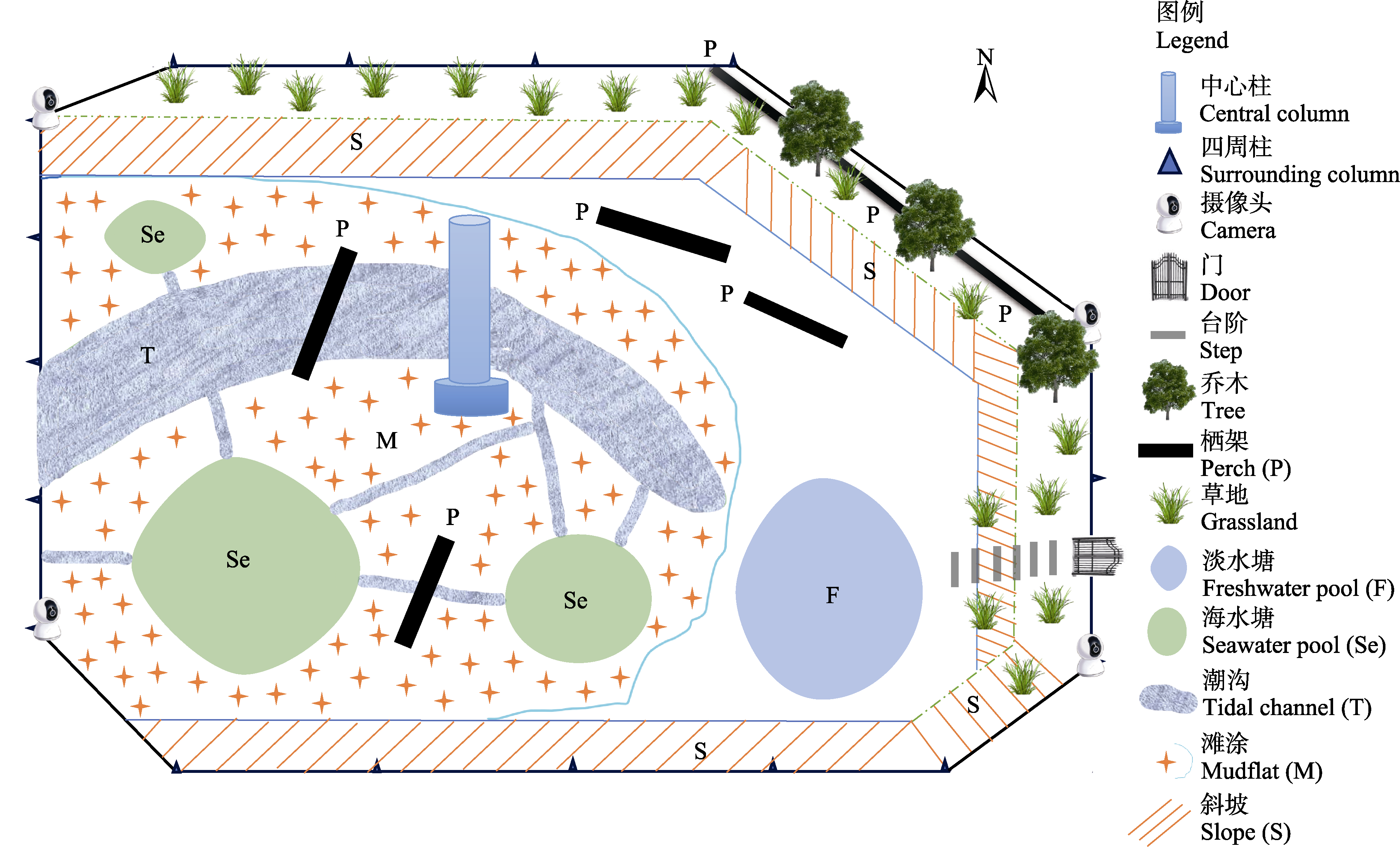
Fig. 1 Layout of environmental enrichment in the large aviary for Crested Ibis acclimating at Jiangsu Yancheng Wetland & Rare Birds National Nature Reserve
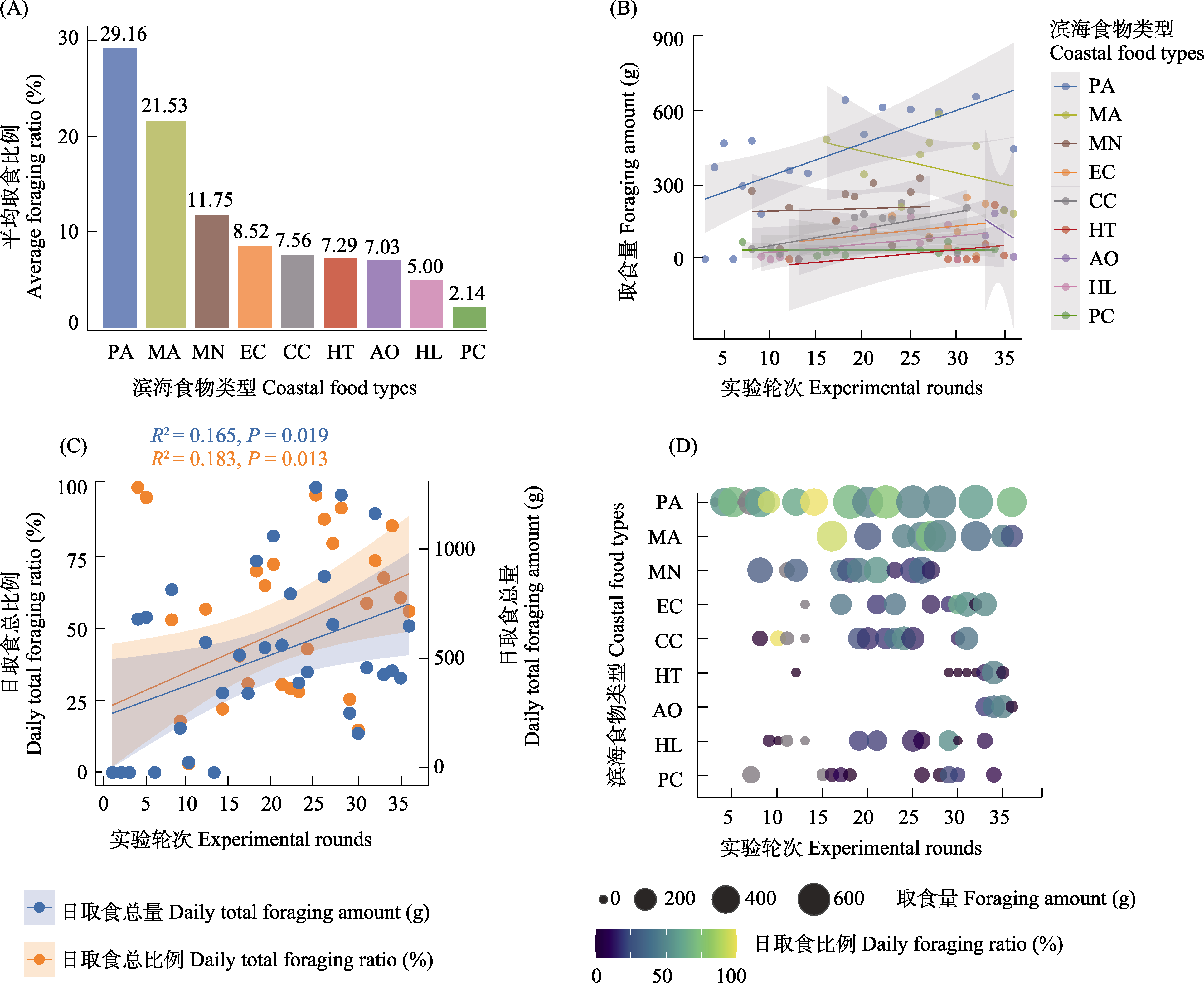
Fig. 2 Dietary composition of coastal foods in Crested Ibis during acclimation in Yancheng, Jiangsu. (A) Average foraging ratio; (B) foraging amount; (C) daily total foraging ratio and daily total foraging amount; (D) daily foraging amount and ratio. PA, Perinereis aibuhitensis; MA, Misgurnus anguilicaudatus; MN, Macrobrachium nipponense; EC, Exopalaemon carinicauda; CC, Carassius carassius; HT, Helice tridens; AO, Acanthogobius ommaturus; HL, Hemiculter leucisculus; PC, Periophthalmus cantonensis.
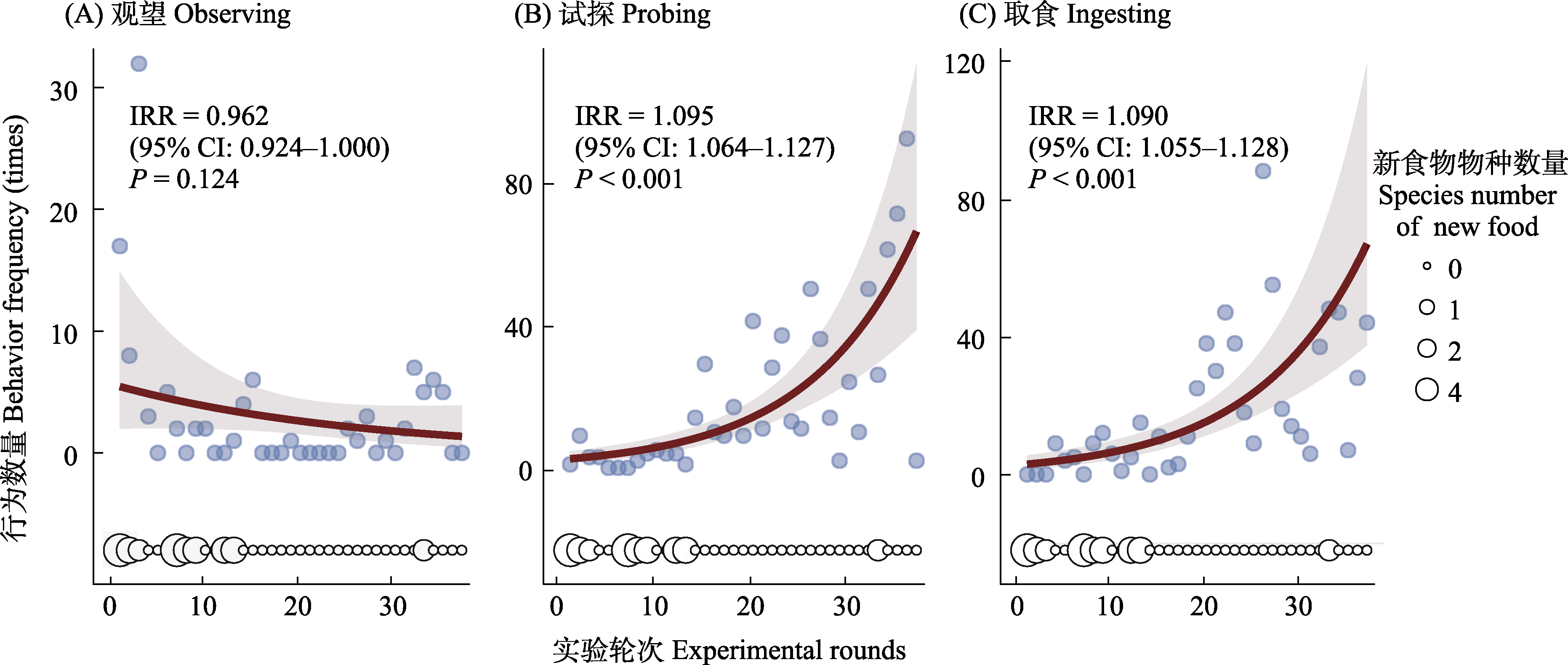
Fig. 3 Changes in foraging behaviors during the diet-shifting experiments of Crested Ibis acclimated in Yancheng, Jiangsu. IRR denotes incidence rate ratio: The 95% CI including 1 and P > 0.05 indicates no statistically significant difference. When the 95% CI does not include 1 and P < 0.05, an IRR > 1 indicates a significant increase, whereas an IRR < 1 indicates a significant decrease.
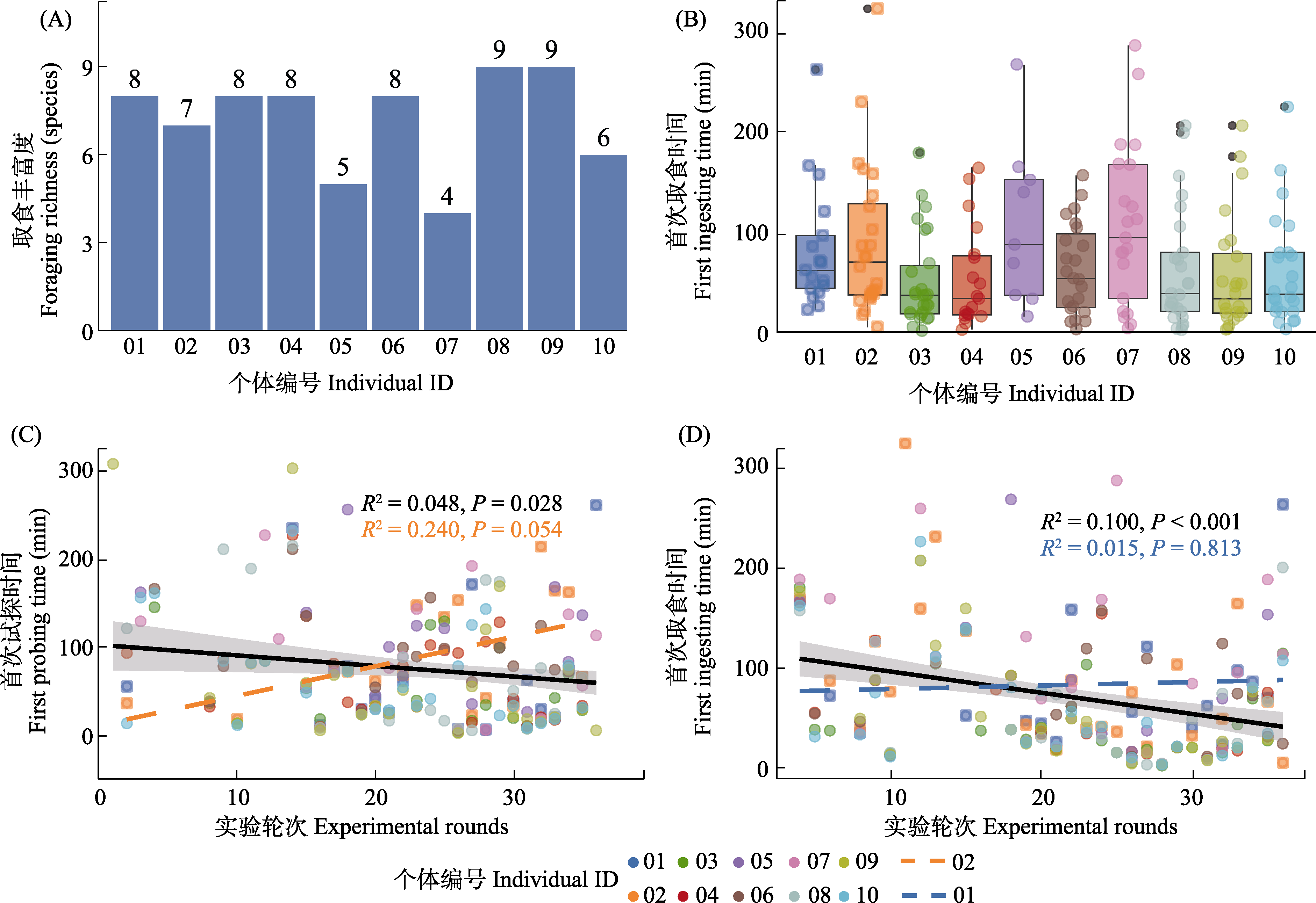
Fig. 4 Individual variation in coastal foods foraging richness and behaviors of acclimating Crested Ibis in Yancheng, Jiangsu. (A) Foraging richness on coastal foods; (B) First ingesting time across individuals; (C) First probing time across experimental rounds within groups (the orange dashed line represents individual No. 02); (D) First ingesting time across experimental rounds within groups (the blue dashed line represents individual No. 01).
| [1] |
Altmann J (1974) Observational study of behavior: Sampling methods. Behaviour, 49, 227-267.
DOI PMID |
| [2] | BirdLife International (2018) The IUCN Red List of Threatened Species 2018: e.T22697548A132069229. https://dx.doi.org/10.2305/IUCN.UK.2018-2.RLTS.T22697548A132069229.en. (accessed on 2024-10-01) |
| [3] |
Ceballos G, Ehrlich PR, Barnosky AD, García A, Pringle RM, Palmer TM (2015) Accelerated modern human-induced species losses: Entering the sixth mass extinction. Science Advances, 1, e1400253.
DOI URL |
| [4] |
de Almeida AC, Palme R, Moreira N (2018) How environmental enrichment affects behavioral and glucocorticoid responses in captive blue-and-yellow macaws (Ara ararauna). Applied Animal Behaviour Science, 201, 125-135.
DOI URL |
| [5] | Ding CQ (2004) Research on the Crested Ibis. Shanghai Scientific and Technological Education Publishing House, Shanghai. (in Chinese) |
| [丁长青 (2004) 朱鹮研究. 上海科技教育出版社, 上海.] | |
| [6] | Dingemanse NJ, Both C, van Noordwijk AJ, Rutten AL, Drent PJ (2003) Natal dispersal and personalities in great tits (Parus major). Proceedings of the Royal Society B: Biological Sciences, 270, 741-747. |
| [7] |
Edge C, Thompson D, Hao CY, Houlahan J (2014) The response of amphibian larvae to exposure to a glyphosate-based herbicide (Roundup WeatherMax) and nutrient enrichment in an ecosystem experiment. Ecotoxicology and Environmental Safety, 109, 124-132.
DOI PMID |
| [8] |
Eguizábal GV, Palme R, Villarreal D, Dal Borgo C, Di Rienzo JA, Busso JM (2013) Assessment of adrenocortical activity and behavior of the collared anteater (Tamandua tetradactyla) in response to food-based environmental enrichment. Zoo Biology, 32, 632-640.
DOI PMID |
| [9] |
Gooch S, Ashbrook K, Taylor A, Székely T (2015) Using dietary analysis and habitat selection to inform conservation management of reintroduced Great Bustards Otis tarda in an agricultural landscape. Bird Study, 62, 289-302.
DOI URL |
| [10] |
Hamilton LP, Kelly PA, Williams DF, Kelt DA, Wittmer HU (2010) Factors associated with survival of reintroduced riparian brush rabbits in California. Biological Conservation, 143, 999-1007.
DOI URL |
| [11] | IUCN/SSC (IUCN Species Survival Commission) (2013) Guidelines for Reintroductions and Other Conservation Translocations. Version 1.0. (accessed on 2024-10-01) |
| [12] | Jiang ZG (2004) Principle of Animal Behavior and Methods in Species Conservation. Science Press, Beijing. (in Chinese) |
| [蒋志刚 (2004) 动物行为原理与物种保护方法. 科学出版社, 北京.] | |
| [13] | Joseph M, Wunderle JR (1991) Age-specific foraging proficiency in birds. In: CurrentOrnithology (ed. Dennis MP), pp. 273-324. Plenum Publishing Corporation, New York. |
| [14] |
Kalan AK, Kulik L, Arandjelovic M, Boesch C, Haas F, Dieguez P, Barratt CD, Abwe EE, Agbor A, Angedakin S, …, Tagg N, Tennie C, Vergnes V, Welsh A, Wessling EG, Willie J, Wittig RM, Yuh YG, Zuberbühler K, Kühl HS (2020) Environmental variability supports chimpanzee behavioural diversity. Nature Communications, 11, 4451.
DOI PMID |
| [15] | Khan AS (2023) The influence of food-based enrichment on the behaviour of captive red pandas Ailurus fulgens fulgens. Prithivya, 3, 17-28. |
| [16] |
Lehner PN (1992) Sampling methods in behavior research. Poultry Science, 71, 643-649.
PMID |
| [17] | Li YH, Yu C, Liao J, Jiang YX, Liu TJ, Luo LJ, Yang S, Yang B, Xu X, Deng T, Li DS, Ran JH (2026) Panda profiles: Integrating personality, cognition, and physiology for conservation success. Conservation Physiology, 14, coag019. |
| [18] |
Liu BY, Li L, Lloyd H, Xia CW, Zhang YY, Zheng GM (2016) Comparing post-release survival and habitat use by captive-bred Cabot’s Tragopan (Tragopan caboti) in an experimental test of soft-release reintroduction strategies. Avian Research, 7, 19.
DOI URL |
| [19] | Meng XX, Yang QS, Feng ZJ, Xia L, Feng JC, Zhou YJ, Xu HF (2006) Behavioral diversity of captive alpine musk deer in Xinglongshan Musk Deer Farm. Acta Zoologica Sinica, 52, 1026-1033. (in Chinese with English abstract) |
| [孟秀祥, 杨奇森, 冯祚建, 夏霖, 冯金朝, 周宜君, 徐宏发 (2006) 兴隆山圈养马麝的行为多样性. 动物学报, 52, 1026-1033.] | |
| [20] | Meng XX, Yang QS, Feng ZJ, Xu HF, Feng JC, Zhou YJ (2007) Stereotypic behavior of alpine musk deer in captivity. Journal of Northeast Forestry University, 35, 47-48, 57. (in Chinese with English abstract) |
| [孟秀祥, 杨奇森, 冯祚建, 徐宏发, 冯金朝, 周宜君 (2007) 圈养马麝的刻板行为. 东北林业大学学报, 35, 47-48, 57.] | |
| [21] |
Mertes K, Stabach JA, Songer M, Wacher T, Newby J, Chuven J, Al Dhaheri S, Leimgruber P, Monfort S (2019) Management background and release conditions structure post-release movements in reintroduced ungulates. Frontiers in Ecology and Evolution, 7, 470.
DOI URL |
| [22] | Nelder JA, Wedderburn RWM (1972) Generalized linear models. Journal of the Royal Statistical Society. Series A (General), 135, 370-384. |
| [23] |
Patrick SC, Pinaud D, Weimerskirch H (2017) Boldness predicts an individual’s position along an exploration- exploitation foraging trade-off. The Journal of Animal Ecology, 86, 1257-1268.
DOI URL |
| [24] |
Pedersen IJ, Tahamtani FM, Forkman B, Young JF, Poulsen HD, Riber AB (2020) Effects of environmental enrichment on health and bone characteristics of fast growing broiler chickens. Poultry Science, 99, 1946-1955.
DOI PMID |
| [25] | R Core Team (2024) R: A Language and Environment for Statistical Computing. R foundation for statistical computing, Vienna, Austria. |
| [26] |
Réale D, Gallant BY, Leblanc M, Festa-Bianchet M (2000) Consistency of temperament in bighorn ewes and correlates with behaviour and life history. Animal Behaviour, 60, 589-597.
DOI PMID |
| [27] |
Roberts JL, Luther D (2023) An exploratory analysis of behavior-based and other management techniques to improve avian conservation translocations. Biological Conservation, 279, 109941.
DOI URL |
| [28] |
Seddon PJ, Armstrong DP, Maloney RF (2007) Developing the science of reintroduction biology. Conservation Biology, 21, 303-312.
PMID |
| [29] |
Shapiro SS, Wilk MB (1965) An analysis of variance test for normality (complete samples). Biometrika, 52, 591-611.
DOI URL |
| [30] |
Shepherdson DJ, Carlstead K, Mellen JD, Seidensticker J (1993) The influence of food presentation on the behavior of small cats in confined environments. Zoo Biology, 12, 203-216.
DOI URL |
| [31] | Shi DC, Cao YH (2001) The Crested Ibis of China. China Forestry Publishing House, Beijing. (in Chinese) |
| [史东仇, 曹永汉 (2001) 中国朱鹮. 中国林业出版社, 北京.] | |
| [32] |
Spiezio C, Valsecchi V, Sandri C, Regaiolli B (2018) Investigating individual and social behaviour of the northern bald ibis (Geronticus eremita): Behavioural variety and welfare. PeerJ, 6, e5436.
DOI URL |
| [33] |
Teixeira CP, Azevedo CS, Mendl M, Cipreste CF, Young RJ (2007) Revisiting translocation and reintroduction programmes: The importance of considering stress. Animal Behaviour, 73, 1-13.
DOI URL |
| [34] | Wang GX (2017) Yancheng Coastal Wetland:Comprehensive Scientific Survey Report of Jiangsu Yancheng Wetland & Rare Birds National Nature Reserve. Science Press, Beijing. (in Chinese) |
| [王国祥 (2017) 盐城沿海湿地: 江苏盐城湿地珍禽国家级自然保护区综合科学考察报告. 科学出版社, 北京.] | |
| [35] |
Wemelsfelder F, Haskell M, Mendl MT, Calvert S, Lawrence AB (2000) Diversity of behaviour during novel object tests is reduced in pigs housed in substrate-impoverished conditions. Animal Behaviour, 60, 385-394.
PMID |
| [36] |
Xu AL, Zheng YT, Zhang XM, Xu DD, Wang JX, Sun JP (2025) Effect of food enrichment based on diverse feeding regimes on the immunity of Nibea albiflora by biochemical and RNA-seq analysis of the spleen. Comparative Biochemistry and Physiology Part D: Genomics and Proteomics, 53, 101363.
DOI URL |
| [37] |
Xu XL, Jiang JH, Lei Y, Wang C, Qing BP, Ding CQ (2022) Using stable isotope to compare the habitat use and trophic level between the new and old breeding range of wild Crested Ibis in the early breeding season. Avian Research, 13, 100007.
DOI URL |
| [38] |
Zhu Y, Wang KH, Li HL, Xu XL, Duan WB, Chen H, Qiu GQ, Chen WH, Lu J, Ding CQ (2024) Ethogram and PAE coding system of Crested Ibis in non-breeding season. Biodiversity Science, 32, 24075. (in Chinese with English abstract)
DOI |
| [朱芸, 王凯红, 李洪磊, 徐向龙, 段文斌, 陈浩, 邱国强, 陈卫华, 卢靖, 丁长青 (2024) 朱鹮非繁殖期行为谱及PAE编码系统. 生物多样性, 32, 24075.] |
| [1] | Jinzhao Ke, Yuning Cao, Nan He, Bin Lü, Mona van Schingen-Khan, Thomas Ziegler, Weiguo Du, Yan Hua, Zhengjun Wu, Yin Qi. Research progress and conservation prospects for the endangered crocodile lizard (Shinisaurus crocodilurus) [J]. Biodiv Sci, 2026, 34(6): 25425-. |
| [2] | Wei Huang, Yifan Liu, Tao Fang, Wei Zhao, Rong Wang, Ting Wu, Yu Jin, Fangli Luo, Yunqian Guo, Yaojun Zhu. Effects of mowed Spartina alterniflora residue retention and plastic film mulching on soil bacterial community structure in coastal wetlands [J]. Biodiv Sci, 2026, 34(5): 25468-. |
| [3] | Song Yuanhao, Gong Lü, Li Ben, Hu Yang, Li Xiuzhen. Impacts of different pond-to-wetland restoration methods on macrofauna in the Liao River Estuary, China [J]. Biodiv Sci, 2025, 33(2): 24316-. |
| [4] | Yun Zhu, Kaihong Wang, Honglei Li, Xianglong Xu, Wenbin Duan, Hao Chen, Guoqiang Qiu, Weihua Chen, Jing Lu, Changqing Ding. Ethogram and PAE coding system of Crested Ibis in non-breeding season [J]. Biodiv Sci, 2024, 32(9): 24075-. |
| [5] | Naipeng Zhang, Hongru Liang, Yan Zhang, Chao Sun, Yong Chen, Lulu Wang, Jiangbao Xia, FangLei Gao. Effects of soil type and groundwater depth on spatial differentiation of typical salt marsh plant communities in the Yellow River Delta [J]. Biodiv Sci, 2024, 32(2): 23370-. |
| [6] | Yufei Huang, Chunyan Lu, Mingming Jia, Zili Wang, Yue Su, Yanlin Su. Plant species classification of coastal wetlands based on UAV images and object- oriented deep learning [J]. Biodiv Sci, 2023, 31(3): 22411-. |
| [7] | Xin Xia, Jing Ren, Li Li, Haiyan Wang, Yucheng Song, Daode Yang, Zhigang Jiang. Autumn-winter habitat selection by the re-wild Milu (Elaphurus davidianus) at the early stage after release in Dongting Lake Wetland, China [J]. Biodiv Sci, 2021, 29(8): 1087-1096. |
| [8] | Fangyuan Qu, Shuyun Li, Linlin Zhao, Chungwing Yeung, Mingyang Wan, Lyutong Cai, Zhaohui Zhang. Conservation gap analysis for the Yellow Sea Ecoregion [J]. Biodiv Sci, 2021, 29(3): 385-393. |
| [9] | Yuyang Zhang, Tao Yu, Wenbao Ma, Fei Wang, Cheng Tian, Junqing Li. Physiological and morphological effects of different canopy densities on reintroduced Acer catalpifolium [J]. Biodiv Sci, 2020, 28(3): 323-332. |
| [10] | Hai Ren. The role of botanical gardens in reintroduction of plants [J]. Biodiv Sci, 2017, 25(9): 945-950. |
| [11] | Chi Li, Daode Yang, Yuming Zhang, Yucheng Song, Pengfei Li, Zhigang Jiang. Seasonal variation in nocturnal bed-site selection by Milu (Elaphurus davidianus) in Hubei Shishou Milu National Nature Reserve, China [J]. Biodiv Sci, 2016, 24(9): 1031-1038. |
| [12] | Youzhi Li, Lijuan Cui, Xu Pan, Yu Ning, Wei Li, Xiaoming Kang, Kai Li, Baodi Sun, Jingjing Yu. Spatial distribution of plant diversity and functional groups in the Liaohe estuary [J]. Biodiv Sci, 2015, 23(4): 471-478. |
| [13] | Yucheng Song, Pengfei Li, Daode Yang, Huajun Wen, Yuming Zhang, Zhigang Jiang. Regulation of free-ranging Milu population in Shishou, Hubei, China: a density-dependent decrease in birth rate [J]. Biodiv Sci, 2015, 23(1): 33-40. |
| [14] | Xiang Zhou, Jiangyun Gao. Reintroduction of rare and endangered plants: theories and practices [J]. Biodiv Sci, 2011, 19(1): 97-105. |
| [15] | Chunwang Li, Zhigang Jiang, Yan Zeng, Zhangqiang You. Rutting tactics in Père David’s deer stags under different population densities and during different rut periods [J]. Biodiv Sci, 2005, 13(5): 424-431. |
| Viewed | ||||||
|
Full text |
|
|||||
|
Abstract |
|
|||||
Copyright © 2026 Biodiversity Science
Editorial Office of Biodiversity Science, 20 Nanxincun, Xiangshan, Beijing 100093, China
Tel: 010-62836137, 62836665 E-mail: biodiversity@ibcas.ac.cn

