

Biodiv Sci ›› 2026, Vol. 34 ›› Issue (5): 25489. DOI: 10.17520/biods.2025489 cstr: 32101.14.biods.2025489
• Original Papers: Plant Diversity • Previous Articles Next Articles
Chenyang Hao1,2,#, Shaoyu Gao2,3,#, Yuehua Cheng2,4, Zhaxinima2, Bo Xu1,*( ), Yang Yang2,*()
Received:2025-12-10
Accepted:2026-02-19
Online:2026-05-20
Published:2026-07-01
Contact:
*Co-corresponding authors.E-mail: yangyang@mail.kib.ac.cn; alpine_flora@swfu.edu.cn
About author:#Co-first authors
Supported by:Chenyang Hao, Shaoyu Gao, Yuehua Cheng, Zhaxinima, Bo Xu, Yang Yang. Ecological significance of the compact and dark inflorescence of Saussurea velutina (Asteraceae) in Hengduan Mountains, Southwestern China[J]. Biodiv Sci, 2026, 34(5): 25489.
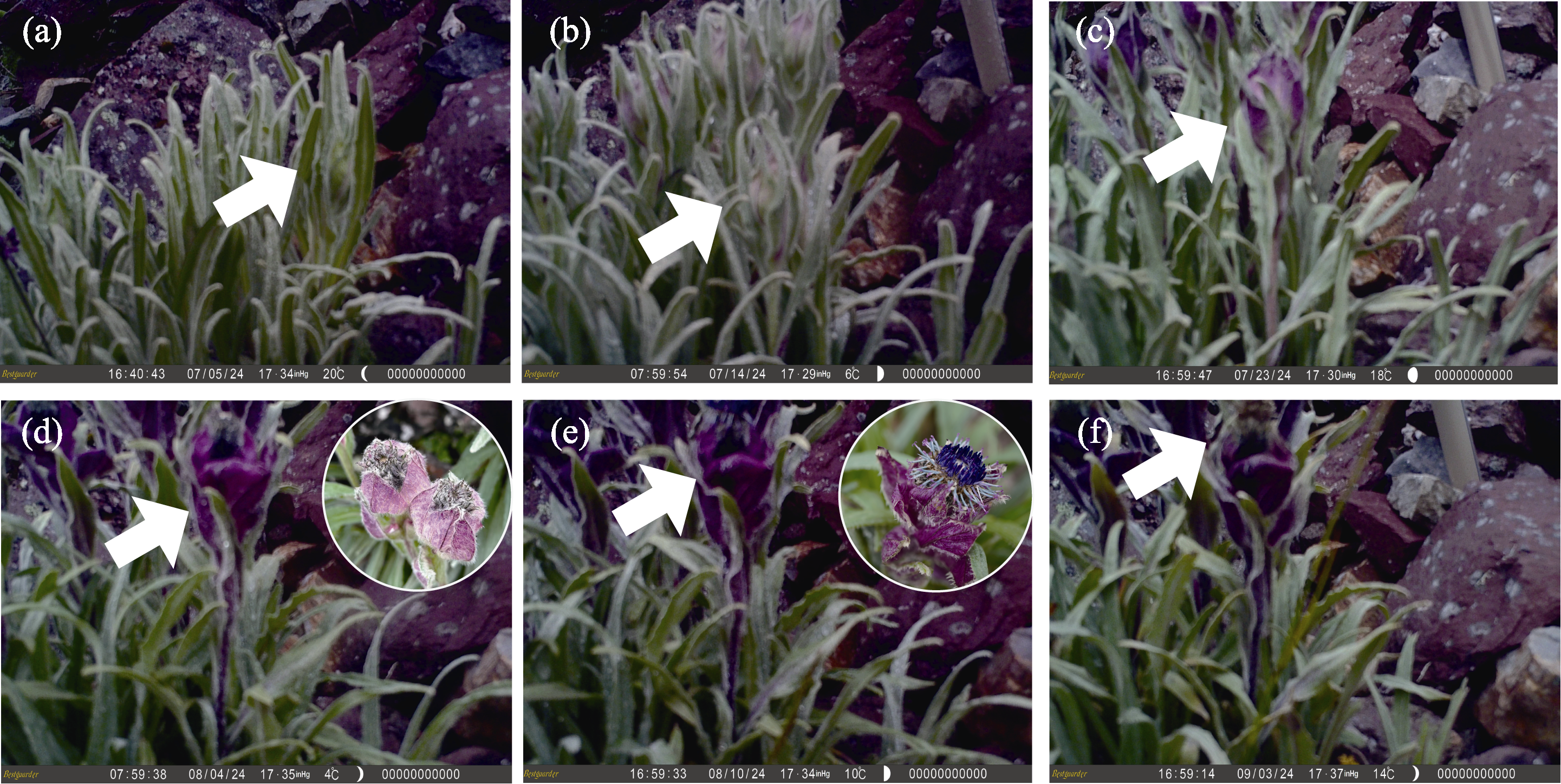
Fig. 1 Phenological changes of Saussurea velutina from July to September 2024. (a) During the early growing season, the inflorescence of S. velutina was covered by yellow-green colored bracts; (b-c) Along with the progresses of growing season, the color of the bracts that covered the inflorescence of S. velutina gradually changed from yellow and green to deep pink-purple; (d) The inflorescence of S. velutina extruded from the cover of bracts; (e) Florets in the inflorescences were in flowering time; (f) S. velutina entered into fruiting period. For each pictures, arrow point as reference points for observing the event of the morphological change. The upper right picture inserted into (d) and (e) indicates the corresponding phenological stages, which were recorded by camera during the regular site visits.
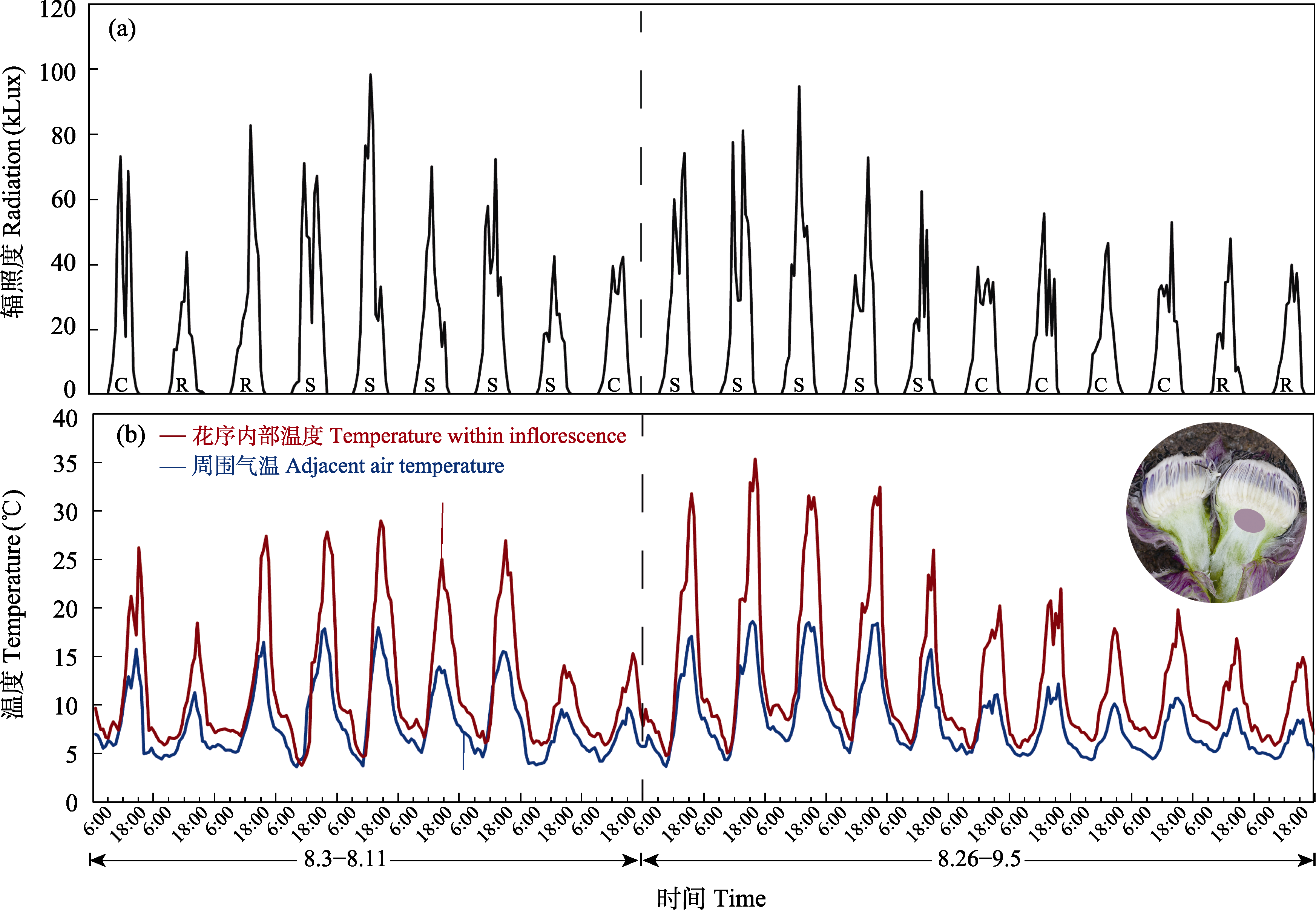
Fig. 2 In situ incident radiation (a), temperature within inflorescence of Saussurea velutina and the adjacent air temperature (at the same height of plant individual, 15-20 cm aboveground) (b) during the on-site measurements from August to September 2024 (a total of 20 d). S, Sunny day; C, Cloudy day; R, Rainy day. The pink area in the insert picture in (b) indicates the position (ovary) of measurement of temperature within inflorescence.
| 日均温 Daily mean temperature | 白天均温(08:00-19:00) Mean temperature during daytime (08:00-19:00) | 夜间均温(20:00-07:00) Mean temperature during nighttime (20:00-07:00) | 极端低温 The lowest temperature | 极端高温 The highest temperature | |
|---|---|---|---|---|---|
| 8月3-11日 Aug. 3 to 11 | 8.1 ± 0.5℃ | 9.4 ± 0.6℃ | 6.9 ± 0.4℃ | 3.6℃ | 17.9℃ |
| 8月26日至9月5日 Aug. 26 to Sept. 5 | 8.1 ± 0.5℃ | 9.2 ± 0.6℃ | 7.1 ± 0.5℃ | 3.6℃ | 18.5℃ |
Table 1 Adjacent air temperature of Saussurea velutina at different monitoring time periods in situ
| 日均温 Daily mean temperature | 白天均温(08:00-19:00) Mean temperature during daytime (08:00-19:00) | 夜间均温(20:00-07:00) Mean temperature during nighttime (20:00-07:00) | 极端低温 The lowest temperature | 极端高温 The highest temperature | |
|---|---|---|---|---|---|
| 8月3-11日 Aug. 3 to 11 | 8.1 ± 0.5℃ | 9.4 ± 0.6℃ | 6.9 ± 0.4℃ | 3.6℃ | 17.9℃ |
| 8月26日至9月5日 Aug. 26 to Sept. 5 | 8.1 ± 0.5℃ | 9.2 ± 0.6℃ | 7.1 ± 0.5℃ | 3.6℃ | 18.5℃ |
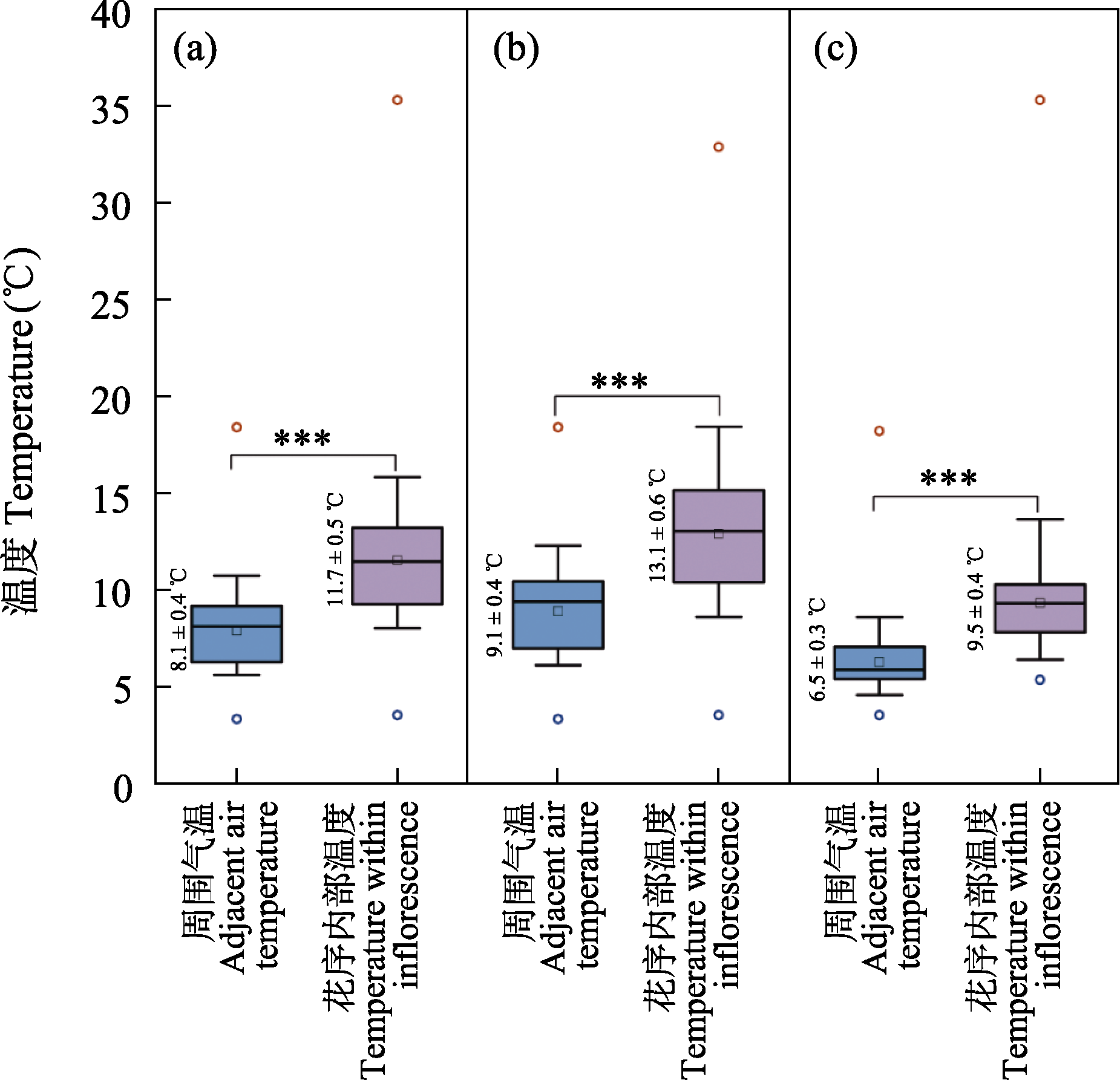
Fig. 3 During the on-site measurements from August to September 2024, in situ daily mean temperature (a), mean temperature during daytime (08:00-19:00) (b) and nighttime (20:00-07:00) (b) within the inflorescence of Saussurea velutina and the adjacent air temperature. For each temperature parameter, n = 20 d. Boxes indicate the mean temperature, with lines indicating median, upper and lower whiskers indicating the range of the mean temperature. Red and blue empty dots in each box indicate the highest and the lowest temperature, respectively. *** P < 0.001.
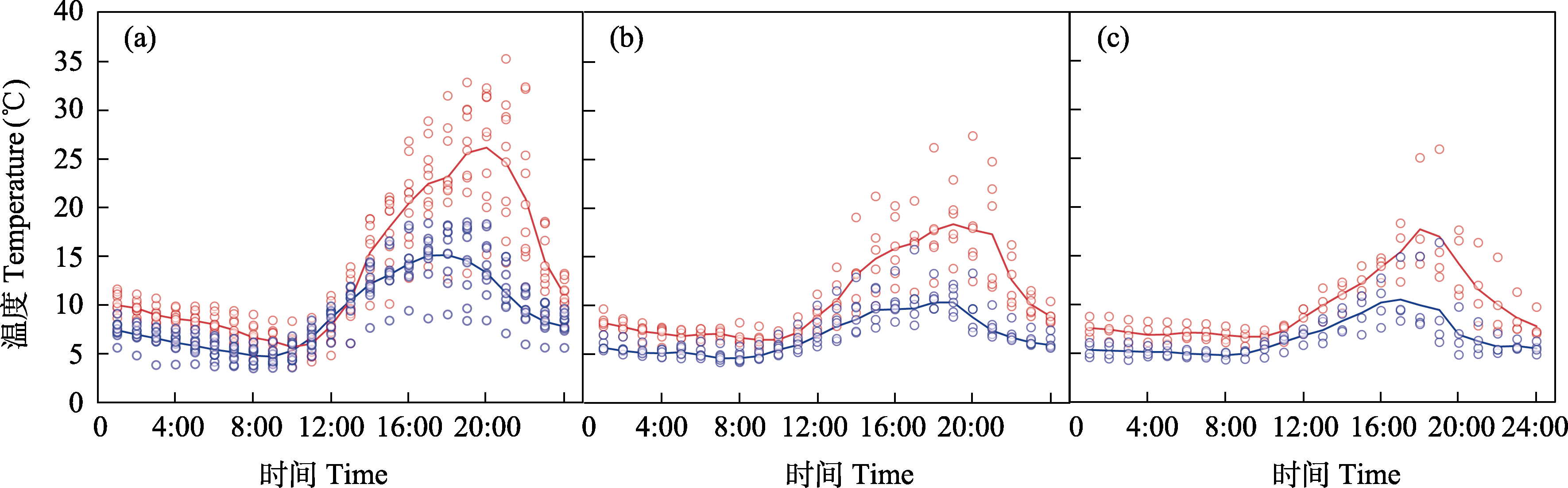
Fig. 4 During the on-site measurements from August to September 2024, under sunny (a), cloudy (b), and rainy (c) days, the hourly mean temperature within the inflorescence of Saussurea velutina (red line) and the adjacent air temperature (blue line) (n = number of sunny, cloudy and rainy days) and the hourly temperature of each days (red dots: inflorescence temperature; blue dots: adjacent air temperature) under the corresponding weather conditions (i.e. sunny day, cloudy day and rainy day).
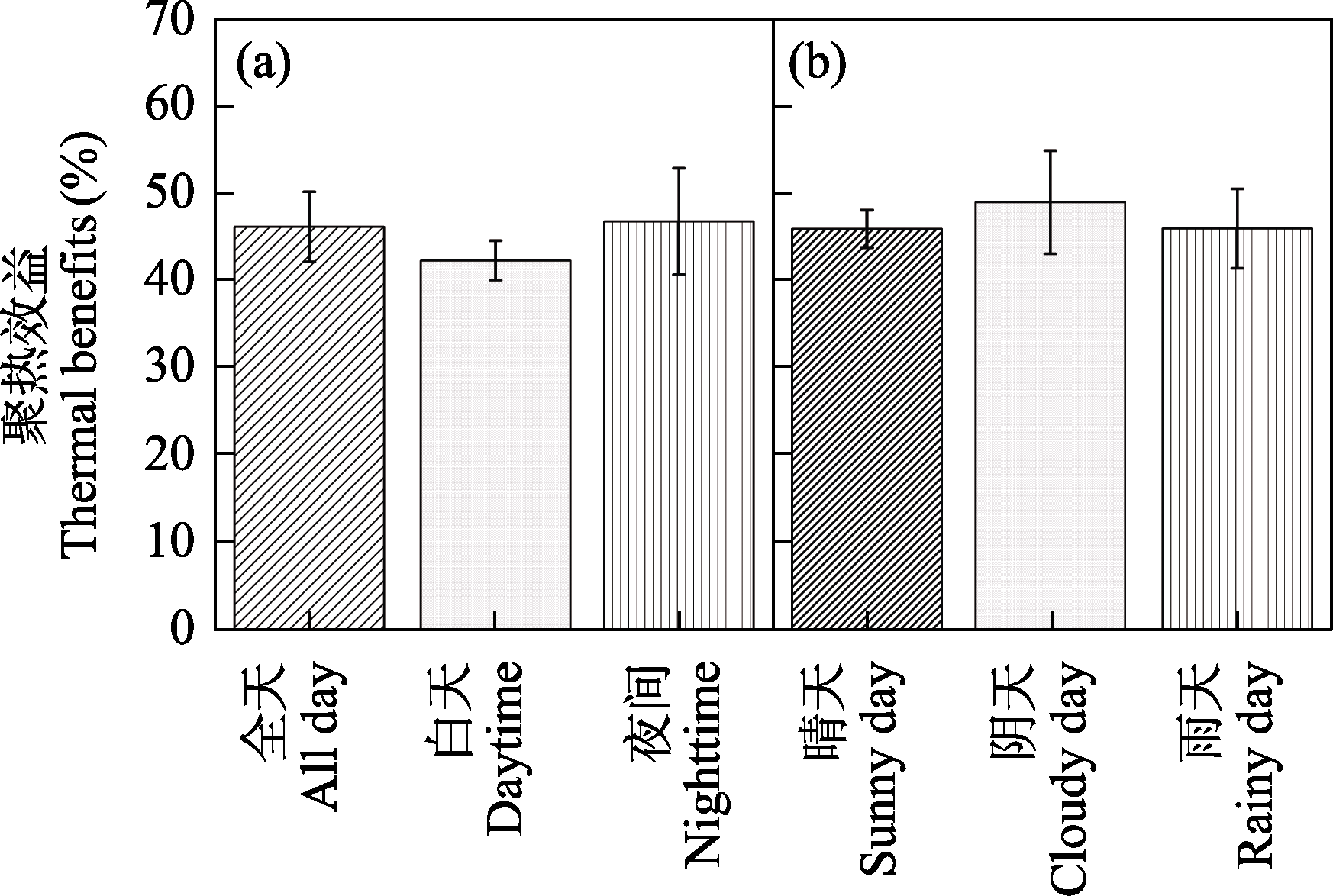
Fig. 5 Thermal benefits obtained from the inflorescent of Saussurea velutina during entire day, daytime, and nighttime (a) and during sunny day, cloudy day, and rainy day (b)
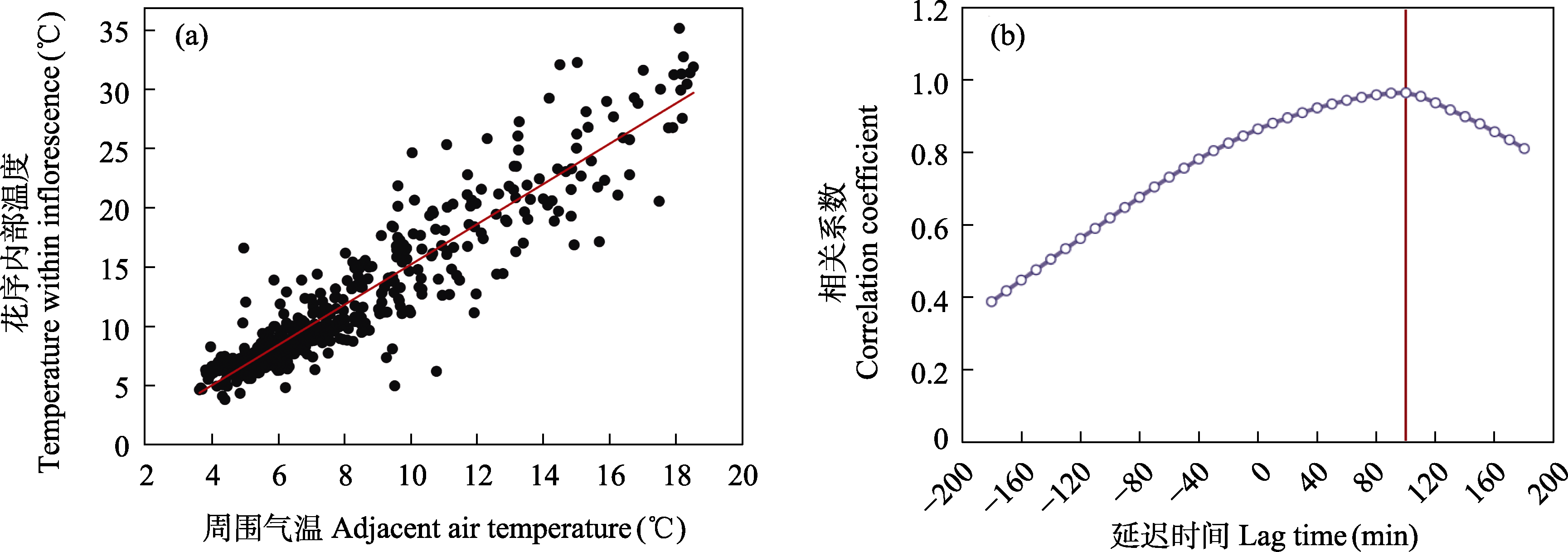
Fig. 6 Significant positive correlation (a) and buffering effects (b) between the temperature within inflorescence of Saussurea velutina with the adjacent air temperature
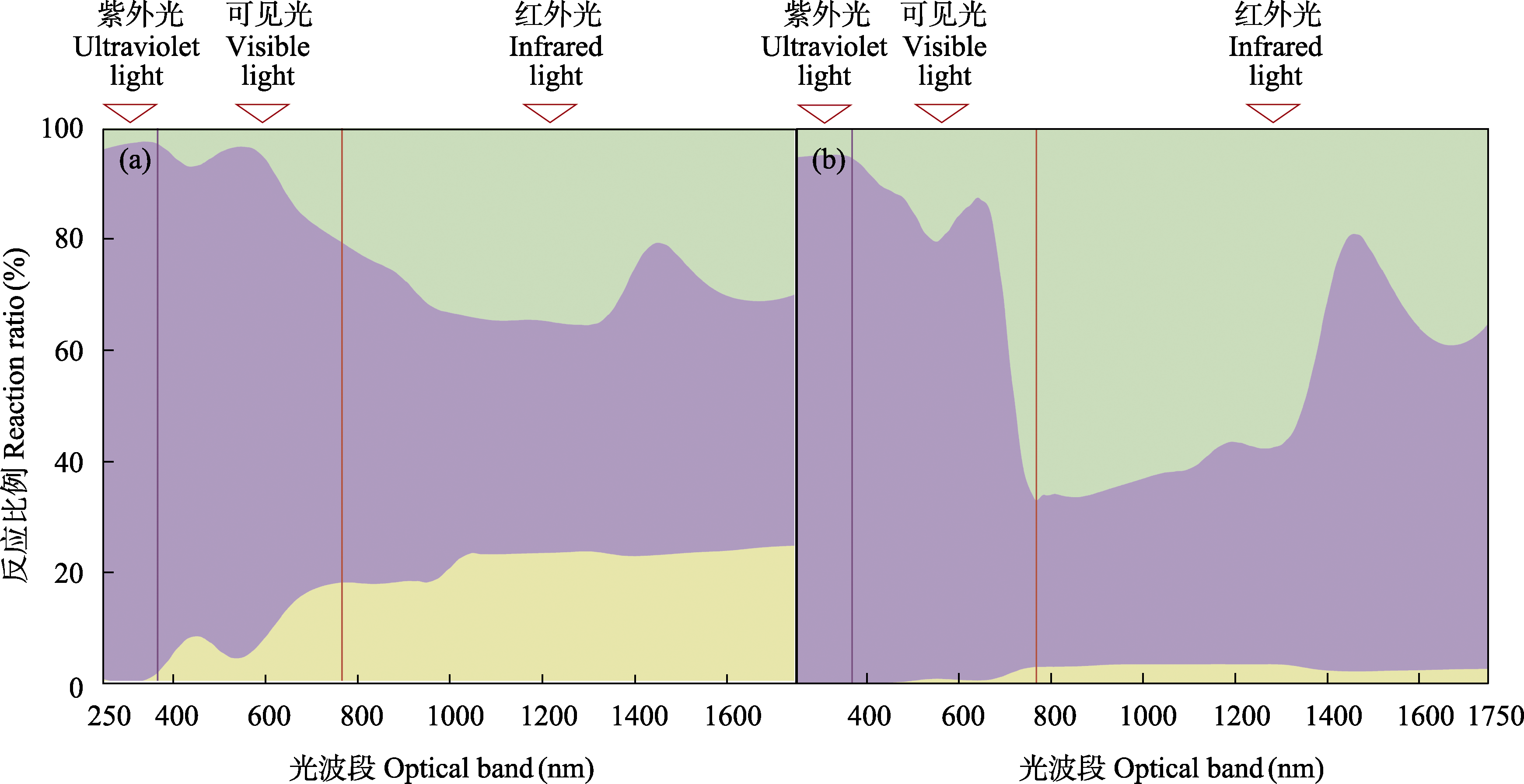
Fig. 7 The reflectance (green area), absorptance (purple area), and transmittance (yellow area) of bracts (a) and leaves (b) to 250-1,750 nm incoming radiation
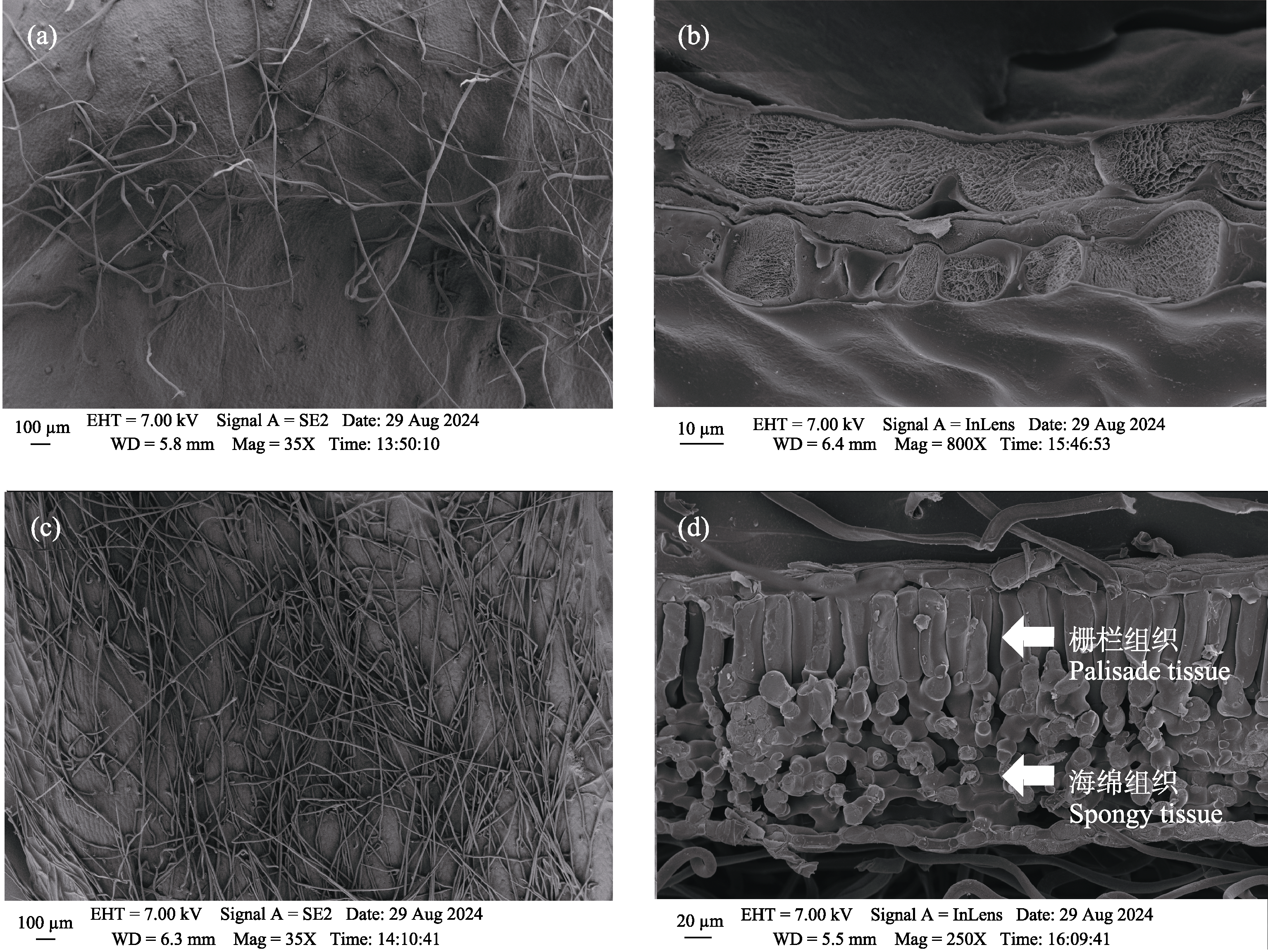
Fig. 8 Scanning electron micrograph of bract and leaves portions of Saussurea velutina. (a) (c) Upper surface; (b) (d) Vertical section.
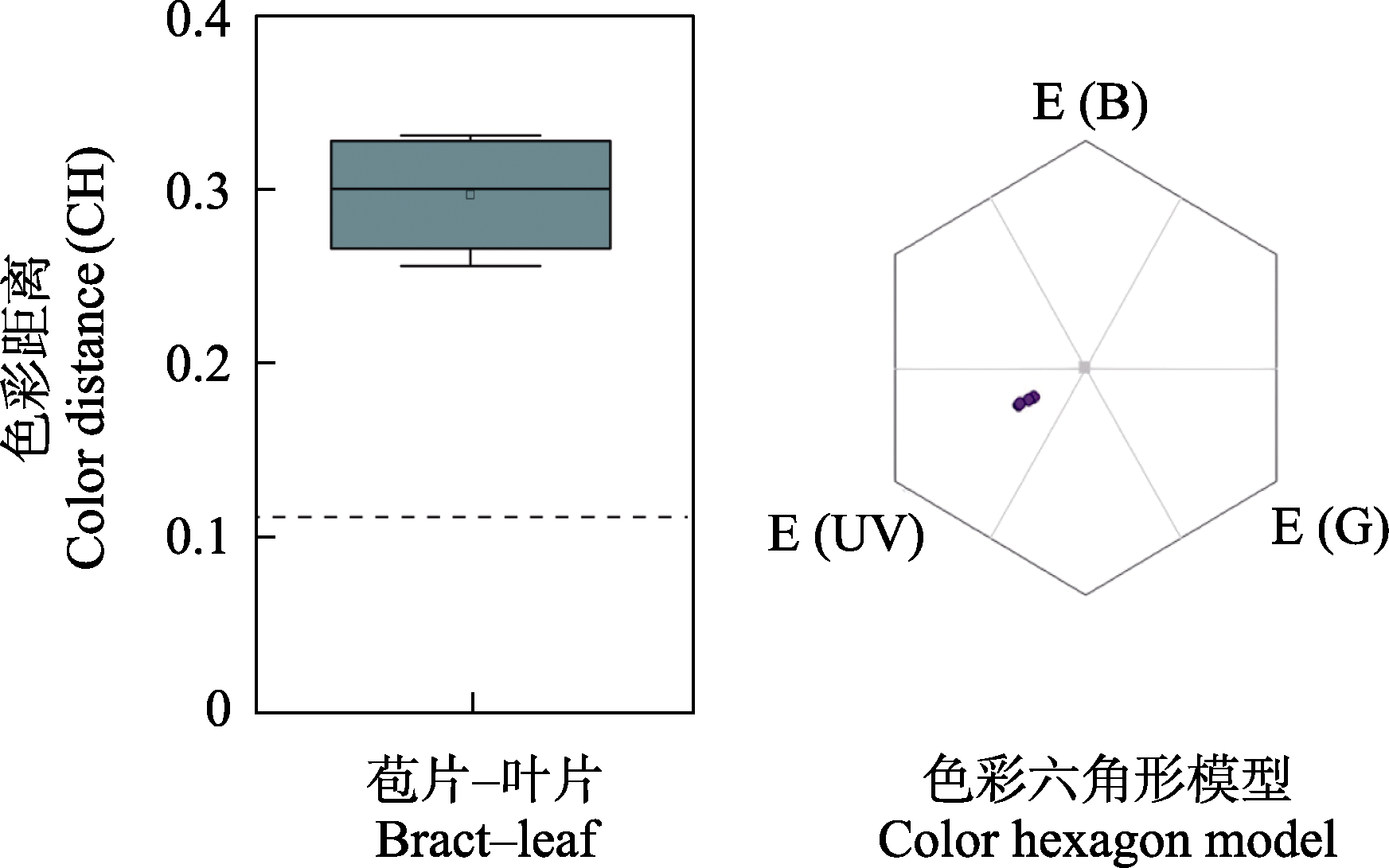
Fig. 9 Color distance and visual hexagon model of bracts in Saussurea velutina with leaves as background. Dot line in left diagram indicates the threshold value of 0.11 CH for identification by bumblebee (Bombus terrestris). In the color hexagon model, E (UV), E (B), and E (G) denote the chromatic response directions of the UV, blue, and green photoreceptor signals, respectively, toward the target in the visual system of bumblebee.
| [1] |
Barfod AS, Hagen M, Borchsenius F (2011) Twenty-five years of progress in understanding pollination mechanisms in palms (Arecaceae). Annals of Botany, 108, 1503-1516.
DOI PMID |
| [2] | Barlow BA (1986) Flora and Fauna of Alpine Australasia:Ages and Origins. CSIRO Publishing, Clayton. |
| [3] |
Beck E, Scheibe R, Senser M, Müller W (1980) Estimation of leaf and stem growth of unbranched Senecio keniodendron trees. Flora, 170, 68-76.
DOI URL |
| [4] |
Billings WD, Mooney HA (1968) The ecology of Arctic and alpine plants. Biological Reviews, 43, 481-529.
DOI URL |
| [5] |
Borges RM, Gowda V, Zacharias M (2003) Butterfly pollination and high-contrast visual signals in a low-density distylous plant. Oecologia, 136, 571-573.
PMID |
| [6] | Chen L, Dong HJ, Peng H (2013) Diversity and distribution of higher plants in Yunnan, China. Biodiversity Science, 21, 359-363. (in Chinese with English abstract) |
|
[陈丽, 董洪进, 彭华 (2013) 云南省高等植物多样性与分布状况. 生物多样性, 21, 359-363.]
DOI |
|
| [7] | Chen YZ, Lu CF (2002) Freezing tolerance of calli and suspension cell cultures in alpine plant Saussurea meduasa Maxim. Chinese Bulletin of Botany, 19, 219-223. (in Chinese with English abstract) |
| [陈玉珍, 卢存福 (2002) 水母雪莲愈伤组织和悬浮培养细胞的抗冻性研究. 植物学通报, 19, 219-223.] | |
| [8] | Chittka L (1992) The colour hexagon: A chromaticity diagram based on photoreceptor excitations as a generalized representation of colour opponency. Journal of Comparative Physiology A: Neuroethology, Sensory, Neural, and Behavioral Physiology, 170, 533-543. |
| [9] | Dyer AG, Chittka L (2004) Biological significance of distinguishing between similar colours in spectrally variable illumination: Bumblebees (Bombus terrestris) as a case study. Journal of Comparative Physiology A: Neuroethology, Sensory, Neural, and Behavioral Physiology, 190, 105-114. |
| [10] |
Gessner U, Naeimi V, Klein I, Kuenzer C, Klein D, Dech S (2013) The relationship between precipitation anomalies and satellite-derived vegetation activity in Central Asia. Global and Planetary Change, 110, 74-87.
DOI URL |
| [11] | Hedberg O (1964) Features of afroalpine plant ecology. Acta Phytogeographica Suecica, 49, 1-144. |
| [12] | Ives JD, Barry RG (1974) Arctic and Alpine Environments. Routledge, London. |
| [13] |
Keasar T, Pollak G, Arnon R, Cohen D, Shmida A (2006) Honesty of signaling and pollinator attraction: The case of flag-like bracts. Israel Journal of Plant Sciences, 54, 119-128.
DOI URL |
| [14] |
Kikvidze Z, Brooker RW, Butterfield BJ, Callaway RM, Cavieres LA, Cook BJ, Lortie CJ, Michalet R, Pugnaire FI, Xiao S, Anthelme F, Björk RG, Cranston BH, Gavilán RG, Kanka R, Lingua E, Maalouf JP, Noroozi J, Parajuli R, Phoenix GK, Reid A, Ridenour WM, Rixen C, Schöb C (2015) The effects of foundation species on community assembly: A global study on alpine cushion plant communities. Ecology, 96, 2064-2069.
PMID |
| [15] | Körner C (2001) Alpine Plant Life: Functional Plant Ecology of High Mountain Ecosystems. Springer, Heidelberg. |
| [16] |
Krog J (1955) Notes on temperature measurements indicative of special organization in Arctic and subarctic plants for utilization of radiated heat from the sun. Physiologia Plantarum, 8, 836-839.
DOI URL |
| [17] | Kudo G (1995) Ecological significance of flower heliotropism in the spring ephemeral Adonis ramosa (Ranunculaceae). Oikos, 72, 14-20. |
| [18] | Mani MS, Giddings LE (1980) Ecology of Highlands. Springer, Dordrecht. |
| [19] |
Meng FS, Shi PL, Yan W, He YT (2013) The function of cushion plants in alpine ecosystems: Patterns and mechanisms. Chinese Journal of Applied and Environmental Biology, 19, 561-568. (in Chinese with English abstract)
DOI URL |
| [孟丰收, 石培礼, 闫巍, 何永涛 (2013) 垫状植物在高山生态系统中的功能: 格局与机制. 应用与环境生物学报, 19, 561-568.] | |
| [20] |
Myers N, Mittermeier RA, Mittermeier CG, da Fonseca GAB, Kent J (2000) Biodiversity hotspots for conservation priorities. Nature, 403, 853-858.
DOI |
| [21] | Pang J, Du ZQ, Zhang XY (2015) Time-lagged response of vegetation to hydro-thermal factors in Xinjiang region. Chinese Journal of Agricultural Resources and Regional Planning, 36(7), 82-88. (in Chinese with English abstract) |
| [庞静, 杜自强, 张霄羽 (2015) 新疆地区植被对水热条件的时滞响应. 中国农业资源与区划, 36(7), 82-88.] | |
| [22] |
Phillips N, Oren R, Zimmermann R, Wright SJ (1999) Temporal patterns of water flux in trees and lianas in a Panamanian moist forest. Trees, 14, 116-123.
DOI URL |
| [23] | Richard Y, Martiny N, Fauchereau N, Reason C, Rouault M, Vigaud N, Tracol Y (2008) Interannual memory effects for spring NDVI in semi-arid South Africa. Geophysical Research Letters, 35, 2008GL034119. |
| [24] | Shih C, Jin SY (1999) Compositae (8): Cynareae [Saussurea]. In: Flora Reipublicae Popularis Sinicae, Tomus 78 (ed. Delectis Florae Reipublicae Popularis Sinicae Agendae Academiae Sinicae Edita), p. 31. Science Press, Beijing. (in Chinese) |
| [石铸, 靳淑英 (1999) 菊科(8): 菜蓟族[风毛菊属]. 见: 中国植物志(第78卷) (中国科学院中国植物志编辑委员会), p. 31. 科学出版社, 北京.] | |
| [25] | Skorupski P, Döring TF, Chittka L (2007) Photoreceptor spectral sensitivity in island and mainland populations of the bumblebee, Bombus terrestris. Journal of Comparative Physiology A: Neuroethology, Sensory, Neural, and Behavioral Physiology, 193, 485-494. |
| [26] |
Song B, Chen JQ, Lev-Yadun S, Niu Y, Gao YQ, Ma R, Armbruster WS, Sun H (2024) Multifunctionality of angiosperm floral bracts: A review. Biological Reviews, 99, 1100-1120.
DOI URL |
| [27] |
Song B, Stöcklin J, Peng DL, Gao YQ, Sun H (2015) The bracts of the alpine ‘glasshouse’ plant Rheum alexandrae (Polygonaceae) enhance reproductive fitness of its pollinating seed-consuming mutualist. Botanical Journal of the Linnean Society, 179, 349-359.
DOI URL |
| [28] |
Song B, Zhang ZQ, Stöcklin J, Yang Y, Niu Y, Chen JG, Sun H (2013) Multifunctional bracts enhance plant fitness during flowering and seed development in Rheum nobile (Polygonaceae), a giant herb endemic to the high Himalayas. Oecologia, 172, 359-370.
DOI PMID |
| [29] |
Tsukaya H, Fujikawa K, Wu SG (2002) Thermal insulation and accumulation of heat in the downy inflorescences of Saussurea medusa (Asteraceae) at high elevation in Yunnan, China. Journal of Plant Research, 115, 263-268.
DOI URL |
| [30] |
Tsukaya H, Tsuge T (2001) Morphological adaptation of inflorescences in plants that develop at low temperatures in early spring: The convergent evolution of “downy plants”. Plant Biology, 3, 536-543.
DOI URL |
| [31] | Wu LL, Ren ZY, Zhang C (2014) Response of NDVI to temperature and precipitation changes and its lag time in North Shaanxi. Chinese Journal of Agrometeorology, 35(1), 103-108. (in Chinese with English abstract) |
| [吴丽丽, 任志远, 张翀 (2014) 陕北地区植被指数对水热条件变化的响应及其时滞分析. 中国农业气象, 35(1), 103-108.] | |
| [32] | Wu ZY, Sun H, Zhou ZK, Peng H, Li DZ (2005) Origin and differentiation of endemism in the flora of China. Acta Botanica Yunnanica, 27, 577-604. (in Chinese with English abstract) |
| [吴征镒, 孙航, 周浙昆, 彭华, 李德铢 (2005) 中国植物区系中的特有性及其起源和分化. 云南植物研究, 27, 577-604.] | |
| [33] |
Xu LS, Song ZQ, Li T, Jin ZC, Zhang BY, Du SY, Liao SY, Zhong XJ, Chen YS (2025) New insights into the phylogeny and infrageneric taxonomy of Saussurea based on hybrid capture phylogenomics (Hyb-Seq). Plant Diversity, 47, 21-33.
DOI URL |
| [34] |
Yang Y, Körner C, Sun H (2008) The ecological significance of pubescence in Saussurea medusa, a high-elevation Himalayan “woolly plant”. Arctic, Antarctic, and Alpine Research, 40, 250-255.
DOI URL |
| [35] | Yang Y, Sun H (2006) Advances in the functional ecology of alpine and Arctic plants. Acta Botanica Yunnanica, 28, 43-53. (in Chinese with English abstract) |
| [杨扬, 孙航 (2006) 高山和极地植物功能生态学研究进展. 云南植物研究, 28, 43-53.] | |
| [36] |
Yang Y, Sun H (2009) The bracts of Saussurea velutina (Asteraceae) protect inflorescences from fluctuating weather at high elevations of the Hengduan Mountains, southwestern China. Arctic, Antarctic, and Alpine Research, 41, 515-521.
DOI URL |
| [37] | Young TP (1984) Solar irradiation increases floral development rates in afro-alpine Lobelia telekii. Biotropica, 16, 243-245. |
| No related articles found! |
| Viewed | ||||||
|
Full text |
|
|||||
|
Abstract |
|
|||||
Copyright © 2026 Biodiversity Science
Editorial Office of Biodiversity Science, 20 Nanxincun, Xiangshan, Beijing 100093, China
Tel: 010-62836137, 62836665 E-mail: biodiversity@ibcas.ac.cn

