动物消化道微生物多样性与宿主协同进化关系的研究进展
收稿日期: 2023-06-25
录用日期: 2023-10-18
网络出版日期: 2023-11-09
基金资助
国家自然科学基金(32260845)
Advances in research on the relationship between microbial diversity in the animal digestive tract and coevolution with the host
Received date: 2023-06-25
Accepted date: 2023-10-18
Online published: 2023-11-09
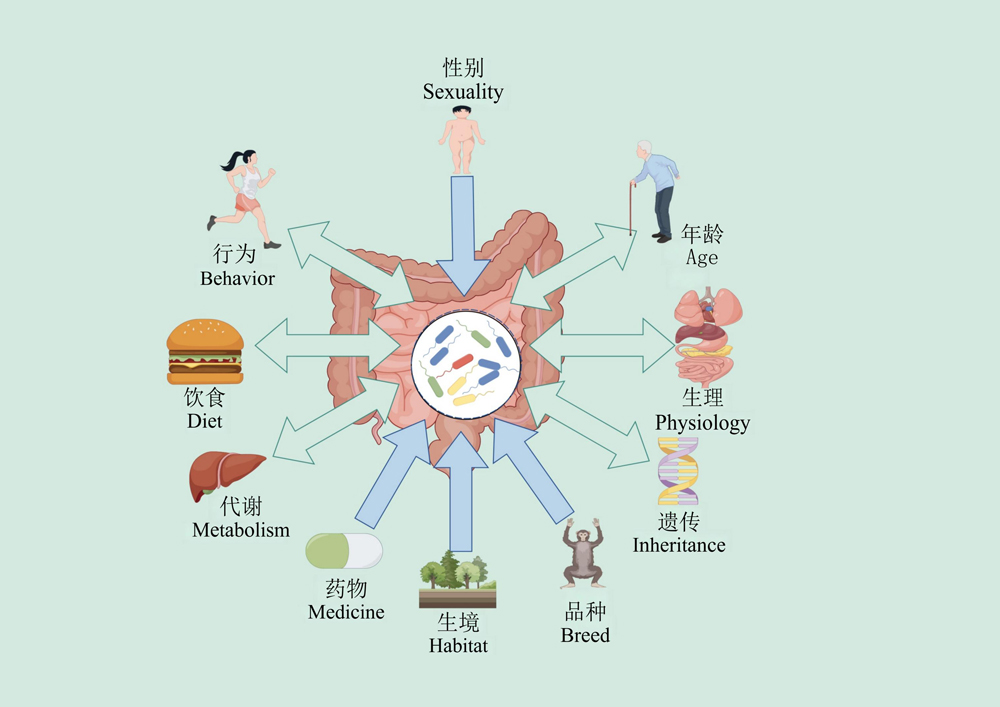
动物消化道栖息着复杂的微生物群落, 它们与动物的生理和代谢过程有着密切的联系。现有研究表明消化道微生物的演化与多样性受到动物生存环境、饮食习惯、生活方式等因素影响, 而消化道微生物群落组成和功能也可以影响到动物的进化, 这种寄生与被寄生物种间的相互作用是二者进化过程中微生物多样性的重要驱动力。本文概述了动物与消化道微生物进化关系及不同动物的消化道微生物群的组成, 并探讨了动物与消化道微生物群在适应性进化过程中的联系以及不同动物中消化道优势微生物, 我们发现尽管动物消化道微生物区系组成具有多样性, 但大多数动物消化道70%-90%的微生物群落仍然来自于厚壁菌门和拟杆菌门, 其原因可能是这两个菌门在分解复杂碳水化合物方面有重要作用。同时我们也指出当前研究应考虑到动物和消化道微生物进化趋势的定义、进化速度以及动物与消化道微生物间存在的竞争与合作等因素对于二者进化关系的影响, 以便于验证其准确性。
俄广旭 , 白天天 , 朱振宇 , 郭雪峰 . 动物消化道微生物多样性与宿主协同进化关系的研究进展[J]. 生物多样性, 2023 , 31(11) : 23214 . DOI: 10.17520/biods.2023214
Background: The digestive tracts of animals host intricate microbial communities that play a crucial role in the physiological and metabolic processes of the animals. Current research suggests that the evolution and diversity of these digestive tract microbiota are influenced by factors such as the animals’ living environment, dietary habits, and lifestyle. Furthermore, the composition and function of the microbial communities in the digestive tract can also impact the animals’ evolution. The interaction between parasitic and host species is acknowledged as a significant driving force for microbial diversity during the evolutionary processes of both.
Progress This paper focuses on the interaction between animals and digestive tract microorganisms, summarizes the evolutionary relationship between animals and digestive tract microorganisms and the composition of digestive tract microflora in different animals, and discusses the relationship between animals and digestive tract microflora in adaptive evolution and the dominant microorganisms in digestive tract of different animals. Despite the diversity of gut microbial composition in animals, it was found that 70% to 90% of gut microbial communities in most animals still come from the phyla Firmicutes and Bacteroidetes, which may be due to their significant role in the degradation of complex carbohydrates.
Conclusion: Current research should take into account the definition of the evolutionary trend of animals and digestive tract microorganisms, the speed of evolution, and the influence of competition and cooperation between animals and digestive tract microorganisms on the evolutionary relationship between the two, so as to verify its accuracy.
Key words: animals; digestive tract; digestive tract microflora; co-evolution; diversity; dominant phyla
| [1] | Alberdi A, Andersen SB, Limborg MT, Dunn RR, Gilbert MTP (2022) Disentangling host-microbiota complexity through hologenomics. Nature Reviews Genetics, 23, 281-297. |
| [2] | Arumugam M, Members MCA, Raes J, Pelletier E, Le Paslier D, Yamada T, Mende DR, Fernandes GR, Tap J, Bruls T, Batto JM, Bertalan M, Borruel N, Casellas F, Fernandez L, Gautier L, Hansen T, Hattori M, Hayashi T, Kleerebezem M, Kurokawa K, Leclerc M, Levenez F, Manichanh C, Nielsen HB, Nielsen T, Pons N, Poulain J, Qin JJ, Sicheritz-Ponten T, Tims S, Torrents D, Ugarte E, Zoetendal EG, Wang J, Guarner F, Pedersen O, de Vos WM, Brunak S, Doré J, Weissenbach J, Ehrlich SD, Bork P (2011) Enterotypes of the human gut microbiome. Nature, 473, 174-180. |
| [3] | Basset Y, Cizek L, Cuénoud P, Didham RK, Guilhaumon F, Missa O, Novotny V, ?degaard F, Roslin T, Schmidl J, Tishechkin AK, Winchester NN, Roubik DW, Aberlenc HP, Bail J, Barrios H, Bridle JR, Casta?o-Meneses G, Corbara B, Curletti G, Duarte da Rocha W, De Bakker D, Delabie JHC, Dejean A, Fagan LL, Floren A, Kitching RL, Medianero E, Miller SE, Gama de Oliveira E, Orivel J, Pollet M, Rapp M, Ribeiro SP, Roisin Y, Schmidt JB, S?rensen L, Leponce M (2012) Arthropod diversity in a tropical forest. Science, 338, 1481-1484. |
| [4] | Belkaid Y, Hand TW (2014) Role of the microbiota in immunity and inflammation. Cell, 157, 121-141. |
| [5] | Benson AK, Kelly SA, Legge R, Ma FR, Low SJ, Kim J, Zhang M, Oh PL, Nehrenberg D, Hua KJ, Kachman SD, Moriyama EN, Walter J, Peterson DA, Pomp D (2010) Individuality in gut microbiota composition is a complex polygenic trait shaped by multiple environmental and host genetic factors. Proceedings of the National Academy of Sciences, USA, 107, 18933-18938. |
| [6] | Berg G, Rybakova D, Fischer D, Cernava T, Vergès MC C, Charles T, Chen X, Cocolin L, Eversole K, Corral GH, Kazou M, Kinkel L, Lange L, Lima N, Loy A, Macklin JA, Maguin E, Mauchline T, McClure R, Mitter B, Ryan M, Sarand I, Smidt H, Schelkle B, Roume H, Kiran GS, Selvin J, de Souza RSC, van Overbeek L, Singh BK, Wagner M, Walsh A, Sessitsch A, Schloter M (2020) Microbiome definition re-visited: Old concepts and new challenges. Microbiome, 8, 103. |
| [7] | Broderick NA, Lemaitre B (2012) Gut-associated microbes of Drosophila melanogaster. Gut Microbes, 3, 307-321. |
| [8] | Brune A (2014) Symbiotic digestion of lignocellulose in termite guts. Nature Reviews Microbiology, 12, 168-180. |
| [9] | Burns AR, Miller E, Agarwal M, Rolig AS, Milligan-Myhre K, Seredick S, Guillemin K, Bohannan BJM (2017) Interhost dispersal alters microbiome assembly and can overwhelm host innate immunity in an experimental zebrafish model. Proceedings of the National Academy of Sciences, USA, 114, 11181-11186. |
| [10] | Callegari M, Crotti E, Fusi M, Marasco R, Gonella E, De Noni I, Romano D, Borin S, Tsiamis G, Cherif A, Alma A, Daffonchio D (2021) Compartmentalization of bacterial and fungal microbiomes in the gut of adult honeybees. Npj Biofilms and Microbiomes, 7, 42. |
| [11] | Carroll SB (2005) Endless Forms Most Beautiful:The New Science of Evo Devo and the Making of the Animal Kingdom. WWW Norton & Company, New York. |
| [12] | Cazemier AE, Hackstein JHP, Op den Camp HJM, Rosenberg J, van der Drift C (1997) Bacteria in the intestinal tract of different species of arthropods. Microbial Ecology, 33, 189-197. |
| [13] | Ceja-Navarro JA, Vega FE, Karaoz U, Hao Z, Jenkins S, Lim HC, Kosina P, Infante F, Northen TR, Brodie EL (2015) Gut microbiota mediate caffeine detoxification in the primary insect pest of coffee. Nature Communications, 6, 7618. |
| [14] | Chapagain P, Arivett B, Cleveland BM, Walker DM, Salem M (2019) Analysis of the fecal microbiota of fast- and slow-growing rainbow trout (Oncorhynchus mykiss). BMC Genomics, 20, 788. |
| [15] | Cheng SC, Liu CB, Yao XQ, Hu JY, Yin TT, Lim BK, Chen W, Wang GD, Zhang CL, Irwin DM, Zhang ZG, Zhang YP, Yu L (2023) Hologenomic insights into mammalian adaptations to myrmecophagy. National Science Review, 10, nwac174. |
| [16] | Colston TJ, Jackson CR (2016) Microbiome evolution along divergent branches of the vertebrate tree of life: What is known and unknown. Molecular Ecology, 25, 3776-3800. |
| [17] | Colwell RR (1962) The bacterial flora of puget sound fish. Journal of Applied Bacteriology, 25, 147-158. |
| [18] | Couch CE, Stagaman K, Spaan RS, Combrink HJ, Sharpton TJ, Beechler BR, Jolles AE (2021) Diet and gut microbiome enterotype are associated at the population level in African buffalo. Nature Communications, 12, 2267. |
| [19] | Cui HR, Bai TT, Zhao LB, Chen YX, Guo XF, Jin W (2022) Comparison and analysis of rumen microflora structure difference between Hu sheep and Karakul sheep. Chinese Journal of Animal Nutrition, 34, 1721-1729. (in Chinese with English abstract) |
| [19] | [崔浩然, 白天天, 赵林波, 陈颜旭, 郭雪峰, 金巍 (2022) 湖羊与卡拉库尔羊瘤胃菌群结构差异性比较分析. 动物营养学报, 34, 1721-1729.] |
| [20] | David LA, Maurice CF, Carmody RN, Gootenberg DB, Button JE, Wolfe BE, Ling AV, Devlin AS, Varma Y, Fischbach MA, Biddinger SB, Dutton RJ, Turnbaugh PJ (2014) Diet rapidly and reproducibly alters the human gut microbiome. Nature, 505, 559-563. |
| [21] | Deshpande NP, Riordan SM, Casta?o-Rodríguez N, Wilkins MR, Kaakoush NO (2018) Signatures within the esophageal microbiome are associated with host genetics, age, and disease. Microbiome, 6, 227. |
| [22] | Dewhirst FE, Chen T, Izard J, Paster BJ, Tanner ACR, Yu WH, Lakshmanan A, Wade WG (2010) The human oral microbiome. Journal of Bacteriology, 192, 5002-5017. |
| [23] | Diaz CJM, Casanova NA, Fernández Miyakawa ME (2019) Microbiota, gut health and chicken productivity: What is the connection? Microorganisms, 7, 374. |
| [24] | Dimitroglou A, Merrifield DL, Carnevali O, Picchietti S, Avella M, Daniels C, Güroy D, Davies SJ (2011) Microbial manipulations to improve fish health and production—A Mediterranean perspective. Fish & Shellfish Immunology, 30, 1-16. |
| [25] | Douglas AE (2015) Multiorganismal insects: Diversity and function of resident microorganisms. Annual Review of Entomology, 60, 17-34. |
| [26] | Douglas E (2010) The Symbiotic Habit. Princeton University Press, Princeton. |
| [27] | Duncan SH, Belenguer A, Holtrop G, Johnstone AM, Flint HJ, Lobley GE (2007) Reduced dietary intake of carbohydrates by obese subjects results in decreased concentrations of butyrate and butyrate-producing bacteria in feces. Applied and Environmental Microbiology, 73, 1073-1078. |
| [28] | Egerton S, Culloty S, Whooley J, Stanton C, Ross RP (2018) The gut microbiota of marine fish. Frontiers in Microbiology, 9, 873. |
| [29] | Engel P, Moran NA (2013) The gut microbiota of insects- diversity in structure and function. FEMS Microbiology Reviews, 37, 699-735. |
| [30] | Ericsson AC, Johnson PJ, Lopes MA, Perry SC, Lanter HR (2016) A microbiological map of the healthy equine gastrointestinal tract. PLoS ONE, 11, e0166523. |
| [31] | Fan PX, Bian BL, Teng L, Nelson CD, Driver J, Elzo MA, Jeong KC (2020) Host genetic effects upon the early gut microbiota in a bovine model with graduated spectrum of genetic variation. The ISME Journal, 14, 302-317. |
| [32] | Fan QS, Wanapat M, Yan TH, Hou FJ (2020) Altitude influences microbial diversity and herbage fermentation in the rumen of yaks. BMC Microbiology, 20, 370. |
| [33] | Flint HJ, Bayer EA (2008) Plant cell wall breakdown by anaerobic microorganisms from the mammalian digestive tract. Annals of the New York Academy of Sciences, 1125, 280-288. |
| [34] | Flint HJ, Scott KP, Duncan SH, Louis P, Forano E (2012) Microbial degradation of complex carbohydrates in the gut. Gut Microbes, 3, 289-306. |
| [35] | Foster JA, Neufeld KAM (2013) Gut-brain axis: How the microbiome influences anxiety and depression. Trends in neurosciences, 36, 305-312. |
| [36] | Fujisaka S, Watanabe Y, Tobe K (2023) The gut microbiome: A core regulator of metabolism. Journal of Endocrinology, 256, e220111. |
| [37] | Gajardo K, Rodiles A, Kortner TM, Krogdahl ?, Bakke AM, Merrifield DL, S?rum H (2016) A high-resolution map of the gut microbiota in Atlantic salmon (Salmo salar): A basis for comparative gut microbial research. Scientific Reports, 6, 30893. |
| [38] | Gatesoupe FJ (2007) Live yeasts in the gut: Natural occurrence, dietary introduction, and their effects on fish health and development. Aquaculture, 267, 20-30. |
| [39] | Gootenberg DB, Turnbaugh PJ (2011) Companion animals symposium: Humanized animal models of the microbiome. Journal of animal science, 89, 1531-1537. |
| [40] | Grice EA, Kong HH, Conlan S, Deming CB, Davis J, Young AC, Bouffard GG, Blakesley RW, Murray PR, Green ED, Turner ML, Segre JA, Program NCS (2009) Topographical and temporal diversity of the human skin microbiome. Science, 324, 1190-1192. |
| [41] | Groussin M, Mazel F, Alm EJ (2020) Co-evolution and co-speciation of host-gut bacteria systems. Cell Host & Microbe, 28, 12-22. |
| [42] | Guo N, Wu QF, Shi FY, Niu JH, Zhang T, Degen AA, Fang QG, Ding LM, Shang ZH, Zhang ZG, Long RJ (2021) Seasonal dynamics of diet-gut microbiota interaction in adaptation of yaks to life at high altitude. Npj Biofilms and Microbiomes, 7, 38. |
| [43] | Hackstein JH (2018) (Endo) Symbiotic Methanogenic Archaea. Springer Nature, Switzerland. |
| [44] | Haindl R, Schick S, Kulozik U (2021) Influence of cultivation pH on composition, diversity, and metabolic production in an in vitro human intestinal microbiota. Fermentation, 7, 156. |
| [45] | Helfman S, Collette B, Facey E, Bowen BW (2009) The Diversity of Fishes: Biology, Evolution, and Ecology, 2nd Edtion. John Wiley & Sons, Hoboken. |
| [46] | Henderson G, Cox F, Ganesh S, Jonker A, Young W, Janssen HP (2015) Rumen microbial community composition varies with diet and host, but a core microbiome is found across a wide geographical range. Scientific Reports, 6, 14567. |
| [47] | Hillman ET, Lu H, Yao TM, Nakatsu CH (2017) Microbial ecology along the gastrointestinal tract. Microbes and Environments, 32, 300-313. |
| [48] | Hongoh Y (2010) Diversity and genomes of uncultured microbial symbionts in the termite gut. Bioscience, Biotechnology and Biochemistry, 74, 1145-1151. |
| [49] | Hsiung T (1930) A Monograph on the Protozoa of the Large Intestine of the Horse. PhD dissertation, Iowa State University, Ames. |
| [50] | Hu JM, Lin SL, Zheng BD, Cheung PCK (2018) Short-chain fatty acids in control of energy metabolism. Critical Reviews in Food Science and Nutrition, 58, 1243-1249. |
| [51] | Jewell KA, McCormick CA, Odt CL, Weimer PJ, Suen G (2015) Ruminal bacterial community composition in dairy cows is dynamic over the course of two lactations and correlates with feed efficiency. Applied and Environmental Microbiology, 81, 4697-4710. |
| [52] | Johnson EL, Heaver SL, Waters JL, Kim BI, Bretin A, Goodman AL, Gewirtz AT, Worgall TS, Ley RE (2020) Sphingolipids produced by gut bacteria enter host metabolic pathways impacting ceramide levels. Nature communications, 11, 2471. |
| [53] | Józefiak D, Rutkowski A, Martin SA (2004) Carbohydrate fermentation in the avian ceca: A review. Animal Feed Science and Technology, 113, 1-15. |
| [54] | Khafipour E, Li S, Tun HM, Derakhshani H, Moossavi S, Plaizier JC (2016) Effects of grain feeding on microbiota in the digestive tract of cattle. Animal Frontiers, 6, 13-19. |
| [55] | Kikuchi Y, Hayatsu M, Hosokawa T, Nagayama A, Tago K, Fukatsu T (2012) Symbiont-mediated insecticide resistance. Proceedings of the National Academy of Sciences, USA, 109, 8618-8622. |
| [56] | Kim M, Morrison M, Yu ZT (2011) Status of the phylogenetic diversity census of ruminal microbiomes. FEMS Microbiology Ecology, 76, 49-63. |
| [57] | Kim PS, Shin NR, Lee JB, Kim MS, Whon TW, Hyun DW, Yun JH, Jung MJ, Kim JY, Bae JW (2021) Host habitat is the major determinant of the gut microbiome of fish. Microbiome, 9, 166. |
| [58] | Klindworth A, Pruesse E, Schweer T, Peplies J, Quast C, Horn M, Gl?ckner FO (2013) Evaluation of general 16S ribosomal RNA gene PCR primers for classical and next-generation sequencing-based diversity studies. Nucleic Acids Research, 41, e1. |
| [59] | Koenig JE, Spor A, Scalfone N, Fricker AD, Stombaugh J, Knight R, Angenent LT, Ley RE (2011) Succession of microbial consortia in the developing infant gut microbiome. Proceedings of the National Academy of Sciences, USA, 108, 4578-4585. |
| [60] | Kohl KD, Weiss RB, Cox J, Dale C, Dearing MD (2014) Gut microbes of mammalian herbivores facilitate intake of plant toxins. Ecology Letters, 17, 1238-1246. |
| [61] | Kokou F, Sasson G, Nitzan T, Doron-Faigenboim A, Harpaz S, Cnaani A, Mizrahi I (2018) Host genetic selection for cold tolerance shapes microbiome composition and modulates its response to temperature. eLife, 7, e36398. |
| [62] | Krajmalnik-Brown R, Ilhan ZE, Kang DW, DiBaise JK (2012) Effects of gut microbes on nutrient absorption and energy regulation. Nutrition in Clinical Practice, 27, 201-214. |
| [63] | Kushmaro A, Rosenberg E, Fine M, Loya Y (1997) Bleaching of the coral Oculina patagonica by Vibrio AK-1. Marine Ecology Progress Series, 147, 159-165. |
| [64] | Kwong WK, Moran NA (2016) Gut microbial communities of social bees. Nature Reviews Microbiology, 14, 374-384. |
| [65] | Le Chatelier E, Nielsen T, Qin JJ, Prifti E, Hildebrand F, Falony G, Almeida M, Arumugam M, Batto JM, Kennedy S, Leonard P, Li JH, Burgdorf K, Grarup N, J?rgensen T, Brandslund I, Nielsen HB, Juncker AS, Bertalan M, Levenez F, Pons N, Rasmussen S, Sunagawa S, Tap J, Tims S, Zoetendal EG, Brunak S, Clément K, Doré J, Kleerebezem M, Kristiansen K, Renault P, Sicheritz-Ponten T, de Vos WM, Zucker JD, Raes J, Hansen T, Guedon E, Delorme C, Layec S, Khaci G, van de Guchte M, Vandemeulebrouck G, Jamet A, Dervyn R, Sanchez N, Maguin E, Haimet F, Winogradski Y, Cultrone A, Leclerc M, Juste C, Blottière H, Pelletier E, LePaslier D, Artiguenave F, Bruls T, Weissenbach J, Turner K, Parkhill J, Antolin M, Manichanh C, Casellas F, Boruel N, Varela E, Torrejon A, Guarner F, Denariaz G, Derrien M, Veiga P, Oozeer R, Knol J, Rescigno M, Brechot C, M’Rini C, Mérieux A, Yamada T, Bork P, Wang J, Ehrlich SD, Pedersen O, Consortium M (2013) Richness of human gut microbiome correlates with metabolic markers. Nature, 500, 541-546. |
| [66] | Ley RE (2016) Prevotella in the gut: Choose carefully. Nature Reviews Gastroenterology & Hepatology, 13, 69-70. |
| [67] | Ley RE, Lozupone CA, Hamady M, Knight R, Gordon JI (2008) Worlds within worlds: Evolution of the vertebrate gut microbiota. Nature Reviews Microbiology, 6, 776-788. |
| [68] | Ley RE, Peterson DA, Gordon JI (2006a) Ecological and evolutionary forces shaping microbial diversity in the human intestine. Cell, 124, 837-848. |
| [69] | Ley RE, Turnbaugh PJ, Klein S, Gordon JI (2006b) Microbial ecology: Human gut microbes associated with obesity. Nature, 444, 1022-1023. |
| [70] | Li B, Jia GB, Wen DX, Zhao XX, Zhang JX, Xu Q, Zhao XL, Jiang N, Liu ZJ, Wang YC (2022) Rumen microbiota of indigenous and introduced ruminants and their adaptation to the Qinghai-Tibetan Plateau. Frontiers in Microbiology, 13, 1027138. |
| [71] | Li BB, Zhang K, Li C, Wang XL, Chen YL, Yang YX (2019) Characterization and comparison of microbiota in the gastrointestinal tracts of the goat (Capra hircus) during preweaning development. Frontiers in Microbiology, 10, 2125. |
| [72] | Li J, Zhao FQ, Wang YD, Chen JR, Tao J, Tian G, Wu SL, Liu WB, Cui QH, Geng B, Zhang WL, Weldon R, Auguste K, Yang L, Liu XY, Chen L, Yang XC, Zhu BL, Cai J (2017) Gut microbiota dysbiosis contributes to the development of hypertension. Microbiome, 5, 14. |
| [73] | Li JL, Powell JE, Guo J, Evans JD, Wu J, Williams P, Lin QH, Moran NA, Zhang ZG (2015) Two gut community enterotypes recur in diverse bumblebee species. Current Biology, 25, R652-R653. |
| [74] | Li K, Bihan M, Yooseph S, Methé BA (2012) Analyses of the microbial diversity across the human microbiome. PLoS ONE, 7, e32118. |
| [75] | Liu YY, de Bruijn I, Jack ALH, Drynan K, van den Berg AH, Thoen E, Sandoval-Sierra V, Skaar I, van West P, Diéguez-Uribeondo J, van der Voort M, Mendes R, Mazzola M, Raaijmakers JM (2014) Deciphering microbial landscapes of fish eggs to mitigate emerging diseases. The ISME Journal, 8, 2002-2014. |
| [76] | Louca S, Polz MF, Mazel F, Albright MBN, Huber JA, O’Connor MI, Ackermann M, Hahn AS, Srivastava DS, Crowe SA, Doebeli M, Parfrey LW (2018) Function and functional redundancy in microbial systems. Nature Ecology & Evolution, 2, 936-943. |
| [77] | Louis P, Flint HJ (2017) Formation of propionate and butyrate by the human colonic microbiota. Environmental Microbiology, 19, 29-41. |
| [78] | Ma Y, Ma S, Chang L, Wang HJ, Ga Q, Ma L, Bai ZZ, Shen YY, Ge RL (2019) Gut microbiota adaptation to high altitude in indigenous animals. Biochemical and Biophysical Research Communications, 516, 120-126. |
| [79] | Mackie RI (2002) Mutualistic fermentative digestion in the gastrointestinal tract: Diversity and evolution. Integrative and Comparative Biology, 42, 319-326. |
| [80] | Maier L, Pruteanu M, Kuhn M, Zeller G, Telzerow A, Anderson EE, Brochado AR, Fernandez KC, Dose H, Mori H, Patil KR, Bork P, Typas A (2018) Extensive impact of non-antibiotic drugs on human gut bacteria. Nature, 555, 623-628. |
| [81] | Martens EC, Neumann M, Desai MS (2018) Interactions of commensal and pathogenic microorganisms with the intestinal mucosal barrier. Nature Reviews Microbiology, 16, 457-470. |
| [82] | Martínez I, Wallace G, Zhang CM, Legge R, Benson AK, Carr TP, Moriyama EN, Walter J (2009) Diet-induced metabolic improvements in a hamster model of hypercholesterolemia are strongly linked to alterations of the gut microbiota. Applied and Environmental Microbiology, 75, 4175-4184. |
| [83] | Mary HC, John RM (1995) The avian cecum: A review. The Wilson Bulletin, 107, 93-121. |
| [84] | McFall-Ngai M, Hadfield MG, Bosch TCG, Carey HV, Domazet-Lo?o T, Douglas AE, Dubilier N, Eberl G, Fukami T, Gilbert SF, Hentschel U, King N, Kjelleberg S, Knoll AH, Kremer N, Mazmanian SK, Metcalf JL, Nealson K, Pierce NE, Rawls JF, Reid A, Ruby EG, Rumpho M, Sanders JG, Tautz D, Wernegreen JJ (2013) Animals in a bacterial world, a new imperative for the life sciences. Proceedings of the National Academy of Sciences, USA, 110, 3229-3236. |
| [85] | Moeller AH, Suzuki TA, Phifer-Rixey M, Nachman MW (2018) Transmission modes of the mammalian gut microbiota. Science, 362, 453-457. |
| [86] | Mohammed WS, Ziganshina EE, Shagimardanova EI, Gogoleva NE, Ziganshin AM (2018) Comparison of intestinal bacterial and fungal communities across various xylophagous beetle larvae (Coleoptera: Cerambycidae). Scientific Reports, 8, 10073. |
| [87] | Morais LH, Schreiber HL, Mazmanian SK (2021) The gut microbiota-brain axis in behaviour and brain disorders. Nature Reviews Microbiology, 19, 241-255. |
| [88] | Moran NA, Sloan DB (2015). The hologenome concept: Helpful or hollow? PLOS Biology, 13, e1002311. |
| [89] | Morrison DJ, Preston T (2016) Formation of short chain fatty acids by the gut microbiota and their impact on human metabolism. Gut Microbes, 7, 189-200. |
| [90] | Muegge BD, Kuczynski J, Knights D, Clemente JC, González A, Fontana L, Henrissat B, Knight R, Gordon JI (2011) Diet drives convergence in gut microbiome functions across mammalian phylogeny and within humans. Science, 332, 970-974. |
| [91] | Mueller UG, Linksvayer TA (2022) Microbiome breeding: Conceptual and practical issues. Trends in Microbiology, 30, 997-1011. |
| [92] | Mulder IE, Schmidt B, Stokes CR, Lewis M, Bailey M, Aminov RI, Prosser JI, Gill BP, Pluske JR, Mayer CD, Musk CC, Kelly D (2009) Environmentally-acquired bacteria influence microbial diversity and natural innate immune responses at gut surfaces. BMC Biology, 7, 79. |
| [93] | Mura E, Edwards J, Kittelmann S, Kaerger K, Voigt K, Mrázek J, Moniello G, Fliegerova K (2019) Anaerobic fungal communities differ along the horse digestive tract. Fungal Biology, 123, 240-246. |
| [94] | Navarrete P, Magne F, Araneda C, Fuentes P, Barros L, Opazo R, Espejo R, Romero J (2012) PCR-TTGE analysis of 16S rRNA from rainbow trout (Oncorhynchus mykiss) gut microbiota reveals host-specific communities of active bacteria. PLoS ONE, 7, e31335. |
| [95] | Nayak SK (2010) Role of gastrointestinal microbiota in fish. Aquaculture Research, 41, 1553-15573. |
| [96] | Neis EPJG, Dejong CHC, Rensen SS (2015) The role of microbial amino acid metabolism in host metabolism. Nutrients, 7, 2930-2946. |
| [97] | Neisha AS (2009) Microbes in gastrointestinal health and disease. Gastroenterology, 136, 65-80. |
| [98] | Neufeld KM, Kang N, Bienenstock J, Foster JA (2011) Reduced anxiety-like behavior and central neurochemical change in germ-free mice. Neurogastroenterology and Motility, 23, 255-e119. |
| [99] | Newman JT, Cosenza BJ, Buck JD (1972) Aerobic microflora of the bluefish (Pomatomus saltatrix) intestine. Journal of the Fisheries Research Board of Canada, 29, 333-336. |
| [100] | Nicholson JK, Holmes E, Kinross J, Burcelin R, Gibson G, Jia W, Pettersson S (2012) Host-gut microbiota metabolic interactions. Science, 336, 1262-1267. |
| [101] | Oakley BB, Lillehoj HS, Kogut MH, Kim WK, Maurer JJ, Pedroso A, Lee MD, Collett SR, Johnson TJ, Cox NA (2014) The chicken gastrointestinal microbiome. FEMS Microbiology Letters, 360, 100-112. |
| [102] | Olav V, ?ivind B, Fran?ois JG, Jorge GV, Victoriano M, Simona P, Peter B (2013) Microbiology and immunology of fish larvae. Reviews in Aquaculture, 5, s1-s25. |
| [103] | Palma-Hidalgo JM, Jiménez E, Popova M, Morgavi DP, Martín-García AI, Yá?ez-Ruiz DR, Belanche A (2021) Inoculation with rumen fluid in early life accelerates the rumen microbial development and favours the weaning process in goats. Animal Microbiome, 3, 11. |
| [104] | Pan XL, Zhou GL, Wu JH, Bian GW, Lu P, Raikhel AS, Xi ZY (2012) Wolbachia induces reactive oxygen species (ROS)-dependent activation of the toll pathway to control dengue virus in the mosquito Aedes aegypti. Proceedings of the National Academy of Sciences, USA, 109, E23-E31. |
| [105] | Poinar JG (2009) Early Cretaceous protist flagellates (Parabasalia: Hypermastigia: Oxymonada) of cockroaches (Insecta: Blattaria) in Burmese amber. Cretaceous Research, 30, 1066-1072. |
| [106] | Qiu Q, Zhang GJ, Ma T, Qian WB, Wang JY, Ye ZQ, Cao CC, Hu QJ, Kim J, Larkin DM, Auvil L, Capitanu B, Ma J, Lewin HA, Qian XJ, Lang YS, Zhou R, Wang LZ, Wang K, Xia JQ, Liao SG, Pan SK, Lu X, Hou HL, Wang Y, Zang XT, Yin Y, Ma H, Zhang J, Wang ZF, Zhang YM, Zhang DW, Yonezawa T, Hasegawa M, Zhong Y, Liu WB, Zhang Y, Huang ZY, Zhang SX, Long RJ, Yang HM, Wang J, Lenstra JA, Cooper DN, Wu Y, Wang J, Shi P, Wang J, Liu JQ (2012) The yak genome and adaptation to life at high altitude. Nature Genetics, 44, 946-949. |
| [107] | Rios-Covian D, Salazar N, Gueimonde M, de los Reyes-Gavilan CG (2017) Shaping the metabolism of intestinal Bacteroides population through diet to improve human health. Frontiers in Microbiology, 8, 376. |
| [108] | Robinson K, Xiao YP, Johnson TJ, Chen BL, Yang Q, Lyu WT, Wang J, Fansler N, Becker S, Liu J, Yang H, Zhang GL (2020) Chicken intestinal mycobiome: Initial characterization and its response to bacitracin methylene disalicylate. Applied and environmental microbiology, 86, e00304-20. |
| [109] | Robinson K, Yang Q, Stewart S, Whitmore MA, Zhang GL (2022) Biogeography, succession, and origin of the chicken intestinal mycobiome. Microbiome, 10, 55. |
| [110] | Rohwer F, Seguritan V, Azam F, Knowlton N (2002) Diversity and distribution of coral-associated bacteria. Marine Ecology Progress Series, 243, 1-10. |
| [111] | Rosenberg E, Falkovitz L (2004) The Vibrio shiloi/Oculina patagonica model system of coral bleaching. Annual Review of Microbiology, 58, 143-159. |
| [112] | Russell JB, Rychlik JL (2001) Factors that alter rumen microbial ecology. Science, 292, 1119-1122. |
| [113] | Rychlik I (2020) Composition and function of chicken gut microbiota. Animals, 10, 103. |
| [114] | Saborío-Montero A, Gutiérrez-Rivas M, López-García A, García-Rodríguez A, Atxaerandio R, Goiri I, Jiménez-Montero JA, González-Recio O (2021) Holobiont effect accounts for more methane emission variance than the additive and microbiome effects on dairy cattle. Livestock Science, 250, 104538. |
| [115] | Salyers AA, West SE, Vercellotti JR, Wilkins TD (1977) Fermentation of mucins and plant polysaccharides by anaerobic bacteria from the human colon. Applied and Environmental Microbiology, 34, 529-533. |
| [116] | Schwiertz A, Taras D, Sch?fer K, Beijer S, Bos NA, Donus C, Hardt PD (2010) Microbiota and SCFA in lean and overweight healthy subjects. Obesity, 18, 190-195. |
| [117] | Sekirov I, Russell SL, Antunes LC, Finlay BB (2010) Gut microbiota in health and disease. Physiological Reviews, 90, 859-904. |
| [118] | Serbus LR, Casper-Lindley C, Landmann F, Sullivan W (2008) The genetics and cell biology of Wolbachia-host interactions. Annual Review of Genetics, 42,683-707. |
| [119] | Servin AL (2004) Antagonistic activities of lactobacilli and bifidobacteria against microbial pathogens. FEMS Microbiology Reviews, 28, 405-440. |
| [120] | Sharon G, Segal D, Ringo JM, Hefetz A, Zilber-Rosenberg I, Rosenberg E (2010) Commensal bacteria play a role in mating preference of Drosophila melanogaster. Proceedings of the National Academy of Sciences, USA, 107, 20051-20056. |
| [121] | Slavin JL (2005) Dietary fiber and body weight. Nutrition, 21, 411-418. |
| [122] | Smith NW, Shorten PR, Altermann EH, Roy NC, McNabb WC (2019) Hydrogen cross-feeders of the human gastrointestinal tract. Gut Microbes, 10, 270-288. |
| [123] | Soares JH, Leffel EC, Larsen RK (1970) Neonatal lambs in a gnotobiotic environment. Journal of Animal Science, 31, 733-740. |
| [124] | Soen Y (2014) Environmental disruption of host-microbe co-adaptation as a potential driving force in evolution. Frontiers in Genetics, 5, 168. |
| [125] | Sokol H, Leducq V, Aschard H, Pham HP, Jegou S, Landman C, Cohen D, Liguori G, Bourrier A, Nion-Larmurier I, Cosnes J, Seksik P, Langella P, Skurnik D, Richard ML, Beaugerie L (2017) Fungal microbiota dysbiosis in IBD. Gut, 66, 1039-1048. |
| [126] | Song W, Li LZ, Huang HL, Jiang KJ, Zhang FY, Chen XZ, Zhao M, Ma LB (2016) The gut microbial community of antarctic fish detected by 16S rRNA gene sequence analysis. BioMed Research International, 2016, 3241529. |
| [127] | Sonnenburg ED, Zheng HJ, Joglekar P, Higginbottom SK, Firbank SJ, Bolam DN, Sonnenburg JL (2010) Specificity of polysaccharide use in intestinal Bacteroides species determines diet-induced microbiota alterations. Cell, 141, 1241-1252. |
| [128] | Stanley D, Geier MS, Hughes RJ, Denman SE, Moore RJ (2013) Highly variable microbiota development in the chicken gastrointestinal tract. PLoS ONE, 8, e84290. |
| [129] | Stanley D, Hughes RJ, Moore RJ (2014) Microbiota of the chicken gastrointestinal tract: Influence on health, productivity and disease. Applied Microbiology and Biotechnology, 98, 4301-4310. |
| [130] | Suárez-Zamorano N, Fabbiano S, Chevalier C, Stojanovi? O, Colin DJ, Stevanovi? A, Veyrat-Durebex C, Tarallo V, Rigo D, Germain S, Ilievska M, Montet X, Seimbille Y, Hapfelmeier S, Trajkovski M (2015) Microbiota depletion promotes browning of white adipose tissue and reduces obesity. Nature Medicine, 21, 1497-1501. |
| [131] | Tailford LE, Crost EH, Kavanaugh D, Juge N (2015) Mucin glycan foraging in the human gut microbiome. Frontiers in Genetics, 6, 81. |
| [132] | Talwar C, Nagar S, Lal R, Negi RK (2018) Fish gut microbiome: Current approaches and future perspectives. Indian Journal of Microbiology, 58, 397-414. |
| [133] | Thomas CM, Desmond-Le Quéméner E, Gribaldo S, Borrel G (2022) Factors shaping the abundance and diversity of the gut archaeome across the animal Kingdom. Nature Communications, 13, 3358. |
| [134] | Thong-On A, Suzuki K, Noda S, Inoue JI, Kajiwara S, Ohkuma M (2012) Isolation and characterization of anaerobic bacteria for symbiotic recycling of uric acid nitrogen in the gut of various termites. Microbes and Environments, 27, 186-192. |
| [135] | Tran NT, Zhang J, Xiong F, Wang GT, Li WX, Wu SG (2018) Altered gut microbiota associated with intestinal disease in grass carp (Ctenopharyngodon idellus). World Journal of Microbiology and Biotechnology, 34, 71. |
| [136] | Turnbaugh PJ, B?ckhed F, Fulton L, Gordon JI (2008) Diet-induced obesity is linked to marked but reversible alterations in the mouse distal gut microbiome. Cell Host & Microbe, 3, 213-223. |
| [137] | Vasapolli R, Schütte K, Schulz C, Vital M, Schomburg D, Pieper DH, Vilchez-Vargas R, Malfertheiner P (2019) Analysis of transcriptionally active bacteria throughout the gastrointestinal tract of healthy individuals. Gastroenterology, 157, 1081-1092. |
| [138] | Voigt RM, Forsyth CB, Green SJ, Mutlu E, Engen P, Vitaterna MH, Turerk FW, Keshavarzian A (2014) Circadian disorganization alters intestinal microbiota. PLoS ONE, 9, e97500. |
| [139] | Waclawiková B, Codutti A, Alim K, El Aidy S (2022) Gut microbiota-motility interregulation: insights from in vivo, ex vivo and in silico studies. Gut Microbes, 14, 1997296. |
| [140] | Wang SC, Wang LY, Fan X, Yu C, Feng L, Yi L (2020) An insight into diversity and functionalities of gut microbiota in insects. Current Microbiology, 77, 1976-1986. |
| [141] | Wang SS, Song F, Gu HY, Shu ZL, Wei XW, Zhang K, Zhou YX, Jiang LR, Wang ZF, Li JN, Luo HB, Liang WB (2022) Assess the diversity of gut microbiota among healthy adults for forensic application. Microbial Cell Factories, 21, 46. |
| [142] | Wei S, Morrison M, Yu Z (2013) Bacterial census of poultry intestinal microbiome. Poultry Science, 92, 671-683. |
| [143] | Wilck N, Matus MG, Kearney SM, Olesen SW, Forslund K, Bartolomaeus H, Haase S, M?hler A, Balogh A, Markó L, Vvedenskaya O, Kleiner FH, Tsvetkov D, Klug L, Costea PI, Sunagawa S, Maier LS, Rakova N, Schatz V, Neubert P, Fr?tzer C, Krannich A, Gollasch M, Grohme DA, C?rte-Real BF, Gerlach RG, Basic M, Typas A, Wu C, Titze JM, Jantsch J, Boschmann M, Dechend R, Kleinewietfeld M, Kempa S, Bork P, Linker RA, Alm EJ, Müller DN (2017) Salt-responsive gut commensal modulates TH 17 axis and disease. Nature, 551, 585-589. |
| [144] | Wu DW, Vinitchaikul P, Deng MY, Zhang GR, Sun LY, Wang HX, Gou X, Mao HM, Yang SL (2021) Exploration of the effects of altitude change on bacteria and fungi in the rumen of yak (Bos grunniens). Archives of Microbiology, 203, 835-846. |
| [145] | Wu GD, Chen J, Hoffmann C, Bittinger K, Chen YY, Keilbaugh SA, Bewtra M, Knights D, Walters WA, Knight R, Sinha R, Gilroy E, Gupta K, Baldassano R, Nessel L, Li HZ, Bushman FD, Lewis JD (2011) Linking long-term dietary patterns with gut microbial enterotypes. Science, 334, 105-108. |
| [146] | Xin JW, Chai ZX, Zhang CF, Zhang Q, Zhu Y, Cao HW, Zhong JC, Ji QM (2019) Comparing the microbial community in four stomach of dairy cattle, yellow cattle and three yak herds in Qinghai-Tibetan Plateau. Frontiers in Microbiology, 10, 1547. |
| [147] | Yadav S, Jha R (2019) Strategies to modulate the intestinal microbiota and their effects on nutrient utilization, performance, and health of poultry. Journal of Animal Science and Biotechnology, 10, 2. |
| [148] | Yoo JY, Groer M, Dutra SVO, Sarkar A, McSkimming DI (2020) Gut microbiota and immune system interactions. Microorganisms, 8, 1587. |
| [149] | Yun JH, Roh SW, Whon TW, Jung MJ, Kim MS, Park DS, Yoon C, Nam YD, Kim YJ, Choi JH, Kim JY, Shin NR, Kim SH, Lee WJ, Bae JW (2014) Insect gut bacterial diversity determined by environmental habitat, diet, developmental stage, and phylogeny of host. Applied and Environmental Microbiology, 80, 5254-5264. |
| [150] | Zhang CH, Zhang MH, Pang XY, Zhao YF, Wang LH, Zhao LP (2012) Structural resilience of the gut microbiota in adult mice under high-fat dietary perturbations. The ISME Journal, 6, 1848-1857. |
| [151] | Zhang ZG, Xu DM, Wang L, Hao JJ, Wang JF, Zhou X, Wang WW, Qiu Q, Huang XD, Zhou JW, Long RJ, Zhao FQ, Shi P (2016) Convergent evolution of rumen microbiomes in high-altitude mammals. Current Biology, 26, 1873-1879. |
| [152] | Zhou H, Yang LY, Ding JM, Dai RH, He C, Xu K, Luo LX, Xiao L, Zheng YM, Han CX, Akinyemi FT, Honaker CF, Zhang Y, Siegel PB, Meng H (2022) Intestinal microbiota and host cooperate for adaptation as a hologenome. mSystems, 7, e01261-21. |
| [153] | Zilber-Rosenberg I, Rosenberg E (2008) Role of microorganisms in the evolution of animals and plants: The hologenome theory of evolution. FEMS Microbiology Reviews, 32, 723-735. |
/
| 〈 |
|
〉 |
备案号:京ICP备16067583号-7
Copyright © 2026 版权所有 《生物多样性》编辑部
地址: 北京香山南辛村20号, 邮编:100093
电话: 010-62836137, 62836665 E-mail: biodiversity@ibcas.ac.cn