叶片病原真菌对植物物种共存的影响: 进展与挑战
- 兰州大学草种创新与草地农业生态系统全国重点实验室/生态学院, 兰州 730000
收稿日期: 2022-09-13
录用日期: 2022-11-27
网络出版日期: 2022-12-30
基金资助
国家自然科学基金(32001116);国家自然科学基金(32201299);甘肃省杰出青年基金(21JR7RA532);兰州大学中央高校基本科研业务费(lzujbky-2021-ct16);兰州大学中央高校基本科研业务费(lzujbky-2022-15)
The effect of foliar fungal pathogens on plant species coexistence: Progress and challenges
- State Key Laboratory of Herbage Improvement and Grassland Agro-Ecosystems/College of Ecology, Lanzhou University, Lanzhou 730000
Received date: 2022-09-13
Accepted date: 2022-11-27
Online published: 2022-12-30
摘要
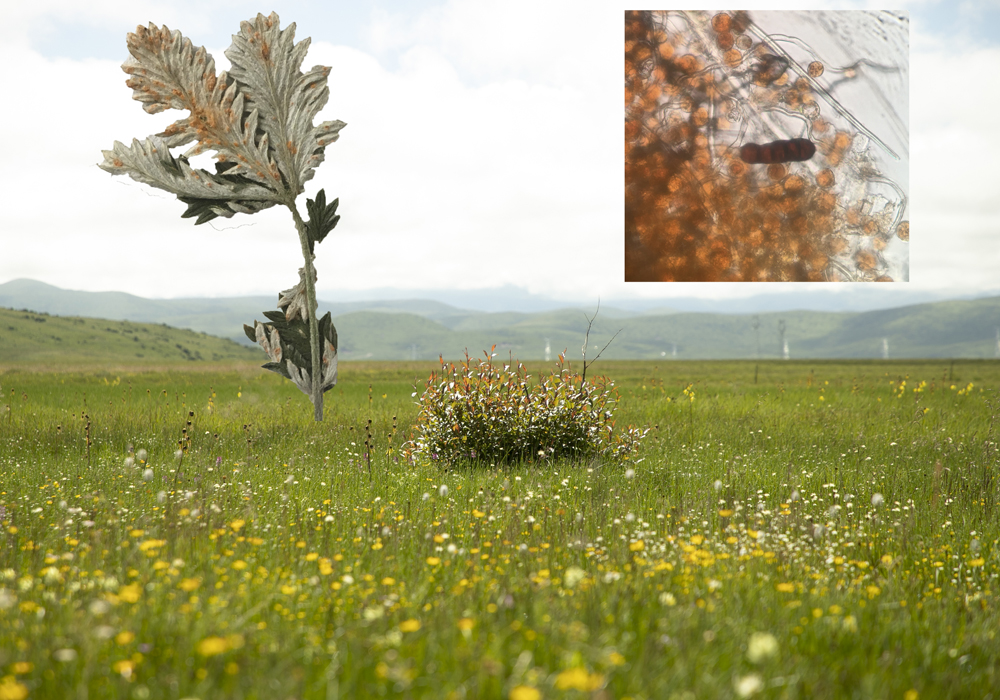
群落内物种如何共存是群落生态学研究中最具争议的核心问题之一。根据当代物种共存理论框架, 维持物种共存的机制可以分为稳定化和均等化机制。尽管植物叶片病原真菌在自然界中大量存在, 但是目前尚不完全清楚叶片病原真菌如何通过稳定化和均等化机制影响物种共存。本文首先介绍了叶片病原真菌驱动同种负密度制约(稳定化机制)和“生长-防御”权衡(均等化机制)促进物种共存的证据, 并阐述了在群落水平抑制叶片病原真菌后物种丰富度的变化。随后, 本文归纳了该领域研究中的主要挑战: 叶片病原真菌在驱动物种共存过程中相较于环境因子的可能重要性更低、部分叶片病原真菌较弱的宿主专一性无法起到维持物种共存的作用, 以及控制叶片病原真菌过程中各种方法均有一定局限性等问题。最后, 本文论述了该研究领域未来的主要方向: 不同土壤养分/气候变化条件下叶片病原真菌如何影响物种共存、叶片病原真菌与其他高营养层次生物类群的交互作用及其对物种共存的贡献、基于系统发育推断叶片病原真菌对植物群落构建的影响、将叶片病原真菌生活史类型纳入病原真菌影响植物物种共存的相关研究中。
本文引用格式
刘向 , 刘木 , 肖瑶 . 叶片病原真菌对植物物种共存的影响: 进展与挑战[J]. 生物多样性, 2023 , 31(2) : 22525 . DOI: 10.17520/biods.2022525
Abstract
Background & Aims: Understanding how species coexist is a core question in community ecology that has long intrigued ecologists. Under the contemporary coexistence theory, the mechanisms that promote species coexistence are categorized into stabilizing and equalizing mechanisms. However, we know little about how foliar fungal pathogens affect stabilizing and equalizing mechanisms, despite being abundant and important.
Progresses & Challenges: In this review, we briefly introduce the experimental evidence of how foliar fungal diseases promote plant species coexistence through conspecific negative density dependence (via stabilizing mechanisms) and growth-defense tradeoffs (via equalizing mechanisms), as well as how community-level foliar fungal pathogen removal affects plant species richness. We then discuss controversies surrounding this topic. These controversies mainly focused on the relative importance of foliar fungal pathogens in driving species coexistence compared to other factors, host specificity of foliar fungal pathogens, and methodological issues in related studies.
Prospects: We highlight some open questions for future studies on this topic, including how climate change and soil nutrients affect the relationship between foliar fungal pathogens and species coexistence, the interactions between foliar fungal pathogens and other high trophic biomes impact upon species coexistence, inferring the effects of foliar fungal pathogens on plant community assembly based on phylogeny, and incorporating plant life histories into related studies.
参考文献
| [1] | Adler PB, HilleRisLambers J, Levine JM (2007) A niche for neutrality. Ecology Letters, 10, 95-104. |
| [2] | Alexander HM, Holt RD (1998) The interaction between plant competition and disease. Perspectives in Plant Ecology, Evolution and Systematics, 1, 206-220. |
| [3] | Allan E, van Ruijven J, Crawley MJ (2010) Foliar fungal pathogens and grassland biodiversity. Ecology, 91, 2572-2582. |
| [4] | Bachelot B, Kobe RK (2013) Rare species advantage? Richness of damage types due to natural enemies increases with species abundance in a wet tropical forest. Journal of Ecology, 101, 846-856. |
| [5] | Bagchi R, Gallery RE, Gripenberg S, Gurr SJ, Narayan L, Addis CE, Freckleton RP, Lewis OT (2014) Pathogens and insect herbivores drive rainforest plant diversity and composition. Nature, 506, 85-88. |
| [6] | Bayandala, Masaka K, Seiwa K (2017) Leaf diseases drive the Janzen-Connell mechanism regardless of light conditions: A 3-year field study. Oecologia, 183, 191-199. |
| [7] | Beckman NG, Dybzinski R, Tilman GD (2014) Neighborhoods have little effect on fungal attack or insect predation of developing seeds in a grassland biodiversity experiment. Oecologia, 174, 521-532. |
| [8] | Benítez MS, Hersh MH, Vilgalys R, Clark JS (2013) Pathogen regulation of plant diversity via effective specialization. Trends in Ecology & Evolution, 28, 705-711. |
| [9] | Bever JD (1994) Feedback between plants and their soil communities in an old field community. Ecology, 75, 1965-1977. |
| [10] | Bever JD (2003) Soil community feedback and the coexistence of competitors: Conceptual frameworks and empirical tests. New Phytologist, 157, 465-473. |
| [11] | Bever JD, Mangan SA, Alexander HM (2015) Maintenance of plant species diversity by pathogens. Annual Review of Ecology, Evolution, and Systematics, 46, 305-325. |
| [12] | Blumenthal D, Mitchell CE, Pysek P, Jarosík V (2009) Synergy between pathogen release and resource availability in plant invasion. Proceedings of the National Academy of Sciences, USA, 106, 7899-7904. |
| [13] | Bradley DJ, Gilbert GS, Martiny JBH (2008) Pathogens promote plant diversity through a compensatory response. Ecology Letters, 11, 461-469. |
| [14] | Burdon JJ (1993) The structure of pathogen populations in natural plant communities. Annual Review of Phytopathology, 31, 305-323. |
| [15] | Burdon JJ, Chilvers GA (1982) Host density as a factor in plant disease ecology. Annual Review of Phytopathology, 20, 143-166. |
| [16] | Cadotte MW, Cardinale BJ, Oakley TH (2008) Evolutionary history and the effect of biodiversity on plant productivity. Proceedings of the National Academy of Sciences, USA, 105, 17012-17017. |
| [17] | Cappelli SL, Pichon NA, Kempel A, Allan E (2020) Sick plants in grassland communities: A growth-defense trade-off is the main driver of fungal pathogen abundance. Ecology Letters, 23, 1349-1359. |
| [18] | Chen L, Mi XC, Ma KP (2014) Niche differentiation and its consequence on biodiversity maintenance in forest communities. Chinese Bulletin of Life Sciences, 26, 112-117. (in Chinese with English abstract) |
| [18] | [陈磊, 米湘成, 马克平 (2014) 生态位分化与森林群落物种多样性维持研究展望. 生命科学, 26, 112-117.] |
| [19] | Chen L, Swenson NG, Ji NN, Mi XC, Ren HB, Guo LD, Ma KP (2019) Differential soil fungus accumulation and density dependence of trees in a subtropical forest. Science, 366, 124-128. |
| [20] | Chen T, Nan ZB (2015) Progress in effects of phytopathogens on plant communities: A review. Acta Ecologica Sinica, 35, 177-183. (in Chinese with English abstract) |
| [20] | [陈焘, 南志标 (2015) 植物病原微生物影响草地植物群落动态研究进展. 生态学报, 35, 177-183.] |
| [21] | Chesson P (2000) Mechanisms of maintenance of species diversity. Annual Review of Ecology and Systematics, 31, 343-366. |
| [22] | Chesson P, Kuang JJ (2008) The interaction between predation and competition. Nature, 456, 235-238. |
| [23] | Chu CJ, Adler PB (2015) Large niche differences emerge at the recruitment stage to stabilize grassland coexistence. Ecological Monographs, 85, 373-392. |
| [24] | Chu CJ, Wang YS, Liu Y, Jiang L, He FL (2017) Advances in species coexistence theory. Biodiversity Science, 25, 345-354. (in Chinese with English abstract) |
| [24] | [储诚进, 王酉石, 刘宇, 蒋林, 何芳良 (2017) 物种共存理论研究进展. 生物多样性, 25, 345-354.] |
| [25] | Clay K, Reinhart K, Rudgers J, Tintjer T, Koslow J, Flory SL (2008) Red queen communities. In: Infectious Disease Ecology: Effects of Ecosystems on Disease and of Disease on Ecosystems (eds Ostfeld RS, Felicia K, Eviner VT), pp. 145-178. Princeton University Press, Princeton. |
| [26] | Clements FE (1916) Plant Succession:An Analysis of the Development of Vegetation. Carnegie Institution of Washington, Washington DC. |
| [27] | Coley PD (1987) Interspecific variation in plant anti-herbivore properties: The role of habitat quality and rate of disturbance. New Phytologist, 106, 251-263. |
| [28] | Connell JH (1971) On the role of natural enemies in preventing competitive exclusion in some marine animals and in rain forest trees. In: Dynamics of Numbers in Populations (eds den Boer PJ, Gradwell GR), pp. 298-312. PUDOC, Wageningen, the Netherlands. |
| [29] | Cronin JP, Welsh ME, Dekkers MG, Abercrombie ST, Mitchell CE (2010) Host physiological phenotype explains pathogen reservoir potential. Ecology Letters, 13, 1221-1232. |
| [30] | Dai D, Xing H, Yang JR, Liu YJ, Cai HM, Liu Y (2021) Advances in mechanisms of rare species maintenance and plant-soil feedback in plant communities. Biodiversity Science, 29, 1687-1699. (in Chinese with English abstract) |
| [30] | [戴冬, 邢华, 杨佳绒, 刘雅静, 蔡焕满, 刘宇 (2021) 植物群落稀有种维持机制与土壤反馈的研究进展. 生物多样性, 29, 1687-1699.] |
| [31] | de Silva NI (2016) Mycosphere essays 9: Defining biotrophs and hemibiotrophs. Mycosphere, 7, 545-559. |
| [32] | Dillen M, Verheyen K, Smit C (2016) Identity rather than richness drives local neighbourhood species composition effects on oak sapling growth in a young forest. Forest Ecology and Management, 380, 274-284. |
| [33] | Duplessis S, Lorrain C, Petre B, Figueroa M, Dodds PN, Aime MC (2021) Host adaptation and virulence in heteroecious rust fungi. Annual Review of Phytopathology, 59, 403-422. |
| [34] | Ebeling A, Strauss AT, Adler PB, Arnillas CA, Barrio I, Biederman LA, Borer ET, Bugalho MN, Caldeira M, Cadotte MW, Daleo P, Eisenhauer N, Eskelinen A, Fay PA, Firn J, Graff P, Hagenah N, Haider S, Komatsu KJ, McCulley R, Mitchell CE, Moore JL, Pascual J, Peri PL, Power SA, Prober SM, Risch A, Roscher C, Sankaran M, Seabloom E, Schielzeth H, Schütz M, Speziale KL, Tedder M, Virtanen R, Blumenthal DM (2022) Nutrient enrichment increases invertebrate herbivory and pathogen damage in grasslands. Journal of Ecology, 110, 327-339. |
| [35] | Eberl F, de Bobadilla FM, Reichelt M, Hammerbacher A, Gershenzon J, Unsicker SB (2020) Herbivory meets fungivory: Insect herbivores feed on plant pathogenic fungi for their own benefit. Ecology Letters, 23, 1073-1084. |
| [36] | Fisher MC, Henk DA, Briggs CJ, Brownstein JS, Madoff LC, McCraw SL, Gurr SJ (2012) Emerging fungal threats to animal, plant and ecosystem health. Nature, 484, 186-194. |
| [37] | García-Guzmán G, Morales E (2007) Life-history strategies of plant pathogens: Distribution patterns and phylogenetic analysis. Ecology, 88, 589-596. |
| [38] | García-Guzmán G, Wennstr?m A (2001) Interactions between two rust fungi and their host plant Anemone nemorosa. Ecography, 24, 25-32. |
| [39] | Gause GF (1934) The Struggle for Existence. Williams and Wilkins, Baltimore, MD. |
| [40] | Gilbert GS, Magarey R, Suiter K, Webb CO (2012) Evolutionary tools for phytosanitary risk analysis: Phylogenetic signal as a predictor of host range of plant pests and pathogens. Evolutionary Applications, 5, 869-878. |
| [41] | Gilbert GS, Parker IM (2016) The evolutionary ecology of plant disease: A phylogenetic perspective. Annual Review of Phytopathology, 54, 549-578. |
| [42] | Gilbert GS, Webb CO (2007) Phylogenetic signal in plant pathogen-host range. Cytotechnology, 104, 4979-4983. |
| [43] | Gleason HA (1926) The individualistic concept of the plant association. Bulletin of the Torrey Botanical Club, 53, 7-26. |
| [44] | Godoy O, Levine JM (2014) Phenology effects on invasion success: Insights from coupling field experiments to coexistence theory. Ecology, 95, 726-736. |
| [45] | Grunberg RL, Halliday FW, Heckman RW, Joyner BN, O’Keeffe KR, Mitchell CE (2022) Disease decreases variation in host community structure in an old-field grassland. BioRxiv, doi: 10.1101/2022.08.15.503989. |
| [46] | Hantsch L, Bien S, Radatz S, Braun U, Auge H, Bruelheide H (2014) Tree diversity and the role of non-host neighbour tree species in reducing fungal pathogen infestation. Journal of Ecology, 102, 1673-1687. |
| [47] | Harvell CD, Mitchell CE, Ward JR, Altizer S, Dobson AP, Ostfeld RS, Samuel MD (2002) Climate warming and disease risks for terrestrial and marine biota. Science, 296, 2158-2162. |
| [48] | Helfer S (2014) Rust fungi and global change. New Phytologist, 201, 770-780. |
| [49] | Hubbell SP (2001) The Unified Neutral Theory of Biodiversity and Biogeography. Princeton University Press, Princeton. |
| [50] | Hubbell SP, Foster RB (1986) Biology, chance and history and the structure of tropical rain forest tree communities. In: Community Ecology (eds Diamond JM, Case TJ), pp. 314-329. Harper and Row, New York. |
| [51] | Huber DM, Watson RD (1974) Nitrogen form and plant disease. Annual Review of Phytopathology, 12, 139-165. |
| [52] | Hutchinson GE (1959) Homage to santa Rosalia or why are there so many kinds of animals? The American Naturalist, 93, 145-159. |
| [53] | Hutchinson GE (1961) The paradox of the plankton. The American Naturalist, 95, 137-145. |
| [54] | Isbell F, Reich PB, Tilman D, Hobbie SE, Polasky S, Binder S (2013) Nutrient enrichment, biodiversity loss, and consequent declines in ecosystem productivity. Proceedings of the National Academy of Sciences, USA, 110, 11911-11916. |
| [55] | Janzen DH (1970) Herbivores and the number of tree species in tropical forests. The American Naturalist, 104, 501-528. |
| [56] | Jia SH, Wang XG, Hao ZQ, Bagchi R (2022) The effects of natural enemies on herb diversity in a temperate forest depend on species traits and neighbouring tree composition. Journal of Ecology, 110, 2615-2627. |
| [57] | Jia SH, Wang XG, Yuan ZQ, Lin F, Ye J, Lin GG, Hao ZQ, Bagchi R (2020) Tree species traits affect which natural enemies drive the Janzen-Connell effect in a temperate forest. Nature Communications, 11, 286. |
| [58] | Johnson DJ, Beaulieu WT, Bever JD, Clay K (2012) Conspecific negative density dependence and forest diversity. Science, 336, 904-907. |
| [59] | Keesing F, Holt RD, Ostfeld RS (2006) Effects of species diversity on disease risk. Ecology Letters, 9, 485-498. |
| [60] | Keesing F, Ostfeld RS (2021) Dilution effects in disease ecology. Ecology Letters, 24, 2490-2505. |
| [61] | Kempel A, Auge H, Allan E (2020) Context-dependency of enemy impact on plant communities in a changing world. Preprints, doi: 10.20944/preprints202002.0005.v1. |
| [62] | Kendig AE, Spear ER, Daws SC, Flory SL, Mordecai EA (2021) Native perennial and non-native annual grasses shape pathogen community composition and disease severity in a California grassland. Journal of Ecology, 109, 900-912. |
| [63] | Kraft NJB, Adler PB, Godoy O, James EC, Fuller S, Levine JM (2015a) Community assembly, coexistence and the environmental filtering metaphor. Functional Ecology, 29, 592-599. |
| [64] | Kraft NJB, Godoy O, Levine JM (2015b) Plant functional traits and the multidimensional nature of species coexistence. Proceedings of the National Academy of Sciences, USA, 112, 797-802. |
| [65] | LaManna JA, Mangan SA, Alonso A, Bourg NA, Brockelman WY, Bunyavejchewin S, Chang LW, Chiang JM, Chuyong GB, Clay K, Cordell S, Davies SJ, Furniss TJ, Giardina CP, Gunatilleke IAUN, Gunatilleke CVS, He FL, Howe RW, Hubbell SP, Hsieh CF, Inman-Narahari FM, Janík D, Johnson DJ, Kenfack D, Korte L, Král K, Larson AJ, Lutz JA, McMahon SM, McShea WJ, Memiaghe HR, Nathalang A, Novotny V, Ong PS, Orwig DA, Ostertag R, Parker GG, Phillips RP, Sack L, Sun IF, Tello JS, Thomas DW, Turner BL, Vela Díaz DM, Vr?ka T, Weiblen GD, Wolf A, Yap S, Myers JA (2018) Response to comment on “Plant diversity increases with the strength of negative density dependence at the global scale”. Science, 360, 1389-1392. |
| [66] | Levine JM, HilleRisLambers J (2009) The importance of niches for the maintenance of species diversity. Nature, 461, 254-257. |
| [67] | Li YZ, Nan ZB (2015) The Methods of Diagnose, Investigation and Loss Evaluation for Forage Diseases. Jiangsu Phoenix Science and Technology Publishing House, Nanjing. (in Chinese) |
| [67] | [李彦忠, 南志标 (2015) 牧草病害诊断调查与损失评定方法. 江苏凤凰科学技术出版社. 南京.] |
| [68] | Liang MX, Liu XB, Gilbert GS, Zheng Y, Luo S, Huang FM, Yu SX (2016) Adult trees cause density-dependent mortality in conspecific seedlings by regulating the frequency of pathogenic soil fungi. Ecology Letters, 19, 1448-1456. |
| [69] | Liao CJ, Hailemariam S, Sharon A, Mengiste T (2022) Pathogenic strategies and immune mechanisms to necrotrophs: Differences and similarities to biotrophs and hemibiotrophs. Current Opinion in Plant Biology, 69, 102291. |
| [70] | Lind EM, Borer E, Seabloom E, Adler P, Bakker JD, Blumenthal DM, Crawley M, Davies K, Firn J, Gruner DS, Stanley Harpole W, Hautier Y, Hillebrand H, Knops J, Melbourne B, Mortensen B, Risch AC, Schuetz M, Stevens C, Wragg PD (2013) Life-history constraints in grassland plant species: A growth-defence trade-off is the norm. Ecology Letters, 16, 513-521. |
| [71] | Liu HY, Mi ZR, Lin L, Wang YH, Zhang ZH, Zhang FW, Wang H, Liu LL, Zhu B, Cao GM, Zhao XQ, Sanders NJ, Classen AT, Reich PB, He JS (2018) Shifting plant species composition in response to climate change stabilizes grassland primary production. Proceedings of the National Academy of Sciences, USA, 115, 4051-4056. |
| [72] | Liu M, Mipam TD, Wang XX, Zhang P, Lin ZY, Liu X (2021) Contrasting effects of mammal grazing on foliar fungal diseases: Patterns and potential mechanisms. New Phytologist, 232, 345-355. |
| [73] | Liu X, Chen LF, Liu M, García-Guzmán G, Gilbert GS, Zhou SR (2020) Dilution effect of plant diversity on infectious diseases: Latitudinal trend and biological context dependence. Oikos, 129, 457-465. |
| [74] | Liu X, Chen LF, Zhou SR (2020) The relationship between biodiversity and infectious disease: Progress, challenge and perspective. Biodiversity Science, 28, 1376-1390. (in Chinese with English abstract) |
| [74] | [刘向, 陈立范, 周淑荣 (2020) 生物多样性与传染性疾病的关系: 进展、挑战与展望. 生物多样性, 28, 1376-1390.] |
| [75] | Liu X, Jia P, Cadotte MW, Zhu C, Si XF, Wang YQ, Chen F, Wu JH, Zhou SR (2021) Host plant environmental filtering drives foliar fungal community assembly in symptomatic leaves. Oecologia, 195, 737-749. |
| [76] | Liu X, Lyu SM, Sun DX, Bradshaw CJA, Zhou SR (2017) Species decline under nitrogen fertilization increases community-level competence of fungal diseases. Proceedings of the Royal Society B: Biological Sciences, 284, 20162621. |
| [77] | Liu X, Lyu SM, Zhou SR, Bradshaw CJA (2016) Warming and fertilization alter the dilution effect of host diversity on disease severity. Ecology, 97, 1680-1689. |
| [78] | Liu X, Ma ZY, Cadotte MW, Chen F, He JS, Zhou SR (2019) Warming affects foliar fungal diseases more than precipitation in a Tibetan alpine meadow. New Phytologist, 221, 1574-1584. |
| [79] | Liu X, Parker IM, Gilbert GS, Lu YW, Xiao Y, Zhang L, Huang MJ, Cheng YK, Zhang ZH, Zhou SR (2022) Coexistence is stabilized by conspecific negative density dependence via fungal pathogens more than oomycete pathogens. Ecology, 103, e3841. |
| [80] | Liu XB, Liang MX, Etienne RS, Gilbert GS, Yu SX (2016) Phylogenetic congruence between subtropical trees and their associated fungi. Ecology and Evolution, 6, 8412-8422. |
| [81] | Liu XB, Liang MX, Etienne RS, Wang YF, Staehelin C, Yu SX (2012) Experimental evidence for a phylogenetic Janzen-Connell effect in a subtropical forest. Ecology Letters, 15, 111-118. |
| [82] | Liu Y, Fang SQ, Chesson P, He FL (2015) The effect of soil-borne pathogens depends on the abundance of host tree species. Nature Communications, 6, 10017. |
| [83] | MacArthur R, Levins R (1967) The limiting similarity, convergence, and divergence of coexisting species. The American Naturalist, 101, 377-385. |
| [84] | Mangan SA, Schnitzer SA, Herre EA, Mack KML, Valencia MC, Sanchez EI, Bever JD (2010) Negative plant-soil feedback predicts tree-species relative abundance in a tropical forest. Nature, 466, 752-755. |
| [85] | McGill BJ (2003) A test of the unified neutral theory of biodiversity. Nature, 422, 881-885. |
| [86] | Mills KE, Bever JD (1998) Maintenance of diversity within plant communities: Soil pathogens as agents of negative feedback. Ecology, 79, 1595-1601. |
| [87] | Mitchell CE (2003) Trophic control of grassland production and biomass by pathogens. Ecology Letters, 6, 147-155. |
| [88] | Mitchell CE, Reich PB, Tilman D, Groth JV (2003) Effects of elevated CO2, nitrogen deposition, and decreased species diversity on foliar fungal plant disease. Global Change Biology, 9, 438-451. |
| [89] | Mitchell CE, Tilman D, Groth JV (2002) Effects of grassland plant species diversity, abundance, and composition on foliar fungal disease. Ecology, 83, 1713-1726. |
| [90] | Mordecai EA (2011) Pathogen impacts on plant communities: Unifying theory, concepts, and empirical work. Ecological Monographs, 81, 429-441. |
| [91] | Nguyen D, Boberg J, Cleary M, Bruelheide H, H?nig L, Koricheva J, Stenlid J (2017) Foliar fungi of Betula pendula: Impact of tree species mixtures and assessment methods. Scientific Reports, 7, 41801. |
| [92] | Niu KC, Liu YN, Shen ZH, He FL, Fang JY (2009) Community assembly: The relative importance of neutral theory and niche theory. Biodiversity Science, 17, 579-593. (in Chinese with English abstract) |
| [92] | [牛克昌, 刘怿宁, 沈泽昊, 何芳良, 方精云 (2009) 群落构建的中性理论和生态位理论. 生物多样性, 17, 579-593.] |
| [93] | Packer A, Clay K (2000) Soil pathogens and spatial patterns of seedling mortality in a temperate tree. Nature, 404, 278-281. |
| [94] | Parker IM, Gilbert GS (2018) Density-dependent disease, life-history trade-offs, and the effect of leaf pathogens on a suite of co-occurring close relatives. Journal of Ecology, 106, 1829-1838. |
| [95] | Paul ND, Ayres PG, Wyness LE (1989) On the use of fungicides for experimentation in natural vegetation. Functional Ecology, 3, 759-769. |
| [96] | Petermann JS, Fergus AJF, Turnbull LA, Schmid B (2008) Janzen-Connell effects are widespread and strong enough to maintain diversity in grasslands. Ecology, 89, 2399-2406. |
| [97] | Peters HA (2003) Neighbour-regulated mortality: The influence of positive and negative density dependence on tree populations in species-rich tropical forests. Ecology Letters, 6, 757-765. |
| [98] | Peters JC, Shaw MW (1996) Effect of artificial exclusion and augmentation of fungal plant pathogens on a regenerating grassland. New Phytologist, 134, 295-307. |
| [99] | Ricklefs RE (2015) Intrinsic dynamics of the regional community. Ecology Letters, 18, 497-503. |
| [100] | Rottstock T, Joshi J, Kummer V, Fischer M (2014) Higher plant diversity promotes higher diversity of fungal pathogens, while it decreases pathogen infection per plant. Ecology, 95, 1907-1917. |
| [101] | Roy BA, Güsewell S, Harte J (2004) Response of plant pathogens and herbivores to a warming experiment. Ecology, 85, 2570-2581. |
| [102] | Rutten G, H?nig L, Schwa? R, Braun U, Saadani M, Schuldt A, Michalski SG, Bruelheide H (2021) More diverse tree communities promote foliar fungal pathogen diversity, but decrease infestation rates per tree species, in a subtropical biodiversity experiment. Journal of Ecology, 109, 2068-2080. |
| [103] | Schmidt R, Deising HB, Hensen I, Sch?dler M, Auge H (2020) Natural enemies do not contribute to negative frequency- dependence in native and exotic grassland plants. Perspectives in Plant Ecology, Evolution and Systematics, 46, 125565. |
| [104] | Seabloom EW, Kinkel L, Borer ET, Hautier Y, Montgomery RA, Tilman D (2017) Food webs obscure the strength of plant diversity effects on primary productivity. Ecology Letters, 20, 505-512. |
| [105] | Seiwa K, Miwa Y, Sahashi N, Kanno H, Tomita M, Ueno N, Yamazaki M (2008) Pathogen attack and spatial patterns of juvenile mortality and growth in a temperate tree, Prunus grayana. Canadian Journal of Forest Research, 38, 2445-2454. |
| [106] | Smith DJB (2022) The functional form of specialised predation affects whether Janzen-Connell effects can prevent competitive exclusion. Ecology Letters, 25, 1458-1470. |
| [107] | Song XY, Corlett RT (2022) Do natural enemies mediate conspecific negative distance- and density-dependence of trees? A meta-analysis of exclusion experiments. Oikos, 2022, e08509. |
| [108] | Spear ER, Mordecai EA (2018) Foliar pathogens of California grasses are multi-host and spatially widespread: Implications for grassland diversity. Ecology, 99, 2250-2259. |
| [109] | Strengbom J, Englund G, Ericson L (2006) Experimental scale and precipitation modify effects of nitrogen addition on a plant pathogen. Journal of Ecology, 94, 227-233. |
| [110] | Tilman D, Pacala S (1993) The maintenance of speceis richness in plant communities. In: Species Diversity in Ecological Communities (eds Ricklefs RE, Schluter D), pp. 13-25. University of Chicago Press, Chicago. |
| [111] | Vellend M (2010) Conceptual synthesis in community ecology. The Quarterly Review of Biology, 85, 183-206. |
| [112] | Veresoglou SD, Barto EK, Menexes G, Rillig MC (2013) Fertilization affects severity of disease caused by fungal plant pathogens. Plant Pathology, 62, 961-969. |
| [113] | Wang SP, Luo MY, Feng YH, Chu CJ, Zhang DY (2022) Theoretical advances in biodiversity research. Biodiversity Science, 30, 22410. (in Chinese with English abstract) |
| [113] | [王少鹏, 罗明宇, 冯彦皓, 储诚进, 张大勇 (2022) 生物多样性理论最新进展. 生物多样性, 30, 22410.] |
| [114] | Webb CO, Ackerly DD, McPeek MA, Donoghue MJ (2002) Phylogenies and community ecology. Annual Review of Ecology and Systematics, 33, 475-505. |
| [115] | Xu ZG (2009) Plant Pathology, 4th edn. Higher Education Press, Beijing. (in Chinese) |
| [115] | [许志刚 (2009) 普通植物病理学, 第四版. 高等教育出版社, 北京.] |
| [116] | Yu WB, Li SP (2020) Modern coexistence theory as a framework for invasion ecology. Biodiversity Science, 28, 1362-1375. (in Chinese with English abstract) |
| [116] | [于文波, 黎绍鹏 (2020) 基于现代物种共存理论的入侵生态学概念框架. 生物多样性, 28, 1362-1375.] |
| [117] | Zhou SR, Zhang DY (2006) Neutral theory in community ecology. Journal of Plant Ecology (Chinese version), 30, 868-877. (in Chinese with English abstract) |
| [117] | [周淑荣, 张大勇 (2006) 群落生态学的中性理论. 植物生态学报, 30, 868-877.] |
| [118] | Zhu BR, Zhang DY (2011) A process-based theoretical framework for community ecology. Biodiversity Science, 19, 389-399. (in Chinese with English abstract) |
| [118] | [朱璧如, 张大勇 (2011) 基于过程的群落生态学理论框架. 生物多样性, 19, 389-399.] |
| [119] | Zhu Y, Chen H, Fan J, Wang Y, Li Y, Chen J, Fan J, Yang S, Hu L, Leung H, Mew TW, Teng PS, Wang Z, Mundt CC (2000) Genetic diversity and disease control in rice. Nature, 406, 718-722. |
| [120] | Zhu Y, Mi XC, Ma KP (2009) A mechanism of plant species coexistence: The negative density-dependent hypothesis. Biodiversity Science, 17, 594-604. (in Chinese with English abstract) |
| [120] | [祝燕, 米湘成, 马克平 (2009) 植物群落物种共存机制: 负密度制约假说. 生物多样性, 17, 594-604.] |
| [121] | Zhu Y, Queenborough SA, Condit R, Hubbell SP, Ma KP, Comita LS (2018) Density-dependent survival varies with species life-history strategy in a tropical forest. Ecology Letters, 21, 506-515. |
| [122] | Zimmerman NB, Vitousek PM (2012) Fungal endophyte communities reflect environmental structuring across a Hawaiian landscape. Proceedings of the National Academy of Sciences, USA, 109, 13022-13027. |