生物多样性评估挑战的层级占有率模型解决路径
Hierarchical occupancy models as solutions to challenges in biodiversity assessment
生物多样性评估挑战的层级占有率模型解决路径 |
| 吴春莹, Viorel D. Popescu, 季吟秋 |
|
Hierarchical occupancy models as solutions to challenges in biodiversity assessment |
| Chunying Wu, Viorel D. Popescu, Yinqiu Ji |
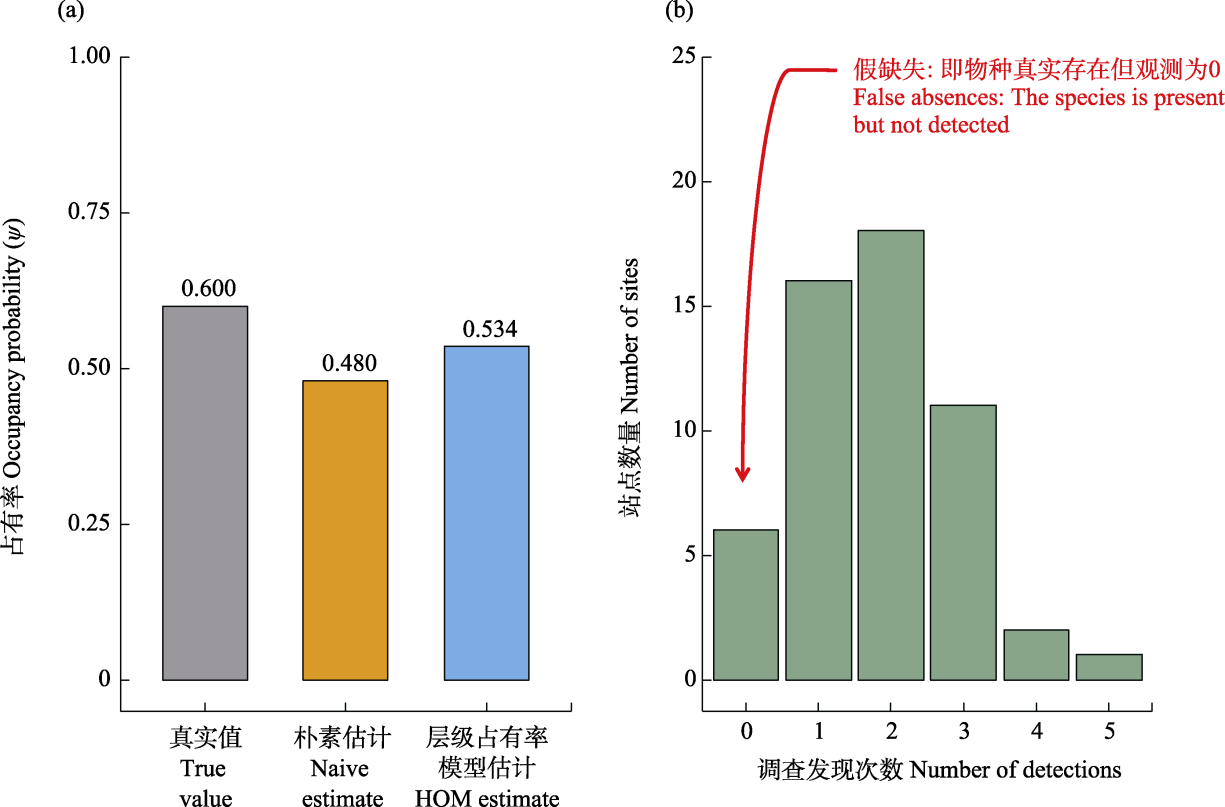
| 图2 层级占有率模型(HOM)对不完全检测的校正效果模拟。(a)不同方法对占有概率(ψ)的估计对比(样本量n = 100)。朴素估计(naive estimate)由于忽略了不完全检测而系统性低估了占有率, 而模型估计(HOM)更接近真实值(true value)。(b)物种真实存在站点(sites with true presence)的检测频率分布。红色箭头指向的“0次发现”柱状图代表假缺失(false absences)现象, 即物种在该站点真实存在, 但由于检测概率P < 1导致调查结果为0, 这是占有率估计偏差的核心来源。 |
| Fig. 2 Simulation of hierarchical occupancy model (HOM) performance in correcting for imperfect detection. (a) Comparison of occupancy probability (ψ) estimates among different methods (sample size n = 100). The naive estimate systematically underestimates occupancy by ignoring imperfect detection, whereas the HOM estimate is closer to the true value. (b) Distribution of detection frequency at sites where the species is truly present. The bar at “0 detections” indicated by the red arrow represents “false absences”, where the species exists at the site but remains undetected due to a detection probability P < 1. This phenomenon is the primary source of bias in occupancy estimation. |
|
|